
Game review
Desktop Raid
5.9 / 10
- Developer
- Lee_Studio
- Publisher
- Lee_Studio, Gamersky Games
- Released
- 8 March 2026
- Platforms
- PC
- Genre
- Idle RPG
Desktop Raid pitches itself as a piece of software you leave running in the corner of your screen while you do something else, which is a fair description of what it actually is. A party of pixel-art adventurers fights automatically through side-scrolling dungeons, loot drops, characters level up, and none of it requires your attention beyond the occasional check-in to re-equip gear or pick a new skill. Developer Lee_Studio, working with publisher Gamersky Games, released the game on 8 March 2026 at a list price of NZ$13.25, currently discounted to NZ$7.95. It has since picked up a paid Eastern Mythology DLC and multiple post-launch patches, which matters more than usual here because the launch build was rough enough that a meaningful chunk of the negative reviews are specifically about problems the developer has already been fixing.
An auto-battler with real positioning decisions
The core loop separates cleanly into two halves: automated combat and manual party management. Combat itself runs without input, a side-scrolling brawl where your squad and the enemy wave trade blows until one side is dead. What you control is everything that shapes those fights before they start. The game offers more than a dozen branching classes, including Warrior, Mage, Assassin, Summoner, Tomb Keeper, and Alchemist, each with its own skill pool and growth path, and the store page frames the deployment choices in auto-chess terms: frontline tanks, backline damage dealers, crowd-control combos, and main/sub-DPS pairings that can be mixed and matched. One reviewer with over 25,000 minutes logged called it "the most fun and in-depth non-gacha wallet idle game" they'd played, specifically citing the class and skill variety as the reason it held their attention. A shorter, blunter review from a 25-minute playtime pushed back on the "idle game" framing entirely, calling it "not an idle game, its an autobattler," and describing the onboarding as unexpectedly involved for something marketed as a background toy. Both readings are accurate depending on how deep you go: the surface loop is genuinely hands-off, but the character-building layer underneath rewards active tinkering.
The character-select screenshot shows this tension directly. New characters roll with randomized names and full stat blocks, attack range, crit rate and multiplier, dodge, armor penetration, all visible before you commit to a choice, alongside a starter skill icon. It is more information than a purely idle game needs to expose, and that is arguably the point. A handful of reviews describe the game as closer to a lightweight action-RPG that happens to auto-play than a true incremental, and the amount of stat granularity on that first screen supports that read.
Loot, gear, and the sell-everything problem
Progression runs on gear drops and a rarity ladder, and the inventory screenshot shows just how fast that pile grows. By character level 101, the sample Mage's inventory grid is packed edge to edge with weapons, armor pieces, and consumables, more than a single glance can sort through. Several reviewers flagged the resulting management burden as the game's weakest link. One long-playtime review (6,338 minutes) that switched from positive to negative over time cited "broken game economy" specifically, noting that selling low-value crafting materials was, bafflingly, a more reliable way to earn premium currency than selling actual gear. Another common complaint targets the auto-equip feature: it compares gear by rarity tier rather than actual stat output, so a low-rarity item with genuinely higher attack power can lose out to a higher-rarity item that is mechanically worse. One reviewer illustrated this with a specific example, a level-300 rare weapon dealing 1000-2000 damage being passed over in favor of a level-1 super-rare weapon dealing only 10-14, which is the kind of concrete, checkable complaint that's worth taking seriously even from a single source.
On the positive side, several long-session players describe the loot loop as the game's real hook rather than its flaw. A 20,380-minute review called it "not a bad little back ground game" to run while painting models or catching up on other tasks, and a 4,967-minute review, while flagging translation issues elsewhere, said the developers "really are working on it" and that patches were landing regularly. The reclass system, letting a character switch class later without starting over, gets specific praise in the screenshots' supporting text as a way to recover from an early mistake without losing accumulated levels.
Translation quality is the game's biggest weak point
This is the area where Desktop Raid loses the most ground, and it shows up directly in the screenshots rather than just in review text. The skill-selection popup captured here displays two "Choose" button labels still in untranslated Chinese characters, alongside a build-version readout in the corner that is also untranslated. This is not a one-off; it is a recurring, specifically-named complaint across a large share of the negative reviews. Multiple reviewers describe quest text that gives directions using terms that don't match the actual UI labels, one specifically pointed out that a quest telling the player to check their "inventory" was actually directing them to the "Warehouse" tab, a mismatch that would be a five-minute fix but clearly wasn't caught before launch. Others describe the translation as machine-generated and never proofread: "poor translation, poor name generation... this game costs money, it should be translated with some actual effort instead of a half assed MTL that wasnt double checked at all," as one put it. A handful of positive reviews still dock points for the same issue while otherwise recommending the game, calling it "a decent idler" that "needs work in translations as some items are in Chinese." Given how many independent reviewers raise the exact same category of complaint, and given that the screenshot evidence backs it up directly, this reads as a genuine, unresolved weakness rather than a handful of isolated gripes.
Launch stability and the pace of fixes
The other major thread running through the negative reviews is launch-week stability. Several reviewers describe "game breaking bugs," corrupted or lost save data, and balance problems severe enough that one long-time player (13,178 minutes) who had wishlisted the game ahead of release ultimately switched to negative after roughly a month, writing that the game felt "more of a beta than an actual full game" and citing unresolved class, skill, and affix balance as the core issue. Weighed against that, a meaningful number of reviewers specifically credit the developer's response speed: one reviewer explicitly reversed their negative review to positive after a 1.1 patch, writing "props to the developer for being on top of them and pushing out a fix in a couple of days," and another noted the developer replying directly to their in-review feedback about the sell-item settings. That kind of visible, fast post-launch support doesn't erase the rough launch, but it does mean the specific bug reports from March are less reliable as a picture of the game's current state than the ongoing translation complaints, which several reviewers report are still present in far more recent playthroughs.
One additional friction point worth flagging: multiple reviewers, independently, objected to a tutorial-guide character whose window can't be moved, resized, or dismissed, requiring repeated clicking just to see past it. One reviewer specifically noted discomfort with the character's presentation. It's a small UI complaint on its own, but it's part of the same broader pattern as the untranslated buttons and the mismatched inventory labels: a game whose systems are genuinely deep but whose presentation layer didn't get the same level of polish before launch.
Verdict
Desktop Raid has real substance underneath its desktop-widget pitch: more than a dozen classes, a reclass system that lets you course-correct without restarting, and combat deep enough that reviewers argue about whether "idle game" is even the right label. The core loop of automated combat plus manual squad-building is a legitimately interesting hybrid, and the discounted price makes the content on offer feel reasonably fair. But the launch-week bug reports and, more persistently, the unresolved translation quality (corroborated directly in this review's own screenshots) are real costs, not just launch noise that will age out. For players comfortable tolerating some rough interface edges in exchange for a genuinely deep idle-RPG systems, it's a reasonable pickup at its current discount. Players who want a polished, fully localized experience out of the box should wait and check current reviews before buying, since the pace of fixes has been real but the underlying translation work still isn't finished as of the most recent reviews checked for this piece.
Screenshots
-
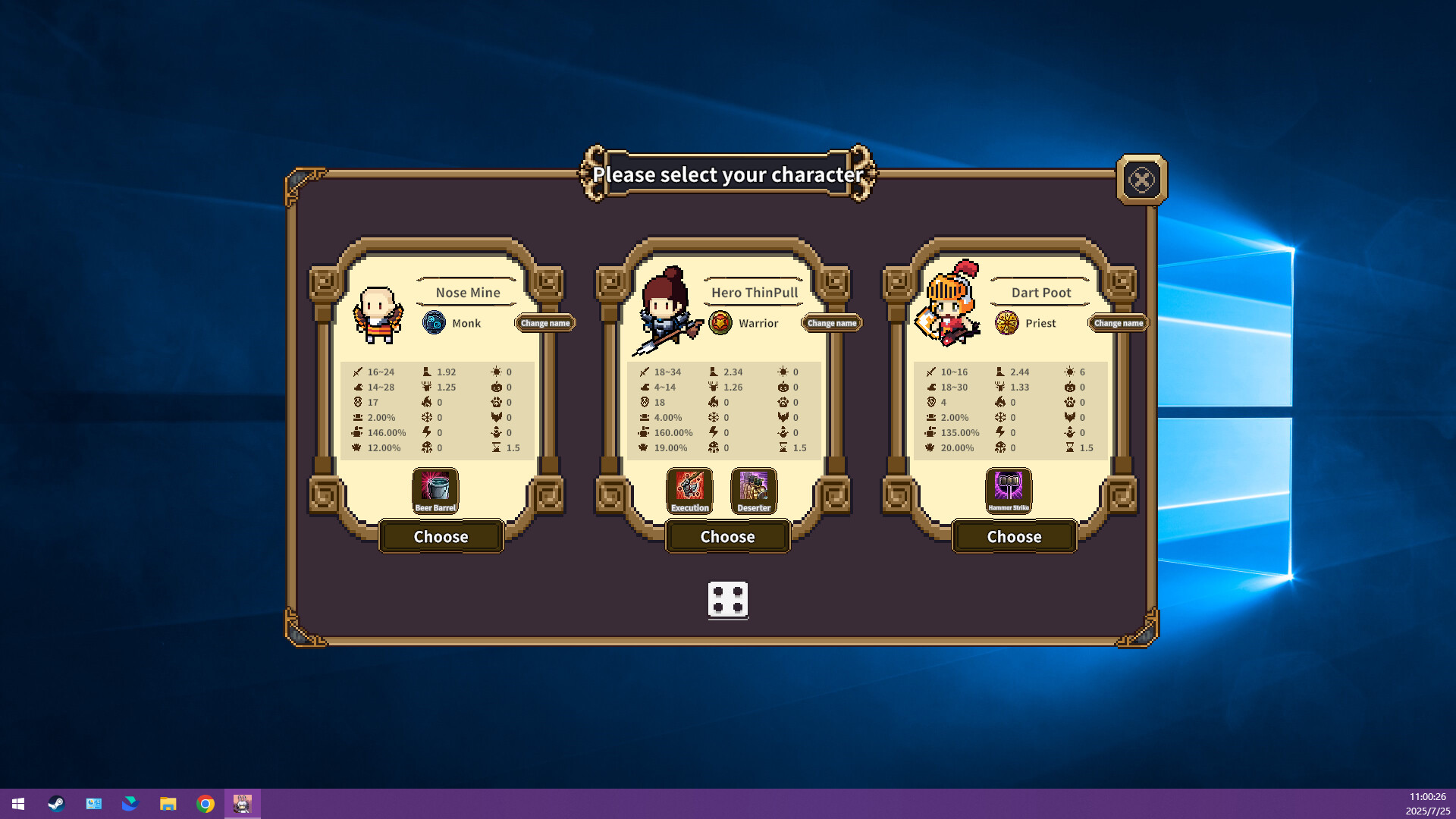
New parties start from a choice of three randomly generated heroes with their own stat spreads and starter skill.Image: Lee_Studio via Steam -
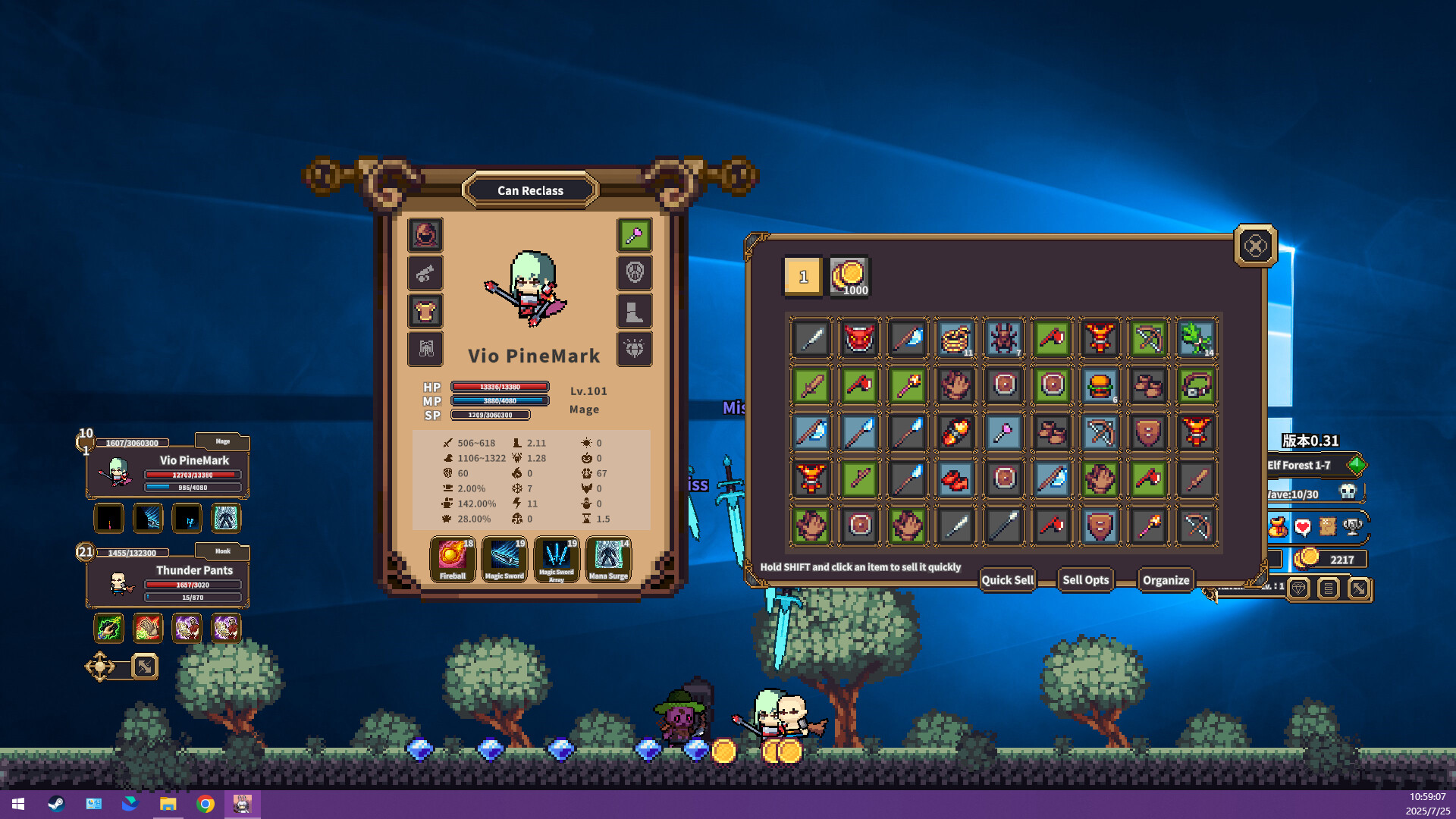
Gear accumulates fast, and the inventory grid fills with drops that need sorting or selling within a few runs.Image: Lee_Studio via Steam -
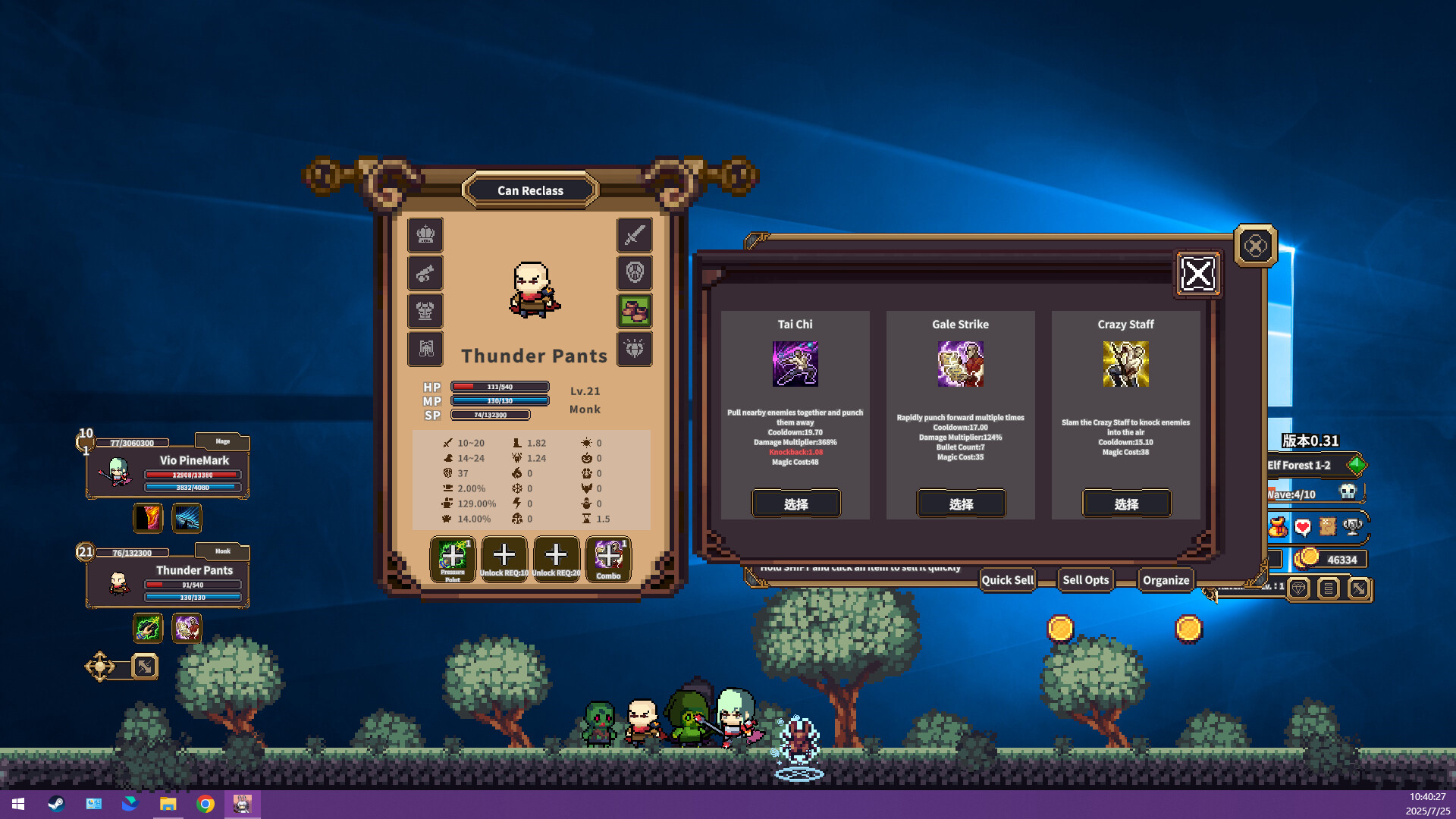
Skill and ability text is mostly in English, but some interface elements still surface untranslated strings during play.Image: Lee_Studio via Steam