
Game review
CatBun Idle
6.4 / 10
- Developer
- Lone Pixel Studios
- Publisher
- Lone Pixel Studios
- Released
- 29 May 2026
- Platforms
- PC
- Genre
- Idle RPG
Tap, idle, prestige, repeat — exactly as advertised
CatBun Idle doesn't pretend to be anything other than what its store page promises: a pixel-art idle RPG built around recruiting an ever-growing crew of catgirls, bunny girls, wolves, and eventually shadow cats and void fairies, then sending them to grind through 40 hand-crafted areas whether or not anyone is actually watching. Captured screenshots confirm the shape of a session in practice — a companion panel on the right tracking individual hero levels and DPS contributions, a boss fight playing out against a named enemy ("Dark Slime," health bar ticking down in the millions) in the main view, and four active skill buttons (Cat Frenzy, Rally, Gold Rush, Catball) along the bottom edge. It's a familiar tap-and-idle structure, executed cleanly rather than reinvented.
Five playable heroes anchor the run, each with a distinct passive — Matsu hits hard from the start, Miya boosts tap damage, Riku amplifies auto DPS, Cleo showers gold, and Kaos extends skill duration — and a screenshot shows the game mid-way through unlocking that hero-switching mechanic via a "New Hero Unlocked" prompt, confirming it's introduced gradually rather than dumped on the player at once. Switching heroes freely once unlocked is a reasonable way to let players lean into whichever passive suits their current bottleneck, whether that's raw tap damage or background DPS.
A genuinely deep companion and prestige structure
Where CatBun Idle puts its real design effort is in the companion roster and the prestige loop built on top of it. Forty companions are split across four tiers — catgirls and bunnies at the entry level, wolves and kitsune in the second tier, shadow cats and crystal bunnies in the third, void fairies and chaos heralds at the top — with each companion gaining meaningful upgrades at levels 10, 25, and 50, and 25 documented pair-synergy bonuses that multiply the whole crew's output when both companions in a pairing are sufficiently levelled. A companion screenshot shows this system mid-session: named companions like Mochi, Riko, and Sora each listed with their own DPS contribution, percentage share of total output, and upgrade cost, which is a genuinely useful piece of feedback most idle games leave the player to guess at.
Beating area 40 triggers a Prestige reset that trades accumulated progress for Stardust, spent across 16 permanent shop upgrades, with 20 additional Prestige Talent milestones unlocking automatically as the prestige count climbs — a screenshot of the Shop tab shows this talent list explicitly, numbered and described one by one (gold bonuses, click damage, offline progress cap increases, skill cooldown reduction), which is a level of transparency about what a prestige currency actually buys that plenty of incremental games obscure behind vague multiplier text. At prestige 10, a second layer called Ascension opens with its own Moondust currency and shop, giving the loop a second growth curve once the first prestige cycle stops feeling meaningful — a sensible way to extend a genre that can otherwise flatten out once the first reset mechanic is fully explored.
Early, thin, and openly still settling into balance
The review sample is extremely small — three total reviews, two positive and one negative — which means no single opinion should carry too much weight, but the negative review is specific enough to be worth repeating rather than dismissed: it states plainly that the game is "way to unbalanced," and points out that the developer's own update logs list a string of balancing passes that, in that reviewer's assessment, still haven't settled the numbers. One of the positive reviews independently echoes the same read, describing the game as "clearly in its early stages of development" and "okay" while noting it needs time to mature. Between a three-review sample split roughly two-to-one positive and a recurring "still balancing" thread running through both the positive and negative comments, the honest read is that CatBun Idle is functional and enjoyable to the people who've played it, but not yet a fully tuned experience — a fair characterization for a solo-developer release five months old at review time.
No IAP, no ads, and an honest offline system
CatBun Idle is a premium, one-time purchase title with no microtransactions, no advertising, and no pay-to-win systems of any kind, which the store page states directly and which is corroborated by the absence of any purchase-related complaints across the (admittedly tiny) review sample. Offline gold accumulates for up to 8 hours by default, extendable through Prestige upgrades, with a welcome-back bonus on return — a standard but honest implementation of the genre's core promise that progress isn't lost while the game sits in the background. Additional structure comes from three daily missions refreshing at midnight UTC, a weekly challenge mode, a dedicated Boss Rush mode running all 40 bosses back to back, and an Endless mode for after the main 40-area campaign is cleared, plus 30 achievements tied to actual gameplay milestones rather than filler completion flags.
Made by one person, according to the closing line of its own store description, CatBun Idle is a competently built idle RPG that leans on genuine systemic depth — the synergy pairs, the two-tier prestige/ascension structure, the per-companion DPS breakdown — to stand out in a crowded genre, even if the tiny and split early review sample suggests the underlying number-tuning hasn't fully caught up to the ambition of those systems yet. English is currently the only supported language, which will limit its reach relative to competitors offering broader localisation, and Steam Deck compatibility with built-in touch controls is a welcome, explicitly stated detail for anyone hoping to run this kind of idle loop away from a desktop. At a modest one-time price with no monetisation traps to navigate, it's a reasonable pickup for genre fans willing to accept some early rough edges.
Screenshots
-
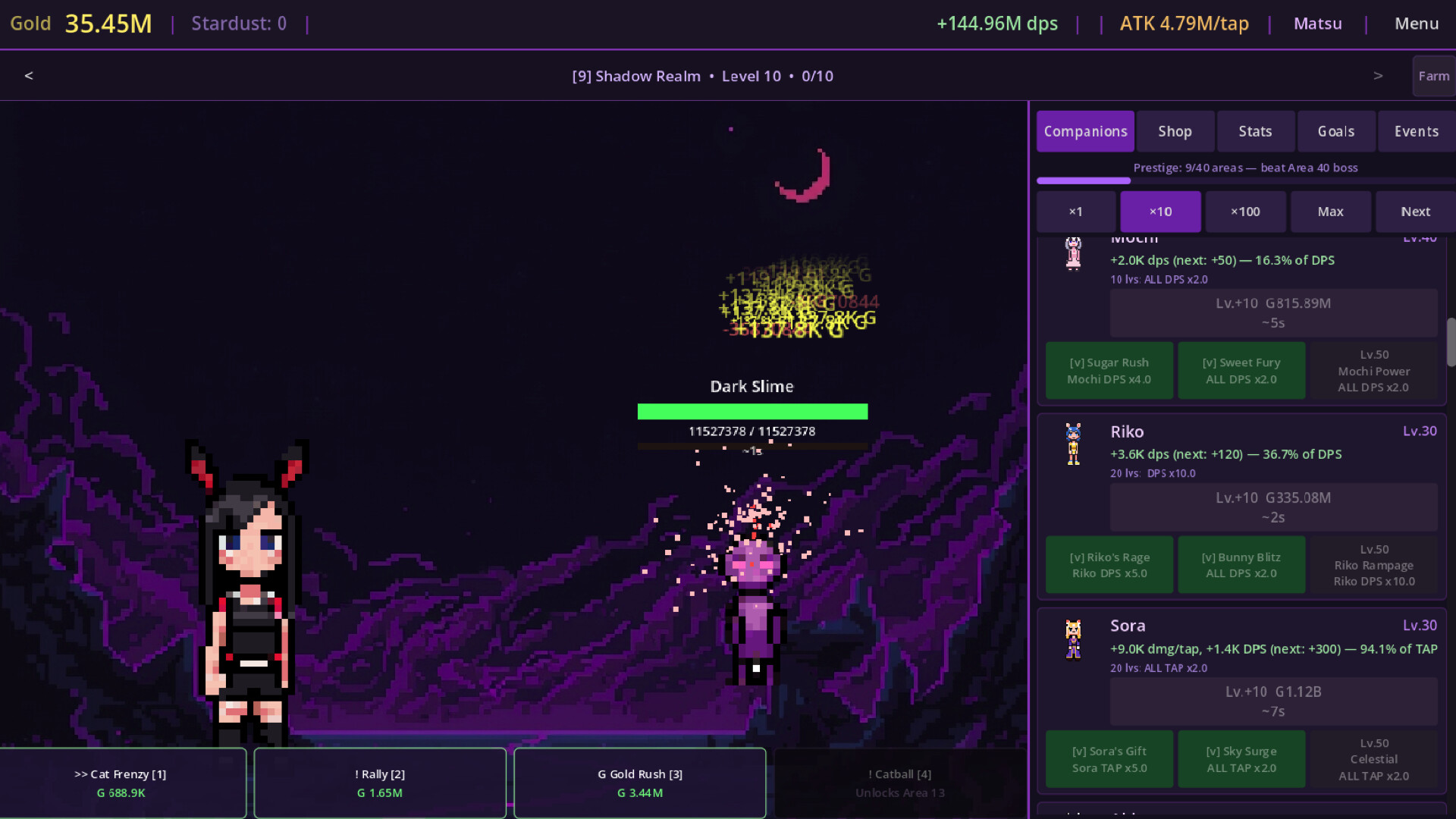
The Companions tab breaks down each crew member's DPS share and upgrade cost in real time.Image: Lone Pixel Studios via Steam -
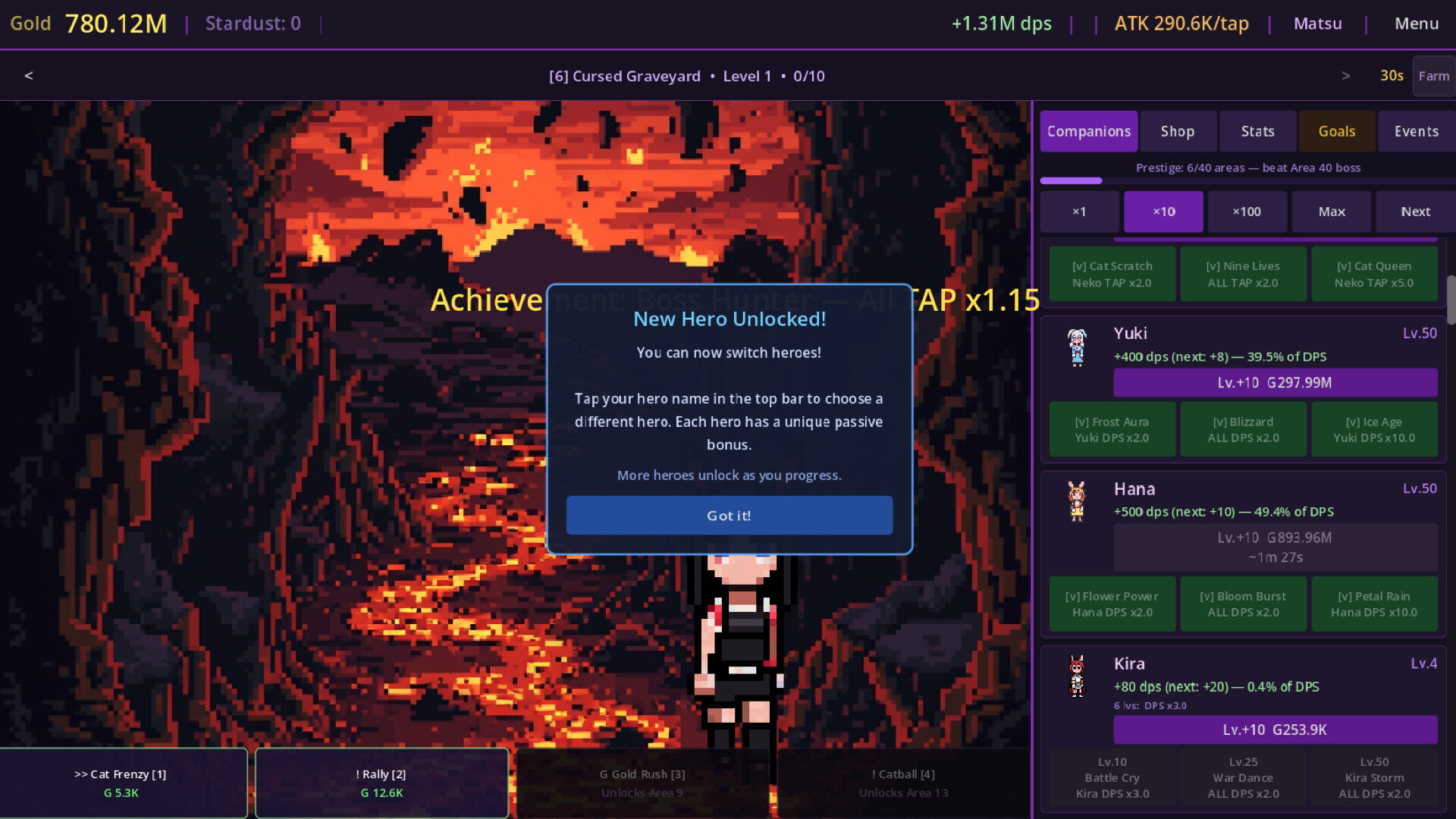
Hero-switching unlocks gradually rather than being available from the start.Image: Lone Pixel Studios via Steam -
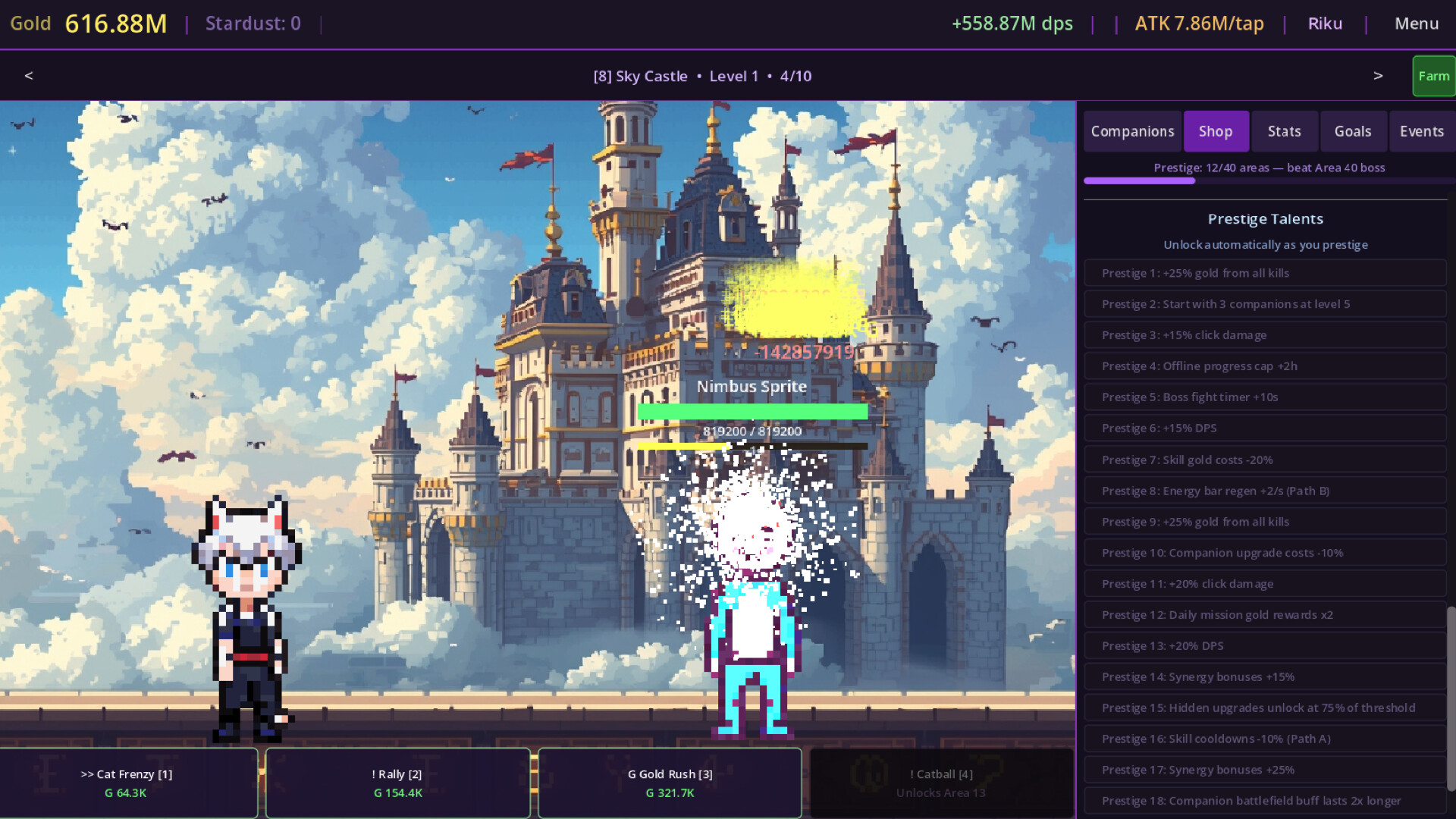
Prestige Talents are listed individually rather than hidden behind vague multiplier text.Image: Lone Pixel Studios via Steam