Game review
No-brainer Heroes 挂机吧!勇者
6.5 / 10
- Developer
- 小团团工作室
- Publisher
- 小团团工作室
- Released
- 29 November 2019
- Platforms
- Windows, macOS
- Genre
- Adventure, RPG, Simulation, Strategy
- Monetisation
- One-time purchase only; no DLC, no in-app-purchase Steamworks category, no currency shop, gacha panel or ad prompt visible in any of the eight official Steam screenshots
- Players
- Single-player only — Steamworks categories list Single-player, Steam Achievements, Steam Trading Cards, Steam Cloud and Family Sharing, with no multiplayer or co-op flag
The short version
No-brainer Heroes is a cheap, generous, genuinely well-liked semi-idle party RPG for the large majority of the people who buy it — 72.8% positive across 1,467 lifetime reviews, "Mostly Positive" on Steam's own scale, and that number holds up in Japanese (75.8%) and both flavours of Chinese (73.8% and 70.4%), which together make up more than nine in ten of the game's reviewers. It does not hold up in English: a much smaller, 55-review sample sits at 52.7%, squarely "Mixed," and reading every one of those reviews turns up a specific, dated, recurring reason — a crash within about a minute of launch that English-speaking buyers have been reporting since 2020, that the developer has not addressed since its last patch note in August 2020, and that a buyer in 2025 was still describing as "always crashes within a minute of opening" on a game they said they used to love.
Biggest strengths
- A one-time NZ$12.39 purchase (routinely discounted to around NZ$3.71) with no DLC, no currency shop and nothing resembling a monetisation prompt anywhere in the official screenshots
- Managing several adventuring parties at once, rather than the single team most semi-idle RPGs give you, is the game's clearest point of difference from its own most obvious comparison, Dragon Cliff
- The Steam review split (72.8% lifetime, "Mostly Positive") is not an outlier — Japanese, Simplified Chinese and Traditional Chinese buyers independently land within a few points of each other, all comfortably positive
Biggest weaknesses
- A crash roughly a minute after launch, reported by English-speaking buyers in every year from 2020 to 2025, with the developer's last version update dated August 2020 and last announcement of any kind dated February 2021 — this is a game nobody is currently fixing
- English localisation is functional at best and, in a recurring complaint dating back to launch, "barely translated" at worst — several core stats and mechanics go unexplained in the English build
- The English-language review sample (55 reviews, "Mixed" at 52.7%) sits well below the 72.8% lifetime figure the store badge shows first, and it is worth knowing which number describes the version you are about to buy
Who it's for: Idle-RPG fans who liked Dragon Cliff and want a cheap, deeply-discounted second helping with multiple parties to manage instead of one — and who are prepared to test the game thoroughly inside Steam's two-hour refund window before trusting it to survive on their specific hardware.
Our recommendation: Worth NZ$3.71 at its usual discount if it runs cleanly for you, and a legitimate pass if it doesn't, because there is nobody left to file a bug report with. Launch it, let it idle for ten minutes, and only then commit past the refund window.
6.5 / 10
A second helping of the semi-idle formula, with more parties to juggle
No-brainer Heroes asks you to run a town, recruit heroes into adventuring parties, send them off to grind stages and boss fights, and periodically check in to reassign gear, spend currency and push further down a very long content ladder — the "semi-idle RPG" shape that the genre's biggest reference point, 2018's Dragon Cliff, established the year before this game shipped. That comparison is not something this review is inventing to be clever: eight of the 55 English-language Steam reviews for No-brainer Heroes name Dragon Cliff explicitly, some to praise this game as a worthy successor ("if you played dragon cliff this game is anotherrrrrrr GREAT AMAZING GAME"), others to mark it down against the original ("It's far less fun than Dragon Cliff and some design choices make certain classes feel very weak"). Dragon Cliff is an unrelated game from a different studio, Meta Interaction, so there is no shared codebase or continuity here — just a genre where one early hit set the yardstick every later entry gets measured against, whether its own developer likes that or not.
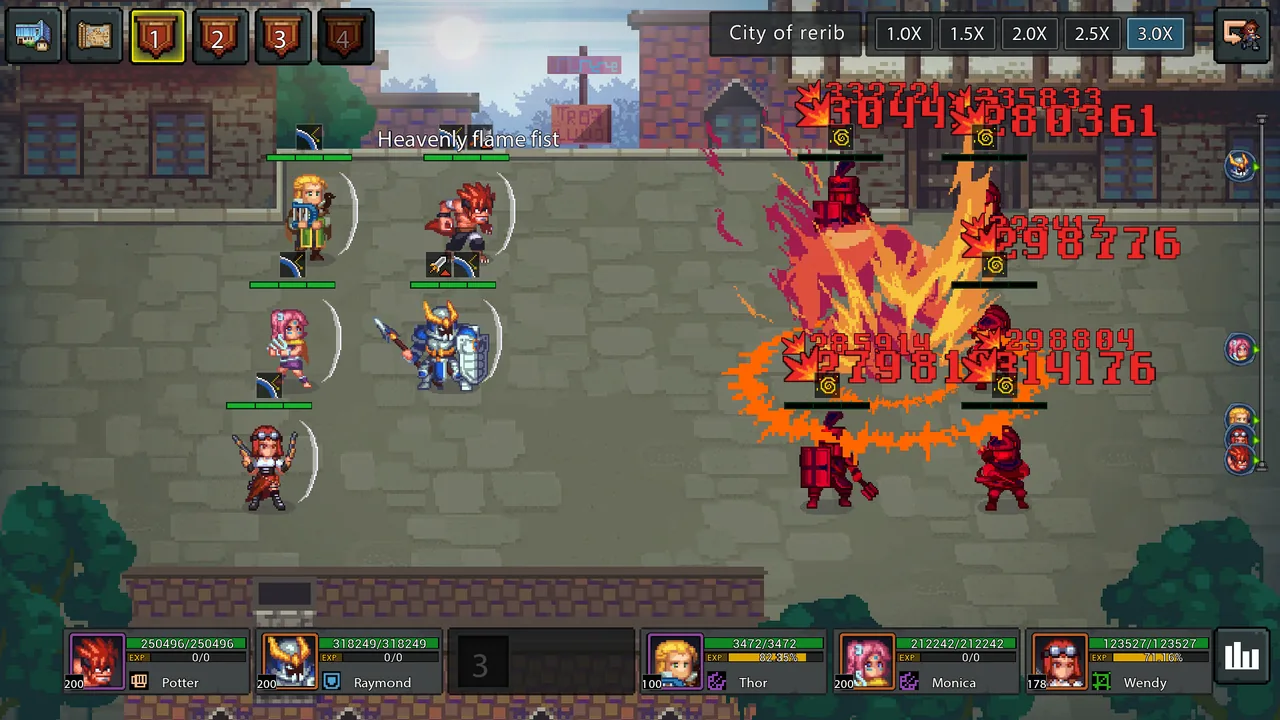
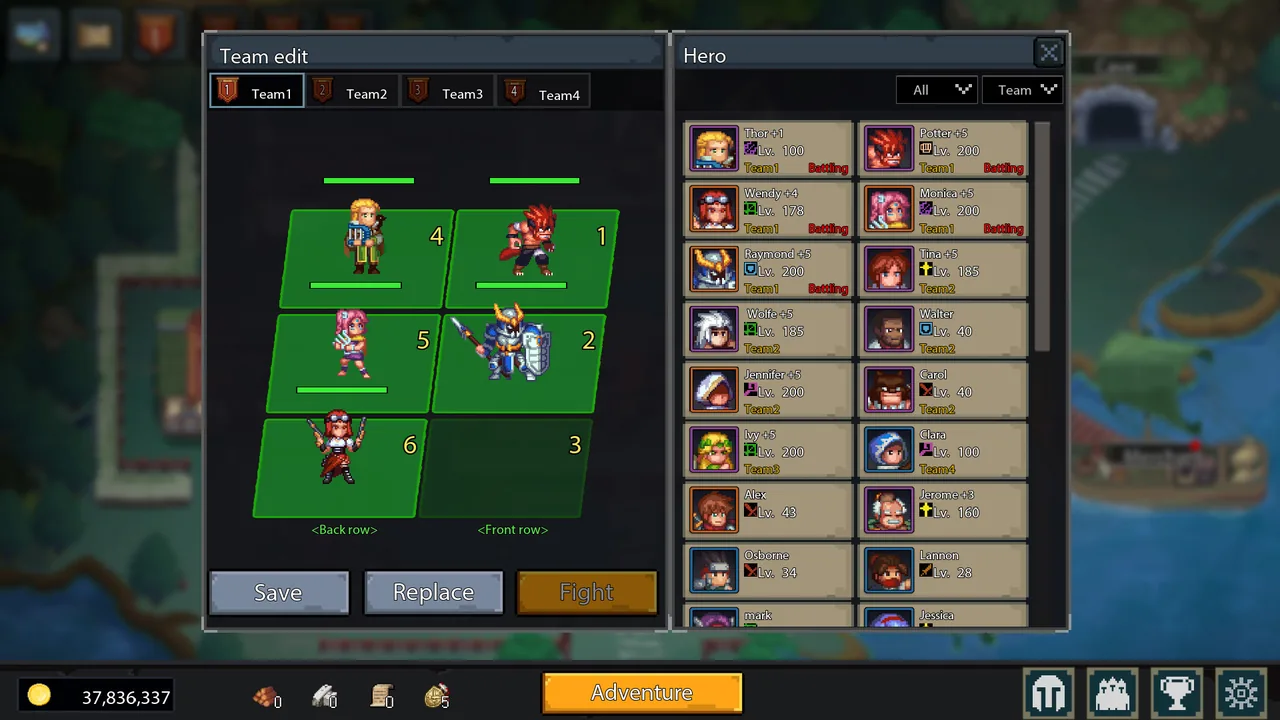
No-brainer Heroes' actual point of difference is management scale: instead of the one team most semi-idle RPGs hand you, this lets you run several adventuring parties in parallel, each progressing its own stage ladder while you split attention between them. It is a genuinely distinctive twist on the formula, and it is the reason the reviewers who like this game tend to like it a lot — "I don't get the bad reviews. This is a very decent timer-waster... and I actually even like No-brainer Heroes better" is a representative five-vote English review, and it is backed by the wider numbers, not just cherry-picked quotes.
What the score actually says, once you split it by language
Steam shows this game at 72.8% positive — 1,068 of 1,467 lifetime reviews, "Mostly Positive" on the platform's own scale. That is a real, well-supported number, and it is worth stating plainly rather than waving away: it is not review-bombed, not a fossil of an old controversy, and not concentrated in any one time period. But it is also, once you pull the full language breakdown, a number that measures a specific and quite narrow audience. Simplified Chinese reviews make up 1,204 of the 1,467 total — 82% on their own — and sit at 73.8% positive. Traditional Chinese adds another 152 at 70.4%. Between them, Chinese-language reviews account for 92.4% of everything this game has ever received, and their sentiment is what the front-page badge is actually reporting. Japanese reviews, a much smaller sample of 33, track close behind at 75.8%.
English reviews are a different story, and a much smaller one: 55 lifetime reviews, 29 positive and 26 negative, 52.7% — squarely inside Steam's own "Mixed" bracket, twenty points below the headline figure. That is a thin sample by the standards of a 1,400-plus-review game, and this review does not claim it as some hidden truer verdict that overrides the majority-language reading — a game two dominant markets like this much is not secretly bad. What a 55-review sample this small does let you do is read every single one of them, which this review did, and every one carries a playtime_forever and a timestamp_created you can check individually rather than trust in aggregate. That reading turns up something specific enough to explain the gap on its own.
The crash that never got fixed
Twelve of those 55 English reviews mention crashing, and they are not clustered at launch the way a typical day-one stability complaint would be — they run 2020, 2021, 2022 (twice), 2023 (three times), 2024 (four times) and 2025, describing the same failure the entire way: the game locking up or closing within roughly a minute of opening, most often reported on newer or higher-end PCs. "100% broken and apparently have been for 2+ years, crashes with a 100% chance within 1 minute so its completely unplayable," reads one 2024 review. A 2025 review is the sharpest version of the pattern: "loved this game, but its completely broken now. always crashes within a minute of opening, impossible to play. Game is abandoned as well so no hope of a fix."
That last claim is checkable, and it holds up. No-brainer Heroes' own Steam news feed shows a version update dated 15 August 2020, and after that, one final post — a "Chinese New Year" greeting on 6 February 2021 — and nothing since. That is a gap of more than five years with no patch, no acknowledgement of the crash reports, and no public roadmap. This review cannot diagnose what is actually going wrong on the affected machines — a review corpus cannot audit a binary, and the complaint is specific enough (a near-instant crash, apparently hardware-correlated) that it reads as a real, technical, unresolved bug rather than exaggeration. What can be said with confidence is that it is not a one-off: it recurs across five separate years from otherwise unconnected reviewers, and as of the newest English review in the corpus — dated 6 August 2026, four days before this review was checked — nobody has reported it fixed.
Interface and translation
The other consistent complaint in the English corpus is the localisation itself, which several reviewers call rough enough to actively work against understanding the game's systems: "Barely translated garbage" is one blunt three-word review; a more detailed one elaborates that "there are tons of unexplained mechanics... and serious balance issues," singling out a stat called Resistance whose actual function — status resistance, general damage reduction or something else — is never made clear anywhere in the English text. This is a smaller, more survivable problem than the crash bug, and several reviewers explicitly say the translation is "as bad as expected but... still good enough to understand everything," but it compounds the same underlying issue: a developer who is not around to patch clarity into the text any more than they are around to patch the crash out of the engine.
Progression, and the wall a lot of players hit
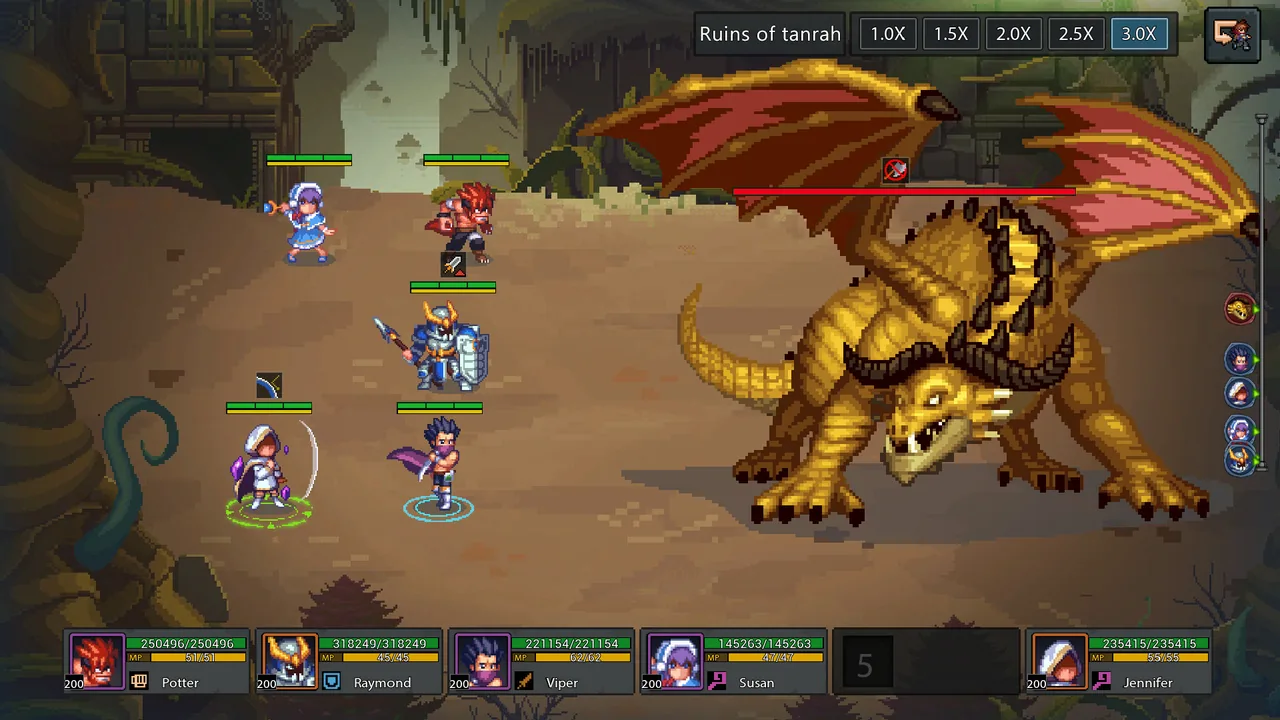
The genre's usual promise — recruit, gear up, push the next stage, repeat — holds for a long while here, and the achievement data shows it. No-brainer Heroes ships 92 Steam achievements, and 18 of them track kill-count tiers against six named boss dragons (Blue, Red, Green, Bone, Golden and Black), each with three difficulty tiers. The first tier of each dragon sits anywhere from roughly 15% to 56% of the tracked player base, which is a normal early-to-mid-game spread. By the third tier of the same dragons, every one collapses into single digits — 4.1% to 9.0%. That matches what several reviewers describe directly and specifically: "After three full days of leaving this game running in the background I STILL can't defeat the blue dragon. And it's not even close. Party wipe before half his hit points are gone," and, more tersely, "I like it but enjoy being suck on the blue dragon." Whether that is a deliberate difficulty wall or an undertuned boss the developer never came back to rebalance is the same open question as the crash bug — nobody is answering it either way — but the shape of the data backs up what the reviewers who reached that point are saying.
Monetisation and value
On money, there is very little to hold against this game. It is a straightforward one-time purchase — NZ$12.39, checked 10 August 2026 — with no DLC listed, no in-app-purchase Steamworks category, and nothing resembling a currency shop, a gacha mechanic or an ad prompt visible anywhere across the eight official screenshots. It is also, like most catalogue titles from a small studio, routinely discounted hard: it was sitting at 70% off, NZ$3.71, at the time of this review. For a genre that frequently hides its real cost behind energy systems and pay-to-skip timers, a semi-idle RPG with none of that is worth crediting plainly, and this review does — the developer's silence since 2021 is a real problem for the game's stability, but it has not, at least, curdled into the kind of live-service monetisation churn this library sees far more often on games that stay actively maintained.
Final verdict
No-brainer Heroes earns its 72.8% lifetime score honestly, for the large majority of buyers who mostly speak Chinese or Japanese and who are, on the numbers, not running into the specific problem this review spent most of its space on. It is a cheap, generous, distinctive-enough take on the semi-idle party RPG that Dragon Cliff's fans invented an audience for, and it asks almost nothing of your wallet beyond the initial purchase. Set against that: a documented, five-year, unresolved crash bug that a meaningful and recurring slice of English-speaking buyers report, a developer who has not posted anything at all since February 2021, rough English localisation, and a late-game boss wall that the achievement data confirms is real. None of that erases what this game does well for the players it works for. It does mean this is not a confident, no-caveats recommendation — it is a NZ$3.71 gamble with genuinely good odds and a known, specific, unfixed failure mode, and this review would rather tell you exactly what that failure mode is than pretend the badge alone settles the question.
Pros and cons
Pros
- A one-time NZ$12.39 purchase (routinely discounted to around NZ$3.71) with no DLC, no currency shop and nothing resembling a monetisation prompt anywhere in the official screenshots
- Managing several adventuring parties at once, rather than the single team most semi-idle RPGs give you, is the game's clearest point of difference from its own most obvious comparison, Dragon Cliff
- The Steam review split (72.8% lifetime, "Mostly Positive") is not an outlier — Japanese, Simplified Chinese and Traditional Chinese buyers independently land within a few points of each other, all comfortably positive
- Free of the usual idle-genre traps: no energy system, no pay-to-skip timer, no battle pass, nothing that pressures a purchase beyond the initial one
Cons
- A crash roughly a minute after launch, reported by English-speaking buyers in every year from 2020 to 2025, with the developer's last version update dated August 2020 and last announcement of any kind dated February 2021 — this is a game nobody is currently fixing
- English localisation is functional at best and, in a recurring complaint dating back to launch, "barely translated" at worst — several core stats and mechanics go unexplained in the English build
- The English-language review sample (55 reviews, "Mixed" at 52.7%) sits well below the 72.8% lifetime figure the store badge shows first, and it is worth knowing which number describes the version you are about to buy
- Global achievement data shows a hard wall partway through the boss-dragon ladder, with tiered kill-count achievements falling from the mid-50s percent down into single digits — several reviewers describe getting permanently stuck on one specific boss, the Blue Dragon
Screenshots
-
No-brainer Heroes 挂机吧!勇者Image: 小团团工作室 via Steam -
No-brainer Heroes 挂机吧!勇者Image: 小团团工作室 via Steam -
No-brainer Heroes 挂机吧!勇者Image: 小团团工作室 via Steam -
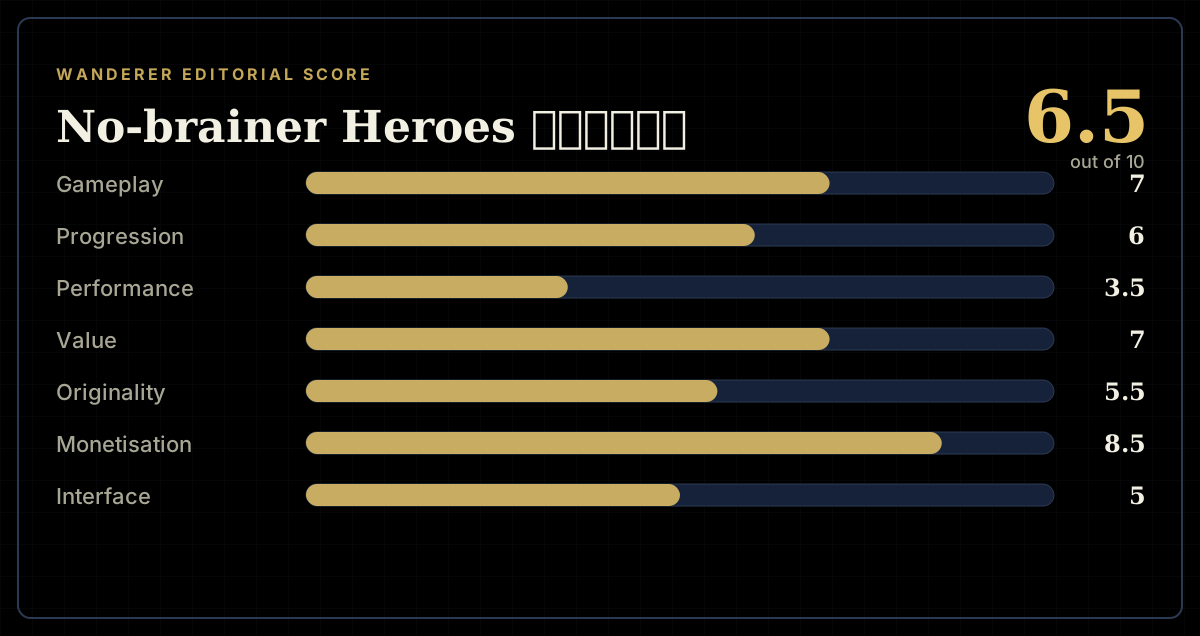
How the review scores each part of the gameWanderer Editorial -
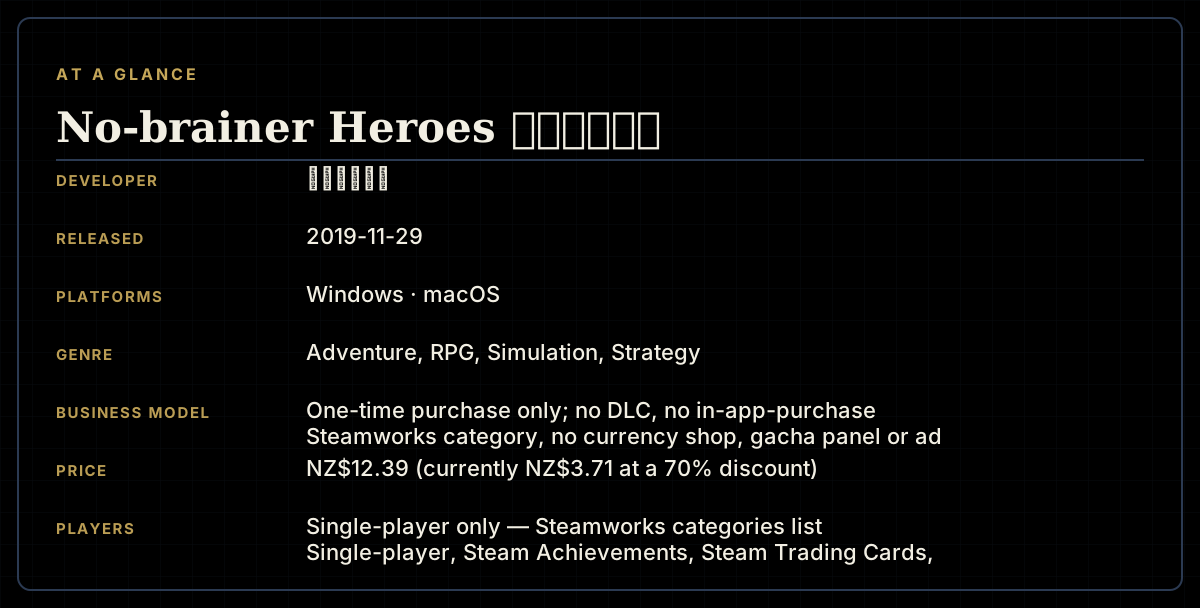
The game at a glanceWanderer Editorial -
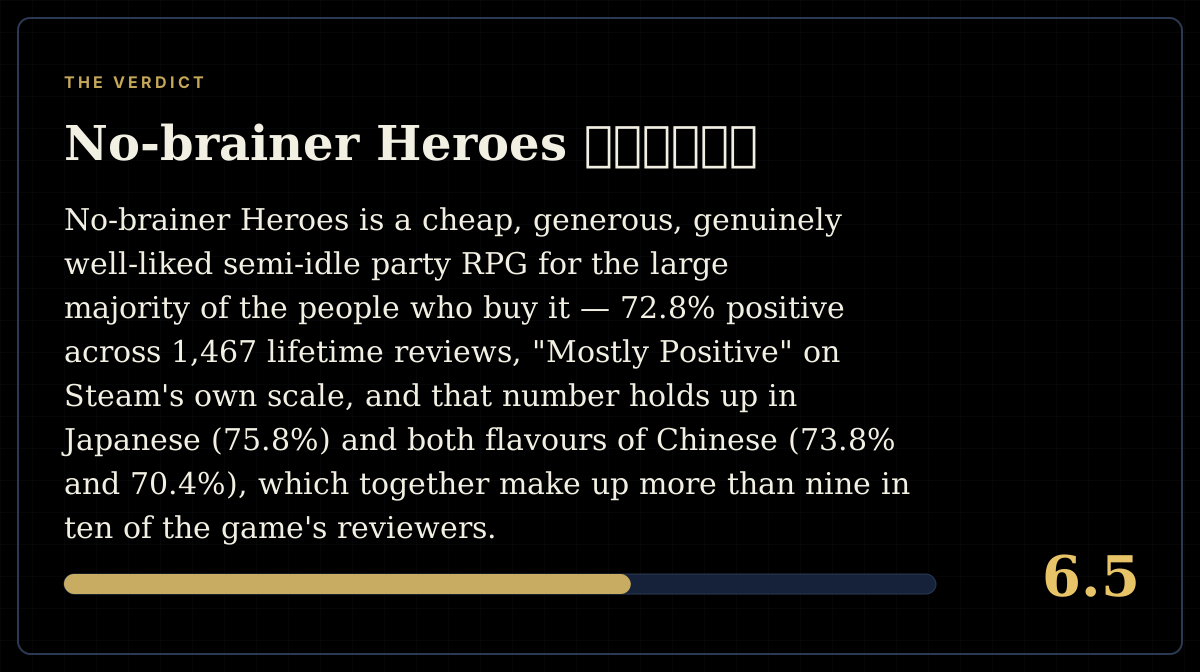
The short versionWanderer Editorial