Game review
Mob Factory
6.5 / 10
- Developer
- LiterallyEveryone Games
- Publisher
- LiterallyEveryone Games, IndieArk
- Released
- 9 November 2023
- Platforms
- Windows
- Genre
- Automation Tower Defense
- Monetisation
- One-time premium purchase; no ads, DLC or in-game store found
- Players
- Single-player only; no online, co-op or PvP modes
The short version
Mob Factory takes the factory-automation genre's core verb — extract a resource, process it, automate the chain — and replaces mining with killing: monsters spawn on a timer and drop specific items on death, which get funneled through conveyors into furnaces and assemblers while towers defend the pipeline. Reviewers consistently call this a genuinely fresh twist on a well-worn formula, one that gives Satisfactory and Dyson Sphere Program fans an approachable, 8-to-15-hour campaign with an actual ending rather than an endless, ever-expanding factory.
At launch, a large share of reviewers described the game as feeling more like a well-executed demo than a finished $22 product: constrained, disconnected island building space, a tower defense layer some called "window dressing" since wave difficulty never escalated, clunky assembler controls with no way to set input and output sides, and a flat, replay-value-free ending. Real, substantive updates since — a manual output-direction toggle, major performance work, and a full New Game+ mode as recently as June 2025 — have directly addressed several of these complaints, though the fundamental space constraints reviewers cite most often remain.
Biggest strengths
- A genuinely fresh reinterpretation of the automation genre's core loop, replacing resource mining with farming monster drops, which reviewers consistently single out as the game's strongest and most distinctive idea
- An actual, complete campaign with a real ending, a rarity reviewers note most factory games avoid in favour of endless expansion
- Real, substantive post-launch development: a manual assembler output-direction toggle and major performance improvements shipped through 2024, and a full New Game+ mode with varied enemy combinations and quality-of-life additions arrived in June 2025
Biggest weaknesses
- Building space is constrained to disconnected islands rather than one contiguous map, a limitation reviewers cite more often than any other as working against the genre's usual creative freedom
- The tower defense layer is described by multiple reviewers as underdeveloped, since enemy waves don't meaningfully escalate once a working defensive setup is built, leaving turrets functioning more as reskinned extractors than a genuine ongoing challenge
- At least one specific dead-end was reported at launch — an item with no discovered use in the game's systems — consistent with a broader launch-era sense that some content was left unfinished
Who it's for: Factory-automation fans wanting a shorter, more approachable entry than genre giants like Satisfactory, especially those drawn to its monster-farming hook. Less suited to anyone wanting a traditional, escalating tower-defense challenge or open-ended sandbox building.
Our recommendation: A genuinely inventive concept worth trying on a sale, especially now that several of its launch-era rough edges have been patched — go in expecting a finite, focused campaign rather than an open sandbox, and check whether the New Game+ mode has grown the content enough to justify full price for you specifically.
6.5 / 10
Factory-automation games live and die on their central resource loop, and Mob Factory finds a genuinely clever twist on it: instead of mining ore from the ground, monsters spawn on a timer and drop specific items when killed, which get funneled through conveyors into furnaces and assemblers while towers hold the line against the enemies supplying that pipeline. Reviewers across the board credit this as a real, fresh idea rather than a reskin, and it earns the game comparisons to Satisfactory and Dyson Sphere Program from players looking for something shorter and more approachable than those genre giants demand.
Killing instead of mining, and a real ending
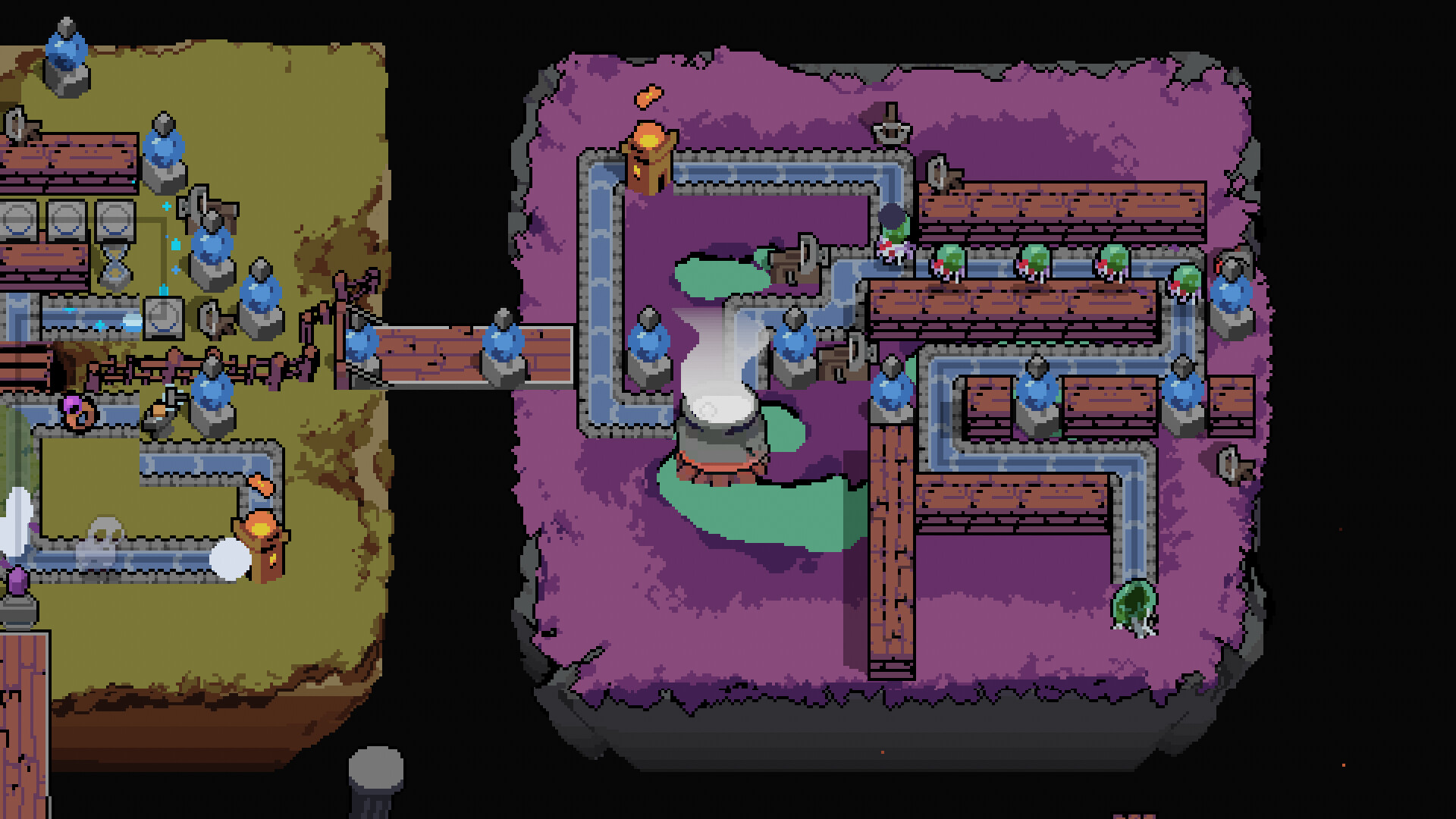
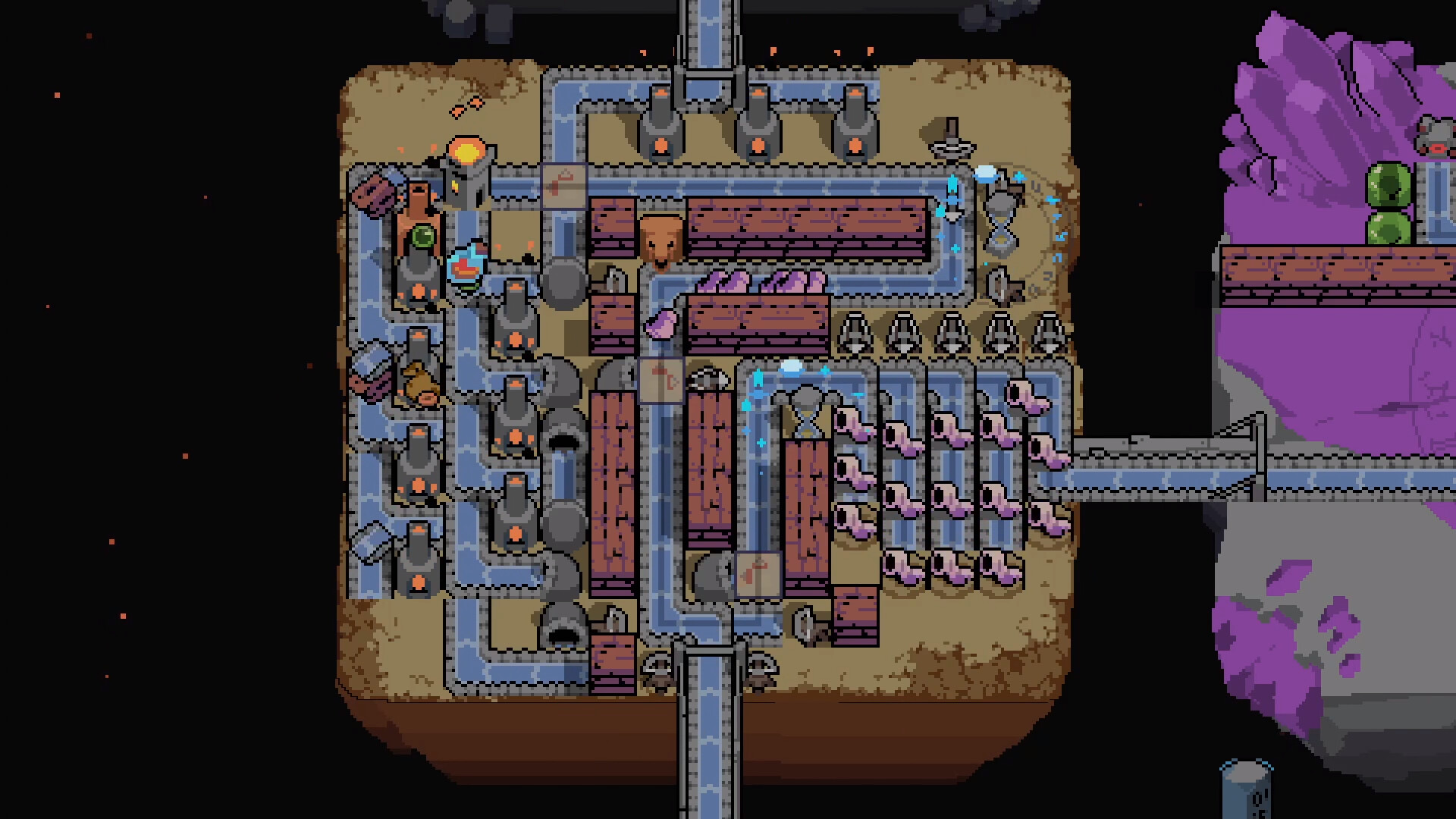
The core loop plays out as advertised: different enemy types require meaningfully different farming setups, turning the usual factory-game puzzle of "route this resource efficiently" into something with an active combat layer woven through it. Reviewers describe genuine satisfaction in solving the logistics of getting a specific monster's drops from a spawn point to the right furnace, especially once liquids and more complex crafting chains enter the picture. One consistent point of praise stands out from the wider genre: Mob Factory has an actual campaign with a real ending, typically taking 8 to 15 hours depending on pace, rather than the open-ended, ever-expanding factory most games in this space are built around. For players who want the genre's satisfaction without an indefinite time commitment, that's a genuinely distinguishing feature.
Launch-era complaints, largely about space and polish
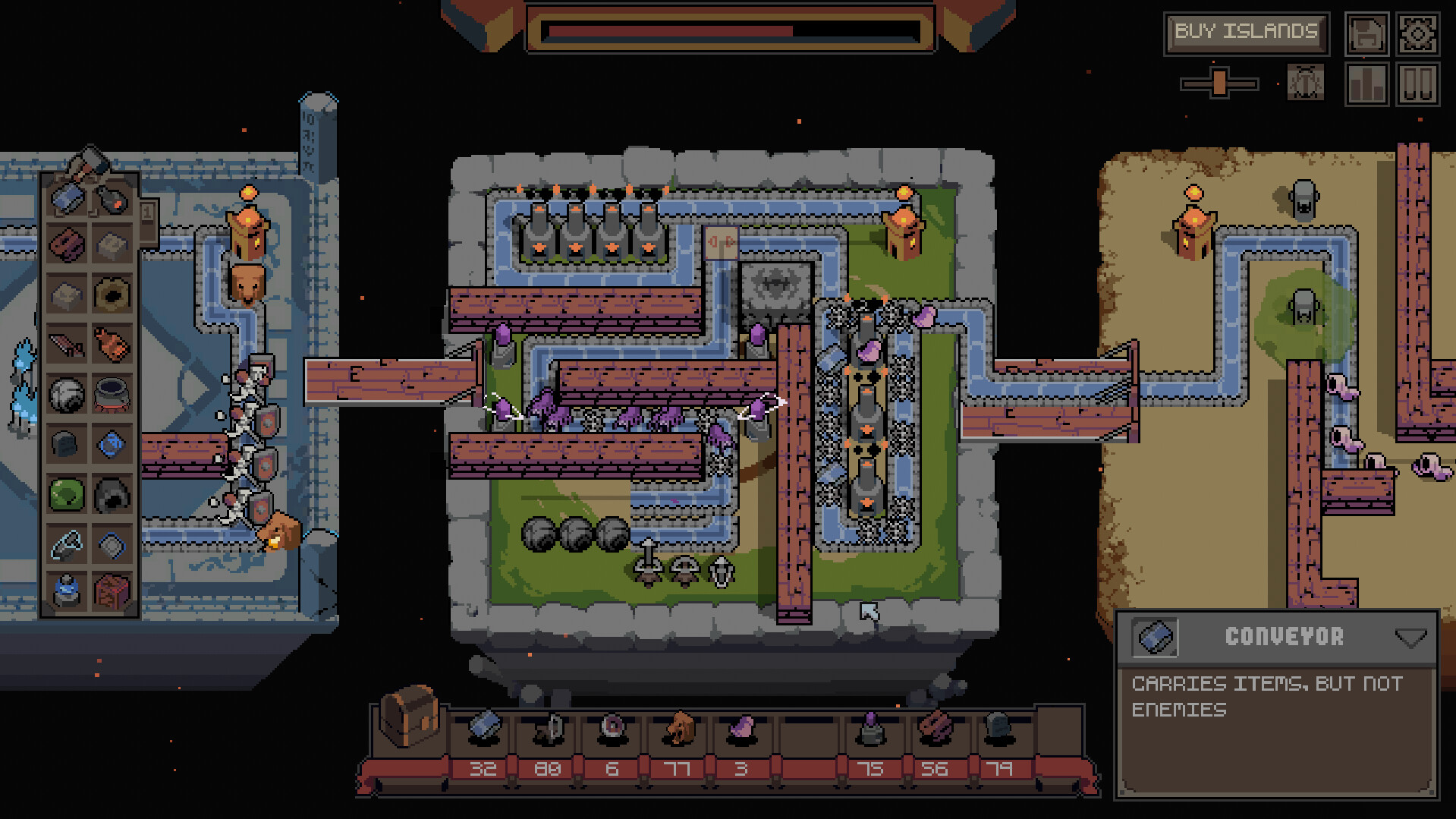
The most consistent criticism at launch concerned constraints on the player's own creativity. Building happens across disconnected islands rather than one contiguous map, and reviewers repeatedly cite this as working directly against the genre's usual appeal — the freedom to expand and redesign a factory however a player wants. A related complaint concerns the tower defense half of the pitch: several reviewers describe enemy waves as failing to escalate once an effective defensive setup is established, making turrets function more like reskinned resource extractors than a genuine ongoing challenge, which undercuts the "tower defense" half of the game's own framing. Interface friction compounded this at launch — reviewers specifically called out the inability to manually set an assembler's input and output sides, and having to open a placed crafter just to check what it could make.
Real fixes, arriving after the loudest complaints
Set against that launch-era picture, this review's research into the game's actual patch history shows substantive, direct responses to several of the complaints above. A February 2024 update added a manual toggle for choosing assembler output direction — precisely the control reviewers had been asking for. A November 2024 update delivered significant performance improvements for high mob and resource counts, additional potion upgrade tiers, and interface clarity work. Most significantly, a New Game+ mode arrived in June 2025, adding varied enemy-drop combinations across runs, the ability to reconfigure land plots into any previously-seen island layout, a new "loot collector" building, and a fast-forward option — directly answering the "no replay value" complaint that dominated reviews written closer to launch. None of this expands the base island layout constraint reviewers cite most often, but it meaningfully narrows the gap between what launch reviewers experienced and what the game offers today.
AFK time as an unintended second act
A specific pattern worth naming separately concerns pacing rather than mechanics: several reviewers describe reaching a point roughly midway through where progression slows enough that the practical strategy becomes leaving the game running unattended for extended periods to stockpile resources before continuing — one reviewer explicitly went in expecting an active factory-builder and got what felt more like "an idle incremental AFK game" instead. That's a legitimate, double-edged observation: it confirms the automation loop genuinely does scratch an incremental-game itch once it's running, as more than one reviewer notes approvingly elsewhere, but several of the same reviewers frame the specific amount of AFK waiting required to progress as padding rather than a deliberate, well-tuned idle mechanic. Anyone drawn to this review specifically for its idle-adjacent qualities should read that as a genuine point in its favour; anyone expecting a consistently hands-on factory builder should treat it as a fair warning.
A dead-end item, and what it says about launch polish
One specific, small detail is worth citing as representative of the broader launch-polish complaint: at least one reviewer reports an "Orange Potion" item with no discovered use anywhere in the game's crafting or upgrade systems at the time of writing. A single unused item isn't significant on its own, but it's a concrete, checkable example of the kind of loose thread reviewers point to when describing the initial release as feeling like a demo rather than a finished product — a specific instance rather than a vague impression. The subsequent patches detailing "new potion upgrades" and "raised requirements for all upgrades" suggest the potion system specifically received developer attention after launch, though this review can't confirm whether that particular item was addressed by name.
Where it lands
Mob Factory earns real credit for a distinctive, well-executed twist on the automation genre that neither Satisfactory nor Dyson Sphere Program attempts, wrapped in a complete campaign that respects a player's time by actually ending. Its launch-era reputation as an unfinished-feeling, overpriced demo was a fair read of what shipped in November 2023, but a genuine, ongoing pattern of substantive updates — control fixes, performance work, and a real New Game+ mode — has since addressed several of the sharpest specific complaints, even if the core island-space constraint remains. Worth a look for automation fans specifically drawn to its monster-farming hook, ideally at a discount that better matches its still-modest overall content volume.
Pros and cons
Pros
- A genuinely fresh reinterpretation of the automation genre's core loop, replacing resource mining with farming monster drops, which reviewers consistently single out as the game's strongest and most distinctive idea
- An actual, complete campaign with a real ending, a rarity reviewers note most factory games avoid in favour of endless expansion
- Real, substantive post-launch development: a manual assembler output-direction toggle and major performance improvements shipped through 2024, and a full New Game+ mode with varied enemy combinations and quality-of-life additions arrived in June 2025
- An approachable entry point for players intimidated by heavier logistics-focused automation games, with a shorter, more digestible campaign length
- Enemy variety that requires genuinely different farming setups, giving the automation side real puzzle-like structure beyond simple resource extraction
Cons
- Building space is constrained to disconnected islands rather than one contiguous map, a limitation reviewers cite more often than any other as working against the genre's usual creative freedom
- The tower defense layer is described by multiple reviewers as underdeveloped, since enemy waves don't meaningfully escalate once a working defensive setup is built, leaving turrets functioning more as reskinned extractors than a genuine ongoing challenge
- At least one specific dead-end was reported at launch — an item with no discovered use in the game's systems — consistent with a broader launch-era sense that some content was left unfinished
- The base game offers essentially no replay value after its single campaign ends, a gap the 2025 New Game+ update addresses but that wasn't present for reviewers judging the original release
- A number of reviewers describe the asking price as too high relative to the roughly 8-to-15 hour campaign length, several suggesting a $10-15 range would feel fairer for the content on offer
Screenshots
-
Mob FactoryImage: LiterallyEveryone Games via Steam -
Mob FactoryImage: LiterallyEveryone Games via Steam -
Mob FactoryImage: LiterallyEveryone Games via Steam -
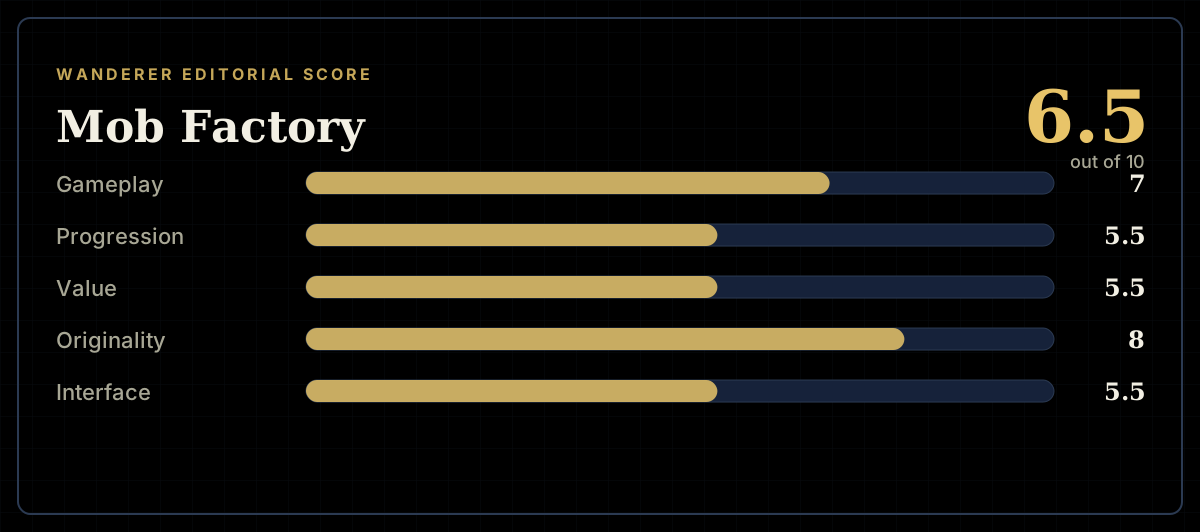
How the review scores each part of the gameWanderer Editorial -
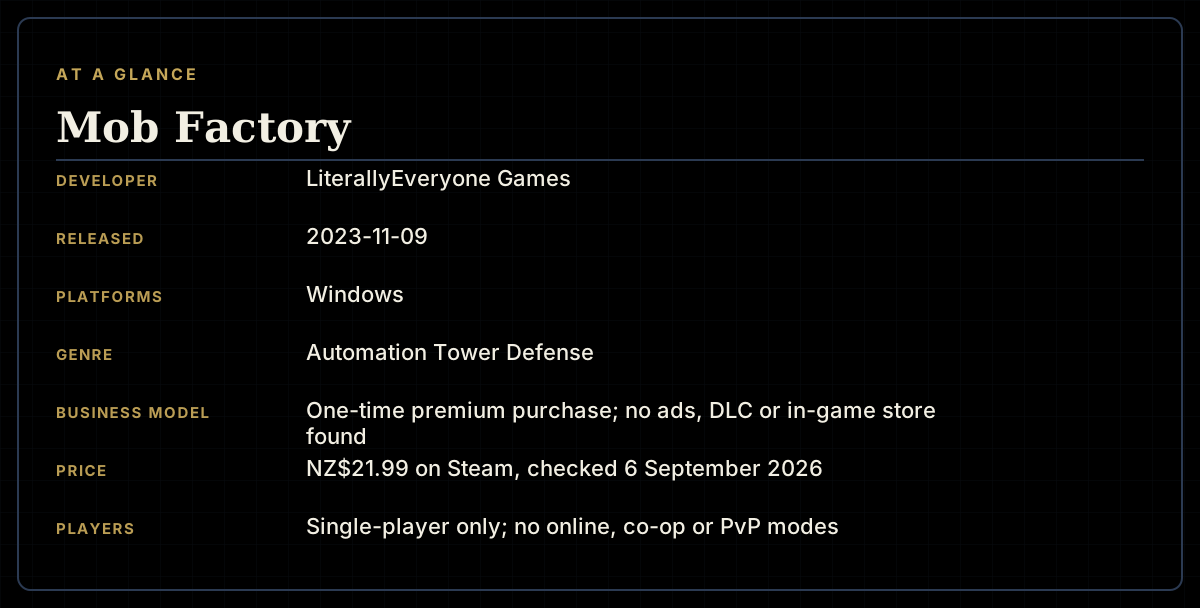
The specsWanderer Editorial -
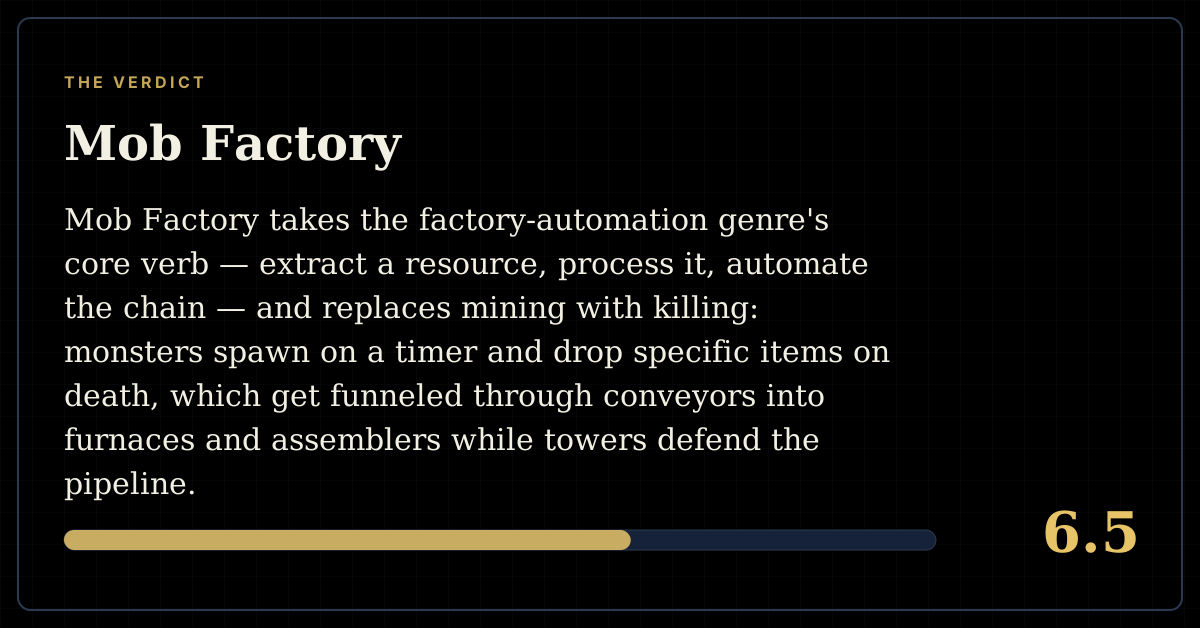
The short versionWanderer Editorial