Game review
Dungeon Builder S
3.2 / 10
- Developer
- LIN KE HSI
- Publisher
- LIN KE HSI
- Released
- 13 July 2017
- Platforms
- Windows
- Genre
- Dungeon-Building Simulation
- Monetisation
- One-time purchase, no in-game currency or DLC listed
- Players
- Single-player only
The short version
Dungeon Builder S asks you to reverse the usual dungeon crawl: wall off rooms, staff them with monsters you breed and synthesise, lay traps, and grind the adventurer parties who come raiding for your bones and souls into paste. It's the premise of War for the Overworld or Dungeon Warfare shrunk to a solo-developer budget, and on paper the sandbox side — free choice of dungeon size, terrain and win condition — is a real hook.
In practice, the entire English-language review record for this game is three reviews, and all three are negative. One calls it a worse version of three specific genre peers named by title. One reports it lagging on a machine with an i7 and 64GB of RAM. One is a single word: "No." The header art hasn't been updated since Steam converted it in early 2018, there are no Steam achievements configured, and the developer's only listed channel is a Facebook page that reads as dormant. Whatever "You play, I create" was supposed to mean in the store description, the paper trail suggests it stopped not long after launch.
Biggest strengths
- The premise is legitimately interesting on paper — build and defend a dungeon against adventurer raiding parties, breed and synthesise monsters, choose your own dungeon size, terrain and victory condition
- Very cheap at NZ$4.49, a low-risk price point for the curious
- A genuine one-person project with an ambitious feature list for its scale: room-by-room construction, trap placement, adventurer classes with distinct abilities, and random events like dwarf invasions and room collapses
Biggest weaknesses
- Every English-language Steam review on record for this game — three of three — is negative
- A reported performance problem serious enough that a reviewer running a high-end i7 machine with 64GB of RAM describes it as laggy and apparently single-threaded
- Visual presentation is described directly as lazy by the one reviewer who engages with it in detail
Who it's for: Genre completionists curious about an obscure, cheap entry in the dungeon-management space, and players specifically hunting for rough, unfinished-feeling indie curios.
Our recommendation: Skip it. The genre it's chasing has better-regarded, actively maintained alternatives at a similar or only slightly higher price, and this one's own review sample — small as it is — is unanimous.
3.2 / 10
Introduction
Dungeon Builder S is a solo-developed dungeon-management sim from LIN KE HSI, released on Steam for Windows on 13 July 2017 with no Early Access period and no updates that leave a visible public trace afterward. It sells for NZ$4.49 with no DLC, no in-game currency and no subscription. The pitch, taken straight from its own store page, flips the usual dungeon-crawler premise: instead of playing an adventurer descending into someone else's dungeon, you build the dungeon, staff it with monsters bred from the bones and souls of the adventurers you kill, and defend it against wave after wave of parties coming to loot it.
It is also about as small a release as Steam's review system can meaningfully describe. At the time of writing, Dungeon Builder S has exactly three English-language reviews, and Steam's own review-summary API reports zero of them as positive — too few for the store page to display a "Negative" tag at all, since Valve's algorithm needs a larger sample before it commits to a descriptor, but unambiguous all the same. This review draws on all three of them (I read every review this game has), on the store page's own description and screenshots, and on Steam's public achievement-tracking API, which in this case has nothing to report because the game ships with no achievements configured.
The pitch: building and defending
According to its own description, the loop is room-by-room construction: you carve out chambers, each with a different function, then populate them with monsters or traps. Some rooms reportedly boost combat stats, and — a detail that stands out as more thoughtful than a straight tower-defense clone — some rooms can heal or strengthen the adventurers passing through, meaning killing every intruder isn't framed as the only route to a working dungeon. Monsters can apparently be "synthesised" into stronger ones, adventurers arrive with distinct classes and abilities (the store page specifically calls out thieves who can disarm traps), and killing an adventurer drops the item they were carrying, which you then have to place correctly in a room to use. Random events — dwarves invading without warning, rooms collapsing and needing rebuilding — are pitched as the texture layered on top. The freedom angle is explicit in the marketing copy too: dungeon size, terrain and win conditions are all left to the player, with the promise of replaying under different conditions.
On paper, that's a genuinely reasonable feature list for a management sim, and it sits in recognisable company — the one substantive review in the sample places it directly alongside Keeper RL, War for the Overworld and Dungeon Warfare, all established names in the "build the evil lair" niche. The problem, according to that same review, is the comparison doesn't go Dungeon Builder S's way: it describes the game as functionally "just a typical Tower Defense game" wearing the management-sim framing, executed with less polish than the genre's established alternatives, and closes with "hard pass."
Performance and presentation
The most concrete, specific complaint in the review sample isn't about design — it's about performance. One reviewer, logging over 11 hours of playtime, reports the game running as though it's single-threaded and lagging badly on a machine built around an i7 CPU and 64GB of RAM, hardware that has no business struggling with a low-poly dungeon sim in any normal circumstance. That's a strong signal for anyone weighing whether to try it on more modest hardware. The same review sample's other substantive comment on presentation is blunter still, describing the visuals as coming across as lazy rather than merely rough — a harsher read than "budget indie asset quality," which is the more common complaint at this price point.
Compounding both is the store page's own text, which is rough machine-translated English from start to finish — sentences like "Take the Resentment of the dead as the magic of the Dungeon" and "This game is continue developing. You play, I create." That's not disqualifying on its own for a solo developer working outside their first language, but it does make it harder to trust the polish of systems the page describes only in broad strokes, like class-specific adventurer AI or monster synthesis trees, none of which any review in the sample confirms working as advertised.
What players say
Three reviews is not a statistical sample by any reasonable definition, and this review treats it accordingly — as a signal worth reporting honestly, not as proof of a settled verdict. But the three reviews that exist agree with each other in tone even where they don't overlap in specifics. The longest and most detailed compares the game unfavourably to three named genre peers and recommends skipping it outright. The second, after more than eleven hours logged, focuses entirely on a performance problem serious enough to call out the exact hardware it was tested on. The third, after nearly seven hours, is one word: "No." None of the three is positive, none is a drive-by five-minute bounce, and two of the three represent meaningful time investment before the reviewer settled on a thumbs-down — which reads less like people who didn't give the game a chance and more like people who did, and weren't won over.
Should you play it
There's no evidence this developer kept working on Dungeon Builder S much past its 2017 launch. The store's own screenshot assets carry a February 2018 timestamp and nothing newer, there are no Steam achievements set up for the game at all, there's no Metacritic listing, and the only official channel linked from the store page is a Facebook page that shows no sign of recent activity. Set against a store description that explicitly promises "This game is continue developing," that's a promise the visible record doesn't back up. None of that means the underlying idea was bad — a solo-developer dungeon-management sim with room synthesis, adventurer classes and player-chosen win conditions is a reasonable scope for one person to have attempted, and cheaper by several dollars than most of the genre peers it gets compared to. It means the execution, on the evidence of everyone who's actually reviewed it, didn't get finished to a standard those players were willing to recommend.
Final verdict
Dungeon Builder S is an obscure, very cheap dungeon-management sim with an interesting premise and a review record that is small but completely one-sided against it: performance complaints serious enough to name the hardware, visuals called out as lazy, and a direct unfavourable comparison to three specific, better-known alternatives in the same niche. Add a store page written in rough machine-translated English and no visible sign of post-launch support, and there's little reason to recommend it over the genre peers its own reviewers point to by name. If you're a completionist specifically hunting rough, forgotten corners of the dungeon-builder genre, NZ$4.49 is a low-risk way to see it for yourself. Everyone else should spend that money on War for the Overworld or Dungeon Warfare instead.
Pros and cons
Pros
- The premise is legitimately interesting on paper — build and defend a dungeon against adventurer raiding parties, breed and synthesise monsters, choose your own dungeon size, terrain and victory condition
- Very cheap at NZ$4.49, a low-risk price point for the curious
- A genuine one-person project with an ambitious feature list for its scale: room-by-room construction, trap placement, adventurer classes with distinct abilities, and random events like dwarf invasions and room collapses
Cons
- Every English-language Steam review on record for this game — three of three — is negative
- A reported performance problem serious enough that a reviewer running a high-end i7 machine with 64GB of RAM describes it as laggy and apparently single-threaded
- Visual presentation is described directly as lazy by the one reviewer who engages with it in detail
- No Steam achievements, no metacritic coverage, and no visible update activity since shortly after launch — every external signal points to abandoned development
- The store page's own text is rough machine-translated English throughout, which undercuts confidence in how much of the promised depth (adventurer classes, item drops, monster synthesis) is actually implemented cleanly
Screenshots
-
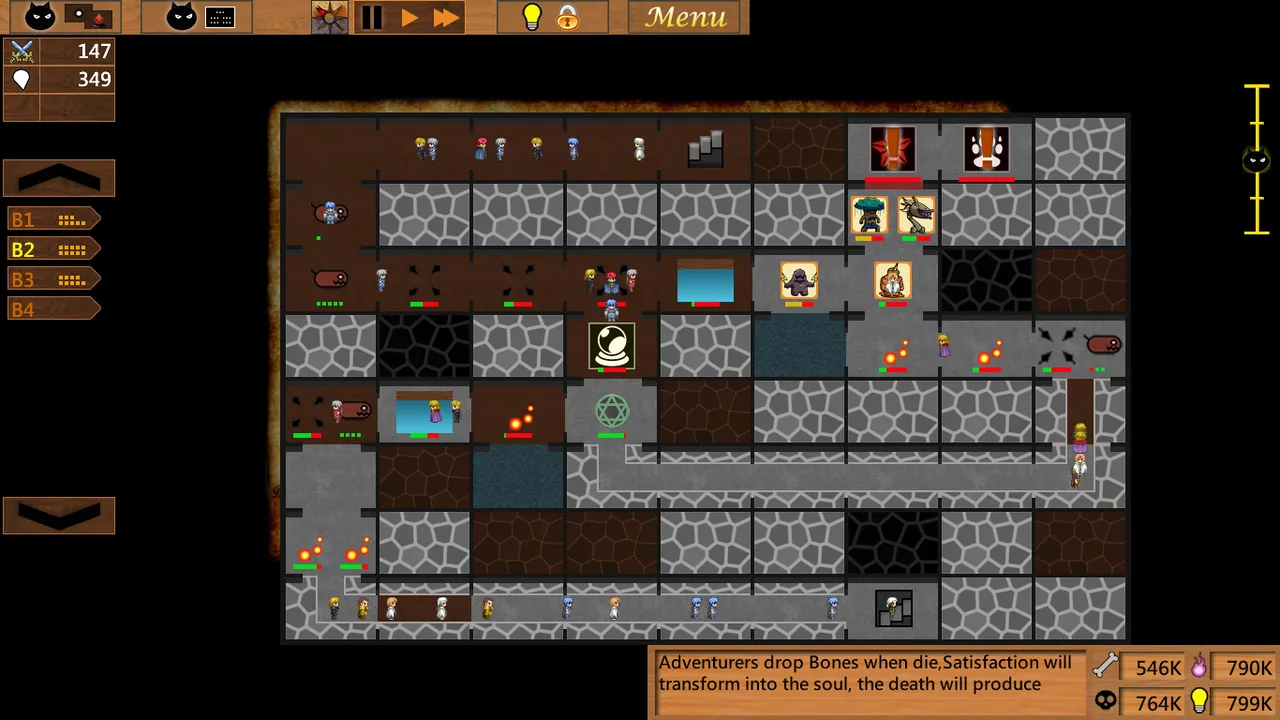
Dungeon Builder SImage: LIN KE HSI via Steam -
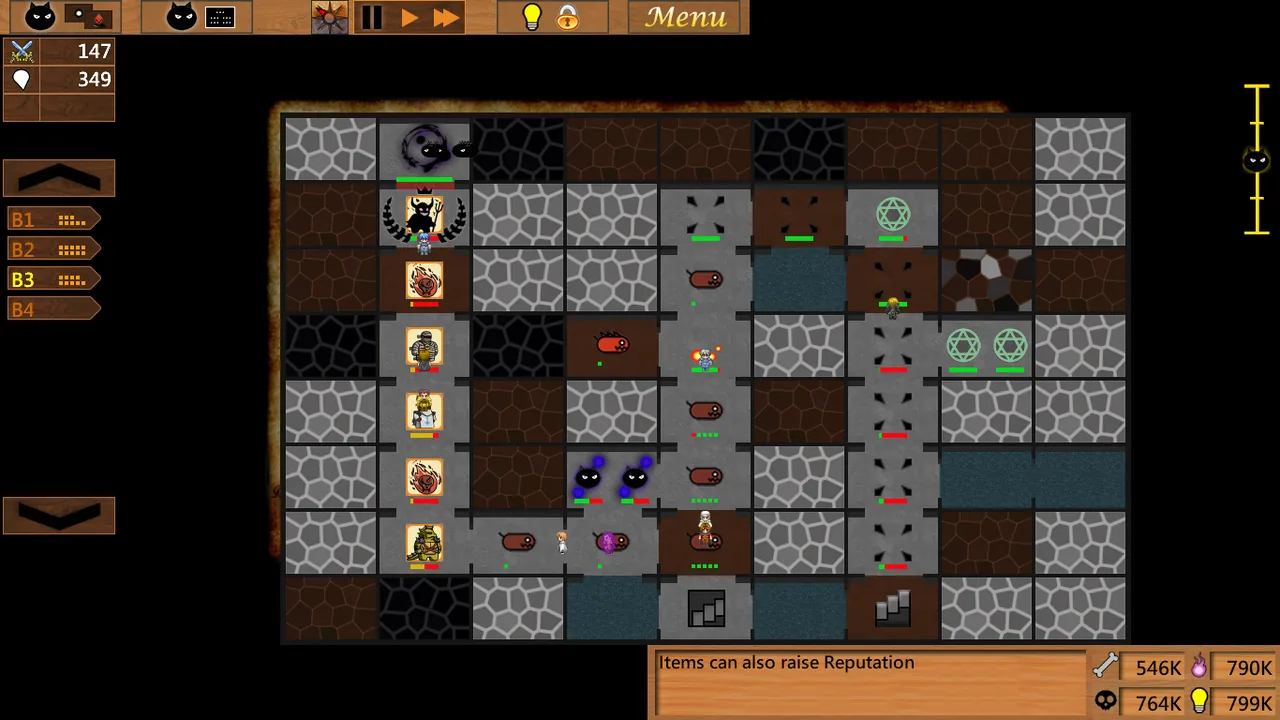
Dungeon Builder SImage: LIN KE HSI via Steam -
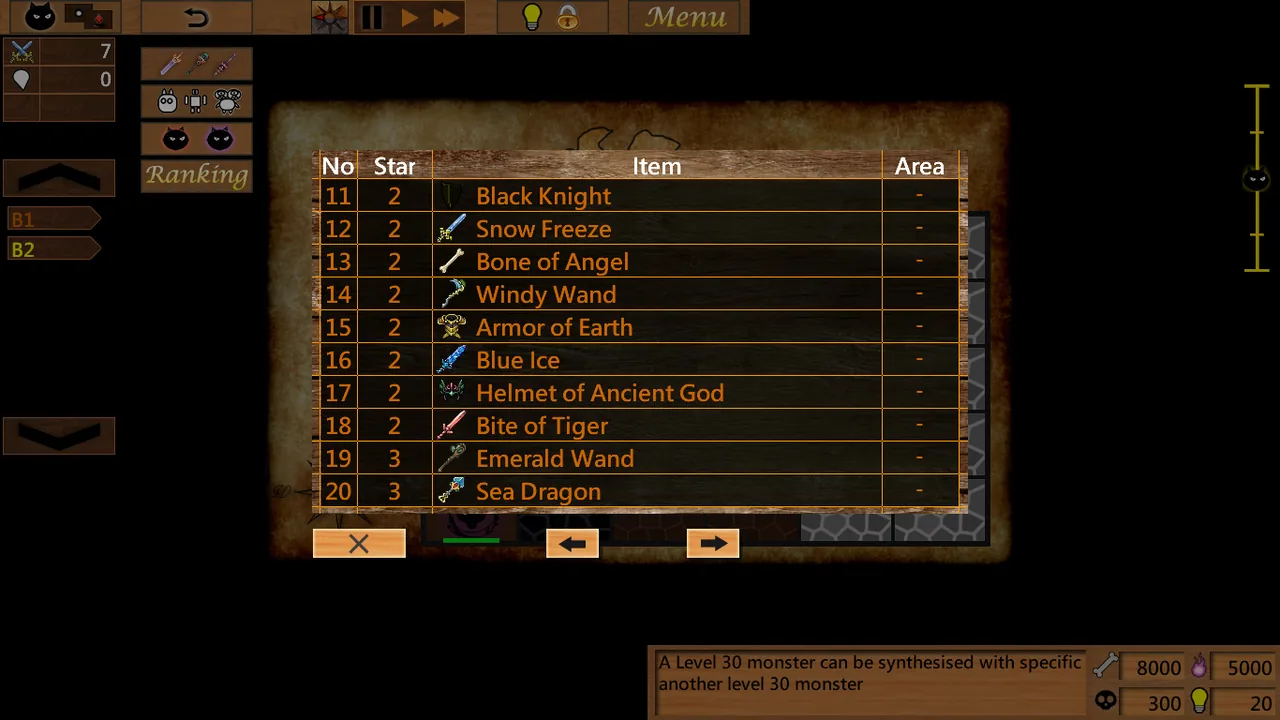
Dungeon Builder SImage: LIN KE HSI via Steam -
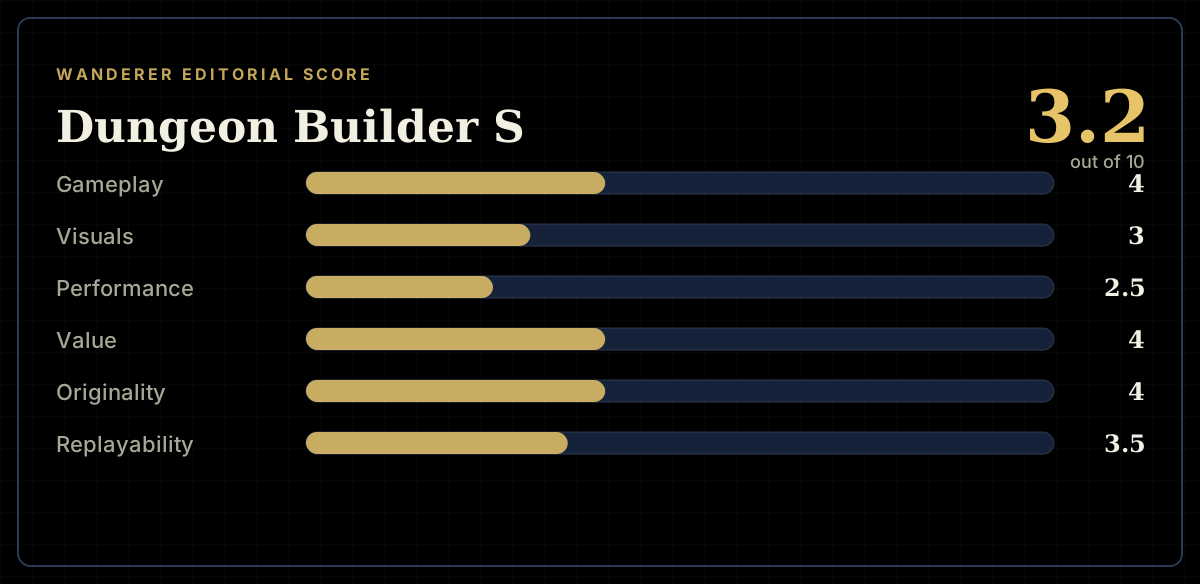
How the review scores each part of the gameWanderer Editorial -
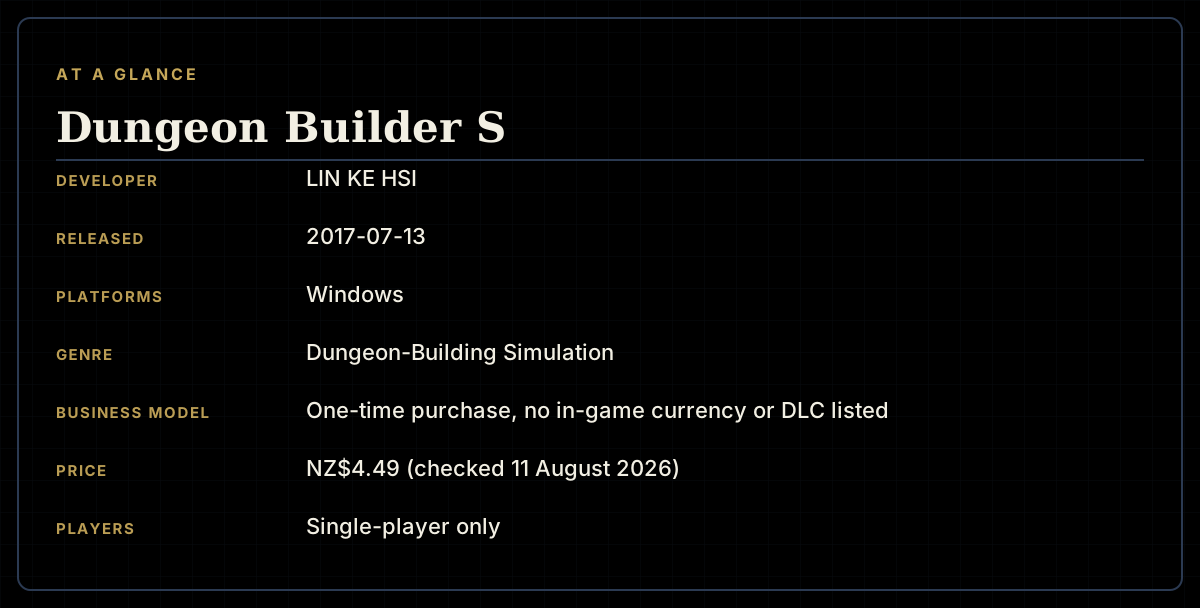
The game at a glanceWanderer Editorial -
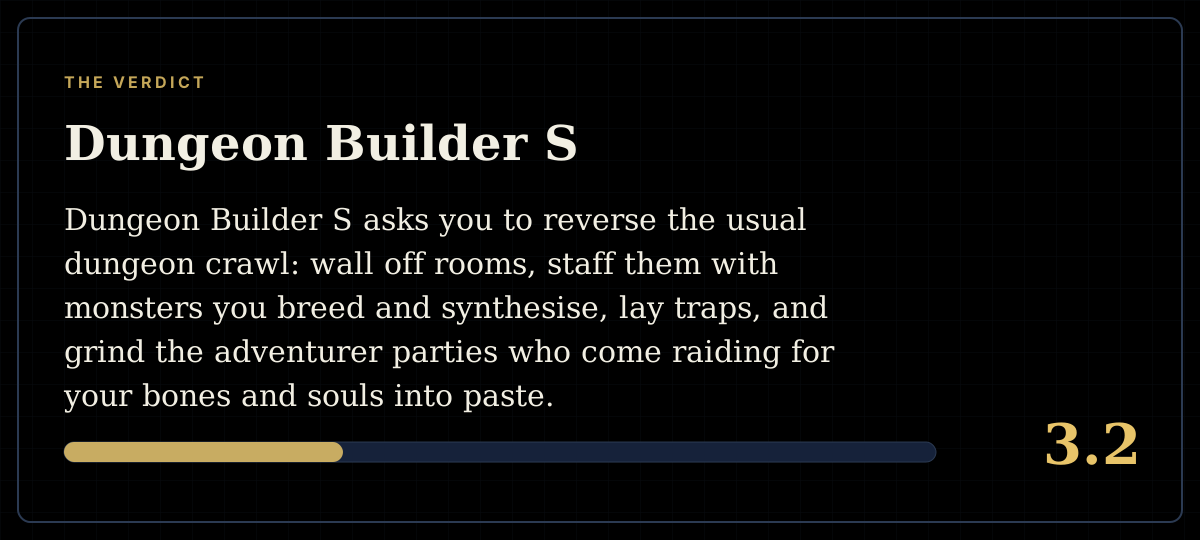
The short versionWanderer Editorial