Game review
JKRobots
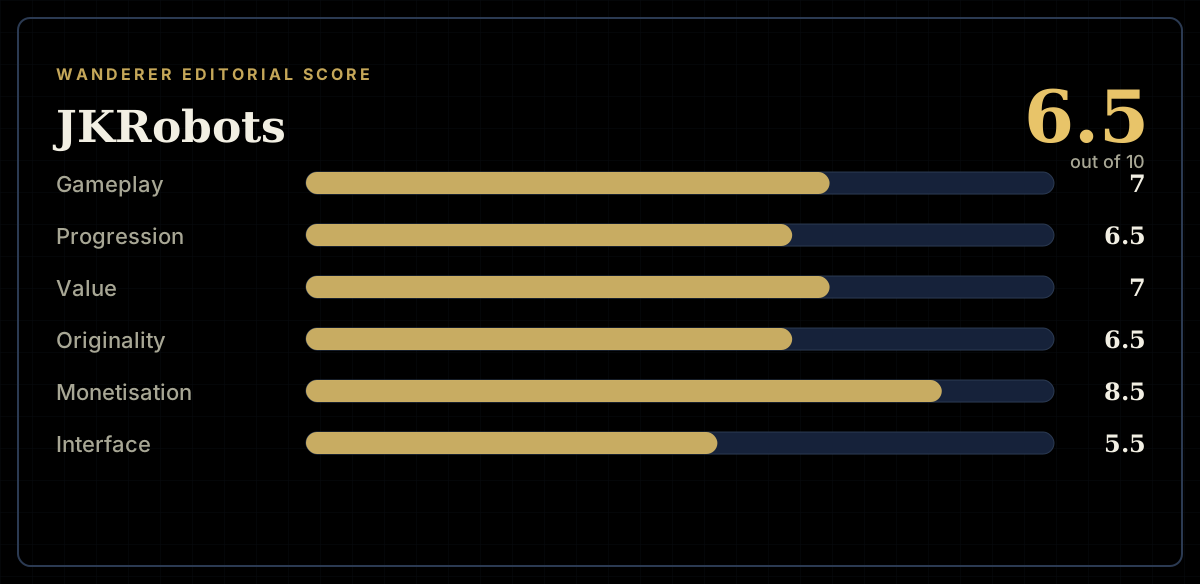
6.5 / 10
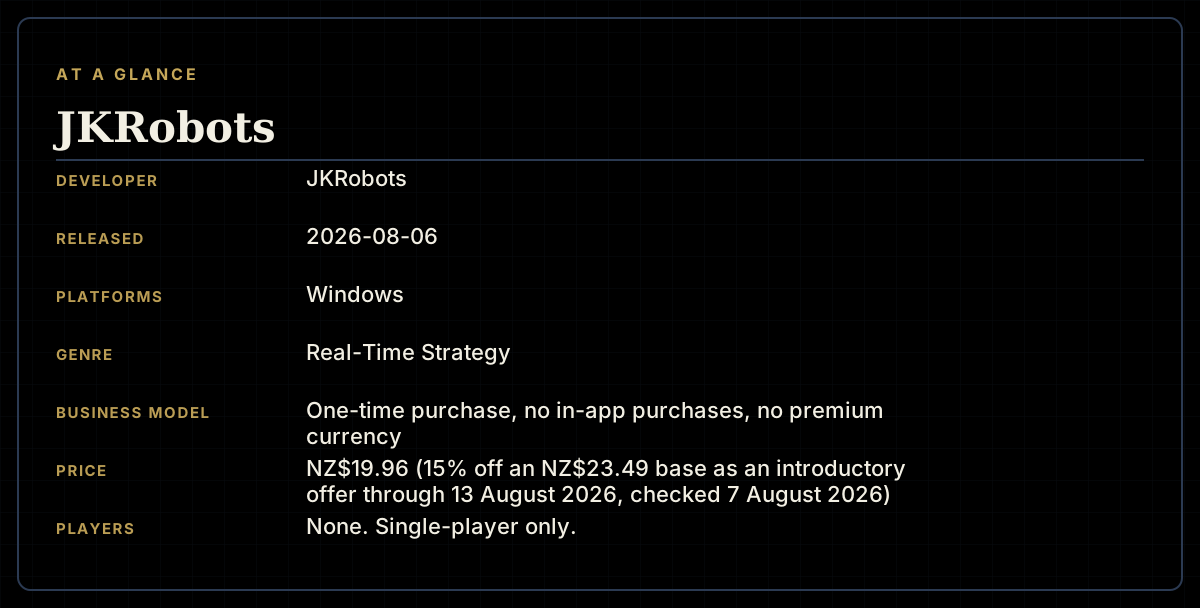
- Developer
- JKRobots
- Publisher
- JKRobots
- Released
- 6 August 2026
- Platforms
- Windows
- Genre
- Real-Time Strategy
- Monetisation
- One-time purchase, no in-app purchases, no premium currency
- Players
- None. Single-player only.
The short version
JKRobots is a solo-developer RTS built almost entirely around one lever: energy. Every map opens with the robots holding all of it, and every push you make outward — a captured resource field, a new power plant, a forward tower — has to be paid for out of the same battery pool the robots are actively trying to blackout with relentless, escalating waves. It's less about army composition or build orders than most RTS games and more about running a power grid under siege, which is a distinctive enough hook for a first commercial release.
The pitch is unusually well-documented for how new the game is. A free demo has been public since March 2026, the full release ships 19 achievements mapped one-to-one onto 3 prologue maps and 16 campaign missions, and the developer's own estimate of 25-plus hours on Hard Mode gives a real sense of scale. What's missing is anything to test that scale against: no user reviews in any language, no news posts, and a launch-day achievement sample too small to draw real conclusions from.
Biggest strengths
- Energy is the one resource that touches everything — offence, defence, economy and upgrades all draw from the same battery pool, so every expansion decision is really a power-budget decision
- The robots don't just get tougher on defence; the store page and mission structure describe them actively disabling towers and bypassing chokepoints to hit power plants directly, which forces an army you have to actively deploy rather than a wall you build once and forget
- A free demo has been public since March 2026, months ahead of the paid release, giving players a real way to test the core loop before spending anything
Biggest weaknesses
- Launches with zero Steam user reviews in any language and no news posts, so there is nothing yet to confirm the difficulty curve, balance or late-campaign pacing hold up over 16 missions
- Achievement data resolves to values like 12.1%, 9.0%, 6.0% and 3.0% — the signature of a reporting population you could count on two hands, not a curve shaped by a real player base
- Single-player only, with no co-op or competitive mode, in a genre where a lot of the genre's longevity usually comes from multiplayer or skirmish replay value
Who it's for: RTS players who want a slower, more deliberate power-management puzzle than the genre's usual base-and-battle loop, and who don't mind a single-developer game with no multiplayer and no track record yet. A weak fit for anyone chasing APM-heavy skirmishes, competitive ladders, or a studio-backed campaign with voice acting and cutscenes.
Our recommendation: The one-time price is fair for a 16-mission campaign with a genuinely distinct central mechanic, and the free demo — live for months before the full release — is the honest way to check whether the energy-juggling loop clicks before paying. Wait a few weeks if you want a real review corpus and patch history behind the price tag first.
6.5 / 10
Most RTS games give you two resources and let you juggle them: gold and wood, minerals and gas, food and something to spend it on. JKRobots gives you one that actually matters — energy — and then makes every single system in the game draw from the same shared pool. Offence, defence, economy and upgrades are not four separate budgets. They're four claims on one battery, and the robots holding the rest of the map are actively trying to overdraw it.
The map starts owned by someone else
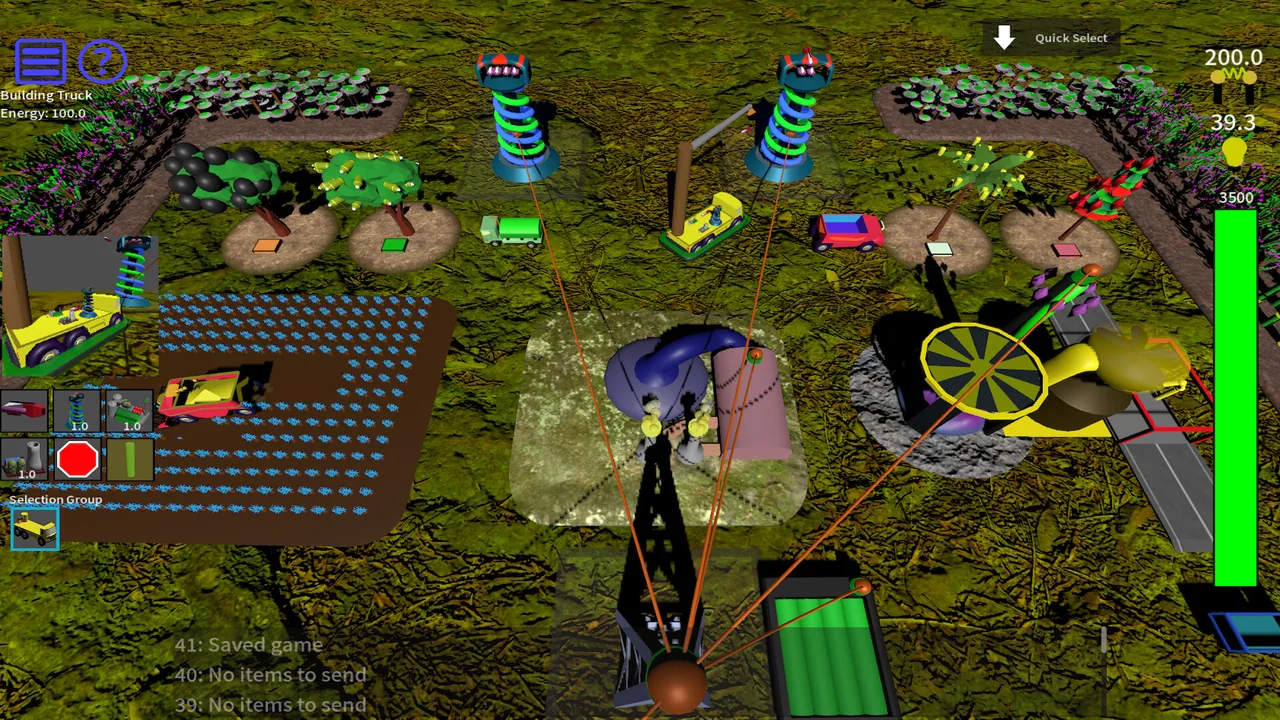
Every JKRobots mission opens the same way: the robots control the whole map, and you control a foothold. Reclaiming ground means pushing outward — capturing resource fields, planting the trees that grow weapon-crystals, mining fertilizer to cultivate bigger crystal variants, extracting lithium to raise battery capacity — and every metre gained is a metre the robots want back. The store page is blunt about the trade-off: the more you expand, the harder they push, which reframes territory from "more map" into "more surface area to defend." That's a meaningfully different shape than the usual RTS base-building loop, where expansion is close to a free good once you've secured a perimeter. Here it never stops costing something.
Energy as the only resource that matters
The power-grid framing is the game's clearest idea. Power plants generate capacity; harvesters, towers, upgrades and army units all draw against it; and the store page's own warning — keep enough excess power in the battery to absorb a wave, or risk a total blackout — describes energy management as the actual difficulty slider, not army composition or unit counters. That's a smart way to make a macro-focused RTS feel tense without leaning on twitch combat: the player isn't reacting to individual units so much as running triage on a grid that four different departments are all drawing from at once, and choosing which one gets starved when a wave hits. It's the kind of single, well-integrated mechanic that a solo developer can execute cleanly without needing the unit-roster depth of a studio production, and on paper it's the strongest reason to be interested in JKRobots specifically rather than the genre in general.
The robots don't wait behind the front line
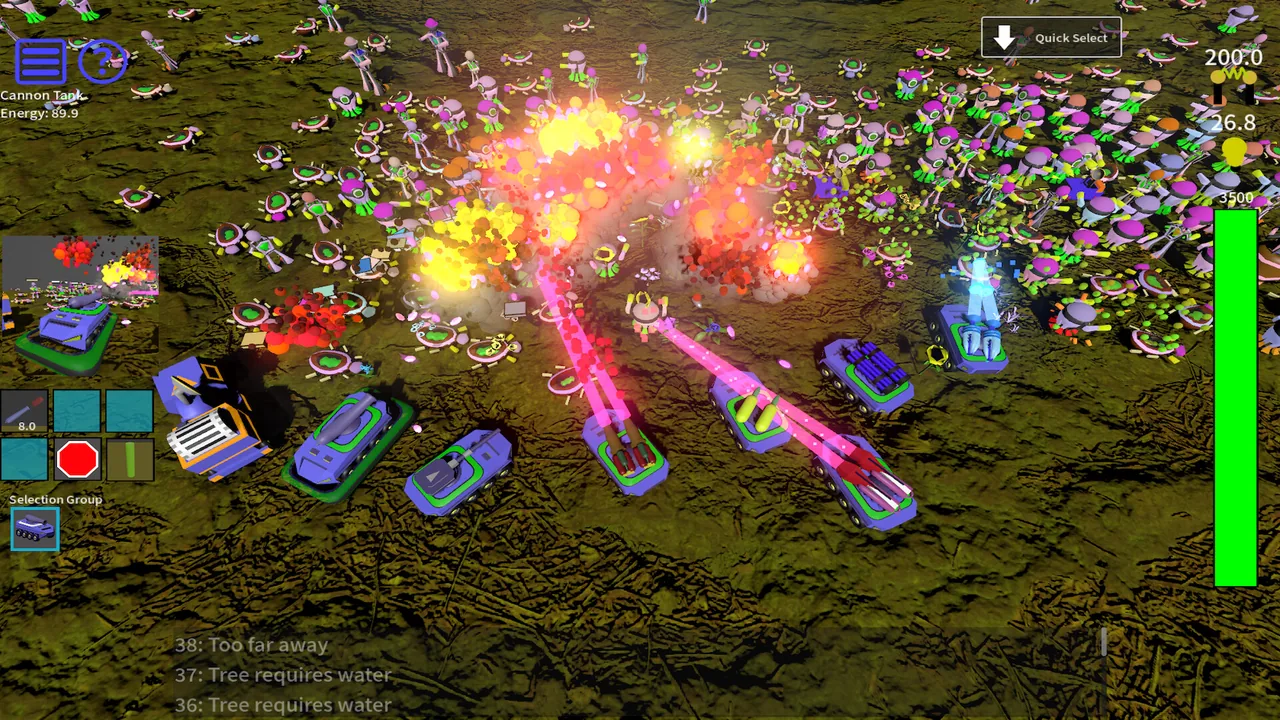
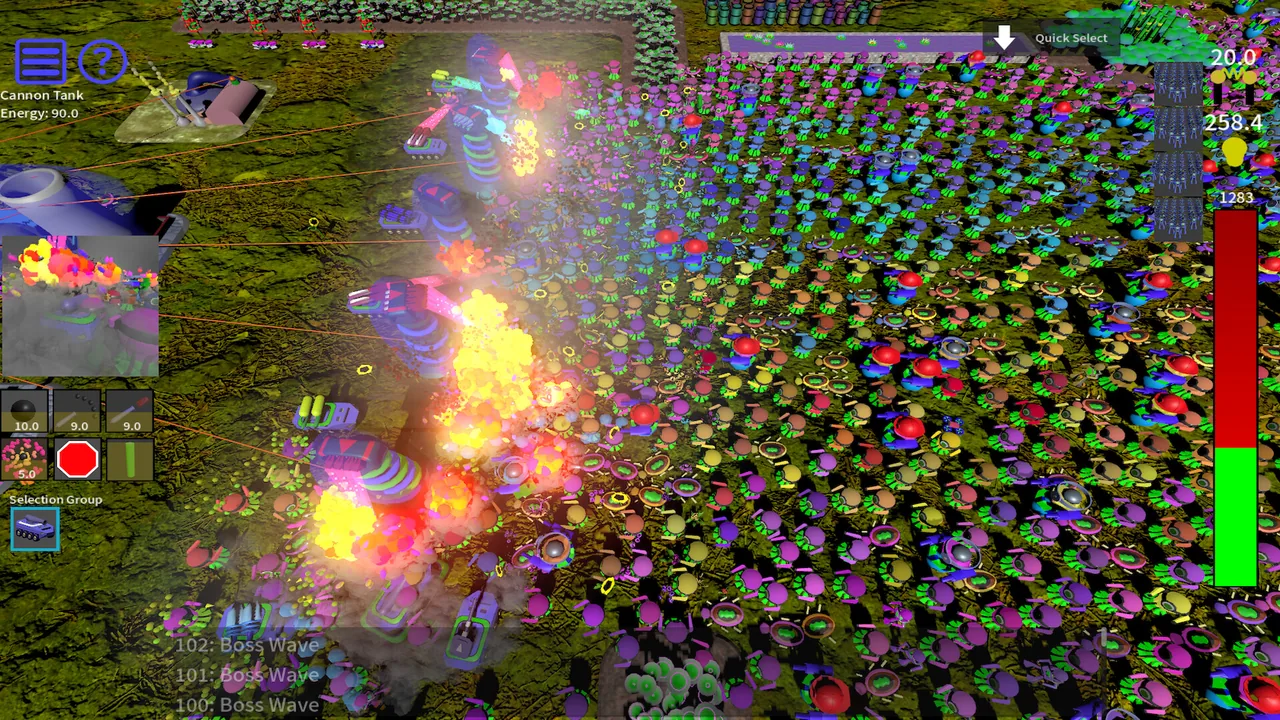
Where the design goes further than a standard tower-defence structure is in how the robots retaliate. Rather than simply attacking the nearest fortification, the store page describes them disabling towers outright and bypassing chokepoints to strike power plants directly — meaning a wall of defences doesn't guarantee the buildings behind it stay safe, and reclaiming a disabled structure requires actively deploying the army rather than waiting for a cooldown. That converts JKRobots from "build defences once, then manage economy" into something closer to a rolling siege where the army is a maintenance tool as much as a weapon. Mission lengths are stated to run from 30 minutes up to over 2 hours, and the developer's own estimate puts a full Hard Mode campaign clear at 25-plus hours, so this dynamic is clearly meant to escalate rather than resolve early.
Nineteen achievements, three prologues, sixteen missions
The structure is unusually well documented for a day-one release, because the achievement list maps cleanly onto it: three prologue tutorial achievements, then one for each of sixteen numbered campaign missions, nineteen in total. Global completion data already shows a spread across that whole range — the earliest prologue and mission achievements sit around 12% and 9%, dropping toward 6% and 3% deeper into the campaign, with the final mission's achievement already unlocked by at least a small number of accounts within roughly a day of launch. Read carefully, that's not a claim about difficulty or pacing — the population behind those percentages is small enough that individual accounts move the number by several points at a time — but it does confirm the sixteen-mission structure is real and reachable, not a number quoted on a store page and never actually built.
A genre this site already knows
JKRobots sits in company Wanderer has reviewed before without being a clone of any of it. Thronefall compresses base-building and waves into short, stylised runs; Creeper World turns territory reclamation into a slow-burn siege against an enemy that never really stops advancing; Mindustry folds automation into its own defence loop. JKRobots' closest kinship is with that second group — games where the enemy owns the map by default and every expansion is bought back rather than granted — but its specific hook, a single energy economy that every other system draws against, isn't something any of those games do in quite the same way. Whether that hook is enough to carry sixteen missions without the loop going stale is exactly the kind of question that needs weeks of a real player base grinding the campaign, and this review is being written a day after that campaign became purchasable at all.
What isn't known yet
It's worth being direct about how thin the record is at this exact moment. Zero Steam user reviews in any language, zero news posts, and achievement percentages that read as a handful of accounts rather than a meaningful sample. That's the ordinary state of a release this fresh rather than a mark against the game — this site's Last Ascender and Desktop Gremlins reviews landed in the same position on their own launch days — but it means claims about long-term balance, whether the power-grid tension stays interesting across sixteen missions, or whether late-game waves become a chore rather than a puzzle, are the developer's claims rather than independently confirmed ones. A free demo has been public since March 2026, which is the one part of the pitch with real runway behind it even though it, too, carries no Steam review history.
The money side
The checklist here is short and clean: one upfront cost, no in-app purchases, no premium currency, no battle pass. At NZ$19.96 during a 15%-off introductory offer running through 13 August (NZ$23.49 afterwards), it's priced in line with a mid-sized indie RTS with a genuine single-player campaign behind it, not inflated toward a live-service model that doesn't exist here. There's no multiplayer to weigh, no cosmetic shop, and nothing purchasable that affects power — the only real financial question is whether a 25-hour, single-player, single-developer campaign is worth the ask sight unseen, and the demo exists specifically to let a buyer answer that themselves before paying.
Final verdict
JKRobots earns its interest from one genuinely distinctive idea, executed with more focus than most first commercial releases manage: an RTS where economy, offence, defence and upgrades are all withdrawals from the same battery, and where the enemy's whole strategy is to force that battery to zero. The escalating-retaliation design, where robots disable towers and strike power plants directly rather than just attacking harder, gives that idea real teeth rather than leaving it as a flavour label on a standard base-builder.
Against that: this is a single developer's first RTS, launched with no reviews, no press coverage and no meaningful player-feedback history to check the pitch against, in a genre where a bad balance pass or a stale back half of the campaign only shows up after people have actually finished it. Single-player only, no controller or Steam Deck support listed, and recommended specs that ask for real hardware to hold 60fps against the bigger waves all narrow the audience further. Six and a half out of ten reflects a well-built, clearly-articulated central mechanic weighed against having almost nothing yet — no reviews, no patch history, no evidence the sixteen-mission arc holds its tension all the way through — to confirm it delivers on that mechanic at length. Try the free demo if the power-grid pitch appeals; it's the cheapest way to find out before the full sixteen missions ask for a real time commitment.
Price, platform and review-corpus details checked 7 August 2026.
Pros and cons
Pros
- Energy is the one resource that touches everything — offence, defence, economy and upgrades all draw from the same battery pool, so every expansion decision is really a power-budget decision
- The robots don't just get tougher on defence; the store page and mission structure describe them actively disabling towers and bypassing chokepoints to hit power plants directly, which forces an army you have to actively deploy rather than a wall you build once and forget
- A free demo has been public since March 2026, months ahead of the paid release, giving players a real way to test the core loop before spending anything
- Clean one-time-purchase monetisation with no in-app purchases, no premium currency and no battle pass of any kind
- A stated 25-plus hours across 3 prologue maps and 16 campaign missions is a substantial amount of single-player content for the asking price
Cons
- Launches with zero Steam user reviews in any language and no news posts, so there is nothing yet to confirm the difficulty curve, balance or late-campaign pacing hold up over 16 missions
- Achievement data resolves to values like 12.1%, 9.0%, 6.0% and 3.0% — the signature of a reporting population you could count on two hands, not a curve shaped by a real player base
- Single-player only, with no co-op or competitive mode, in a genre where a lot of the genre's longevity usually comes from multiplayer or skirmish replay value
- No Steam Deck or controller support is listed, and the recommended specs already ask for a GeForce RTX 3050-class card to hold up against large late-game waves
- A one-person studio with no prior commercial RTS credited to its name is a real unknown next to genre veterans with years of balance patches behind them
Screenshots
-
JKRobotsImage: JKRobots via Steam -
JKRobotsImage: JKRobots via Steam -
JKRobotsImage: JKRobots via Steam -
How the review scores each part of the gameWanderer Editorial -
The game at a glanceWanderer Editorial -
The short versionWanderer Editorial