Game review
Autonauts vs Piratebots
6.5 / 10
- Developer
- Denki
- Publisher
- Curve Games
- Released
- 28 July 2022
- Platforms
- Windows
- Genre
- Automation and base-defence simulation
- Monetisation
- Premium, one-off purchase — no in-game purchases, no premium currency, no ads
- Players
- Single-player only
The short version
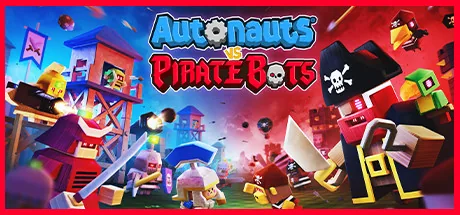
Autonauts vs Piratebots keeps the trick that made the original good — teach a wooden robot a job by doing it once yourself — and bolts a squad-based defence layer onto it, where dropping a banner sends your bots to automatically fight off raiders instead of asking you to click each one individually. That idea earns its place; watching a knight-and-archer squad clear a Piratebot camp on its own is a satisfying extension of the same "hand off the work" fantasy the first game built.
What it doesn't earn is the price of a second full game. The production side has been thinned rather than deepened, the economy tips into an oversupply of cash and materials by the midpoint, and the combat UI asks for several menu steps where a real strategy game needs one click. A large share of the game's own Steam audience has already made the "should have been DLC" argument, and the achievement data backs it up in a way the marketing copy never will.
Biggest strengths
- Dropping a banner and watching a mixed squad of warriors, archers and knights automatically clear a Piratebot camp extends the original's "teach it once, let it work" fantasy into combat convincingly
- Tech now unlocks from looted Piratebot resources instead of tending settlers, finally giving raiding parties a mechanical reason to exist beyond flavour
- The low-poly art, chibi robots and unhurried soundtrack carry over untouched, so the tone never clashes with the new combat layer
Biggest weaknesses
- Squad orders route through several menu layers for actions a standard RTS handles in one click, and reviewers single this out as the game's most consistent friction
- Production regularly outpaces the game's fixed resource caps by the midpoint, leaving players burying surplus cash and materials with nothing left worth building
- Global achievement data shows barely a quarter of owners ever clear the game's very first combat milestone, a steeper immediate wall than the original's early tutorial numbers
Who it's for: Existing Autonauts players who finished or nearly finished the original and want another fifteen to thirty hours in the same toy box, this time with something to defend against. Not the place to start if you haven't played the first game.
Our recommendation: Worth buying on a sale for series fans who want more scripting puzzles wrapped in a defensive layer. At full price, weigh it against the fact that a meaningful slice of its own playerbase considers it an expansion sold as a sequel.
6.5 / 10
Somewhere around the second hour of Autonauts vs Piratebots, you stop hand-feeding your workerbots and start planting a small banner on the ground near your walls. A few seconds later, a squad of warriors, archers and a knight peel off from whatever they were doing, march to the banner and cut down the next wave of raiders without a single further click from you. It's the same trick the original Autonauts built its whole reputation on — demonstrate a job once, let the robot repeat it forever — turned toward combat instead of chores, and for a while it's just as satisfying to watch click into place.
Denki originally planned this as a survival-mode DLC for Autonauts. The scope grew across roughly two years of development until Curve Games shipped it as a standalone release on 28 July 2022 instead, at the same NZ$32.99 price as the base game. That decision to sell it separately, rather than fold it back into the original as an update, is still the single most common complaint attached to this game's Steam reviews four years later — and it's worth understanding why before deciding whether the new ideas justify it.
Automating a fight instead of a chore
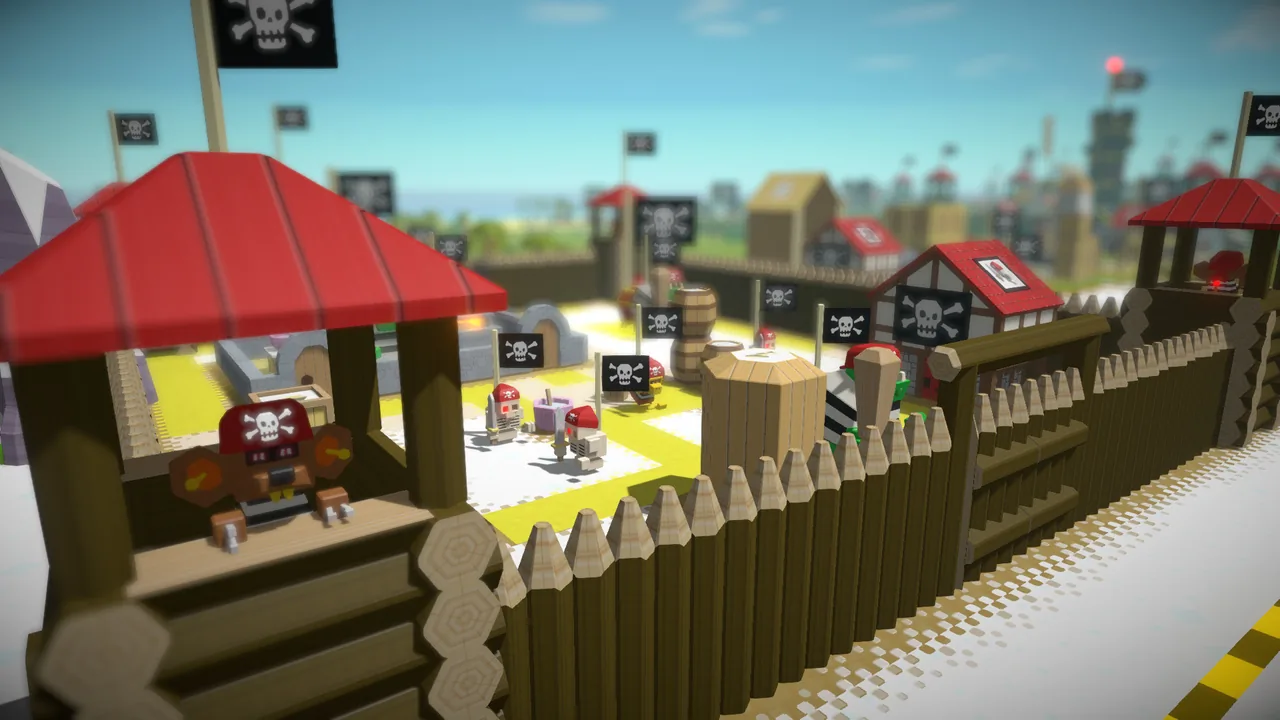
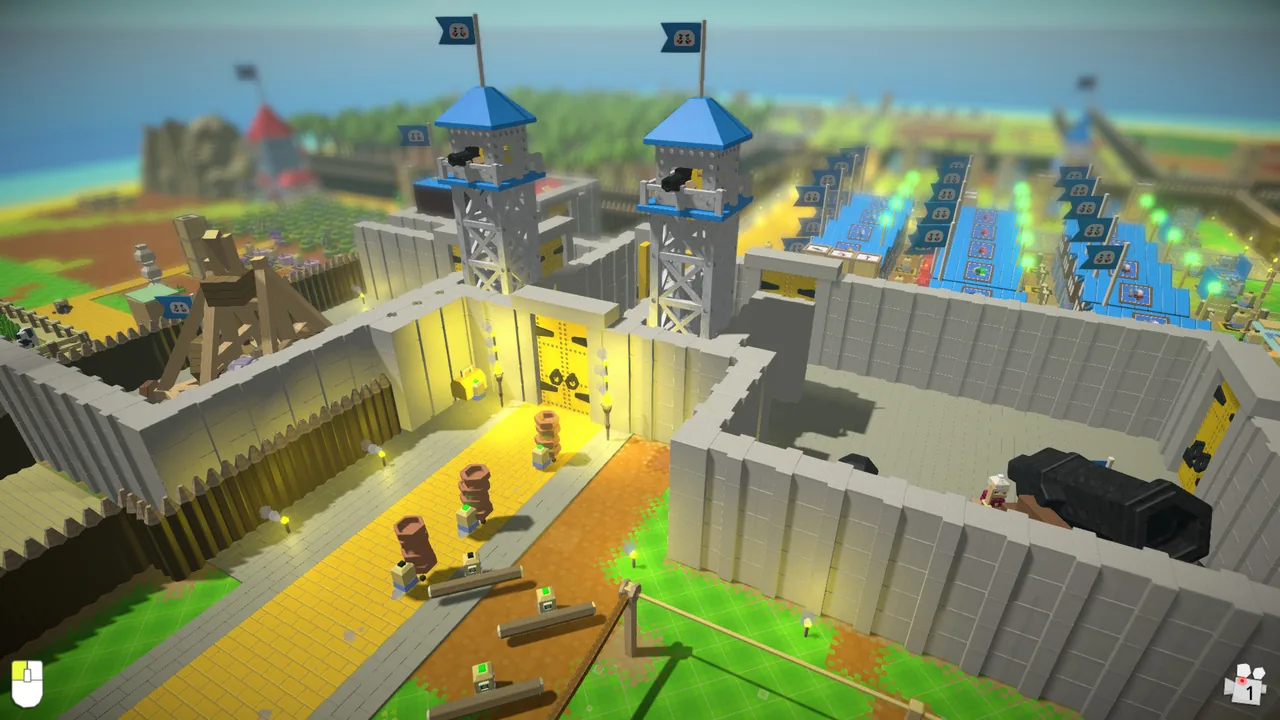
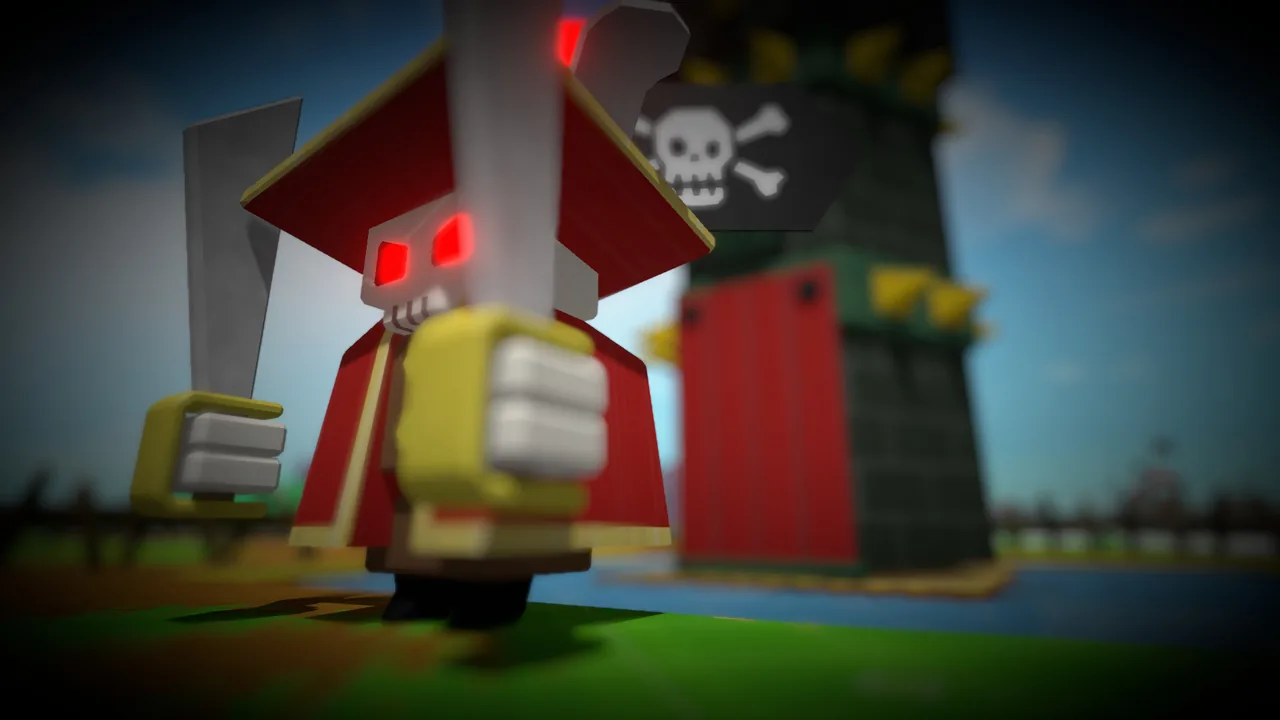
The core pitch is straightforward: everything that made Autonauts a programming toy in disguise is still here. You still teach a bot a task by physically performing it once — chop this tree, carry this plank, smelt this ore — and the bot loops the recording until its inputs or targets run out. What's new is a second category of bot built entirely around combat. Workerbots keep running the production side; Defencebots — Warriors, Archers, Knights — get organised into squads and pointed at a target zone with a banner, and from there the fighting is automatic. You're not directing units in real time so much as managing a standing army the way you'd manage a factory floor: build more of the unit type that's dying too often, feed it better gear, and let the loop run.
That's a deliberate design choice, and reviewers of the game have generally credited it as the right one for what this is. Real-time unit control would have turned a manager sim into an RTS overnight; instead, combat here plays more like the automated raids in a game such as Clash of Clans — you set the army up correctly beforehand and the outcome is mostly decided before the fighting starts. For a game whose entire identity is "hand the doing to something else," that's a coherent extension rather than a bolted-on minigame, and it's the strongest thing Autonauts vs Piratebots does.
Tech progression follows the same logic and improves on the original in one specific way: rather than unlocking new tools by keeping settlers content, as the base game did, this one unlocks tech from resources looted off defeated Piratebots. Raiding finally has a mechanical payoff instead of existing purely as a threat to survive, which closes a gap the original never addressed.
Where the seams show
The friction starts as soon as combat needs anything more precise than "defend this banner." Multiple player reviews describe routing basic squad orders through several menu layers — reassigning a unit, changing a target zone, or splitting a squad — where a conventional strategy game manages the same action in a single click. None of it is unplayable, but it's the kind of tax that compounds across a long session, and it sits directly on top of interface complaints the original Autonauts never fully resolved either.
The bigger problem is pacing, and it isn't the kind that improves with patience. The opening hours move slowly by design, mirroring the original's manual-labour start. But once a handful of production chains and defence squads are running unattended, several reviewers report the economy tipping the other way entirely: production accelerates well past what the game's fixed resource caps can hold, cash piles up faster than there's anything meaningful to spend it on, and players describe burying surplus materials because storage runs out before objectives do. A game about automation running ahead of its own containers is an ironic failure mode, and it isn't one solved by better play — it's a balance problem in the caps and costs themselves.
What the achievement numbers say about the wall
Global Steam achievement data draws a much steeper early cliff than the original game showed. The single easiest combat milestone in Autonauts vs Piratebots — surviving meaningful pirate damage — sits at just 23.3% of owners. The next handful of early milestones, including repelling a first pirate assault and losing a structure to raiders, cluster between 15% and 23%. By comparison, 68% of players who opened the original Autonauts finished its tutorial. That gap matters: it isn't measuring how far players get once they're invested, it's measuring how many bounce off the very first hour, before the automated-combat idea has had a chance to show what it does well. The game's actual completion achievements — clearing all five zones, finishing every base — sit at 2% or lower, a floor about as low as the original's, but reached from a much smaller starting pool.
The same toy box, less new furniture in it
Visually and tonally, nothing has changed, and that's a compliment. The chibi bots, the wood-and-acorn material palette and the unhurried score carry straight over, and explosions and pirate raids don't clash with a presentation built for a cozier game. Shapez 2 makes a similar bet that approachable art can carry a mechanically dense game past its own complexity; this one leans on the same trick and it still works.
What doesn't carry over as convincingly is the sense of a genuinely new production layer. Reviewers consistently note that the manufacturing side feels thinner than the original's, built around a narrower set of resource chains rather than an expanded one, with the game's real new content concentrated almost entirely in the combat systems. Factorio took a comparable swing at merging its automation core with combat in its own expansion content and kept both halves growing in tandem; here, the production half reads more like the vehicle for reaching the next combat encounter than a system that grew to match it.
Value
At the same NZ$32.99 as the original Autonauts, Autonauts vs Piratebots is priced as a full sequel but plays, by its own community's frequent description, like the DLC it started out as. That isn't automatically disqualifying — a fifteen-to-thirty-hour campaign across five zones is a reasonable amount of content for the price if the new combat layer is what you came for, and the demonstrate-it- once scripting tool is still enjoyable regardless of which task you're pointing it at. But it's a hard sell to anyone who hasn't already spent real hours with the original, and even fans should go in knowing the production side hasn't grown to match the ambition of the new combat systems.
Players drawn to automation that keeps paying out progress without needing constant hands-on scripting may prefer the gentler, always-running offline gathering loops Wanderer builds its systems around.
Verdict
Six and a half — a full point below the original Autonauts, and for a specific reason: the new idea here, automated squad combat replacing manual unit control, genuinely works and extends the series' core fantasy in a direction worth exploring. But everything around that idea is a step back from what the first game delivered. The production loop is thinner, the economy breaks its own containers by the midpoint, the combat interface asks for more clicks than it should, and the achievement curve shows a much larger share of players failing to get past the opening hour than the original ever did. Denki built a good expansion's worth of new mechanics and then, by its own former plan, sold it as a second game instead.
Buy it if the pitch of "automated army defending an automated economy" appeals and you've already made peace with the first game's slower opening hours. Don't expect the production half to have grown up the way the combat half clearly did.
Price and platform details checked 3 August 2026.
Pros and cons
Pros
- Dropping a banner and watching a mixed squad of warriors, archers and knights automatically clear a Piratebot camp extends the original's "teach it once, let it work" fantasy into combat convincingly
- Tech now unlocks from looted Piratebot resources instead of tending settlers, finally giving raiding parties a mechanical reason to exist beyond flavour
- The low-poly art, chibi robots and unhurried soundtrack carry over untouched, so the tone never clashes with the new combat layer
- The demonstrate-a-task recording tool from the original is still a genuinely good way to hand off a new production chain to a bot
Cons
- Squad orders route through several menu layers for actions a standard RTS handles in one click, and reviewers single this out as the game's most consistent friction
- Production regularly outpaces the game's fixed resource caps by the midpoint, leaving players burying surplus cash and materials with nothing left worth building
- Global achievement data shows barely a quarter of owners ever clear the game's very first combat milestone, a steeper immediate wall than the original's early tutorial numbers
- The combat tutorial trails well behind the production tutorial in depth, leaving mechanics like scripting a building's own defences unclear until deep into a run
- A meaningful share of Steam's "Mostly Positive" reviews argue this should have been a DLC expansion for Autonauts rather than a standalone purchase at the same price
Screenshots
-
Autonauts vs PiratebotsImage: Curve Games via Steam -
Autonauts vs PiratebotsImage: Curve Games via Steam -
Autonauts vs PiratebotsImage: Curve Games via Steam -
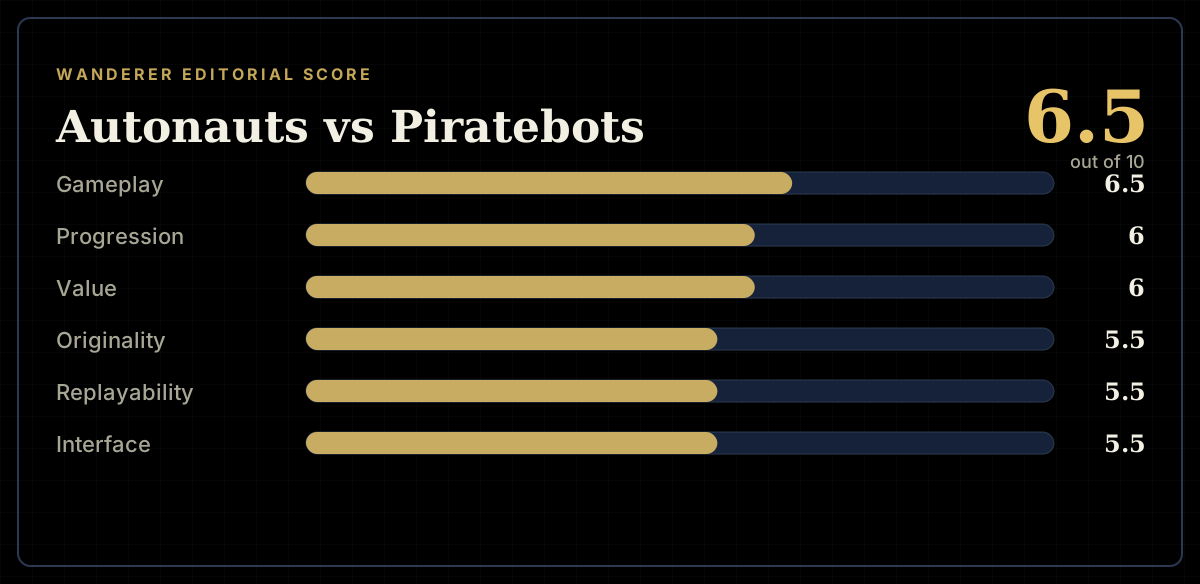
How the review scores each part of the gameWanderer Editorial -
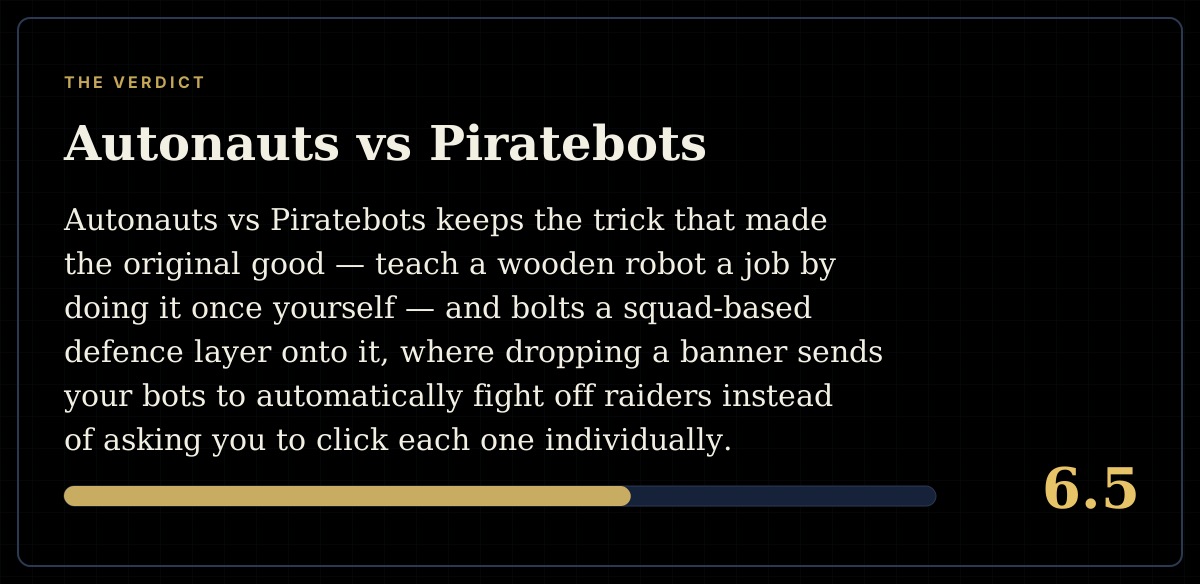
The short versionWanderer Editorial