Game review
Autonauts
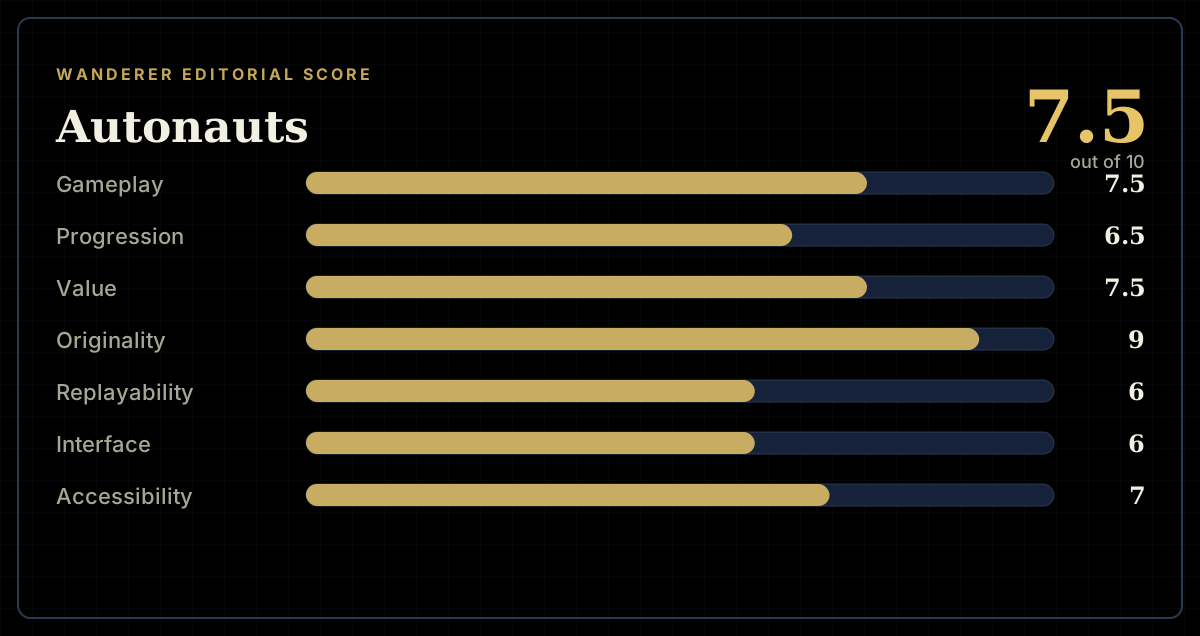
7.5 / 10
- Developer
- Denki
- Publisher
- Curve Games
- Released
- 17 October 2019
- Platforms
- Windows, PlayStation 4, PlayStation 5, Xbox One, Xbox Series X|S, Nintendo Switch
- Genre
- Automation and colony simulation
- Monetisation
- Premium, one-off purchase — no in-game purchases, no premium currency, no ads
- Players
- Single-player only
The short version
Autonauts is a programming game that never uses the word, teaching real scripting concepts — loops, conditionals, subroutines — by having you physically demonstrate a task to a wooden robot and then let it repeat what it saw. That trick is close to brilliant for the first fifteen or twenty hours, turning non-programmers into people who instinctively think in procedures.
It is also the game's ceiling. The recording-based editor never grows more expressive as the colony does, so the mid and late game ask for more of the same limited scripts rather than smarter ones, and a large share of players stop well before the credits.
Biggest strengths
- Teaching a script by physically performing the task once is a genuinely elegant way to introduce loops, conditionals and subroutines to people who have never coded anything
- The jump from doing every task by hand to watching a small fleet of self-sufficient bots run the colony is one of the most satisfying "aha" moments in the automation genre
- A charming, low-poly art style and a gentle soundtrack keep the tone consistently cozy even as the colony's logistics get complicated
Biggest weaknesses
- The scripting tool never grows more expressive than record-and-replay, so scaling a colony means writing more near-identical bot programs by hand rather than genuinely smarter ones
- Global achievement data shows more than four in five players never get as far as keeping livestock, and fewer than one in fifty ever reach the game's completion milestones
- Switching between empty hands and held tools to interact with objects is a constant, low-grade friction that several years of patches have not removed
Who it's for: Players who like the idea of automation games but have bounced off Factorio's learning curve, and anyone curious what a colony sim looks like when "tech tree" is replaced by "your own scripting skill."
Our recommendation: Worth buying at full price if the pitch appeals to you, but treat the first fifteen hours as the whole sales pitch — if the scripting hasn't clicked by then, the back half of the game will not change your mind.
7.5 / 10
Most automation games hand you a tech tree and let the belts do the talking. Autonauts hands you nothing but your own two hands, a patch of dirt, and a small wooden robot that will do exactly what you just did, forever, until you tell it otherwise. There's no code editor, no syntax, no programming language to look up. You chop a tree, the bot watches, and the next time you press record it chops trees the same way you did, in a loop, until the wood runs out or you tell it to stop. That single idea — teaching by demonstration rather than by writing instructions — is the entire hook of Denki's colony sim, and for a long stretch of the game it works beautifully.
Autonauts launched straight to a 1.0 release on Steam on 17 October 2019, skipping the usual Early Access stop entirely; its actual proving ground was a free public prototype Denki kept on itch.io from 2017 into 2018, built to test whether the recording-based robot concept had legs before a publisher deal with Curve Games turned it into a commercial product. That prototype, a self-described "pre-pre-pre-alpha," is still sitting on itch.io years later, left up for anyone curious where the idea started. A console edition followed in June 2022, bringing a redesigned early tutorial built specifically to teach the scripting concepts faster on a gamepad.
Teaching a script without ever saying the word
Where Autonauts earns its place next to genuine programming games is in how invisibly it introduces programming concepts. Press record, perform a task, press stop, and you've written a sequence. Point a bot at a stockpile and a resource node and it will loop that sequence until one of them runs dry — that's a while-loop, dressed up as chores. Nest one bot's output into another bot's input and you've built a pipeline without ever seeing the word "pipeline." Later scripts let you branch on conditions like whether a container is full, which is a conditional statement by any other name. None of it is labelled that way in the UI, and that's precisely the point: players who would never open a Scratch tutorial voluntarily end up thinking in loops and conditionals because the game made the abstraction physical first and the logic second.
Compare that to The Farmer Was Replaced, which puts a real Python-like language in front of the player from minute one. That game is more honest about what it's teaching and scales further because actual code can express arbitrarily complex logic. Autonauts trades that ceiling for a much gentler floor — nobody bounces off Autonauts because they don't understand variables, because the game never asks them to know what a variable is until they've already been using one for an hour without noticing.
From your own hands to a working colony
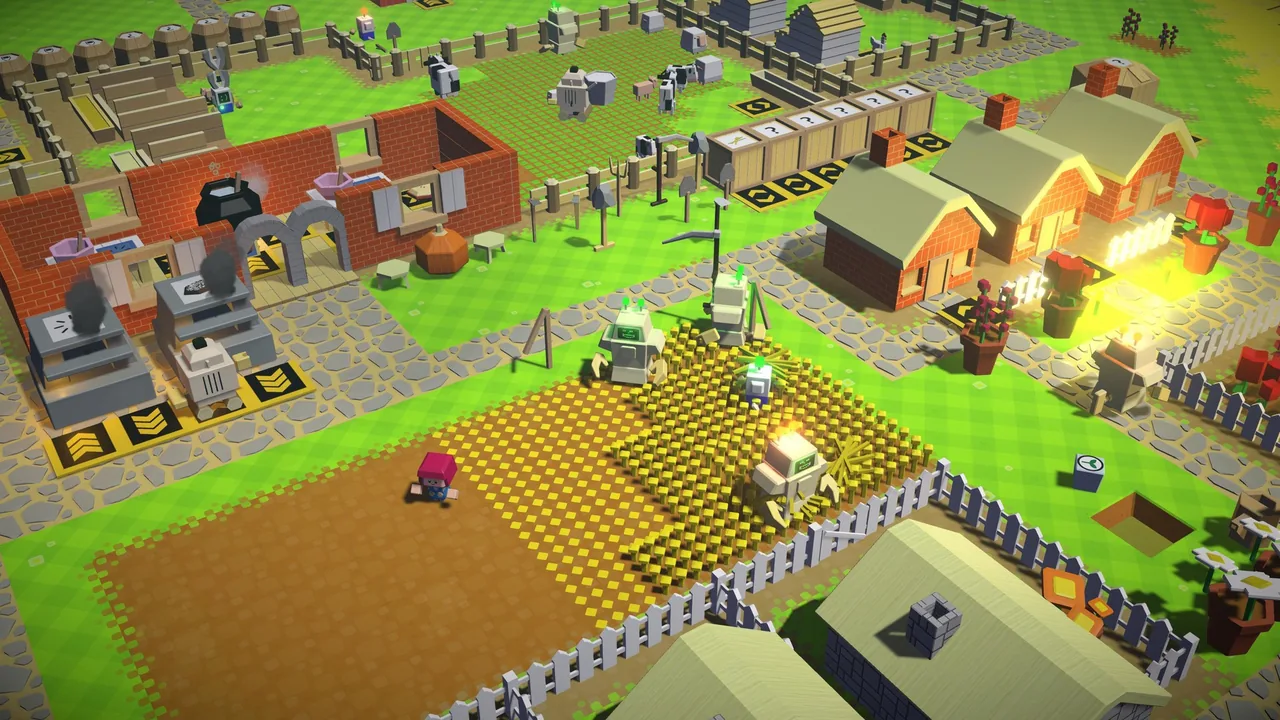
The progression loop mirrors that teaching curve closely. Early hours are almost entirely manual: gathering berries, planting crops, chopping the first trees by hand while your first bot learns to copy you one task at a time. The payoff arrives once two or three bots are running a simple chain unattended — water gets carried, seeds get planted, crops get harvested — and the colony starts producing food and tools without you touching them. Watching that first automated loop close is a legitimately great moment, on par with the first time a Factorio player watches an assembler feed itself from a belt rather than a manual hopper.
The problem is what happens next. New buildings, new resources and new bot roles keep arriving through the campaign, but the tool you use to program each one never changes: you still teach it by recording yourself doing the task once. There's no way to write a general procedure and pass it parameters, no way to have one script call another, no branching beyond simple full/empty checks. Scaling a colony in Autonauts means writing more scripts that all look almost identical, one bot program at a time, rather than writing fewer, smarter ones. Factorio solves the equivalent problem with blueprints that let a single well-designed production block get copy-pasted across an entire base; Autonauts has nothing comparable, and the workaround players settle on is simply cloning an existing bot and its script rather than composing new behaviour. It's automation that stops compounding.
What the achievement list actually shows
That ceiling isn't just a subjective complaint from a handful of forum posts — Steam's own global achievement data draws it out in hard numbers. 68% of players who touch the game finish its tutorial, but that number falls to under a third by the time players unlock basic storage, and keeps sliding through the early milestones: about 17% ever get their first working bot, roughly 14% reach mushroom farming, and only around 8% ever get as far as running mobile storage or keeping sheep for wool. The game's actual completion achievements — finishing the campaign, or building out a full 300-strong settlement — sit under 2%. That's a steeper drop-off than most automation or colony games manage, and it lines up precisely with the recurring shape of negative Steam reviews: players who liked the opening hours enormously, then hit a wall somewhere around the point the scripting tool needed to grow up and didn't.
The game this isn't
Autonauts should not be confused with Autonauts vs Piratebots, a separate, later Denki release built around combat and base defence against pirate factions; it began life as a planned survival add-on for this game before growing large enough that Denki spun it off as its own standalone purchase in 2022, a decision that still accounts for a meaningful slice of this game's negative Steam reviews years later, mostly from players who feel a promised free update turned into a second sale. Judged only on what actually shipped inside Autonauts itself, that controversy is a footnote rather than a design flaw, but it's worth knowing before reading older reviews that reference a "survival mode" this game was never going to contain on its own.
Interface friction that never quite got fixed
The parts of Autonauts that draw the most consistent frustration have nothing to do with programming and everything to do with basic interaction. Picking things up requires switching to empty hands first, which means constant tool-swapping during ordinary play. Managing more than a handful of bots means clicking into each one individually to rename, reassign or debug it — there's no filtering, no batch renaming, no fleet-wide overview. None of this is fatal on its own, but it's the kind of low-grade sand in the gears that shows up in review after review across six years of patches, which suggests it's a structural UI choice rather than an oversight waiting on a fix.
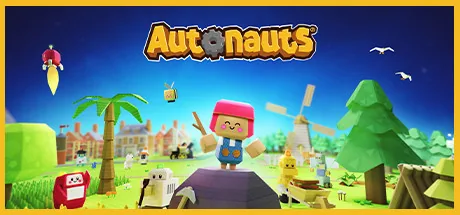
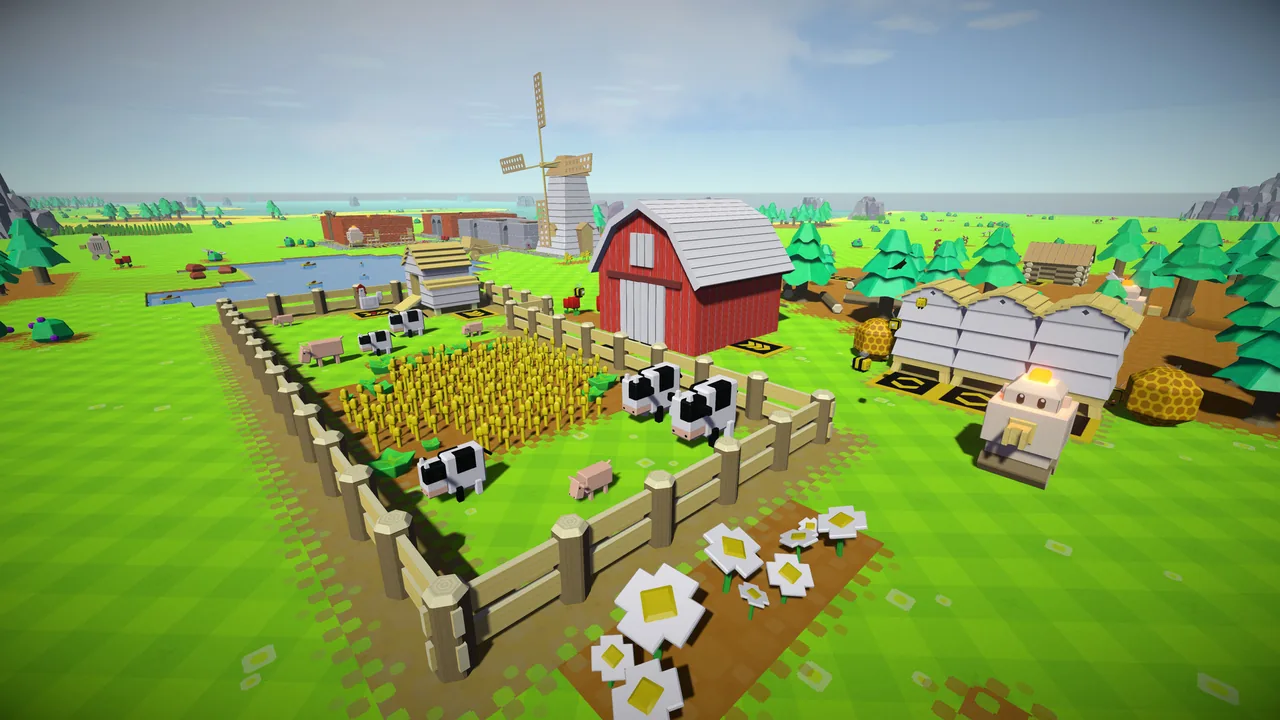
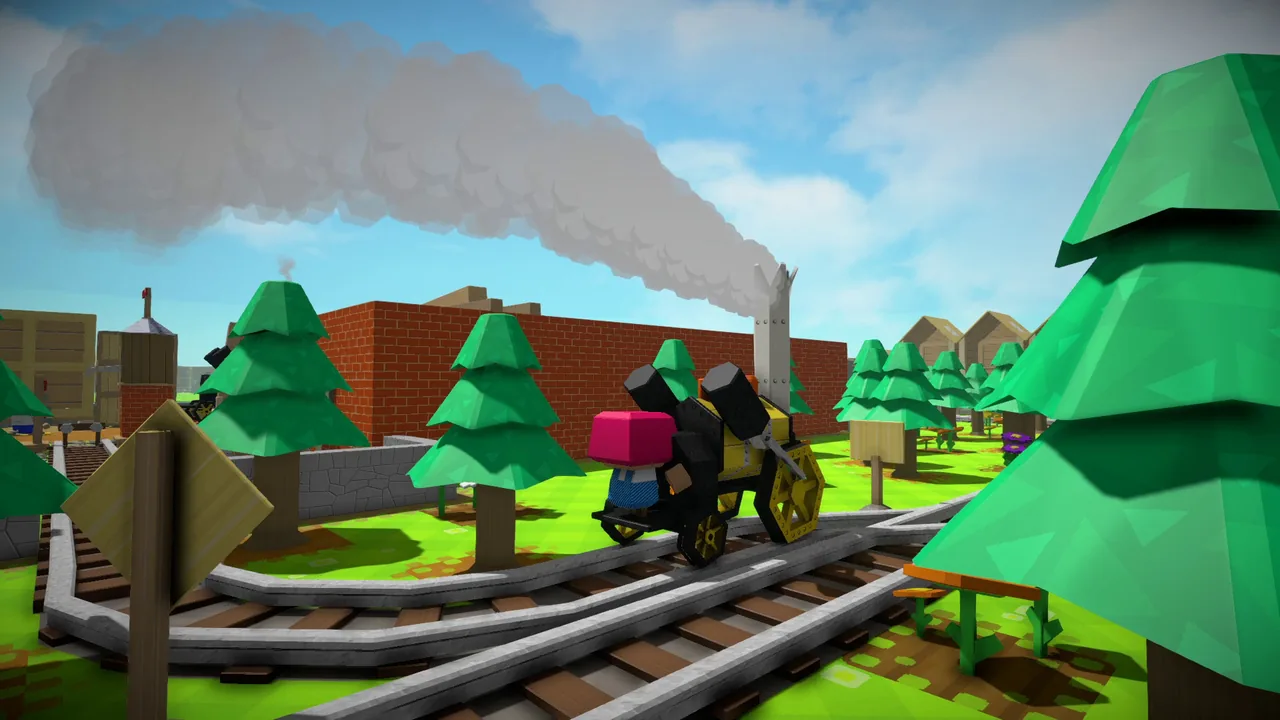
Presentation fares better. The low-poly art style is simple but consistently charming, animals and bots read clearly at a glance even when a screen is busy, and the soundtrack keeps a cozy, unhurried tone that never fights against the slower stretches of manual gathering. Shapez 2 makes a similar bet on approachable, uncluttered visuals carrying an automation game past its own complexity, and Autonauts pulls off the same trick almost as well.
Value
At NZ$32.99 for a single purchase with no ongoing costs, Autonauts is priced fairly for a game that can comfortably deliver fifteen to forty hours depending on how far a player pushes past the point the scripting tool stops scaling. Steam Workshop support adds genuine extra mileage in the form of community maps and tool packs, which matters more here than in most single-player games because it's one of the only ways to get new problems out of an editor the base campaign eventually stops extending. The 2022 console ports carry the same price and the same design, with a rebuilt early tutorial that by most accounts onboards faster than the original PC version still does.
Players who like automation systems that keep paying out numbers while they're away from the keyboard, rather than asking for constant hands-on scripting, may prefer the gentler offline progression Wanderer builds its own gathering loops around.
Verdict
Seven and a half. Autonauts' central idea — teach programming concepts by having a robot watch you do the job once — is genuinely one of the best onboarding tricks in the automation genre, and the first fifteen hours of turning a one-person homestead into a self-sufficient little economy are as good as this kind of game gets. What keeps it from ranking with the genre's best is that the tool which makes those first hours so good never grows up: there's no way to write more expressive scripts as the colony demands them, only more copies of the same simple one, and the achievement data confirms what the reviews already suggested — most players stop well before the game actually asks anything hard of them.
Buy it for the teaching curve and the first automated loop clicking into place. Don't expect the back half to reward you for getting there.
Price and platform details checked 2 August 2026.
Pros and cons
Pros
- Teaching a script by physically performing the task once is a genuinely elegant way to introduce loops, conditionals and subroutines to people who have never coded anything
- The jump from doing every task by hand to watching a small fleet of self-sufficient bots run the colony is one of the most satisfying "aha" moments in the automation genre
- A charming, low-poly art style and a gentle soundtrack keep the tone consistently cozy even as the colony's logistics get complicated
- Steam Workshop support has produced custom maps, tools and mod packs that extend a game the base campaign eventually stops adding new ideas to
- One flat purchase price with no in-game store, timers or currencies of any kind
Cons
- The scripting tool never grows more expressive than record-and-replay, so scaling a colony means writing more near-identical bot programs by hand rather than genuinely smarter ones
- Global achievement data shows more than four in five players never get as far as keeping livestock, and fewer than one in fifty ever reach the game's completion milestones
- Switching between empty hands and held tools to interact with objects is a constant, low-grade friction that several years of patches have not removed
- Bot management at scale means manually renaming, filtering and re-assigning individual robots, with no batch tools to speed up a job that only gets bigger
- A large fraction of Steam's negative reviews still relate to the 2022 decision to spin the long-promised "survival mode" into a separate paid game rather than a free update
Screenshots
-
AutonautsImage: Curve Games via Steam -
AutonautsImage: Curve Games via Steam -
AutonautsImage: Curve Games via Steam -
How the review scores each part of the gameWanderer Editorial -
The short versionWanderer Editorial