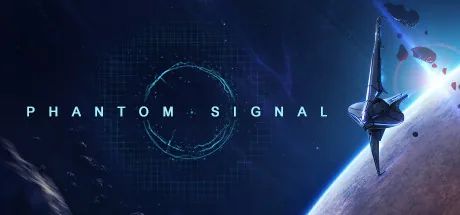
Game review
Phantom Signal
5.5 / 10
- Developer
- Veslo Games
- Publisher
- Veslo Games
- Released
- 16 January 2018
- Platforms
- Windows, macOS, Linux
- Genre
- Real-Time Strategy
- Monetisation
- Premium, one-time purchase, three DLC packs
- Players
- Single-player, with Steam Leaderboards for competitive times
The short version
Phantom Signal drops you into an awakened AI spinning webs of miners, relays and turrets across drifting asteroid fields, and the first few missions of that spider-out-and-defend loop are genuinely satisfying — retract everything into a single glowing knot of energy and weapons, then unspool it again the moment a new wave shows on radar. The trouble is that the loop barely evolves across sixteen story missions and a handful of side objectives, the interface can't keep pace with how fast the later waves arrive, and Veslo Games' own achievements and leaderboards have been broken since the studio's last public appearance in March 2018. A confident debut idea, shipped once and never revisited.
It also isn't hiding its ancestry. Multiple Steam reviewers independently call it a close cousin of The Space Game, the Kongregate browser tower-defense from Flash Element TD creator David Scott — same web-of-relays resource chain, same recycle-and-rebuild rhythm. Phantom Signal dresses that structure in better lighting and a spoken story, but it rarely improves on the system underneath it.
Biggest strengths
- The spider-web resource network — mine, relay, capacitor, turret — makes positioning and rebuild timing the actual skill test, and the early missions teach it well
- Sixteen story missions plus roughly seven side missions is a real campaign for a NZ$7.59 asking price, and it goes on sale often
- A daily-seeded Survival mode gives the loop a reason to keep coming back after the campaign ends
Biggest weaknesses
- Achievements and Steam Leaderboards have been reported broken by multiple players since 2018, with no dev response since Veslo Games' last public post that March — I read every negative review this game has, and broken achievements is the single most repeated complaint in them
- The interface doesn't scale with the game's own pacing: several reviewers describe later missions as an exercise in clicking faster than the enemy attacks, not out-thinking them
- Enemy wave composition leans on a heavy RNG element with limited scouting, so more than one player describes losing runs to compositions they had no way to prepare for
Who it's for: Tower-defense players who remember browser-era flash strategy games fondly and want a cheap, short return to that specific web-of-relays loop, and completionists willing to accept that some of the 52 achievements may never unlock
Our recommendation: Worth it at the price it usually sells for on sale, and the free demo (Phantom Signal — Demo) answers the "is this loop for me" question better than any review can; go in expecting the campaign to plateau by the halfway point and the achievement list to stay partly broken
5.5 / 10
Introduction
Phantom Signal opens with a drifting spaceship jolted awake by an unknown signal, and hands control to the ship's fabricator — an industrial AI tasked with mining resources, threading power across a web of relays, and holding off whatever is attacking while the story figures out what "the phantom signal" actually is. Veslo Games, a small studio previously known for the similarly structured Insects: The Ultimate Formic Simulator, released it on Steam on 16 January 2018 at a NZ$7.59 list price, with three planned DLC packs and — per the store page — hopes of adding trading cards "after Valve lets us activate them." Eight years on, the base game is still there, still cheap, and still built around one clean idea repeated across sixteen missions.
Gameplay
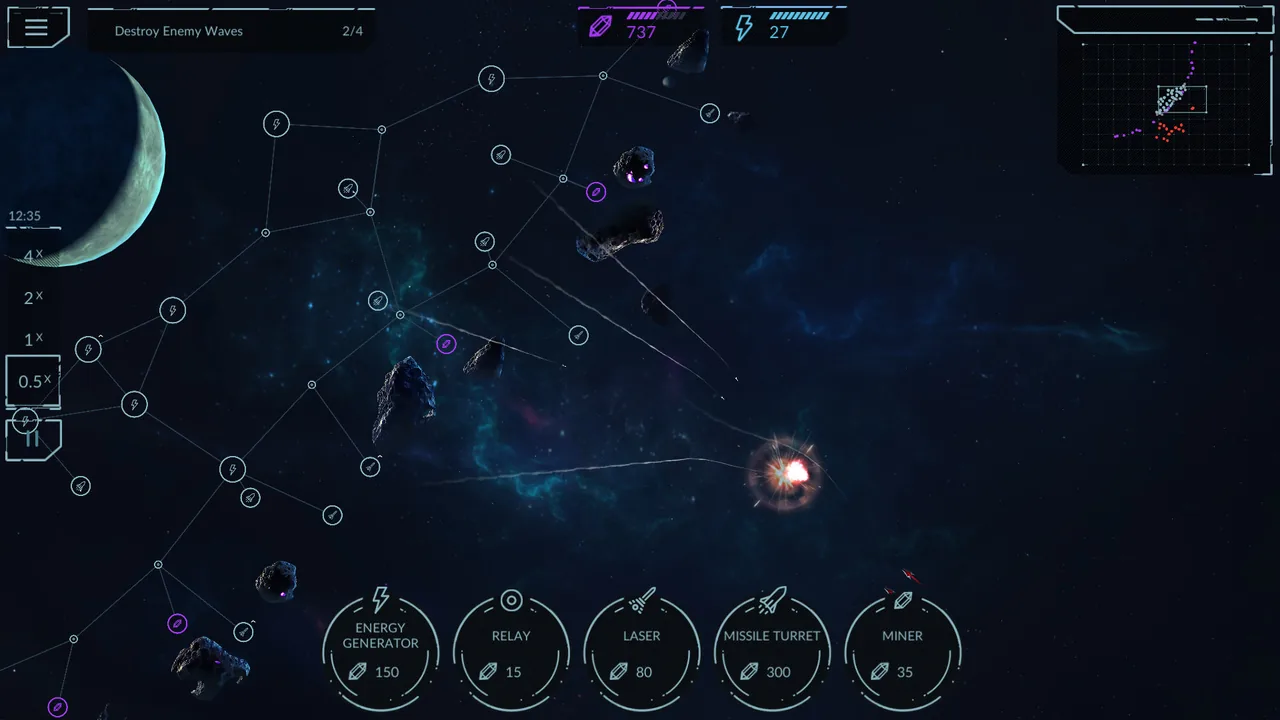
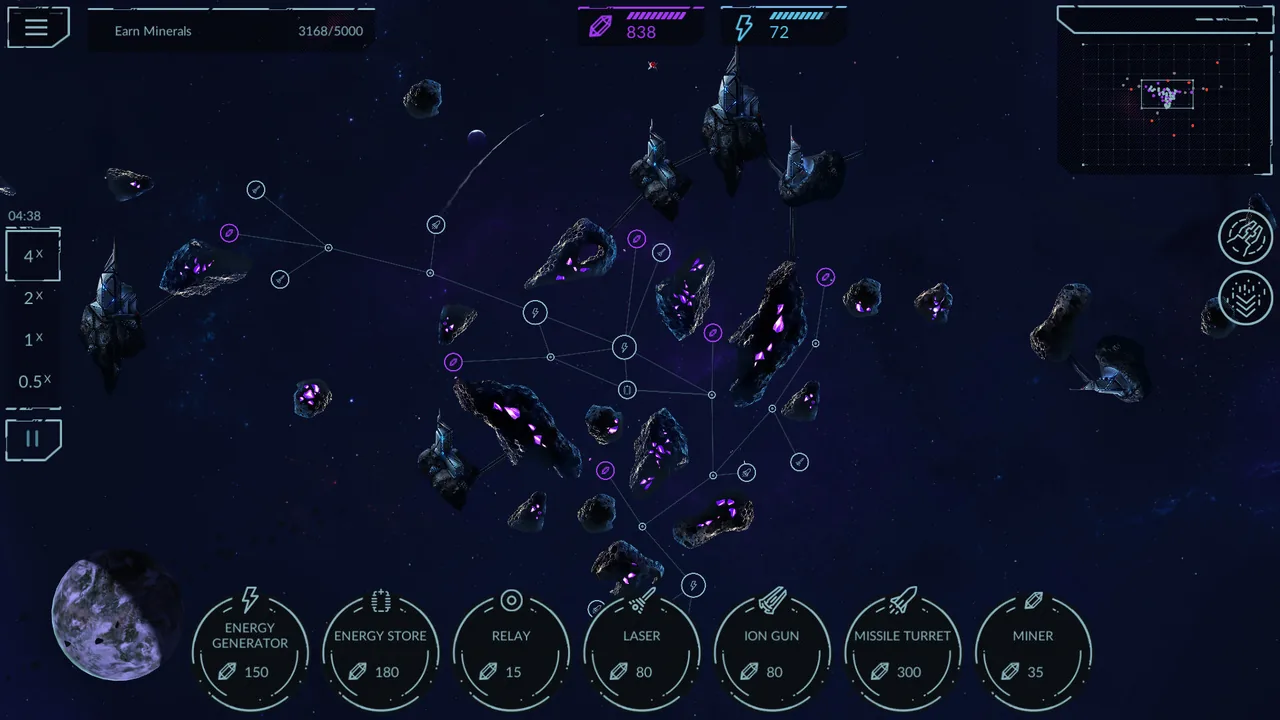
The loop is the whole pitch. Land a fabricator on an asteroid, spend minerals to spider a chain of relays outward to more asteroids, drop miners on anything worth harvesting, and slot turrets, lasers and shield generators wherever the incoming wave demands. Every structure can be recycled for a partial refund, so the real skill isn't building — it's deciding what to tear down and rebuild as a mission's threat profile shifts. One reviewer described the ideal state as retracting the whole network "into a single ball of energy and weapons" the instant danger passes, then unspooling it again the moment radar picks up the next wave. When that rhythm clicks, Phantom Signal earns the "you feel badass" reaction more than one player reported.
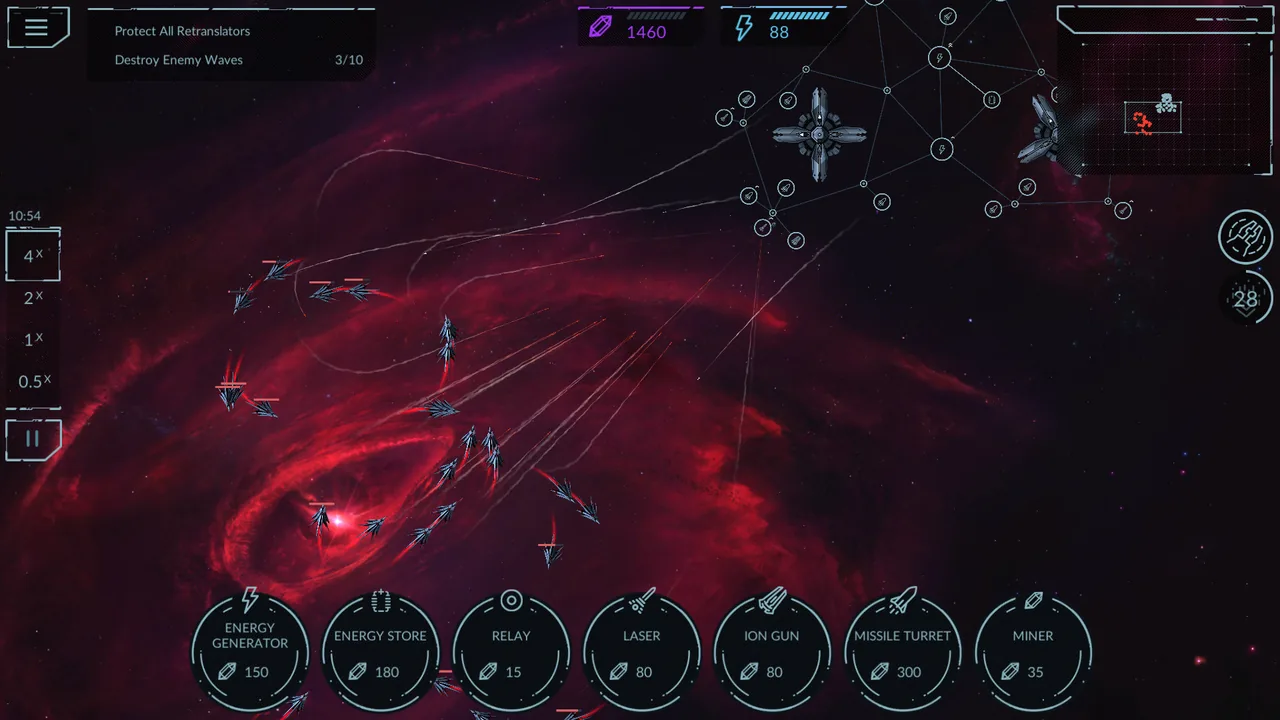
It doesn't stay clicked for long. The building roster tops out at seven structure types across the entire campaign, and several players flagged the same failure mode independently: later missions escalate enemy speed and numbers faster than the point-and-click interface can be driven, so success stops being about strategy and starts being about who clicks faster. A 16-year veteran of the genre's Steam review put it bluntly — strategy "becomes meaningless" once the enemy is simply out-pacing the player's hands. Compounding that, wave composition and enemy origin points carry a heavy random element with limited scouting tools, which more than one negative review singled out as the difference between a fair loss and a cheap one: you often can't know what's coming, or from where, until it's already arriving, and by then the correct counter-build may be several recycle cycles away.
A Survival mode with a daily randomized map gives the structure a second life after the campaign, and it's the mode Wanderer's readers most invested in the genre are likeliest to return to — though even there, reviewers wanted more variety in how that randomization plays out than a single daily seed provides.
Visuals and sound
The asteroid fields are genuinely handsome in screenshots — the store page's "incredibly beautiful deep space" claim isn't far off for the backdrop art, all soft nebula glow and scattered debris fields. The actual play pieces are plainer: buildings and enemy ships read as icons and simple silhouettes rather than modeled objects, which a few players flagged as more mobile-game than PC-game in presentation. It reads fine at a glance and rarely gets in the way of parsing the battlefield, which matters more in a game this click-dependent than any amount of extra detail would. The soundtrack leans stressful and atmospheric to match the "AI under siege" premise; one player specifically called out a high-pitched alert beep as more grating than tense.
Story and structure
The framing — a nameless AI, an unknown attacker, a signal worth chasing across star systems — gives each mission a reason to exist beyond "defend the base," and the sixteen main missions plus roughly seven side missions add up to a real handful of hours, several players clocking four to ten before finishing. The twist, when it lands, is compact enough that one player summarized the entire plot in a single sentence in their own review. It's serviceable scaffolding for the gameplay rather than a reason to play on its own, and more than one reviewer wanted the setup "fleshed out" further than the game ultimately bothers to.
Achievements, support and the abandonware question
This is where Phantom Signal's Steam reputation actually turns. Of 93 English-language reviews at time of writing — 79 positive, 14 negative, a "Very Positive" 85% — the negative slice is small enough that I read every one of them, and the same complaint recurs across nearly all of them: achievements and Steam Leaderboards have been broken for years, Veslo Games' last public forum appearance was March 2018, and bug reports since have gone unanswered. One reviewer called it outright "abandonware." Global achievement-completion data backs up how deep this cuts: the most-earned achievement sits at 51.8% of owners, but the game's harder late-campaign achievements bottom out around 5–7%, a steeper drop-off than difficulty alone typically produces when a leaderboard-linked bug is also in the mix. Several players who otherwise enjoyed the game said the broken achievements were the specific reason they landed on a thumbs-down rather than a thumbs-up. If Steam completion tracking matters to you, budget for the possibility that some of the 52 achievements simply won't fire.
Value
At a NZ$7.59 list price — and reviewers widely note it drops well under a dollar on sale — a four-to-ten-hour campaign plus a Survival mode is a fair trade, and the free standalone demo (listed separately on Steam as Phantom Signal — Demo) removes most of the risk of finding out the loop isn't for you after paying. It compares less favourably the moment you know to look for The Space Game specifically: that older, freely playable browser game covers much of the same resource-web ground, repair mechanics included, for nothing at all. Phantom Signal's case for existing alongside it is a nicer coat of paint, a story wrapper and native desktop play — real things, but not things every reader will value at seven and a half dollars.
Verdict
Phantom Signal is a small, competent riff on a genre idea that's older than the studio's own back catalogue, elevated by a genuinely fun relay-web loop for its first several missions and undercut by a campaign that doesn't grow much past them, an interface that buckles under its own late-game pacing, and a set of achievements and leaderboards nobody has fixed since 2018. It's an easy recommendation on a deep sale for genre fans chasing that specific web-of-relays feeling, and a much harder one at full price for anyone who isn't already sold on the pitch.
Pros and cons
Pros
- The spider-web resource network — mine, relay, capacitor, turret — makes positioning and rebuild timing the actual skill test, and the early missions teach it well
- Sixteen story missions plus roughly seven side missions is a real campaign for a NZ$7.59 asking price, and it goes on sale often
- A daily-seeded Survival mode gives the loop a reason to keep coming back after the campaign ends
- Steam Cloud saves and a free standalone demo make it low-risk to try before buying
Cons
- Achievements and Steam Leaderboards have been reported broken by multiple players since 2018, with no dev response since Veslo Games' last public post that March — I read every negative review this game has, and broken achievements is the single most repeated complaint in them
- The interface doesn't scale with the game's own pacing: several reviewers describe later missions as an exercise in clicking faster than the enemy attacks, not out-thinking them
- Enemy wave composition leans on a heavy RNG element with limited scouting, so more than one player describes losing runs to compositions they had no way to prepare for
- The core structure — mine asteroids, thread relays, defend with turrets, recycle to rebuild — is a close enough read of the older flash game The Space Game that "polished clone" is a phrase that recurs unprompted across the review section
- Only seven building types across the whole campaign, and the roster doesn't meaningfully grow after the opening act
Screenshots
-
Phantom Signal — Sci-Fi Strategy GameImage: Veslo Games via Steam -
Phantom Signal — Sci-Fi Strategy GameImage: Veslo Games via Steam -
Phantom Signal — Sci-Fi Strategy GameImage: Veslo Games via Steam -
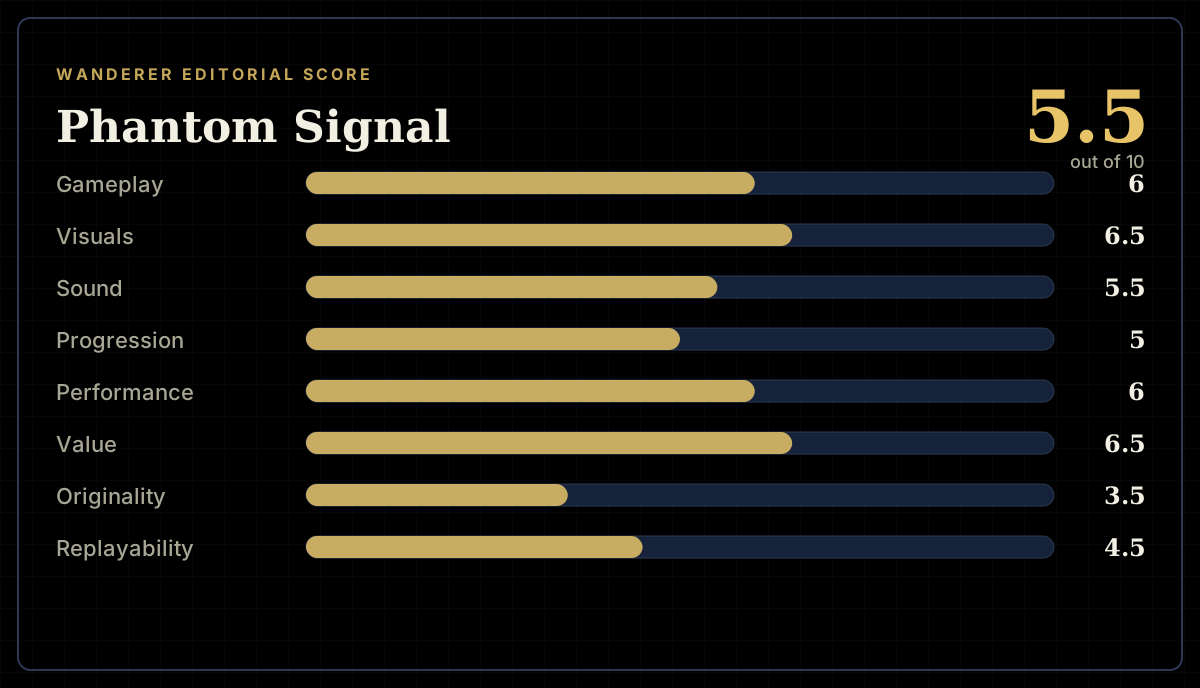
How the review scores each part of the gameWanderer Editorial -
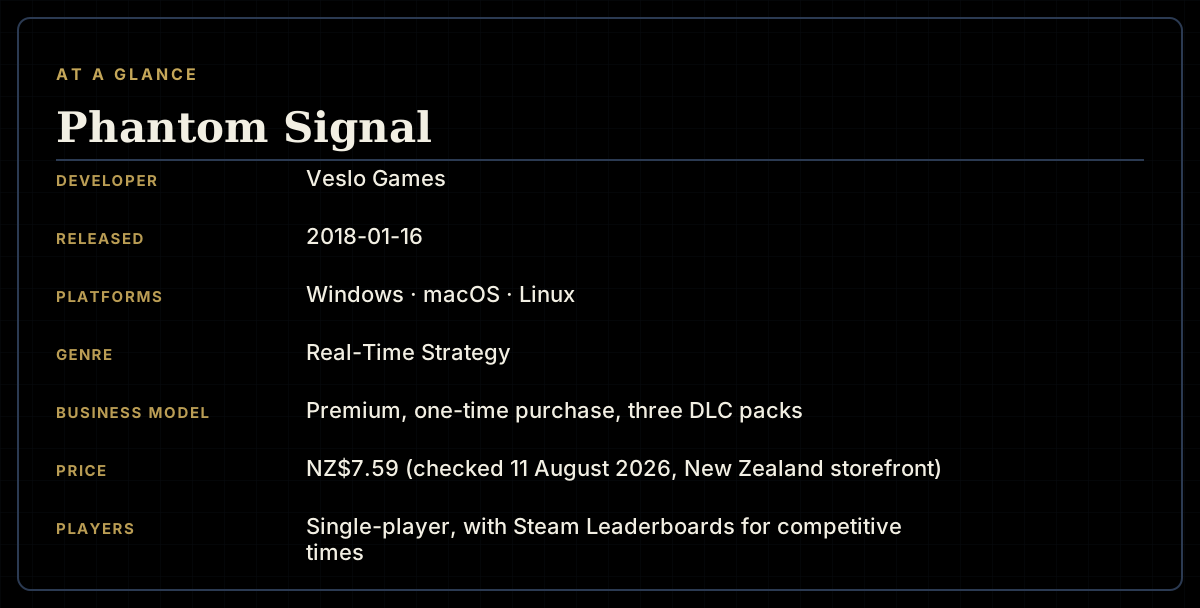
The game at a glanceWanderer Editorial -
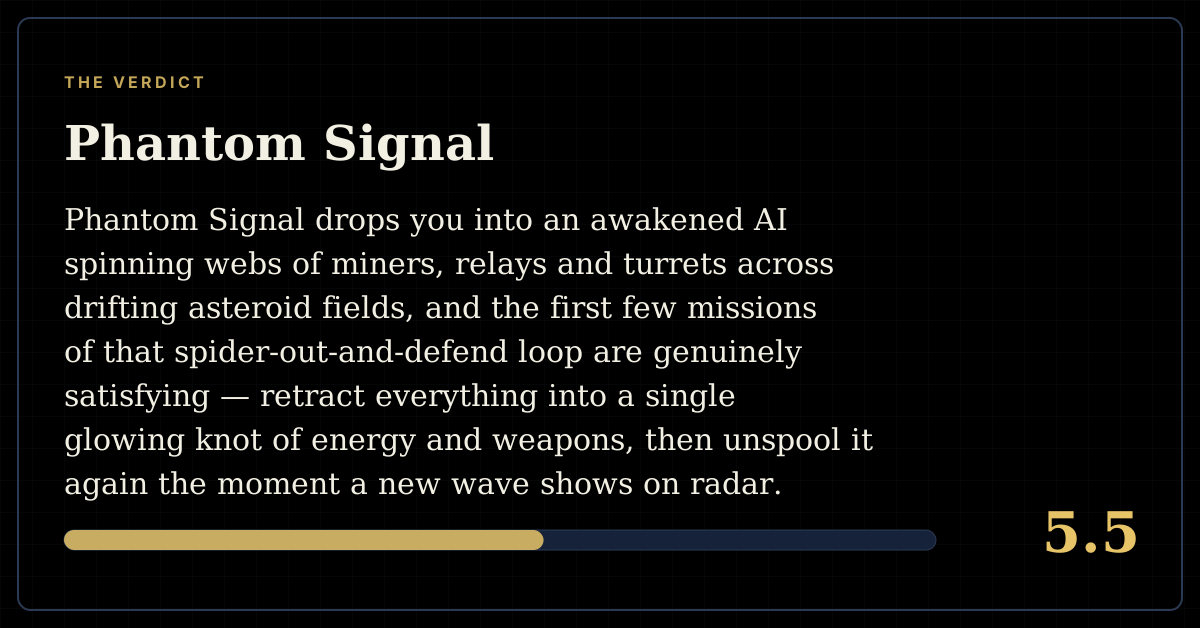
The short versionWanderer Editorial