
Game review
miniBONG
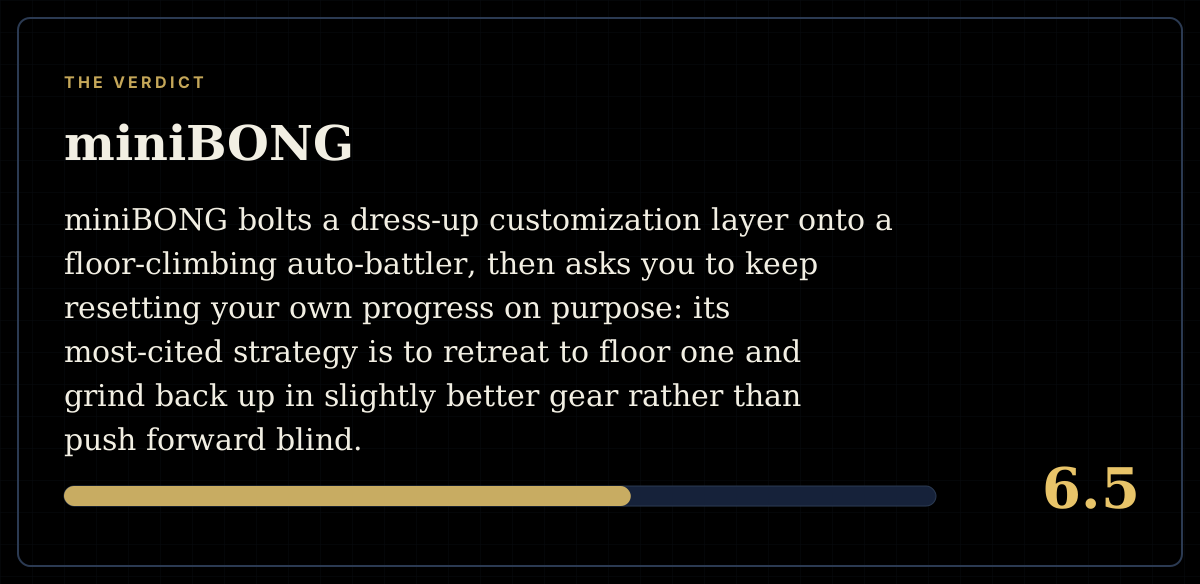
6.5 / 10
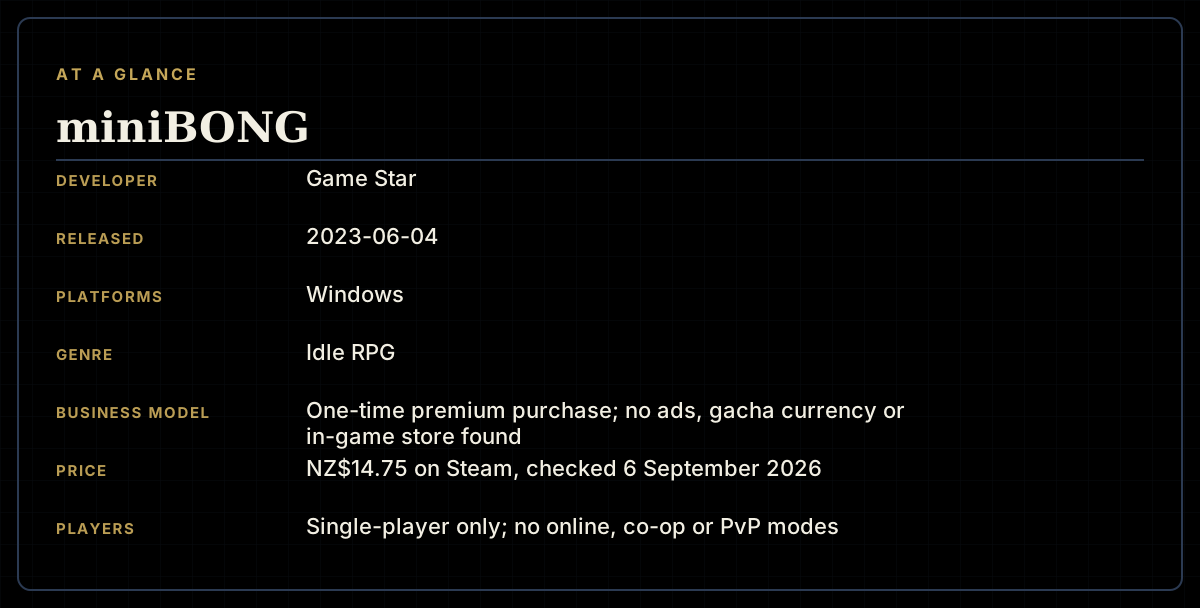
- Developer
- Game Star
- Publisher
- Game Star
- Released
- 4 June 2023
- Platforms
- Windows
- Genre
- Idle RPG
- Monetisation
- One-time premium purchase; no ads, gacha currency or in-game store found
- Players
- Single-player only; no online, co-op or PvP modes
The short version
miniBONG bolts a dress-up customization layer onto a floor-climbing auto-battler, then asks you to keep resetting your own progress on purpose: its most-cited strategy is to retreat to floor one and grind back up in slightly better gear rather than push forward blind. That loop, paired with outfits that are genuinely decorative rather than reskinned icons, is a legitimately fresh combination for the idle-RPG shelf.
What holds it back is everything around the loop rather than the loop itself. The English text reads like an unedited machine translation in places, several stat descriptions never explain what they do, and a meaningful share of reviewers report the game's own autosave turning into a multi-second freeze once a save file grows past the early hours. None of that is fatal at the asking price on sale; at full price it's a harder sell.
Biggest strengths
- The prestige-style "retreat to floor one and re-climb in better gear" loop that top reviews describe is a genuinely different structural hook than the usual "always push forward" idle design
- Outfit customization is cosmetic and separate from stat-optimal gear, so dressing a team up doesn't cost combat effectiveness the way it does in most gear-as-appearance RPGs
- One-time purchase with no cash shop, gacha currency or ads, repeatedly singled out by reviewers who compare it favourably to mobile idle games charging the same way to play
Biggest weaknesses
- English text reads as raw machine translation in places, including stat tooltips that describe percentage effects incoherently
- Multiple reviewers report severe RAM growth and autosave-triggered freezes that worsen the deeper a save file progresses, particularly past floor 1,000
- No item sort, search or filtering, and no bulk or auto-equip option, despite a loot-heavy itemization loop that produces exactly the volume of gear those tools exist for
Who it's for: Idle-game players who want something to half-watch that still rewards deliberate decisions between runs, and who don't mind reading around some rough English localization to get there.
Our recommendation: A solid pickup on a discount, and a much easier one to defend than at full price — go in expecting genuine depth in the gearing and reset loop, and real friction in the text and late-game performance.
6.5 / 10
Most idle games treat character appearance as a side effect of whatever stats you've bolted on — the strongest sword just happens to look a certain way, and if you want your team to look different you generally have to give something up to get it. miniBONG separates those two questions almost entirely. Outfits are their own customization layer, sitting alongside a floor-climbing auto-battler where the standout strategic move, according to a large share of its own audience, is choosing to throw away your progress on purpose.
That's the game's clearest hook and the reason it's built a genuinely loyal, if fairly small, following rather than disappearing into Steam's crowded idle shelf. It's also a game whose rougher edges — a translation that reads like it never got a native-English pass, and a late-game performance problem several reviewers trace to the same feature — are specific and repeatable enough to weigh seriously against that hook.
Climb, then choose to fall
The core loop sends a small squad of chibi-styled fighters through numbered floors of automatic combat, gaining experience, dropping equipment, and unlocking new playable characters as they go. On its own that's a familiar shape for the genre. What isn't familiar is the strategy reviewers converge on once the early floors stop being trivial: rather than grinding forward at the current difficulty ceiling, top-voted feedback consistently recommends retreating back to floor one and re-climbing with whatever better gear has accumulated since the last reset, repeating that cycle rather than pushing blind against a wall. One widely-upvoted review frames it as the entire "meat of the game" — follow the early advice to reset when a run stalls, swap in better gear, and treat each re-climb as the actual point rather than a failure state.
That's a legitimately different structural hook from the "always push forward, occasionally prestige for a permanent bonus" template most idle RPGs use, and it gives moment-to-moment decisions a genuine "is it time to fall back" texture that a simple floor-counter wouldn't produce on its own.
Dressing a team up costs nothing
The customization side backs this up rather than undercutting it. Reviewers repeatedly single out that outfit choices are cosmetic rather than tied to a character's best available stats, meaning players can pursue the dress-up half of the game — described across multiple reviews as surprisingly deep, with dozens of pieces and full outfit sets to unlock — without sacrificing combat performance to do it. That's a real point of separation from RPGs where "gear as appearance" quietly means giving up your best numbers to look a particular way, and it's core to why several reviewers describe the game as scratching two different itches (numbers-go-up idling and dress-up collecting) that rarely sit in the same package.
The business model reinforces the same read: a single upfront purchase with no cash shop, no gacha currency layered on top of the equipment drops, and no ads. Several reviewers explicitly contrast this with mobile idle games charging the same core loop through a currency-and-gacha structure, treating the flat price as a selling point rather than a formality.
The text gets in its own way
Set against that is a translation quality problem specific and consistent enough across reviews to treat as a real defect rather than a nitpick. One reviewer quotes a stat tooltip reading "5% increases damage immunity by 30% lasting 5 seconds on attack" as a representative example of text that parses as machine-translated rather than edited for English. Beyond individual garbled lines, several reviewers report that some stats are never explained at all — one specifically calls out an unlabelled "Force" stat with no in-game description of what it does, which matters more than usual in a game whose stated appeal is optimizing a build between climbs. The June 2026 patch's addition of a DPS counter is a direct, if partial, response to that specific complaint, giving players one more piece of previously invisible information — but broader stat-tooltip clarity and the raw translation quality don't appear to have been addressed by any patch note on record.
The interface gap compounds itself at scale: with no item sort, search, or filter, and no bulk or auto-equip option, managing a loot-heavy itemization system as it grows becomes progressively more manual busywork rather than less, which is exactly backwards for a genre whose whole premise is reducing manual overhead.
A specific, reviewer-traced performance problem
The most serious recurring complaint isn't difficulty or content — it's a late-game performance issue several reviewers describe in near-identical terms: RAM usage climbing well past 3GB and staying there, worsening the deeper a save file progresses, with periodic autosaves triggering multi-second freezes that one reviewer describes as the game becoming "unresponsive, borderline crashing" specifically past floor 1,000. That's a concrete, reproducible-sounding complaint rather than vague "it runs badly," and it's specific enough — tied to autosave timing and save-file size rather than general hardware requirements — that it reads as an unoptimized save/serialization system rather than an unavoidable cost of a graphically demanding game. Whether it's been addressed isn't verifiable from the patch notes on record; the June 2026 "save file fix" note gives no detail on what it actually changed.
Global achievement data offers a useful counterweight to how discouraging that sounds: 80.1% of players reach floor 100, and the drop-off to floor 1,000 (30.7%) is a steady, gradual decline rather than a cliff at any single point — including right around where the performance complaints concentrate. Read together, the loop clearly holds a meaningful share of its audience well past the point where the reported performance problem should be biting, even if it isn't pleasant for the players it does affect.
Support, then silence, then one more patch
miniBONG's own update history tells a fairly standard small-studio story with one late wrinkle. Launch in June 2023 came with a genuine burst of near-daily patches through the month, plus a community "DIY Dress-up" outfit event, then one more update at the end of October 2023. After that, the developer's public Steam activity shifts almost entirely to promoting other, unrelated titles — a "Flash Doll" release pushed through late 2024, then a "NiuMa" demo through mid-2025 — before miniBONG saw any further attention. That's roughly two and a half years of the developer's visible energy going elsewhere, which lines up with reviewer complaints that specific reported bugs (the non-functional stat bonuses noted above, among others) went unaddressed for a long stretch. The June 2026 return — a save-file fix and the DPS counter — is real and dated, so "abandoned" isn't quite accurate at review time, but it's also thin enough that treating the game as actively maintained would overstate what's actually on record.
Where it lands
At full price, miniBONG asks NZ$14.75 for a game whose own reviewers are consistently more enthusiastic about it at the one-to-four-dollar range it regularly sees on sale — several positive reviews explicitly frame their recommendation around the discount price rather than the list price, and at least one reviewer says outright they'd have refunded at full price despite enjoying it on sale. That's a fair way to think about the whole package: a genuinely inventive reset-and-regear idle loop with real, stat-independent dress-up depth, sold at a price its own happiest players think is a little steep, wrapped in text that needed another editing pass and a save system that a meaningful slice of reviewers say chokes on its own file size once you've put real time in.
Pros and cons
Pros
- The prestige-style "retreat to floor one and re-climb in better gear" loop that top reviews describe is a genuinely different structural hook than the usual "always push forward" idle design
- Outfit customization is cosmetic and separate from stat-optimal gear, so dressing a team up doesn't cost combat effectiveness the way it does in most gear-as-appearance RPGs
- One-time purchase with no cash shop, gacha currency or ads, repeatedly singled out by reviewers who compare it favourably to mobile idle games charging the same way to play
- A steady, gradual achievement completion curve (80% reach floor 100, roughly 31% reach floor 1,000) rather than a cliff, suggesting the core loop holds attention well past the opening hours
- The June 2026 patch added a DPS counter, directly answering an earlier complaint that combat stats were invisible
Cons
- English text reads as raw machine translation in places, including stat tooltips that describe percentage effects incoherently
- Multiple reviewers report severe RAM growth and autosave-triggered freezes that worsen the deeper a save file progresses, particularly past floor 1,000
- No item sort, search or filtering, and no bulk or auto-equip option, despite a loot-heavy itemization loop that produces exactly the volume of gear those tools exist for
- Some stat bonuses are reported as non-functional by reviewers, with no patch note addressing the specific reports found
- After a real burst of daily patches at launch in June 2023 and one more in October, the developer's public activity shifted to promoting other, unrelated games for roughly two and a half years before returning with a save-file fix and the DPS counter in June 2026
Screenshots
-
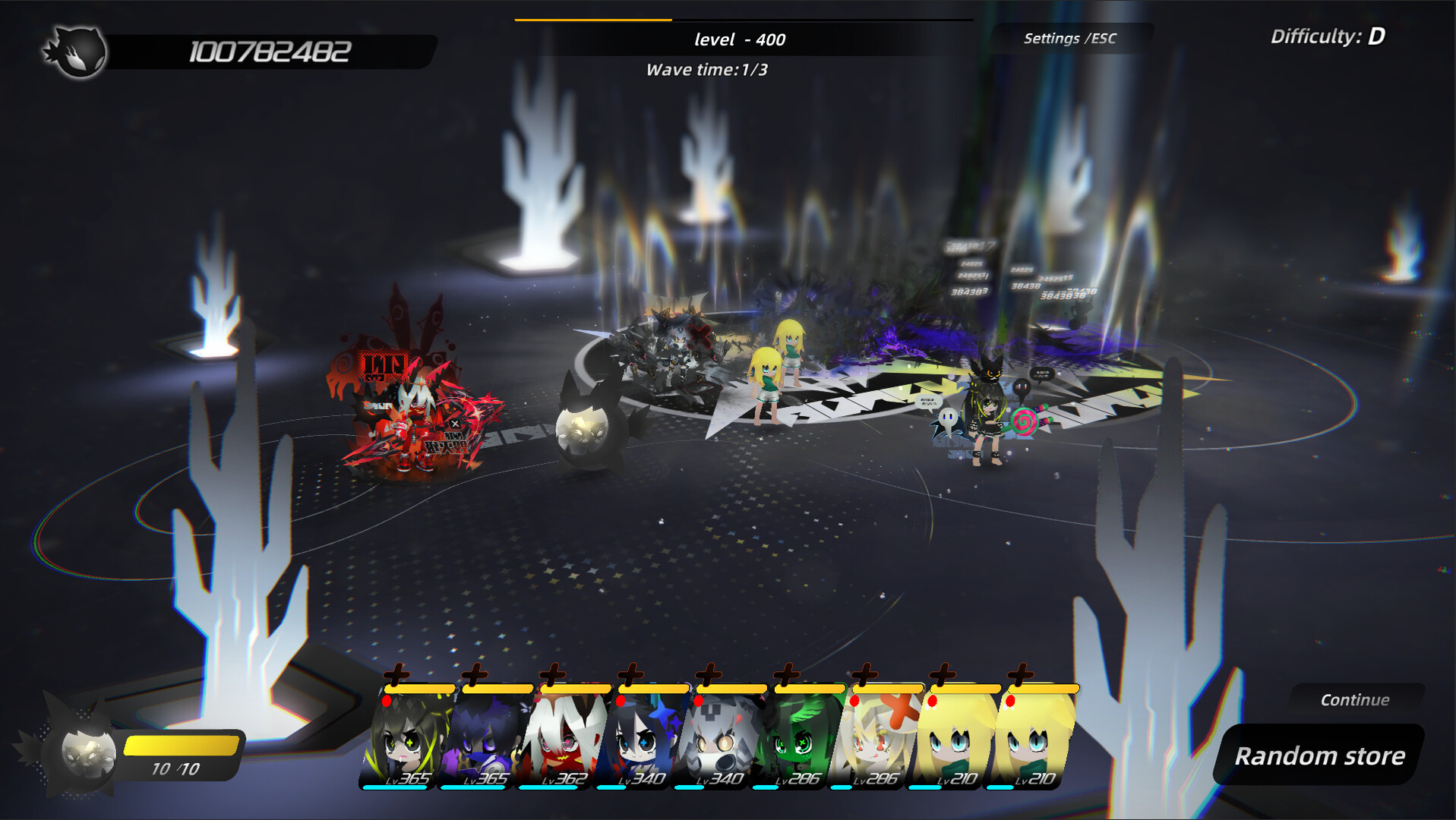
miniBONGImage: Game Star via Steam -
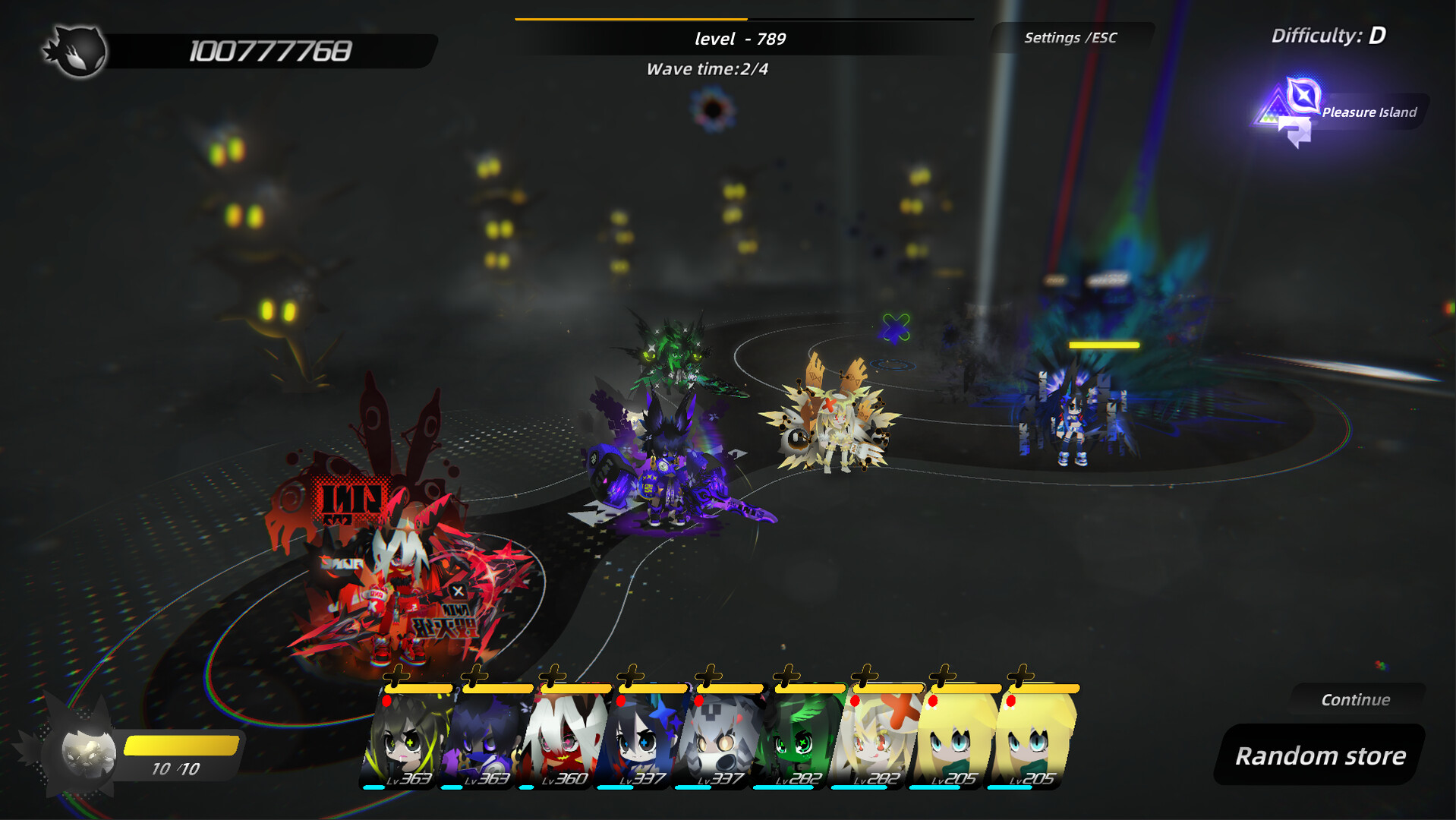
miniBONGImage: Game Star via Steam -
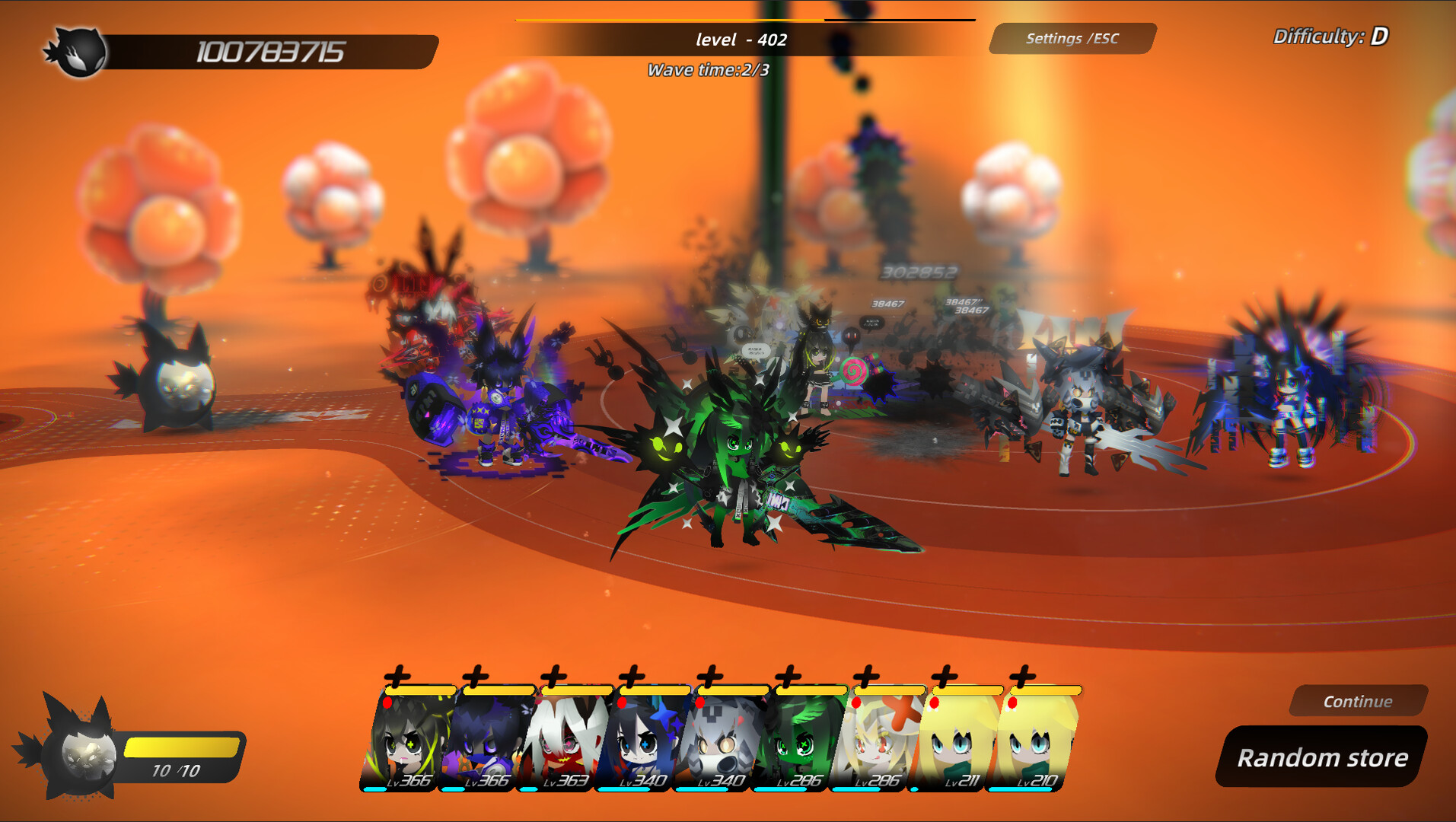
miniBONGImage: Game Star via Steam -
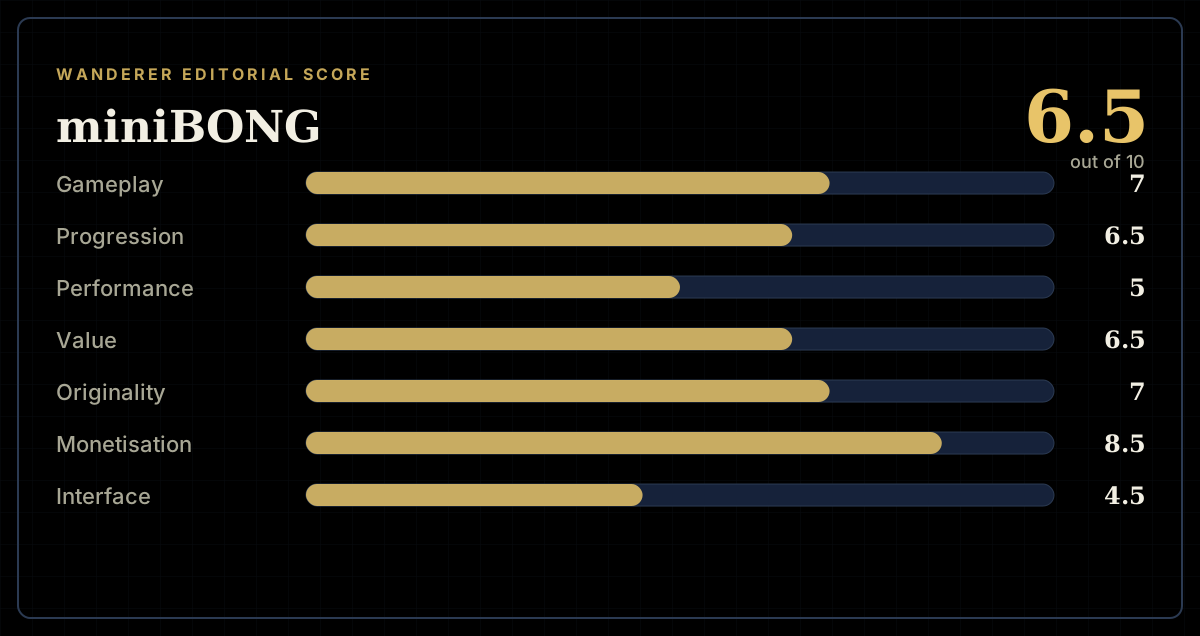
How the review scores each part of the gameWanderer Editorial -
The specsWanderer Editorial -
The short versionWanderer Editorial