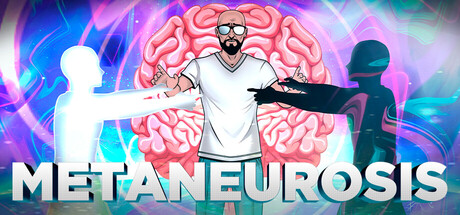
Game review
Metaneurosis
6.9 / 10
- Developer
- Lazy Dev Studio
- Publisher
- Lazy Dev Studio
- Released
- 20 August 2026
- Platforms
- Windows
- Genre
- RPG
Two Reviews, Both Glowing
Metaneurosis launched on Steam on 20 August 2026 from solo developer Lazy Dev Studio, and at the time of writing it has exactly two user reviews — both positive. That's a small sample, but both reviews are substantive rather than one-line thumbs-ups: one reviewer, three hours in, describes the game's corporate-dread premise as hitting close to home and praises its old-school references and easter eggs; the other, further in at just under two hours logged, specifically calls out the tactical combat's learning curve, praises a "solid tutorial" for easing new players in, and singles out the dialogue system as "sharp, flexible, and full of personality," with room to either play along with corporate expectations or "throw verbal grenades" instead. Both reviewers frame the developer as actively responsive to feedback, which is worth noting directly as early, if thin, evidence of post-launch support.
A Surreal Corporate Nightmare, Turn-Based
The pitch is a genuinely distinctive one for the RPG space: a surreal, story-rich turn-based tactical RPG that filters corporate-office dread and personal anxiety through absurdist fantasy, with mindscapes populated by talking skeletons, undead seagulls, and an "occasional flying walrus." The store page frames it as "a love letter to RPGs, and to the beautiful mess of being human stuck in the corporate trap," and the achievement list backs that dual tone up directly — alongside more conventional milestones like "Awakened" and "Emergence" sit achievements named "Corporate Trap Avoidance," "Conspiracy Averted," "Disparaged," and the deliberately nonsensical "Tobogganed Mantis" and "Snilbog," a strong signal that the game commits to its tonal mix of dark humor and something more sincere underneath rather than treating the absurdism as a one-note gimmick. One of the two existing reviews backs this up in practice, describing memorable characters that "hit especially hard if you've ever been the low rung in a corporate ladder" — evidence the tonal balance the store page promises actually lands for at least one real player. A screenshot of the overworld hub grounds the tone visually too: ordinary NPCs play volleyball and shoot hoops in a mundane pixel-art park, complete with benches and a pond, an intentionally normal backdrop for the surreal breakdowns the store page promises will follow once combat starts.
The "flying walrus" the store page jokes about turns out to be a genuine, non-trivial combat encounter rather than a throwaway punchline: one battle screenshot shows a walrus boss sitting at 911 remaining HP while taking ongoing bleed damage, a considerably larger health pool than the goblins and skeletons fighting alongside it, and the battlefield is dotted with small "RIP" gravestones as a running dark-humor sight gag rather than a one-off image.
Tactical Combat With a Personality Problem to Solve
Combat is turn-based and party-based, built around what the store page calls "a party of uniquely unstable characters" with a mix of "ridiculous and powerful abilities" — the explicit joke being that party members' quirks and mental hang-ups are baked directly into their combat kit rather than being purely cosmetic flavor text. The existing player feedback confirms this isn't a shallow system dressed up in interesting names: one reviewer specifically flags that the tactical system "takes a bit of getting used to," which reads as a real, if modest, layer of mechanical depth rather than a paper-thin turn order, and credits the developer's tutorial with successfully bridging that learning curve for a new player. A combat screenshot confirms status effects are a real part of that tactical layer rather than a cosmetic flourish — a Forest Goblin Shaman is shown being inflicted with Shock mid-battle, and a separate encounter shows bleed damage ticking down a boss's health bar over multiple turns — while a row of turn-order and action icons along the bottom of the screen, including a greyed-out option, suggests some abilities or actions carry cooldowns or resource costs that aren't always available. For players who'd rather skip combat friction entirely, the store page also advertises an "Optional Story Mode" that lets the full narrative, humor, and emotional beats play out without any tactical challenge at all — a sensible accommodation for a game whose main draw, per both existing reviews, may be its writing and characters as much as its combat system.
Character Creation and a Progression Layer Beyond Stats
Beyond the combat numbers, the store page promises character creation and a customisation layer that lets players "personalize your look and unlock new outfits as you push deeper into yourself" — tying cosmetic unlocks directly to narrative progress rather than treating them as a separate grindable system. Combined with the "Puzzles, Secrets, and Side Quests" the store page promises across each surreal mindscape, the shape of Metaneurosis's structure looks closer to a compact, exploration-driven RPG with a handful of distinct hub worlds than a pure combat gauntlet, though with only 17 total Steam achievements against the more sprawling completion lists common in the genre, the overall scope reads as tightly scoped rather than sprawling — a reasonable trade for a single-developer project working in a genre known for scope creep. A visible "55/100 SP" readout in the overworld hub confirms there's a spendable resource tracked outside of combat as well, though the store page doesn't spell out exactly what it's used for, leaving its precise role as an open question rather than a confirmed system.
Price, Scope, and What Two Reviews Can't Yet Confirm
At NZ$21.99, Metaneurosis sits at a moderate price for a tactical RPG, reasonable if the roughly-tutorial-through-multiple-mindscapes structure the store page describes delivers several hours of distinct content, though with only 17 achievements and two reviews logging three hours and under two hours respectively, there isn't yet enough outside data to confirm total run length with any confidence. It's Windows-only, single-player, English-only with no other listed language support, and carries no accessibility category tags beyond basic Family Sharing — a narrower accessibility footprint than some of its genre peers, worth flagging plainly for players who rely on those options. Both existing reviews are enthusiastic rather than lukewarm, but a sample of two is still a sample of two, and claims about pacing, difficulty balance, and how well the surreal humor holds up across a full playthrough remain open questions that will need a larger review base to properly settle.
Verdict
Metaneurosis pairs a genuinely distinctive premise — corporate anxiety and personal dread rendered as absurdist turn-based tactics — with early, if sparse, player feedback that specifically praises its tutorial, its dialogue writing, and characters that land emotionally underneath the jokes. A tightly scoped achievement list and an optional story-only mode suggest a developer being deliberate about accessibility of experience rather than padding for length, and the two reviews so far, thin as they are, both single out real mechanical and narrative strengths rather than just general enthusiasm. Whether the tactical system has enough depth to sustain a full playthrough at this price, and whether the surreal tone holds together once the initial novelty wears off, remain fair questions for a two-review launch, but the ingredients here look more considered than most single-developer RPGs manage at NZ$21.99.
Screenshots
-
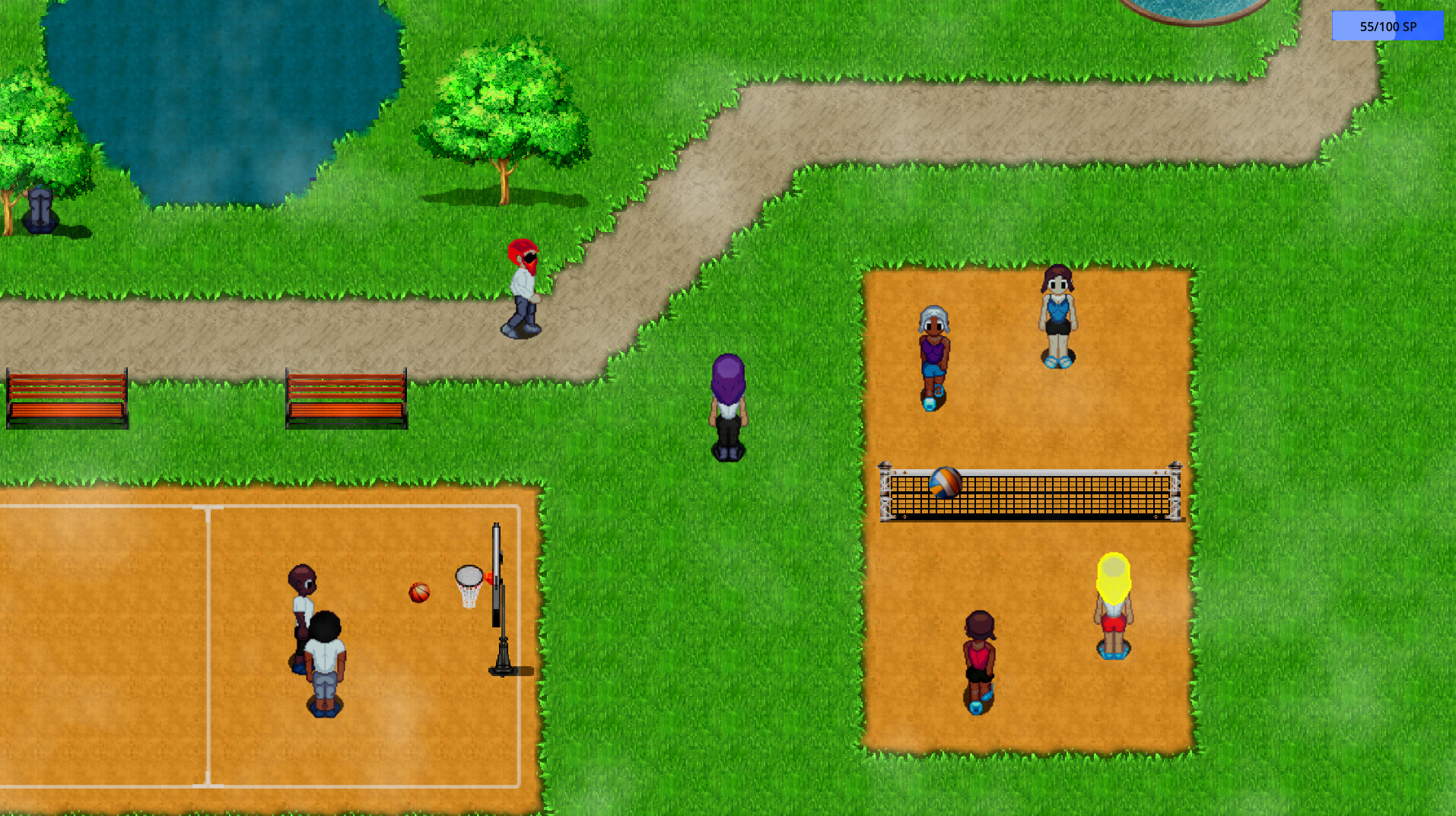
The overworld hub, populated by NPCs playing volleyball and basketball, with an SP resource tracked in the corner.Steam store page -
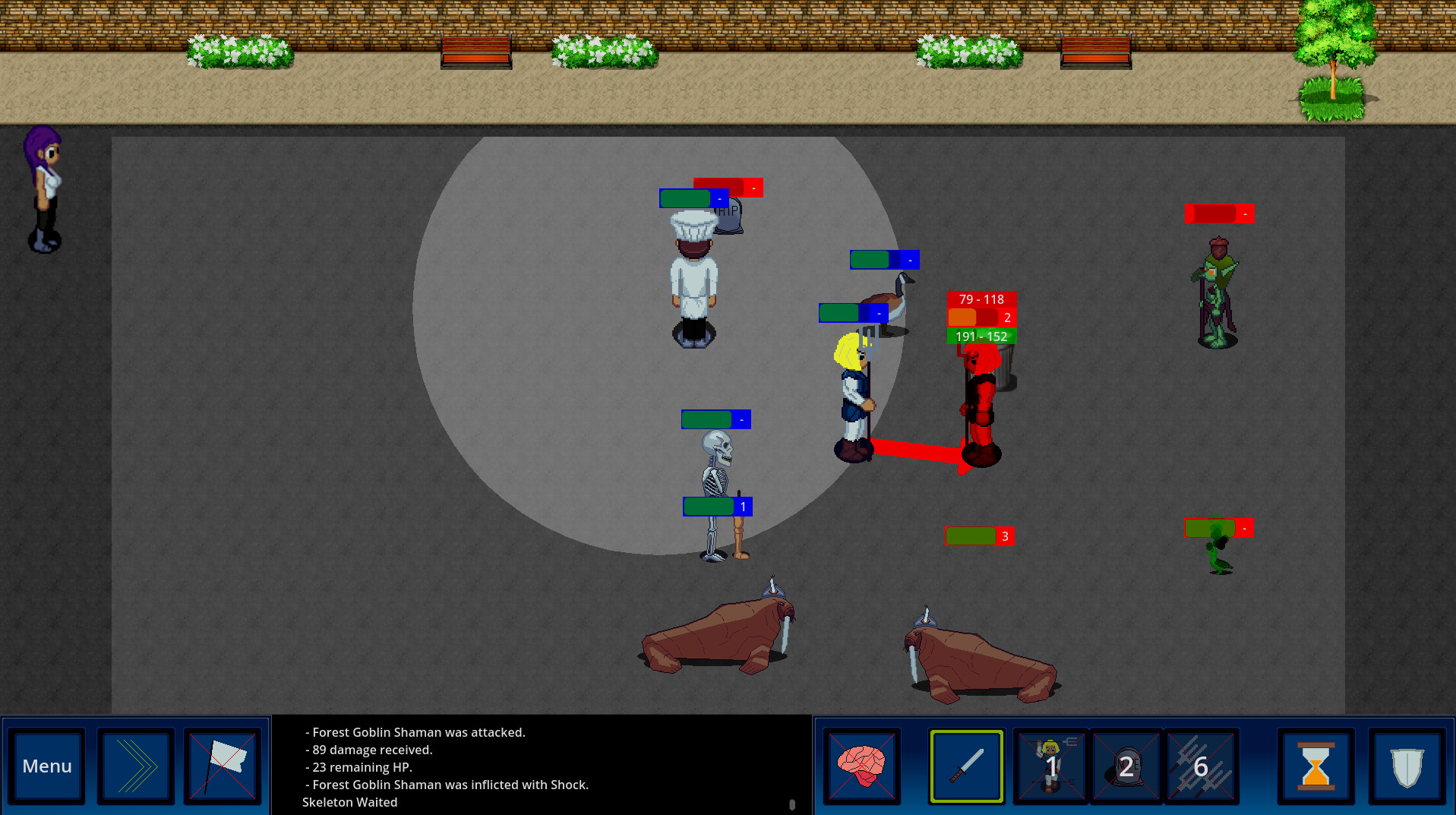
Turn-based combat against a Forest Goblin Shaman and a pair of walruses, with a Shock status effect landing mid-fight.Steam store page -
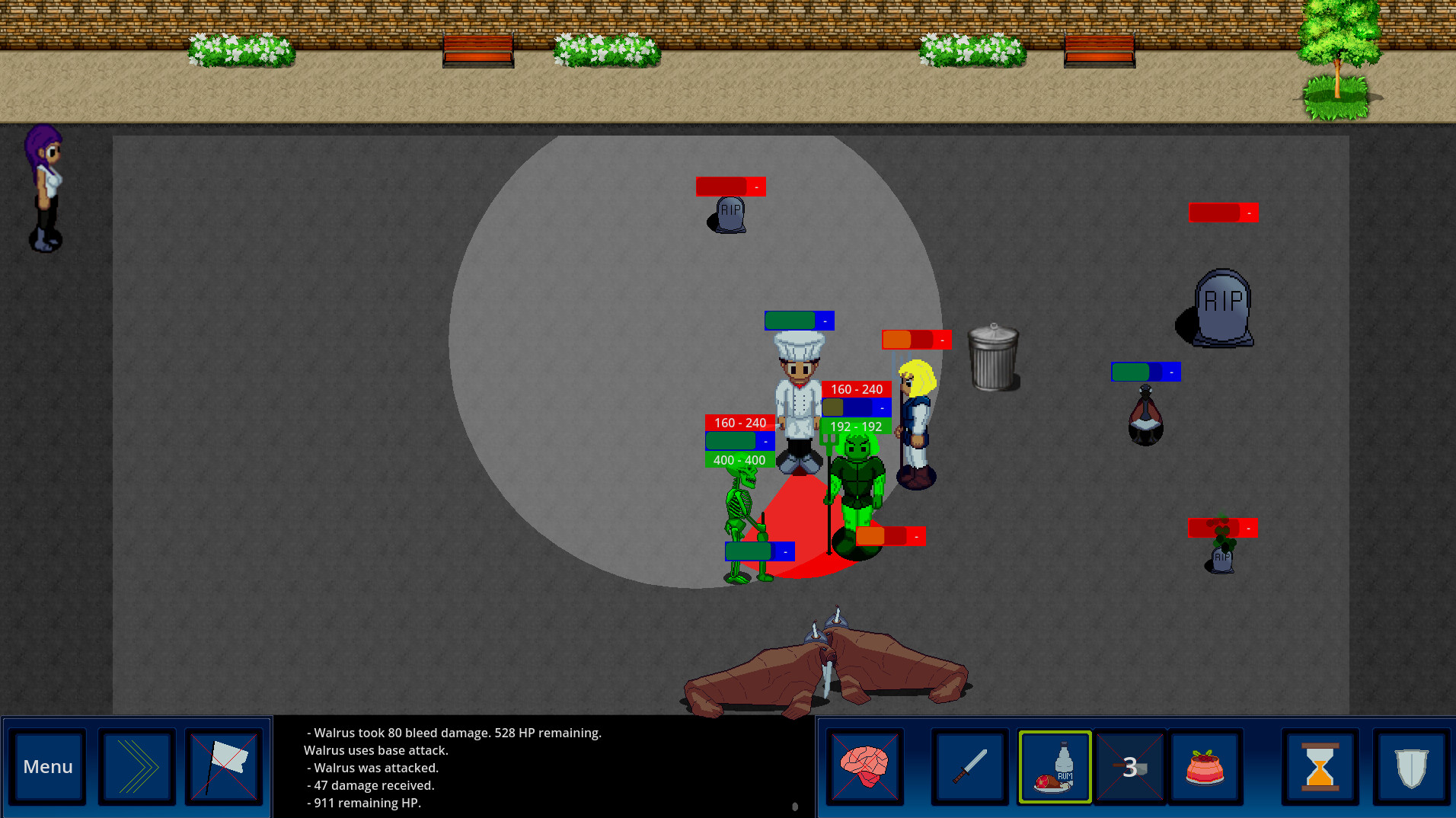
The same battle later on, with a high-HP walrus boss taking ongoing bleed damage while RIP gravestones dot the battlefield.Steam store page