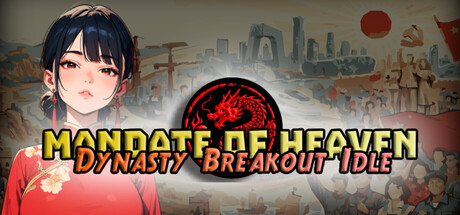
Game review
Mandate of Heaven: Dynasty Breakout Idle
7.1 / 10
- Developer
- genkakusoft
- Publisher
- genkakusoft
- Released
- 3 July 2026
- Platforms
- PC
- Genre
- Idle Incremental Brick-Breaker
Four thousand years of history, reduced to a self-playing brick-breaker
Mandate of Heaven: Dynasty Breakout Idle takes a genuinely odd premise — an idle incremental built on brick-breaker mechanics, marching through the entirety of Chinese history from the Xia dynasty onward — and commits to it fully. Released 3 July 2026 by solo studio genkakusoft for NZ$7.49, it strips away the one skill-based element brick-breakers usually keep (aiming a paddle) and replaces it with pure automation: units launch themselves, chain-bounce through stacked crates, and grind currency out of the wreckage while you spend it on more units, upgrades, and historical heroes.
Community tags mark it correctly as both Incremental and Idler, and the premise earns that label — there's genuinely no way to lose, and the loop is explicitly designed to be left running or checked in on periodically, the same rhythm as any other clicker or idle RPG, just wearing brick-breaker mechanics instead of a stat sheet.
A distinctive spin on a crowded genre
What sets this apart from the dozens of other idle games chasing the same "numbers go up forever" appeal is the brick-breaker chassis itself. The screenshots show a genuinely busy, kinetic battlefield: chains of small projectiles arc and bounce across the screen, stacked crates labelled with Chinese characters absorb hits and shatter, and a prominent rally combo counter (visible reaching x280 and x122 in separate screenshots) tracks unbroken bounce streaks. It's a much more visually active idle game than the genre's usual static number-farms, closer in feel to a bullet-heaven auto-battler than a traditional incremental — which lines up with the Bullet Heaven and Auto Battler tags the community has already applied.
The historical framing does real work here too. Rather than a generic fantasy skin, the game marches through actual dynasties — the screenshots show transitions into the Shang and Zhou periods specifically, each introduced with a title card and flavour text ("His Pleasure Pavilions Burn" for the Shang transition) — and populates its hero-recruitment system with real and legendary Chinese historical figures. One screenshot shows an anime-style portrait card for Wu Zetian, China's only reigning female emperor, alongside a sidebar queue of timed bonus events invoking Lu Bu, Zhuge Liang, and Mao Zedong. Folding a genuine sweep of Chinese history — from ancient dynasties through to modern political figures — into hero-unlock flavour text is an unusual choice that the developer's own store page leans into rather than downplays, promising heroes, bosses, and bonuses drawn from "the entirety of Chinese history."
Numbers that actually feel like they're climbing somewhere
The screenshots show scores in the trillions (2.50T) alongside individual resource currencies in the tens of millions, which is standard idle-game escalation, but the six-currency resource bar and the Heroes/Prestige counters visible in every screenshot suggest a genuinely layered economy rather than one number scaling up in isolation. A prestige system (shown tracked in "MP" alongside a hero-collection counter reading 50.04K/800) gives long-term players a reset-and-improve loop on top of the moment-to-moment brick-breaking, and the store page's claim of over 30 achievements and multiple leaderboards points toward real replay incentive beyond just watching one number grow.
The two Steam reviews on file back this up directly. One reviewer logged just under two hours and praised "a nice twist on the upgrade part," while the other logged over 3,000 minutes — more than fifty hours — and specifically called out the escalating unit power and hero-summoning system as the draw, comparing the moment-to-moment rush to Megabonk despite the genre difference. A fifty-hour engagement from an idle-game reviewer is a meaningfully strong signal of sustained progression appeal, even from a sample of just two reviews.
Where the density works against it
The screenshots are also the clearest evidence of the game's biggest weakness: information density. Numbers, Chinese-character resource icons, floating damage text, and combo counters all compete for space simultaneously, and several of the smaller UI elements (the six resource-currency icons along the top bar, in particular) are rendered small enough that reading them at a glance requires real effort even in a still screenshot, let alone during active play. That's a common idle-game problem, but Mandate of Heaven's busier brick-breaker visuals compound it rather than easing it — the same chaotic energy that makes the genre spin fresh also makes the HUD harder to parse than a typical stat-list idler.
With only two reviews on record, there's no way to confirm whether this becomes a genuine friction point over dozens of hours or fades into background noise once a player learns the icon language, and that uncertainty is reflected in a more conservative interface score than the rest of the systems earn.
Where this lands
Mandate of Heaven: Dynasty Breakout Idle takes a real risk on genre-blending — idle economy management wrapped around brick-breaker action and a genuine trip through Chinese dynastic history — and the evidence so far, both from the store's own screenshots and from a small but enthusiastic review base, suggests it mostly pays off. The historical hero system and prestige loop give it more identity than the average idle release, even if the interface needs room to breathe as more systems stack on top of each other. At $7.49 with a fifty-hour positive account already on record, it's a reasonable bet for idle-genre players looking for something visually busier than the norm, tempered by the fact that a two-review sample can't yet confirm how it holds up at the genre's usual hundred-plus-hour horizon.
Screenshots
-
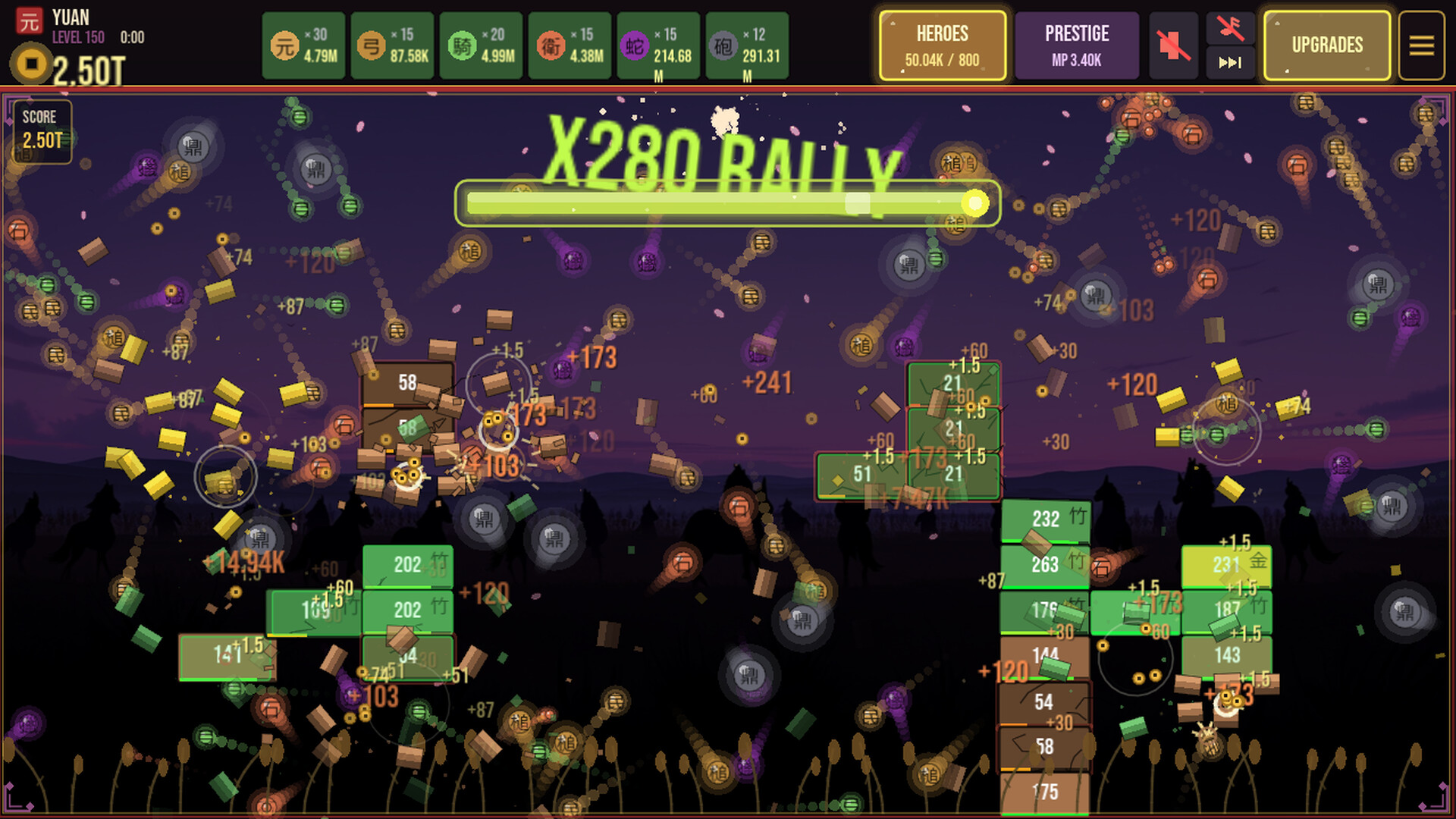
The core loop is a self-playing brick-breaker: units auto-launch, chain-bounce, and grind stacked crates down while numbers climb into the trillions.Steam store page -
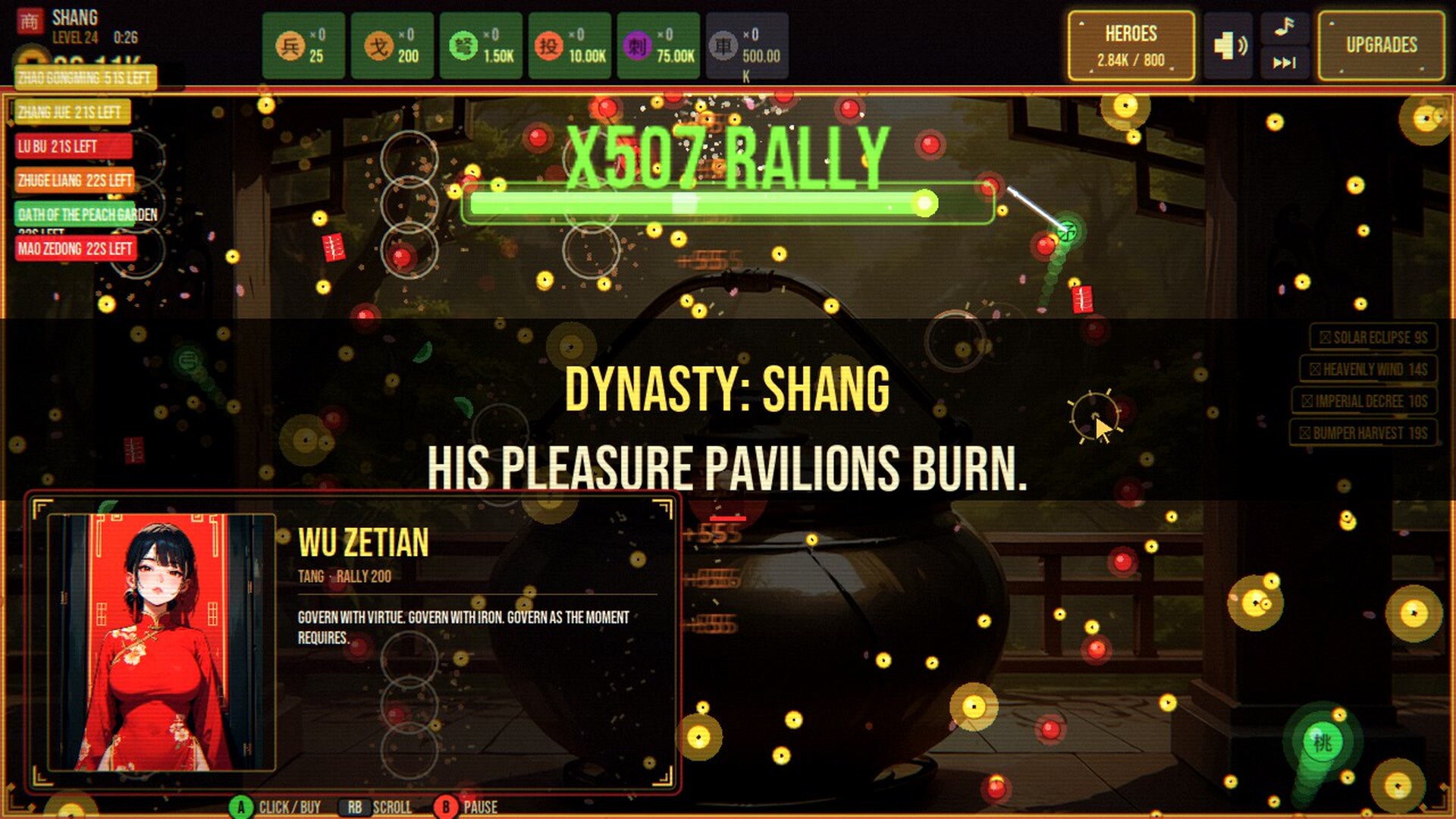
Dynasty transitions pull in named historical and legendary figures as unlockable heroes and timed bonus events.Steam store page -
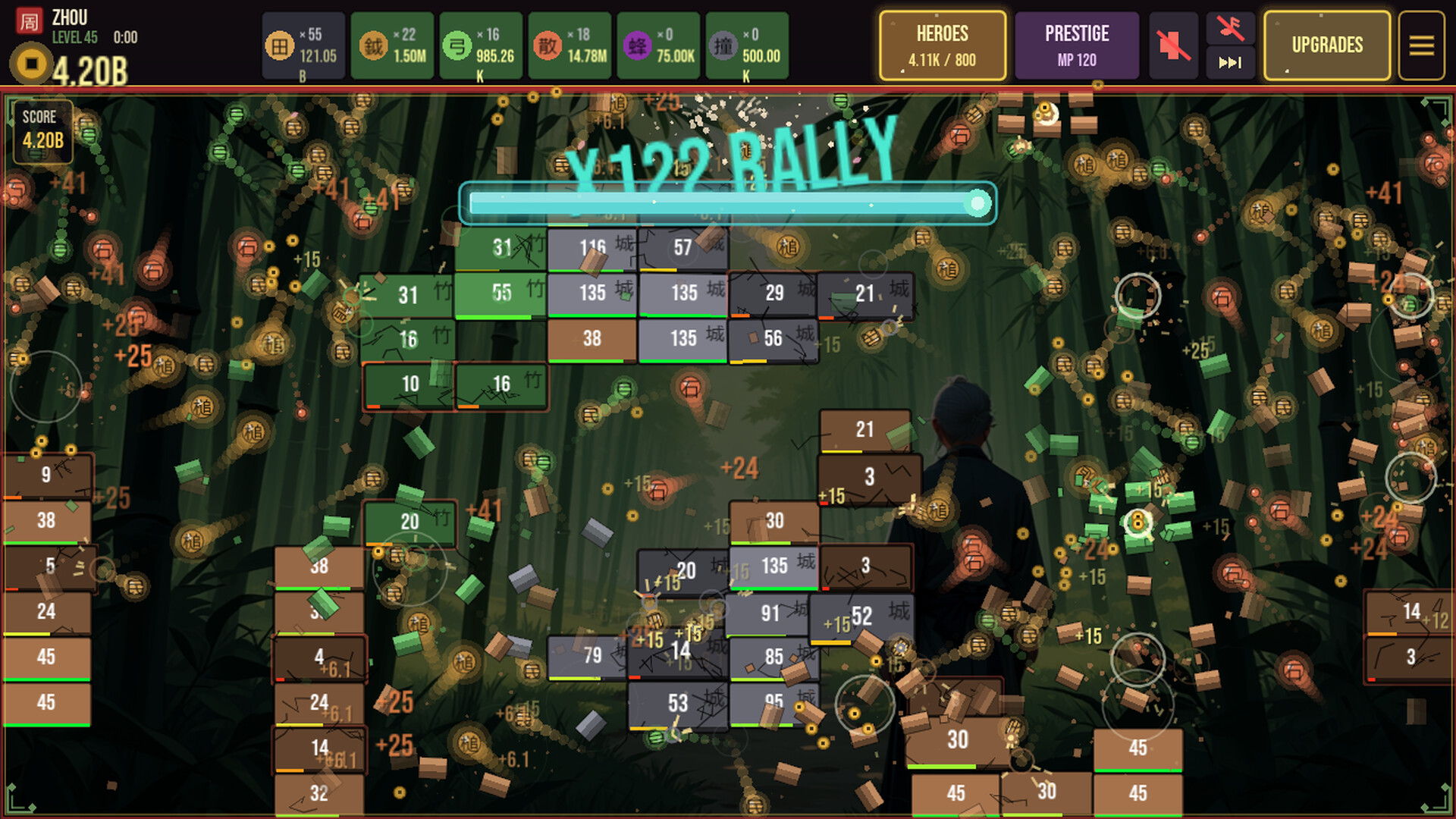
Later dynasties add denser brick fields and taller combo chains without changing the fundamental hands-off loop.Steam store page