
Game review
Sky Scaffold
6 / 10
- Developer
- Asleepius Games
- Publisher
- Asleepius Games
- Released
- 16 September 2026
- Platforms
- PC
- Genre
- Colony Sim / Idle Strategy
A one-person colony sim with more ambition than polish
Sky Scaffold is a solo project from developer Jordan "Asleepius" Haus, released into Early Access on 16 September 2026 for NZ$13.25. The pitch is a vertical industrial colony built on an alien world in a setting called the Fourcade Expanse, where you climb from a handful of scavenged machines to a fortified tower defended against raiders and deep-space fleets. The hook that separates it from the crowded field of base-building idlers is persistence: your faction standing, in-game relationships, and reputation are meant to survive character death and carry into a new run, so a wiped colony still leaves something behind.
At zero Steam reviews as of this writing, there's no player consensus to lean on yet. That's worth stating plainly rather than papering over — everything below is built from the store page's own extensive feature documentation, the screenshots the developer chose to show, and the community tags players have already applied (Idler, Incremental, Colony Sim, Auto Battler, Political Sim, Automation). This is a first-look assessment of a very new Early Access build, not a verdict on how the systems play out over dozens of hours.
Production chains and the idle backbone
The core loop is classic incremental-game architecture wearing a colony-sim skin. Drills and processors generate raw minerals, carbon, cobalt, and copper; those feed into intermediate goods like alloy, circuits, and copper wire; those in turn feed weapons and ammo production, which is explicitly tiered rather than a single flat resource. The screenshot of the production panel shows this stacking clearly: Basic Production, Advanced Production, Defence, Weapons, and Storage Containers all live in the same scrolling list, with resource caps and per-second rates tracked in a running ledger on the right side of the screen.
That's a lot of systems to expose simultaneously, and on the evidence of the screenshot alone, the interface hasn't been simplified for readability. Numbers, icons, and abbreviated labels ("Comms Rele...", "Mineral D...") compete for a narrow column of space, which is a legitimate concern for a genre that lives or dies on how quickly a player can read their own economy at a glance. Whether this smooths out with more building unlocks and UI passes during Early Access is an open question the store page doesn't answer.
Social systems and the phone mechanic
The more distinctive claim is the Persistent Social Ledger — a system for tracking relationships with named NPCs and factions that's meant to matter beyond a single playthrough. Reputation swings from your actions are supposed to be remembered, and the game includes an in-fiction phone for messaging characters directly, each apparently built with some generated individual personality rather than being interchangeable quest-givers. Community tags for Political Sim, Diplomacy, and Choices Matter back up that this isn't just marketing copy layered over a standard base-builder; the developer has tagged the game the way you'd tag an immersive-sim-adjacent narrative title, not a pure production toy.
This is the part of Sky Scaffold that's hardest to evaluate sight unseen. Faction and dialogue systems are notoriously easy to describe ambitiously and hard to deliver with real weight, especially from a one-person team also building the economy, combat, and galaxy layer simultaneously. No player has yet weighed in on whether the social ledger produces meaningful consequences or just flavour text, so treat this as the game's stated intent rather than a confirmed strength.
Fleet command and the wider galaxy
Beyond the home base, the screenshots show a Home System map presented as a grid of largely locked tiles, a handful revealed with small icons for special content. The store page describes Galactic Logistics and Fleet Command layers sitting on top of the ground-level colony sim, suggesting the eventual scope is meant to stretch from single-planet resource management into system-spanning logistics and combat. That's an enormous amount of scope for Early Access, and the locked-grid screenshot itself signals a galaxy that's mostly gated content at launch — reasonable for a 1.0 roadmap, but it also means a chunk of what's being marketed isn't accessible on day one.
Combat is tagged as Auto Battler rather than direct control, which fits the automation-heavy framing of the rest of the game: you're managing production and dispatch orders more than piloting anything by hand. Ammo tiers feeding into a defence hub, visible in the production screenshot, point toward combat readiness being another resource-management puzzle rather than a skill-based minigame.
Presentation and the fair-play pledge
The pixel art is functional and reasonably distinct — the logo screenshot with its robed figure on a mechanical throne against a comet-streaked sky has more personality than most idler cover art — but the in-game screens lean utilitarian, with UI panels stacked directly over a fairly plain planetary backdrop. That tracks with the developer's own framing of the project as "handcrafted on a hobo budget," which is an honest way to describe a solo effort but also sets expectations for rough edges in places a larger team would smooth over.
One thing worth crediting outright: the store page makes an explicit no-microtransactions pledge, positioning the $13.25 asking price as the entire cost of admission with no plans to add paid shortcuts later. For a genre where monetisation creep is common even in single-purchase idlers, a developer stating that position up front, in writing, before launch, is a meaningful signal about where the game is headed — even if it isn't something that can be verified until well after 1.0.
Where this leaves a buyer today
Sky Scaffold reads as a genuinely ambitious solo project stacking production chains, persistent social systems, and galaxy-scale logistics into one Early Access package, with a pixel-art identity and a clear anti-monetisation stance in its favour. The risk is the standard one-person-team risk: whether the breadth of systems on the store page is matched by depth and stability in the actual build, and whether the interface gets clearer as more content stacks on top of an already dense production panel. With no reviews yet to confirm either way, this is a game to watch rather than a game to bank on — worth a look for players who specifically want colony-sim idling with narrative ambitions, but one to treat as an early, unproven Early Access purchase rather than a finished experience.
Screenshots
-
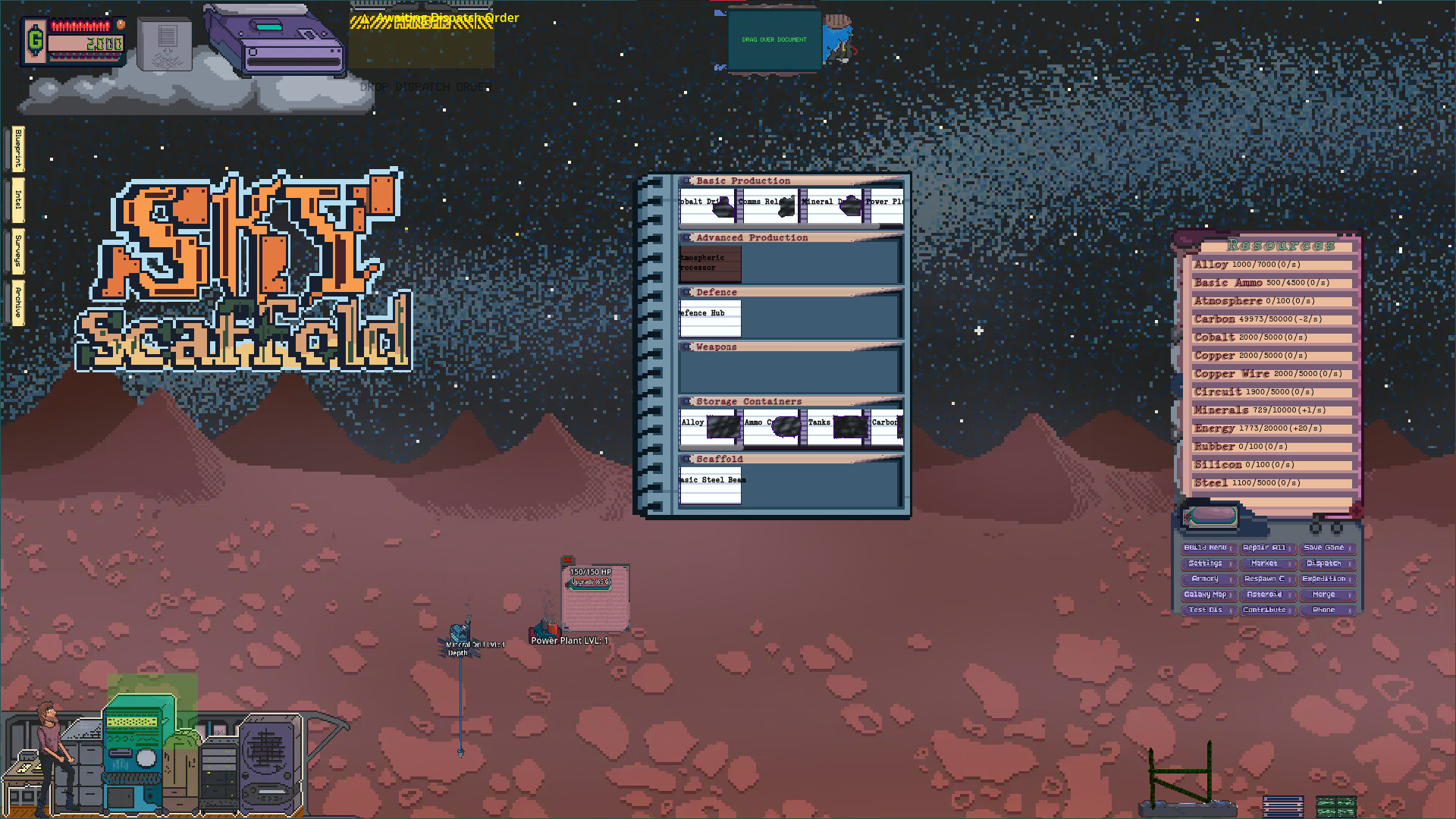
The production panel is where most of the actual decision-making happens, and it is dense from the first hour.Steam store page -
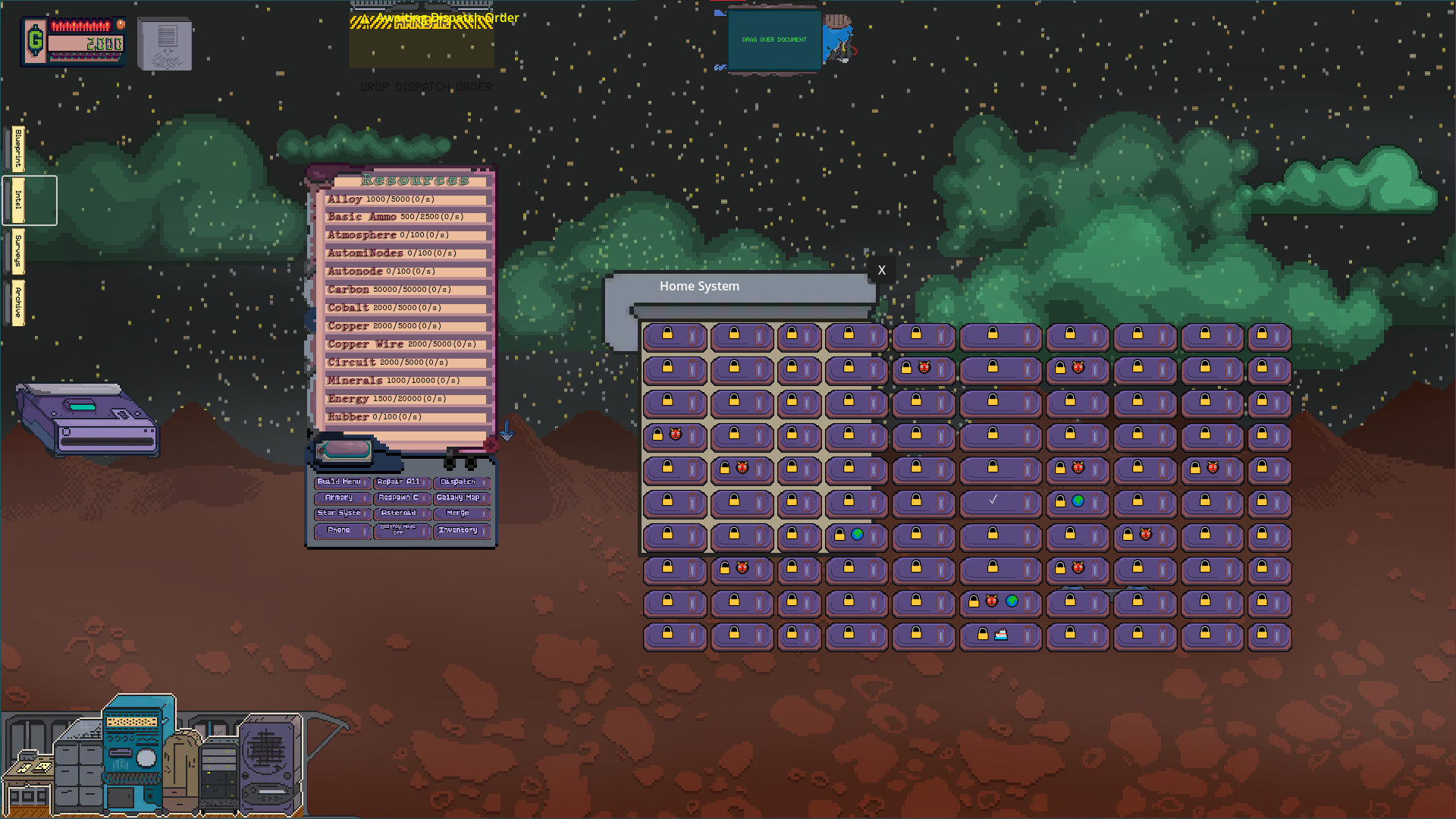
The Home System map hints at a much larger galaxy of lockable, explorable systems beyond the starting base.Steam store page -
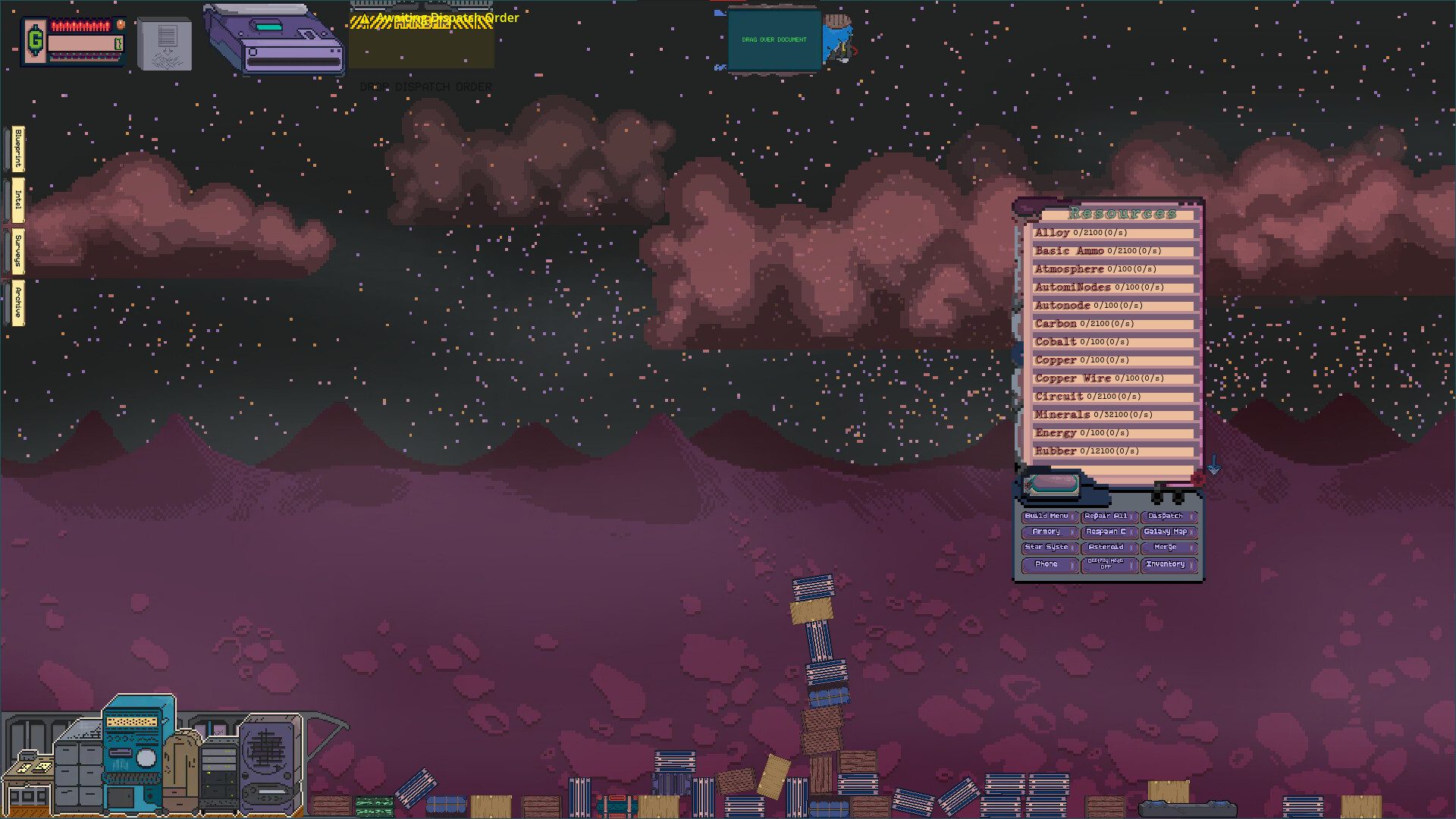
Early towers are little more than a few beams and a pile of unsorted materials waiting to be hauled.Steam store page