
Game review
Greed Champions
5.2 / 10
- Developer
- Pixelabor
- Publisher
- Pixelabor
- Released
- 7 March 2026
- Platforms
- PC
- Genre
- Idle Auto-Battler RPG
Grinding, uncomplicated, and free
Greed Champions is a free-to-play idle RPG from solo-adjacent studio Pixelabor, and it's built with almost defiant simplicity: no story, ten-plus biomes to grind through, loot and experience piling up whether you're watching or not. The store page's own pitch is blunt about it — "let it run on your background collecting loot and killing enemies while you drink a coffee" — and having looked at the screenshots directly, that's a completely accurate description of what's on offer. It's also explicitly a sequel, described on the store page as "the proud successor of Greed Knights," continuing a small family of similarly-named idle games from the same developer (one reviewer separately referred to an "Endless Greed" as an earlier version they'd played, though the store page itself only names Greed Knights as the direct predecessor).
The systems on display are straightforward but genuinely present rather than just decorative: combat runs as a side-on duel with every relevant stat (HP, ATK, DEF, RES, SPD, attack speed) displayed as a raw number for both fighter and enemy, gear is managed through a proper drag-and-drop inventory with dedicated Sword/Head/Chest equip slots and a visible item-rarity system (item borders change colour by rarity tier), and a talent tree sits alongside more than ten biomes and "Dimensions" as the game's stated long-term progression hooks. A town hub screen for each biome offers a shop, a dedicated boss encounter, and travel/exit controls, giving some structure to what would otherwise be pure background-grinding.
A number-crunching interface that doesn't dress anything up
The most honest thing to say about the interface is that it makes zero effort to hide the math. Every combat encounter is presented as two columns of exposed stat values rather than abstracted health bars or damage numbers alone — genuinely useful for players who want to understand exactly what a piece of gear is doing to their build, but visually about as plain as the genre gets, and it's fair to describe the whole presentation as function-first with essentially no attempt at atmosphere. That's consistent with what one of the more detailed negative reviews argues: that this is fundamentally "a lazy vibe coded 2D browser/Flash-tier number incrementer" dressed up as a dungeon crawler, calling out both the game and its marketing materials as partially AI-generated. That specific claim about the production process is an allegation from a single reviewer and can't be independently verified here, though it's worth noting the same boilerplate "AI slop" warning-template language appears verbatim in that review, a phrasing pattern that shows up attached to many unrelated games on Steam rather than being written freshly for this one — worth being aware of as possible copy-paste review spam rather than treating it as a uniquely-observed critique. What can be verified directly from the screenshots is that the actual visual presentation — flat colour pixel sprites, exposed numeric stat panels, a simple drag-and-drop inventory — is genuinely minimal by genre standards, whatever produced it.
A second negative review reports getting stuck unable to progress past level 10 despite repeatedly clearing the stage and its bosses — a single, unverified account, but specific enough (naming the exact level and confirming boss clears) to flag directly rather than dismiss, especially in a genre where progression gates are core to the entire pitch.
The positive reviews back the core loop, not the polish
The positive side of the review base is consistent in what it praises: several reviewers single out the reward and leveling systems specifically as well-tuned, with one Brazilian-language reviewer (who'd previously played an earlier game in the same series) confirming the loot, inventory, and equipment systems work as described and highlighting three dragon bosses plus a secret boss unlocked after defeating one of them as genuine endgame content. Another reviewer called it "probably this dev's best work so far" and praised it as "a truly complete idle game" that's approachable but has enough nuance in the systems to reward more careful play, not just idle clicking. None of the positive reviews argue this is an especially deep or original game — the praise is consistently about execution and value rather than ambition.
Free doesn't mean throwaway
It's worth being clear about what "free to play" means here, because it isn't the usual gacha-and-timer setup this outlet has flagged in other idle RPGs recently: there's no premium currency visible in any of the screenshots, no gacha pull mechanic, and none of the eight Steam reviews — positive or negative — mention monetisation pressure, paywalls, or purchase prompts of any kind. That silence is itself notable; monetisation complaints tend to show up quickly and loudly in review sections when they exist. Combined with the store page's own straightforward feature list (biomes, items, achievements, dimensions, talent tree, all presented as base-game content rather than DLC-gated extras), the most reasonable read is that this is simply a small, complete, ad-free idle game offered at no cost rather than a free-to-start funnel toward spending — a genuinely different proposition from most "free" entries in the genre, and a meaningful contributor to its value score here even without being able to independently confirm hours of hands-on play.
Where this lands
Greed Champions doesn't pretend to be more than it is: a free, no-story idle grinder with real systems underneath a deliberately plain presentation, built by a developer iterating on the same core formula across several small releases. The gear, rarity, and biome/dimension progression are genuinely present and, per the more detailed positive reviews, well-tuned once you're in them — but the interface makes no concessions to atmosphere, one detailed negative account raises a specific and plausible progression-blocking bug, and the "vibe coded"/AI-generation allegation, while unverifiable and possibly boilerplate review-spam text, sits alongside a visual style that is undeniably minimal regardless of its origin. At a price of zero, this is a reasonable pick for players who specifically want a background-running number-crawler and don't need the wrapper to look like much, but it's not aiming to impress anyone who does.
Screenshots
-
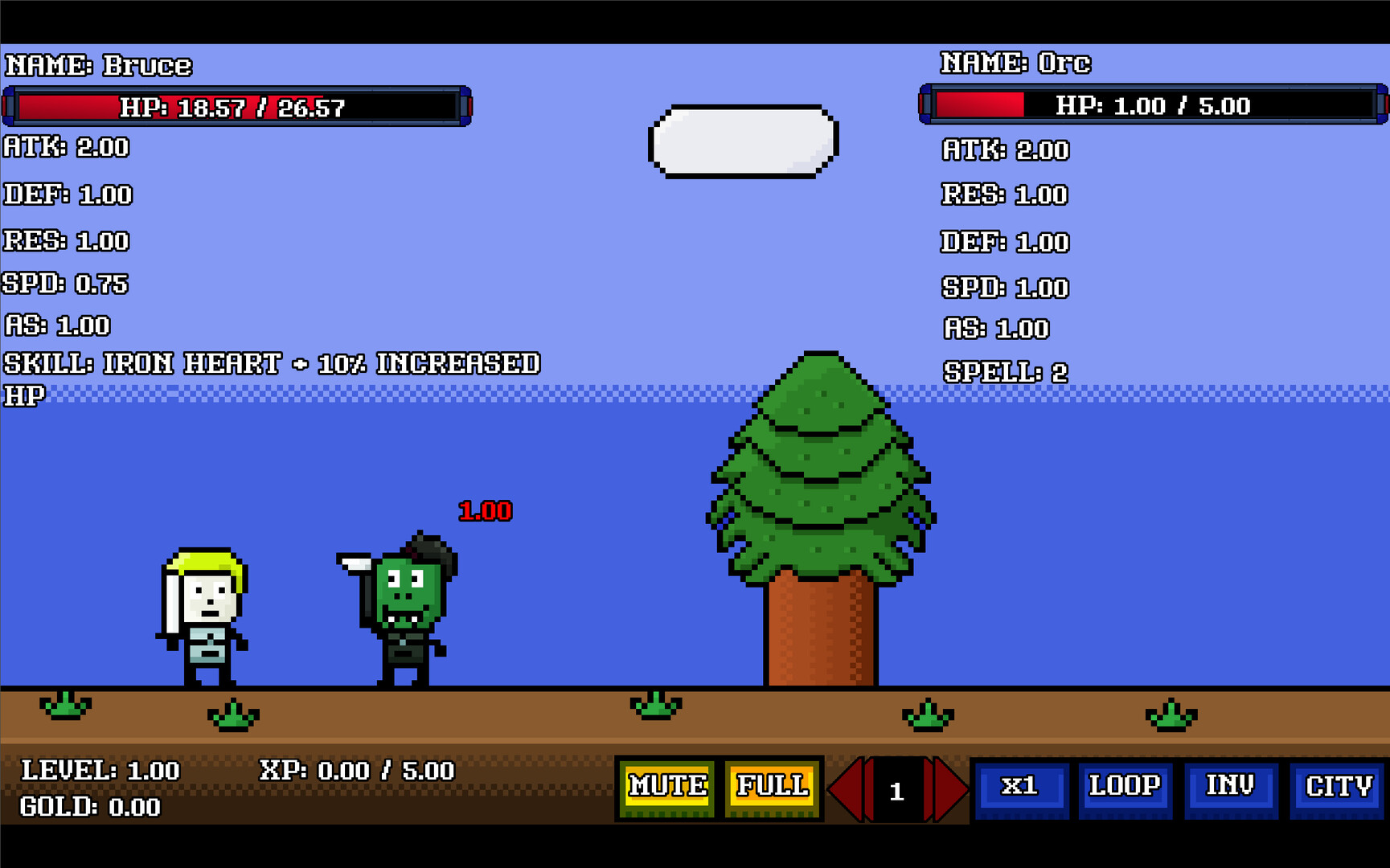
Combat plays out as a side-on pixel-art duel with every stat displayed as a raw number, backed by speed and auto-loop controls for unattended play.Steam store page -
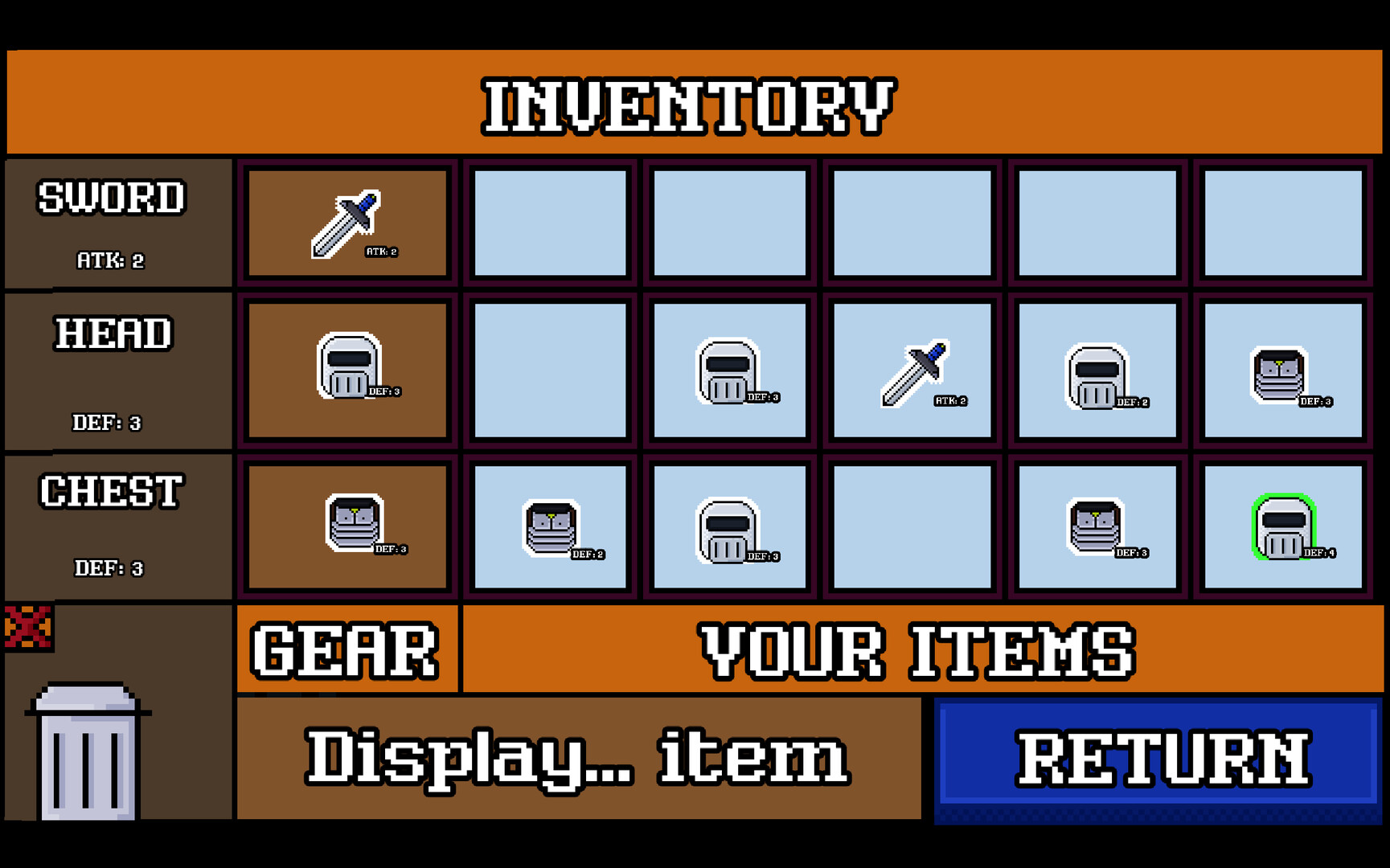
Gear is managed through a drag-and-drop inventory with equip slots and a visible item-rarity system, rather than a single passive stat total.Steam store page -
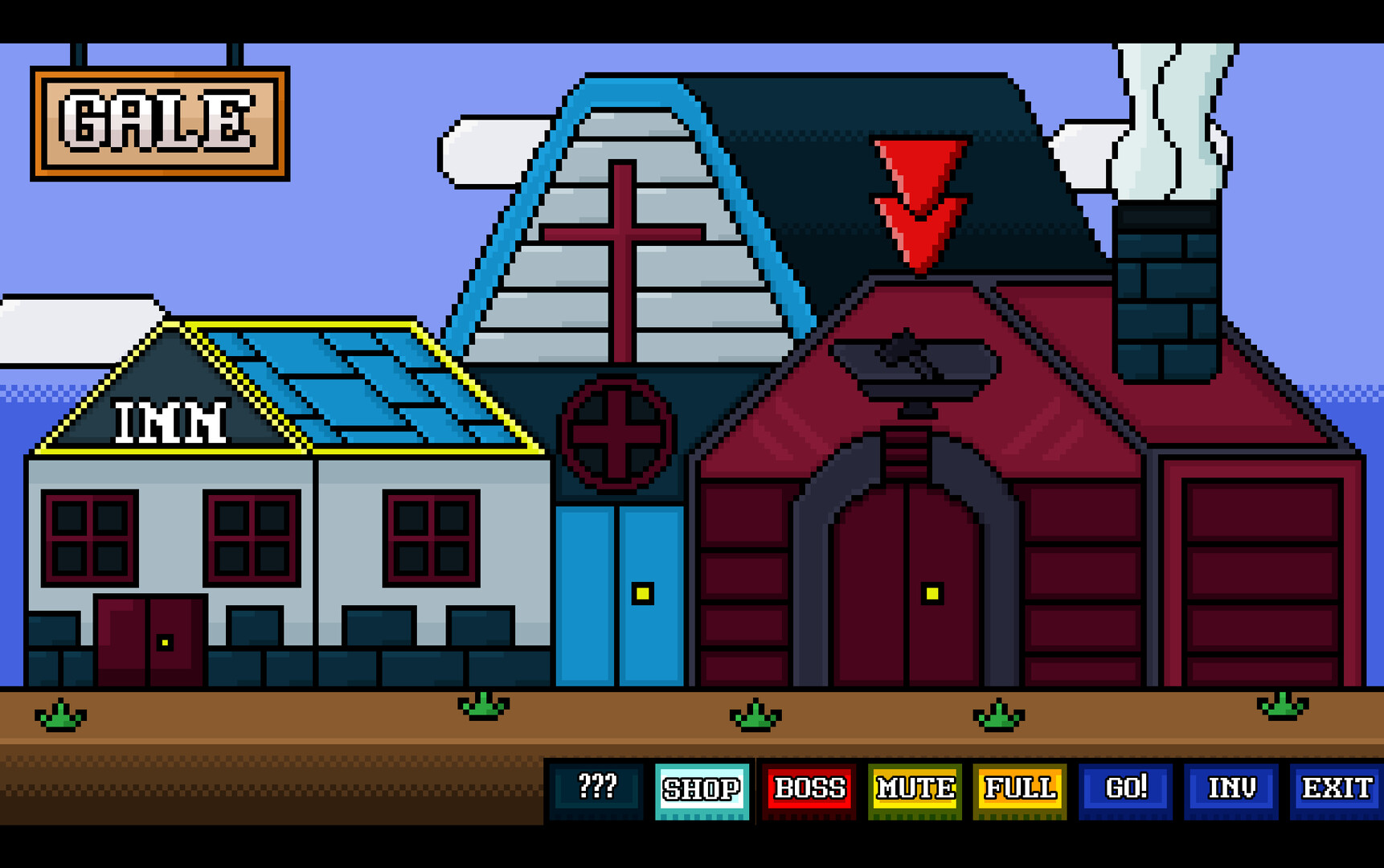
Each biome's town hub offers a shop, a boss fight, and a mystery option alongside the usual inventory and travel controls between grinding runs.Steam store page