Game review
Greed and Greed
2.8 / 10
- Developer
- DIG Games
- Publisher
- DIG Games
- Released
- 22 June 2026
- Platforms
- PC
- Genre
- Idle RPG
Grinding for the sake of grinding
Greed and Greed is a small, plainly made idle RPG from solo-scale developer DIG Games, and it does not pretend to be anything more than that. Its own Steam description opens by calling itself the sequel to an earlier game, Greed and Grind, before stating its goal in exactly these words: "become strongeeeer!!" The rest of the store page is written in the same unpolished, all-caps-bullet-point tone, closing its feature list with "Grab a coffe and wait =P." That's not a knock on the writing for its own sake — it's a fair preview of the level of production polish the game itself delivers, and it's worth going in with that expectation set correctly.
The premise is as stripped-down as idle RPGs get. You pick one of three starting classes — Knight, Mage, or Duelist — each offering a single passive bonus (extra defence, doubled starting gold, or doubled experience) and nothing else to differentiate them mechanically that the store page discloses. From there, combat runs automatically against a rotating cast of enemies, framed only as "FOREST: ORC" and similar location-and-monster labels, while your character's HP and the enemy's HP climb in the background as you level. There are two skill slots visible in combat, a loot counter, and that's the entire on-screen interface during a fight.
What's actually here
Per the developer's own feature list, the systems on offer are: five enemy types, a talent system, weapon and armour reforging for extra damage and defence, an ascension/prestige loop, an inventory and looting system, and one named superboss — a single Dragon Boss — as the stated endgame target. The gear roster is explicitly small: five swords, five shields, five armours, and five boots make up the entire itemization pool, by the developer's own count. That's a real, functioning idle loop — automated battles, resource accumulation, gear upgrades, a prestige reset — just built at a scale closer to a weekend project than a commercial release, which the sub-NZ$1 price tag at least reflects honestly.
Visually, the screenshots confirm what the store copy implies. Combat plays out as two simply-drawn, hand-inked stick-figure sprites standing in front of a single repeating three-tree forest backdrop, regardless of which enemy or area is supposedly active — the same clearing appears behind both an early-game orc fight and a later one with dramatically higher HP totals. The class-select screen is the one moment of relatively more deliberate presentation, with each of the three hero portraits given a little more linework than the combat sprites get, but it's still firmly amateur-tier art throughout, closer to a marker sketch than a game asset. There's nothing wrong with modest art in principle — plenty of idle games get by on spreadsheets and text — but here the crude drawings are presented as the whole visual identity of the game, and they read as unfinished rather than intentionally minimal.
The one voice on record
At the time of writing, Greed and Greed has exactly one Steam user review, and it's negative. The reviewer, who logged 210 minutes of playtime, describes it bluntly as "just another mindless incrementer" with "bottom-of-the-barrel production values and incredibly weak technical delivery," comparing it unfavourably to 1990s browser Flash games. That's one person's account rather than a verified consensus — with only a single data point, it can't be treated as representative of how every player would react — but having actually put in over three hours before writing it up, their frustration reads as informed rather than a drive-by. And on the specific, checkable claims (the flat art, the single background loop, the tiny feature list), the review lines up with what the developer's own store assets show, which is worth noting as corroboration rather than dismissing outright.
Because the review sample is this thin, this write-up is grounded in the developer's own documented feature list, the publicly posted screenshots, and that lone review — not in claimed hands-on play. Anyone considering it should treat the actual moment-to-moment feel of combat pacing, how quickly the ascension loop kicks in, and whether the five-boots inventory ceiling gets tedious in practice as open questions the current evidence can't settle.
Who this actually suits
It's worth being specific about the audience this fits, because "idle game" covers a huge range of ambition. Players who already know they want the most stripped-down version of the genre — a number that grows while a fight animates itself in the background, with no story beats, no branching builds, and no expectation of returning for months of content — are the ones this is aimed at. The ascension system the developer describes suggests at least one loop of resetting progress for a permanent bonus, which is the one structural hook that gives an otherwise flat grind a reason to keep going past the first hour. Whether that loop is tuned well enough to feel rewarding rather than repetitive is exactly the kind of pacing detail that isn't visible from screenshots or a feature list, and with only one review on record, there's no secondhand account of how the ascension curve actually plays out either.
Players coming from more developed idle RPGs — ones with multiple zones, skill trees, or itemization deep enough to support build variety — should expect this to feel thin by comparison almost immediately. Twenty total gear pieces split across four slots and five enemy types don't leave much room for the kind of "just one more upgrade" pull that keeps the better games in this genre compelling over dozens of hours. That's not a flaw so much as a scope decision, but it's one worth going in aware of.
Where it lands
Greed and Greed isn't broken or dishonest about what it is — it's an idle RPG with automated combat, gear upgrades, talents, and a prestige loop, sold cheaply and described in plain (if typo-heavy) terms by its one-person developer. What it doesn't have is any meaningful content variety: one background, a handful of enemy silhouettes implied by name only, twenty total gear pieces, and a single named boss as the ceiling. For a player who genuinely just wants numbers to climb in the background while doing something else, that might be enough. For anyone hoping an "RPG" tag means classes, story, or distinct areas, the honest answer is that none of those are really here — just a loop, dressed in a handful of sketched sprites, asking you to keep clicking until the number gets bigger. At under a dollar it's a low-stakes curiosity rather than a real purchase decision, but it's hard to recommend over any of the more developed idle RPGs already crowding the genre.
Screenshots
-
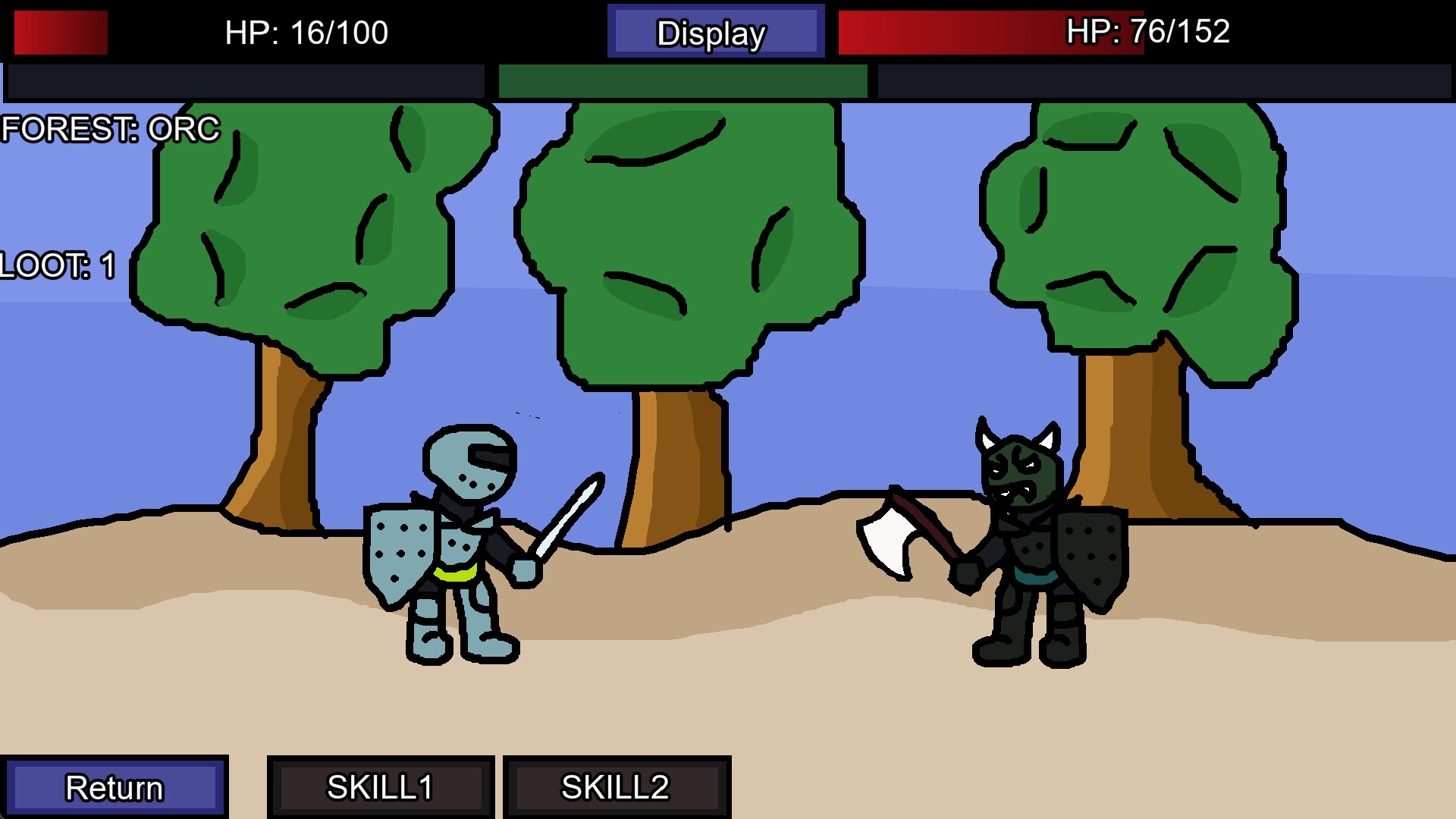
Combat plays out as a static face-off between two stick-figure sprites over the same three-tree backdrop, whichever enemy type is queued up.Steam store page -
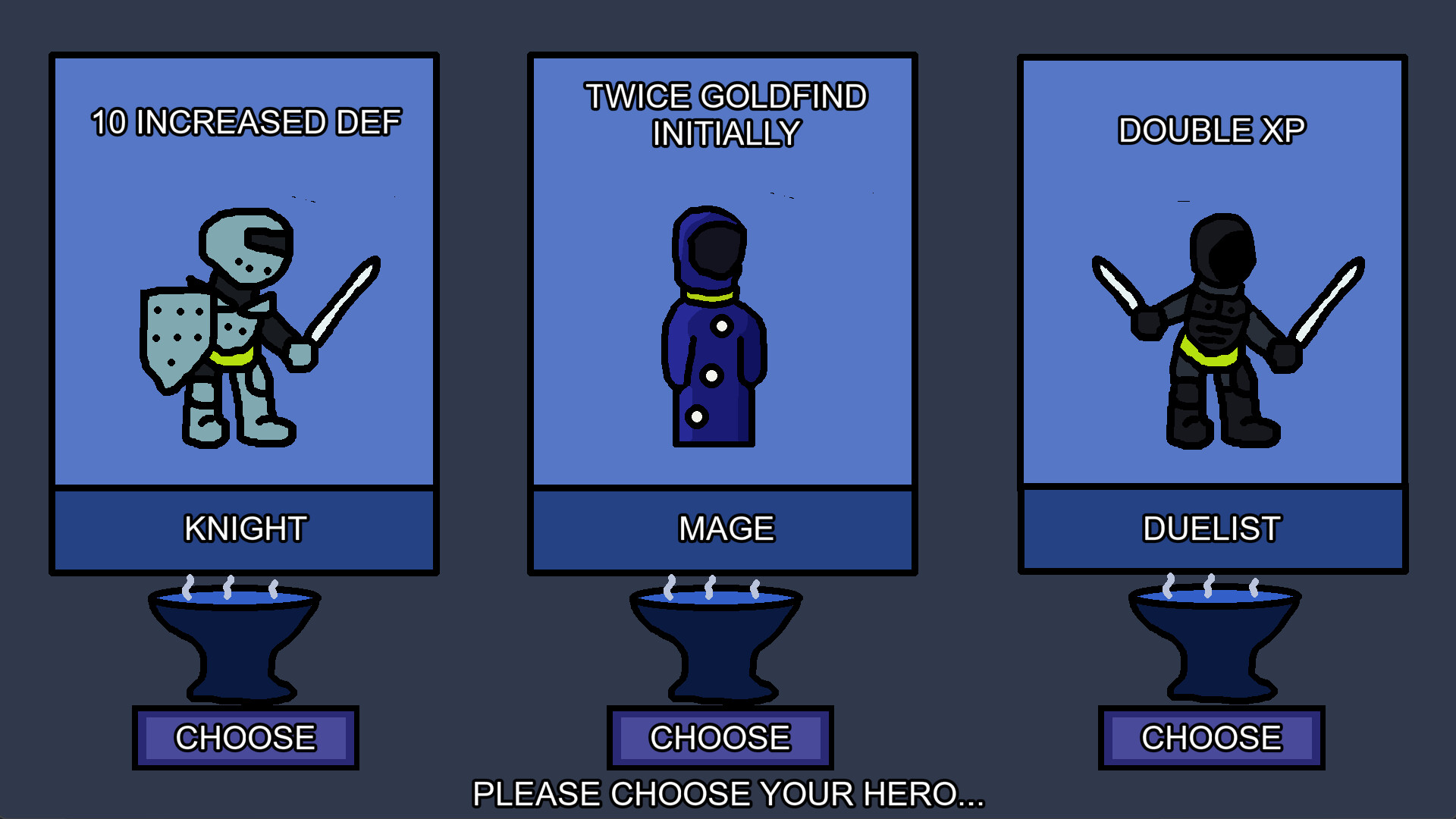
The entire character-building decision happens once, at the very start, picking between three classes distinguished by one stat line each.Steam store page -
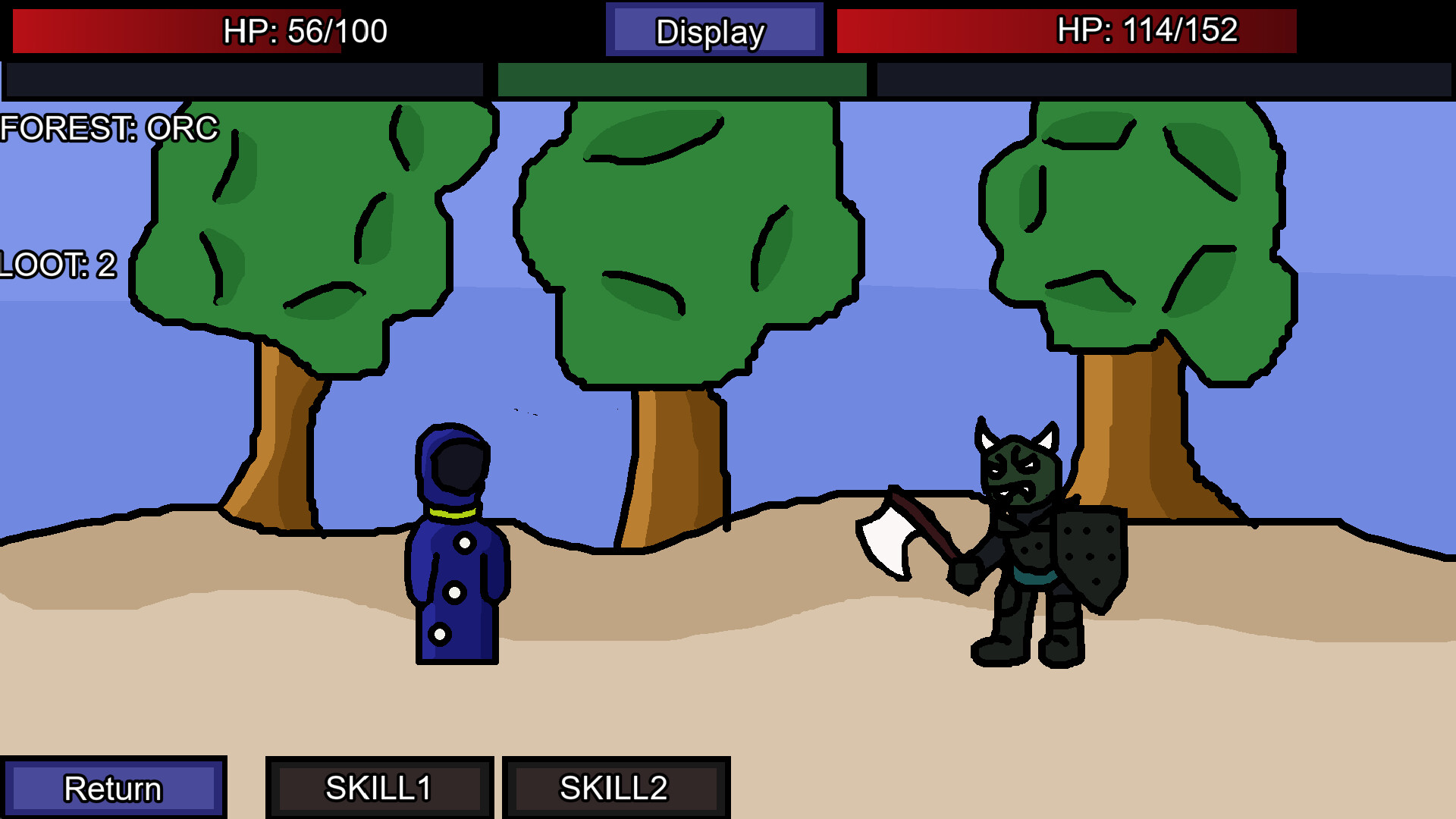
Later fights swap in bigger HP numbers on the same two figures and the same background, with no new enemy designs or environments shown.Steam store page