Game review
Idle Squire
5.8 / 10
- Developer
- White Cape Games
- Publisher
- White Cape Games
- Released
- 6 May 2026
- Platforms
- PC
- Genre
- Idle Roguelite RPG
Idle Squire has a genuinely clever pitch: it's an idle roguelite RPG where your keyboard is the weapon. Every keystroke you make, whether you're writing an email, coding, or just chatting, lands an attack for your squire, who spends that damage clearing randomized ten-floor dungeons for loot and stat upgrades. Developer and publisher White Cape Games released it on 6 May 2026 for NZ$7.89, and it sits as a small always-on-top window you can park anywhere on your screen while you go about your actual work. It's a strong hook, but the small Steam review sample (six total, split evenly three positive and three negative) points to a game whose ambition has outrun its current polish.
Your typing is the combat system
The core conceit is straightforward and, as far as this reviewer can find in the idle genre, distinctive: rather than the usual passive number-crawl, Idle Squire ties damage output directly to real keyboard input. One reviewer with 1,801 minutes logged compared it favourably to Bongo Cat, the novelty desktop-cat app that reacts to typing, saying Idle Squire does the same basic trick "but better," turning idle busywork into a tangible reason to keep typing. The store page frames this as a spectrum rather than a fixed rule: early on you'll out-type your squire's attack speed, but talents, artifacts, and perks gradually let the squire "keep pace… and eventually take over parts of the grind on their own," as the about text puts it, working toward partial automation rather than starting there.
That gradual handoff from active to automatic is also where the reviews diverge sharply on what kind of game this actually is. One reviewer's account (in an edited, multi-part review) describes chasing a specific perk that was rumoured to unlock full auto-attacking in dungeons, only to find "it does not enable auto attacking while in the dungeon, so calling it 'pure idle' would be wrong in my opinion." A second reviewer echoes the same complaint more bluntly: "only the 'training' is idle, when you go to a dungeon you will have to click to choose rewards and proceed to each floor." The reward-selection screenshot backs this up directly, it's a manual pick-one-of-three interface, not something that resolves itself. For players expecting a fully hands-off idle experience, that manual dungeon layer is a real point of friction against the marketing.
A tiny window with an outsized footprint
The screenshot of the game running as a desktop overlay shows exactly what the "always-on-top" pitch looks like in practice: a compact frame sitting in the corner of the screen, layered over the desktop wallpaper and taskbar. In principle this is the whole point of the game, it's meant to coexist with whatever you're actually doing. In practice, one detailed review (2,660 minutes played) singled this out as underbaked: "you can either have the game 'always on top' which isn't ideal when the smallest size setting takes up roughly 1/8 of my 24" screen, covering up parts I'd need to see." That's a significant chunk of screen real estate for a widget that's supposed to run quietly alongside other work, and the same reviewer titled their write-up "Great concept, but the execution needs polishing," a framing that several other reviews independently arrive at as well.
Smaller signs of that same rough-edges problem show up elsewhere. The reward-selection screenshot captured for this review displays a visible spelling error, "Mystyrious Apple" instead of "Mysterious Apple", sitting right alongside two correctly spelled reward cards. It's a minor thing in isolation, but for a text-light UI with only a handful of screens, a typo that's been live long enough to appear in a review screenshot suggests limited proofreading passes since launch.
Save-loss bugs are the sharpest complaint
The most serious recurring issue in the review sample isn't a design disagreement, it's data loss. One reviewer wrote plainly: "Character revert back to lv 0 twice due to game saving issue... this is a waste of time." A second, shorter review echoes the same category of problem without the specific detail: "The game has potential but there are so many bugs that can break the game, resulting in a lost save." Against that, one positive reviewer offers a counter-explanation worth including for balance, they speculate that at least one of the reported save-loss cases might actually be a player accidentally hitting a delete-character button next to their save slot, rather than a genuine bug, noting they nearly did the same thing themselves. Whether that alternate explanation accounts for all the reported cases isn't something this review can verify either way, both possibilities are plausible from the available evidence, and reporting the save-loss complaints as real without acknowledging that counterpoint would be misleading.
Progression and the roguelite loop
Underneath the input gimmick and the rough edges, the actual dungeon-crawling structure looks reasonably solid from what's visible in the combat screenshot: floor counters (4 of 10 shown), a leveled boss encounter with a visible health bar, gold and EXP tracking, and chest icons hinting at loot pickups mid-run. The about text lists a character creator, randomized dungeon layouts, and stat/talent/artifact growth systems layered on top of the base attack loop, which is a reasonably ambitious feature set for a roguelite built around a single-mechanic hook. One reviewer specifically flagged wanting mouse clicks to also register as attacks, calling it "a small nitpick" rather than a dealbreaker, which suggests the underlying combat loop itself is functional enough that players are asking for refinements rather than replacements.
Verdict
Idle Squire's central idea, that your own keyboard use becomes the engine of a roguelite dungeon crawl, is a genuinely original angle on the idle genre, and it's clearly landed with at least some players who describe it as an improvement on novelty-app predecessors like Bongo Cat. But the review sample, thin as it is, converges on the same two complaints from multiple independent voices: the always-on-top window doesn't fit comfortably alongside real work at its current sizing, and save-loss bugs have cost at least some players real progress. Both are the kind of problems a patch or two could meaningfully fix, and the roguelite systems underneath look sound enough to be worth returning to once they are. At its current NZ$7.89 price, it's a reasonable bet for players drawn specifically to the input-driven hook who can tolerate some rough edges, but it isn't yet the seamless background companion its pitch promises.
Screenshots
-

The game runs as a small always-on-top overlay window that sits alongside whatever else is on screen.Image: White Cape Games via Steam -
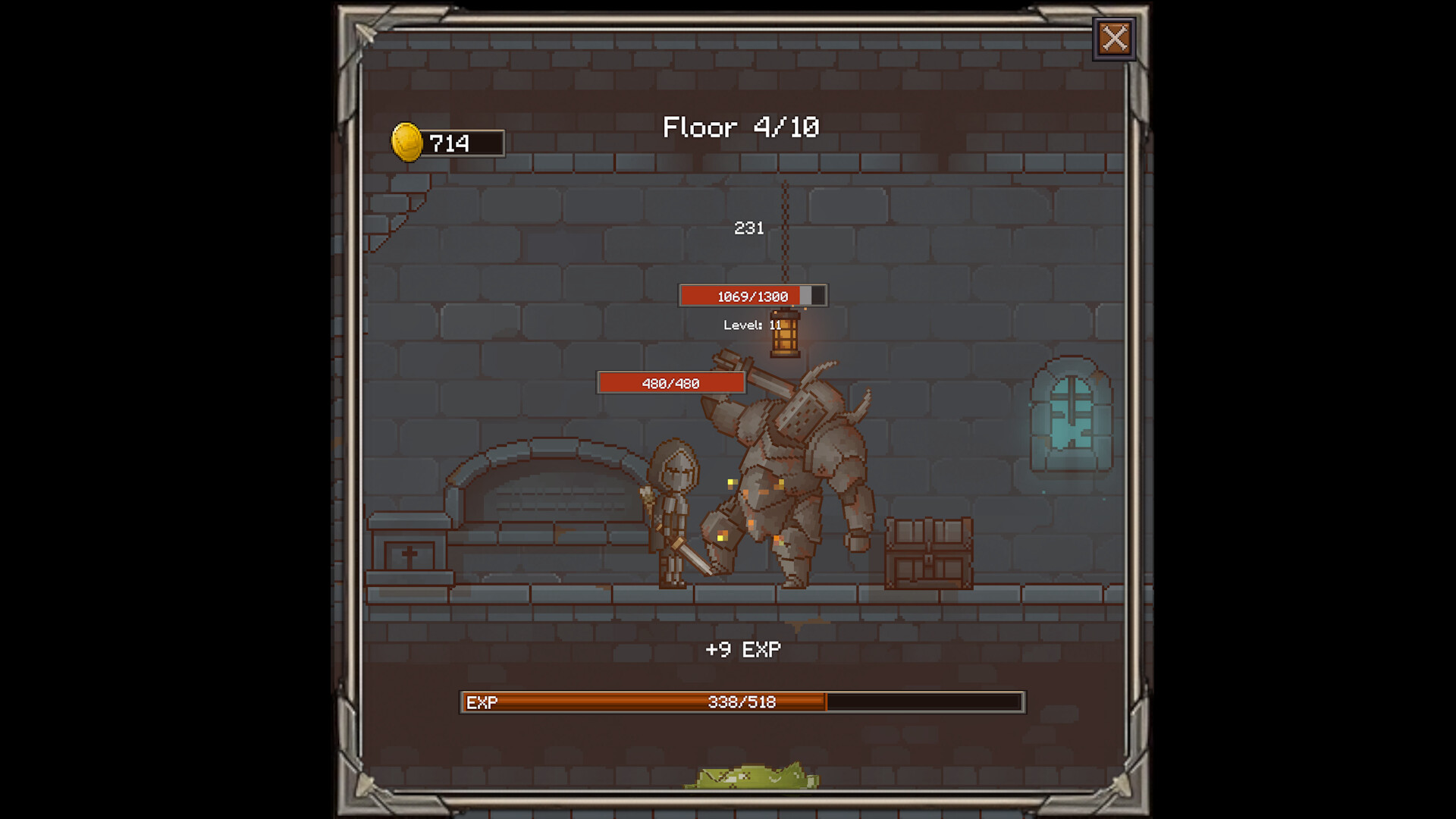
Combat plays out automatically in short dungeon runs, triggered and sustained by the player's own keystrokes.Image: White Cape Games via Steam -
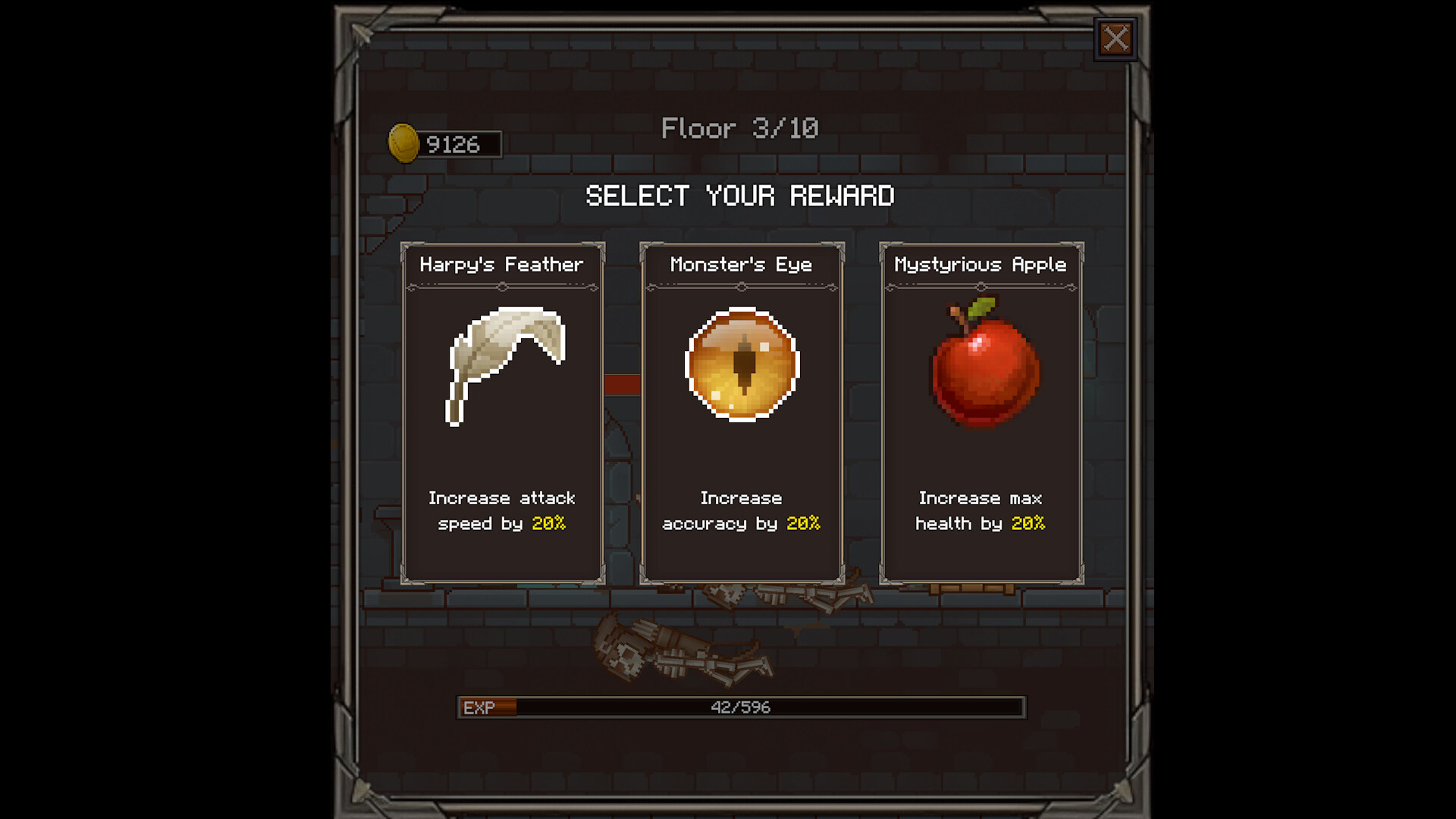
Floor rewards offer a pick-one stat boost between runs, though a visible typo on one item name hints at the game's overall lack of polish.Image: White Cape Games via Steam