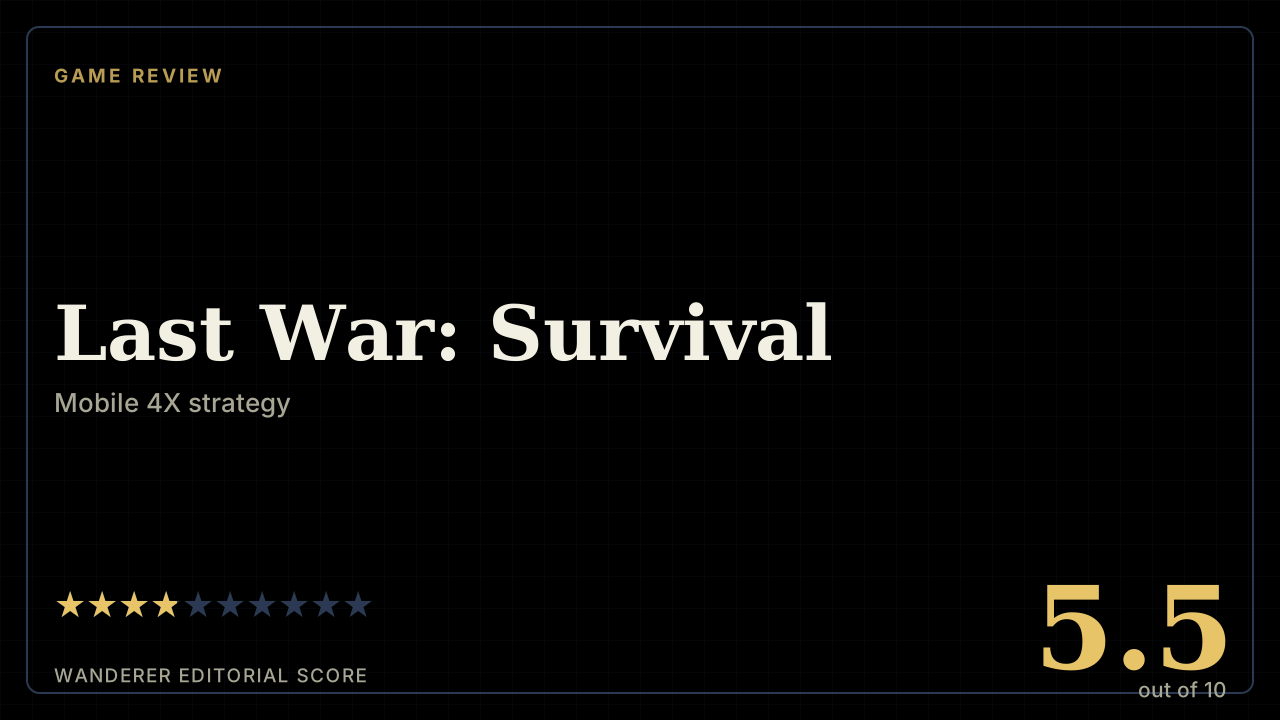
Game review
Last War: Survival
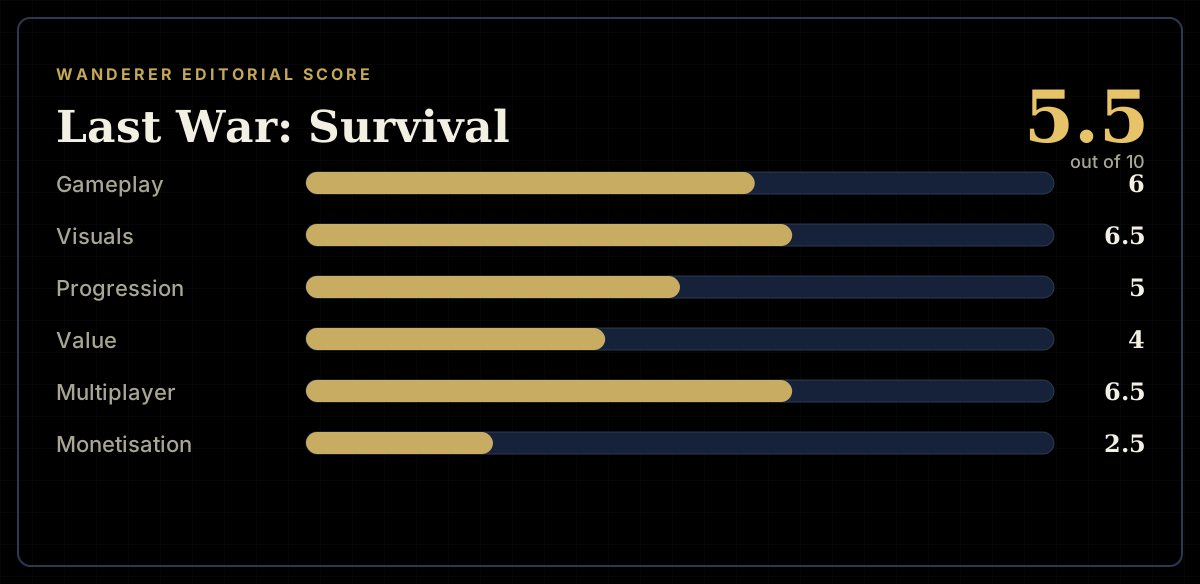
5.5 / 10
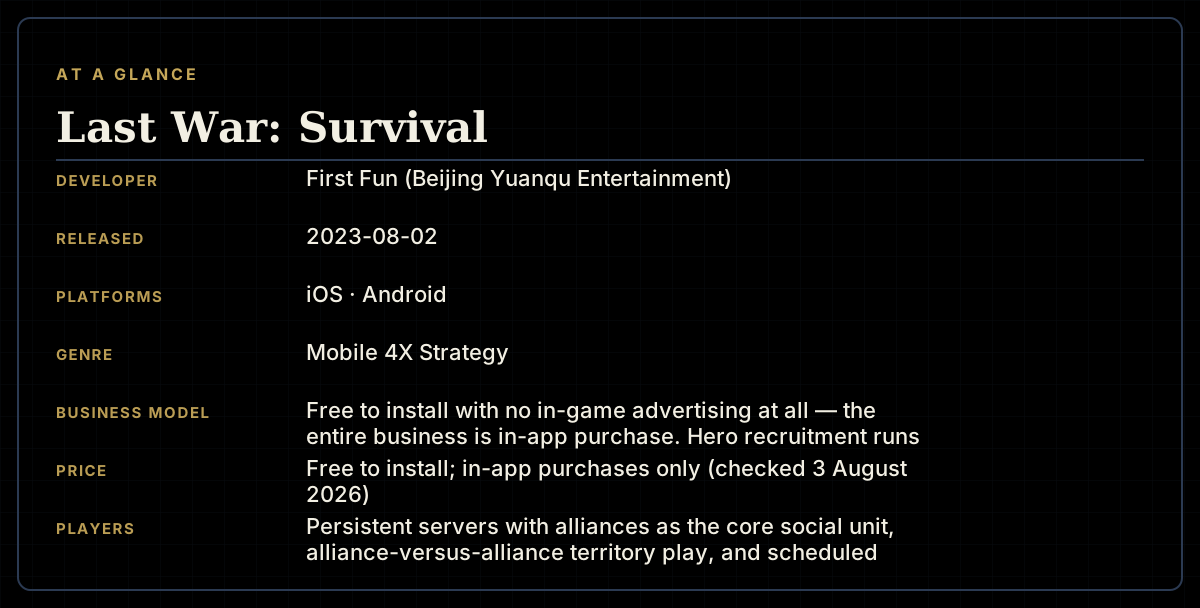
- Developer
- First Fun (Beijing Yuanqu Entertainment)
- Publisher
- FUNFLY PTE. LTD.
- Released
- 2 August 2023
- Platforms
- iOS, Android
- Genre
- Mobile 4X Strategy
- Monetisation
- Free to install with no in-game advertising at all — the entire business is in-app purchase. Hero recruitment runs on gacha, base construction and research run on timers that can be skipped with premium currency, and the spend ladder continues through packs, VIP tiers, season passes and event-specific bundles tied to server-versus-server competition. Checked 3 August 2026.
- Players
- Persistent servers with alliances as the core social unit, alliance-versus-alliance territory play, and scheduled server-versus-server events that function as the real endgame.
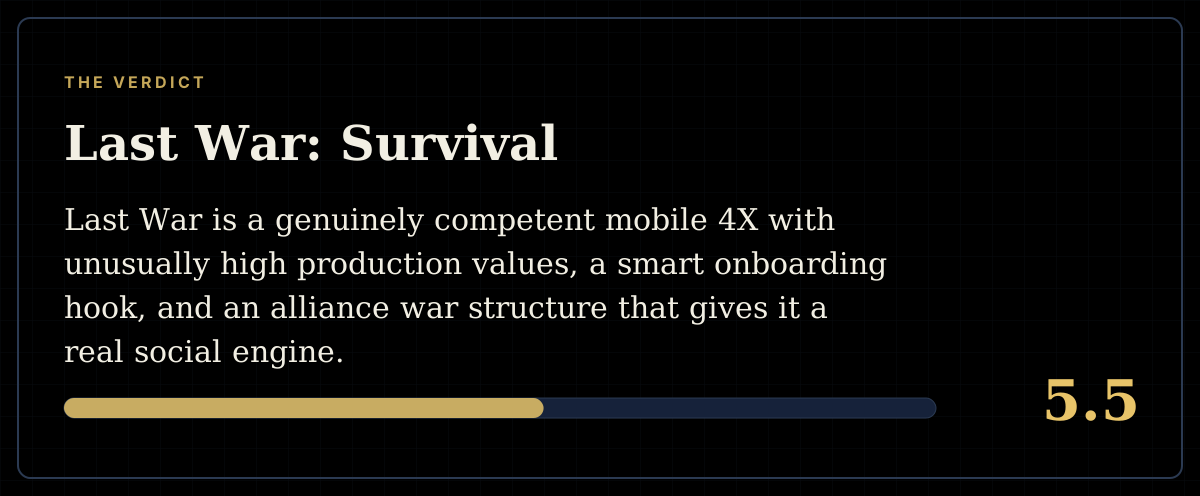
The short version
Last War is a genuinely competent mobile 4X with unusually high production values, a smart onboarding hook, and an alliance war structure that gives it a real social engine. It is also built, from the first tap to the hundredth purchase prompt, to convert attention into spending — a game where the mini-games from the adverts exist mostly as a doorway into a base builder full of timers, gacha heroes and packs. The rating it carries is real. So is the reason people who leave feel like they were sold something else.
Biggest strengths
- Production values well above the mobile-strategy norm, with a smooth opening hour that genuinely does hand you the mini-game the adverts promised
- Alliances are the real game — coordinated territory play and scheduled server-versus-server events give it a social structure most single-player idle titles can't match
- No in-game advertising whatsoever; the business is entirely in-app purchase, which at least means the game itself is never interrupted to sell you something else
Biggest weaknesses
- The advertised gameplay is a fraction of the actual game; the rest is base building, research timers and hero collection
- Progress is gated by construction and research timers that exist to be skipped with premium currency, and the gates widen as you climb
- Competitive standing in server events is tightly coupled to spending, so the social layer that makes the game good is also the pressure that makes it expensive
Who it's for: Mobile strategy players who like alliance politics and scheduled server wars and know exactly what a 4X spend ladder looks like. Not for anyone who came for the lane-choice mini-game in the advert, and not for players who can't hold a hard line on in-app purchases.
Our recommendation: If you want to see what the top of the mobile-strategy market looks like in 2026, install it, play the first week, and treat the moment the timers start stretching as your exit cue. Anyone tempted to spend should look up the price of competing in a server war before the first pack, not after — the ladder does not have a top, and the people you're matched against are the reason this game earns what it earns.
5.5 / 10
You have seen the advert. A stick figure sprints down a corridor choosing between two doors marked ×3 and +12, gathering a crowd of soldiers, and running headlong into a wall of zombies. It has been served to you on every platform you use, possibly hundreds of times, and it is not what the game is.
What makes Last War genuinely interesting — as a business story if not always as a game — is that the developers eventually made it what the game is, sort of. The lane-choice mini-game exists. It's the first thing you play. Then it hands you off to a post-apocalyptic base builder with research queues, hero gacha and alliance politics, and that's where you'll spend the next three hundred hours if you stay.
They also, in a marketing campaign fronted by Antony Starr in late 2024, more or less admitted it: the pitch was that the developers had made a real game out of the fake game in the ads. That campaign drove over twelve million downloads and took the game to number one in the US. It's the most honest thing anyone in this space has said in years, and it worked precisely because everybody already knew.
What you're actually playing
Strip the marketing and Last War is a well-executed mobile 4X. You build a base, run research and construction queues, recruit and level heroes, and push out into a shared map where the meaningful unit isn't you, it's your alliance. Territory gets contested. Scheduled server-versus-server events turn the whole population into two sides of a fight. If you've played Whiteout Survival or any of the Rise of Kingdoms lineage, the shape is familiar — this one just does it with more polish and a faster opening.
The alliance layer is genuinely the good part, and it's why the retention numbers hold. A game where several hundred strangers coordinate timings, share resources and argue about strategy in chat has a social engine no idle game can replicate, and the scheduled events give it a rhythm. People stay for their alliance long after the base building stops surprising them. That's real design, not just extraction.
The production values are high too, and worth acknowledging. Squad merging is tactile, the interface is clean by the standards of a genre that usually looks like a spreadsheet wearing camouflage, and the game runs well on modest phones.
The money
Last War is not a moderately successful game with an aggressive shop. It is one of the largest commercial products in mobile gaming.
Its first month, August 2023, brought in an estimated $287,000. By January 2024 it was making around $30 million a month; by December 2024, roughly $138 million. It passed $2 billion in lifetime revenue in February 2025, and industry estimates put it somewhere around $3.5 billion since, including its strongest year in 2025. It sat in the top five highest-grossing mobile games of 2024, trading places at the top of the charts with Honor of Kings.
Notably, none of that comes from advertising inside the game — there is none. The entire business is in-app purchase, which is the tell for what kind of game this is. Ad-supported titles monetise attention; this one monetises progress. Construction and research timers stretch as you climb, and the currency that skips them is the currency you buy. Heroes come from gacha. Packs, passes and VIP tiers run concurrently. And because competitive standing in server events tracks spending closely, the social layer that makes the game worth playing is also the mechanism that makes it expensive to keep playing well.
That's the honest structural criticism, and it isn't unique to this game — it's the genre's standard model, executed unusually well. The Hero Wars franchise runs a similar funnel from a different direction, and Whiteout Survival is the nearest direct comparison.
The 4.7 problem
Here's the part that should give any reviewer pause. Last War holds a 4.74 rating from nearly 448,000 ratings on the US App Store, and 4.64 in New Zealand. That is an extraordinary score, and it's not fabricated.
It's also a survivorship measurement. The players still there to rate it are the ones for whom the bargain works — the alliance members, the schedulers, the people who like this genre and found a particularly slick example of it. Everyone who installed it expecting the advert, played for eleven minutes and deleted it is not in that number. Both populations are enormous. The gap between the store rating and the game's public reputation isn't a contradiction; it's two different samples of the same funnel.
For a reader deciding whether to install, the useful question isn't "is 4.7 accurate" but "which of those two groups am I likely to be in", and the answer is usually obvious within a day.
One thing on the record
There is a claim worth reporting carefully. A member of the National Assembly in South Korea, Rep. Lee Jung-hun, has publicly stated that the game restricts access for players who have obtained refunds, describing it in terms of a deducted internal score. That is a legislator's public allegation, not an adjudicated finding, and it should be read as exactly that. It's noted here because it is on the record and because refund behaviour is a legitimate thing for a prospective spender to weigh.
Verdict
Last War: Survival is better than the joke it has become, and worse than its rating suggests. As mobile 4X design it's near the top of its category — polished, socially clever, relentlessly supported, and honest enough about its own advertising to make a campaign out of it. As a place to put your money, it's the same escalating ladder the genre always builds, tuned by people who have measured every rung.
Play it if the alliance-war fantasy appeals and you can treat the shop as scenery. Skip it if you came for the corridor with the two doors, because that part is over in about ninety seconds, and the game underneath is a different genre entirely — one that will happily take three hundred hours and whatever you're willing to spend.
Players who want progress that accumulates on its own schedule rather than one designed to be skipped for money may also enjoy Wanderer.
Pros and cons
Pros
- Production values well above the mobile-strategy norm, with a smooth opening hour that genuinely does hand you the mini-game the adverts promised
- Alliances are the real game — coordinated territory play and scheduled server-versus-server events give it a social structure most single-player idle titles can't match
- No in-game advertising whatsoever; the business is entirely in-app purchase, which at least means the game itself is never interrupted to sell you something else
- Live operations are relentless in a way players in this genre value — a version update landed on 1 August 2026, three years after launch
- The publisher's self-aware 2024 marketing campaign, which openly joked about the fake-ad reputation, is a more honest piece of communication than the ads it was apologising for
Cons
- The advertised gameplay is a fraction of the actual game; the rest is base building, research timers and hero collection
- Progress is gated by construction and research timers that exist to be skipped with premium currency, and the gates widen as you climb
- Competitive standing in server events is tightly coupled to spending, so the social layer that makes the game good is also the pressure that makes it expensive
- Hero acquisition is gacha, layered on top of packs, passes and VIP tiers — several concurrent spend systems rather than one
- A Korean legislator has publicly alleged that the game penalises players who obtain refunds; the claim is a political statement rather than a finding, but it is on the record
Screenshots
-
How the review scores each part of the gameWanderer Editorial -
The game at a glanceWanderer Editorial -
The short versionWanderer Editorial