Game review
MARVEL SNAP
6.5 / 10
- Developer
- Second Dinner Studios, Inc.
- Publisher
- Second Dinner Studios, Inc.
- Released
- 22 August 2023
- Platforms
- Windows, iOS, Android
- Genre
- Digital Card Game
- Monetisation
- Free to play with a monthly season pass, card bundles, multiple currencies and randomised card acquisition.
- Players
- Online PvP with ranked ladder and limited-time modes
The short version
Six turns, twelve cards, three locations, and a betting mechanic that lets either player double the stakes or walk away. MARVEL SNAP is the sharpest card-game design in years — matches take three minutes, the bluffing is genuine, and even its angriest reviewers stop to call it the best card game out there.
Then there's the collection. The word "card" appears in 84 of its hundred most-helpful English negative reviews, and the specific grievance is unusual: not that money wins games, but that money can't reliably buy you a particular card. New releases sit behind the season pass, then enter a randomised pool at rates reviewers describe in fractions of a percent, with no catch-up mechanism for anyone arriving late.
Biggest strengths
- An outstanding core design — three-minute matches with real bluffing and no solitaire turns
- The snap-and-retreat cube betting is a genuine contribution to the genre, not a reskin
- Location effects change every match, so the same deck plays differently game to game
Biggest weaknesses
- Card acquisition is randomised, and reviewers report no reliable way to buy a specific card
- New cards debut behind a paid season pass before entering the general pool
- No meaningful catch-up mechanic, making the game increasingly hostile to new and returning players
Who it's for: Card-game players who want the fastest, cleverest ranked experience available and are content to build a collection slowly. Competitive players intending to keep pace with new releases should read the acquisition section first.
Our recommendation: Install it — the game is free, brilliant, and the first fifty hours are pure upside while your collection is still growing quickly. Decide before you spend anything whether an economy that can't sell you a specific card is one you want to buy into.
6.5 / 10
Most pay-to-win complaints follow the same shape: money buys power, so the people with money win. MARVEL SNAP's reviews describe something stranger and, I think, worse.
A reviewer with 1,169 hours puts it plainly: "There is no catch-up mechanic for new or returning players; you actually can't even buy the cards you'd want to use if you were inclined." The objection isn't that spending wins. It's that spending doesn't reliably get you the specific thing you're spending for.
The game is genuinely superb
Start here, because the critical corpus is unanimous about it and it's the reason this scores a 6.5 rather than something bleak.
Each match is six turns. You have twelve cards. Three locations reveal themselves over the first three turns and each does something that reshapes the board — one doubles power, one destroys cards played there, one moves things around. Matches take about three minutes.
The masterstroke is the cube. Either player can "snap" to double the stakes, and either can retreat to cut their losses, so every match carries a poker layer on top of the card game. Retreating early from a losing board is a skill, and it's a genuinely novel contribution rather than a reskin of Hearthstone.
The reviews reflect it. "Brilliant game, but deeply insulting monetization policy." "The gameplay is great. Best card game out there." "I love everything about the game." Those are all thumbs-down reviews.
The collection problem
Card appears in 84 of the hundred most-helpful English negatives. Nothing else is close: pay 31, bundle 24, collection 23, grind 21, season pass 17.
The structure reviewers describe works like this. New cards debut attached to the monthly season pass. After a period they enter the general pool — but acquisition from that pool is randomised. A 2023 review with 225 votes goes as far as quoting the odds they'd calculated, in fractions of a percent per collection milestone. Whether those exact figures still hold three years later I can't verify, and rates have changed repeatedly; the structure has not.
The consequence is the thing that makes this different from an ordinary card-game economy. In most collectible games, if you want a card badly enough, there is a price — you buy packs, you craft it with dust, you trade for it. Here, multiple long-term reviewers report that no amount of money reliably produces a chosen card, and that there's no catch-up path for someone starting late. A 177-hour reviewer's summary is blunt: casual players "will have a fun ride for some weeks," competitive players should "either prepare to seriously invest… or don't even start."
A 1,084-hour player, self-described as a paying customer for sixteen months, describes the direction of travel as "alarmingly greedy." The median playtime across the whole negative sample is 261 hours, and the maximum is 5,474. As with almost every long-running game I've assessed today, the complaints come from the invested.
The year it went dark
Some context a prospective player deserves. In early 2025, MARVEL SNAP went offline for players in the United States — collateral damage from the TikTok ban affecting the company then publishing it. Reporting carried in the game's own Steam news feed describes 2025 as a rough year followed by a new "Foundations" era under changed arrangements.
That helps explain the negative distribution: 4 in 2022, 23 in 2023, 25 in 2024, 31 in 2025, 17 so far in 2026. A game vanishing from an entire country for a period will do that.
Things have steadied since. Monthly seasons have shipped without interruption through 2026 — Guardians in February, Apocalypse in March, X-Men in April, Daredevil in May, a summer season in June, Spider-Man in July — and current sentiment is running ahead of lifetime, at 73 of the last 100 English reviews positive against 67.6% overall.
One more current caution: recent reviews include reports of losing access to existing accounts on reinstall, with an unskippable tutorial creating a fresh account over the old one. Worth knowing before you reinstall on a new machine.
The verdict
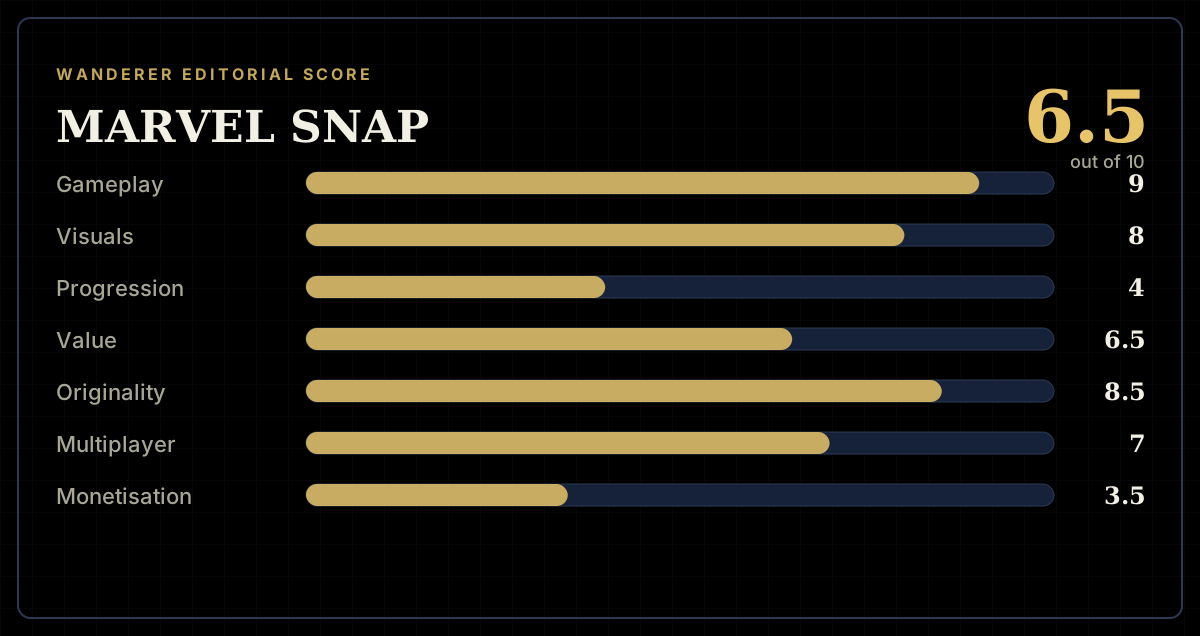
MARVEL SNAP earns a 6.5, and the gap between its gameplay score and its overall score is one of the widest I've written this year. As a design it's a 9 — the fastest, sharpest, most genuinely innovative card game to arrive in a decade, and it costs nothing to play.
It lands at 6.5 because a collectible game is its collection, and this one's is built on randomised acquisition with no reliable purchase path and no catch-up for latecomers. That's a harder bargain than pay-to-win, because at least pay-to-win has a price you can decline. Here the money buys you odds.
Play it free, enjoy the excellent first stretch while your collection is expanding fastest, and be honest with yourself at the point where the meta starts requiring cards you don't have. If you want a card game where the entire deck is available for one payment, Slay the Spire and Balatro remain the better value by a distance — they just won't give you three-minute ranked matches against a real opponent.
Pros and cons
Pros
- An outstanding core design — three-minute matches with real bluffing and no solitaire turns
- The snap-and-retreat cube betting is a genuine contribution to the genre, not a reskin
- Location effects change every match, so the same deck plays differently game to game
- Presentation and card art are excellent, and it runs well on modest hardware and phones
- Monthly seasons have arrived steadily throughout 2026, and recent sentiment is improving
Cons
- Card acquisition is randomised, and reviewers report no reliable way to buy a specific card
- New cards debut behind a paid season pass before entering the general pool
- No meaningful catch-up mechanic, making the game increasingly hostile to new and returning players
- Competitive play is described by long-term reviewers as requiring sustained monthly spending
- Recurring account-access complaints, including a tutorial that can create a new account over your old one
Screenshots
-
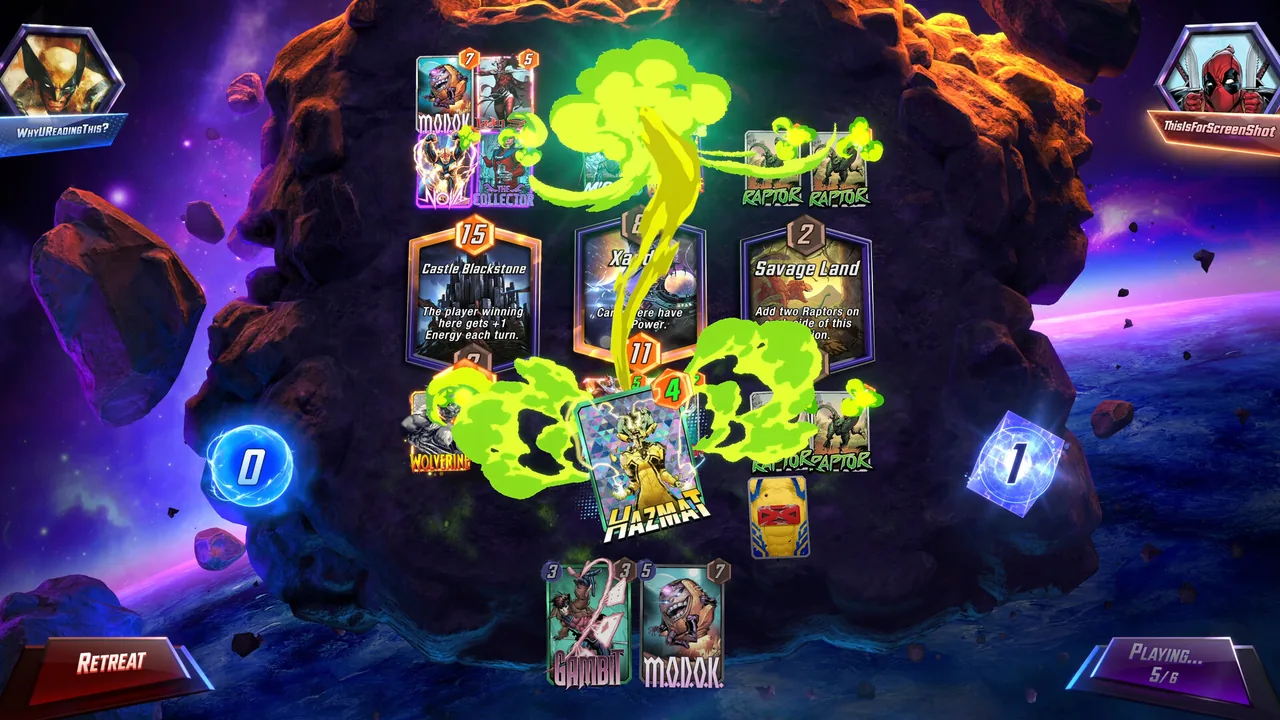
MARVEL SNAPImage: Second Dinner Studios, Inc. via Steam -
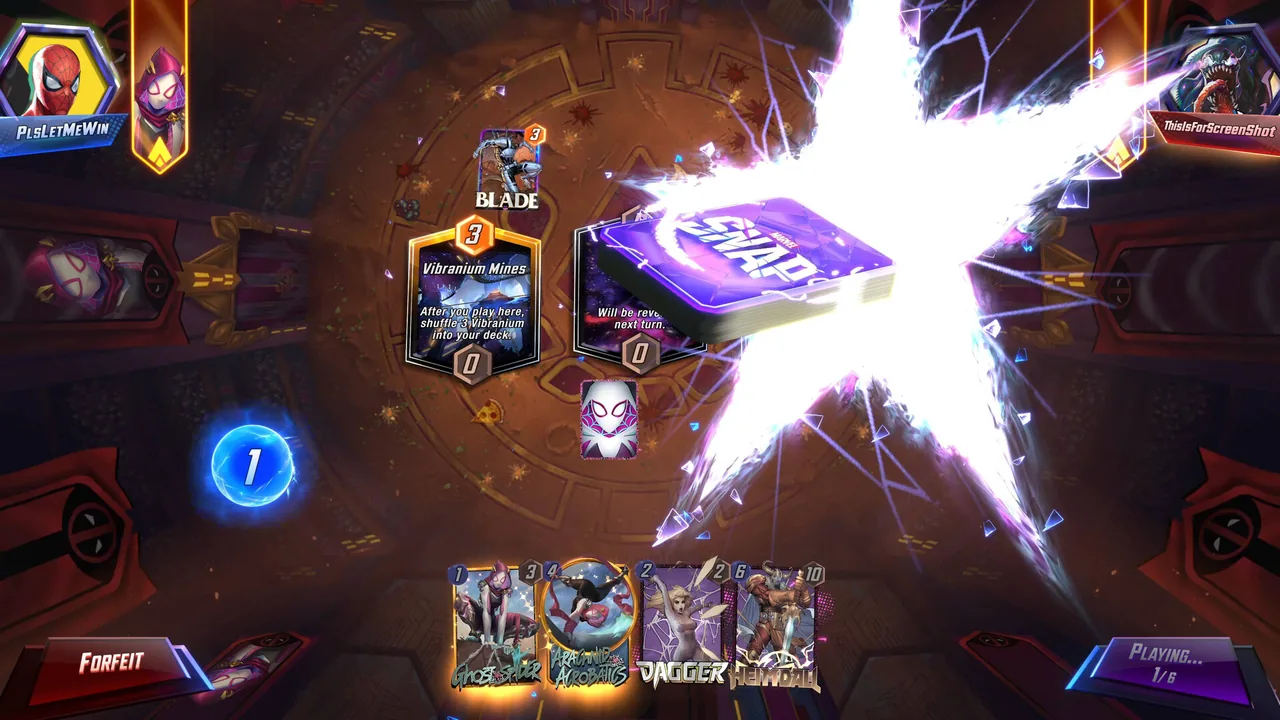
MARVEL SNAPImage: Second Dinner Studios, Inc. via Steam -
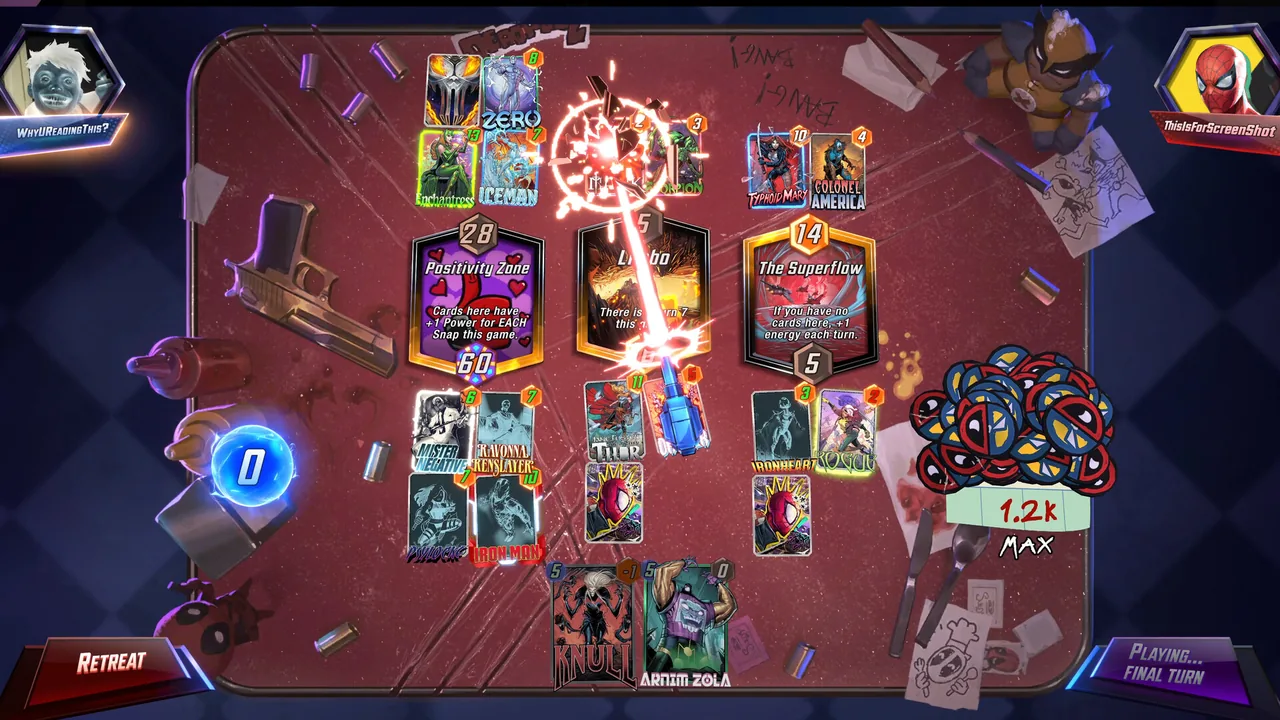
MARVEL SNAPImage: Second Dinner Studios, Inc. via Steam -
How the review scores each part of the gameWanderer Editorial -
The short versionWanderer Editorial