
Game review
Legion TD 2 - Multiplayer Tower Defense
7.7 / 10
- Developer
- AutoAttack Games
- Publisher
- AutoAttack Games
- Released
- 1 October 2021
- Platforms
- Windows, Mac
- Genre
- Strategy
- Monetisation
- Paid base game with optional cosmetic skins and two paid single-player campaign DLCs; no gameplay-affecting purchases in ranked or casual PvP
- Players
- Core mode is 1v1 up to 4v4 matchmade PvP, with 2v2 and co-op options; also playable solo against AI across 10 bot difficulty levels
The short version
Legion TD 2 takes the tower-defense genre's usual solitary furniture-arranging and turns it into a duel: every wave you survive is a wave you're also sending at someone else's king, and every fighter you buy is a card played against a live opponent who is doing the same math back at you. Eight legions, over a hundred fighters and twelve million listed combinations give it more genuine strategic depth than almost anything else in the genre on Steam, and AutoAttack Games has kept tuning it since well before its 2021 full release.
What it doesn't have is a large, welcoming front door. The learning curve is steep, matches run 25-45 minutes with real commitment once you're in one, and an unmoderated global chat is a recurring complaint in the game's own review section. This is a genre classic for the players willing to climb into it, not a pick-up-and-relax pick.
Biggest strengths
- Genuine PvP tower defense — you're not just optimizing a maze, you're sending mercenaries at a live opponent's lane while defending your own
- Eight legions and 100+ fighters produce a build space deep enough that AutoAttack still needs regular balance patches years after release
- No pay-to-win anywhere in ranked or casual play — the store sells only cosmetic skins, and the paid DLC is single-player campaign content
Biggest weaknesses
- Steep learning curve with limited in-client teaching; new players are largely expected to lean on the wiki and community guides to understand fighter synergies
- Global chat has no moderation according to a recurring theme across negative Steam reviews, and toxicity is one of the most repeated complaints in the negative column
- Current concurrent player counts are modest for a matchmaking-dependent game, and reviewers flag queue times as a real friction point, especially for 4v4
Who it's for: Warcraft III custom-map veterans, competitive strategy players who want a shorter commitment than a full RTS, and anyone who liked the idea of a tower defense with a human opponent instead of a difficulty slider
7.7 / 10
Most tower defense games are a conversation with a difficulty curve: you build, the game sends waves, you adjust, repeat until either you or the algorithm blinks first. Legion TD 2 replaces the algorithm with another player. You still plant fighters along your own lane and watch waves break against them, but every gold you save also buys mercenaries to send down your opponent's lane, and every wave they survive is a wave you didn't hit hard enough. It's the same swap that turned a Warcraft III custom map into a genre unto itself in the mid-2000s, and Legion TD 2 — built by AutoAttack Games and in active development since well before its October 2021 full release — is the standalone, still-updated descendant of that lineage, sitting in the same custom-map family tree as Element TD's jump to a standalone sequel.
Defense that's also offense
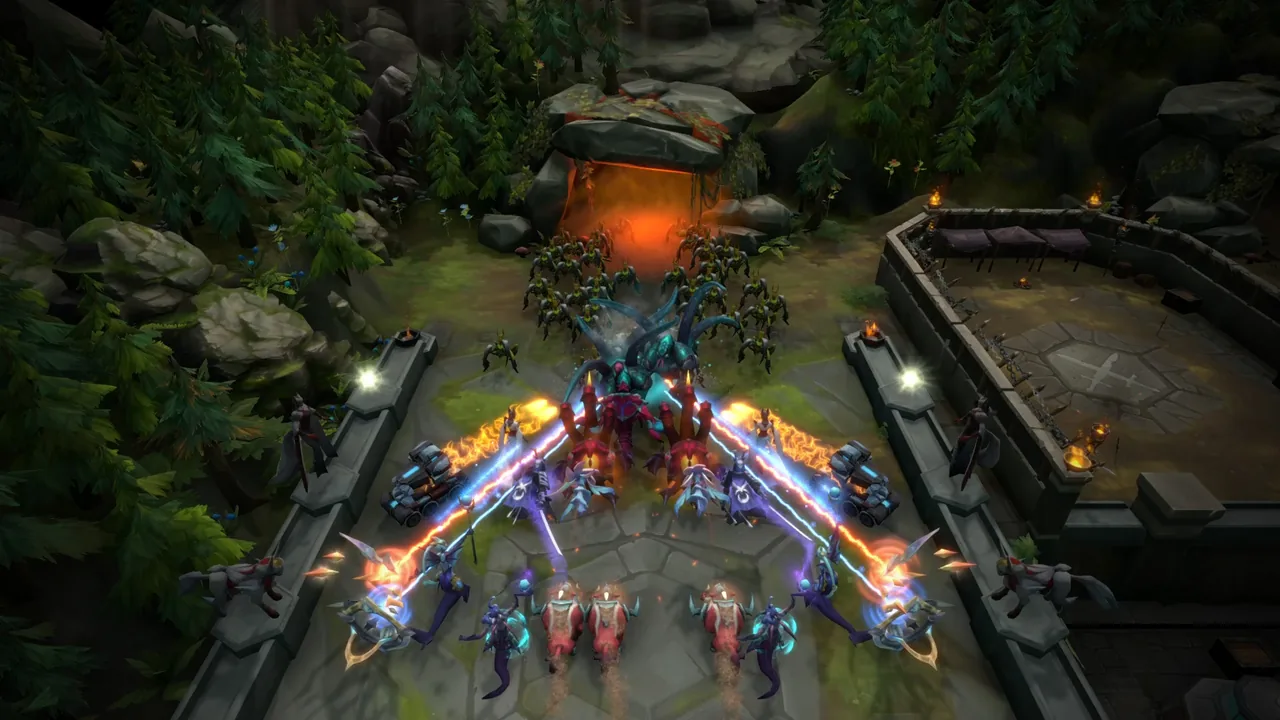
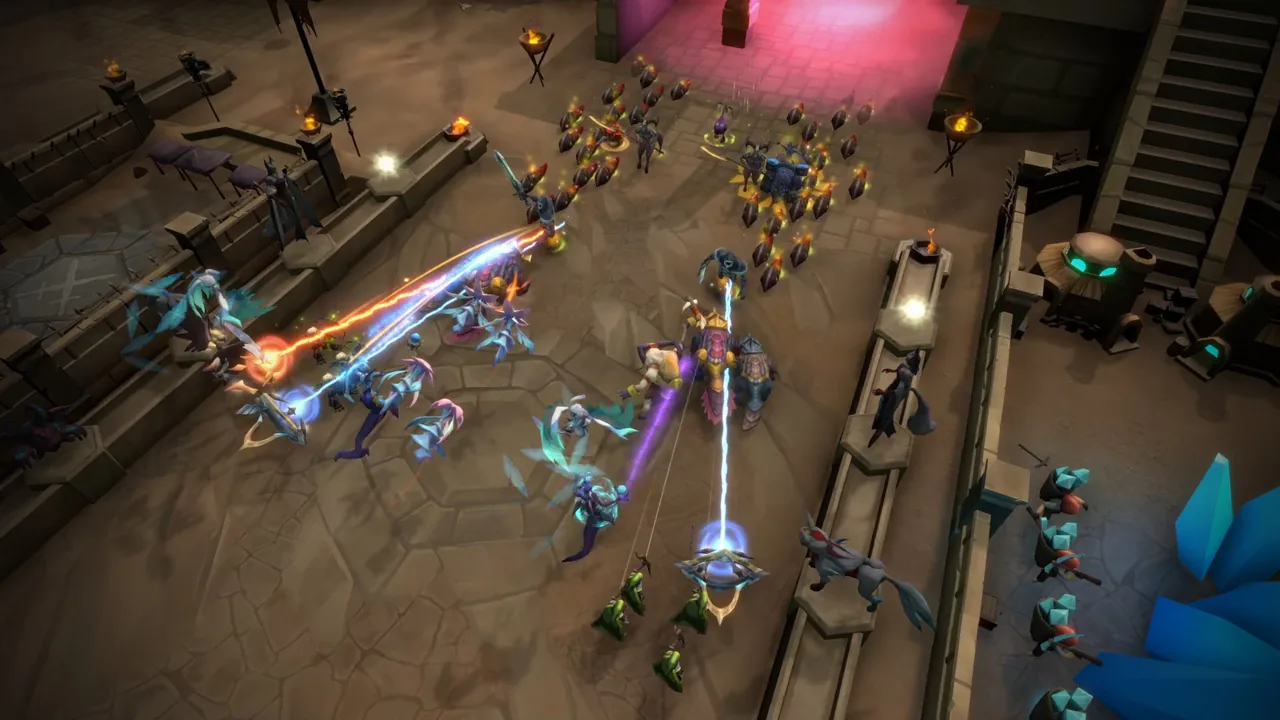
The structural idea is simple to state and hard to master: build up defenses to survive increasingly dangerous waves, while simultaneously spending resources to send waves of your own at an opponent's king. Every match is therefore two decisions running at once — how much to invest in your own lane's survival versus how much to spend attacking someone else's — and the tension between those two spending priorities is where the actual game lives. Playing purely defensively lets waves snowball against you once your opponent's economy scales past yours; playing purely offensively leaves your own lane exposed to the same pressure coming back the other way. AutoAttack's own pitch describes three viable approaches — defensive, aggressive, or economy-focused scaling into a late-game juggernaut — and that framing checks out against how the fighter roster is built: some units exist purely to shore up an early defense, others exist to punish an opponent who over-invests in economy too early. It's a tighter, faster-resolving version of the build-versus-race tension that real-time strategy games have run on for decades, compressed into a genre usually built for solitaire.
Eight legions, a hundred fighters, twelve million combinations
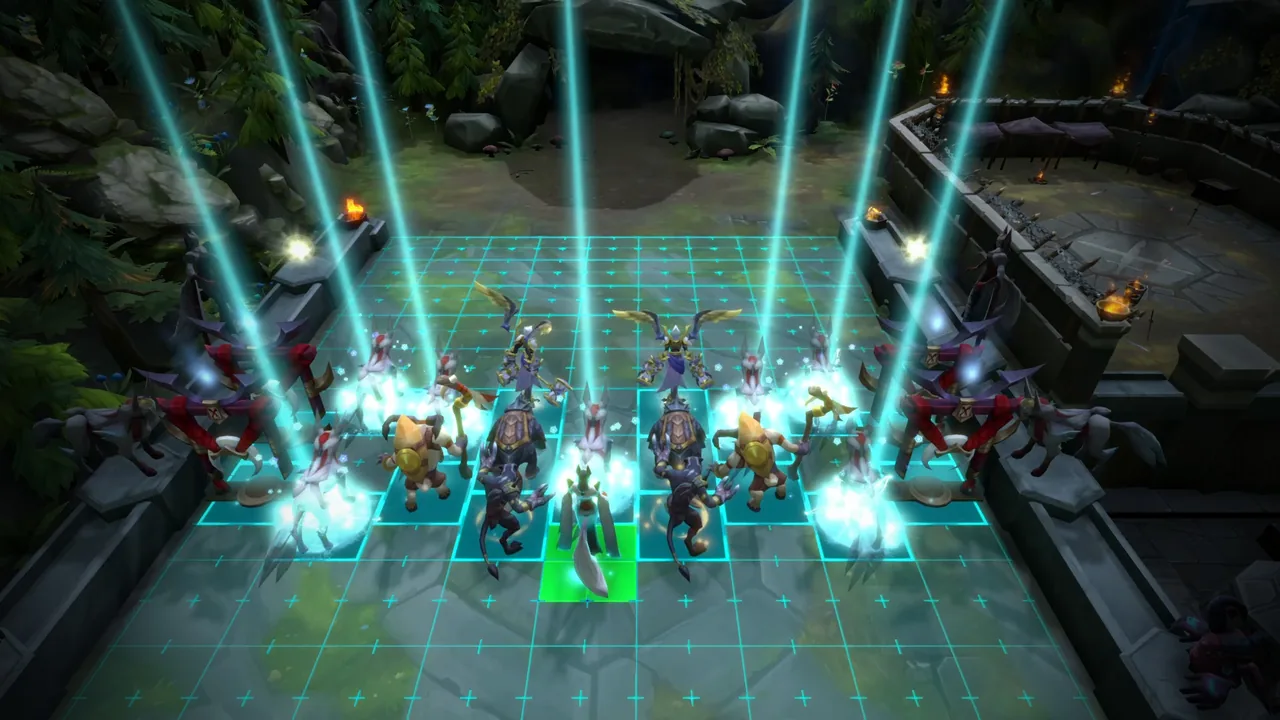
The number AutoAttack leads with — 12 million possible fighter combinations across eight legions and over 100 individual units — is the kind of marketing figure that's easy to dismiss, but the achievement data backs up that the game actually gets played at that depth rather than solved and abandoned. Steam's global achievement stats show PvP-specific milestones like Most Valuable Player and Win As Mastermind sitting around 50-53% completion — not trivial, not vanishingly rare, exactly where you'd expect meaningful accomplishments in a game people keep returning to. Each legion carries its own identity and internal synergies, and fighters you select from different legions interact with each other's auras, spells and mercenary abilities in ways that reward genuine theorycrafting rather than memorizing one dominant build. That's also the game's steepest cost of entry: a new player facing a hundred-plus units with interlocking synergies, and comparatively little in-client teaching to make sense of them, is exactly the profile of learning curve that shows up as a recurring theme in the game's own negative reviews. AutoAttack leans on the community wiki and external guides to do a job the client itself doesn't fully take on.
A decade of live balancing, still visible today
What separates Legion TD 2 from most standalone spin-offs of a beloved mod is that AutoAttack Games didn't ship it and move on. The store page's own claim of "12+ years of development" and an active playerbase "since 2017, still going strong in 2026" lines up with what the review text shows: multiple long-time players describe the same four-person team patching and rebalancing continuously since the earliest access builds, with one reviewer specifically praising that it's "been carried by the same 4 people the whole time" and still "has heart." That kind of sustained, single-team stewardship is unusual for a PvP strategy game at this scale, and it shows in the fighter roster's apparent balance — nothing in the top-line achievement or review data points to one dominant legion or build drowning out the rest, which for a 100-plus-unit roster is a genuinely hard thing to maintain for this long.
The queue is the actual difficulty setting
The catch with any matchmaking-dependent PvP game is that its health depends on population, and Legion TD 2's numbers are respectable rather than huge — concurrent player counts sit in the low hundreds at typical hours, healthy enough to support 1v1 and 2v2 reliably but thin enough that several reviewers flag queue times as a real source of friction, particularly for the larger 4v4 mode. AutoAttack has reportedly pulled 4v4 from rotation at points specifically because of queue length, a decision at least one reviewer in our source data pushed back on directly, wanting the choice restored rather than removed on their behalf. For a game whose entire premise depends on finding a live opponent quickly, that's worth weighing seriously against the depth on offer: the strategic ceiling here is real, but reaching a match to explore it isn't always instant.
The chat box nobody's watching
The most consistent complaint across negative Steam reviews isn't about balance or matchmaking — it's about the community. Multiple reviewers independently describe global chat as toxic, citing racism and harassment with no visible moderation, drawing explicit comparisons to the worst of League of Legends or Call of Duty voice chat. One reviewer who otherwise enjoyed a hundred-plus hours still led their review with a warning about it; another, more severe review describes a "declining population" alongside the chat problem and states plainly that AutoAttack "won't do anything regarding moderation." This is a pattern the review section repeats often enough that it reads as a real, ongoing gap rather than an isolated bad match, and it's the single clearest reason a player who'd otherwise enjoy the strategic depth here might bounce off the game entirely. A tower defense with this much genuine skill expression deserves a front door that doesn't require tolerating an unmoderated global channel to walk through.
Paying for the base game, then paying again for campaign
Legion TD 2's monetisation is honest where it matters most: the in-game store sells cosmetic skins only, and the eight-legion, hundred-fighter roster that defines competitive play is entirely earned through play, not purchase. Steam reviewers are consistent on this point — multiple call it explicitly "not P2W." Where the structure gets unusual is the two single-player campaigns, Desert Ridge and Floating Isles, which AutoAttack sells as separate DLC at NZ$14.75 each on top of a base game that already costs NZ$35.99. For a primarily multiplayer title, gating its 8-12 hour co-op campaign content behind further paid unlocks is a harder sell than the skins-only PvP economy, and it's worth budgeting for if a completionist run at the campaign achievements is part of the plan — the achievement data shows campaign-hard completions sitting at a fraction of a percent, well below even the toughest PvP milestones, suggesting relatively few buyers finish what they paid extra for.
Verdict
Legion TD 2 is the rare tower defense that earns the word "competitive" — it inherited the idea from a Warcraft III mod that never should have worked as well as it did, and AutoAttack Games has spent close to a decade proving the standalone version deserves the inheritance. Eight legions, a hundred-plus fighters and a still-active balance team give it more real strategic depth than most of what shares a genre tag with it on Steam, and the fact that money buys only cosmetics keeps that depth honest. The cost is a genre-atypical one: a learning curve that expects outside study, matchmaking that can make you wait for the bigger modes, an unmoderated chat that a meaningful slice of its own player base actively warns newcomers about, and a campaign structure that charges twice for content most competitive strategy games would just include. Worth climbing into if the pitch of PvP tower defense sounds like exactly the missing piece it is — go in expecting to lean on outside guides for the first few weeks, and to mute chat on principle.
Pros and cons
Pros
- Genuine PvP tower defense — you're not just optimizing a maze, you're sending mercenaries at a live opponent's lane while defending your own
- Eight legions and 100+ fighters produce a build space deep enough that AutoAttack still needs regular balance patches years after release
- No pay-to-win anywhere in ranked or casual play — the store sells only cosmetic skins, and the paid DLC is single-player campaign content
- A committed, opinionated playerbase and a developer still actively patching a decade-plus into the game's life, per its own Steam description
Cons
- Steep learning curve with limited in-client teaching; new players are largely expected to lean on the wiki and community guides to understand fighter synergies
- Global chat has no moderation according to a recurring theme across negative Steam reviews, and toxicity is one of the most repeated complaints in the negative column
- Current concurrent player counts are modest for a matchmaking-dependent game, and reviewers flag queue times as a real friction point, especially for 4v4
- Two single-player campaigns are sold as separate paid DLC on top of a non-free base game, an unusual structure for a primarily multiplayer title
- Interface leans on dense text and iconography carried over from its custom-map roots, which reads as busy next to more polished modern strategy UIs
Screenshots
-
Legion TD 2 - Multiplayer Tower DefenseImage: AutoAttack Games via Steam -
Legion TD 2 - Multiplayer Tower DefenseImage: AutoAttack Games via Steam -
Legion TD 2 - Multiplayer Tower DefenseImage: AutoAttack Games via Steam -
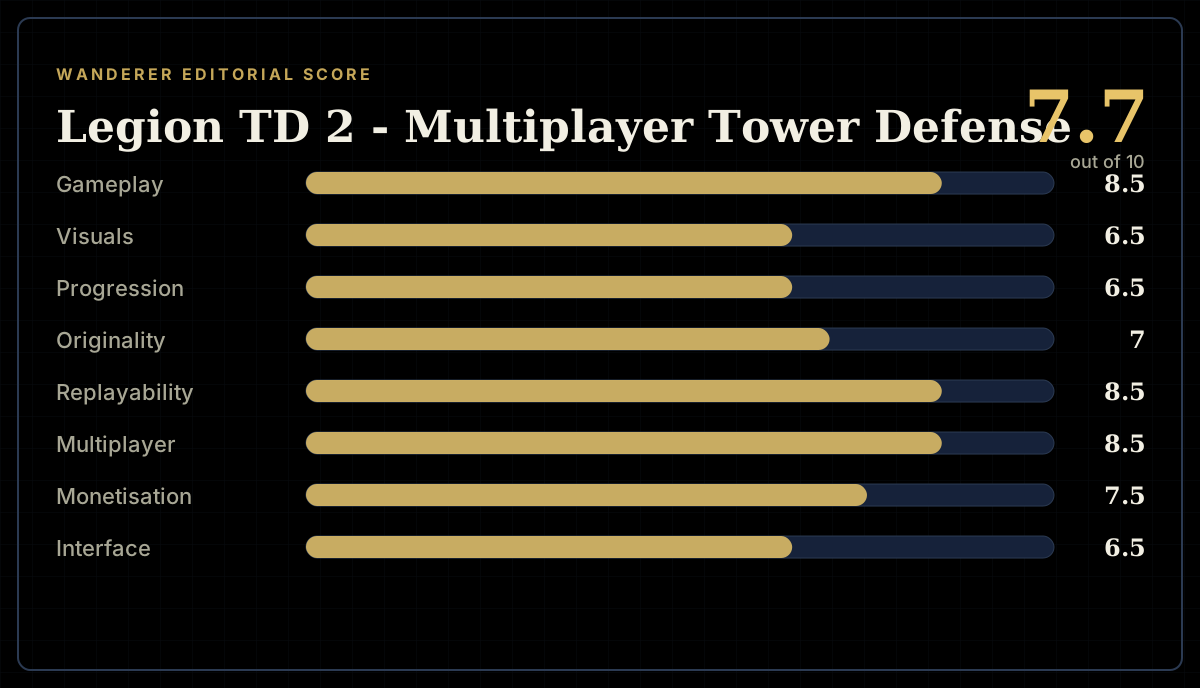
How the review scores each part of the gameWanderer Editorial -
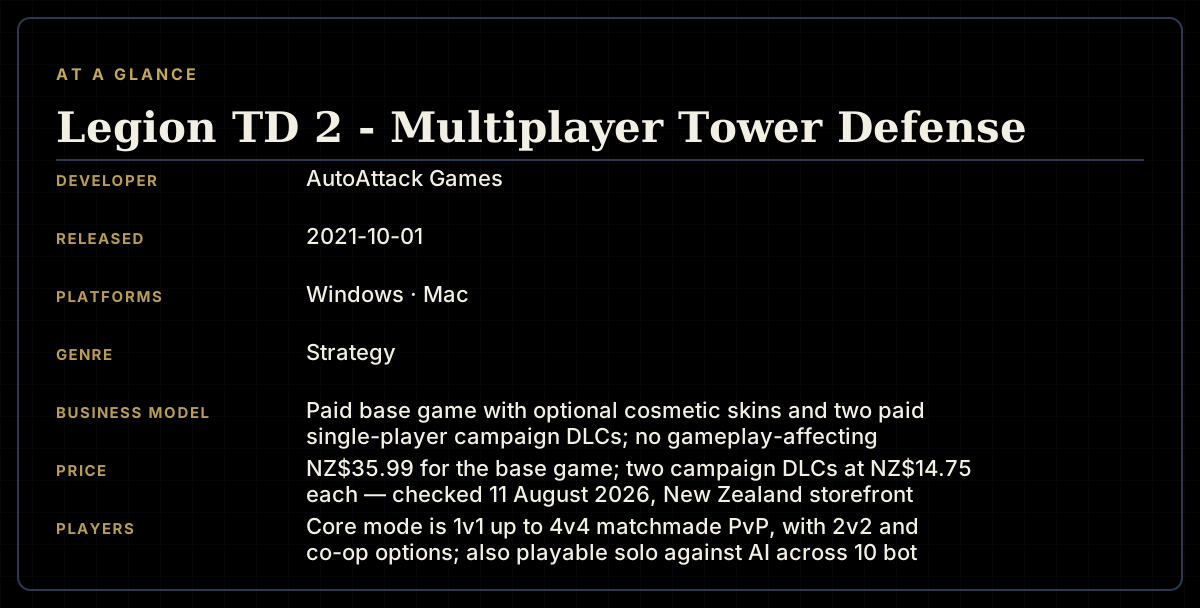
The essentials at a glanceWanderer Editorial -
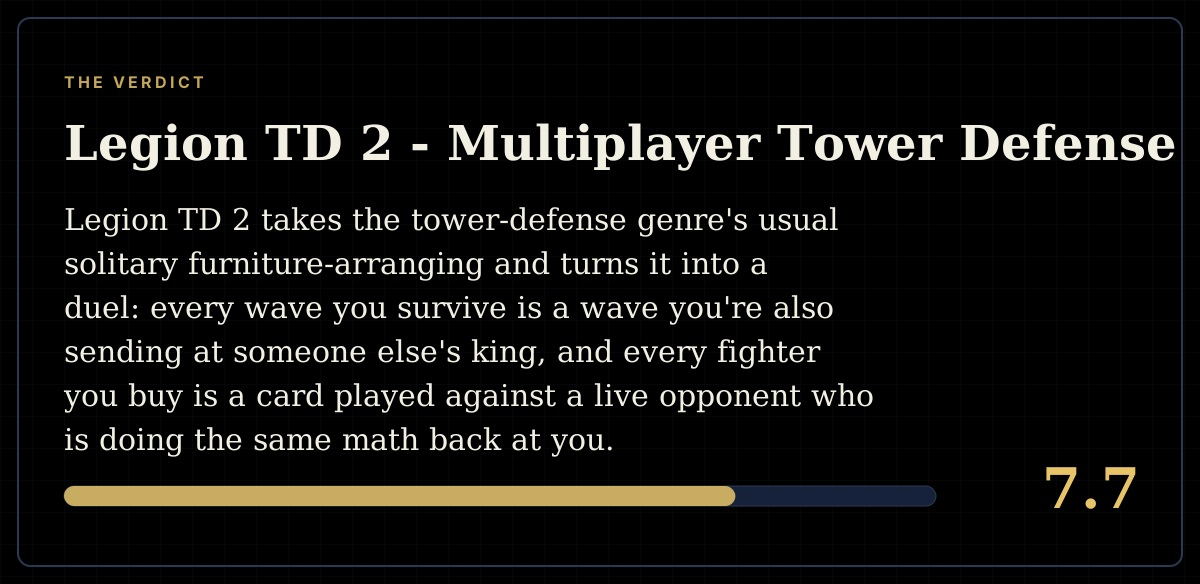
The short versionWanderer Editorial