Game review
Towerful Defense: A Rogue TD
5.5 / 10
- Developer
- Mini Fun Games
- Publisher
- Mini Fun Games, Gamersky Games
- Released
- 29 July 2024
- Platforms
- Windows
- Genre
- Tower Defense, Roguelite, Strategy
- Monetisation
- One-time purchase, no in-game store
- Players
- Single-player only
The short version
Towerful Defense: A Rogue TD strips the tower-defense genre down to a single tower, arming it with skills, traits and build-shaping items across escalating waves rather than asking the player to place and manage dozens of structures. Developed and self-published by Mini Fun Games with Gamersky Games, it released on 29 July 2024. Its 54 English-language Steam reviews sit at Mixed, roughly 55.6%, and this review reads nearly the full available sample — 24 negatives and 30 positives — to find a genuinely interesting concept that both sides of the split agree needed more time before launch, with balance, interface and pricing the three recurring, specific complaints.
Biggest strengths
- The single-tower concept draws genuine praise as a fresh, focused take on the genre, with numerous skills and traits giving players real build-shaping decisions to make
- The game supports six escalating difficulty tiers and runs on very low system requirements, making it accessible on modest hardware
- Even critical reviewers acknowledge the core proof of concept is sound, several specifically saying the idea deserves a more polished execution rather than dismissing it outright
Biggest weaknesses
- Multiple reviewers on both sides of the split independently describe the game as feeling unfinished or under-tested, several specifically saying it plays like an Early Access release despite not being tagged as one
- Balance draws the most consistent, detailed criticism: reviewers report that at higher difficulties, effectively only one build archetype is viable, with most skills and upgrades described as underpowered relative to a small handful of dominant options
- The game's play area is cramped into a small circular viewport that several reviewers say remains too small even after investing stat points meant to expand vision
Who it's for: Fans of build-focused survivors-likes and single-structure tower defense who don't mind playing something that still feels a little unfinished; best bought on sale given the value complaints in its own review base.
Our recommendation: A neat idea with real bones, best approached at a discount and with tempered expectations about build variety and interface polish.
5.5 / 10
Introduction
Towerful Defense: A Rogue TD takes the tower-defense genre's usual base-building sprawl and narrows it to a single point of focus: one tower, upgraded and reshaped across a run through skills, traits and build-defining items, defending against waves that escalate across six difficulty tiers. Mini Fun Games developed and self-published it alongside Gamersky Games, releasing on 29 July 2024. With a review corpus small enough to read almost in full — 24 of 24 available negatives and 30 of 30 available positives — out of 54 English-language reviews sitting at Mixed, roughly 55.6%, this review finds a genuinely interesting concept that both sides of a fairly even split agree needed more development time before its price tag arrived.
A focused idea with real appeal
The core hook draws real credit even from reviewers who ultimately don't recommend the game. One detailed negative review, while arguing for a "complete balancing overhaul," still called it "a great proof of concept that the idea of this game is good." Positive reviewers describe the single-tower structure as creating "several very distinct modes of play based on the same premise," and multiple reviewers compare it favourably to Brotato and A Perfect Tower as a build-crafting hybrid within the survivors-like space, praising the depth of skill and trait combinations available even at this stage. The minimalist visual design earns its own specific compliment for how well its limited colour palette reads during hectic waves, and the low system requirements mean it runs comfortably on modest hardware — a real accessibility plus for a genre that can otherwise demand a lot from a machine.
Balance that narrows the real choices
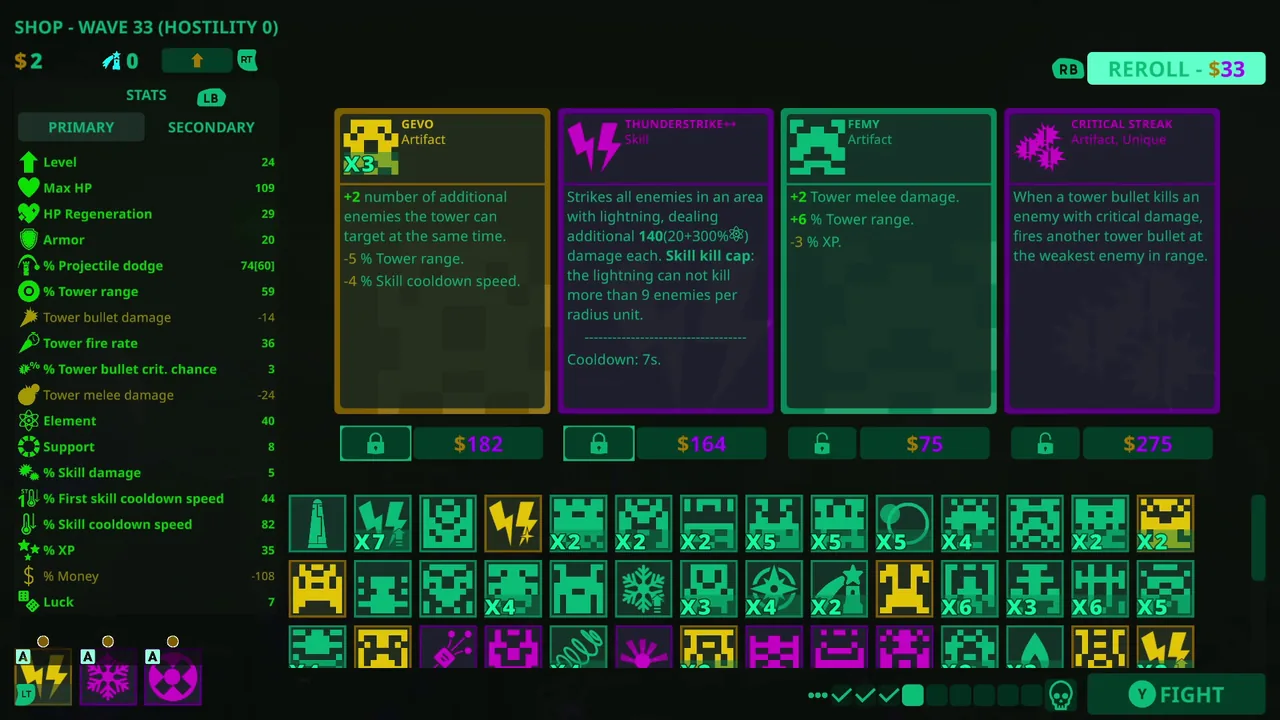
The most consistent, detailed criticism concerns build viability once difficulty rises. One detailed review explained the problem precisely: while the stat list suggests many viable approaches, higher difficulties are reportedly clearable through essentially one build archetype based on basic attacks, with a large proportion of other upgrades either underwhelming or actively undesirable regardless of what a player is building toward. Notably, this complaint isn't confined to the negative sample — one positive reviewer with over 24,000 minutes logged still said plainly "it's currently too frustratingly RNG reliant" while confirming they liked the game overall. That combination — real playtime investment alongside a specific, technical balance critique — carries more weight than either a drive-by negative or an uncritical positive would on its own.
A window too small for its own game
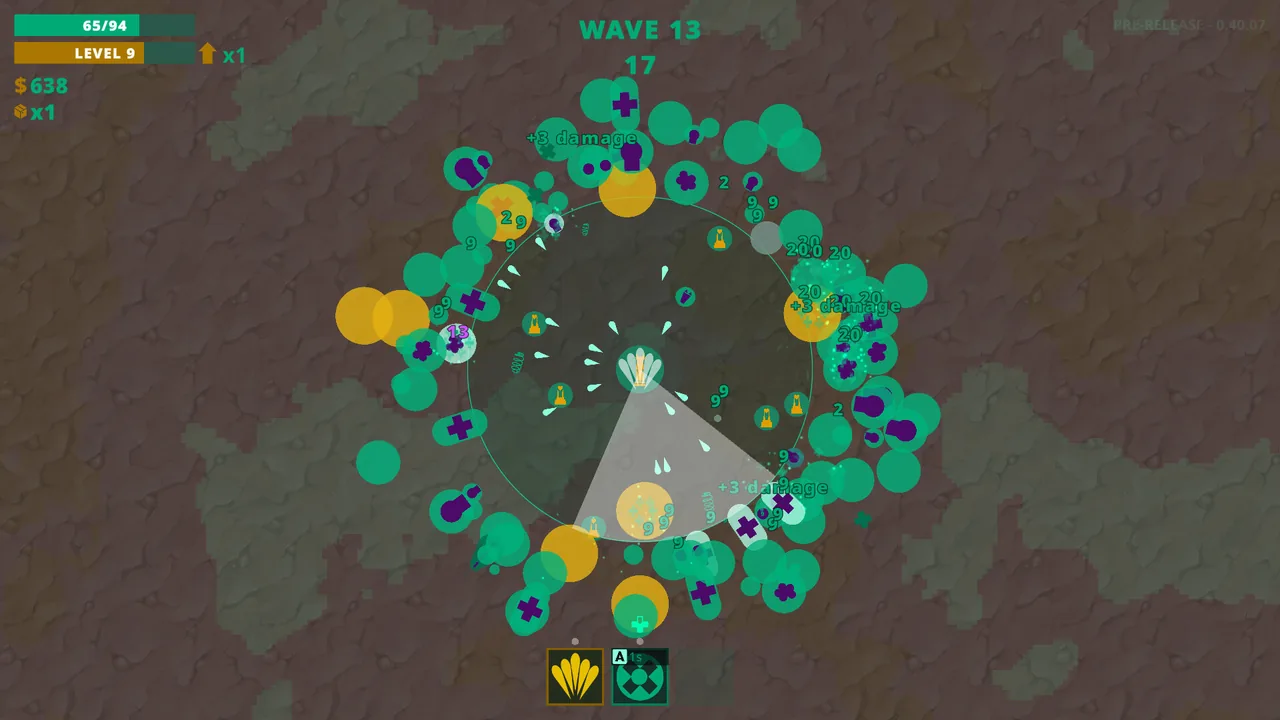
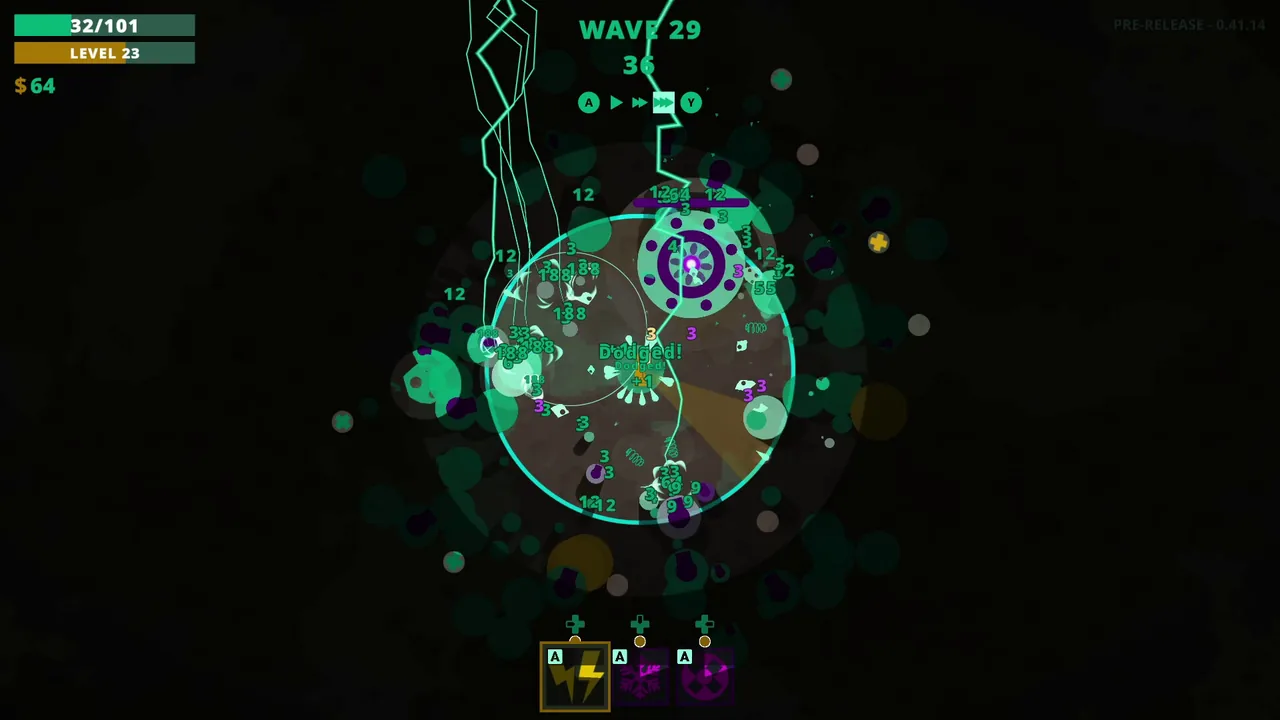
A more concrete, easily-verified complaint concerns the play area itself: multiple reviewers describe the actual combat viewport as cramped into a small circular area, occupying roughly a quarter or less of the screen for most of a run. One detailed reviewer noted that even after investing stat points specifically meant to expand visibility, they could still see less than a third of the screen, comparing the experience to "looking through a cardboard tube." That's the kind of specific, reproducible complaint that reads as a genuine design or tuning problem rather than a matter of taste.
A price its own fans questioned
Pricing draws its own recurring criticism. Multiple reviewers, including several giving the game a positive review, flagged the NZ$14.75 launch price as too high relative to the amount of polish and content on offer, with more than one suggesting a price closer to NZ$3-5 would feel fairer. It's worth noting the game currently sits at an 80% discount, priced around NZ$2.95 at the time of this review — close to the figure several of its own reviewers independently suggested was more appropriate, which reads as the market, and possibly the publisher, agreeing with that specific piece of feedback.
Final Verdict
Towerful Defense: A Rogue TD has a genuinely good idea at its centre — collapsing the tower-defense genre down to one build-crafted structure is a fresher premise than the Mixed score alone might suggest — but this review's near-complete read of its small corpus finds real, specific execution problems rather than a mismatch of taste. Balance narrows meaningful choice at higher difficulties, the play area is uncomfortably cramped, and a chunk of its own audience felt the price didn't match what shipped. At a discount, and with realistic expectations about build variety, there's a worthwhile small roguelite here; at full price, this review's own sample suggests waiting.
Pros and cons
Pros
- The single-tower concept draws genuine praise as a fresh, focused take on the genre, with numerous skills and traits giving players real build-shaping decisions to make
- The game supports six escalating difficulty tiers and runs on very low system requirements, making it accessible on modest hardware
- Even critical reviewers acknowledge the core proof of concept is sound, several specifically saying the idea deserves a more polished execution rather than dismissing it outright
- Distinct playstyles are achievable across different skill and trait combinations, giving replay value to players willing to experiment
Cons
- Multiple reviewers on both sides of the split independently describe the game as feeling unfinished or under-tested, several specifically saying it plays like an Early Access release despite not being tagged as one
- Balance draws the most consistent, detailed criticism: reviewers report that at higher difficulties, effectively only one build archetype is viable, with most skills and upgrades described as underpowered relative to a small handful of dominant options
- The game's play area is cramped into a small circular viewport that several reviewers say remains too small even after investing stat points meant to expand vision
- Multiple reviewers flagged the NZ$14.75 launch price as too high for the amount of content and polish delivered, and the game's current 80% discount price suggests the publisher may agree
Screenshots
-
Towerful Defense: A Rogue TDImage: Mini Fun Games via Steam -
Towerful Defense: A Rogue TDImage: Mini Fun Games via Steam -
Towerful Defense: A Rogue TDImage: Mini Fun Games via Steam -
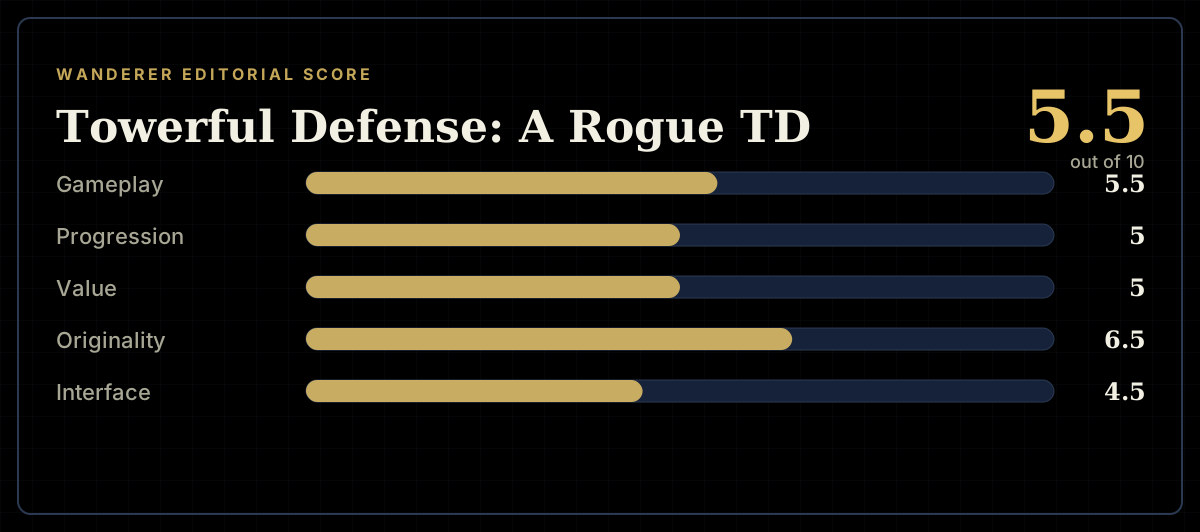
How the review scores each part of the gameWanderer Editorial -
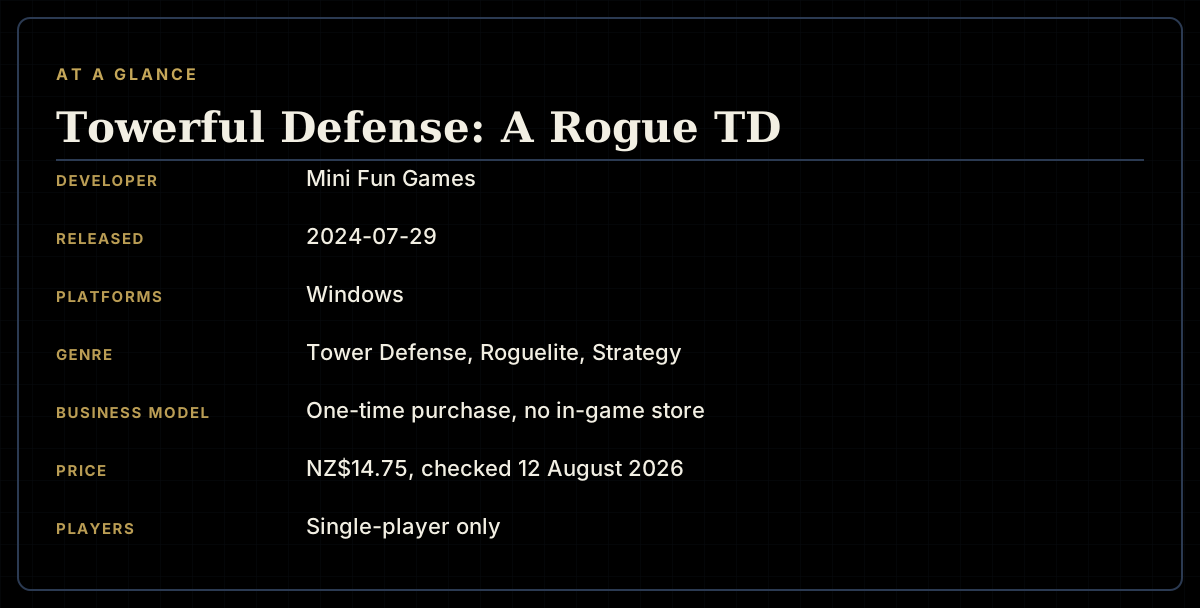
The essentials at a glanceWanderer Editorial -
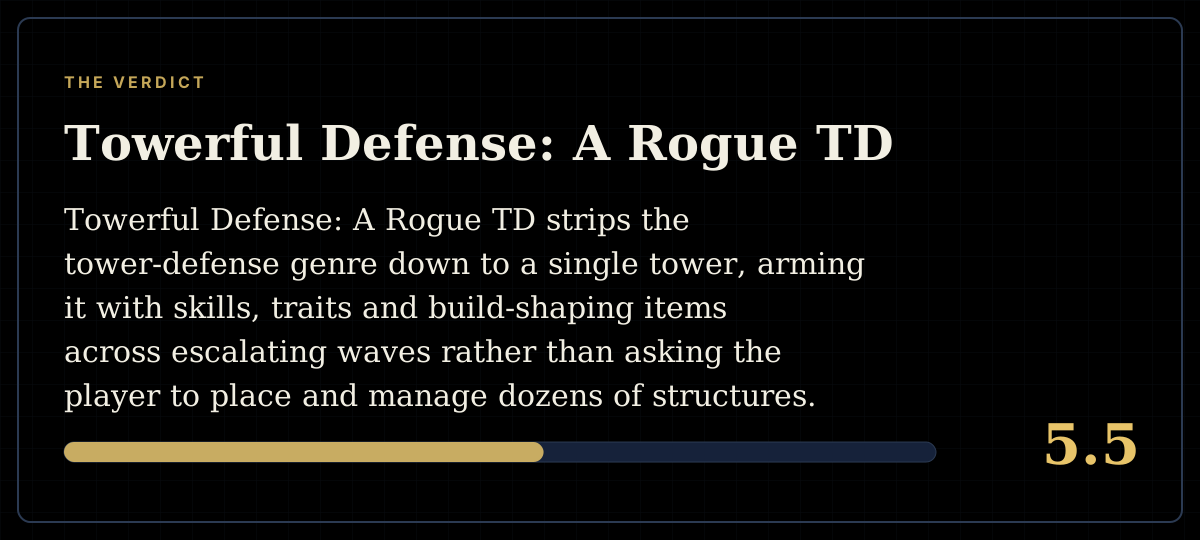
The short versionWanderer Editorial