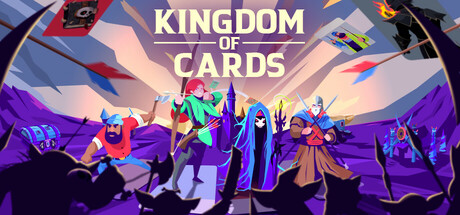
Game review
Kingdom of Cards
5.5 / 10
- Developer
- Rubber Duck Games
- Publisher
- Gamirror Games
- Released
- 13 March 2025
- Platforms
- Windows
- Genre
- Casual, Indie, RPG, Strategy
- Players
- Single-player
The short version
Biggest strengths
- A genuinely satisfying core mechanic of combining resource cards to discover new units, buildings, and crafting recipes, described by multiple reviewers as addictive in the specific way good discovery-based games are
- Strong, consistently praised visual design and a soundtrack reviewers say fits the game's tone well
- A wide achievement spread (96.1% down to 0.6% across 46 achievements) confirms real endgame depth for players who push toward full completion
Biggest weaknesses
- An unusually confusing progression structure where only card unlocks persist between runs while buildings and resources reset each time, with one reviewer calling it the strangest progression system they've seen on PC
- Starting a fresh game can wipe the entire album of unlocked cards, a destructive option several reviewers say isn't adequately warned against
- The variety of unlockable content is reported as thin at the resource-gathering layer specifically — only two additional resource-producing lands exist, with most other unlocks being same-function "location" cards
5.5 / 10
Discovery, one card combination at a time
Kingdom of Cards belongs to the small but growing genre of card-combination crafting games popularised by titles like Stacklands: place resource-generating cards on a board, combine them in the right configurations to discover new units, buildings, and recipes, and use what you uncover to fight off invasions and expand your holdings. The specific pleasure of experimentation is where the game earns its most consistent, enthusiastic praise. "Discovering new combinations is kind of addicting, and I've found some secrets too," one reviewer writes, and a separate reviewer independently praises the same core loop alongside the game's presentation: "the visual design is stunning... the gameplay is smooth and engaging. The soundtrack is amazing and fits the game perfectly."
The genre lineage matters here, and reviewers who've played the games this one is clearly drawing from are quick to place it on that map, sometimes generously and sometimes less so. One reviewer calls it "more than just a card game — an exciting roguelike that has a unique crafting and resource system," comparing their intent to finish it fully to how they engaged with a previous favourite in the space. That's a genuinely positive framing from someone clearly invested in the genre, and it sits in real tension with a more skeptical assessment elsewhere in the review sample.
A progression system reviewers call genuinely strange
The most detailed, most specific complaint in the negative review sample concerns how progress actually carries between play sessions, and it's worth quoting at length because of how precisely it's described. "Buildings and progress are not saved in a 'run.' The game starts from scratch with each run. Only card unlocks are saved from run to run. 'New Game' will erase EVERYTHING. Card unlocks, everything in the album will be gone. This game has the most bizarre progression system I have ever seen done on PC," the reviewer writes. That's not a vague complaint about difficulty or pacing — it's a specific, structural critique of how the save system is designed, including a serious warning that a menu option most players would assume is safe (starting a new game) can permanently erase collection progress with, this reviewer implies, insufficient warning beforehand.
A related complaint concerns the depth of what's actually being unlocked. "Unlockables: 2 extra lands to gather resources from, and the rest are 'location' type cards, which you can use to explore, steal, or conquer — all of which do the same thing," one detailed review states, arguing that the game's headline discovery mechanic thins out considerably once the more functionally distinct early unlocks are exhausted, leaving later unlocks feeling more like reskins of the same action than genuinely new options.
Measured against its clearest influences
Because Kingdom of Cards sits so close to a small number of well-known predecessors, reviewers naturally measure it against them, and the comparison isn't always flattering. "It's basically a dumbed down version of WychHand, which, in turn is a dumbed down version of Stacklands," one detailed review states, arguing the core loop — plots of land generating cards combined into units to fight enemies — lacks the meaningful decision-making that makes the genre's better examples compelling. That's a real, specific critique about design lineage rather than a generic dismissal, and it's a useful frame for anyone deciding between this and its more established genre neighbours: reviewers who've played those games first are more likely to notice what Kingdom of Cards hasn't matched yet.
A long Early Access tail, and lingering bugs
Kingdom of Cards had an unusually extended path to its current full-release state — a public demo from December 2024, an Early Access launch in March 2025, and a full 1.0 release only arriving in September 2025, six months later. One reviewer's complaint is worth reading in that light: "the core loop isn't fun and that's not helped by the fact that it has several game-breaking bugs that, looking at the Steam forum, were reported over a year ago and still aren't fixed." Given the long Early Access runway, a bug surviving from that period into the full release is a meaningfully worse sign than the same bug appearing shortly after a rushed launch — it suggests specific, known issues went unaddressed across an extended development window rather than simply not yet being caught.
The achievement data offers a useful counterbalance to the "thin unlocks" complaint, at least at the far end of the curve: full-completion achievements for collecting all weapons, all units, all locations, all cards, and all enemies each sit in the 0.6-1.1% range — a genuinely difficult, long tail that argues for real structural depth existing somewhere in the game, even if reviewers are right that the early-to-mid unlock variety feels thinner than it should.
Where this leaves it
Kingdom of Cards has a genuinely satisfying core discovery loop, strong presentation, and enough structural depth at its extreme end to reward dedicated players — but a save-and-progression system multiple reviewers find confusing and potentially destructive, thinner-than-expected unlock variety at the resource-gathering layer, and specific bugs that reportedly survived a lengthy Early Access period into the finished release all sit as real, unresolved problems. Worth trying at its price for fans of the card-combination crafting genre who haven't already exhausted Stacklands and its closer relatives, with a clear warning to be careful around the "New Game" option and to check recent reviews for word on whether the longer-standing bugs have finally been addressed.
Pros and cons
Pros
- A genuinely satisfying core mechanic of combining resource cards to discover new units, buildings, and crafting recipes, described by multiple reviewers as addictive in the specific way good discovery-based games are
- Strong, consistently praised visual design and a soundtrack reviewers say fits the game's tone well
- A wide achievement spread (96.1% down to 0.6% across 46 achievements) confirms real endgame depth for players who push toward full completion
- Cheap enough for the genre that several reviewers recommend it specifically as an entry point into card-combination crafting games
Cons
- An unusually confusing progression structure where only card unlocks persist between runs while buildings and resources reset each time, with one reviewer calling it the strangest progression system they've seen on PC
- Starting a fresh game can wipe the entire album of unlocked cards, a destructive option several reviewers say isn't adequately warned against
- The variety of unlockable content is reported as thin at the resource-gathering layer specifically — only two additional resource-producing lands exist, with most other unlocks being same-function "location" cards
- Directly and repeatedly compared unfavourably to genre predecessors Stacklands and Wytchwood, described by one detailed review as a "dumbed down" version of an already-established formula
- At least one reviewer reports specific bugs from the long Early Access period remain unresolved at full release, roughly a year after they were first reported on the Steam forum
Screenshots
-
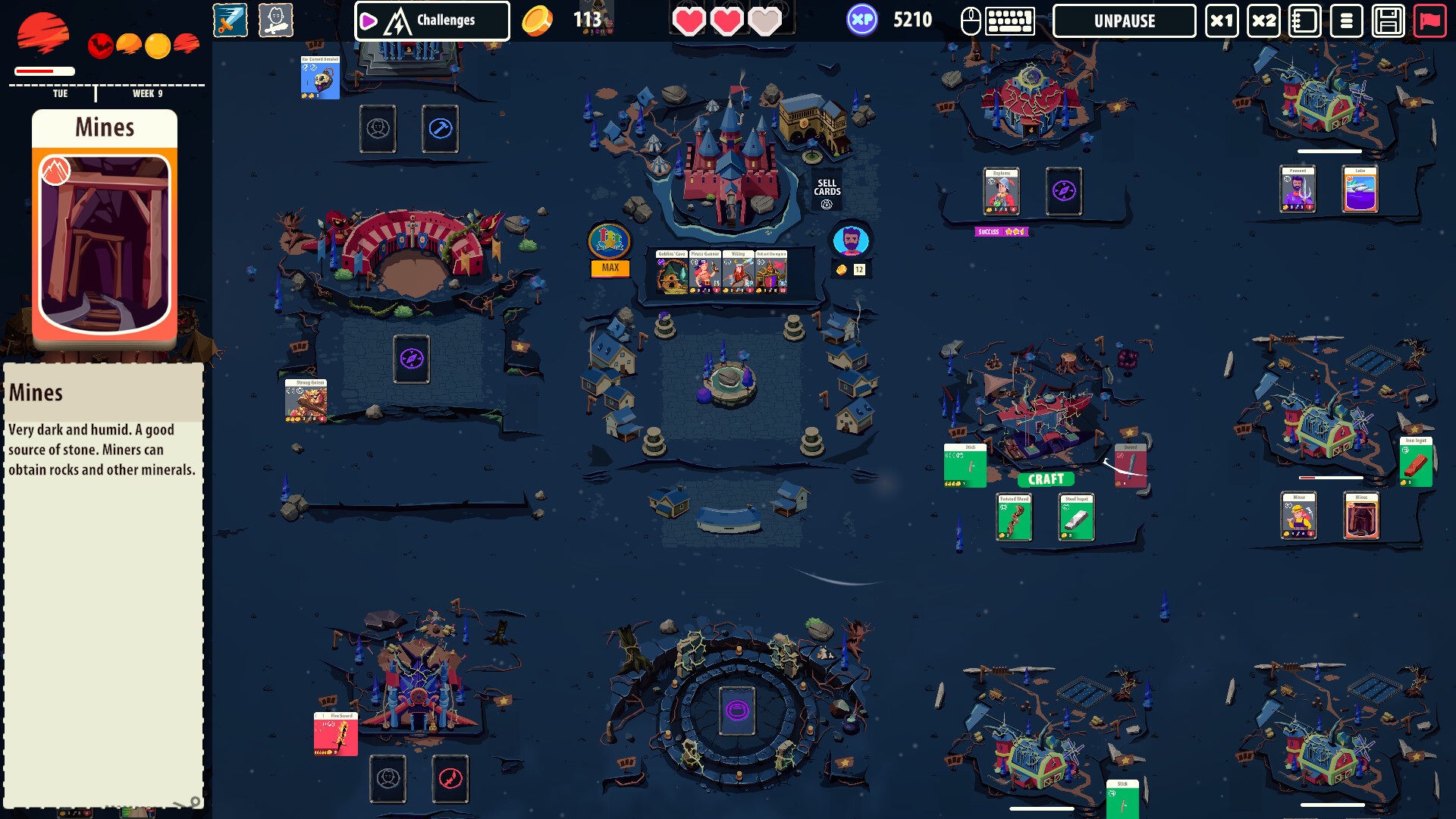
Kingdom of CardsImage: Gamirror Games via Steam -
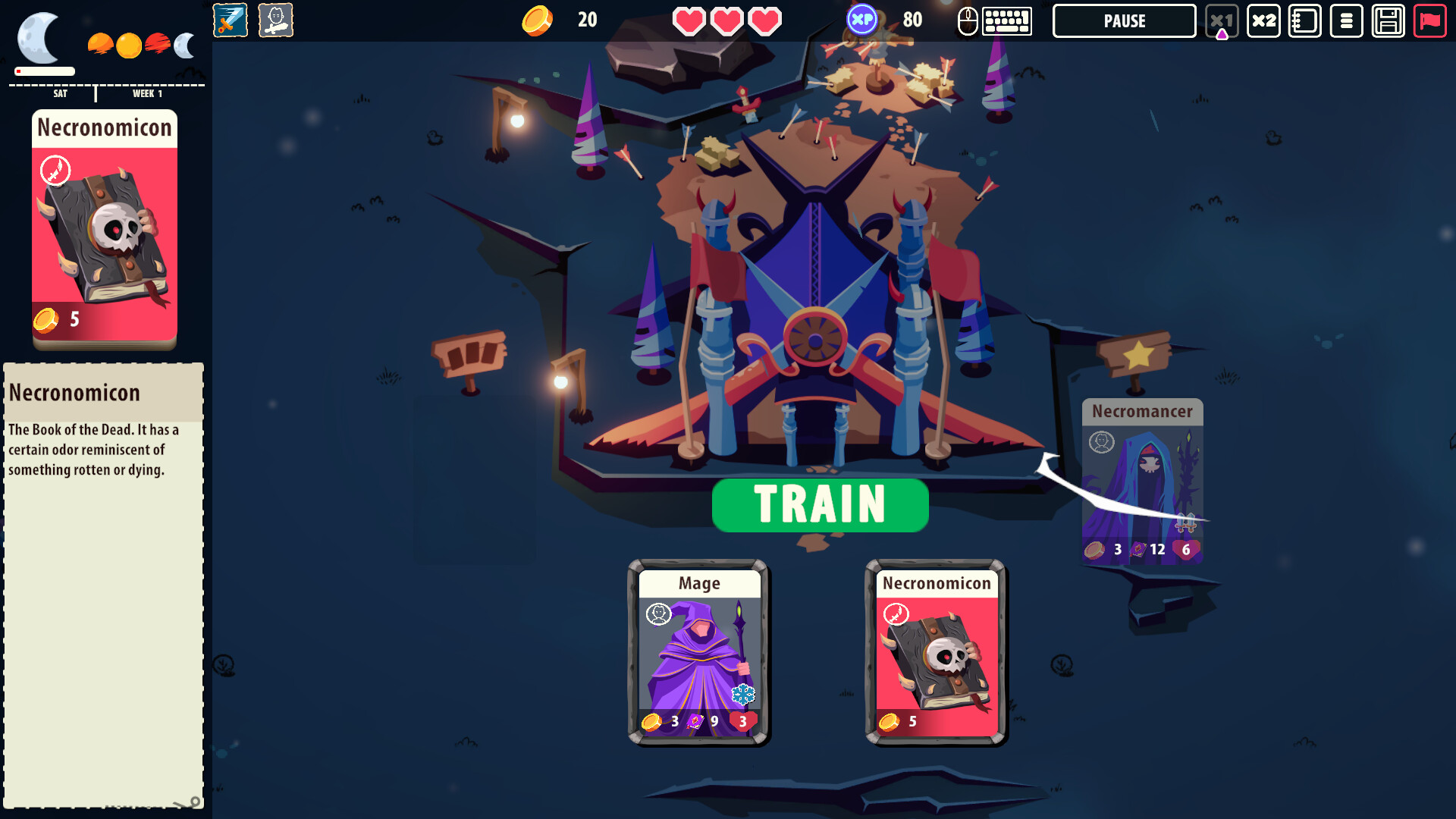
Kingdom of CardsImage: Gamirror Games via Steam -
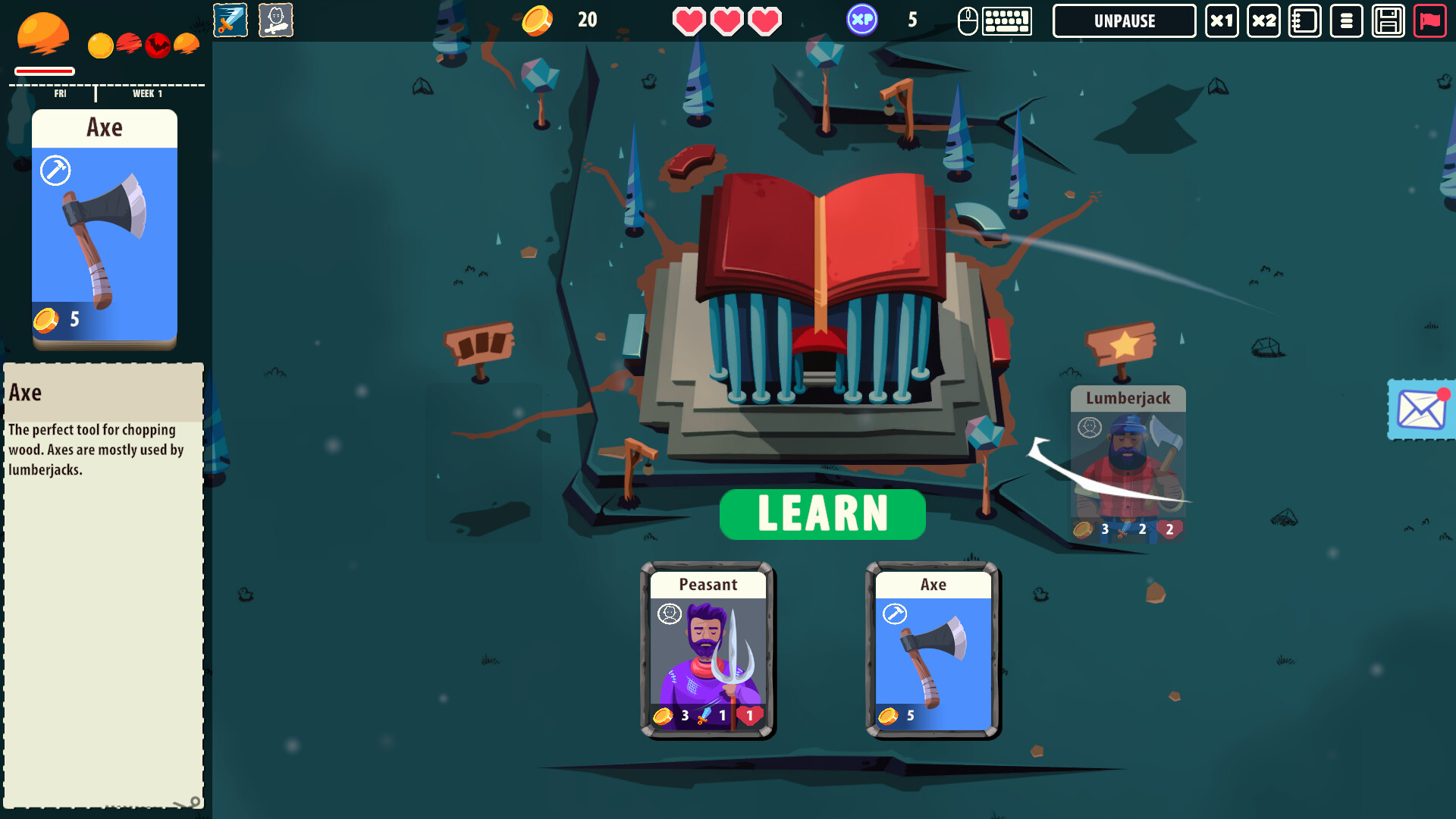
Kingdom of CardsImage: Gamirror Games via Steam -
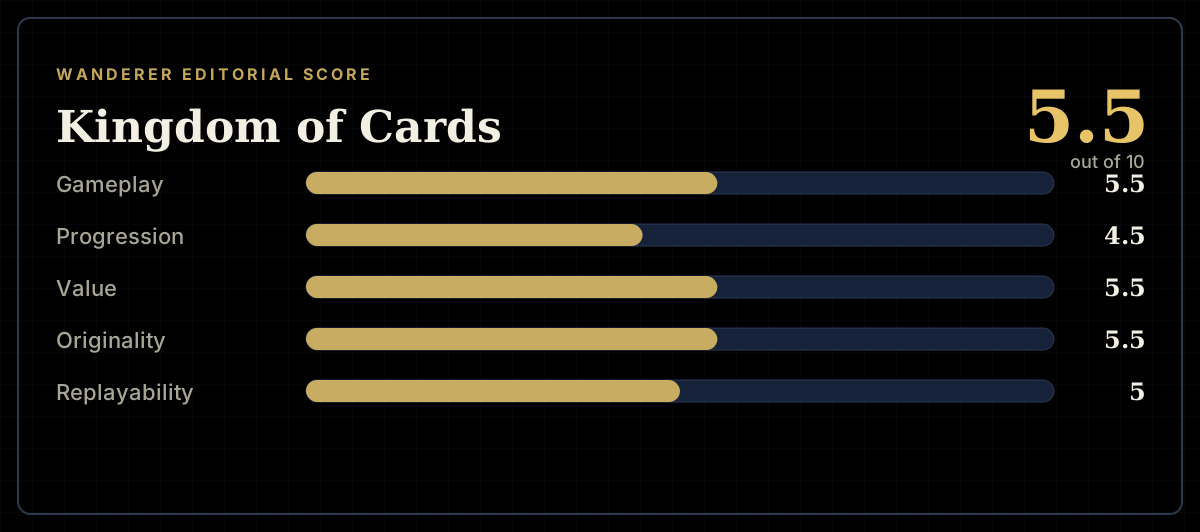
How the review scores each part of the gameWanderer Editorial -
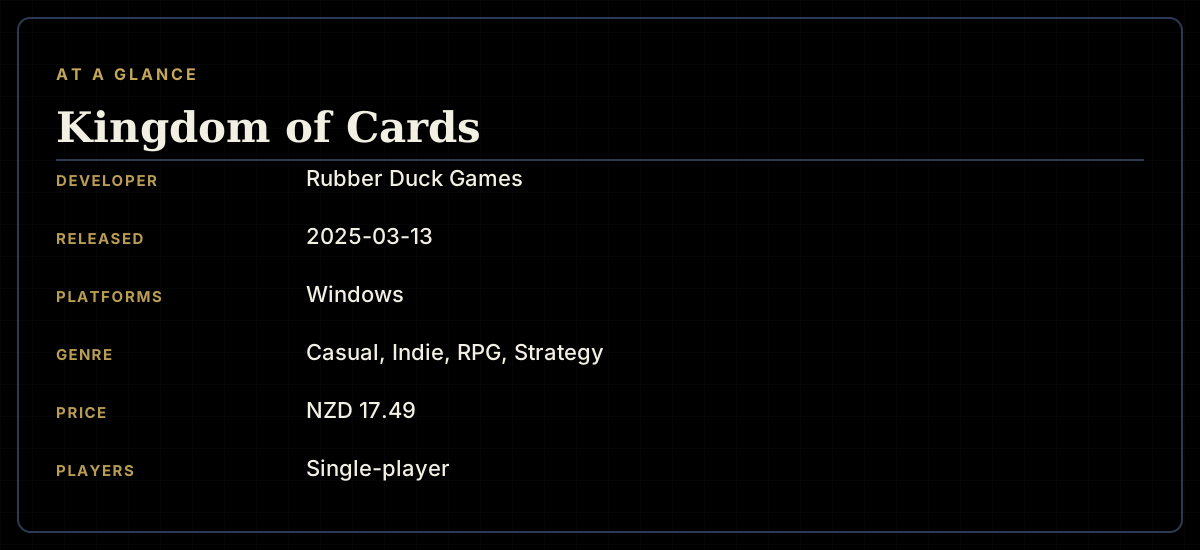
At a glanceWanderer Editorial -
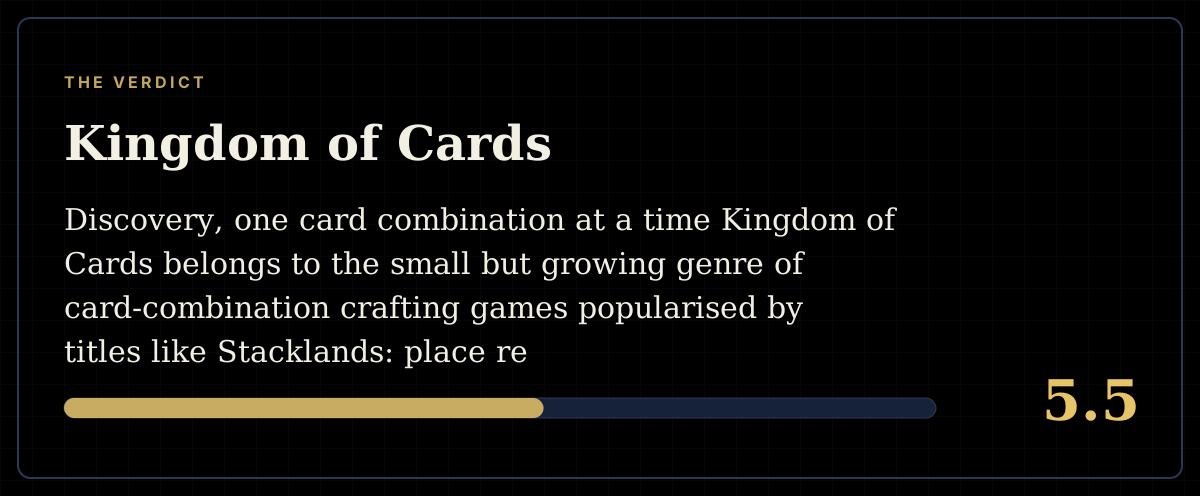
The short versionWanderer Editorial