
Game review
Yohane the Parhelion - NUMAZU in the MIRAGE -
5.5 / 10
- Developer
- BeXide Inc.
- Publisher
- BeXide Inc.
- Released
- 21 February 2024
- Platforms
- Windows
- Genre
- Roguelike deckbuilder
- Monetisation
- One-time purchase, with extensive paid character and costume DLC released on an ongoing basis
- Players
- Single-player only
The short version
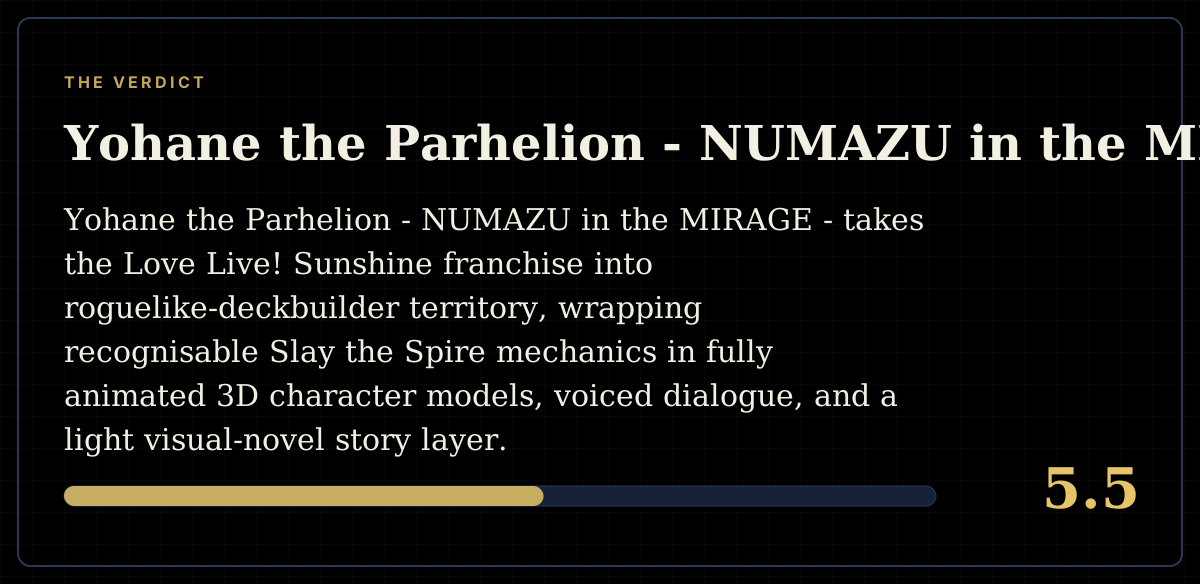
Yohane the Parhelion - NUMAZU in the MIRAGE - takes the Love Live! Sunshine franchise into roguelike-deckbuilder territory, wrapping recognisable Slay the Spire mechanics in fully animated 3D character models, voiced dialogue, and a light visual-novel story layer. This review's sample is consistently charmed by the presentation and finds the core loop approachable enough for genre newcomers, but a large, specific, and highly informed negative sample keeps returning to the same conclusion: the game borrows too directly from its inspiration without matching its balance or depth, the fun runs out within the first several hours, and an extensive paid-DLC structure layered on top of an already premium asking price draws real, repeated frustration.
Biggest strengths
- The 3D character models, combat animations, and voiced dialogue deliver a level of production polish multiple reviewers describe as surprisingly high for a licensed anime-property deckbuilder
- The core card-based combat is described by several reviewers as an approachable, well-paced entry point for players unfamiliar with the roguelike-deckbuilder genre, thanks to generous early difficulty and adjustable difficulty settings
- A dedicated summon mechanic tied to supporting cast members is repeatedly singled out as a genuine, worthwhile addition layered on top of the borrowed Slay the Spire foundation
Biggest weaknesses
- A large, specific, and repeated negative-review theme describes the game as directly copying enemy, card, relic, and map designs from Slay the Spire without matching that game's underlying balance, several reviewers naming precise status effects (poison and defense-piercing damage that bypass shields entirely) as frustrating, uncounterable design choices
- Multiple reviewers with completed playthroughs report the core loop becomes repetitive within six to ten hours, well short of the genre's usual replay expectations, citing a shallow relic pool and limited deck-archetype variety
- The paid DLC structure draws sustained, specific criticism, with reviewers calling individual character and costume packs "insultingly expensive" even during sales, and at least one reviewer withdrawing an otherwise-positive recommendation specifically over the monetisation model
Who it's for: Existing Love Live! Sunshine fans specifically drawn to the cast, and newcomers to the deckbuilder-roguelike genre looking for a gentle, low-difficulty introduction; genre veterans with existing roguelike-deckbuilder experience are the audience this review's sample most consistently steers away.
Our recommendation: Worth a purchase on sale for invested franchise fans who value the character content and voiced presentation over deep mechanical challenge; genre veterans are better served, as several reviewers put it directly, by simply playing Slay the Spire instead.
5.5 / 10
Yohane the Parhelion - NUMAZU in the MIRAGE - takes the Love Live! Sunshine cast into an unlikely genre: the Slay the Spire-style roguelike deckbuilder. This review's sample finds a game that delivers real charm and surprising production polish, set against a large and unusually specific negative-review contingent that keeps arriving at the same verdict from different angles — this borrows too much, delivers too little new, and asks too much money for the privilege.
A faithful, well-produced spin-off
Reviewers across the sample consistently praise the game's presentation. "Very cute roguelike deckbuilder with a lot of polish and production value," one writes, while another describes the character work directly: "The character models and animations are really cute. There's a decent amount of voiced dialogue by the seiyu... I was expecting something a little janky but the production values are surprisingly high." For franchise fans specifically, that faithfulness matters — several reviewers frame the game as a genuinely loving adaptation of the cast into a new mechanical space, complete with a supporting-character summon mechanic that more than one reviewer calls a worthwhile original addition layered over the borrowed foundation.
The dominant complaint: too close to its inspiration, without the balance
The single most repeated criticism in this review's negative sample is a direct, specific comparison to Slay the Spire — not as a vague genre resemblance, but as a named, detailed list of copied elements. "A lot of enemy/card/relic/map designs were taken directly from slay the spire," one reviewer writes, adding that "status effects that stop you from playing a category of cards as well as attacks/status effects that deal damage to you through block... I personally found these mechanics to be very frustrating to play against with little to no counterplay." Another reviewer with over 8,000 minutes logged is blunter still: "It's a sloppy imitation of Slay the Spire, with the Love Live IP slapped on top... you will pretty much experience all this game has to offer within the first couple of runs." A third puts the comparison in the most concrete terms available, noting the direct competitor "costs $29 while the other is just $25" and that they'd "seen everything in my 12 hour playthrough of this game while the other game took almost 100 hours."
These aren't vague quality complaints — they're specific, mechanically detailed observations from reviewers who clearly know the genre well, and they line up closely with each other across multiple independent accounts.
Repetition sets in fast
Even reviewers who enjoyed their time report the fun draining out quickly. "Sadly, it really falls off after 6 or 7 hours of doing the same thing over and over again," one positive-leaning reviewer notes, suggesting the game "really needs more roguelite elements to keep you progressing." Another agrees from the other side of the recommendation line: "the game itself is quite fun, not worth the price though. The main issue is, it already got super repetitive after the second runthrough... You basically have like 10-15h fun playing." For a genre built around replayed runs, several reviewers converge on this same six-to-fifteen-hour ceiling as a real structural limitation.
A specific, sustained complaint about DLC pricing
Beyond the base game, this review's sample raises a consistent and pointed complaint about monetisation. "It's a very good roguelike card based game, but frankly the DLC monetization is disgusting and i can't give it a positive review anymore for that reason," one reviewer writes — a rare case of a reviewer explicitly reversing their verdict over pricing alone. Another is more colourful but no less specific: "it's a fun game but wtf are those DLC prices? yea let me burn 10 dollars to make yohane a duck." One reviewer also flags a concrete structural cost of buying into DLC characters: playing anyone other than the base protagonist reportedly strips out mid-run checkpointing, turning those runs into all-or-nothing single-credit clears — "had checkpointing or at least a Continue screen been introduced it would have saved players hours of gameplay."
What the update record confirms
Steam's own partner-events feed backs up the reviewer complaints about DLC volume rather than refuting them: 33 documented posts show a steady, numbered patch cadence continuing well into late 2025, interspersed with a genuinely extensive run of paid character packs and costume add-ons released roughly every few months since launch. That's a picture of a developer that kept the game actively maintained and continuously monetised in roughly equal measure — exactly the pattern several reviewers describe when they praise the ongoing support while separately objecting to how much of it costs extra.
Achievement data and translation quality
Achievement completion data shows a fairly gentle overall curve — 91.1% for an early milestone down to 2.9% for the hardest late-game unlocks — consistent with reviewer descriptions of a low-difficulty, accessible entry point for genre newcomers rather than a punishing challenge run. Several reviewers separately flag inconsistent English translation quality, including card-text errors, though none describe this as severe enough to obscure core strategic decisions.
Final verdict
Yohane the Parhelion - NUMAZU in the MIRAGE - succeeds as a faithful, well-produced showcase for its source material's cast, and this review's sample confirms real charm in its presentation and an approachable on-ramp for players new to the deckbuilder-roguelike genre. But a large, specific, and consistent negative-review theme — direct mechanical borrowing without matching balance, a fun ceiling of well under fifteen hours, and an aggressively priced DLC structure — makes this a hard recommendation at full price for anyone already familiar with the genre it's built on. Franchise fans drawn specifically to the cast will likely find it worth a sale-priced purchase; everyone else is better served, in the words of more than one reviewer here, by simply playing the game this one is copying.
Pros and cons
Pros
- The 3D character models, combat animations, and voiced dialogue deliver a level of production polish multiple reviewers describe as surprisingly high for a licensed anime-property deckbuilder
- The core card-based combat is described by several reviewers as an approachable, well-paced entry point for players unfamiliar with the roguelike-deckbuilder genre, thanks to generous early difficulty and adjustable difficulty settings
- A dedicated summon mechanic tied to supporting cast members is repeatedly singled out as a genuine, worthwhile addition layered on top of the borrowed Slay the Spire foundation
- Steam's own partner-events feed documents an unusually dense, sustained patch cadence, with numbered version updates released roughly monthly for well over a year after launch
- The English localisation includes full voiced Japanese dialogue for major story beats, giving franchise fans a genuinely faithful presentation of the source material's cast
Cons
- A large, specific, and repeated negative-review theme describes the game as directly copying enemy, card, relic, and map designs from Slay the Spire without matching that game's underlying balance, several reviewers naming precise status effects (poison and defense-piercing damage that bypass shields entirely) as frustrating, uncounterable design choices
- Multiple reviewers with completed playthroughs report the core loop becomes repetitive within six to ten hours, well short of the genre's usual replay expectations, citing a shallow relic pool and limited deck-archetype variety
- The paid DLC structure draws sustained, specific criticism, with reviewers calling individual character and costume packs "insultingly expensive" even during sales, and at least one reviewer withdrawing an otherwise-positive recommendation specifically over the monetisation model
- Playing as any DLC character other than the protagonist reportedly removes mid-run checkpointing, forcing an all-or-nothing single-credit clear that at least one reviewer describes as a specific, avoidable design oversight
- Several reviewers report inconsistent English translation quality, including card-text errors and awkward phrasing that occasionally muddies build-planning clarity
Screenshots
-

Yohane the Parhelion - NUMAZU in the MIRAGE -Image: BeXide Inc. via Steam -

Yohane the Parhelion - NUMAZU in the MIRAGE -Image: BeXide Inc. via Steam -

Yohane the Parhelion - NUMAZU in the MIRAGE -Image: BeXide Inc. via Steam -
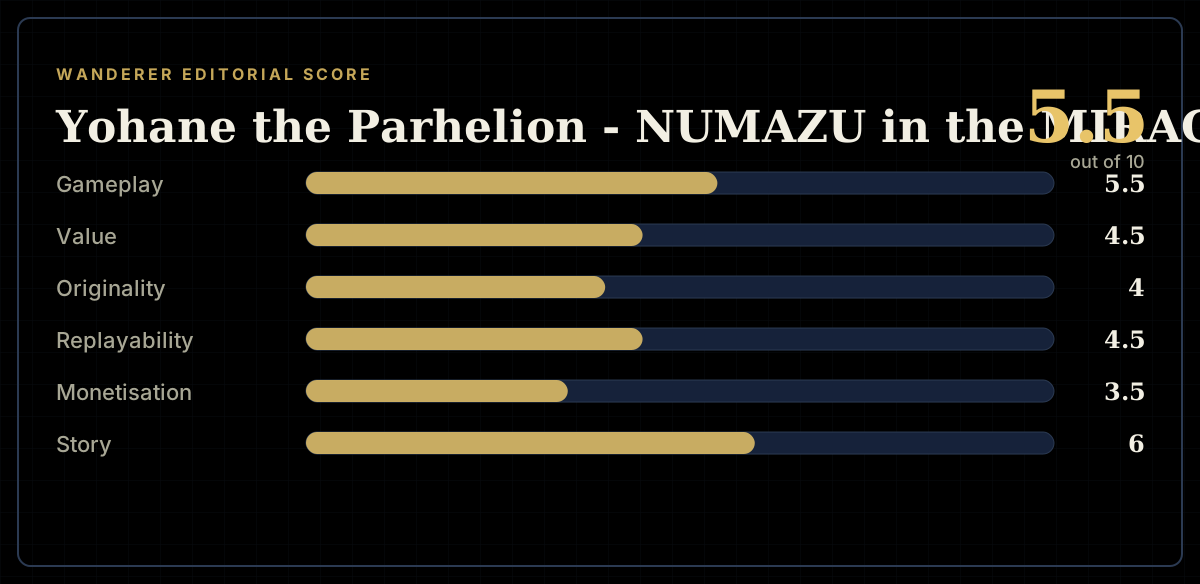
How the review scores each part of the gameWanderer Editorial -
The short versionWanderer Editorial