Game review
Illyriad - Grand Strategy MMO
6.5 / 10
- Developer
- Illyriad Games
- Publisher
- Illyriad Games
- Released
- 11 January 2017
- Platforms
- Windows, Browser
- Genre
- Strategy MMO
- Monetisation
- Free-to-play. A one-time Steam purchase unlocks a permanent premium account and a bundle of Prestige, the premium currency, but the same account tier and currency can be bought (or earned) directly through the browser client at no cost to entry
- Players
- Persistent multiplayer only, hundreds to thousands of players sharing one world map per server, with alliances, trade, and open PvP warfare between empires
The short version
Illyriad has been running one persistent fantasy world since 2011, and the sheer scale of what it has built in that time is genuinely rare: 400-plus technologies, 380-plus tradeable resources and items, and an economy that lives or dies on what other players choose to make and sell. That depth is the whole appeal, and it rewards the kind of long-haul commitment almost no strategy game asks for any more.
It is also, underneath the "Grand Strategy MMO" branding, a browser city-builder in the Tribal Wars and Ikariam lineage — queue a building, wait real hours, log back in — and the Steam version's main addition is a one-time purchase for an account tier and premium currency that the free browser client hands out for nothing. Go in knowing what you are actually buying.
Biggest strengths
- A research and crafting web deep enough that veteran reviewers still describe finding new systems years into playing
- The in-game economy is entirely player-driven, with 380+ tradeable resources and items and no scripted vendor undercutting real trade
- A long-running, welcoming community that multiple Steam reviews single out as the best reason to stick around, even from players who otherwise criticise the game
Biggest weaknesses
- The Steam listing's "4X" and "Grand Strategy" framing oversells what is, mechanically, a real-time browser city-builder with a research tree
- The Steam purchase duplicates a premium tier and currency bundle the free browser client already gives away, and several Steam reviewers call this out directly as a bad-faith upsell
- No exploration and no fog of war — the map is visible from the start, which undercuts the "explore" half of the 4X label entirely
Who it's for: Players who already love slow-burn browser empire-builders (Tribal Wars, Ikariam, Evony) and want the deepest one of that type still running, plus anyone drawn to genuinely player-run in-game economies over scripted content
Our recommendation: Play it free through the browser first before spending anything on Steam — the premium tier you'd buy there is available at no cost through illyriad.co.uk directly
6.5 / 10
Introduction
Illyriad's Steam page calls it a "Grand Strategy MMO," and its own store description leans further into 4X language than almost any browser game on the platform — research, craft, trade, scheme, fight, conquer. What it doesn't say up front is that this exact game has been running continuously since 2011, five and a half years before it ever reached Steam, built by a UK studio of gaming outsiders who set out to fix what they felt strategy games had stopped doing: rewarding patience and letting players build an economy rather than just an army. In an era when most "strategy MMOs" on mobile storefronts are reskinned clash-of-clones with a battle pass bolted on, Illyriad is the rare one that is actually still what it always was — a slow, dense, player-run world that has simply kept adding to itself for a decade and a half.
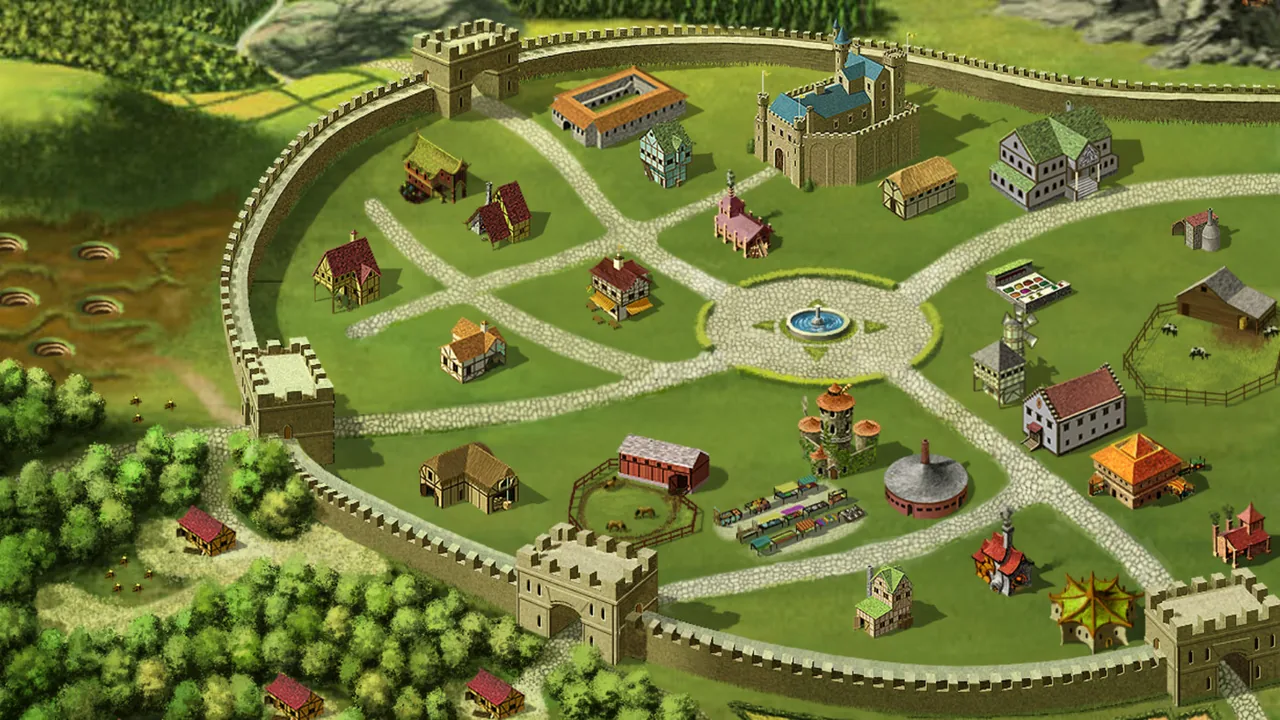
That makes it a strange fit for a 2026 Steam listing, and an even stranger fit for the "4X" shorthand. There is no fog of war and nothing to explore; the map is visible from the first login. What Illyriad actually offers is closer to Tribal Wars or Ikariam scaled up several times over — city management, a sprawling technology tree, and a fully player-driven market — dressed in fantasy lore thick enough that engadget once compared it to Game of Thrones. Whether that sells you depends entirely on whether "browser empire-builder with fifteen years of accumulated systems" sounds like a dream or a chore.
Gameplay and progression
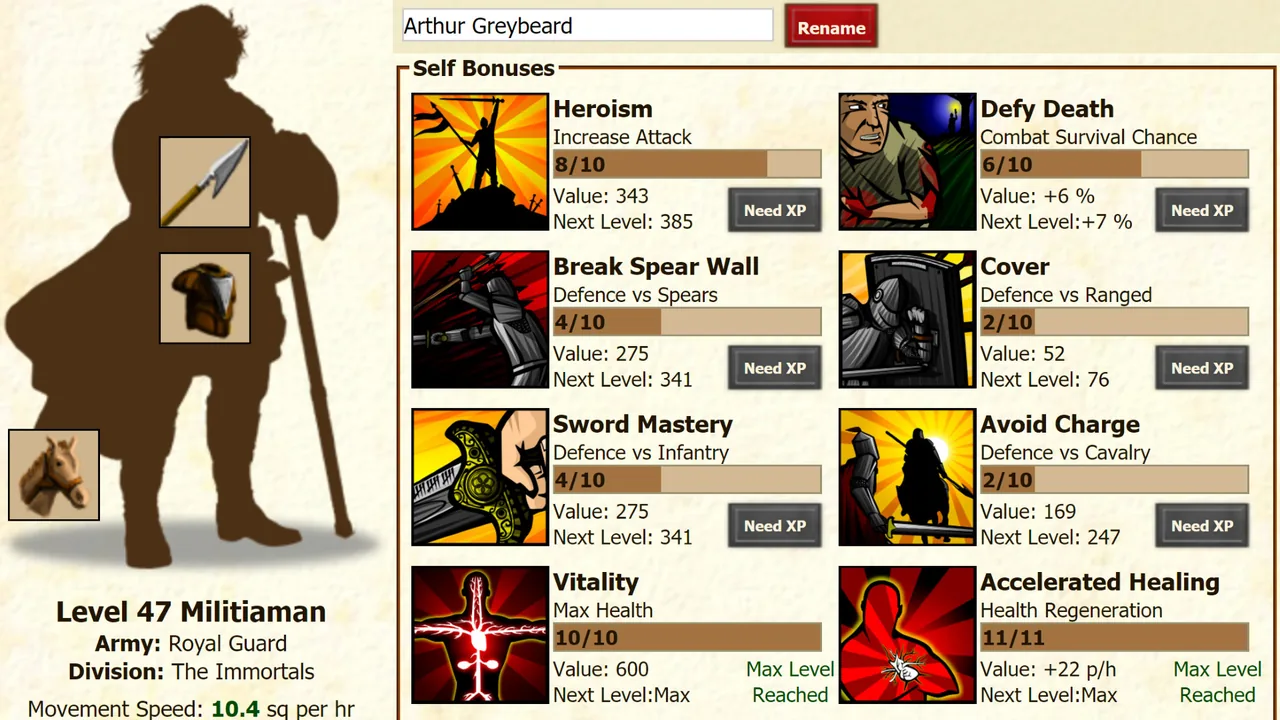
The core loop is the genre's familiar one: found a city, queue buildings, research technologies, gather resources, and defend or expand your territory against other players sharing the same world map. What sets Illyriad apart is scale. The store page advertises more than 400 technologies, over 70 building types, and 380-plus resources and craftable items, and Steam reviewers who have logged thousands of hours back that up — several describe still discovering systems years into playing, from thievery and assassination mechanics to specialised city layouts built around a single production chain. One reviewer with over 5,200 hours logged called it "the most mind-blowing browser game" they'd found after years in the genre, ahead of Evony, Lords of Ultima and Tribal Wars.
The tradeoff is exactly what that kind of depth implies: this is a real-time game measured in days and weeks, not sessions. Buildings and research queue on timers that run whether or not you're logged in, and meaningful progress compounds over months. Steam's own achievement data makes the drop-off visible — across 601 achievements, the single most commonly earned sits at just 38.3% of players, and the long tail of harder ones sits at 0%. That's not a flaw exactly; it's the natural shape of a game built for years-long careers rather than completionist runs. But it means the early hours undersell what the game becomes, and the late game is only visible to players who commit far beyond a typical Steam refund window.
The player-driven economy
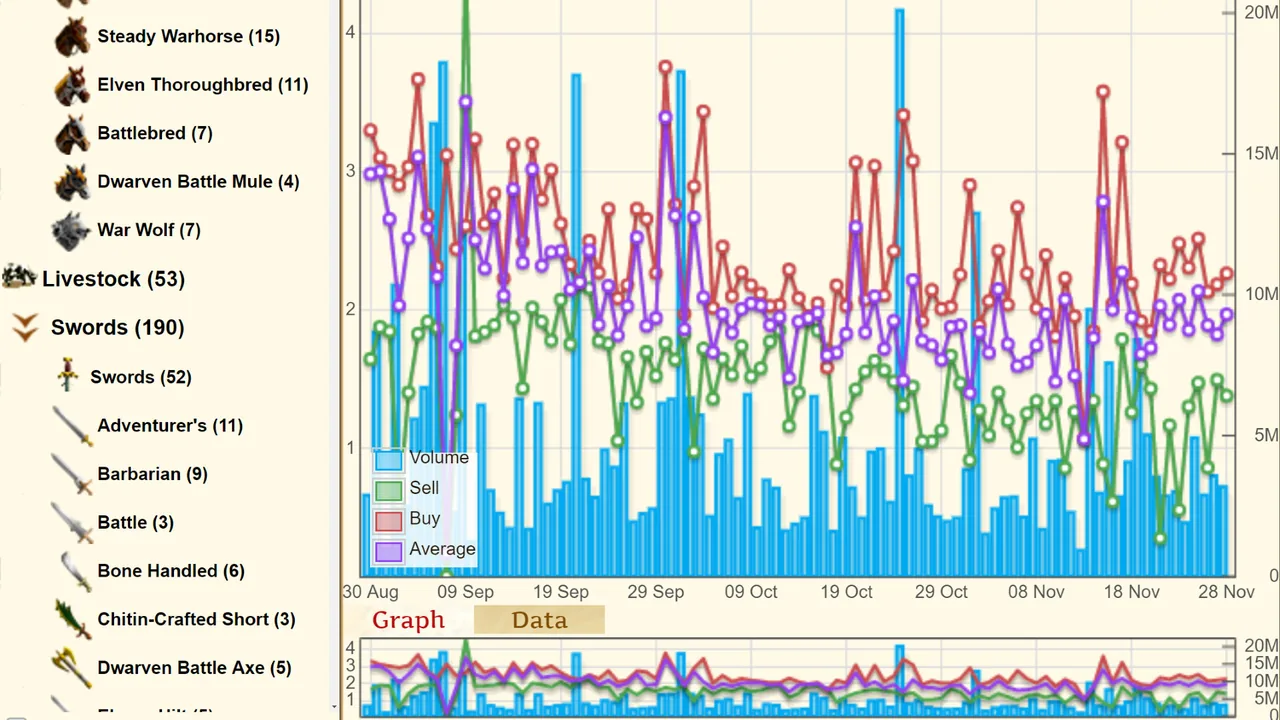
The strongest single feature is the market. Nothing is vendor-scripted: every one of Illyriad's 380-plus resources and items moves because another player produced it and chose to sell it, and city specialisation exists specifically to feed that trade — a city built around ore has to buy its food, timber, and tools from someone who built theirs around farming or lumber. Multiple reviews, including from players who otherwise recommend against buying the game, single this out as the thing Illyriad does that almost nothing else in the genre bothers with. It rewards economic play as its own victory condition, not just a support system for war, which is a rarer design choice in this genre than the marketing copy's list of numbers suggests.
Community
Across both positive and negative Steam reviews, one thing comes up again and again unprompted: the community. Reviewers who are otherwise sharply critical of the monetisation or the interface still volunteer that newcomers get welcomed in open chat, that established players hand out starting resources to strangers, and that alliance culture leans cooperative rather than predatory. For a persistent PvP world where established empires could easily bully new arrivals off the map, that reputation — held consistently across a fifteen-year lifespan — says more about the game's health than any single system does. It's not universal; a small number of long-time players allege uneven moderation and favouritism toward established alliances in dispute resolution, which is worth flagging for anyone planning to invest years into one server.
Monetisation
This is where the Steam version earns its most pointed criticism. Illyriad is genuinely free at illyriad.co.uk, where a premium account tier and Prestige, the premium currency used to speed up building, research, or resource production, are both obtainable without spending anything. The Steam release charges for a bundle that includes that same premium account tier plus a chunk of Prestige — content the browser client already gives away. Several Steam reviewers flag this explicitly, essentially warning shoppers to check the free site before buying on Steam at all. None of it gates content: nothing in the technology tree, building list, or crafting system requires Prestige to reach, and reviewers consistently describe it as a time-skip convenience rather than a power purchase. But charging Steam customers for what illyriad.co.uk gives away is a bad first impression for a storefront audience who may not know to check.
Interface and accessibility
Illyriad's UI is unmistakably a browser strategy game's — dense stat tables, nested menus, and a learning curve multiple reviewers describe as the biggest single barrier standing between a curious newcomer and the systems that make the game worth playing. There's no controller support and no mobile client through Steam; the browser version at illyriad.co.uk is the more flexible way in for players who want to check queues from a phone. Nothing about the presentation has been modernised to compete with the clean dashboards of newer idle and management games, and for players used to that standard, the first hour will feel more like reading a spreadsheet than playing a game.
Long-term retention
Here Illyriad has a track record almost nothing else in its genre can claim: continuous operation since 2011, a Steam release in January 2017, and a move to fully free-to-play in 2021 that outlived that decision by five years and counting. The developer's news feed shows content still landing in 2026 — a Dragon Magic tournament and siege warfare updates as recently as June, on top of a quest storyline players spent late 2025 into early 2026 working through together. Current Steam concurrent player counts read low, but that understates the game's real population, since the browser client at illyriad.co.uk has always been the primary way people actually play; Steam is a secondary entry point layered on top of an older, larger audience. For a persistent-world game, "still being updated after fifteen years by the original small studio" is a stronger signal of health than any single day's player count.
Final verdict
Illyriad is a genuinely deep, genuinely player-driven strategy world that has quietly kept running and growing since 2011, and the density of what it has built in that time — the research tree, the crafting web, an economy with no scripted vendors in it — is rare enough to be worth a strategy fan's attention on its own terms. It is not, whatever the store page says, a 4X game, and newcomers expecting exploration or a tight combat loop will find a much slower, much more administrative game underneath the fantasy branding. The Steam release's biggest misstep is charging for a premium tier the developer's own website gives away, which is an unforced error for a studio that otherwise seems to understand exactly what kept its community coming back for fifteen years. Try it free at the source first; only consider the Steam purchase once you already know you're staying.
Pros and cons
Pros
- A research and crafting web deep enough that veteran reviewers still describe finding new systems years into playing
- The in-game economy is entirely player-driven, with 380+ tradeable resources and items and no scripted vendor undercutting real trade
- A long-running, welcoming community that multiple Steam reviews single out as the best reason to stick around, even from players who otherwise criticise the game
- Still being actively developed fifteen years on, with tournament events and content updates landing as recently as mid-2026
- Genuinely free to reach the game's full depth; nothing in the tech tree or building list is paywalled behind Prestige
Cons
- The Steam listing's "4X" and "Grand Strategy" framing oversells what is, mechanically, a real-time browser city-builder with a research tree
- The Steam purchase duplicates a premium tier and currency bundle the free browser client already gives away, and several Steam reviewers call this out directly as a bad-faith upsell
- No exploration and no fog of war — the map is visible from the start, which undercuts the "explore" half of the 4X label entirely
- Steam's own achievement data shows a steep drop-off past the early game: even the most common non-trivial achievement sits under 40% completion, and dozens sit at zero
- The interface is unmistakably a fifteen-year-old browser strategy game's, with dense menus and a learning curve that several reviews describe as the single biggest barrier to sticking around
- A handful of long-time players report uneven moderation, alleging favouritism toward established alliances in rules enforcement
Screenshots
-
Illyriad - Grand Strategy MMOImage: Illyriad Games via Steam -
Illyriad - Grand Strategy MMOImage: Illyriad Games via Steam -
Illyriad - Grand Strategy MMOImage: Illyriad Games via Steam -
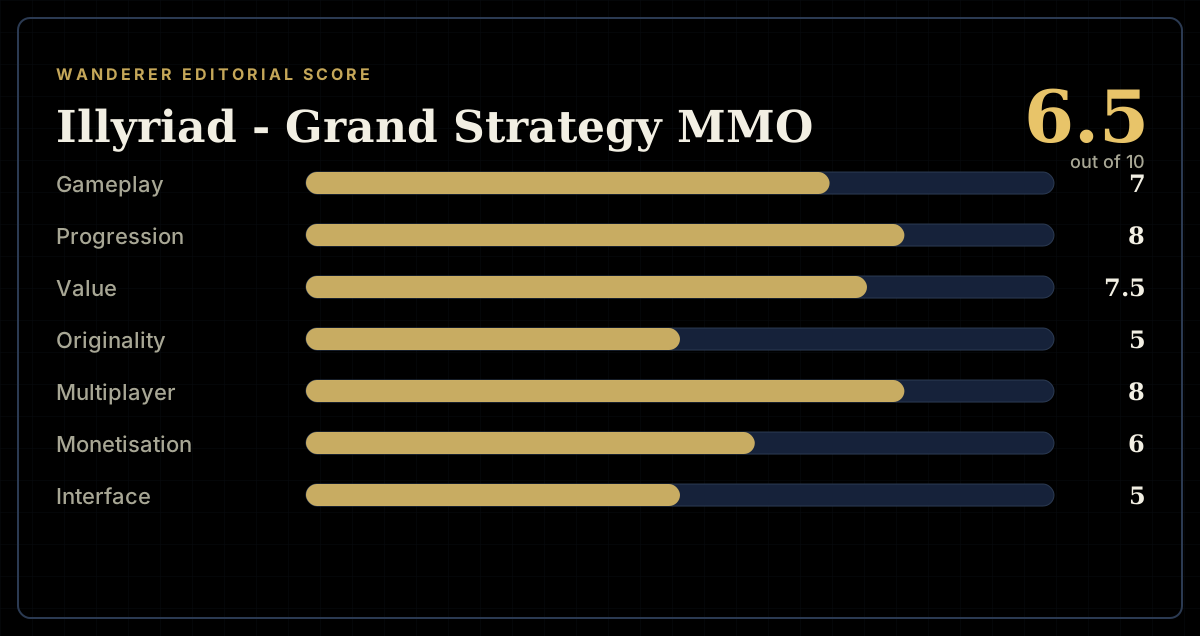
How the review scores each part of the gameWanderer Editorial -
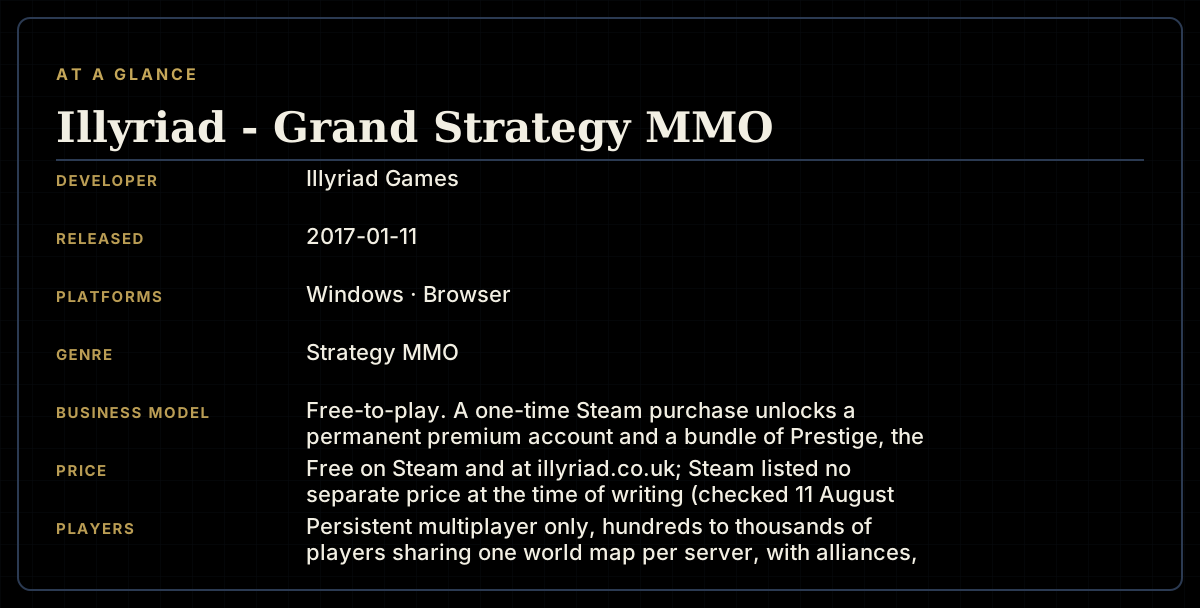
The game at a glanceWanderer Editorial -
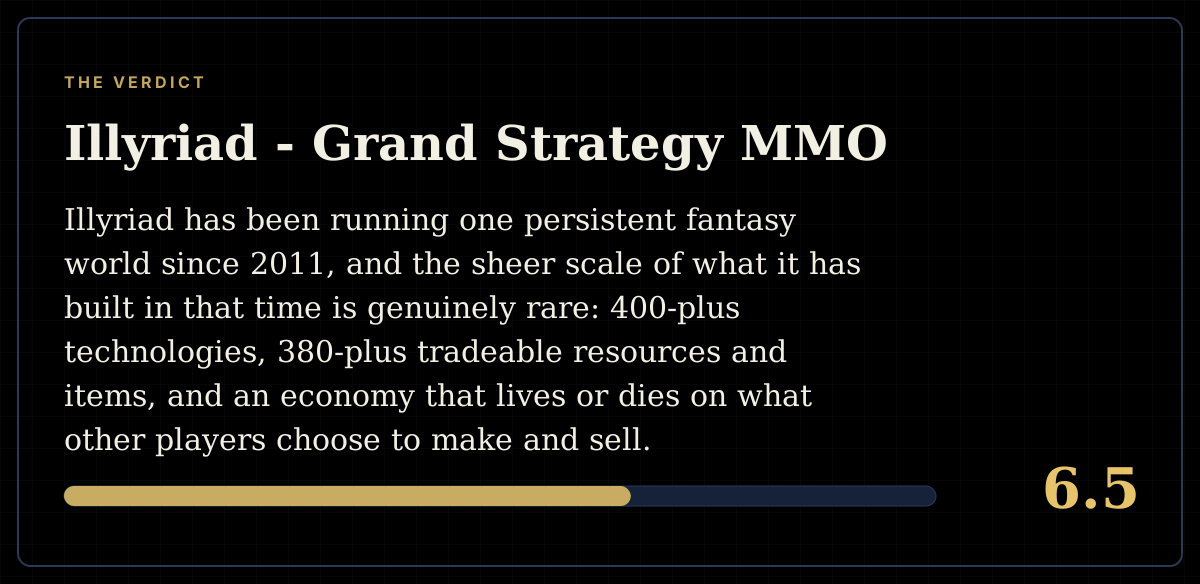
The short versionWanderer Editorial