
Game review
Idle Planet Miner
7 / 10
- Developer
- Tech Tree Games
- Publisher
- Tech Tree Games
- Released
- 23 January 2019
- Platforms
- iOS, Android
- Genre
- Idle Mining Simulation
- Monetisation
- Free-to-play with a Dark Matter premium currency, a Miner Pass, several bundle tiers up to $29.99, a one-off Remove Ads purchase and optional rewarded video ads; Apple's own storefront disclosure flags loot box mechanics
- Players
- Asynchronous weekly tournament leagues (Copper through Platinum); no direct player interaction
The short version
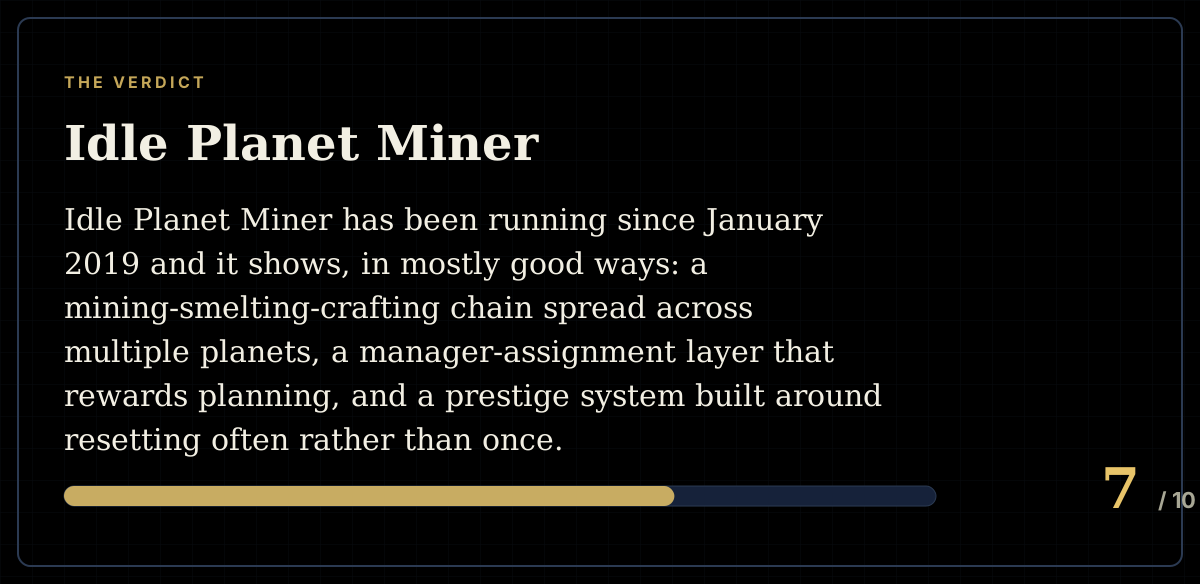
Idle Planet Miner has been running since January 2019 and it shows, in mostly good ways: a mining-smelting-crafting chain spread across multiple planets, a manager-assignment layer that rewards planning, and a prestige system built around resetting often rather than once. Weekly tournament leagues give it a competitive pulse most single-player mining idles never bother with. Against that sits a monetisation menu that Apple itself flags for loot box mechanics, a $19.99 pack that sells direct access to the same manager recruitment layer the free game asks you to grind toward, and a specific, recurring player complaint about offline resource tracking silently zeroing out real progress.
Biggest strengths
- The ore-into-alloy-into-crafted-item chain spread across several manager-assigned planets gives the mid-game real decisions instead of one upgrade queue
- The Sell Galaxy prestige loop feeds permanent Mothership room bonuses and is tuned around frequent early resets rather than a single distant endgame reset
- Weekly Copper-to-Platinum tournament leagues give the loop a recurring, ranked reason to return that most single-player mining idles skip entirely
Biggest weaknesses
- A recurring, specific bug complaint describes smelters consuming stored ore faster than it's produced while the app is closed, occasionally zeroing out offline gains despite a healthy surplus on return
- The default offline cap is a stingy two hours until the Backup Generator Mothership room is unlocked and upgraded, which takes real early investment to reach
- Apple's own storefront discloses loot box mechanics, and a standalone $19.99 Manager Pack sells direct access to the exact recruitment layer that otherwise drives the game's strategic decisions
Who it's for: Mobile idle-game players who want more strategic layering than a single upgrade tree, and anyone weighing whether a seven-year-old free-to-play idle is still worth the install against newer competitors.
Our recommendation: Worth installing for the manager and prestige systems alone, which give it more mid-game decision-making than most mining idles bother with. Go in expecting a wider monetisation menu than the genre's cleaner premium alternatives, and don't assume every hour away from the app is being counted accurately.
7 / 10
A mining idle that refused to go stale
Most mobile idle games from 2019 are either dead or fossilised — the servers are up, the store page still loads, but nothing has shipped in years and the whole thing plays like a museum piece. Idle Planet Miner isn't in that category. Tech Tree Games' space-mining idle launched in January 2019 and is currently sitting at version 3.0.18, with a module system, colony features and alternate crafting recipes added within the last year. That alone puts it ahead of a large chunk of its genre before a single system gets discussed.
What's kept it worth returning to isn't the premise — dig ore, sell it, buy bigger drills, repeat is as old as the genre itself — it's how much of that loop actually asks you to make a decision rather than wait for a number to climb. Multiple planets competing for the same manager pool, a prestige system tuned around resetting early and often rather than once at the very end, and a weekly ranked tournament ladder all sit on top of the basic dig-and-sell loop. None of it is revolutionary. Together it's more structure than most of this site's other mining idlers bring to the table.
Ore, alloys and crafted goods: where the real strategy sits
The production chain runs in three stages. Raw ore comes off a planet at a rate set by your drills and manager assignment; smelters turn that ore into alloys at a conversion rate that has to keep pace with how fast the drills are filling the input queue; a crafting station turns alloys into finished items worth more than either raw ore or alloy sold on their own. Selling at any of the three stages is valid, and the actual skill in the early and mid-game is knowing when to hold ore for the next stage of processing instead of dumping it for a quick, smaller payout.
Community strategy guides converge on a "concentrate, don't sprawl" approach — unlock five to seven planets rather than every planet on offer, push toward a handful of higher-value ores and alloys, and resist opening new worlds faster than you can staff and upgrade them. That's a real strategic constraint, not busywork: spreading managers too thin across too many planets measurably slows every planet down at once, which is the kind of trade-off a genre built on "buy the next upgrade" usually doesn't bother modelling.
Managers are the layer that turns planet assignment into an actual puzzle. Recruited from the Brilliant Academy using Dark Matter, each manager carries a star rating, and once a manager reaches three stars they unlock a secondary bonus that applies more broadly — to every planet, or to crafting or smelting specifically, depending on the manager. Deciding which manager goes where, and which secondary bonuses are worth chasing over others, is the closest thing the mid-game has to a build a player actually gets to plan rather than simply unlock.
What the offline cap actually covers
This is the part readers of a site built around a persistent, always-ticking world most want a straight answer on, so here it is: Idle Planet Miner's default away cap is two hours. Time accrued beyond that is lost outright until you unlock and invest in the Backup Generator, a Mothership room that extends how long the game keeps crediting production while the app is closed. Reaching it takes real early-game commitment rather than a purchase — it sits in the Mothership tree behind other prestige-funded rooms, so a new player spends their first several sessions capped at two hours whether they like it or not.
That's a meaningfully different design from the genre's "watch an ad, double your offline haul" pattern. There's no rewarded-video multiplier that instantly doubles a returning player's stash here — the only ad-linked boost on offer is a one-hour mining-rate buff you trigger while actively playing, not a lever tied to how much you missed while away. The upside is that the away cap can't be gamed with ad-watching; the downside is that extending it is a slow structural investment, not a quick fix.
There's a real wrinkle worth flagging before anything else, though: a specific and recurring player complaint describes smelters continuing to consume ore from storage while the app is closed even when production isn't keeping pace, occasionally reporting a net offline loss — one reviewer described returning to zero copper despite mining it at several times the consumption rate before closing the app. That's a tracking or simulation bug rather than a design choice, and it's the kind of issue that specifically undermines the offline promise this genre is built on. It's worth checking your own resource queues before assuming a long absence paid off the way the Mothership numbers suggest it should.
What the ads and the loot boxes actually sell
Idle Planet Miner's ad model, on the evidence of player feedback, matches what Apple's own storefront copy claims: nothing forced, a mining-rate boost for those who opt in. Watching a rewarded video grants a 1.2x mining-rate buff across all planets for an hour; the $9.99 Remove Ads purchase makes that same buff permanently active instead of gating it behind a video. That's an honest trade — you're paying to skip an inconvenience, not paying for something free players categorically can't reach.
Two things complicate that picture. First, Apple's own in-app purchase disclosure for the current build flags loot box mechanics, which almost certainly sits on the Dark Matter pack side of the economy — Dark Matter buys manager recruitment rolls at the Brilliant Academy, and randomised recruitment funded by a premium currency is exactly the mechanic that disclosure exists to flag. Second, and more pointed: a standalone $19.99 Manager Pack sells managers directly, which means the game's single strongest strategic layer — deciding which managers to chase and where to place them — has a real-money shortcut sitting right next to the free recruitment path. That's not automatically predatory; nothing about it blocks a free player from reaching the same managers over time. But it is selling a shortcut through the exact system doing the most interesting design work in the game, which is a sharper trade-off than the "just an ad boost" framing the rest of the monetisation earns credit for. Player reviews add a second, more mundane complaint: some rewarded-ad breaks run two to three minutes with stuck end screens, longer and rougher than a genuinely optional prompt should be, and missing purchase confirmations in the Dark Matter pack menus have led reviewers to report accidental real-money spends.
Tournaments give the loop a pulse most mining idles lack
The one system here that Mr.Mine, Idle Deepcore and Orbitmine all go without is direct competition. Idle Planet Miner runs weekly tournaments split into Copper, Silver, Gold and Platinum leagues; players are ranked against others in their bracket by their galaxy's value at the end of the window, with promotion and relegation moving players between leagues based on where they finish. It's asynchronous — nobody is fighting your planets directly, and rewards come down to who built the bigger number in the same window, not head-to-head play — so calling it "multiplayer" in any active sense overstates it. What it does provide is a recurring, dated reason to check in around a deadline, a different kind of engagement than most idle games offer in a genre that's usually entirely solitary.
Prestige built for repetition, not for one big reset
The Sell Galaxy system is Idle Planet Miner's prestige loop, and it's built the opposite way from a game like Mr.Mine, which has no reset at all. Selling your galaxy banks prestige credits spent on permanent Mothership room upgrades — faster mining, faster smelting and crafting, faster ships, cheaper planet and research upgrades, more prestige points per future reset and, eventually, that extended offline cap. Community guidance consistently recommends resetting early and often rather than holding out for one huge payout, since each reset compounds the value of the next. That's a meaningfully different shape from Idle Deepcore's prestige system, where players report the reset math rarely justifies triggering it more than once or twice — Idle Planet Miner's version is tuned to actually be repeated, and the resulting cycle of short runs followed by permanent upgrades is where most of the game's decision-making lives past the opening hours.
Presentation and the fine print
Player feedback consistently singles out the visual polish and soundtrack as above the genre's baseline, and the ten-language localisation on a seven-year-old mobile release is more support than most titles this old still receive. The interface itself draws a more mixed reaction: reviewers praise having three distinct ways to convert resources into income, but the same reviewers are the ones reporting the smelter-depletion bug and missing purchase confirmations, both of which are interface-adjacent trust problems rather than cosmetic complaints. A game whose pitch rests partly on offline progress needs its resource tracking to be visibly, verifiably correct, and that's the area drawing the most pointed criticism right now.
Verdict
Idle Planet Miner earns its longevity. Seven years in, it's still adding systems rather than coasting on its 2019 shape, and the manager-assignment layer, the reset-friendly prestige loop and the weekly tournament ladder give it more genuine mid-game decision-making than most of its mining-idle peers manage. That's enough to make it a fair recommendation for anyone who wants more from the genre than a single upgrade tree. What keeps the score from climbing higher is the monetisation menu — a loot-box disclosure, a pack that sells a shortcut through the game's best strategic system, and ad-length complaints that don't match the "fully optional" pitch — stacked next to a specific, credible bug report about offline resource tracking that strikes directly at what this kind of game is supposed to guarantee. Install it for the systems. Keep an eye on your smelter queues before trusting the numbers on your way back in.
Readers who want to see the opposite end of the prestige spectrum, a mining idle with no reset button at all, can read our review of Mr.Mine. For a clean, one-time-purchase alternative with no ads or loot boxes anywhere in the pitch, Idle Deepcore is the closer match, though its own prestige system has different problems. And for a rewarded-ad economy that sits close to Idle Planet Miner's "watch or don't, it's genuinely optional" model but applies it to an idle RPG rather than a mining loop, see Almost a Hero.
Players who'd rather have their gathering and crafting progress tick over in a persistent shared world than inside a mobile app's offline timer might also want to look at Wanderer.
Pricing, ratings and version information checked 1 August 2026 against the US App Store listing (id 1441880123, com.TironiumTech.IdlePlanetMiner on Google Play).
Pros and cons
Pros
- The ore-into-alloy-into-crafted-item chain spread across several manager-assigned planets gives the mid-game real decisions instead of one upgrade queue
- The Sell Galaxy prestige loop feeds permanent Mothership room bonuses and is tuned around frequent early resets rather than a single distant endgame reset
- Weekly Copper-to-Platinum tournament leagues give the loop a recurring, ranked reason to return that most single-player mining idles skip entirely
- Seven years of continued support, including a 2026 module and colony system, mean the game hasn't calcified the way most 2019-era mobile idles have
- Multiple App Store reviewers describe the rewarded-ad mining boost and the rare Dark Matter currency as genuinely optional rather than a hard progress gate
Cons
- A recurring, specific bug complaint describes smelters consuming stored ore faster than it's produced while the app is closed, occasionally zeroing out offline gains despite a healthy surplus on return
- The default offline cap is a stingy two hours until the Backup Generator Mothership room is unlocked and upgraded, which takes real early investment to reach
- Apple's own storefront discloses loot box mechanics, and a standalone $19.99 Manager Pack sells direct access to the exact recruitment layer that otherwise drives the game's strategic decisions
- Player reviews describe some rewarded-ad breaks running two to three minutes with stuck end screens, rougher than the game's "fully optional" framing suggests
- Missing purchase confirmations in the Dark Matter pack menus have led reviewers to report accidental real-money spending
Screenshots
-
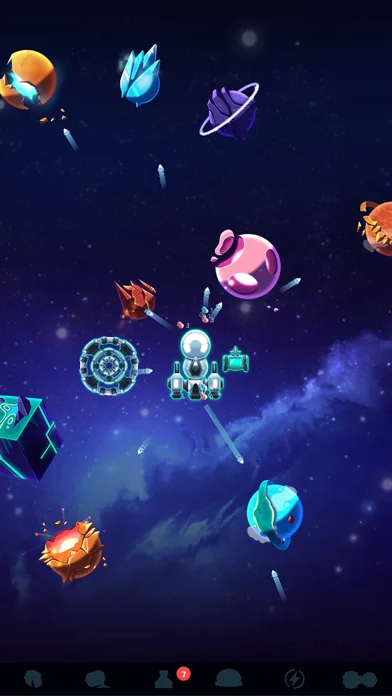
Idle Planet MinerImage: Tech Tree Games LLC via the App Store -
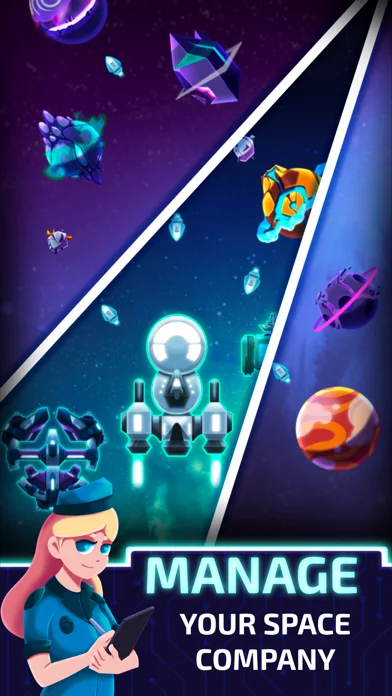
Idle Planet MinerImage: Tech Tree Games LLC via the App Store -
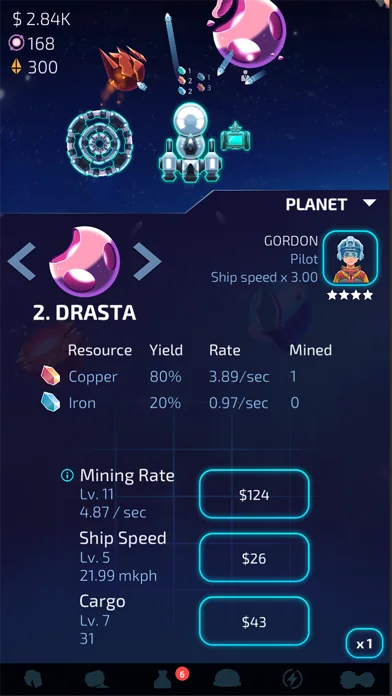
Idle Planet MinerImage: Tech Tree Games LLC via the App Store -
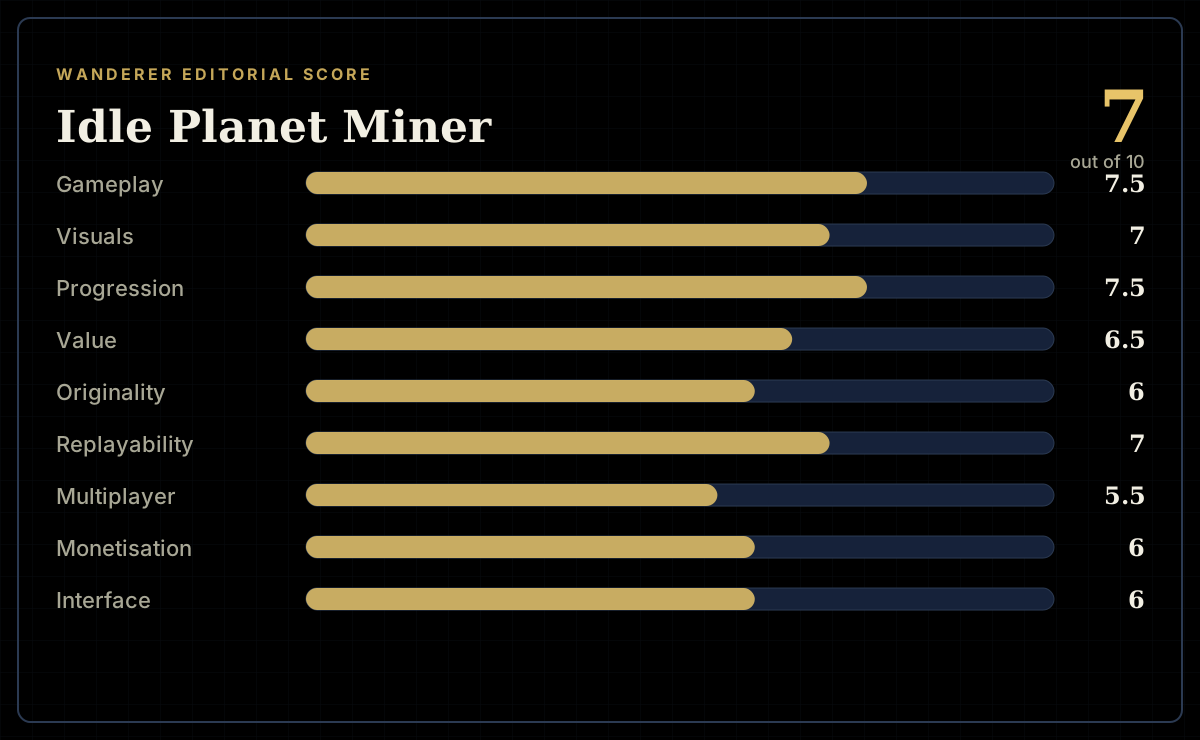
How the review scores each part of the gameWanderer Editorial -
The short versionWanderer Editorial