
Game review
Idle Planets
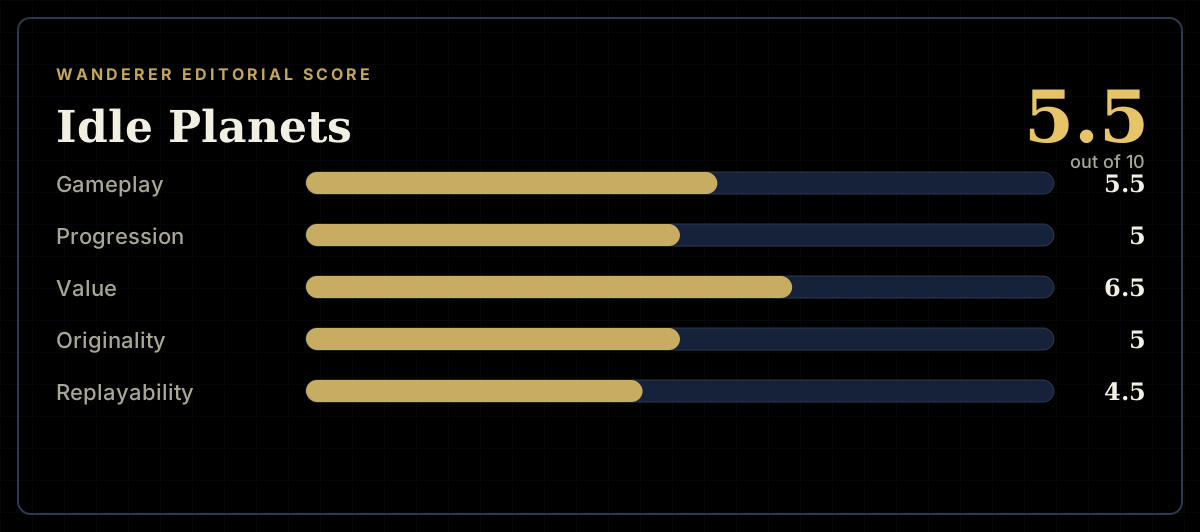
5.5 / 10
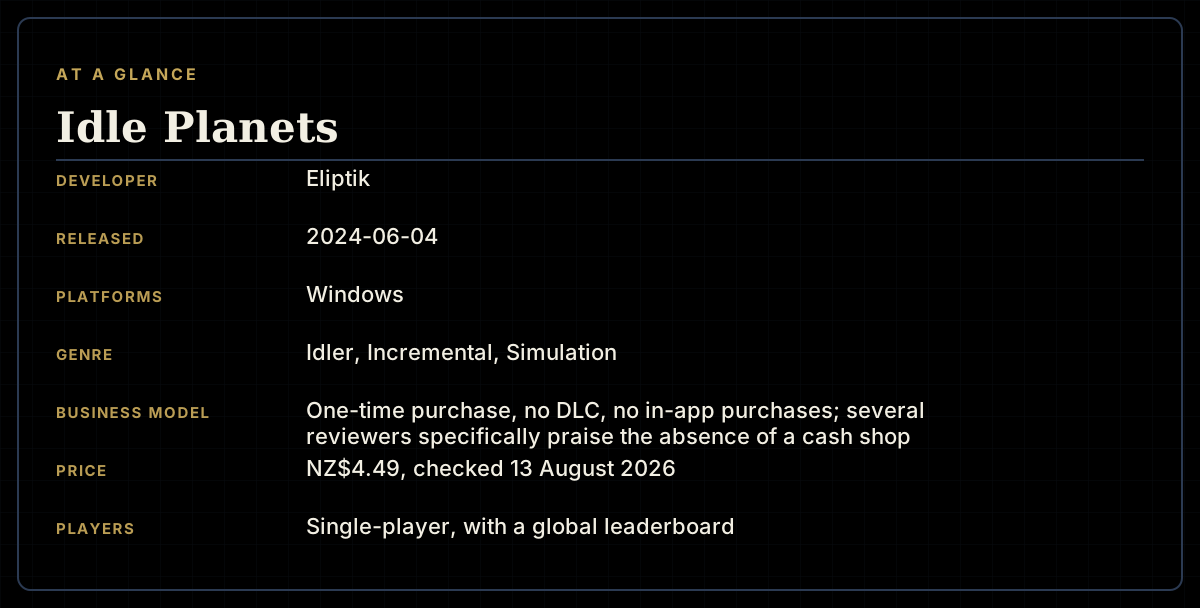
- Developer
- Eliptik
- Publisher
- Eliptik
- Released
- 4 June 2024
- Platforms
- Windows
- Genre
- Idler, Incremental, Simulation
- Monetisation
- One-time purchase, no DLC, no in-app purchases; several reviewers specifically praise the absence of a cash shop
- Players
- Single-player, with a global leaderboard
The short version
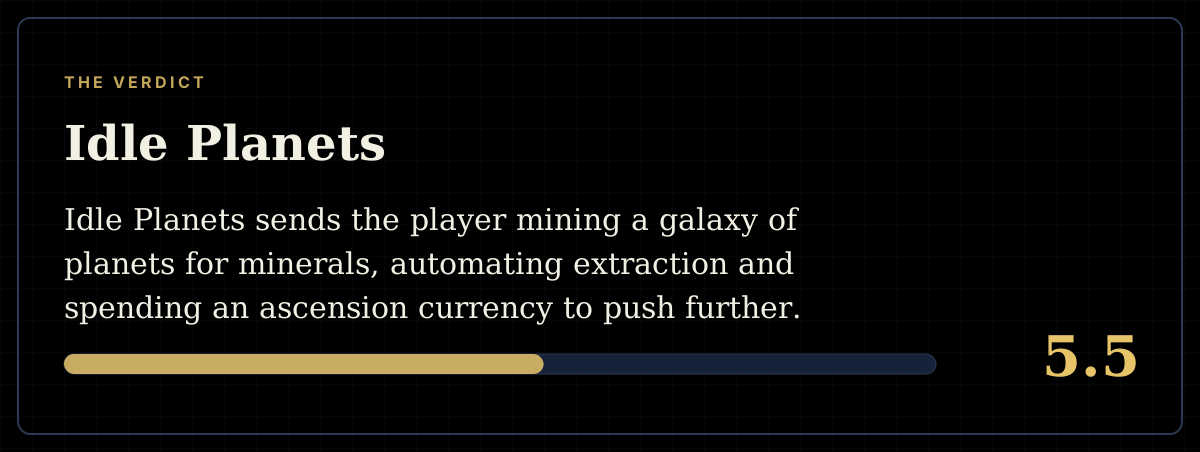
Idle Planets sends the player mining a galaxy of planets for minerals, automating extraction and spending an ascension currency to push further. Made by solo developer Eliptik and released 4 June 2024 for NZ$4.49, it sits at Mixed among its 22 English-language reviews, all of which this review reads in full. The launch drew real complaints about thin content and slow pacing, and two of its most detailed, highest-playtime reviews — both from long-time playtesters — independently describe being removed from the developer's Discord after giving critical feedback, a claim this review cannot verify but reports as attributed testimony. The game then went largely quiet for over a year before a substantial October 2025 update added a second galaxy's worth of new content.
Biggest strengths
- Fairly priced at NZ$4.49 with no cash shop, DLC or in-app purchases — several reviewers single this out as a refreshing contrast to typical idle-genre monetisation
- Colourful, readable presentation that a real audience finds satisfying once the first planet is automated, with individual players logging tens of thousands of minutes
- The October 2025 "2.0" update added a genuinely substantial second galaxy — five new planets, a new store, new alien types, a full automation system and eight new achievements — directly answering several of the original thin-content complaints
Biggest weaknesses
- Two of this game's most detailed, highest-investment reviews — from playtesters with over 165 and 300 hours logged respectively — independently describe being removed from the developer's Discord community after giving critical balance feedback during the pre-release playtest; this review cannot verify a developer's private moderation decisions and reports this only as attributed testimony from two separate accounts
- Multiple 2024 reviews describe a genuinely slow, thin opening: one detailed critique argues the upgrade system amounts to simple per-planet multipliers with little real synergy, and several report exhausting the original ascension tree within about ten hours
- At launch, ascension progress did not continue while the game was closed, which one reviewer specifically argues undercuts the idle-genre promise, requiring the game to be left open around the clock to progress meaningfully
Who it's for: Fans of cheap, low-commitment space-themed idlers in the Adventure Capitalist mould who don't mind a slow opening stretch; players wary of buying into a small studio's ongoing support should weigh the gap between its 2024 launch and its 2025 update honestly.
Our recommendation: A fairly priced, genuinely improved idler since its thin 2024 launch, worth considering for genre fans now that the October 2025 update has answered several of the original content complaints — though the unresolved playtester dispute is worth knowing about.
5.5 / 10
Introduction
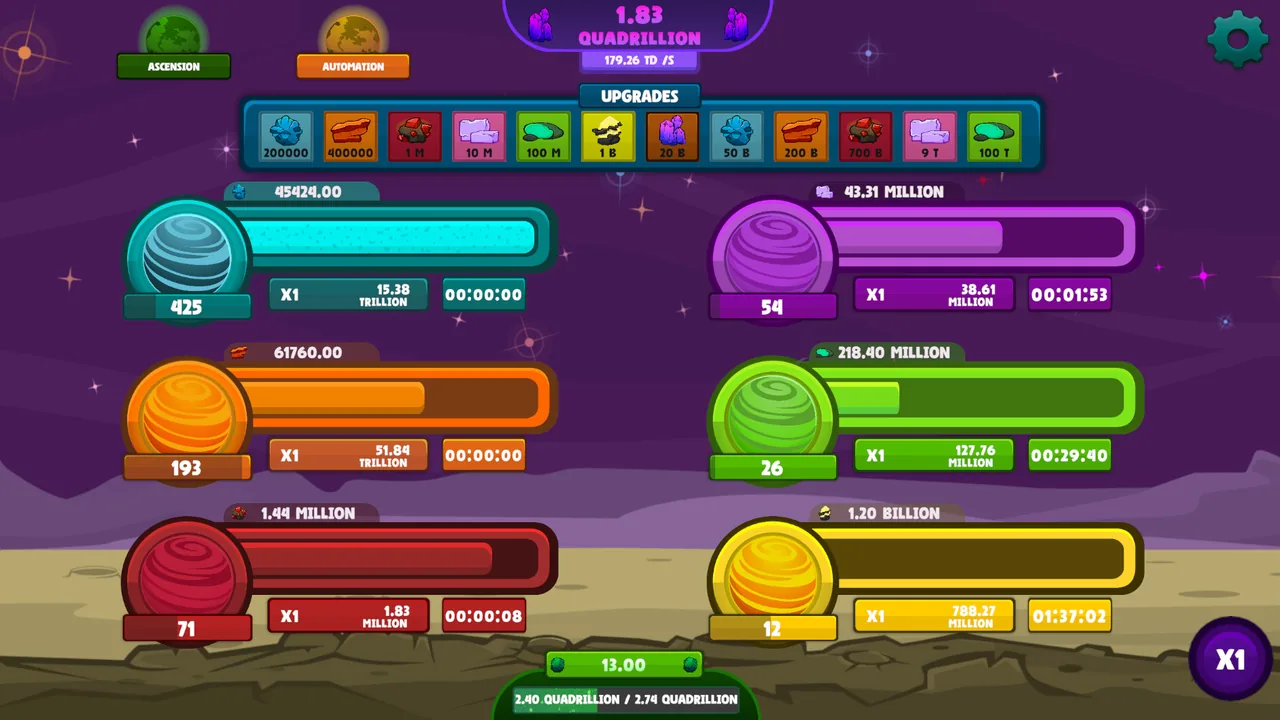
Idle Planets is a straightforward premise dressed up in bright, cartoonish colour: mine a galaxy of planets for minerals, automate the extraction, and spend an ascension currency to push into harder territory. Made solo by developer Eliptik and released 4 June 2024 for NZ$4.49, it sits exactly at Mixed across the 22 English-language reviews this review reads in full — a genuinely even split rather than a lopsided one. What that even split hides is a story with real before-and-after shape: a thin, slow-paced launch that drew both design complaints and a serious unverified dispute from its own playtesters, followed by more than a year of quiet, then a substantial content update in October 2025 that meaningfully changes what a shopper finds today.
A cheap, colourful idler with a slow start
The presentation and pricing draw consistent praise. "$2.99 and no cash shop!" one reviewer notes approvingly, comparing the loop to "Adventure Capitalist in space." Once the first planet is fully automated, several reviewers describe the game becoming genuinely rewarding, and the playtime numbers back that up: individual positive reviewers report 21,995, 25,672 and even 57,891 minutes logged — hundreds of hours from players who clearly found something worth returning to. The consistent caveat, even among fans, is that the opening stretch is slow: "the start might seem a bit slow," one recommends, "but if you play with the boosters you can quickly automate the first planet, and then the game becomes quite rewarding."
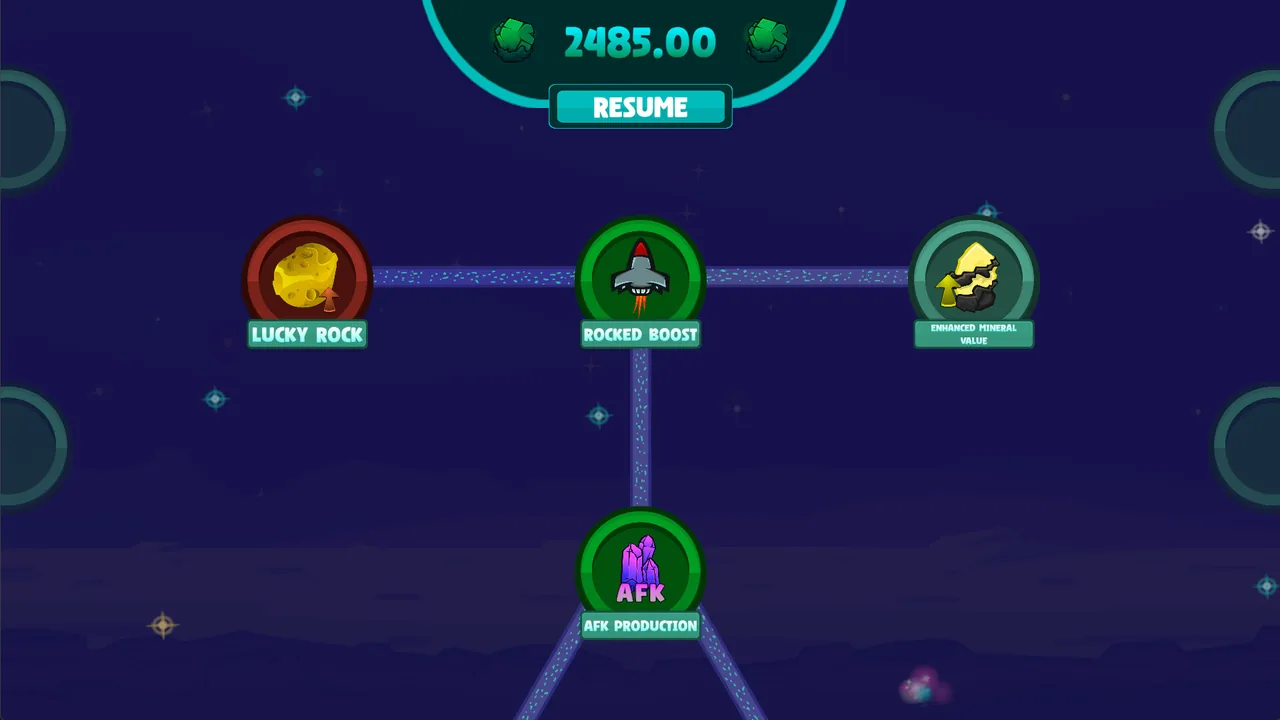
Among the game's critics, that slowness reads less charitably. One detailed review argues the upgrade system amounts to little more than per-planet multipliers with minimal synergy between them, and that automation upgrades feel largely pointless once the ascension loop takes over. A separate review calculates the maths bluntly: reaching the first meaningful upgrade required roughly eight hours of clicking once per second. And at least one reviewer raises a specific genre complaint worth taking seriously: at launch, ascension progress did not continue while the game was closed, meaning meaningful progress required leaving the application open continuously rather than the away-from-keyboard progression the idle genre usually promises.
A dispute this review can't settle
The most serious material in this small review sample concerns not the game's design but its developer's conduct during the pre-release playtest, and it deserves careful handling rather than either repetition or dismissal. The single most-upvoted review in the entire sample — 42 votes, from a player who logged around 250 hours during the playtest phase and roughly 300 more since release — describes providing repeated balance feedback to the developer during testing and being banned from the developer's Discord server as a result, before being asked to purchase the game at launch despite having playtested it extensively. A second, separately-written review with 165 hours logged makes a similar claim in less detail, describing the developer as unresponsive to bug reports submitted through the same channel. These are two independent, unusually well-invested accounts making a consistent claim, which is more than this review would need to report a pattern rather than an isolated grievance — but a developer's private community moderation decisions aren't something a review corpus can verify from the outside, and this review makes no finding about what actually happened. What can be said plainly is that both reviewers remained deeply engaged with the game for hundreds of hours despite the dispute, which speaks to genuine investment in the underlying idea even where trust in the developer soured.
A long silence, then a real update
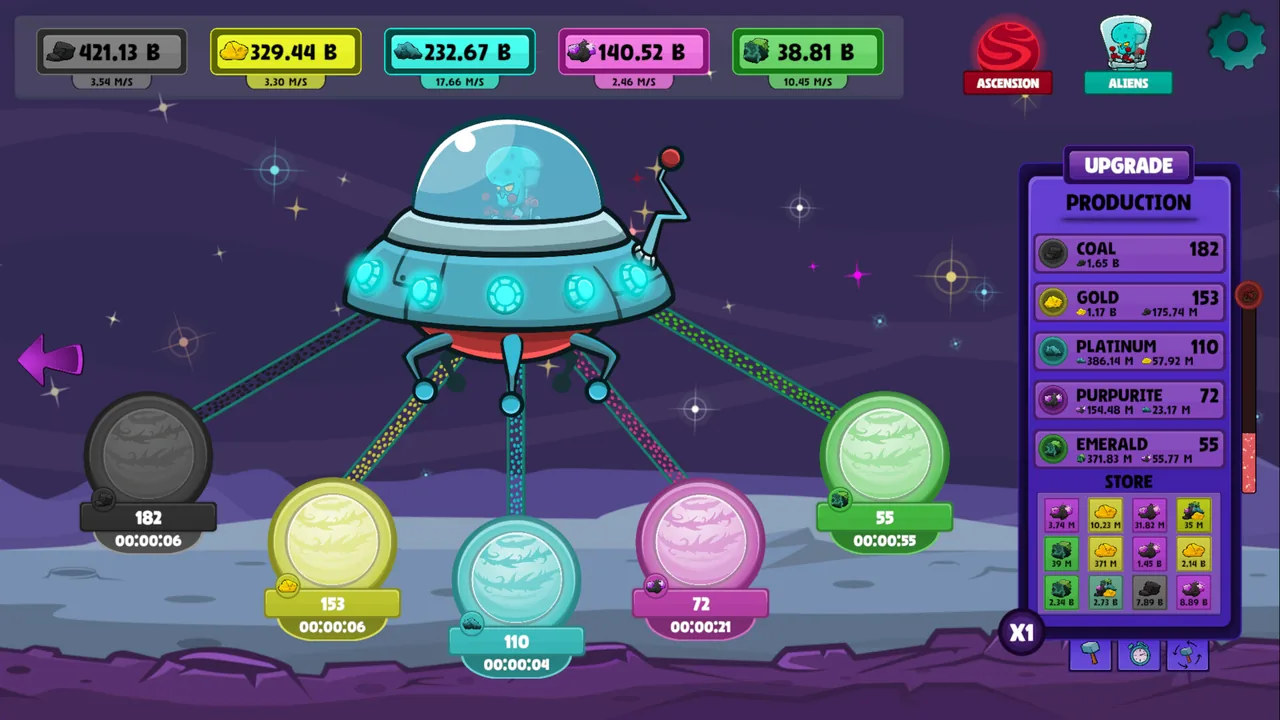
Steam's own patch history shows a run of minor updates through July 2024, several explicitly apologising for delays, and then nothing publicly announced for roughly fifteen months. One mid-2024 review calls the game "dead" and "abandoned" on that basis — a fair read of the record at the time it was written, but one that a shopper checking today should know is now out of date. An October 2025 update, titled "2.0 – The New Galaxy," added five new planets, a new in-game store, new alien types with their own upgrades, a proper ascension system with permanent bonuses, full production automation, and eight new achievements exclusive to the new content. That's a genuinely substantial addition rather than a token gesture, and it directly answers several of the launch-era complaints about thin content and a short ascension tree — though it doesn't retroactively resolve the structural criticism that the core upgrade system is mostly flat multipliers, which several reviewers raised as a design choice rather than a content-volume problem.
Final Verdict
Idle Planets is a cheap, honestly-priced idler that launched thinner and slower than its genre peers, drew a serious and unresolved dispute from two of its most invested early players, and then went quiet for well over a year before a real, substantial update arrived. Both halves of that story are worth knowing before buying: the current build is meaningfully bigger than the one most of these reviews describe, and the price and lack of a cash shop remain genuinely fair. Whether the playtester dispute matters to a given buyer is a personal call this review won't make for anyone — but it's real enough, corroborated by two independent and heavily invested accounts, to be worth knowing about rather than leaving out.
Pros and cons
Pros
- Fairly priced at NZ$4.49 with no cash shop, DLC or in-app purchases — several reviewers single this out as a refreshing contrast to typical idle-genre monetisation
- Colourful, readable presentation that a real audience finds satisfying once the first planet is automated, with individual players logging tens of thousands of minutes
- The October 2025 "2.0" update added a genuinely substantial second galaxy — five new planets, a new store, new alien types, a full automation system and eight new achievements — directly answering several of the original thin-content complaints
- Steam's achievement data shows strong early engagement, with the base game's core milestones sitting between 80% and 84% completion
Cons
- Two of this game's most detailed, highest-investment reviews — from playtesters with over 165 and 300 hours logged respectively — independently describe being removed from the developer's Discord community after giving critical balance feedback during the pre-release playtest; this review cannot verify a developer's private moderation decisions and reports this only as attributed testimony from two separate accounts
- Multiple 2024 reviews describe a genuinely slow, thin opening: one detailed critique argues the upgrade system amounts to simple per-planet multipliers with little real synergy, and several report exhausting the original ascension tree within about ten hours
- At launch, ascension progress did not continue while the game was closed, which one reviewer specifically argues undercuts the idle-genre promise, requiring the game to be left open around the clock to progress meaningfully
- Development support went quiet for roughly fifteen months between a July 2024 patch and the October 2025 update, a gap that predates the developer's own admission of running behind on promised fixes
Screenshots
-
Idle PlanetsImage: Eliptik via Steam -
Idle PlanetsImage: Eliptik via Steam -
Idle PlanetsImage: Eliptik via Steam -
How the review scores each part of the gameWanderer Editorial -
The essentials at a glanceWanderer Editorial -
The short versionWanderer Editorial