Game review
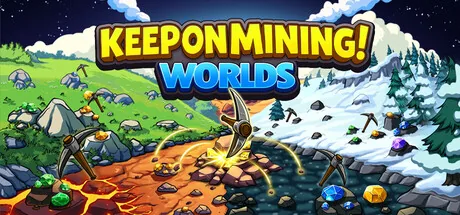
Keep on Mining! - Worlds
6 / 10
- Developer
- EagleEye Games
- Publisher
- EagleEye Games
- Released
- 30 March 2026
- Platforms
- Windows
- Genre
- Incremental Clicker
- Monetisation
- One-time purchase. No DLC, no in-game purchases.
- Players
- Single-player
The short version
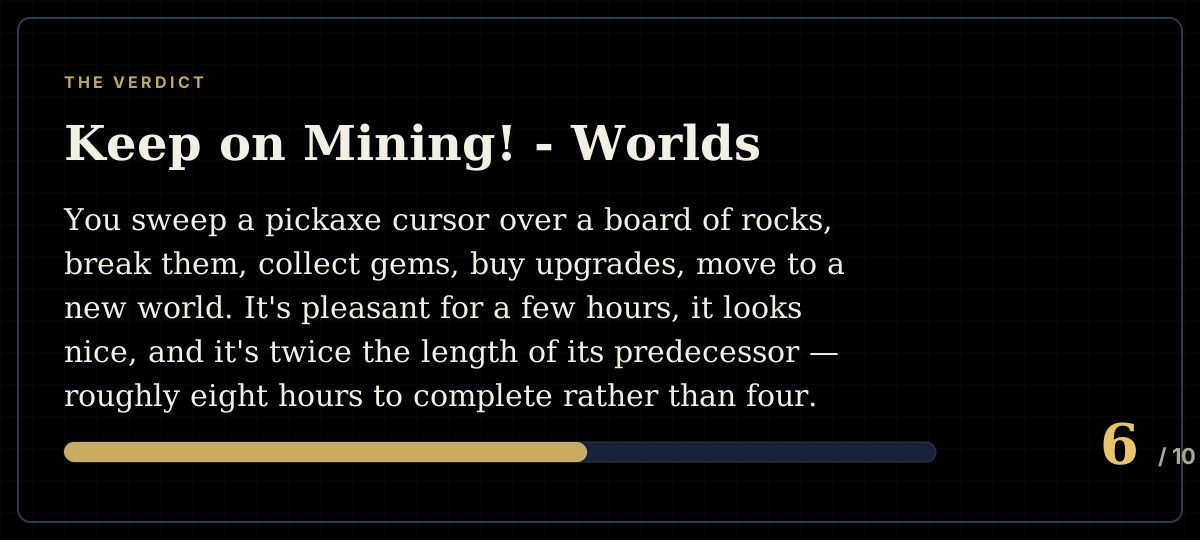
You sweep a pickaxe cursor over a board of rocks, break them, collect gems, buy upgrades, move to a new world. It's pleasant for a few hours, it looks nice, and it's twice the length of its predecessor — roughly eight hours to complete rather than four.
It's also rated **79.7% positive in English against the original's 91.8%**, a twelve-point fall for the same developer one year later. The reason is in the reviews: grinding appears in 39 of the 100 most-helpful negatives and the first game in 37, with the specific complaint that upgrade *benefits* scale linearly while upgrade *costs* scale exponentially. The sequel is longer without being deeper, and the extra hours are the ones players least wanted.
Biggest strengths
- Genuinely pleasant to look at and to operate for the first few hours
- Roughly twice the content of the original, with worlds, artifacts and craftable pickaxes
- Cheap, complete, with no DLC or in-game purchases of any kind
Biggest weaknesses
- Upgrade costs scale exponentially while their benefits scale linearly, so late progress crawls
- Rated twelve points below its own predecessor
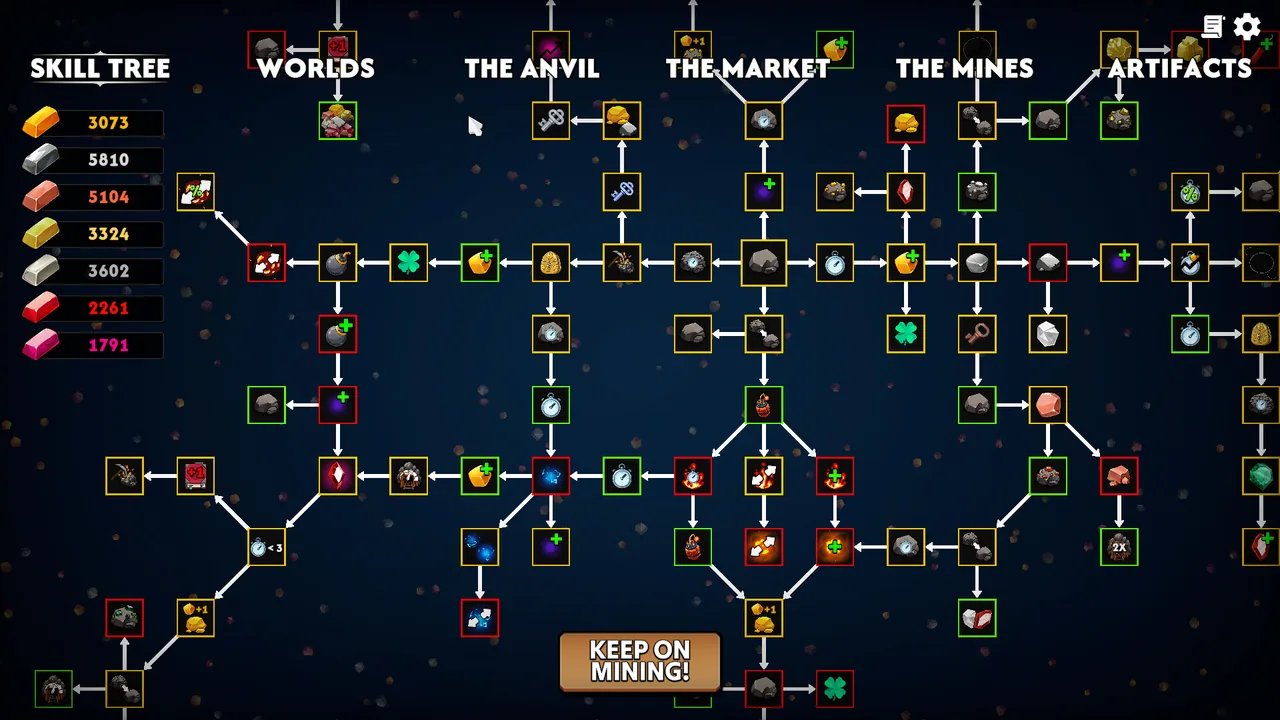
- Reviewers describe the skill tree as an illusion of choice — effectively linear
Who it's for: People who finished the first Keep on Mining! and want more of the same, knowing the back half drags. Newcomers are better served by the original.
Our recommendation: Play the first game instead, or wait for a discount on this one. If you already know you enjoy the loop and eight cheap hours appeals, it's fine — just don't expect the pacing problem to have been solved, because it's worse here.
6 / 10
Two numbers, both from Steam, both checked today:
| Game | English reviews | Positive |
|---|---|---|
| Keep on Mining! (2025) | 3,083 | 91.8% |
| Keep on Mining! - Worlds (2026) | 669 | 79.7% |
Same developer, one year apart, twelve points down. That's the review, and the corpus explains it precisely.
The diagnosis, from the players
Grinding appears in 39 of the 100 most-helpful English negatives. The first game appears in 37. Upgrade appears in 36, "same" in 24, slow in 21, boring in 20.
The clearest statement of the fault comes from a 66-vote review: "It has the same problems, but worse than the first game had. After about the first hour all the upgrades are repeats that scale linearly meanwhile the cost of the upgrades are more exponential. The first game seemed like a 2 hour game stretched to 4 hours; this game seems like a 2 hour game stretched [further]."
That is a genuinely precise piece of design criticism. If what an upgrade gives you grows by addition while what it costs grows by multiplication, the gap widens forever and the only variable left is your patience. A 38-vote reviewer describes the endpoint: "The game starts with a good pacing but is terribly balanced towards the end. You have to play 10-20 rounds to buy just one meaningless upgrade."
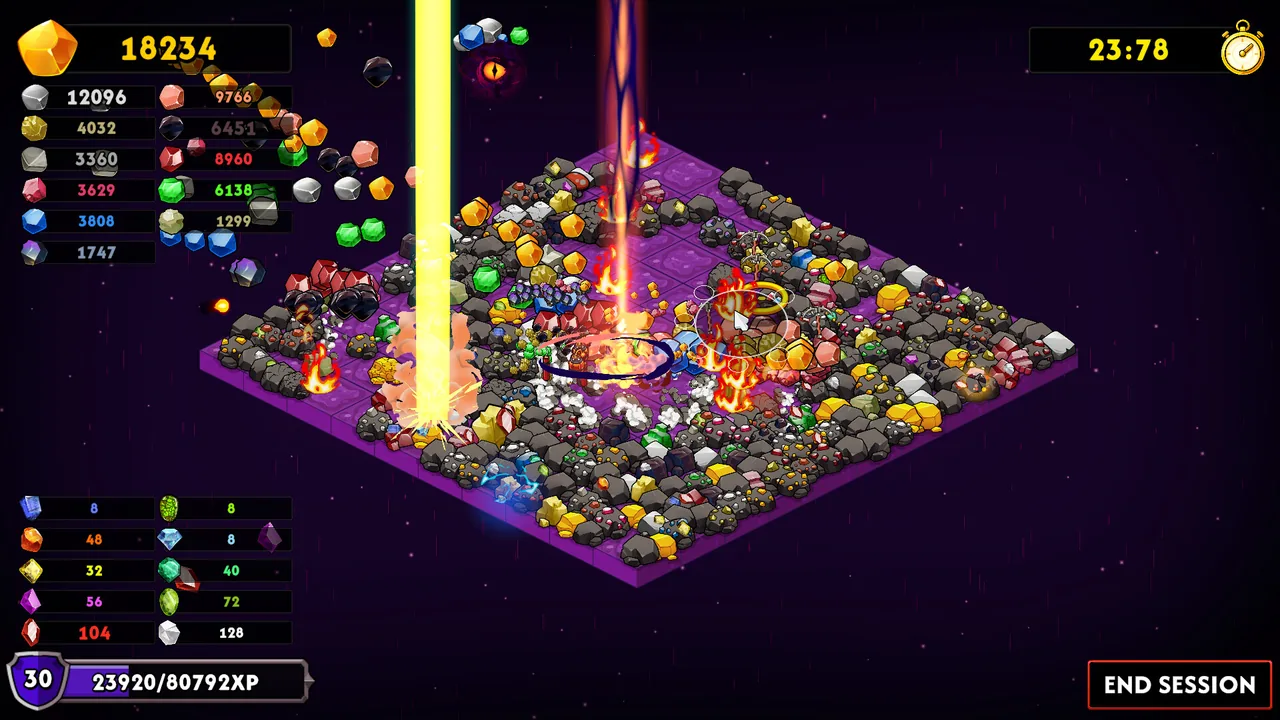
A 21-vote review adds a structural complaint: "skill tree is just illusion — it is linear," along with visual clutter making artifacts hard to see once boards fill with rocks.
Which is a different failure from the usual sequel complaint
Earlier today I reviewed Rift Wizard 3, where the critics were almost all fans of the previous game arguing it had been redesigned rather than improved — an audience mismatch rather than a quality verdict, and something I told readers to discount if they were new to the series.
This is not that. Here the critics aren't saying "it's different"; they're saying it's the same, and longer. "Same" in 24 of 100 is the tell. A 63-vote reviewer: "I finished the first game in 4 hours. This was supposed to be a lot bigger, more content etc. Finished it in 5 hours… And honestly it was more like a chore." And an 83-vote review reaches for the framing that dogged Miles Morales: "this is essentially a DLC of the original game."
When a sequel's critics complain about sameness rather than change, that's a quality signal rather than an audience one, and a newcomer should weigh it fully.
The counter-case, which is real
I don't want to flatten this. A meaningful minority think it's straightforwardly better, and they give the same reason the critics do — length.
A 12-vote positive: "The first game was around 4 hours to 100%. This one is around 8 hours to 100%. I liked the 2nd more, it has more content and is a little bit more complex." An 11-vote positive: "Big improvement from the 1st game! Took me 8 hours to 100%."
So the corpus agrees on the facts and splits on the verdict: it is twice as long, and whether that's a virtue depends entirely on whether the extra hours entertained you or wore you down. Eighty percent found it worth a thumbs-up; nearly twenty percent, up from eight on the original, did not.
What the achievements confirm
This is the flattest achievement curve I've measured in this library apart from one: 64 achievements, the most common at 99%, the median at 76.3%, and the rarest still held by 48.7% of players.
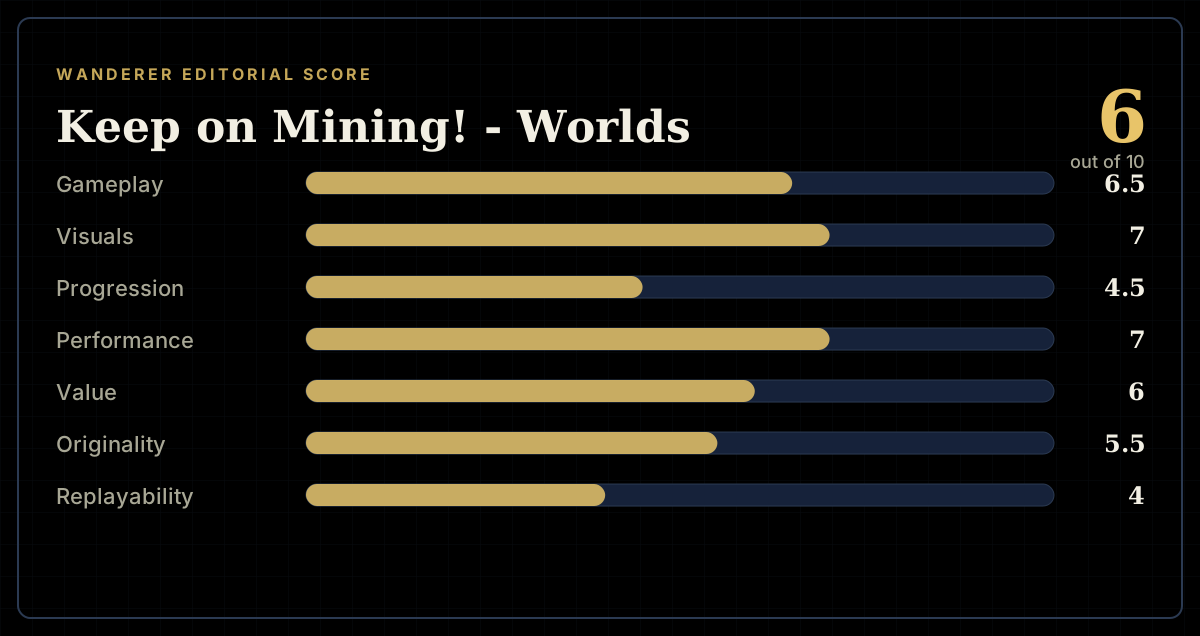
Nearly half of everyone who buys this game earns its rarest achievement. That corroborates the length reports directly — this is a short, completable game that almost nobody abandons, which also means there is very little beyond those eight hours. Replayability scores a 4 for exactly that reason.
The verdict
Keep on Mining! - Worlds earns a 6. It's competent, pleasant to look at, cheap, and it does deliver roughly double the content of a game this library rated a 7.
It lands lower than its predecessor because the one thing that needed fixing wasn't. The original was a good short game with a saggy back half; the sequel is a good short game with a longer, saggier back half, and an upgrade economy that its own players have correctly identified as mathematically stacked against them. Progression scores a 4.5 and that's the whole story.
If you've never played either, buy the first one. If you finished it and want more of the same, this is more of the same — which is both the pitch and the problem.
Pros and cons
Pros
- Genuinely pleasant to look at and to operate for the first few hours
- Roughly twice the content of the original, with worlds, artifacts and craftable pickaxes
- Cheap, complete, with no DLC or in-game purchases of any kind
- Almost everyone who buys it finishes it — the achievement curve is remarkably flat
- Well-liked by a substantial minority who consider it a clear improvement
Cons
- Upgrade costs scale exponentially while their benefits scale linearly, so late progress crawls
- Rated twelve points below its own predecessor
- Reviewers describe the skill tree as an illusion of choice — effectively linear
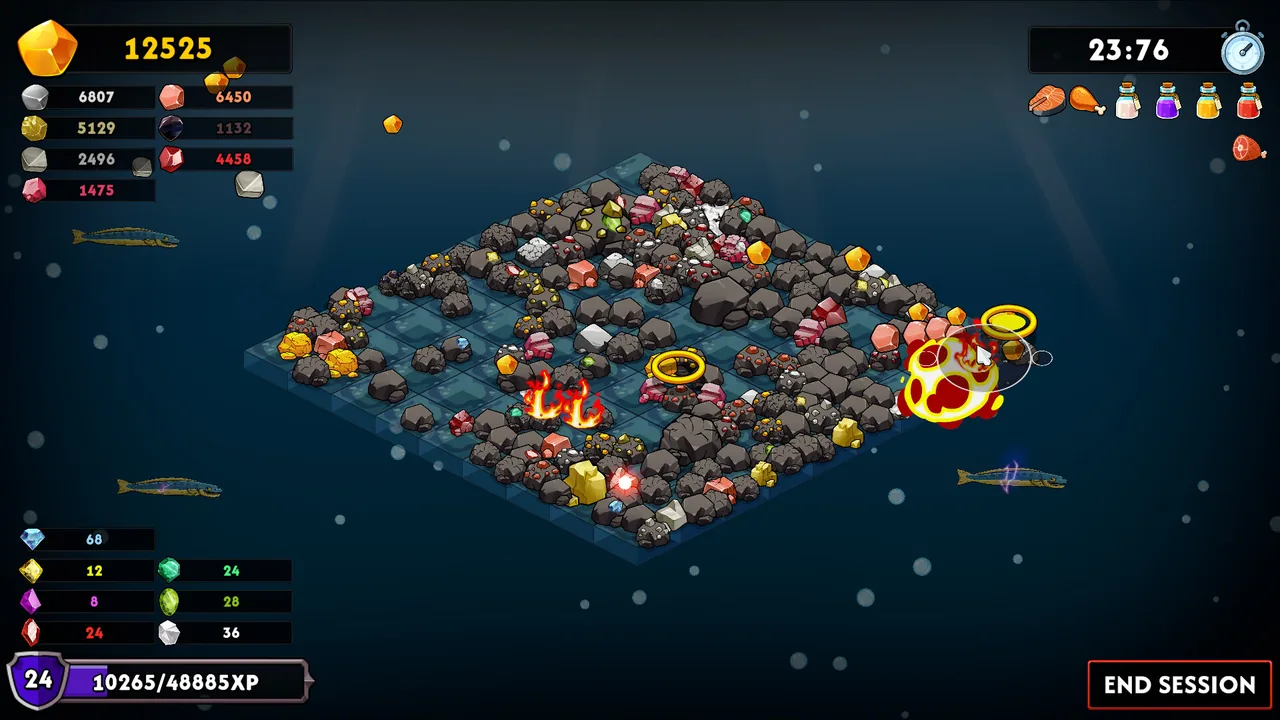
- Visual clutter makes artifacts hard to spot as boards fill with rocks
- Little reason to return once the eight hours are done
Screenshots
-
Keep on Mining! - WorldsImage: EagleEye Games via Steam -
Keep on Mining! - WorldsImage: EagleEye Games via Steam -
Keep on Mining! - WorldsImage: EagleEye Games via Steam -
How the review scores each part of the gameWanderer Editorial -
The short versionWanderer Editorial