
Game review
Idle Miner Tycoon
6.5 / 10
- Developer
- Kolibri Games GmbH (founded as Fluffy Fairy Games in 2016, renamed October 2018)
- Publisher
- Kolibri Games GmbH, majority-owned by Ubisoft since February 2020
- Released
- 1 July 2016
- Platforms
- iOS, Android
- Genre
- Idle Mining Simulation
- Monetisation
- Free-to-play with a Super Cash premium currency, roughly a dozen bundle tiers from under $2 to around $20, a seasonal Premium Pass, a one-time ad-removal purchase, and optional rewarded video ads that double specific earnings rather than gating progress outright
- Players
- Single-player; an optional Facebook connection grants a permanent income bonus of up to 100% from friends, but there is no direct player interaction, trading or competitive mode
The short version
Idle Miner Tycoon didn't just join the mining-idle genre, it wrote most of its rulebook: dig, lift, sell, automate, repeat, and let the whole thing run while the phone is in a pocket. Ten years on, the miner-elevator-warehouse loop is still the cleanest piece of design in the game — every upgrade shifts which of the three stations is choking the other two, and reading that bottleneck correctly is the entire skill of the mid-game. What's aged less gracefully is everything Kolibri has built on top of it since: a monetisation menu with a dozen bundle tiers and a seasonal pass, an ad-multiplier structure that leans hard on habit, and an interface carrying ten years of accreted systems with no real spring cleaning.
Biggest strengths
- The miner-elevator-warehouse chain is a genuinely elegant three-variable balancing act, and reading which station is the current bottleneck is a real, teachable skill rather than busywork
- Roughly 500 times more cash per mineshaft than the one above it keeps the "just dig one level deeper" pull working for dozens of hours before it needs a prestige reset to feel meaningful again
- Ten straight years of updates under two different studio names is rare for a 2016 mobile idle and means the continents, research trees and events keep expanding rather than sitting static
Biggest weaknesses
- The Super Cash shop runs to roughly a dozen separate bundle tiers plus a seasonal Premium Pass, and figuring out which of them is actually worth buying is its own confusing sub-game
- Rewarded-video boosts double specific income streams rather than adding to them, a stacking structure that rewards habitual ad-watching far more than a single optional prompt should
- Balancing miners, elevators and warehouses across 33 mines eventually turns into the same spreadsheet-style micromanagement the loop was originally praised for avoiding
Who it's for: Idle-game players who want to understand where the genre's core mechanics came from, mobile players who want a low-friction management loop to run in the background, and anyone weighing whether a game this old and this monetised is still worth the install in 2026.
Our recommendation: Worth installing to see the loop that half the genre is still copying, and the core systems hold up fine for the first several dozen hours. Go in expecting a heavier monetisation menu than most of the mining idlers that came after it, and don't expect the interface to make that menu easy to ignore.
6.5 / 10
The template everyone else is still copying
Half the mining idlers reviewed on this site owe Idle Miner Tycoon a debt they don't credit. Idle Planet Miner runs a three-stage ore-smelter-crafting chain across multiple planets with manager assignment. Idle Deepcore runs hand-mining into smelteries into an upgrade tree. Both of those games are good on their own terms, and both are running variations on a structure Kolibri Games — then still called Fluffy Fairy Games — shipped on iOS and Android in July 2016. Idle Miner Tycoon didn't invent the idle genre. It did more or less invent the specific shape of "mine something, move it, sell it, automate all three steps" that a huge slice of mobile idle design has been remixing ever since, and it's still running, still getting updates, and still one of the cleanest examples of that shape a decade later.
That matters more to this review than the studio's commercial history, but the history is worth stating plainly since a lot of casual references to it are wrong: Fluffy Fairy Games renamed itself Kolibri Games in October 2018, and Ubisoft acquired a 75% controlling stake in the Berlin studio in February 2020 at a reported €160 million valuation, with an option to raise that stake over time. Idle Miner Tycoon is the reason that acquisition happened — it's the studio's breakthrough title, credited with well over 100 million downloads by the time Ubisoft came calling, and it's still the flagship of a portfolio that now runs to about ten idle-themed games across mining, factories, farms and restaurants. Ten years since launch, the current build sits at version 5.59.0 with an update as recent as early July 2026, carrying a 4.7-star rating from roughly 857,000 App Store reviews — a legacy title someone forgot to shelve, still actively run as a live product.
Three stations, one bottleneck, real decisions
The core loop is deceptively small: miners dig ore out of shafts, an elevator carries that ore up to the surface, and a warehouse sells it for cash. Each of the three has its own level, capacity and speed, and the entire mid-game is one continuous exercise in noticing which of the three is currently the weak link. Pour every upgrade into deeper mine shafts and ore piles up faster than the elevator can carry it. Max out the elevator and the warehouse can't unload fast enough to keep the belt moving. Ignore the warehouse and none of the cash the other two are generating actually gets banked. It's a genuinely well-designed three-variable balancing act, and — unlike a lot of idle games where "upgrade" just means "bigger number" — figuring out which station to invest in next is an actual, learnable skill rather than dressing on top of a single power stat.
Kolibri's own stated design philosophy backs up why the loop stays compelling as long as it does: each mineshaft is designed to produce roughly 500 times more cash than the shaft above it, so the pull of "just dig one level deeper" keeps paying off in a way that's immediately, visibly rewarding. That exponential curve is doing a lot of quiet work — it's the reason the early and mid-game feel so frictionless compared to idle games that ramp more gently, and it's also exactly the kind of number that eventually needs a prestige reset to keep meaning anything once a mine's shafts are all maxed out.
Managers, research and where the automation ceiling sits
Managers are the layer that actually lets the loop become idle rather than a full-time tapping job — hire one for a mine shaft, the elevator or the warehouse, and that station runs itself. Research trees split into two branches that upgrade what managers can do: one focused on manager walking speed, hiring cost and how long their effects last, the other on miner capacity and elevator/warehouse loading speed. Rarer Super Managers go further, some carrying passive bonuses that boost a mine's idle income by well over 50% just by being assigned to it overnight. None of that is a novel idea by 2026, but Idle Miner Tycoon's version still has real texture: which Super Manager goes where, and which research branch to prioritise first, are decisions with actual consequences, not a second currency to spend on autopilot.
Where the automation genuinely starts working against the game is scale. Thirty-three mines spread across eight continents means the "read the bottleneck" skill that made the early game satisfying eventually has to be applied thirty-three times over, simultaneously, and the interface hasn't grown any better tools for managing that since the earliest continents. What was an elegant three-variable puzzle in one mine becomes a spreadsheet-adjacent chore once you're maintaining that balance across a full roster of mines at once — the exact kind of friction the manager system was originally built to remove.
What offline cash actually covers
Idle cash accrues the entire time the app is closed, and the boost duration players can stockpile before logging in typically caps at around 24 hours — a materially more generous ceiling than Idle Planet Miner's default two-hour window, and one that doesn't require an early prestige investment just to reach. That's a real point in Idle Miner Tycoon's favour for exactly the kind of reader this site attracts: a day away from the app doesn't mean losing most of what would have accrued.
The catch sits in how rewarded ads interact with that accrued total. Watching a video doesn't add a flat bonus to your offline haul — it applies as its own separate multiplier, stacking on top of whatever other boosts are already active rather than simply topping up the number you'd have gotten anyway. That's a meaningfully different structure from a game that treats an ad as a single optional nudge: multiplicative stacking rewards habitual ad-watching disproportionately, since each additional multiplier compounds the ones already active rather than adding a flat, easily ignored amount. A player who never watches an ad still gets their 24 hours of offline cash; a player who watches consistently gets meaningfully more than a linear bonus would suggest.
Prestige, continents and what the late game adds
Prestige here works per-mine rather than as one universal reset: paying down a mine's Prestige cost wipes that mine back to its starting level and applies a permanent income multiplier to everything it produces going forward, without touching your other mines, achievements or Super Cash. It's a sensible middle ground between Mr.Mine's no-reset descent and a single galaxy-wide prestige button — you can reset the mines that have plateaued while leaving newer ones to keep growing, which fits the multi-mine structure better than a blanket reset would.
The eight continents that follow — grass, fire, ice, an ancient continent, an underwater set and beyond — are where the honest question about late-game design lives. Each introduces new mines running the same core loop, generally reskinned rather than mechanically distinct. That's not automatically a criticism; a loop this well-tuned doesn't need reinventing every five mines. But it does mean the back half is mostly bigger numbers on a familiar shape rather than new decisions, and player sentiment around the later continents consistently describes a shift from strategic bottleneck-reading toward repeating the same balancing pattern across an ever-larger mine roster.
What the money actually buys
This is the section that separates Idle Miner Tycoon most clearly from the newer, leaner alternatives on this site. The shop runs to roughly a dozen distinct Super Cash bundle tiers from under $2 to around $20, a rotating $9.99 Premium Pass tied to each Event Season rather than a recurring subscription, and a one-time ad-removal purchase that players report costing around $15. None of it is a hard progress gate — a free player can reach every continent and every Super Manager through normal play — but the sheer number of separate purchase tiers is itself a form of friction, and figuring out which bundle is worth the money, if any, is a genre-standard problem Idle Miner Tycoon does nothing to simplify.
Set against Almost a Hero's rewarded-ad model, where declining every video still gets a player to every milestone at a modestly slower pace, Idle Miner Tycoon's multiplicative ad-stacking asks more of a player's attention to get comparable value, even though neither game blocks free progress outright. And set against Idle Deepcore's flat $6.99 one-time purchase with no ads and no IAP menu at all, the contrast is stark: Idle Miner Tycoon is free to start and genuinely playable without spending, but the amount of shop surface area a returning player has to learn to ignore is far larger than anything a newer, cleaner-designed mining idle asks of them.
Presentation carrying a decade of additions
The visual style hasn't chased modern mobile trends — no 3D managers, no animated hero portraits, just the same bright, chunky mine-cutaway look the game launched with, and it still reads clearly at a glance, which matters more for an idle game's interface than raw fidelity does. What's less forgivable a decade in is how many systems now sit stacked on top of that original three-station view with no real attempt at consolidation: research trees, Super Managers, seasonal events, the Premium Pass and the Super Cash shop have each arrived over ten years of live updates with their own icon, own currency interaction and own explanation screen, rather than being folded into a coherent whole. A new player in 2026 is handed the same onboarding for a much larger game than the one that launched in 2016, and it shows.
Verdict
Idle Miner Tycoon earns its place in this genre's history honestly — the miner-elevator-warehouse loop is still one of the cleanest pieces of idle-game design this site has covered, and reading which station is currently the bottleneck remains a genuine skill rather than filler between upgrade taps. Ten years of continuous updates, a generous 24-hour offline cap and a sensible per-mine prestige system all hold up. What keeps the score from climbing into the same range as Idle Planet Miner or Idle Deepcore is everything built on top of that original loop since: a monetisation menu with more bundle tiers than any player needs to track, an ad-multiplier structure that quietly rewards habit over a single fair choice, and an interface that has never been rebuilt to match the size of the game it's now presenting. Install it to see where this genre's rulebook came from — the systems earn that much. Just expect to spend some of your first sessions figuring out what to ignore rather than what to play.
Players who'd rather have their gathering and crafting tick along inside a persistent shared world, with no shop menu to learn at all, may also want a look at Wanderer.
Pricing, ratings and version information checked 1 August 2026 against the NZ App Store (id 1116645064, com.fluffyfairygames.idleminertycoon on Google Play). No Steam listing exists for Idle Miner Tycoon as of this check.
Pros and cons
Pros
- The miner-elevator-warehouse chain is a genuinely elegant three-variable balancing act, and reading which station is the current bottleneck is a real, teachable skill rather than busywork
- Roughly 500 times more cash per mineshaft than the one above it keeps the "just dig one level deeper" pull working for dozens of hours before it needs a prestige reset to feel meaningful again
- Ten straight years of updates under two different studio names is rare for a 2016 mobile idle and means the continents, research trees and events keep expanding rather than sitting static
- Idle cash accrues while the app is fully closed and stacks toward a roughly 24-hour cap, so a returning player is never staring at an empty collection screen
- Research trees for elevator speed, manager duration and loading capacity give upgrade spending a real branching structure instead of one flat power number
Cons
- The Super Cash shop runs to roughly a dozen separate bundle tiers plus a seasonal Premium Pass, and figuring out which of them is actually worth buying is its own confusing sub-game
- Rewarded-video boosts double specific income streams rather than adding to them, a stacking structure that rewards habitual ad-watching far more than a single optional prompt should
- Balancing miners, elevators and warehouses across 33 mines eventually turns into the same spreadsheet-style micromanagement the loop was originally praised for avoiding
- Ten years of added systems — research, Super Managers, events, seasons, the Premium Pass — sit on top of the original three-station interface with no visible attempt to simplify or re-teach any of it
- A one-time ad-removal purchase priced around $15 on a free game is a steep ask next to newer mining idlers that charge less for the entire game with no ads at all
Screenshots
-
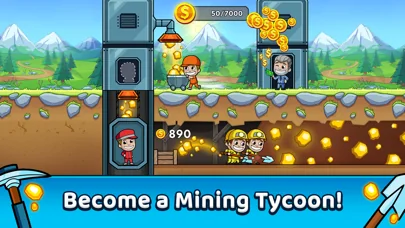
Idle Miner Tycoon: Gold diggerImage: Kolibri Games GmbH via the App Store -

Idle Miner Tycoon: Gold diggerImage: Kolibri Games GmbH via the App Store -
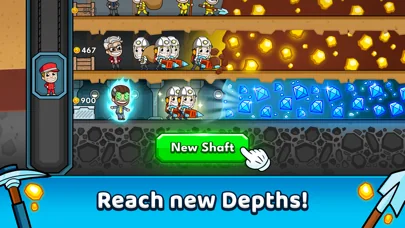
Idle Miner Tycoon: Gold diggerImage: Kolibri Games GmbH via the App Store -
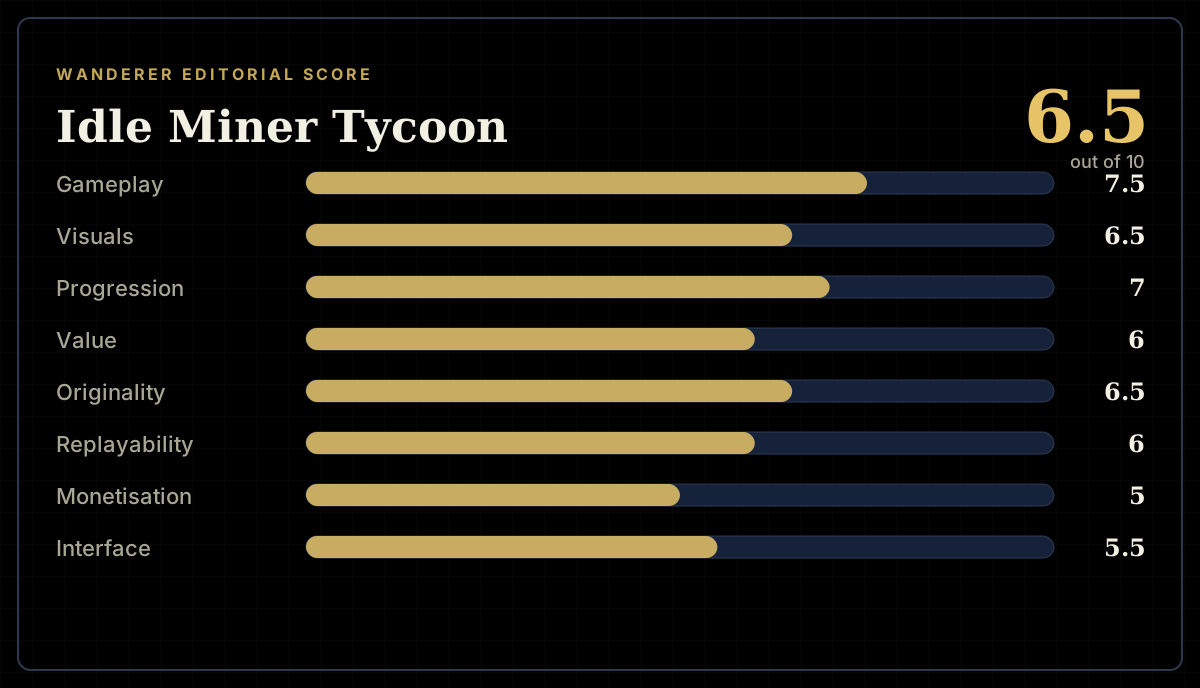
How the review scores each part of the gameWanderer Editorial -
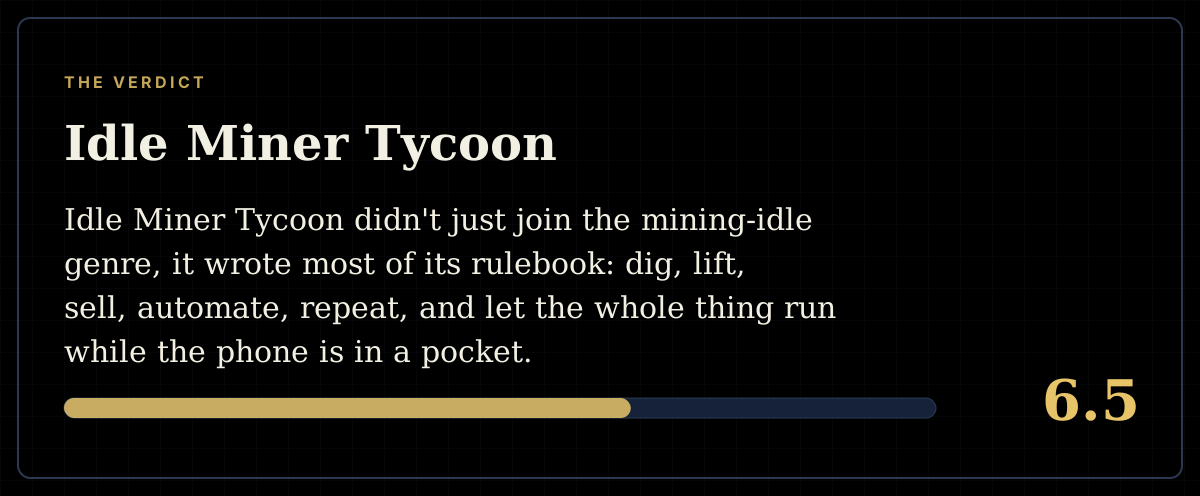
The short versionWanderer Editorial