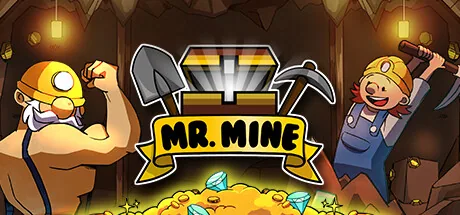
Game review
Mr.Mine
6.5 / 10
- Developer
- Playsaurus
- Publisher
- Playsaurus
- Released
- 30 September 2020
- Platforms
- Windows, macOS, Browser, Android, iOS
- Genre
- Idle Mining Game
- Monetisation
- Free-to-play with an optional Tickets premium currency (real-money bundles from about $1 to $100) spent on relic slots, mission rerolls, chest purchases and timer skips; no Steam DLC; mobile carries optional rewarded ads, desktop does not
- Players
- Single-player
The short version
Mr.Mine is a calm, well-supported idle game about descending through 2,500 kilometres of drill upgrades, hired miners and buried secrets, and it never once asks you to reset your progress to keep growing. That's also its central limitation: without a prestige loop to restructure the numbers, the back half of a long session leans harder on patience than on decisions. The Tickets economy underneath it is fair by mobile-idle standards, if not by Playsaurus's own Clicker Heroes standards.
Biggest strengths
- Miners hired into a shaft keep generating minerals while the game is closed, and they routinely outperform drill upgrades over the long run
- 100-plus drill upgrades and a handful of distinct late-game worlds like the Moon and Titan give 2,500km of depth genuine variety rather than one repeating number
- No Steam DLC and no forced advertising on desktop, with mobile's rewarded ads clearly optional rather than a gate
Biggest weaknesses
- There is no prestige or reset mechanic at all, so late-game sessions increasingly become waiting out a timer rather than making a choice
- Steam, Android and iOS all keep separate save files with no automatic sync between them, and iOS can't even export a manual code the way Android can
- The Tickets bundle ladder tops out at roughly $100, and the two largest tiers sell a cosmetic red miner name that borders on a paid status symbol
Who it's for: Players who want an idle game that respects a single long-term save without asking them to burn it down for a permanent bonus, and anyone curious what a Playsaurus idle game looks like when it skips the ascension mechanic the studio is best known for.
Our recommendation: Install it free on whichever platform you'll actually keep open — desktop if you want it running unattended without ads, mobile if you want it in your pocket. Just don't expect your progress to follow you between them, and don't buy Tickets until a specific wall actually justifies it.
6.5 / 10
Playsaurus is the studio that taught the idle genre how to reset itself. Clicker Heroes' ascension loop — burn a run down, spend what it earned on a permanent tree, come back stronger — became the template nearly every idle RPG since has borrowed in some form. Mr.Mine is the other idle game Playsaurus makes, and the strange, telling thing about it is that it doesn't use that template at all. There's no ascension button here, no Hero Souls equivalent, no run to burn down. You just keep drilling down, and down, and down, for as long as you're willing to watch the depth counter climb.
That's not an oversight. Mr.Mine actually predates Clicker Heroes — it started life as a browser game in 2012, two years before Clicker Heroes existed, racking up more than ten million plays before Playsaurus brought it to Steam as a remastered, actively supported release in September 2020. So the honest framing isn't "the ascension studio forgot to add ascension." It's closer to: Playsaurus built a genre-defining reset mechanic for one game and then, when they returned to their older, simpler idle game to give it a proper modern release, left its original one-way structure alone. What did carry over is harder to miss — a free-to-play model that, like Clicker Heroes' rubies, keeps its premium currency out of the game's core power sources more often than the genre's reputation would suggest.
Digging without a reset button
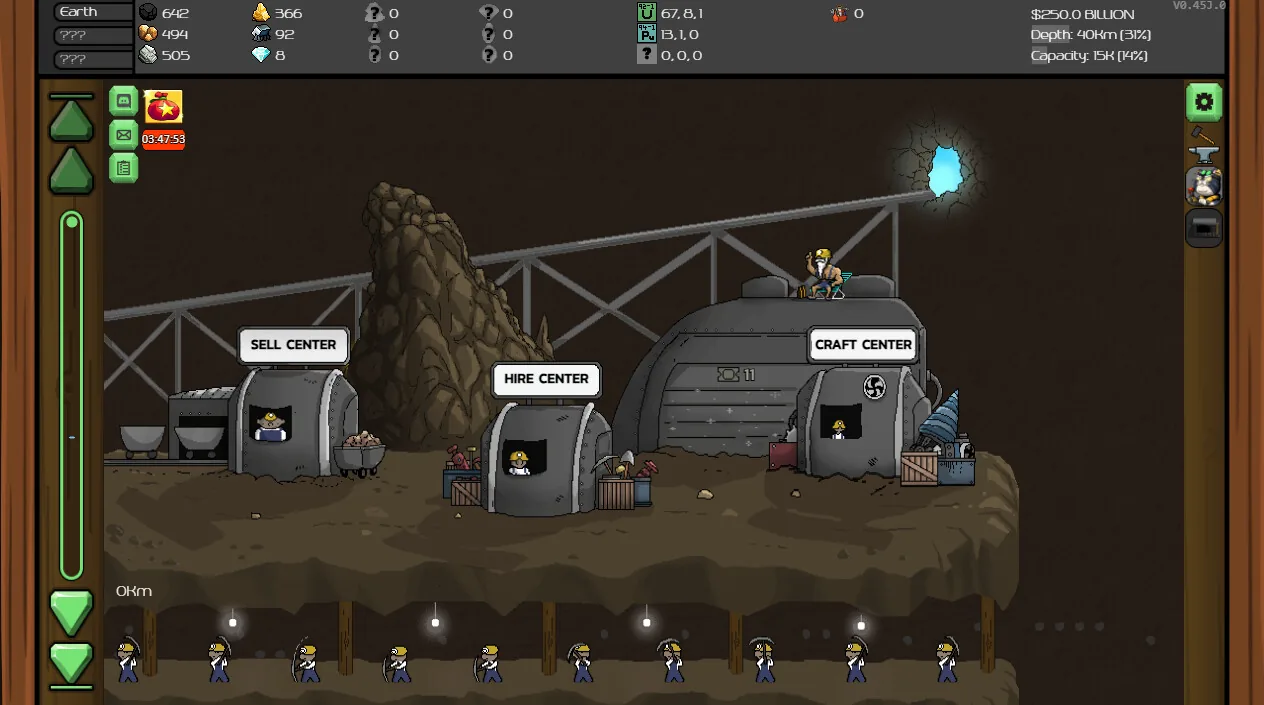
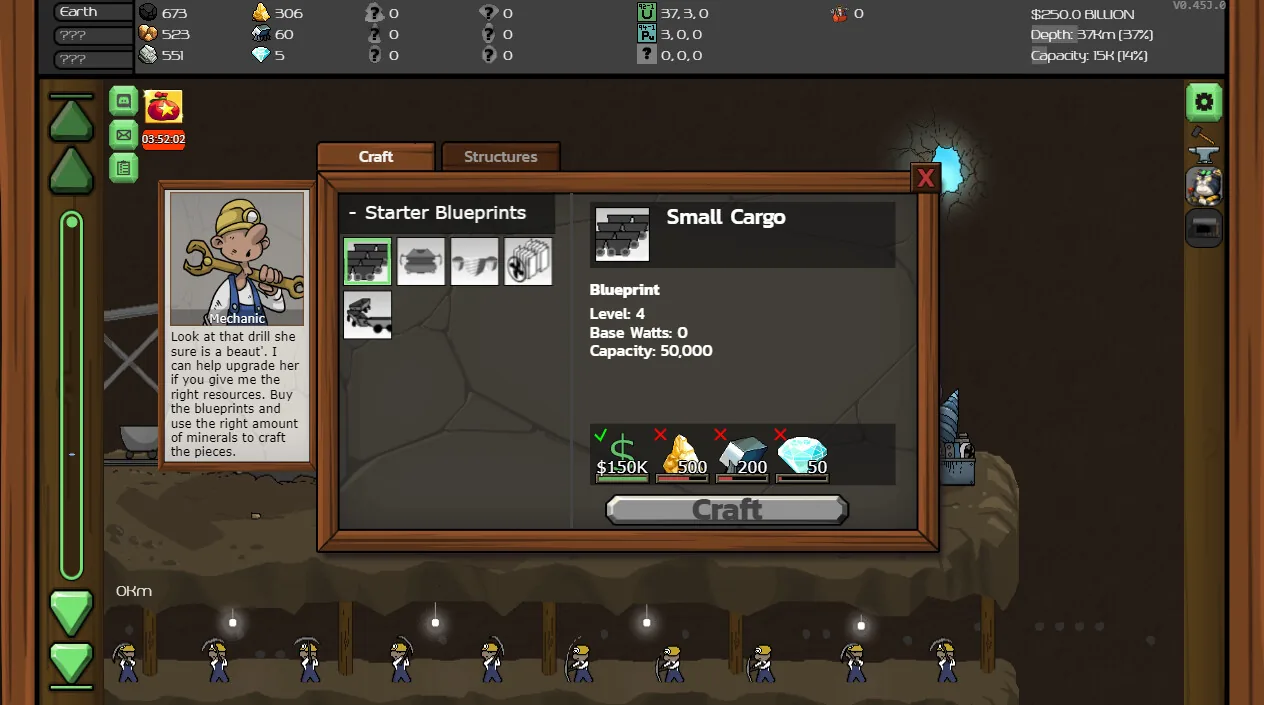
The core loop is straightforward. A drill descends automatically through a shaft, hitting minerals whose value and rarity climb with depth — coal and copper near the surface, silver and platinum by 30 kilometres, isotopes and rarer finds not far past that. Selling what comes up funds drill upgrades that dig faster and deeper, and funds miners who work the shaft without any input at all, generating income whether the game is open or not. Scientists sent out on excavation missions bring back relics on their own schedule. Chests, hidden encounters and secret finds reward exploring rather than just waiting.
Two and a half thousand kilometres of that structure is a lot of ground, and Mr.Mine spaces it out with real landmarks rather than one long grind: an Underground City around 300 kilometres down, the Moon past 1,000, Titan past 1,700, each unlocking new drill tiers and new mechanics rather than just bigger numbers on the same screen. It's a legitimately well- paced piece of world design for a genre that usually settles for reskinned zones.
What it can't offer is the thing Clicker Heroes made feel essential to idle design: a moment where the player deliberately gives something up in exchange for a fresh, faster start. There's no equivalent reset here, which means the back half of a long session doesn't restructure itself the way an ascension-based game's does. Progress instead becomes a matter of which upgrade queue you're waiting on, and Steam's own discussion boards include players noting that a session can feel like it delivers a few days of real forward motion followed by a long stretch of waiting for the next big number to become affordable. That's a fair description of what happens once the linear curve outpaces what miners and drill tiers can keep up with, and it's the direct cost of the design decision to skip the loop Playsaurus is famous for.
Miners, relics, and what the game added later
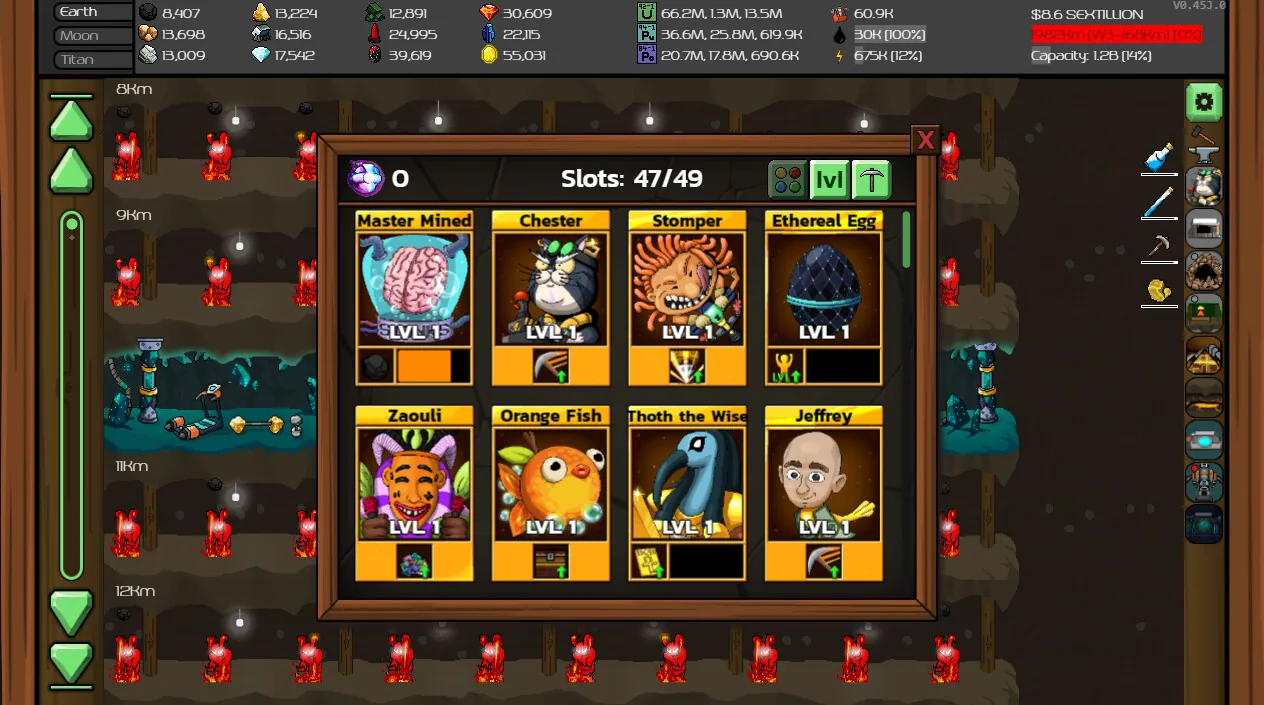
Mr.Mine didn't stand still after 2020. A "Titanic Update" reworked late-game progression not long after the Steam launch, and updates through 2024 and 2025 added a New Miners system and an Ancient Relics layer that gives hired miners RPG-style equipment slots — the closest thing the game has to a modern idle RPG's gear grind. A more recent update introduced Playsaurus Accounts alongside proper cloud saves, points and rewards, which is overdue quality-of-life for a game that had been running on browser-era save conventions for most of its life.
Each shaft can host up to ten miners, and hiring more compounds faster than most drill upgrades do over a long enough horizon — the guide-level advice from the game's own community content is consistent that miners, not drills, are where serious long-term investment should go. That's a sound piece of design: it rewards planning ahead rather than reflexively spending on whatever the next upgrade button offers.
What Tickets actually buy
Tickets are the premium currency, and the honest version of what they do is: convenience, not power that can't be earned otherwise. They unlock extra relic slots, reroll excavation missions, refresh the trading post, buy chests, resurrect scientists and skip timers on the chest compressor. All of that is also earnable for free — through quests (over 400 tickets' worth are built into the quest line alone), rare scientist mission rewards, golden chests and occasional codes — and Playsaurus's own guidance to players is that reckless ticket spending creates a "pay-to-continue" feeling rather than pay-to-win, since nothing sold is exclusive to paying customers.
Real-money bundles run from around a dollar for ten Tickets up to roughly a hundred dollars for the largest pack, and the two biggest tiers include a cosmetic perk: the ability to give a miner a red, starred name visible to other players. It's not a competitive advantage in a single-player game with no leaderboard stakes, but selling social status at the top of a $100 ladder is a strange thing to bolt onto a game whose pitch is patient, unattended progress. Mobile carries one wrinkle desktop doesn't: optional rewarded ads that hand out buffs or Tickets for watching, clearly opt-in rather than a wall. Steam's page also lists purely cosmetic Points Shop items — profile art, nothing that touches gameplay. None of this crosses into content genuinely locked behind payment. It is, however, a wider and pushier menu of things to buy than the core loop needs, and a minority of negative Steam reviews single out an early prompt to create an account, complete a survey and invite friends as more aggressive than the rest of the game's unhurried pacing would suggest — a fair complaint about first impressions even if it isn't the majority experience behind that 92% positive score.
Three platforms, three separate saves
Mr.Mine exists on more surfaces than most idle games bother with: the Steam release, free Android and iOS apps, and a browser version hosted directly on Playsaurus's own site as well as through third-party portals like CrazyGames — a direct descendant of the game's original 2012 home. What it doesn't offer is a save that follows you between any of them. Steam uses its own save format entirely separate from mobile, and while Android supports a manual export-and-import code to carry progress across, iOS doesn't support that at all, leaving iPhone players with the single most isolated version of the game. If you're choosing a platform, choose the one you intend to stay on — there's no clean way to change your mind later without starting over.
Presentation and the long tail
The remastered art is bright and legible without doing anything visually ambitious, which is the right call for a game whose screen needs to communicate a lot of numbers clearly at a glance. Sound design does its job and no more. None of that is a real weakness in a genre where presentation has never been the deciding factor, but it does mean Mr.Mine wins players on its systems or not at all — and those systems are strong enough in the details, thin enough in the big structural choice, to make that a real trade-off rather than an easy win.
Verdict
Mr.Mine is a fair, actively supported idle game that respects a player's time without ever demanding they burn their progress down to keep growing — and that same choice is exactly why it plateaus into patience rather than decision-making once the depth curve outpaces the upgrades funding it. The Tickets economy sits closer to Clicker Heroes' restrained rubies than to mobile idle's worst habits, even with a $100 bundle ceiling and an onboarding push some players find too eager. Judge it as what it actually is — a calm, one-way descent rather than a loop built to be repeated — and it's a perfectly reasonable free game to leave running. Judge it against the ascension structure its own studio invented, and it's easy to see what's missing.
Players who want to see the reset loop Mr.Mine skips, built by the same studio, can read our review of Clicker Heroes. Anyone drawn to a mining-and-depth loop that keeps ticking over while they're away from the screen, without needing a second app or a separate save file to do it, may also want to look at Wanderer.
Pricing, platform availability and Steam review data checked 30 July 2026.
Pros and cons
Pros
- Miners hired into a shaft keep generating minerals while the game is closed, and they routinely outperform drill upgrades over the long run
- 100-plus drill upgrades and a handful of distinct late-game worlds like the Moon and Titan give 2,500km of depth genuine variety rather than one repeating number
- No Steam DLC and no forced advertising on desktop, with mobile's rewarded ads clearly optional rather than a gate
- Regular content support well into 2025 and 2026, including a new Ancient Relics equipment layer and account-based cloud saves, keeps a 2012-era design from feeling abandoned
- Runs light enough that one Steam reviewer reported no performance trouble even on modest hardware while other games were open alongside it
Cons
- There is no prestige or reset mechanic at all, so late-game sessions increasingly become waiting out a timer rather than making a choice
- Steam, Android and iOS all keep separate save files with no automatic sync between them, and iOS can't even export a manual code the way Android can
- The Tickets bundle ladder tops out at roughly $100, and the two largest tiers sell a cosmetic red miner name that borders on a paid status symbol
- A vocal slice of negative Steam reviews single out an early account-creation and survey prompt as pushier than the rest of the game's pacing suggests
- Sound design and presentation are pleasant but generic next to how much system depth Playsaurus built underneath them
Screenshots
-
Mr.MineImage: Playsaurus via Steam -
Mr.MineImage: Playsaurus via Steam -
Mr.MineImage: Playsaurus via Steam -
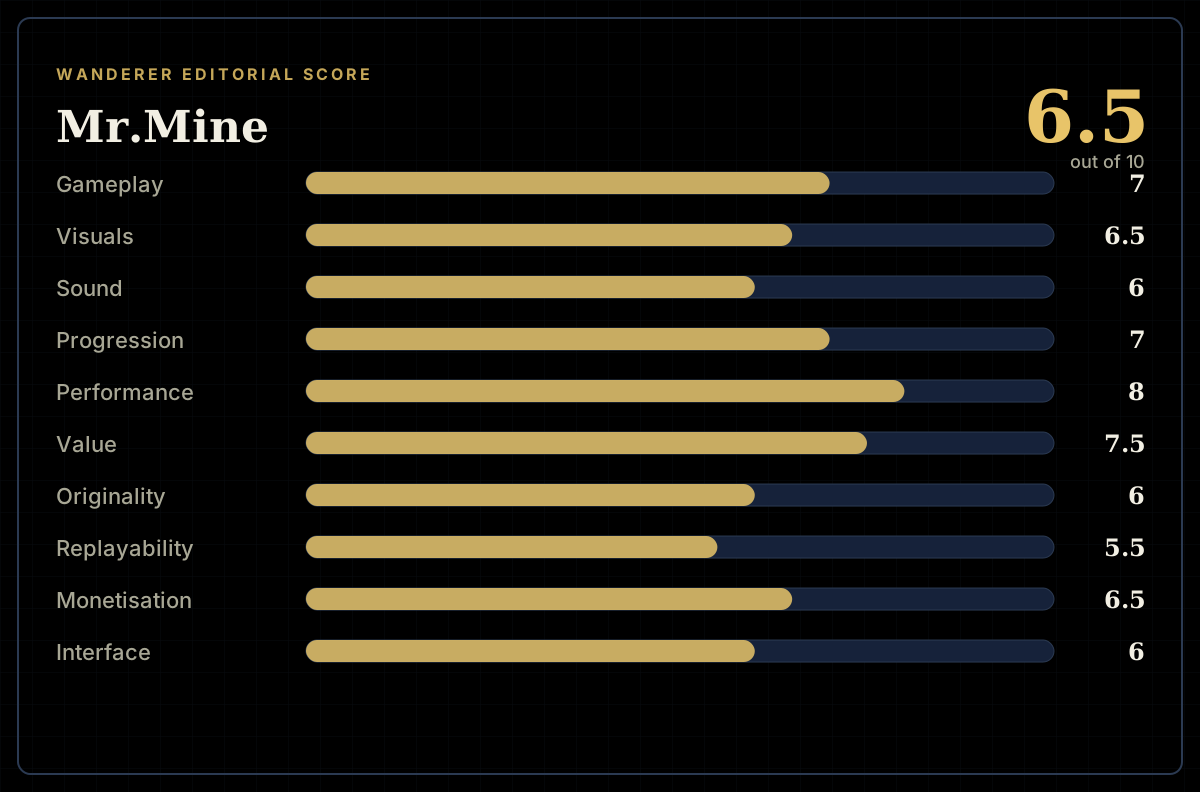
How the review scores each part of the gameWanderer Editorial -
The short versionWanderer Editorial