Game review
Leaf Blower Revolution - Idle Game
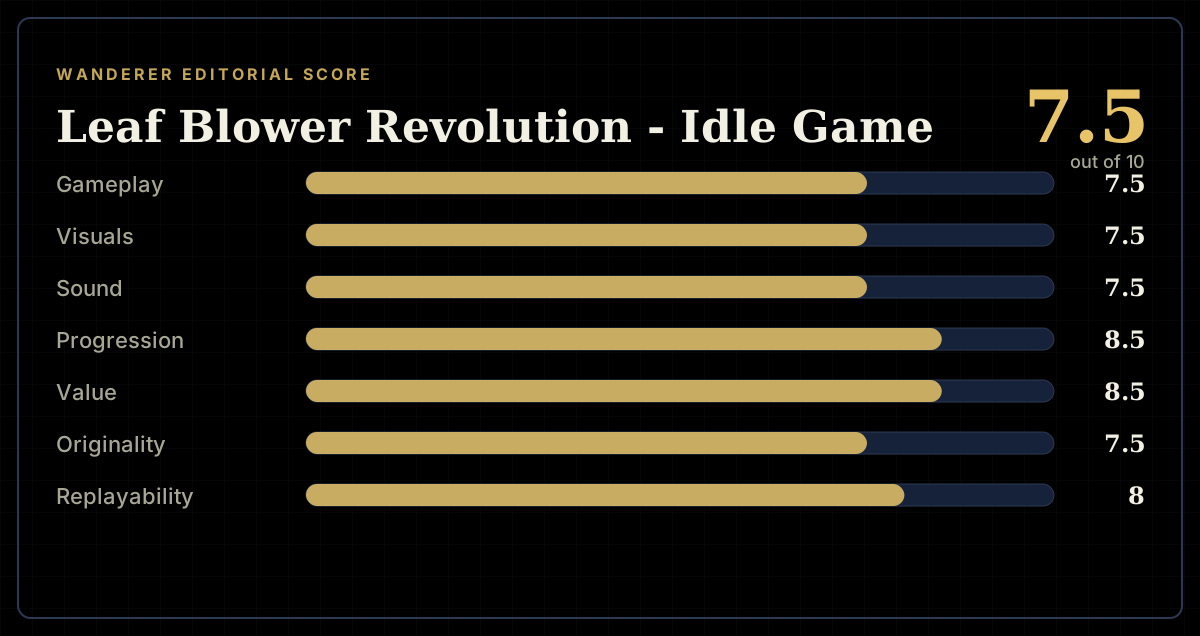
7.5 / 10
- Developer
- Humble North
- Publisher
- Humble North
- Released
- 4 December 2020
- Platforms
- Windows, iOS, Android
- Genre
- Incremental
- Monetisation
- Free-to-play with seven optional DLC packs, two of them selling randomised loot and one selling progression materials directly
- Players
- Single-player
The short version
Leaf Blower Revolution is what happens when a one-joke browser incremental refuses to stop growing. What started as clicking leaves off a lawn is now a sprawling free game with a prestige layer, a second reset layer above that, forty-plus areas, a materials economy, pets, crafting and a minigame pub — and it is still getting substantial free content five years after launch.
That sprawl is both the pitch and the problem. Long-time incremental players will find months of genuine systems to chew on for nothing. Newcomers get almost no help figuring out which wall is a design choice and which is just poor signposting, and two of the seven DLC packs sell gacha-style loot in a game that otherwise markets itself as paywall-free.
Biggest strengths
- Progression branches into more than a dozen interlocking systems, so committed players are never short of a next unlock
- The core loop, including offline gains, stays fully playable without spending anything
- Five years after launch the game is still shipping substantial free content, including a new Industrial Harbor area in January 2026
Biggest weaknesses
- New players get almost no guidance on when to prestige or why progress has stalled, so natural bottlenecks read as bugs
- The Borbventure and Cards DLC sell randomised loot packs for real money, which sits awkwardly next to the game's paywall-free reputation
- Writing and story beats are thin enough that the game's identity rests entirely on its systems rather than its world
Who it's for: Incremental veterans who want a free game with real depth to sink into over months, and anyone who likes watching a silly premise turn into a genuinely complicated economy.
Our recommendation: Install it for free and judge the first two prestiges for yourself before touching the store page — the base loop is the whole game, and most of what's for sale is optional once you understand what you're looking at.
7.5 / 10
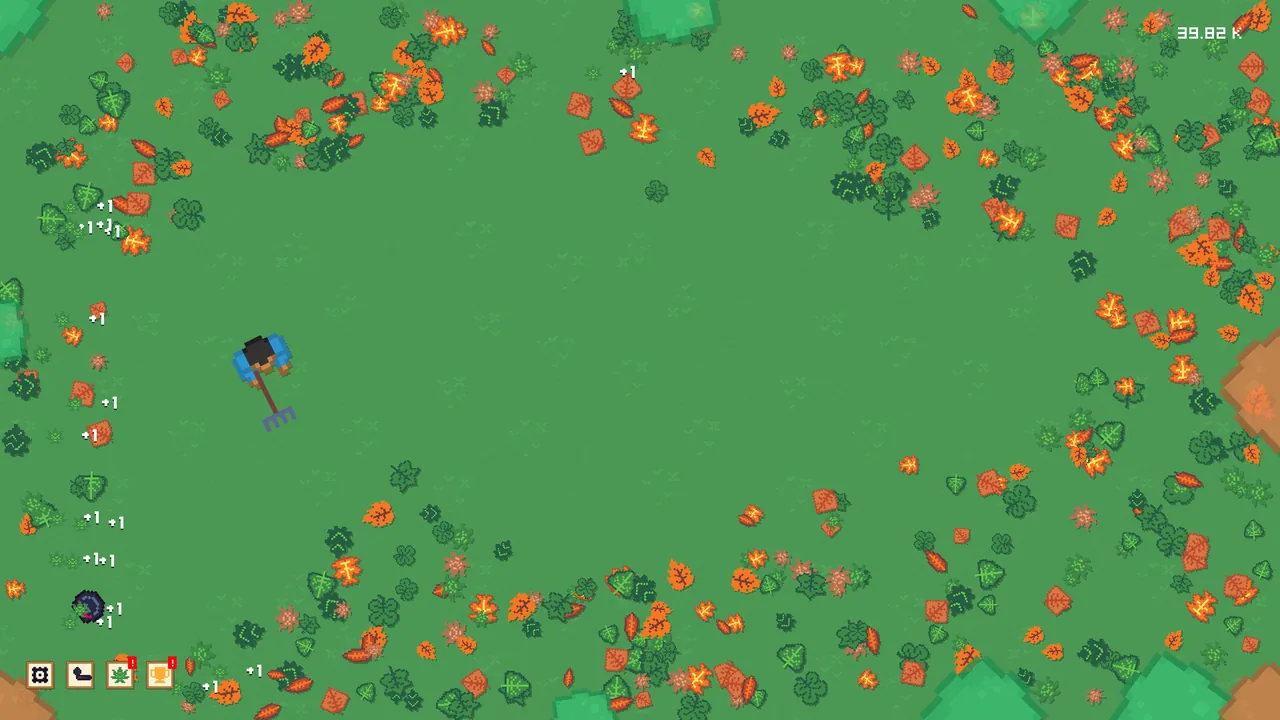
The premise is a punchline: you are given a leaf blower and a lawn, and the entire game is pointing it at leaves until they leave the screen. Leaf Blower Revolution never really abandons that joke, which is part of its charm. What it does instead is build an entire idle economy on top of it, one free update at a time, until "blow the leaves" is just the first of a dozen things you are managing at once.
From a lawn to a spreadsheet
Nothing about the opening hour suggests where this is going. You click leaves, buy a couple of autoblowers, watch numbers tick up. It's the most conventional incremental opening imaginable. The turn comes with the first Leaf Portal — the game's prestige mechanic — which resets your leaf count in exchange for coins you spend on permanent upgrades. That's still familiar territory for anyone who has played a clicker before.
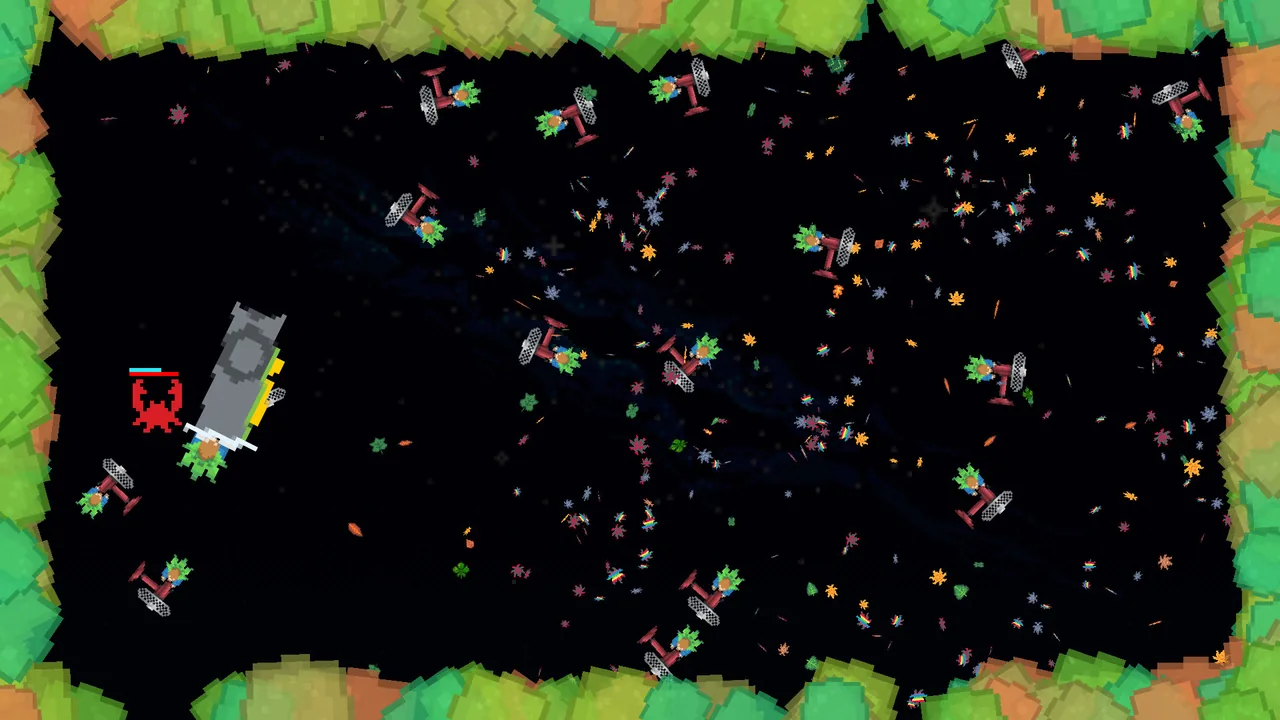
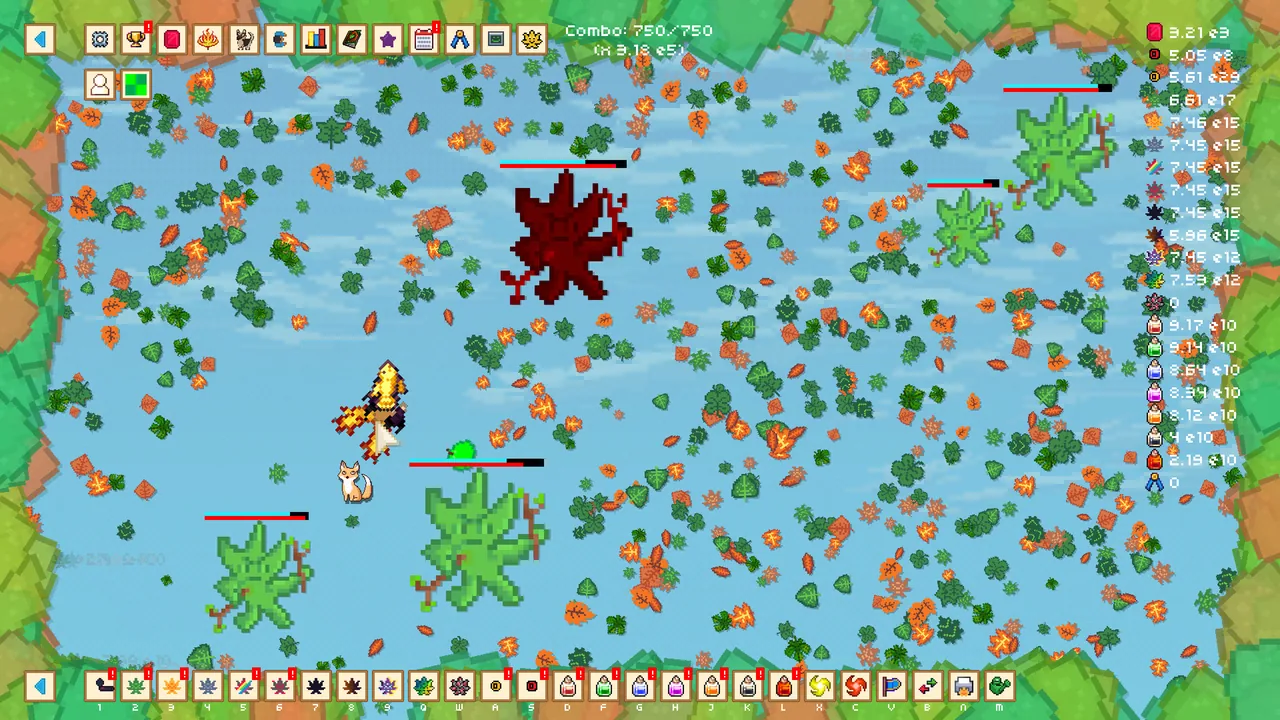
Where Leaf Blower Revolution stops being familiar is everything stacked on top of that first reset. There's a second, deeper reset layer above prestige for players who push further. Areas unlock progressively — more than forty of them across the current build — each gating a different leaf type, currency, or mechanic behind it. Converters turn one resource into another through a tiered flask system. A materials-and-essences economy runs in parallel to the leaf counter, feeding a crafting system. Pets get collected and levelled. Cards and "Borbs" — the game's collectible creature line — add their own progression track. A minigame hub called the Cheese Pub gives you something to do that isn't watching a number climb. The January 2026 Industrial Harbor update added a shipping-and-cargo layer on top of all of it, complete with its own resources and jobs. None of this is padding for padding's sake — each system has its own numbers and its own decisions — but by the time you're juggling six currencies and three reset mechanics, "idle game" starts to undersell what's actually happening on screen.
Depth, or just more of it
This is the question the game forces on anyone reviewing it seriously, and the honest answer is that it's both, depending on which hour of play you're in. The first fifteen or so unlocks feel like genuine game design — each new system changes how you think about the leaf counter rather than just multiplying it. Converters force real trade-offs about efficiency versus speed. The choice of which upgrades to carry through a prestige matters.
Further in, the returns get murkier. New areas increasingly function as reskins of systems you've already learned, and currencies start existing mainly to gate the next currency rather than to create a fresh decision. That's not unique to this game — it's the oldest trap in the incremental genre, the moment a system stops being a puzzle and becomes a checklist — but Leaf Blower Revolution has enough separate systems that the checklist gets long. Players who love an incremental's meta-game for its own sake will read that as generosity. Players hoping each new layer teaches them something new will start to feel the difference between depth and volume somewhere around the third or fourth area.
Nobody hands you a map
The game's biggest structural weakness isn't a system, it's the absence of one: it does very little to explain itself. The early hours drip-feed mechanics with barely any framing, and the prestige moment in particular is easy to miss entirely if you haven't played an incremental before — there's no clear signal that resetting your leaf count is the intended next move rather than a punishment for misclicking. Combined with a story and world that barely register — this is a game about numbers wearing a leaf-blower costume, and it never pretends otherwise — new players are left to work out for themselves whether a slow patch is a wall they're meant to push through or a sign they've missed an unlock. Community wikis and guides exist precisely because the game doesn't do this job itself, which is a fair workaround for players willing to look, and a real barrier for anyone who just wants to open the game and understand it.
Progress that doesn't need you awake
Offline progress is where the design gets more credit. The game calculates rewards from your peak leaf-collection rate and applies them while you're away, with no premium gate stopping you from getting the full benefit for free — a meaningful contrast with the several DLC packs sitting one tab over. It's a fairly standard implementation by incremental standards rather than an innovative one, and players who like to min-max it have found ways to spike their offline rate by piling up leaves before logging off, which says more about the genre's usual optimisation culture than about a flaw in the system. As a baseline, though, it does the one thing an idle game's offline system has to do: it respects time spent away without making active play feel like a wasted alternative.
What the store page is actually selling
Free-to-play is the honest label here — nothing behind the DLC wall blocks the core loop, and a sizeable share of the playerbase never needs to open the store tab at all. But the DLC list is worth reading carefully rather than waving through. The Supporter Pack, Skins Pack and Soundtrack are exactly what they sound like: cosmetic and goodwill purchases that change nothing about how the game plays. The Premium Pack, at roughly NZ$38.49, bundles most of that convenience together for players who want to support the game in one go, which is a reasonable if pricey option for a title that costs nothing to start.
The two packs worth being wary of are Borbventure and Cards. Both sell daily randomised packs — common, rare and legendary tiers — for real money, in a genre where meta-collectibles like this can quietly become a second currency system players feel pressure to keep topping up. Framed against the game's own "no paywall" reputation, selling randomised loot for cash is a harder sell than a soundtrack, even when nothing inside those packs blocks progress outright. The Materials Pack sits in similar territory from the other direction — it sells the game's core crafting currencies directly, which is a straightforward pay-for-convenience option rather than anything predatory, but it does mean money can visibly shortcut the grind the free game is built around. None of this makes Leaf Blower Revolution aggressive about monetisation — nothing is timed, nothing nags — but "completely free of paywalls" undersells what's actually on the store page.
Still shovelling content five years on
The strongest argument for the game isn't any single system, it's the release cadence. Humble North has kept shipping meaningful content since the December 2020 launch, and the Industrial Harbor update that landed in January 2026 — a new area, a new resource loop, and follow-up balance patches through the rest of that month — shows a five-year-old free incremental still getting first-party attention rather than coasting on its install base. For a genre where plenty of games go quiet within a year of release, that consistency is worth more than any individual feature, and it's the clearest reason the sprawling system count keeps growing instead of stabilising: there's an active team still finding new things to bolt on.
The look and feel of it
The presentation never oversells itself. Pixel art, bright colours, a soundtrack good enough that it got its own DLC listing — it's a comfortable, low-stakes aesthetic that matches the "relaxing" tag players keep attaching to it, and it stays legible even once the interface is showing five or six resource counters at once. Nothing about the visual design is ambitious, but ambition isn't really the job here; staying calm while the numbers get absurd is.
Verdict
Leaf Blower Revolution earns its size honestly — this is a genuinely deep incremental with years of free content behind it, not a shell padded out to look impressive on a store page. The core loop is free in every sense that matters, offline progress works without asking for money, and the update history backs up the idea that this is still an actively developed game rather than an abandoned one coasting on old reviews.
What keeps it from scoring higher is exactly the thing that makes it impressive: the sheer system count outruns the game's willingness to explain any of it, and the DLC list quietly undercuts the paywall-free pitch with two packs selling randomised loot. Incremental veterans who like reading a wiki and building their own mental map will get months out of this for free. Players who want a game to teach them its own rules, or who'd rather not see gacha mechanics attached to something this casual, should go in with clearer expectations than the store page gives them.
Price and DLC details checked 30 July 2026.
Pros and cons
Pros
- Progression branches into more than a dozen interlocking systems, so committed players are never short of a next unlock
- The core loop, including offline gains, stays fully playable without spending anything
- Five years after launch the game is still shipping substantial free content, including a new Industrial Harbor area in January 2026
- Casual pixel art and a dedicated soundtrack keep the tone relaxing even once the numbers turn absurd
- Pets, crafting and the Cheese Pub minigames give idle downtime something to do besides watch a counter climb
Cons
- New players get almost no guidance on when to prestige or why progress has stalled, so natural bottlenecks read as bugs
- The Borbventure and Cards DLC sell randomised loot packs for real money, which sits awkwardly next to the game's paywall-free reputation
- Writing and story beats are thin enough that the game's identity rests entirely on its systems rather than its world
- Forty-plus areas and a growing pile of currencies eventually blur into upkeep rather than fresh decisions
- The NZ$38.49 Premium Pack asks a lot of a game whose free version already contains everything the loop needs
Screenshots
-
Leaf Blower Revolution - Idle GameImage: Humble North via Steam -
Leaf Blower Revolution - Idle GameImage: Humble North via Steam -
Leaf Blower Revolution - Idle GameImage: Humble North via Steam -
How the review scores each part of the gameWanderer Editorial -
The short versionWanderer Editorial