Game review
Space Miner - Idle Adventures
4.2 / 10
- Developer
- FrontRunnerTek
- Released
- 8 November 2024
- Platforms
- Windows, Linux
- Genre
- Idle RPG
- Monetisation
- Free-to-play with an in-game "Supporter Shop" cash shop selling premium currency and permanent boosts
- Players
- Single-player only, with Steam Leaderboards for competitive stats but no direct player-to-player mode
The short version
Space Miner - Idle Adventures has a real idea in it: split idle mining into two tracks, a drone-and-turret automation layer that runs while you're away and an actively flown drill-or-laser layer for players who want something to do with their hands, then wrap both in 170-plus research unlocks and a handful of space-flavoured minigames. On Steam's own count, though, only 16 of the 44 English-language reviews recommend it, and the 28 negative ones converge on the same handful of complaints: no real offline progress despite the "idle" name, a UI that hides basic actions like partial selling behind trial and error, and — in one detailed report — a mining-output nerf that landed in the same patch as new permanent pay-to-win purchases in the cash shop.
It's free, so the cost of finding out for yourself is low. But a game whose central promise is "idle" shouldn't need its own players explaining, in review after review, that closing the client stops your progress cold.
Biggest strengths
- Splitting mining into an actively flown drill-or-laser mode and a background drone/turret/AutoMiner layer is a genuine structural idea most idle clickers don't attempt
- Completely free to install, with over 170 research unlocks, a crafting system (the Click Factory) and space-flavoured encounter minigames like rock-paper-scissors with aliens and dice with pirates
- Steam Cloud saves and cross-platform support, including Steam Deck, mean the free download carries no real commitment
Biggest weaknesses
- No meaningful offline progress despite the "idle" branding — multiple reviewers report that hours logged only reflect the client being left open, not real away-time gains
- The interface is repeatedly described as confusing and under-explained, down to the window size not being remembered between sessions and no way to sell only part of a cargo hold early on, which stalls research when the wrong ore fills your bay
- A detailed, specific report describes mining output from drones and turrets being roughly halved in the same patch that added permanent Ore Booster purchases to the cash shop
Who it's for: Idle-genre completionists curious about the active-mining twist, and only if they can tolerate an unfinished-feeling UI and a game that has to stay open to progress
Our recommendation: Try it for free, but go in expecting a rough, low-polish build rather than a finished idle game
4.2 / 10
Space Miner - Idle Adventures asks a fair question for the idle genre: what if mining didn't have to be entirely hands-off? FrontRunnerTek's free Steam release splits the loop into an actively flown mode — chase asteroids down with drills or snipe them with lasers from your cockpit — and a background layer of AutoMiners, Mining Drones and Laser Turrets that keep gathering while you're doing something else in the game, sitting on top of a research tree the store page puts at over 170 entries and a crafting system called the Click Factory. On paper it's a wider structure than most free idle games attempt. Steam's own review data, though, tells a much rougher story: only 44 English-language reviews exist in total, and 28 of them are negative, enough to hold the game at "Mostly Negative" nine months after launch. This review draws on all 28 negative reviews and the 16 positive ones alongside FrontRunnerTek's own store description and Steam's global achievement data, rather than a play session of our own — the brief this section works from asks for documented mechanics and player-feedback patterns, not a logged playthrough, and 28 negative reviews is a small enough set to read in full.
Gameplay: two mining modes, one control scheme problem
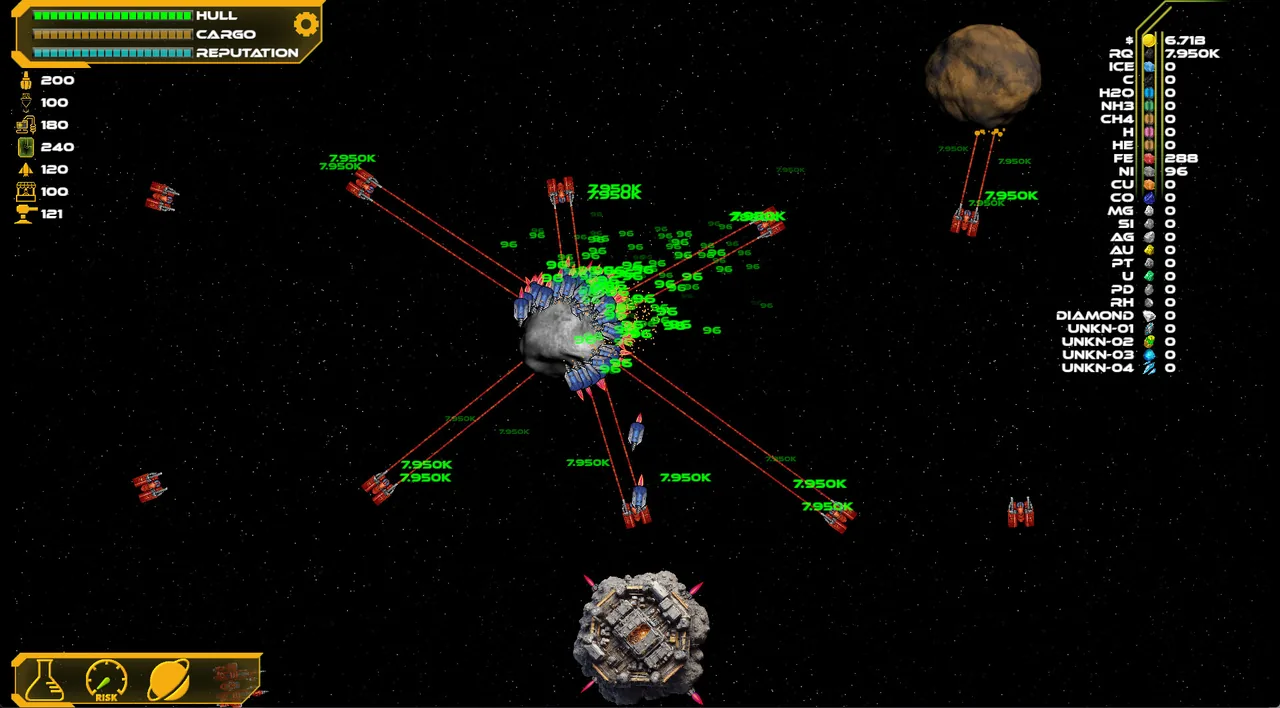
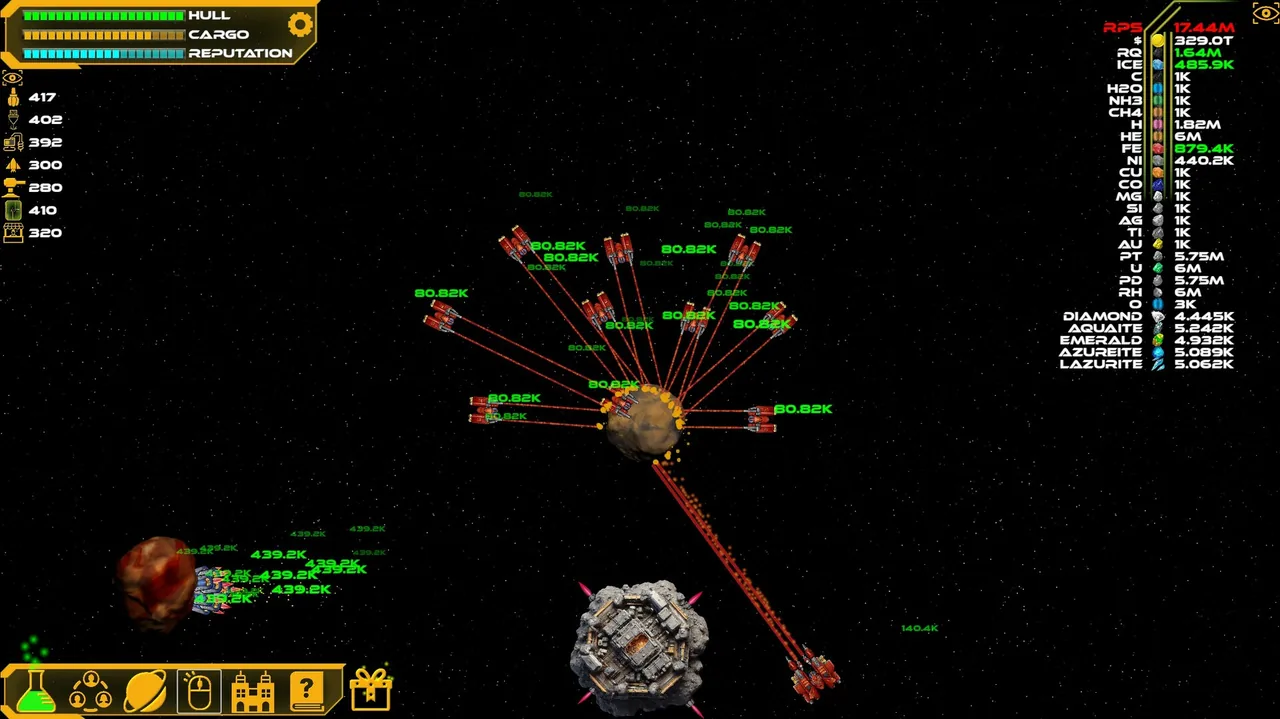
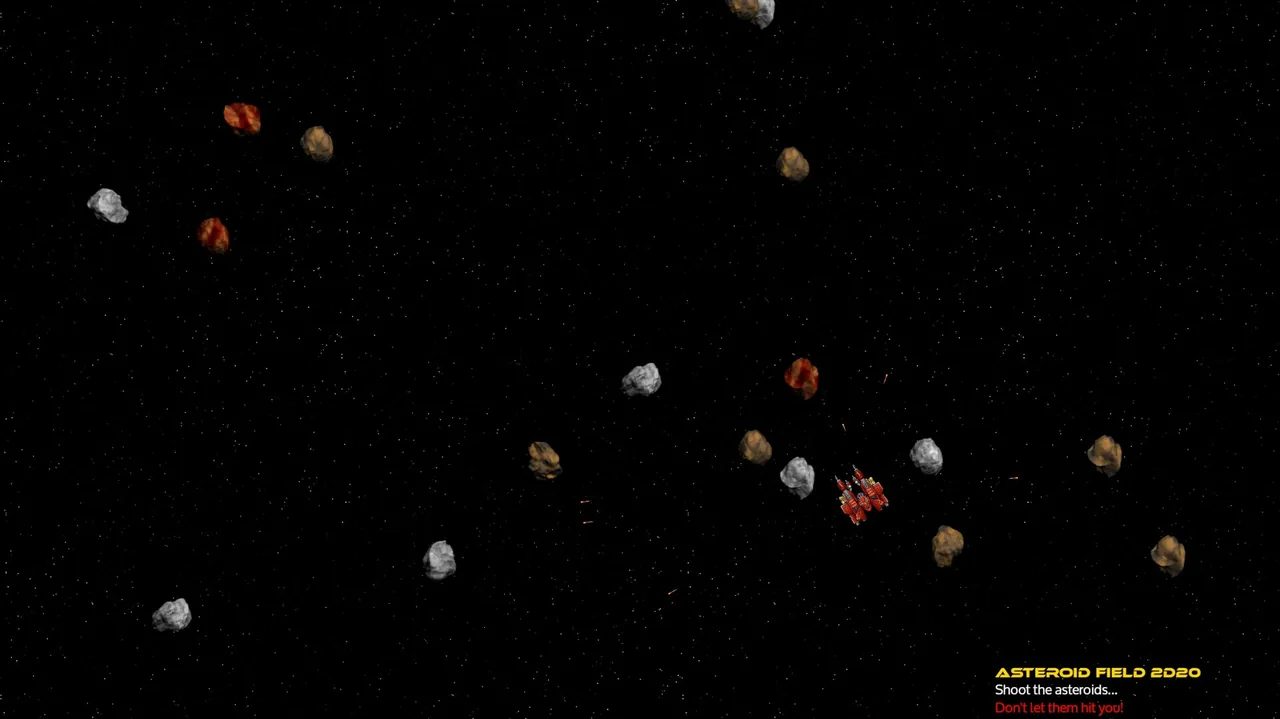
The core pitch is real: drills are cheap and always collect the full amount but require flying close enough to catch an asteroid, while lasers cost more and have diminishing returns over distance but don't need you to chase anything down. Layered on top are Mining Drones that fly themselves, player-placed Laser Mining Turrets, and Mining Outposts that farm a specific resource passively — enough moving parts that, described in a feature list, it reads like a genuinely ambitious take on idle mining. The recurring complaint across negative reviews is that none of it feels good to actually pilot. Several reviewers single out the flight controls specifically — keys bound to both keyboard and mouse simultaneously, with one describing movement keys firing in the opposite of the intended direction — and more than one reviewer makes the same joke independently: an idle game that forces you to actively fly a ship to make any progress has arguably stopped being an idle game. One positive review put it plainly: "if its got idle in the name I shouldn't have to control the space ship," while still recommending the game on balance because it's free. That tension — active systems bolted onto an idle framing — runs through nearly every review, positive and negative alike.
Progression: the missing half of "idle"
The single most repeated complaint, and the one that does the most damage to the game's core premise, is that Space Miner does not meaningfully progress while the client is closed. Several reviewers report leaving the game open for hours specifically to test this, only to find their playtime total reflects idle time at the keyboard rather than real away-from-computer gains; one put it bluntly: "there is absolutely no offline progress." Research timers that run into the hundreds of minutes compound the problem, since a system built around long unlock timers only pays off if it also runs while you're not watching it. On top of that, cargo capacity caps create a specific, well-documented bottleneck: early on, selling ore sells everything in the hold rather than letting you keep or dump selectively, so a bay that fills with the wrong resource can block the exact research you need and force a reset. The Reputation system — Space Miner's prestige mechanic — comes in for similar criticism, with reviewers describing it as "basically just a forced reset button" that doesn't return enough of a permanent bonus to justify starting over. For a game whose entire premise is built on offline and away-from-keyboard progression, a category the Wanderer team looks at closely because it's the same territory this game's readers already play in, that's a structural miss rather than a rough edge.
Interface and stability
Reviewers describe the UI in consistently harsh terms — "clunky," "atrocious," "horrible" — and the specific complaints back up the general ones: menus and mechanics with no tooltips or explanation, a window size that resets every time the game is relaunched, and settings for basic things like resolution that are hard to find or don't apply cleanly to fullscreen and alt-tab behaviour. Stability complaints run in parallel: several reviewers, independently and across different hardware, report multi-minute hangs on startup, crashes roughly every ten minutes during play, and the game refusing to close normally, requiring a forced kill from Task Manager. None of this is universal — plenty of the negative reviews still describe "a glimmer of potential" or "the bones of a potentially good idle game" underneath the rough execution — but the frequency and specificity of the reports, across otherwise unrelated players, points to real unresolved technical debt rather than isolated bad luck.
Monetisation: a nerf next to a new purchase
The most serious individual complaint in the review set is also the most specific. One 566-minute reviewer documented, by version number, that before update v0.0.67 their Mining Drones were collecting roughly 678 resources per tick and Laser Turrets over 6,000; after that same update, the numbers dropped to about 68 and 2,000 respectively — a drop of roughly 90% and 65%. The same patch, per that review, added permanent Ore Booster multipliers to the cash shop. The reviewer is careful to frame it as something they can't prove was deliberate ("I'm sure is a simple coincidence"), and Wanderer hasn't independently verified the patch notes behind the claim — but a detailed, version-numbered report of output being cut at the same moment a permanent boost became purchasable is exactly the kind of pattern that erodes trust in a free-to-play game's cash shop, and it's serious enough that other reviewers reference the same "toxic mobile app style cash shop" concern in less specific terms, with one calling out the "Supporter Shop" branding directly as a euphemism. Set against a genre where offline-progress games routinely monetise time-savers, a report of the underlying rate itself moving is a materially bigger red flag than the existence of the shop.
Achievements and long-term retention
Steam's global data lists 68 achievements, roughly matching the "over 60" the store page advertises, and the completion curve is steep: the two easiest sit above 90% (one above 96%), while the hardest tiers fall under 7%. That shape is normal for an idle game's late-game milestones, but several of Space Miner's achievements are called out by name as artificial padding rather than earned progress — one review cites a requirement to win the in-game rock paper scissors minigame 10,000 times as an example of turning "an idle game into a boring active game." Combined with the offline-progress gap, the achievement list reads as one more place where the game asks for raw clock time rather than rewarding play.
Final verdict
Space Miner - Idle Adventures is not without ideas — the drill-versus-laser choice, the drone-and-turret automation layer, and the space-flavoured encounters (dice with pirates, rock paper scissors with aliens) are all things a template idle clicker wouldn't bother including, and FrontRunnerTek's 170-plus research entries show real content investment for a small, self-published team. But a nine-month-old, Mostly Negative review score built on only 44 total reviews is itself a signal, and reading all 28 negative ones turns up the same specific, repeatable problems rather than scattered noise: no real offline progress on an "idle" game, a UI reviewers across the board call confusing and unfinished, stability issues serious enough to need a forced-kill on exit, and one credible, detailed report of a mining nerf landing beside a new pay-to-win cash shop purchase. It's free, and free lowers the bar for trying it. It doesn't lower the bar for what "idle" should mean once you do.
Pros and cons
Pros
- Splitting mining into an actively flown drill-or-laser mode and a background drone/turret/AutoMiner layer is a genuine structural idea most idle clickers don't attempt
- Completely free to install, with over 170 research unlocks, a crafting system (the Click Factory) and space-flavoured encounter minigames like rock-paper-scissors with aliens and dice with pirates
- Steam Cloud saves and cross-platform support, including Steam Deck, mean the free download carries no real commitment
Cons
- No meaningful offline progress despite the "idle" branding — multiple reviewers report that hours logged only reflect the client being left open, not real away-time gains
- The interface is repeatedly described as confusing and under-explained, down to the window size not being remembered between sessions and no way to sell only part of a cargo hold early on, which stalls research when the wrong ore fills your bay
- A detailed, specific report describes mining output from drones and turrets being roughly halved in the same patch that added permanent Ore Booster purchases to the cash shop
- Crashes, multi-minute startup hangs, and the game locking up on exit are reported by several players independent of hardware
- Several of the 68 Steam achievements ask for large repeated counts (win a minigame thousands of times) that reviewers call padding rather than content, and the global completion curve backs that up — several tiers sit under 10% while the earliest ones clear 90%+
Screenshots
-
Space Miner - Idle AdventuresImage: FrontRunnerTek via Steam -
Space Miner - Idle AdventuresImage: FrontRunnerTek via Steam -
Space Miner - Idle AdventuresImage: FrontRunnerTek via Steam -
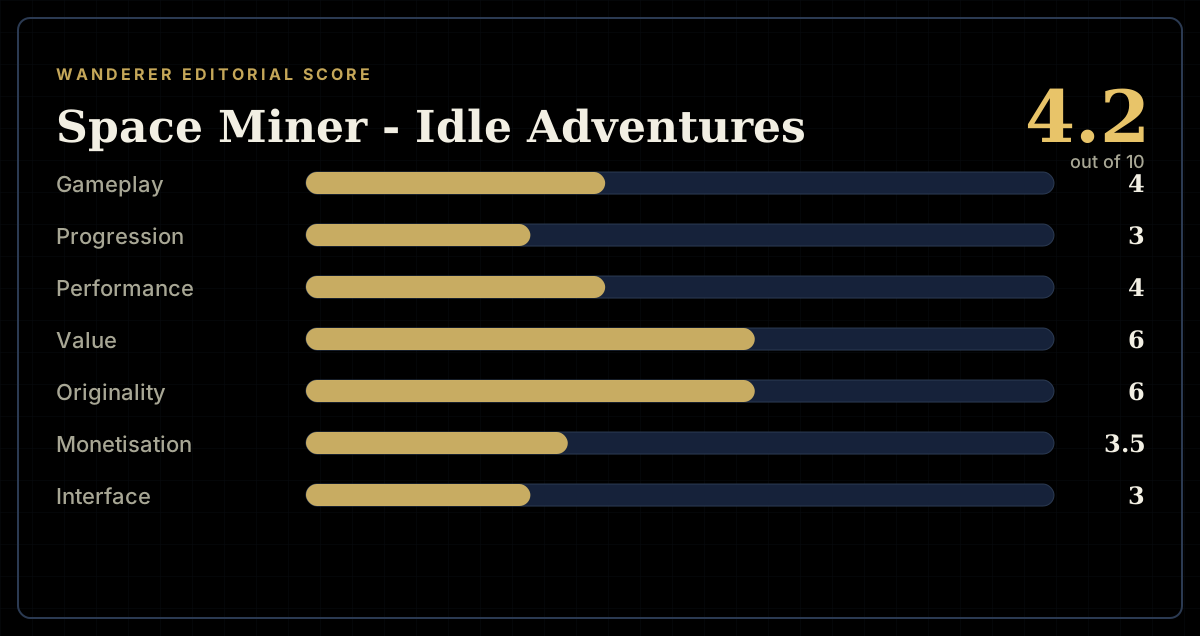
How the review scores each part of the gameWanderer Editorial -
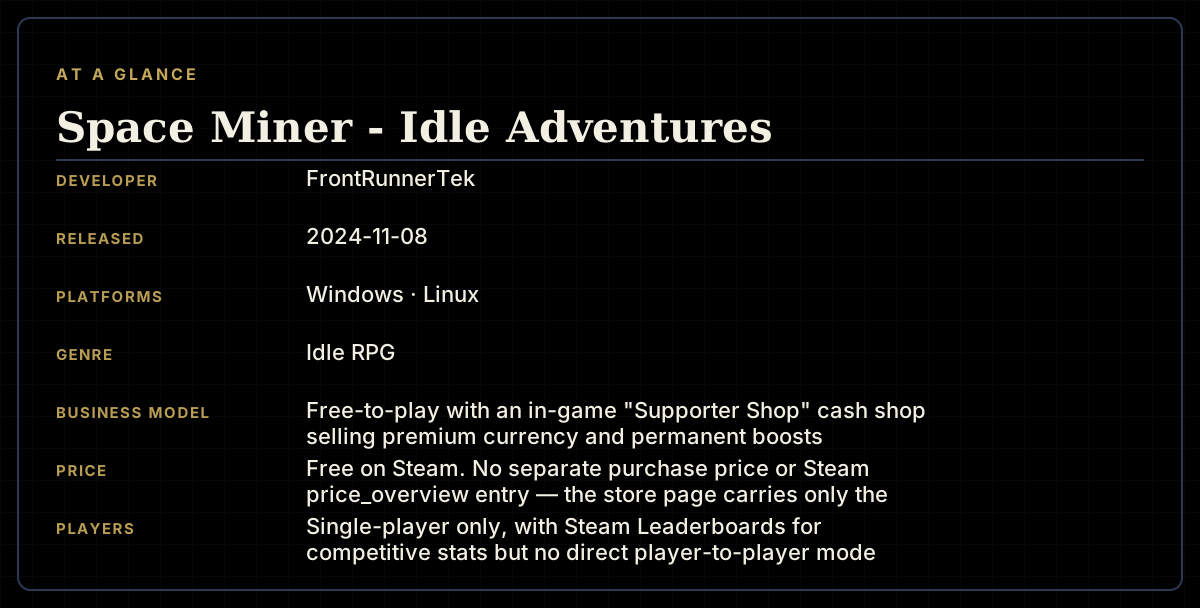
The game at a glanceWanderer Editorial -
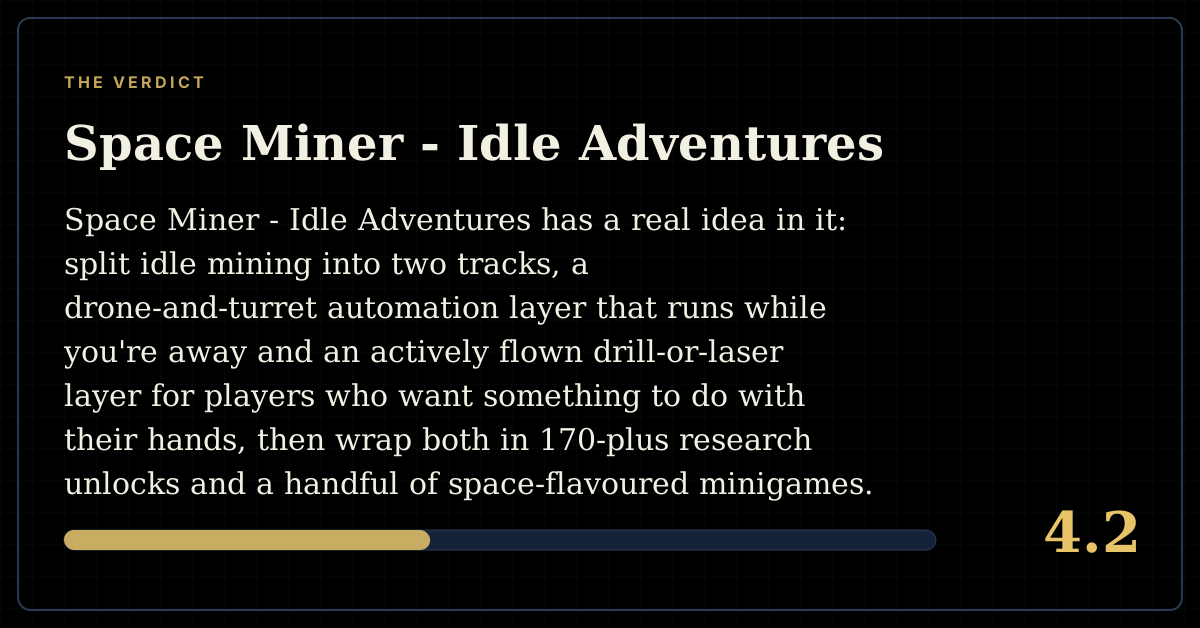
The short versionWanderer Editorial