
Game review
PickCrafter
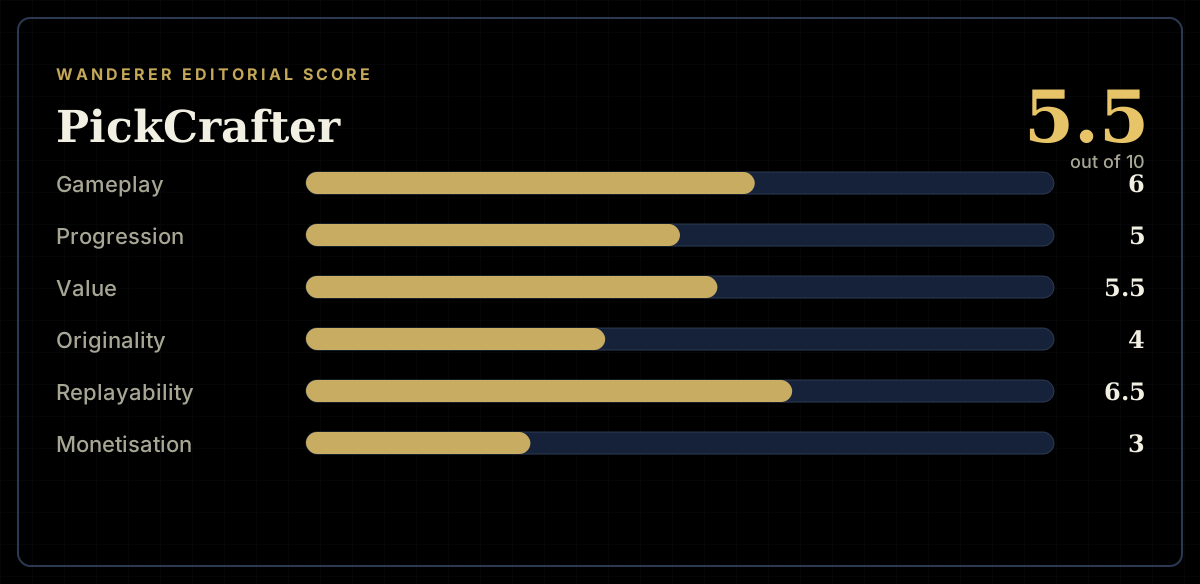
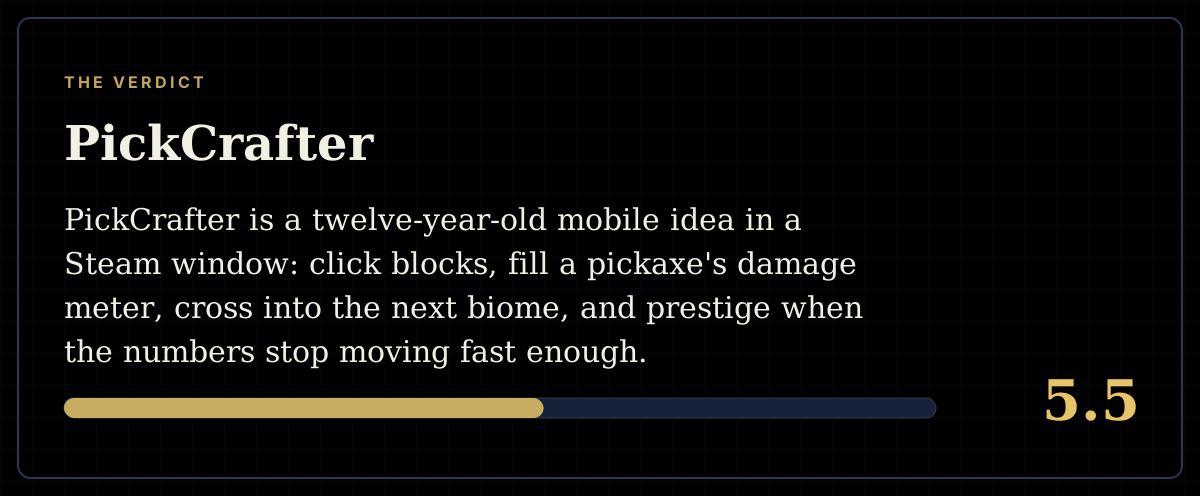
5.5 / 10
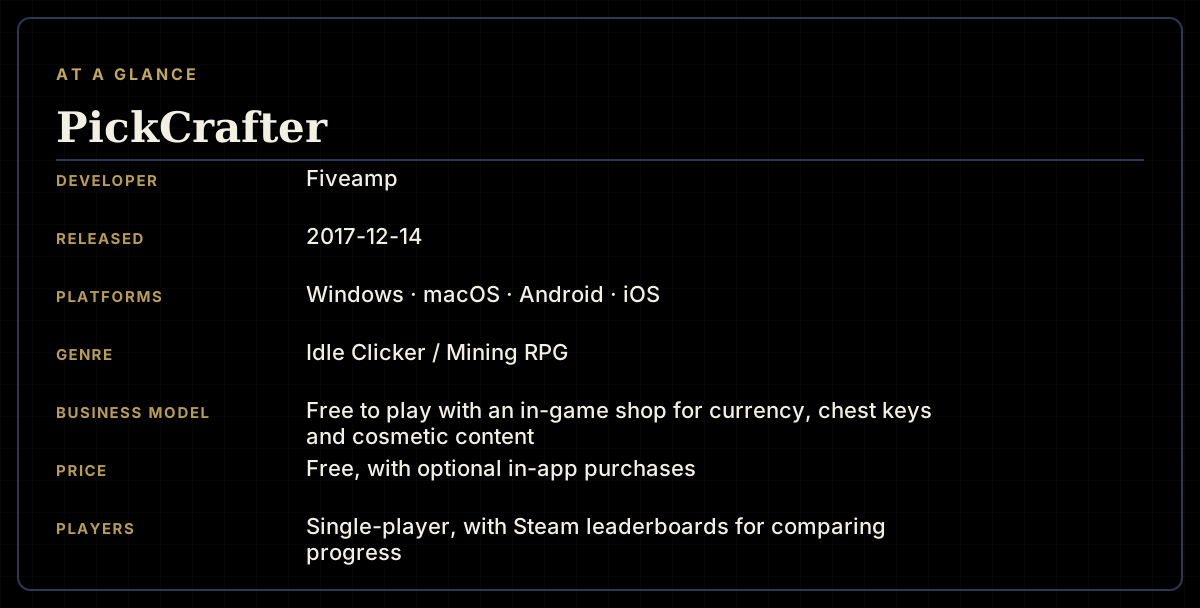
- Developer
- Fiveamp
- Publisher
- Fiveamp
- Released
- 14 December 2017
- Platforms
- Windows, macOS, Android, iOS
- Genre
- Idle Clicker / Mining RPG
- Monetisation
- Free to play with an in-game shop for currency, chest keys and cosmetic content
- Players
- Single-player, with Steam leaderboards for comparing progress
The short version
PickCrafter is a twelve-year-old mobile idea in a Steam window: click blocks, fill a pickaxe's damage meter, cross into the next biome, and prestige when the numbers stop moving fast enough. That loop is still legitimately compelling in short bursts, and the review pattern of players logging hundreds or even thousands of hours on the mobile original isn't an accident — this is a well-tuned few minutes of clicking, repeated.
What hasn't traveled well is everything built around that minute. Chest timers, an in-your-face shop, and a prestige currency that several long-time players describe as fixed rather than scaling all work against the idea that progress should feel like it's accelerating. Free to try costs nothing, but go in expecting a mobile game's economy, not a PC idle game's.
Biggest strengths
- The core loop of clicking through a biome's blocks, upgrading a pickaxe and crossing into the next zone is simple enough to pick up instantly and still be running hundreds of hours later
- Steam's global achievement stats back up genuine long-term depth — 121 achievements span from 96% completion down under 1%, so there's real late-game content for players who go looking for it
- Timed in-game events are singled out by multiple reviewers as unusually well-designed for the genre, rather than the throwaway currency-and-countdown filler idle games typically ship
Biggest weaknesses
- Chest timers gate early progress hard enough that one of the store page's most-upvoted reviews describes waiting roughly two hours to open the game's second chest, with no way to queue more than one at a time
- The shop surfaces "unlock for real money" prompts across upgrades and cosmetics often enough that several reviewers call the monetisation the loudest thing about the game, not the mining
- Multiple long-time players describe the post-prestige currency as a fixed amount per reset rather than one that scales with progress, so later runs don't noticeably accelerate the way the genre's better resets do
Who it's for: Genre veterans who already know and like PickCrafter from mobile, and idle-clicker fans who don't mind a shop asking for money every few minutes in exchange for a loop that genuinely holds up.
Our recommendation: Try it free first — the opening biomes cost nothing to see. Decide within the first hour whether the chest timers and shop prompts are background noise or a dealbreaker, because they don't let up later.
5.5 / 10
PickCrafter has been mining the same block for a very long time. It first shipped on iOS and Android back in August 2014, picked up a major overhaul in June 2016, and only reached Steam in December 2017 — arriving on PC not as a new game but as a mobile idle clicker with a mouse cursor bolted on. Nearly nine years into its Steam life, the pitch is unchanged: click blocks, break them for gems and materials, forge better pickaxes and gear, and cross from Runaria's grassy starting biome out toward the Tundra, the Moon and Mars, prestiging through higher tiers whenever the current run runs out of steam. It's a formula that has clearly worked on players for over a decade — the Steam reviews are full of people citing four-digit hour counts from the mobile version alone — and the question a Steam port has to answer is whether that stickiness survives the move to a storefront where the shop prompts are suddenly a lot easier to compare against everything else on sale.
Breaking blocks in Runaria
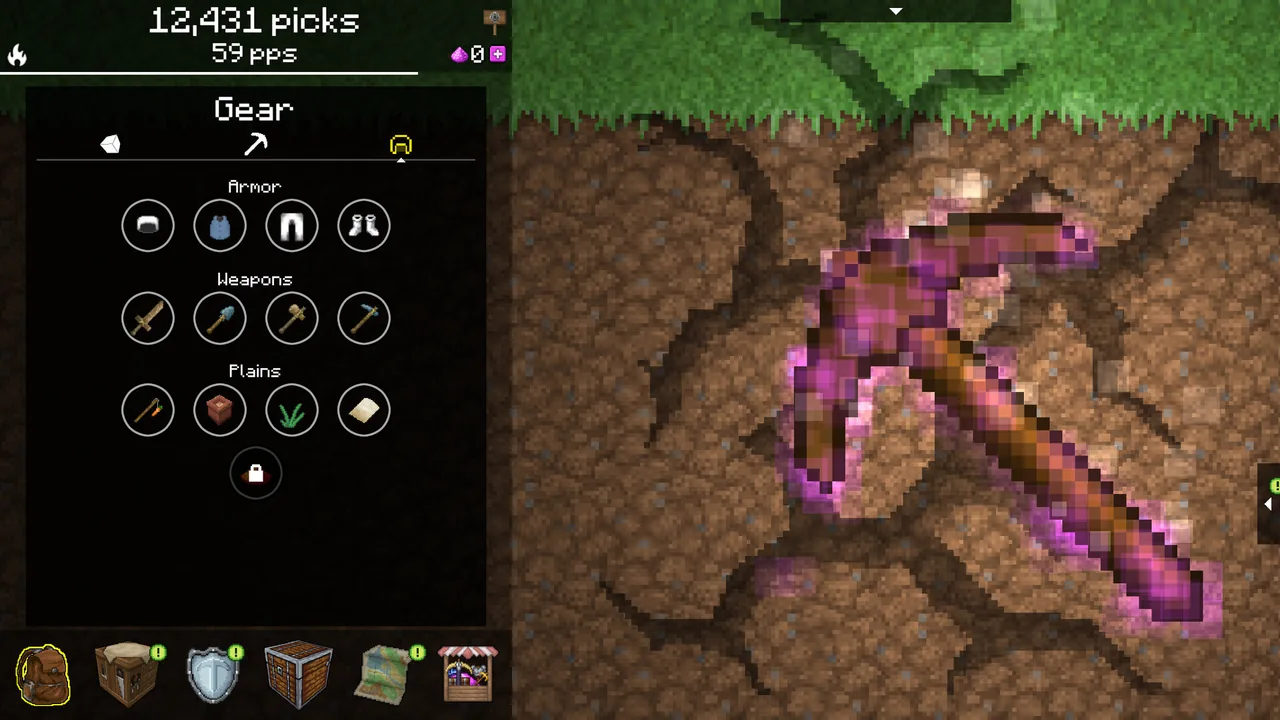
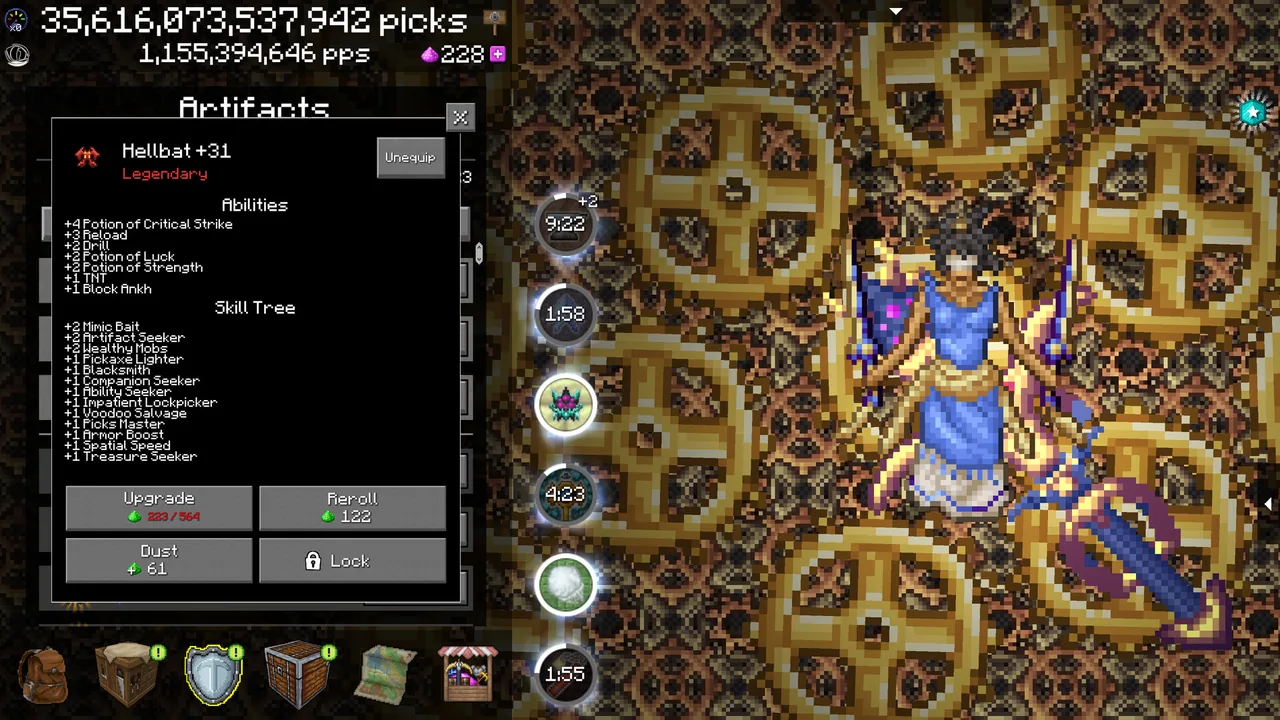
The loop itself earns its reputation quickly. Clicking fills a damage bar against the current block; break enough blocks and the biome yields gems, ore and crafting materials that feed straight back into better pickaxes, armor and furnaces, which in turn break blocks faster. Runaria's biomes are stacked in a rough difficulty order — reviewers describe grinding through the familiar Overworld-style opening before reaching snow, desert, and eventually the alien Moon and Mars zones — and each new biome resets the clicking-power math just enough to make the next equipment tier feel necessary rather than cosmetic. Fiveamp layers timed events on top of that structure, and it's one of the few things reviewers on both sides of the score line agree on: several call PickCrafter's events unusually well-built for the genre, with real rewards and reasons to log in on a schedule rather than the disposable countdown currencies most idle games treat as retention filler. The Ascension Skill Tree, added later, gives the prestige loop a second axis to spend into beyond raw stat multipliers, and four escalating prestige tiers — Extravagant, Transcendent, Preposterous and Legendary — mean there's a genuine long game for players willing to reset repeatedly. Steam's own achievement data backs that up: of PickCrafter's 121 achievements, the earliest cluster sits around 95–96% completion, but the list tails off sharply toward under 1% for its deepest milestones, which is exactly the shape you'd expect from a game with real late-game content rather than one that just runs out of ideas after the tutorial.
The ascension problem
Where the loop runs into trouble is in how progress compounds — or, by several accounts, doesn't. A number of longer-tenured reviewers describe the reward for prestiging as a fixed quantity of reset currency regardless of how far the previous run pushed, rather than a scaling bonus that makes the next climb meaningfully faster. That's a real departure from the genre's better-known reset systems, where Clicker Heroes' Ancients or AdVenture Capitalist's Angel Investor multiplier exist specifically to make each subsequent run shorter than the last. Without that acceleration, PickCrafter's mid-to-late game reads to some players as linear rather than exponential — the same amount of clicking required for increasingly marginal gains, with pickaxe upgrades and skills that "don't feel like they matter" once the numbers get large enough. It doesn't undo the appeal of the opening hours, but it does mean the game asks a lot of patience from anyone chasing its highest achievement tiers, and the review section is fairly consistent that patience stops paying off the way it should.
A shop that never lets up
The other recurring complaint is the one Steam reviewers reserve their sharpest language for: monetisation. PickCrafter is free, and nothing in the reviews suggests the core loop is blocked outright behind a paywall — but several of the store page's most-upvoted reviews describe a shop that surfaces "unlock for real money" options across upgrades and cosmetics persistently enough to overshadow the mining itself, and one of the highest-voted negative reviews specifically calls out an early chest with a roughly two-hour timer and no way to open a second one concurrently, forcing a choice between waiting or paying to skip. Others push back on a free-to-play disclosure common to Steam's F2P listings — the standard note that all content is obtainable through ordinary play — arguing that in practice some items are gated behind spending in a way that undercuts the claim. None of this is unusual for a game with roots in 2014 mobile free-to-play design, where chest timers and shop nudges are standard retention tools rather than a PC-specific add-on. But it lands differently on Steam, next to genre peers that either charge a flat price upfront or, like AdVenture Capitalist, keep every system reachable through play while selling speed rather than access. PickCrafter sits closer to the aggressive end of that spectrum than the restrained one, and it's the single biggest reason the Very Positive aggregate — 82.9% across 3,186 reviews — still has a substantial negative minority attached to it.
Verdict
Five and a half out of ten. The block-mining, pickaxe-prestige loop at PickCrafter's center is still a legitimately good idea, competently paced across its early biomes and backed by an achievement list and Ascension system with real depth for players who stick with it — the four-digit playtime totals scattered through its Steam reviews aren't an illusion. But a decade of mobile free-to-play design habits came along for the Steam port largely unedited: chest timers that gate progress by the clock, a shop that interrupts more than it informs, and a prestige currency several long-time players describe as static rather than accelerating all work against the loop's own best qualities. It's a reasonable free download for anyone curious what kept a mobile mining game running for over a decade, and it clearly still works on the audience that already loves it. Just go in knowing the shop prompts are part of the design, not a bug in an otherwise finished game.
Steam review totals and achievement data checked 11 August 2026.
Pros and cons
Pros
- The core loop of clicking through a biome's blocks, upgrading a pickaxe and crossing into the next zone is simple enough to pick up instantly and still be running hundreds of hours later
- Steam's global achievement stats back up genuine long-term depth — 121 achievements span from 96% completion down under 1%, so there's real late-game content for players who go looking for it
- Timed in-game events are singled out by multiple reviewers as unusually well-designed for the genre, rather than the throwaway currency-and-countdown filler idle games typically ship
- Ascension Skill Tree and four prestige tiers (Extravagant, Transcendent, Preposterous, Legendary) give returning players an actual destination past the first reset
- Genuinely free to install and try, with no purchase required to see whether the loop clicks
Cons
- Chest timers gate early progress hard enough that one of the store page's most-upvoted reviews describes waiting roughly two hours to open the game's second chest, with no way to queue more than one at a time
- The shop surfaces "unlock for real money" prompts across upgrades and cosmetics often enough that several reviewers call the monetisation the loudest thing about the game, not the mining
- Multiple long-time players describe the post-prestige currency as a fixed amount per reset rather than one that scales with progress, so later runs don't noticeably accelerate the way the genre's better resets do
- A first-time tutorial that interrupts free exploration and can't easily be skipped draws specific complaints, on top of periodic boss-battle and lottery-chest pop-ups breaking up the core clicking
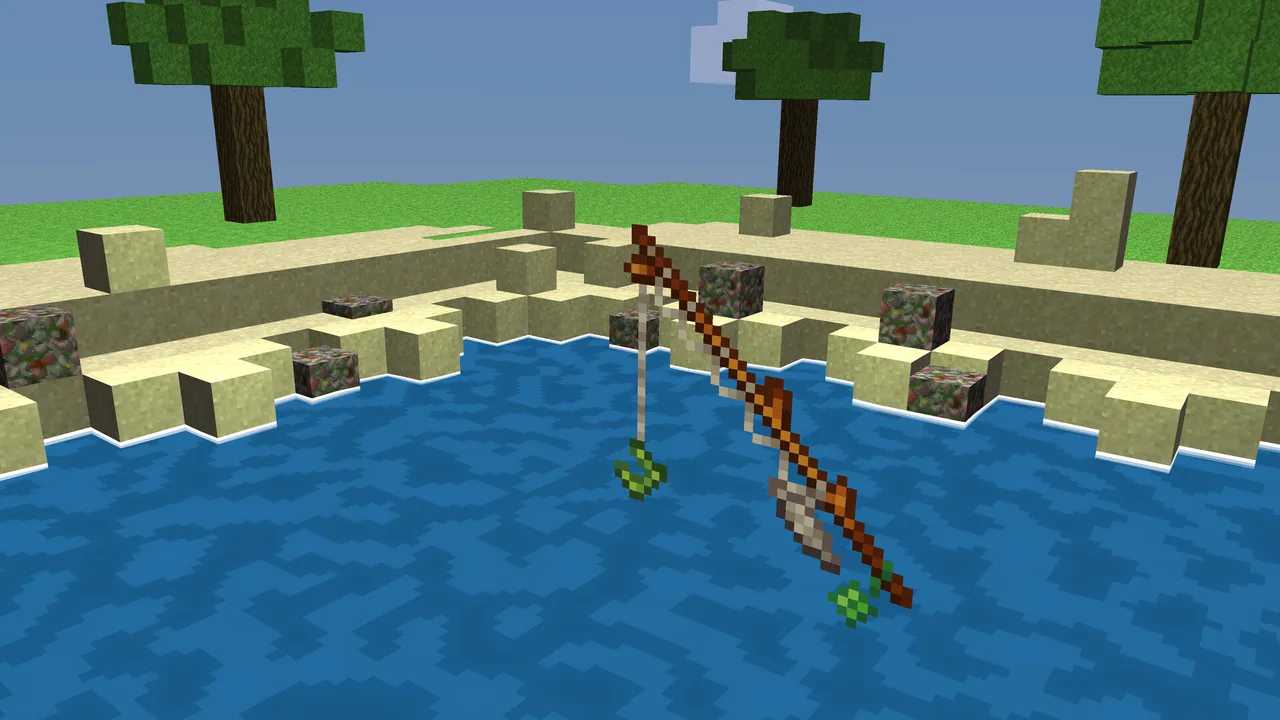
- The pixel-mining, biome-and-pickaxe presentation invites direct Minecraft comparisons in the review section, and PickCrafter doesn't do much to distinguish its own visual identity from the games it's echoing
Screenshots
-
PickCrafterImage: Fiveamp via Steam -
PickCrafterImage: Fiveamp via Steam -
PickCrafterImage: Fiveamp via Steam -
How the review scores each part of the gameWanderer Editorial -
At a glanceWanderer Editorial -
The short versionWanderer Editorial