
Game review
Journeybound Idle
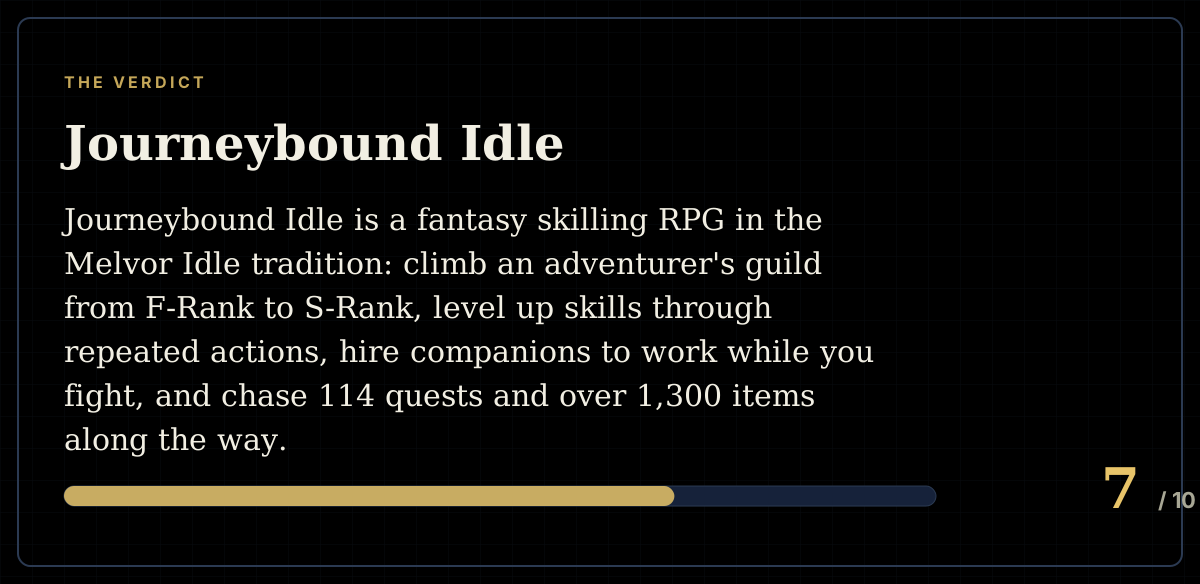
7 / 10
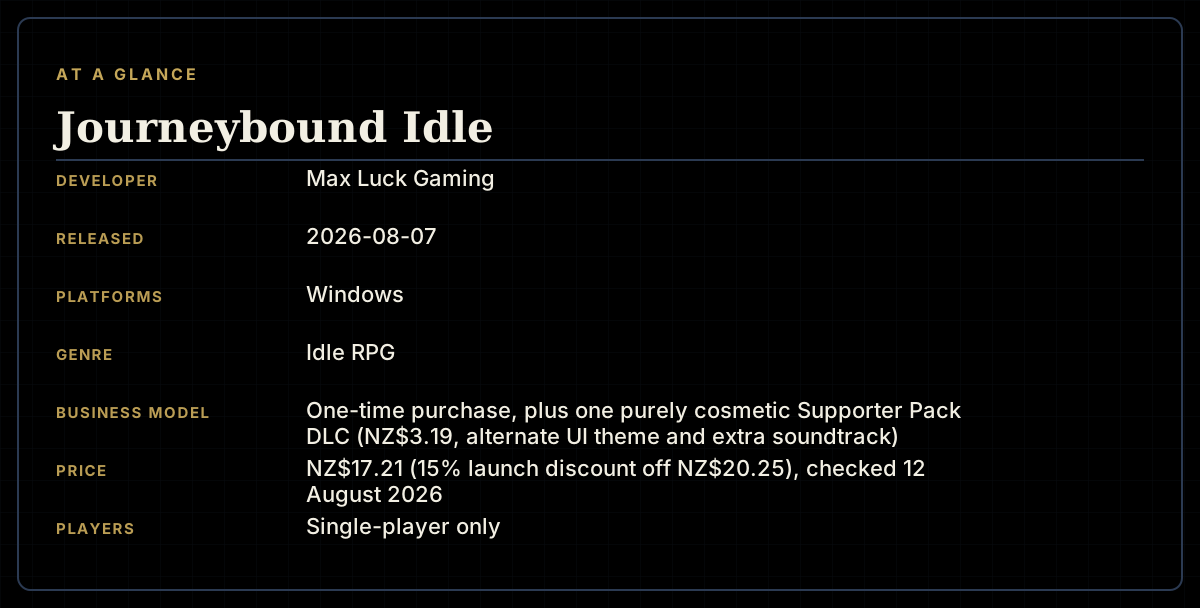
- Developer
- Max Luck Gaming
- Publisher
- Max Luck Gaming
- Released
- 7 August 2026
- Platforms
- Windows
- Genre
- Idle RPG
- Monetisation
- One-time purchase, plus one purely cosmetic Supporter Pack DLC (NZ$3.19, alternate UI theme and extra soundtrack)
- Players
- Single-player only
The short version
Journeybound Idle is a fantasy skilling RPG in the Melvor Idle tradition: climb an adventurer's guild from F-Rank to S-Rank, level up skills through repeated actions, hire companions to work while you fight, and chase 114 quests and over 1,300 items along the way. It released 7 August 2026, and five days later it holds a genuinely rare record for this library — fourteen Steam reviews, every single one positive.
This review reads all fourteen in full, because the sample is small enough to do so honestly rather than because there's nothing to say about it. Several reviewers with hundreds of hours already logged — evidence of significant pre-release access — specifically compare it favourably to Melvor Idle, crediting a queue system that lets players line up several actions in advance as a genuine quality-of-life improvement the wider genre lacks. The most useful dissenting note comes from inside the positive reviews themselves: at least one reviewer flags that combat isn't actually idle, and companions cost gold to work — a genre-authenticity question this review has now seen raised against several 2026 idle RPGs in a row.
Biggest strengths
- A queue system letting players line up multiple gathering or crafting actions in advance draws specific, repeated praise as an improvement several reviewers say the wider idle RPG genre still lacks
- Substantial content at launch: 114 quests, over 1,300 items and 100 Steam achievements, with reviewers well past 100 hours still describing new systems they haven't reached yet
- Companions who gather resources independently, random discovery events unlocking hidden zones or recipes, and a soundtrack singled out by name across multiple reviews
Biggest weaknesses
- At least one detailed reviewer pushes back on the "idle" framing directly: combat requires active engagement rather than running passively, and several skills only progress through a companion that costs gold to employ — worth knowing before assuming this plays like a background-running idler
- The learning curve is real for genre newcomers; more than one reviewer describes the early game as overwhelming before the systems click into place
- The review sample is very small — fourteen reviews at time of writing — so this review's read is a first-week signal rather than a settled long-term verdict, however unanimous it is so far
Who it's for: Melvor Idle fans looking for a genre neighbour with its own systems rather than a clone, and idle RPG players who specifically want a queue system for planning several actions ahead. Less suited to anyone who wants a purely background-running idle experience, since combat and several skills need active management.
Our recommendation: Worth buying now given the unanimous early reception and a developer reviewers describe as actively engaged with the community — just budget for more active play than the "idle" label alone implies, particularly around combat.
7 / 10
Introduction
Journeybound Idle sits squarely in the fantasy skilling-RPG lane that Melvor Idle helped define: train skills through repeated in-world actions, climb a guild's rank ladder, gather materials and craft equipment, and let the numbers do most of the talking. What makes it worth a look five days after its 7 August 2026 release isn't novelty of premise — it's a genuinely rare early record. Every one of its fourteen Steam reviews, across three languages, is positive. This review reads all fourteen, because at this size that's the honest way to represent what's actually being said about the game rather than treating a percentage as the whole story.
The queue system, and why reviewers keep bringing it up
The single most-repeated point of praise across this sample is a specific mechanical addition: a queue system that lets players line up several actions in advance rather than manually reselecting a task every time one finishes. "LOVE the 'QUEUE' system, just what every idler like this needs," wrote the sample's most-upvoted reviewer, who's logged over 500 hours already — a figure that, combined with several other reviewers reporting hundreds of hours in a five-day-old release, strongly suggests meaningful pre-release access through a demo or closed testing period rather than genuinely impossible playtime. That reviewer went further, drawing the genre's standard comparison directly: "It's such an epic idler, way better then Melvor or any other skill-advance idler." Another reviewer, more measured but pointing at the same feature, called it "a solid Melvor-like skilling game" that "does some things differently, such as discoveries and events," specifically praising random events that can unlock hidden zones or secret recipes as a layer Melvor itself doesn't have.
Companions add a second wrinkle worth explaining precisely: rather than every skill training purely through the player's own queued actions, certain skills progress through companions who work independently once hired — for a gold cost, an economic decision layered on top of the usual XP math. Content volume at launch is substantial for a five-day-old release: 114 quests, more than 1,300 items, and 100 Steam achievements, with multiple reviewers well past the 100-hour mark still describing systems they haven't fully explored.
A caveat worth taking seriously, from inside the positive reviews
The most useful critical note in this sample doesn't come from a negative review — there isn't one — it comes from a detailed positive review willing to complicate its own recommendation. "This is a text RPG like Melvor but it's not truly idle. Combat is not idle and other skills require a companion that works for gold... The game is suited for active play because there is a lot of quick quests," the reviewer wrote, adding a clarification later that queueing between skills requires a shift-click most players wouldn't discover on their own. That reviewer's definition of "truly idle" — a game that keeps progressing while closed — is a fair standard, and by it, Journeybound Idle asks for more active attention than its genre label alone implies.
This is worth flagging as part of a pattern rather than a one-off complaint: this review has now covered several 2026 idle RPGs where reviewers raise a version of the same question — whether a game marketed as "idle" actually delivers meaningful passive progress, or leans more on active engagement than the label suggests. It's not a defect unique to this release, but it's a genuinely useful thing for a prospective buyer to know going in, especially anyone specifically shopping for a background-running, walk-away-from-it idler.
Monetisation and early signs of support
On value, this is close to a clean sweep. The only additional purchase is a NZ$3.19 Supporter Pack DLC — an alternate UI theme and eight extra soundtrack songs, explicitly cosmetic with no gameplay effect, which one reviewer bought specifically to support development and praised for the music alone. There's no premium currency, no energy system, and no purchase that touches progression in any way. Reviewers describe the developer as actively engaged with the community, a claim that lines up with the public record: a Discord server opened two weeks ahead of launch, giving the game a visible community-building runway most five-day-old releases don't have.
It's worth being honest about the limits of what this review can currently verify. Global achievement data exists but is too thin at this population size to support any real conclusions about pacing or difficulty — the top achievement sits at 77.2% and several late-game ones at 0%, numbers that reflect a very small early player base rather than a meaningful difficulty curve yet. That will become a more useful signal in a few weeks; for now, this review leans on the review text itself rather than achievement statistics too thin to trust.
Final Verdict
Journeybound Idle earns its unanimous early reception on the strength of real, specific systems — a queue mechanic reviewers who know this genre well rate above Melvor Idle's equivalent, genuine content depth at launch, and monetisation that asks for nothing beyond a single small cosmetic purchase. The honest caveat, raised by the sample's own reviewers rather than manufactured by this one, is that "idle" undersells how much active attention the game — particularly its combat — actually wants. At NZ$17.21 that's a fair price for a game with this much already built into it, and a small, still-growing review sample with a perfect record so far is a genuinely good sign worth acting on rather than waiting out.
Pros and cons
Pros
- A queue system letting players line up multiple gathering or crafting actions in advance draws specific, repeated praise as an improvement several reviewers say the wider idle RPG genre still lacks
- Substantial content at launch: 114 quests, over 1,300 items and 100 Steam achievements, with reviewers well past 100 hours still describing new systems they haven't reached yet
- Companions who gather resources independently, random discovery events unlocking hidden zones or recipes, and a soundtrack singled out by name across multiple reviews
- Monetisation is about as clean as this genre gets: one NZ$3.19 purely cosmetic Supporter Pack DLC, with no gameplay-affecting purchases of any kind
- Reviewers describe the developer as actively engaged with the community, a claim consistent with a public Discord opened two weeks ahead of release
Cons
- At least one detailed reviewer pushes back on the "idle" framing directly: combat requires active engagement rather than running passively, and several skills only progress through a companion that costs gold to employ — worth knowing before assuming this plays like a background-running idler
- The learning curve is real for genre newcomers; more than one reviewer describes the early game as overwhelming before the systems click into place
- The review sample is very small — fourteen reviews at time of writing — so this review's read is a first-week signal rather than a settled long-term verdict, however unanimous it is so far
- Achievement completion data is too thin to draw firm conclusions from yet, with the game only five days old at time of writing
- Price sits above several genre neighbours at NZ$17.21, which at least one reviewer flagged as steep even while ultimately recommending the purchase
Screenshots
-
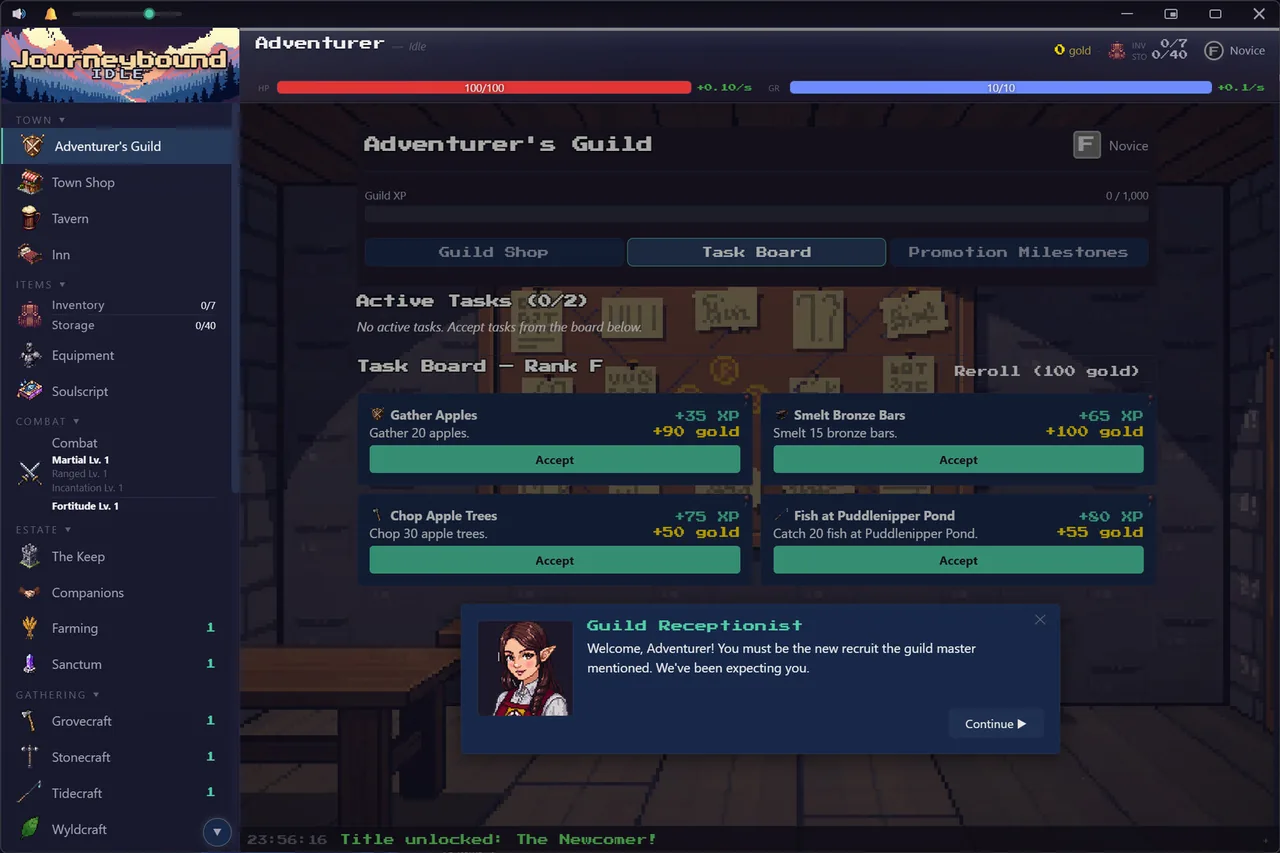
Journeybound IdleImage: Max Luck Gaming via Steam -
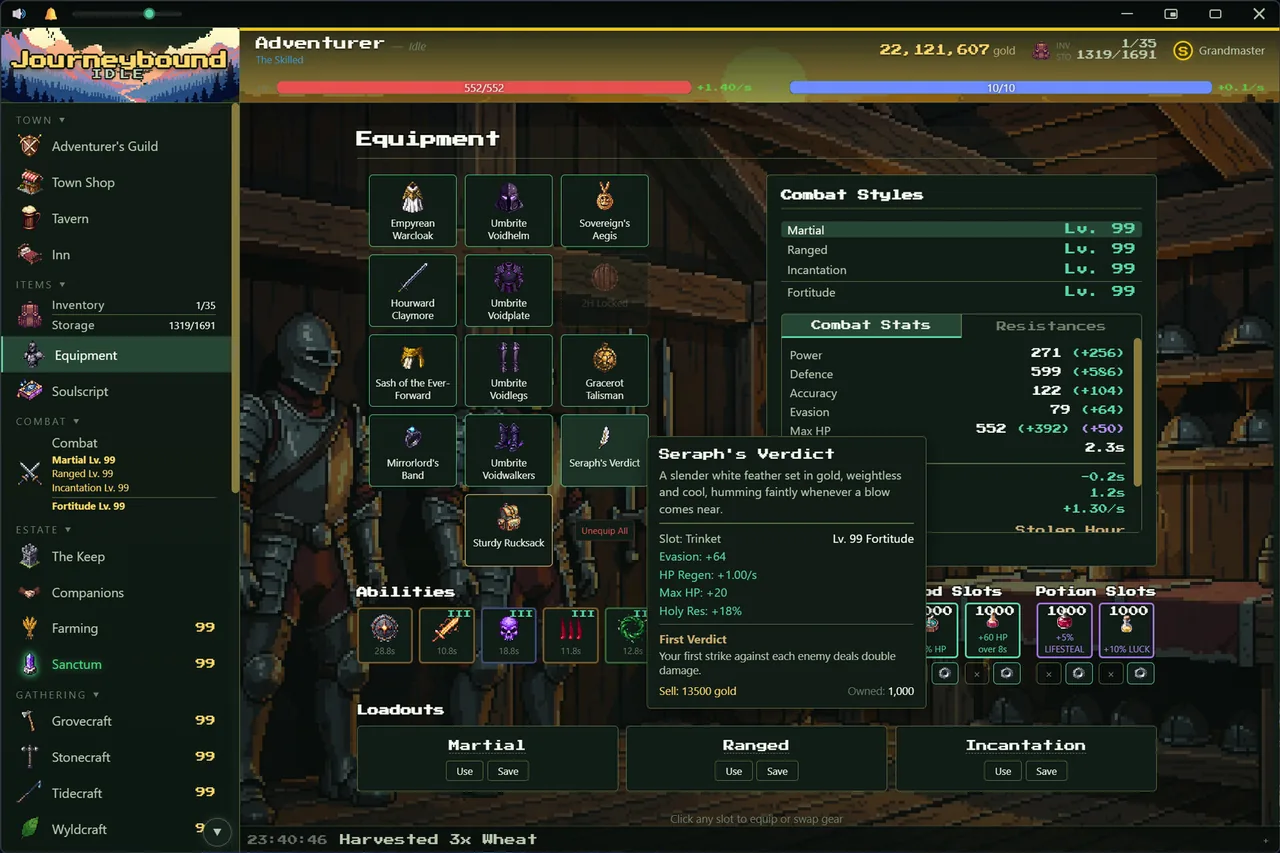
Journeybound IdleImage: Max Luck Gaming via Steam -
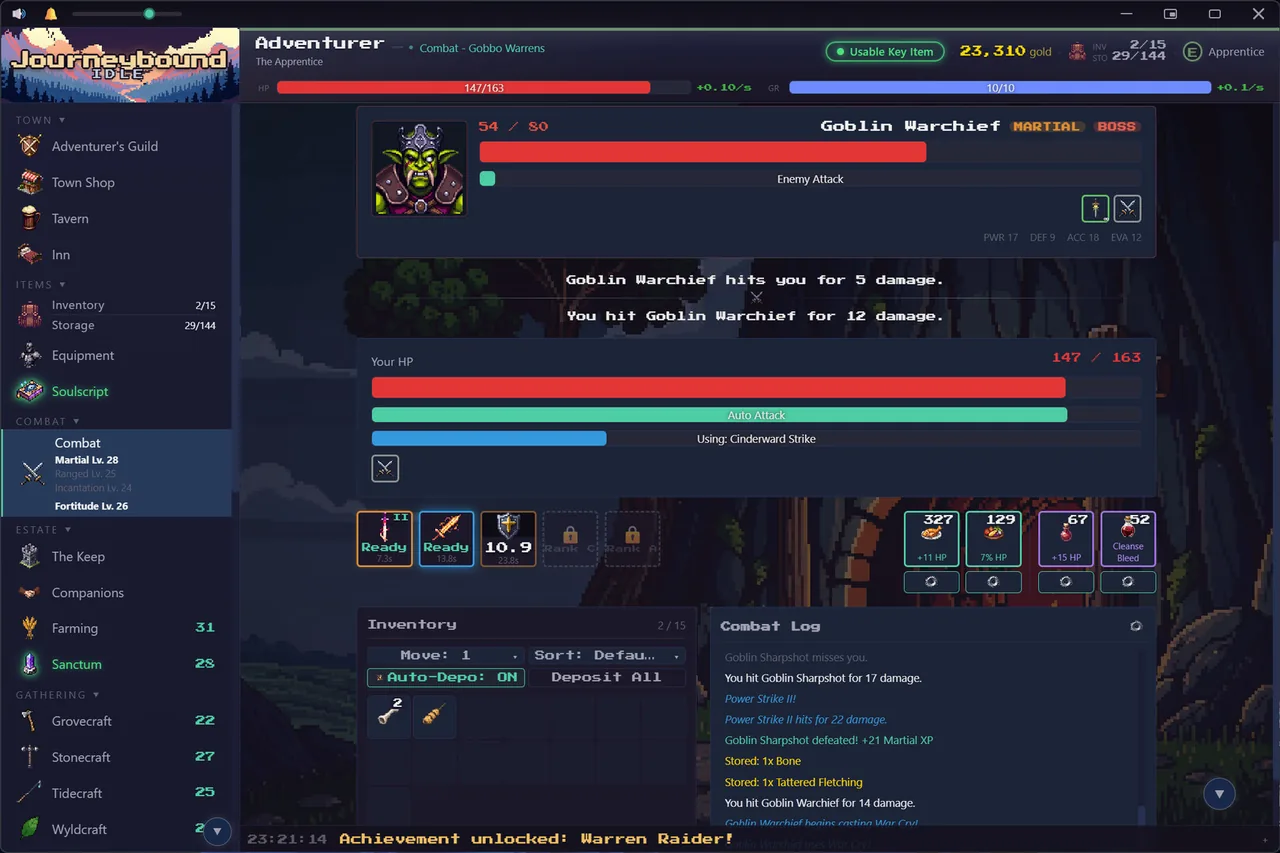
Journeybound IdleImage: Max Luck Gaming via Steam -
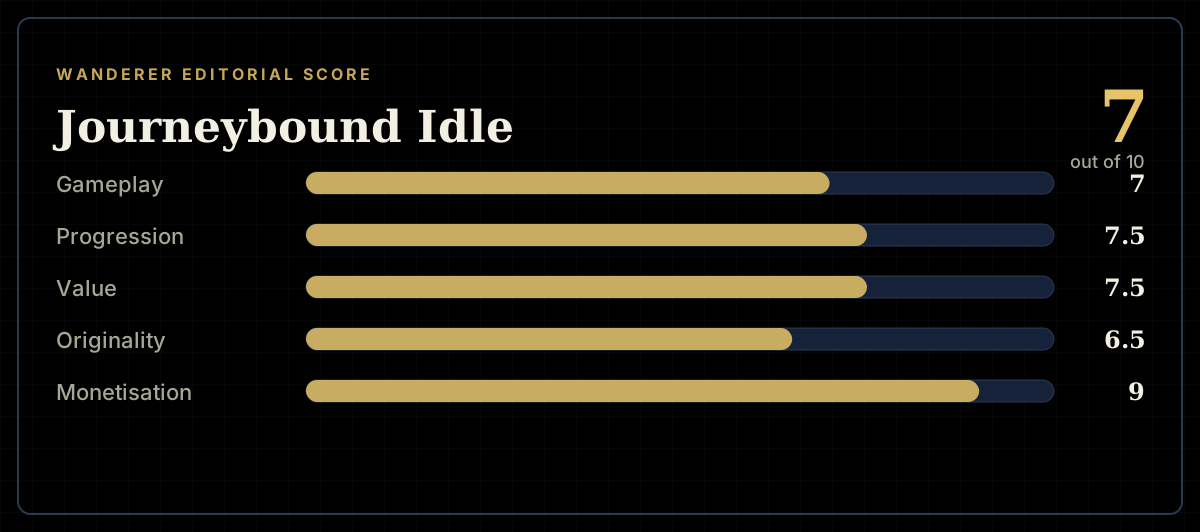
How the review scores each part of the gameWanderer Editorial -
The essentials at a glanceWanderer Editorial -
The short versionWanderer Editorial