
Game review
Hopeless Days
6.1 / 10
- Developer
- Artenith Games
- Publisher
- Artenith Games
- Released
- 19 August 2026
- Platforms
- Windows
- Genre
- RPG
Zero Reviews for a Familiar Horde Shooter
Hopeless Days launched on Steam on 19 August 2026 from solo developer Artenith Games, and at the time of writing it has no user reviews. The pitch is a straightforward one: a forest overrun by the undead, ever-growing hordes, and a player character who levels up and masters weapons to survive as long as possible. It's a genre with an enormous amount of competition on Steam right now, most of it drawing an obvious lineage from the top-down auto-battler-survivor wave that's dominated the space for the past few years — Screenshots confirm Hopeless Days plays from a fixed top-down, isometric-style camera rather than either a first-person view or the roaming top-down-with-orbiting-camera style common to the biggest names in the survivor-clicker subgenre, which is a meaningful structural choice even before any other content is weighed.
Waves, Weapons, and a Level-Up Loop
The store page describes fast, fluid 3D combat against hordes that test aim, movement, and decision-making, layered with a level-and-attribute progression system that lets the player adapt their build to face stronger enemies as waves escalate. Player input here isn't automated the way it is in the survivor-clicker subgenre — the store page is explicit that reflexes, aim, reloading at the right moment, and active movement all matter, which puts Hopeless Days closer to a traditional horde shooter with RPG-style leveling bolted on than to the passive-build genre it might get lumped in with by its RPG tag. Temporary mid-battle power-ups are also promised as a way to swing a losing fight, a standard but reliable tool in this kind of design. The store page's description of weapons having "distinct stats, handling, and effects" — rather than just stats and handling — is borne out directly by screenshots: individual weapons carry their own names and attached status effects rather than being generic reskins, with a shotgun named "Skull Spreader" seen setting a cluster of zombies alight and a sniper rifle named "Eclipse Hunter" paired with a separate frost ability icon used to slow a swarm before picking it apart at range. That's a genuinely more specific implementation of "weapon effects" than the vague marketing phrase implies on its own. Notably absent from the feature list is any mention of a persistent currency, unlockable loadout, or meta-progression that carries over between individual survival runs beyond the achievement and weapon-mastery tracks themselves, which — if accurate — would put Hopeless Days closer to a single continuous session structure than the run-based, permadeath-and-restart loop that's become the genre default since the survivor-clicker boom. A wave counter reading "Rodada 3" (Portuguese for "Round 3") in one screenshot at least confirms the Portuguese-Brazil localisation reaches into the actual HUD text, not just the store page and menus.
Weapon Mastery Tracks Confirmed by the Achievement List
The store page's "master the arsenal" pitch is vague on its own, but the game's 35-entry achievement list fills in real detail: named tiers for "Gunslinger," "Rifleman," and "Sniper," each split into Beginner, Experienced, and Advanced levels, confirm at least three distinct weapon-mastery tracks that scale independently of the player's overall character level. That's useful, checkable evidence that "weapon mastery" is a real per-weapon-class system with its own progression ladder rather than a single generic upgrade meter, and with 35 achievements total against only nine named so far in the highlighted list, there's likely at least one more weapon class or mastery track not yet publicly detailed. Sitting apart from those three ladders is a tenth highlighted achievement, "First Blood," which reads as a deliberately easy, first-kill milestone rather than part of any mastery track — a common structural choice in survival shooters to give a new player an immediate sense of progress before the steeper Beginner-to-Advanced grind on each weapon class kicks in.
Accessibility Features Worth Naming
One thing that stands out clearly in Hopeless Days' own Steam category tags, easy to miss but worth naming directly: the game ships with Camera Comfort options, custom volume controls, and is explicitly playable without timed input. For a fast-paced horde shooter that markets itself on reflexes and quick decision-making, offering a way to play without punishing time-sensitive prompts is a genuinely useful inclusion for players with motor or processing-speed limitations, and it's the kind of detail that a solo developer including without fanfare deserves to be pointed out rather than left buried in a tag list nobody reads. One rougher edge visible in a screenshot: an on-screen FPS counter is present during ordinary combat, the kind of debug overlay that's usually stripped out before a full release rather than left on by default — not a serious issue on its own, but a small sign that some launch polish may still be pending.
Price, Scope, and a Crowded Genre
At NZ$8.99, Hopeless Days sits at a fair price for a single-player-only, Windows-exclusive horde shooter from a solo developer, with full audio support in English and Portuguese (Brazil) and no other listed language options. There's no multiplayer, no controller-support flag in the category list, and nothing on the store page suggesting meta-progression that persists between individual survival runs beyond the achievement and weapon-mastery tracks — a narrower scope than many of its more elaborate competitors in the crowded horde-survival space, for better or worse. The genre it's entering is thick with entrenched, long-running competitors that have years of content updates behind them, and a launch with zero reviews and a fairly conventional feature list is going to have to earn attention on execution quality alone rather than any single standout hook.
Verdict
Hopeless Days is a competent-sounding pitch in an extremely crowded genre: a top-down horde shooter with named, effect-carrying weapons confirmed by screenshots, real per-weapon mastery tracks confirmed by its own achievement list, a level-and-attribute system, and a welcome, quietly-included set of accessibility options. None of that is enough on its own to stand out against the sheer volume of horde-survival games already on Steam, and with zero player reviews at launch, there's no outside confirmation yet of whether the core shooting feels good or the wave-pacing holds up over a long run. At NZ$8.99 it's a low-risk purchase for genre fans specifically drawn to a more traditional shooter perspective over the now-dominant auto-battler-survivor template, but it isn't doing enough on paper to justify prioritising it over its many established competitors.
Screenshots
-
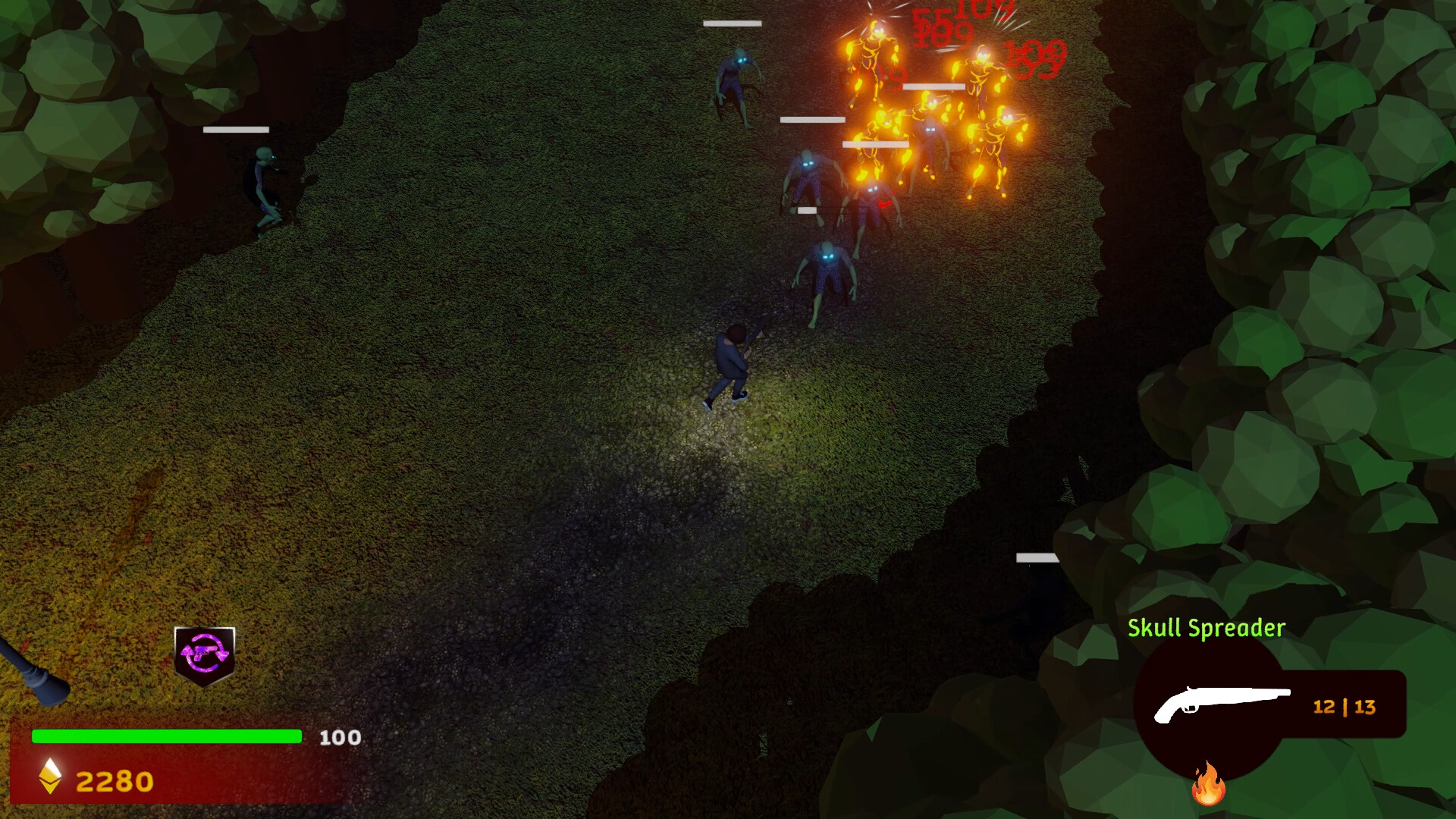
A named weapon, the Skull Spreader shotgun, setting a cluster of zombies alight during a top-down firefight.Steam store page -
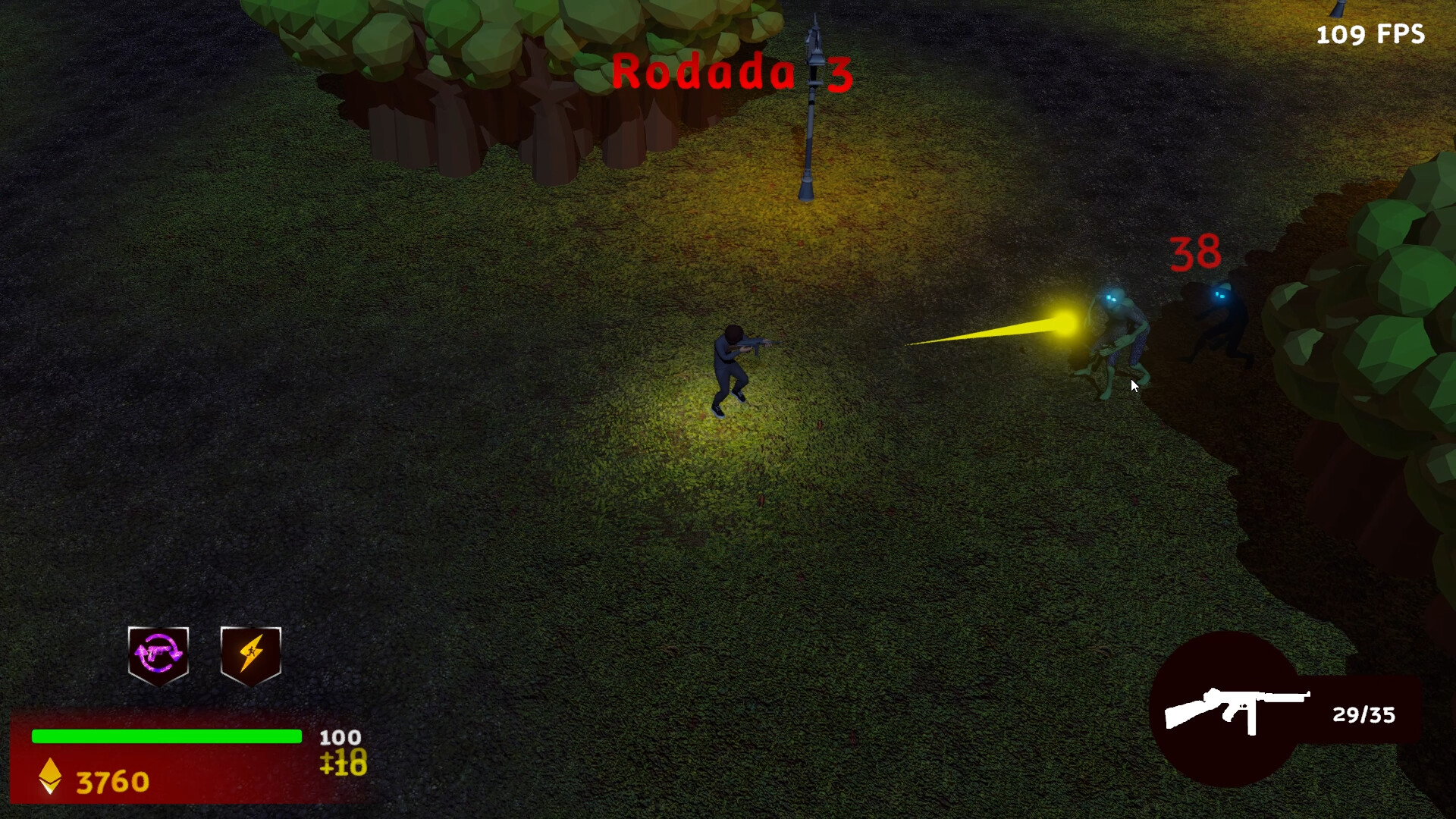
Round 3 (labelled in Portuguese, \"Rodada 3\"), with a visible FPS counter, ability icons, and a levelling-up notification during the fight.Steam store page -
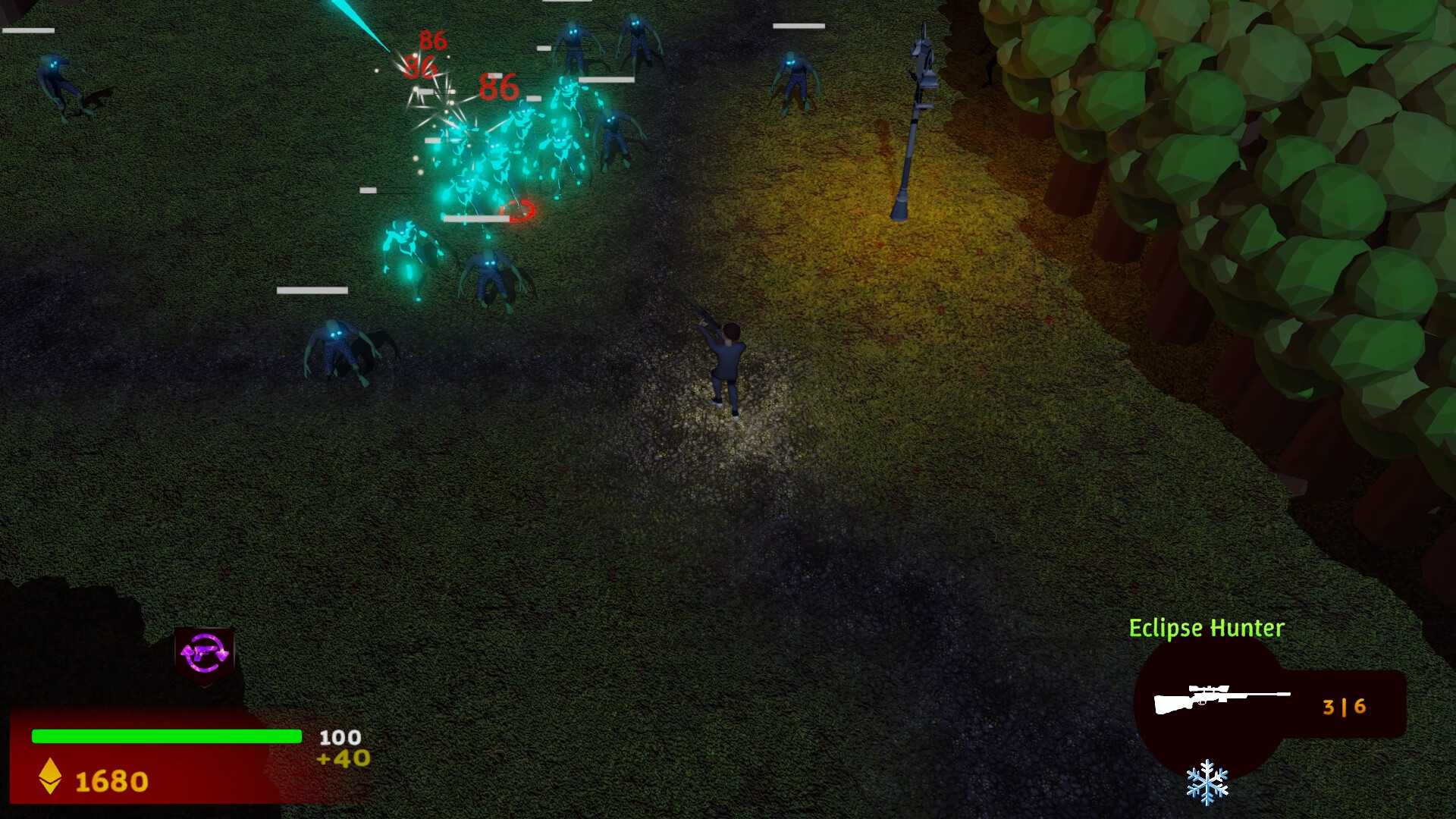
The Eclipse Hunter sniper rifle, paired with a frost ability icon, tearing into a glowing elite zombie swarm.Steam store page