Game review
Divine Descent
6 / 10
- Developer
- 青灯独酌
- Publisher
- 青灯独酌
- Released
- 19 August 2026
- Platforms
- Windows
- Genre
- RPG
Zero Reviews for a Grim, Bow-Focused Roguelike
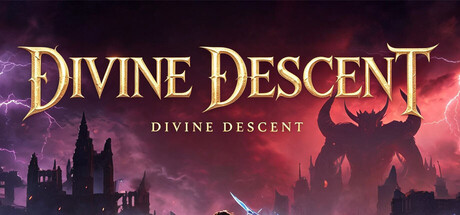
Divine Descent launched on Steam on 19 August 2026 from solo developer 青灯独酌, and at the time of writing it has no user reviews, so everything below reflects the store page's own framing rather than any confirmed player experience. The premise leans hard into a grim, fallen-pantheon fantasy: the gods have fallen, their shattered divinity curdled into Twelve Demon Kings occupying every checkpoint of the mortal world, and a hundred years of warriors have gone in and never returned. The player takes on the archer sent in next, across a stated 60 levels culminating in a fight against those twelve named bosses, with an endless mode unlocked afterward for players who want to keep pushing.
Shoot, Retreat, Predict: A Kiting-Focused Combat Loop
Where Divine Descent tries to distinguish itself from the broader top-down roguelike-action crowd is in its explicit design philosophy around ranged combat: the store page states plainly that "your job isn't to rush in blindly — it's to shoot while retreating, chain skills together, and predict their moves," framing the archer's kit as fundamentally reactive and positional rather than an aggressive damage-race. That's a meaningfully different pitch from the dash-and-melee approach many of its genre peers default to, and it tracks with the archer class choice specifically — a bow-based protagonist naturally rewards distance management and prediction over trading blows up close. The store page also promises each of the twelve boss encounters has "their own skills and weaknesses, so no two battles are alike," name-dropping a bloodthirsty Fire Demon King, a soul-devouring Ice Demon King, and a lightning-wielding Poison Demon King as examples — though it's worth flagging directly that the achievement list actually labels these same encounters "Ghost Kings" rather than "Demon Kings," a naming inconsistency in the store text and in-game systems that's most likely a translation artifact from the original Chinese rather than a sign of sloppy design, but worth noting for players who might otherwise wonder if they're missing a distinct enemy category. Actual gameplay screenshots complicate the pure "shoot and retreat from one boss" framing somewhat: rather than one-on-one duels, the levels shown are dense horde encounters — skeleton knights and archers, ghosts, zombie-like mobs, and in one later screenshot a scorpion-type enemy, all converging on the player at once with a visible countdown timer, closer to a wave-survival structure than a series of isolated boss fights. That's not necessarily a contradiction of the store page — the twelve named kings are likely stage-capping encounters at the end of a level's horde-clearing gauntlet rather than the entirety of each level — but it's a meaningfully different moment-to-moment experience than "boss duel" framing alone would suggest, and worth setting expectations around directly.
Twelve Named Bosses Confirmed by the Achievement List
The store page's boss-variety claim is at least partially checkable against the game's own 13-entry achievement list, which names ten of the twelve promised encounters directly: Crimson Gold Ghost King, Flame Ghost King, Ice Ghost King, Soul Devourer Ghost King, Wind Spirit Ghost King, Bloodthirsty Ghost King, Thunder Ghost King, Venom Ghost King, Golden Ghost King, and a separate Skeleton King that doesn't fit the elemental naming pattern of the others — suggesting it may function as an early or optional boss outside the main twelve-king gauntlet. That's genuinely useful, checkable evidence that the twelve-boss structure isn't just marketing copy; ten named, killable targets exist as trackable Steam achievements, with the remaining three achievements presumably covering completion, endless-mode, or other non-boss milestones. For a NZ$4.79 game, having each major boss individually named and confirmed via achievements is a reasonable substitute for the player-review confirmation this launch doesn't have yet.
A Roguelike Reward Loop Built Around Three Choices Per Level
Progression follows a familiar but sound roguelike structure: clearing a level offers a choice of three random rewards — upgrading an existing skill, socketing a rare gem, or claiming a "red legendary item" — which is a clean, low-friction decision point repeated across all 60 levels rather than a sprawling skill tree the player has to plan out in advance. The three-tier reward naming (regular upgrades, gem sockets, and a distinctly named "legendary" tier) at least implies some meaningful rarity stratification in the loot table, though without player data it's impossible to say from the outside how often the higher tiers actually appear or how build-defining the legendary items turn out to be in practice. The endless mode that unlocks after all 60 levels, promising "stronger monsters, higher drops," is a standard but sensible way to extend a roguelike's replay value once its authored content is exhausted, though it's also the kind of feature that's easy to describe in one line on a store page and much harder to actually balance well for indefinite play.
Price, Scope, and Localisation
At NZ$4.79, Divine Descent is priced as a light, low-commitment roguelike, and its store listing claims a wider localisation footprint than many single-developer games at this price manage — interface support in English, French, German, Simplified Chinese, and Traditional Chinese. That claim is worth weighing against what's actually visible on screen, though: every one of the game's own official screenshots shows an entirely Chinese-language HUD — level counter, gold counter, timer, and menu button all rendered in Chinese with no English shown anywhere — which, while not proof the English localisation is broken or absent in practice, is a real gap between the store page's promise and the evidence the developer has chosen to show off, and a reasonable point of caution for English-speaking players deciding whether to buy sight-unseen. The accessibility and category footprint is otherwise fairly minimal: single-player only, custom volume controls, a keyboard-only option, and save-anywhere support, but no controller-support flag and no timed-input accommodations listed, which is worth flagging for a genre that's typically reflex-heavy by design. With 60 authored levels plus an endless mode, the stated scope reads as reasonably substantial for the price, though a zero-review launch means none of the difficulty curve, boss-fight balance, or loot-drop pacing claims have been tested by anyone outside the developer yet.
Verdict
Divine Descent pitches a grim, twelve-boss roguelike built specifically around kiting and prediction rather than aggressive melee play, with a checkable, achievement-confirmed roster of ten named Ghost Kings, a clean three-choice reward loop across 60 levels, and unusually broad four-language localisation for a NZ$4.79 solo release. None of its difficulty balance or endless-mode pacing has outside confirmation yet, and a naming inconsistency between "Demon Kings" in the marketing copy and "Ghost Kings" in the achievement list, alongside every official screenshot showing an entirely Chinese-language HUD despite a claimed English localisation, are small but real signs of rough edges. For roguelike fans specifically drawn to a bow-and-kite playstyle over the genre's more common dash-and-melee default, it's a low-risk, thematically coherent pickup — but with zero reviews at launch, its actual difficulty tuning, boss variety, and the real-world quality of its English interface all remain open questions rather than confirmed strengths.
Screenshots
-
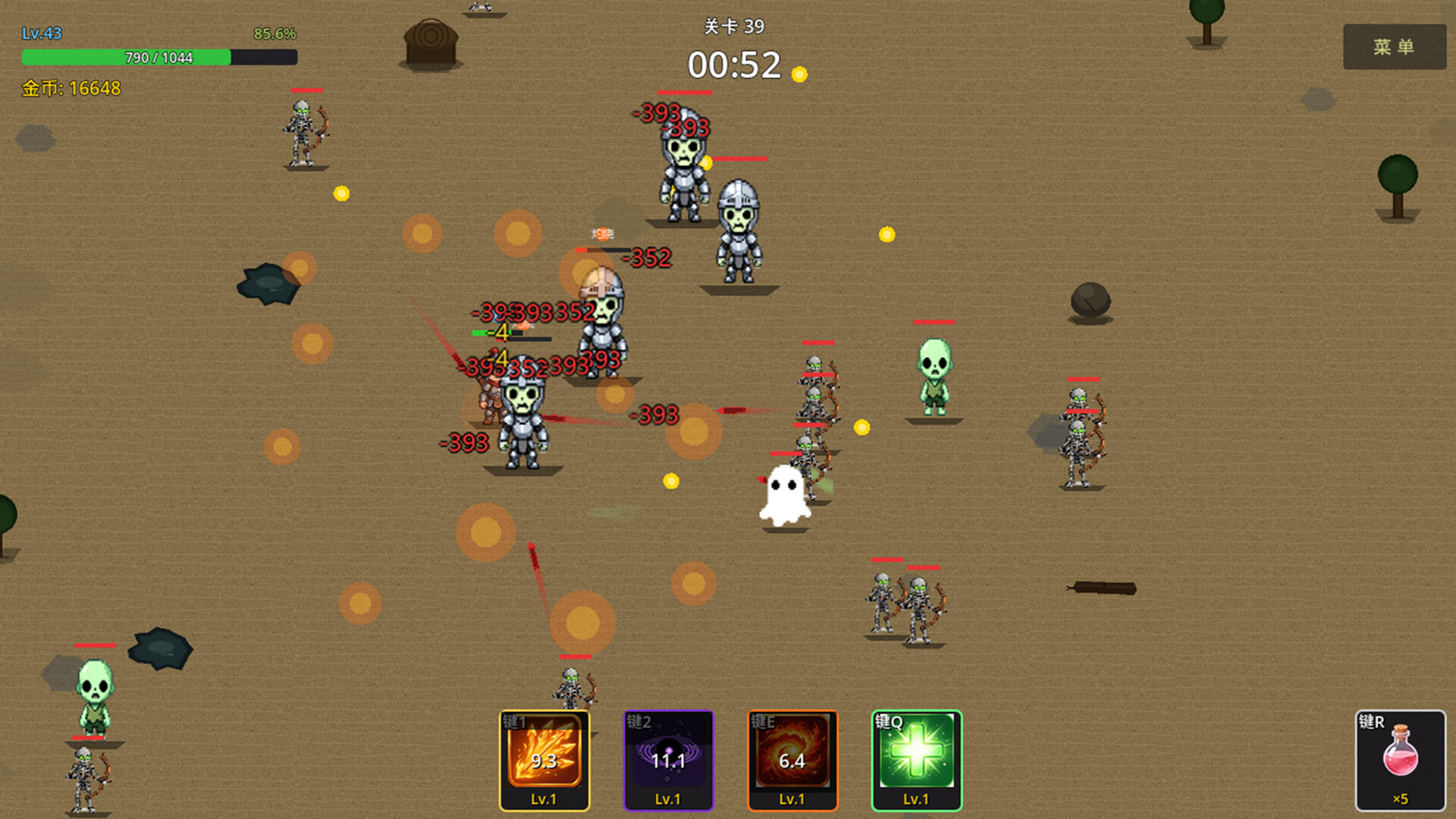
A level-39 wave-clear encounter against skeleton knights, archers, and ghosts, with the game's Chinese-language HUD fully on display.Steam store page -
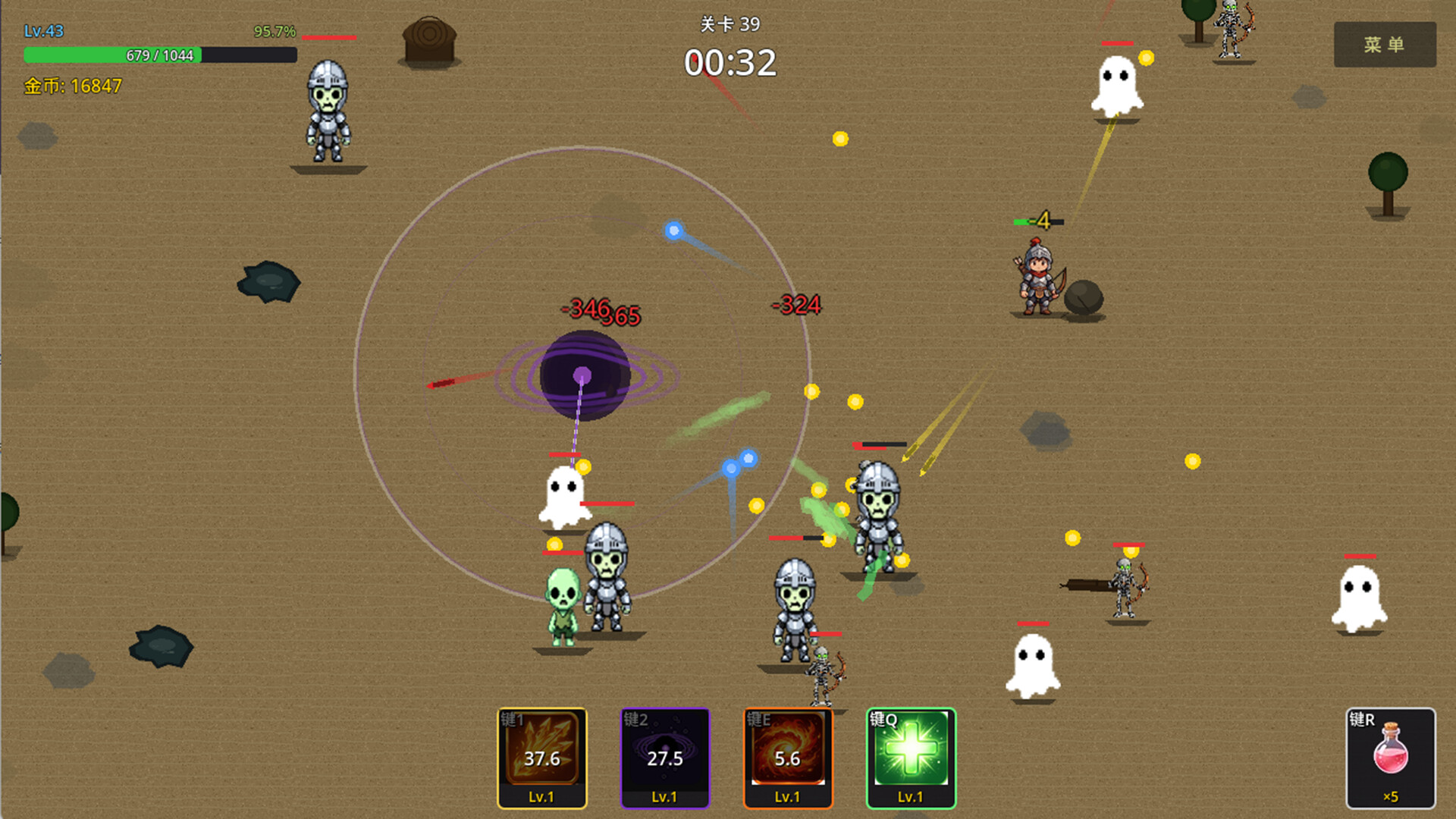
An area-of-effect skill landing on a cluster of enemies for 300-plus damage each, with cooldowns visibly ticking down on the ability bar.Steam store page -
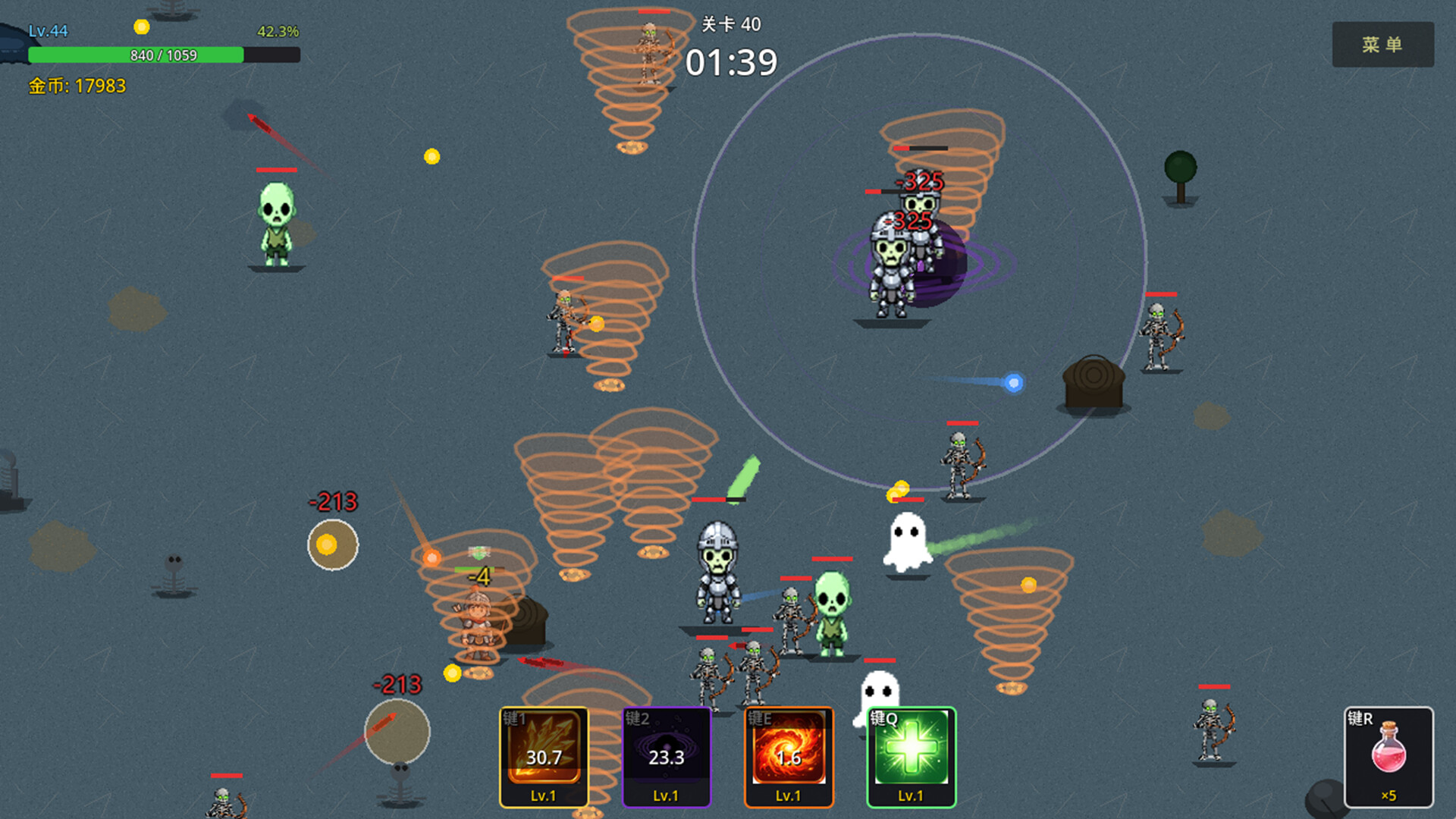
A busier, later encounter with tornado-style projectiles and a wider enemy mix, including a scorpion-type foe not shown in the earlier screenshots.Steam store page