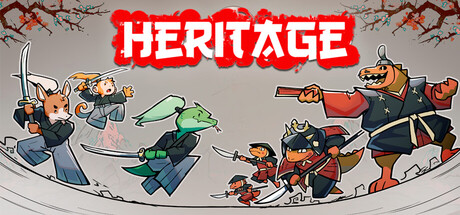
Game review
Heritage
6 / 10
- Developer
- Big Three Games
- Publisher
- Big Three Games
- Released
- 11 August 2026
- Platforms
- Windows
- Genre
- RPG, Simulation, Strategy
- Monetisation
- One-time purchase, no in-game purchases listed
- Players
- Single-player
The short version
Heritage, released 11 August 2026 by Big Three Games, is an auto-battler roguelike built around a reincarnation cycle: choose scrolls, skills and equipment, join one of ten sects, and try to fell the Lizard King across repeated runs. It sits Mostly Positive with English-speaking players, 73.8% across 42 reviews as of this check, and the reception splits along a specific, consistent line. Fans praise genuine build variety and a "labor of love" level of polish for a roguelike auto-battler, several saying it's kept them hooked run after run. Set against that, a large share of reviewers on both sides of the recommendation line independently report seeing everything the game offers, including fully maxing its meta-progression, within about four hours — a very short runtime for its price. Separately, at least one detailed review reports that accessibility problems present in the pre-release demo — rapid camera shake and flashing effects with no option to disable them — remain unaddressed at launch, and that the game has no way to pause or access a menu mid-run.
Biggest strengths
- Reviewers consistently praise genuine build variety across scrolls, skills and sect choices, several describing real satisfaction in making unconventional skill combinations work and calling the attention to detail a clear "labor of love"
- The reincarnation-based meta-progression, which preserves some advantages between runs, draws specific praise for making repeated attempts feel meaningfully connected rather than starting completely from scratch each time
- Several reviewers who played the pre-release demo report noticeable polish improvements by the full release, and cosmetic unlocks for character appearance add a further small layer of replay incentive
Biggest weaknesses
- A large, consistent share of reviewers across both the positive and negative samples independently report seeing everything the game currently offers, including maxing its meta-progression unlocks, within roughly four hours, several explicitly calling this expensive per hour of entertainment relative to its price
- At least one detailed review reports that accessibility problems present since the pre-release demo remain unfixed at launch: rapid zooming and screen-shake effects, along with flashing lights, occur frequently with no setting to disable them, a real concern for players prone to motion sickness or photosensitivity
- The game has no pause function and no way to access a menu while a run is in progress, forcing players to force-close the game entirely if they need to step away mid-match
Who it's for: Auto-battler and roguelite fans who want tight, build-focused runs and don't need dozens of hours of content to feel a purchase was worthwhile.
Our recommendation: Worth its price for a handful of genuinely enjoyable evenings if short overall length doesn't bother you; skip if you're sensitive to screen shake or flashing lights, since there's currently no way to turn those effects off.
6 / 10
Introduction
Heritage, released 11 August 2026 by Big Three Games, casts the player as Oro, a serpent trapped in a cycle of reincarnation, tasked with assembling scrolls, skills and equipment across repeated runs to eventually topple the Lizard King who has seized the land of Animount. It sits Mostly Positive with English-speaking players — 73.8% across 42 reviews — and reading through that sample turns up a specific, recurring split: real enthusiasm for the moment-to-moment build variety, set against an unusually consistent complaint that there simply isn't very much game here once you've seen what it has to offer.
Genuine build variety that keeps reviewers coming back
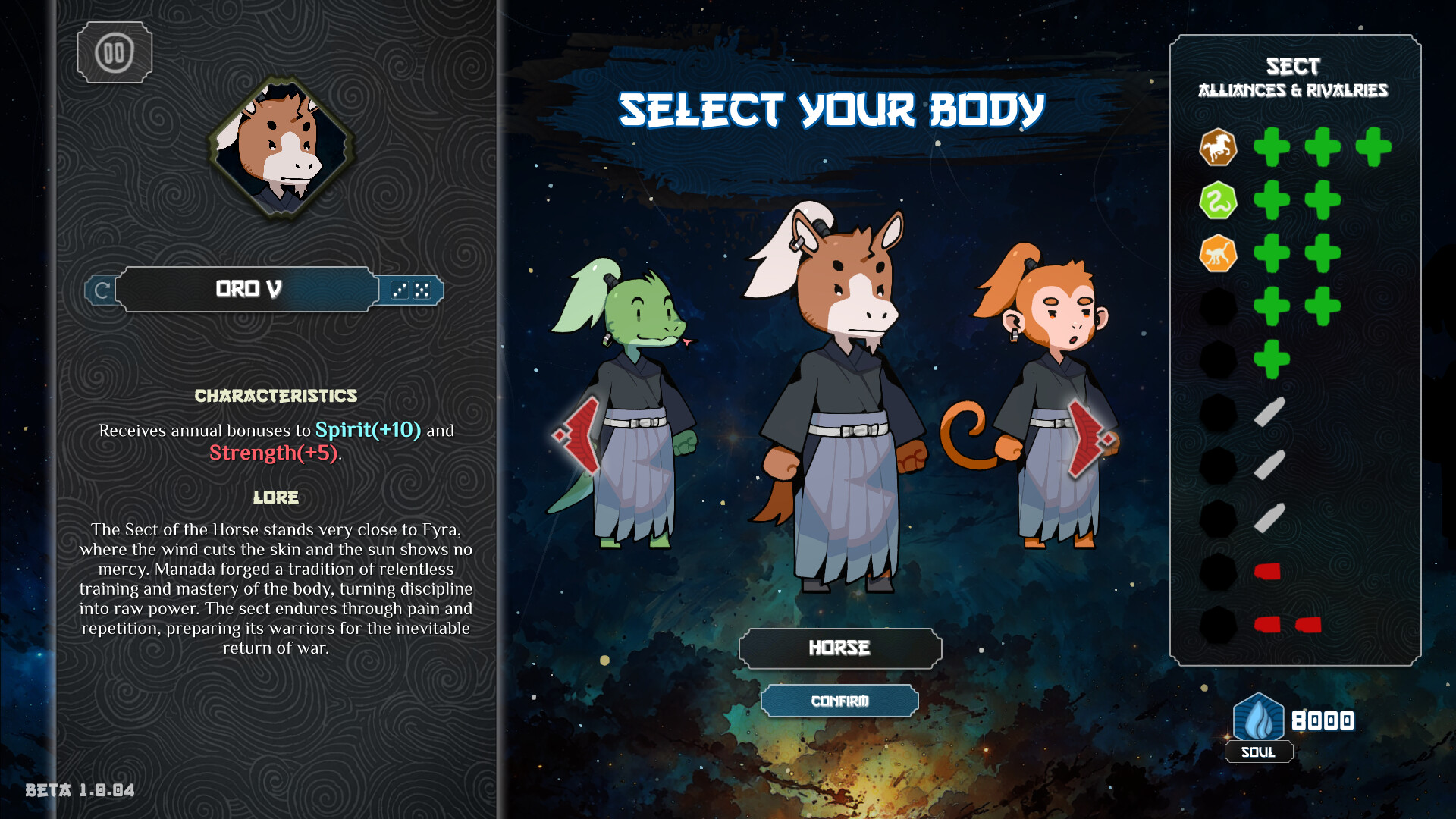
The praise here is specific rather than vague. Reviewers repeatedly describe real satisfaction in experimenting with unconventional skill combinations across ten playable sects, and several specifically credit the reincarnation-based meta-progression with making repeated runs feel connected rather than starting from zero each time. One detailed review calls the attention to detail evident throughout "a labor of love," and multiple reviewers who tried the pre-release demo report noticeable polish improvements by the time of full release. For players who specifically want a tight, build-focused auto-battler roguelike, this is a real, repeatedly confirmed strength.
A large share of reviewers say it's over in about four hours
Set against that enthusiasm is the most consistent complaint in this review's research, and it appears on both sides of the recommendation line rather than only from critics. Multiple reviewers independently report completing the game, including fully unlocking its meta-progression, in roughly four hours — one detailed account describes finishing all three end-boss difficulties and unlocking everything in that time, explicitly calling it expensive per hour of entertainment even while saying they enjoyed it. A separate reviewer states they'd bought every available meta-progression upgrade in under an hour, aside from a single expensive one requiring one more run. Even clearly positive reviews echo this: one recommends the game while noting there "isn't much content" and that players will "see everything" in about four hours. That kind of overlap between fans and critics on a specific, measurable claim is a stronger signal than either group's opinion alone.
A persisting accessibility problem, and no way to pause
Beyond length, this review found a specific, serious accessibility concern. One detailed reviewer, who also tried the pre-release demo, reports that rapid camera zooming and shaking effects, along with flashing lights, occur frequently during play with no setting available to reduce or disable them — and that this was already a known problem in the demo that remains unaddressed at launch. That's a real barrier for players prone to motion sickness or photosensitivity, not a matter of taste. Separately, a different reviewer reports the game has no pause function and no way to open a menu while a run is active, meaning stepping away requires force-closing the game entirely — a basic quality-of-life gap for a 2026 release.
Disputed balance: broken open, or well-tuned?
Reviewers genuinely disagree about how well the game's core numbers hold up. One detailed critical review argues that a modest understanding of the game's underlying stat-scaling math is enough to trivially break its difficulty, and separately describes its skill pool as wildly inconsistent — ranging from actively harmful choices to ones so strong they remove any real challenge. That same review specifically doubts that the game's advertised five-tier ascension difficulty system meaningfully changes this given how quickly base-difficulty runs can be solved. Directly contradicting this, a separate reviewer with roughly nineteen hours logged specifically praises "a nice level of both skill difficulty and knowledge difficulty." This review cannot resolve which account better reflects the typical experience and reports both positions as genuinely held, rather than treating either as more authoritative.
A meta-progression system that may pad rather than reward
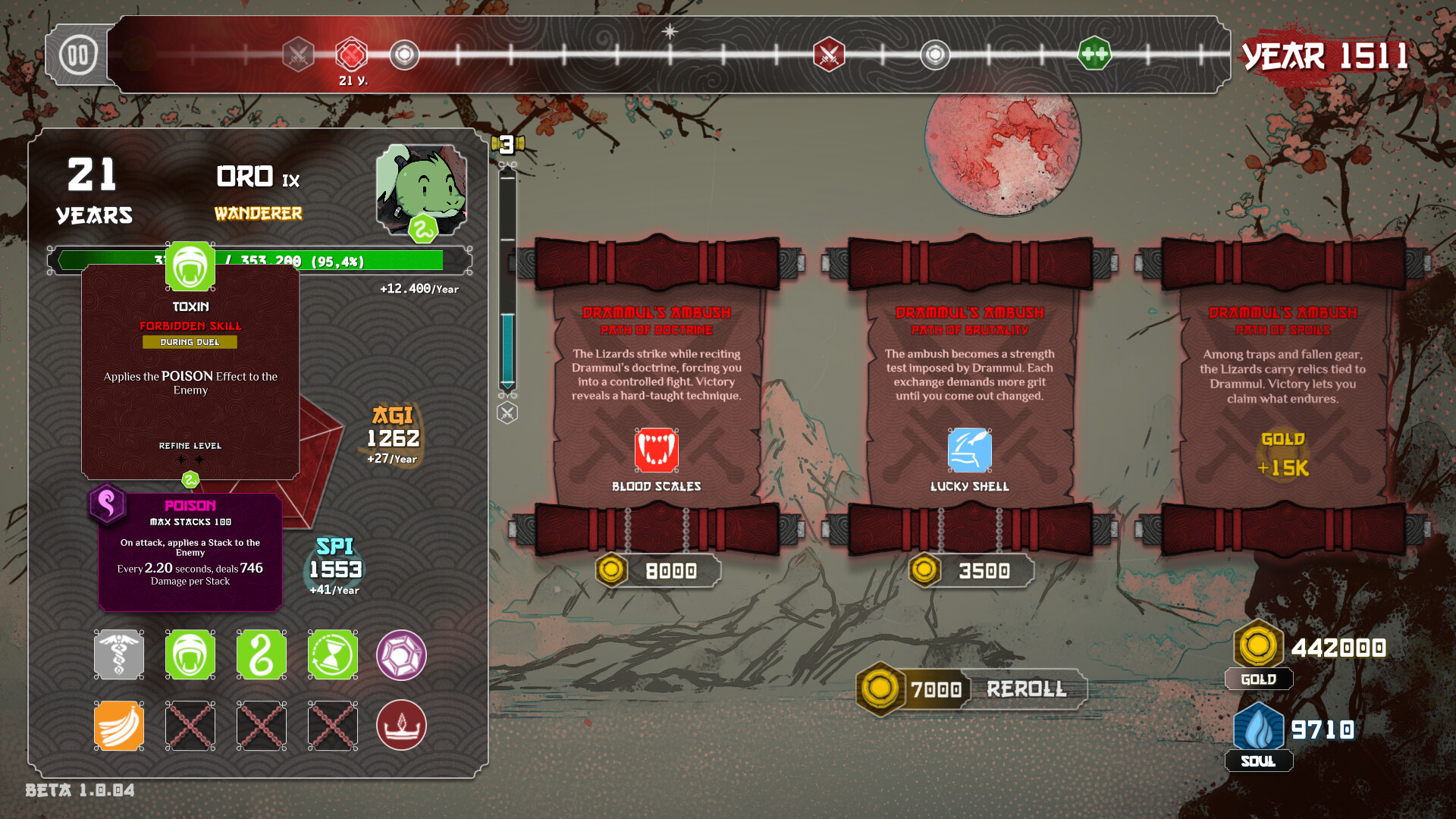
A more specific complaint concerns what the game's between-run unlocks actually do. One reviewer draws a useful distinction between two kinds of meta-progression on offer: horizontal unlocks that add genuinely new content and options to work with, and vertical unlocks that simply make a starting run more powerful than it would otherwise be. That reviewer argues the vertical half doesn't add meaningful decision-making so much as it inflates a new run's power level for its own sake, existing mainly to stretch out the time before a player has "everything" rather than to offer a real strategic choice. Combined with the roughly four-hour completion time reported above, this reads as a specific design critique of how the game paces its own short lifespan, rather than a separate issue on its own — padding the road to full completion rather than deepening it, which is a meaningfully different problem for a genre whose replay value depends on runs feeling distinct from one another rather than merely longer.
Final Verdict
Heritage delivers a genuinely well-liked core loop for players specifically drawn to build-focused auto-battler roguelikes, with real, specific praise for its variety and polish backing up its Mostly Positive score. What keeps this from a stronger rating is that its own reviewers, on both sides of the recommendation, converge on the same specific limitation: roughly four hours until there's nothing left to unlock, at a price that several reviewers explicitly call steep for that runtime. Combined with an unresolved accessibility problem carried over from the demo and the absence of a basic pause function, this reads as a genuinely fun but noticeably unfinished-feeling package. Worth its price for a few good evenings if the length doesn't bother you and you're not affected by uncontrollable screen shake or flashing lights; skip if either of those does.
Pros and cons
Pros
- Reviewers consistently praise genuine build variety across scrolls, skills and sect choices, several describing real satisfaction in making unconventional skill combinations work and calling the attention to detail a clear "labor of love"
- The reincarnation-based meta-progression, which preserves some advantages between runs, draws specific praise for making repeated attempts feel meaningfully connected rather than starting completely from scratch each time
- Several reviewers who played the pre-release demo report noticeable polish improvements by the full release, and cosmetic unlocks for character appearance add a further small layer of replay incentive
- The price is low enough that multiple reviewers explicitly call it worth buying despite listing the game's short length as a real limitation
Cons
- A large, consistent share of reviewers across both the positive and negative samples independently report seeing everything the game currently offers, including maxing its meta-progression unlocks, within roughly four hours, several explicitly calling this expensive per hour of entertainment relative to its price
- At least one detailed review reports that accessibility problems present since the pre-release demo remain unfixed at launch: rapid zooming and screen-shake effects, along with flashing lights, occur frequently with no setting to disable them, a real concern for players prone to motion sickness or photosensitivity
- The game has no pause function and no way to access a menu while a run is in progress, forcing players to force-close the game entirely if they need to step away mid-match
- Reviewers disagree sharply on balance quality: one detailed critical review reports that a basic understanding of the game's stat-scaling math trivially breaks its difficulty, and describes the skill pool as wildly inconsistent in power from actively harmful to extremely overpowered, while a separate positive review specifically praises a "nice level of both skill difficulty and knowledge difficulty" — this review reports both positions as genuinely contested rather than resolving which is more representative
- One reviewer specifically criticizes the game's vertical (power-increasing) meta-progression unlocks as serving little purpose beyond padding playtime, since they make early runs substantially more powerful without adding meaningful decisions
Screenshots
-
HeritageImage: Big Three Games via Steam -
HeritageImage: Big Three Games via Steam -
HeritageImage: Big Three Games via Steam -
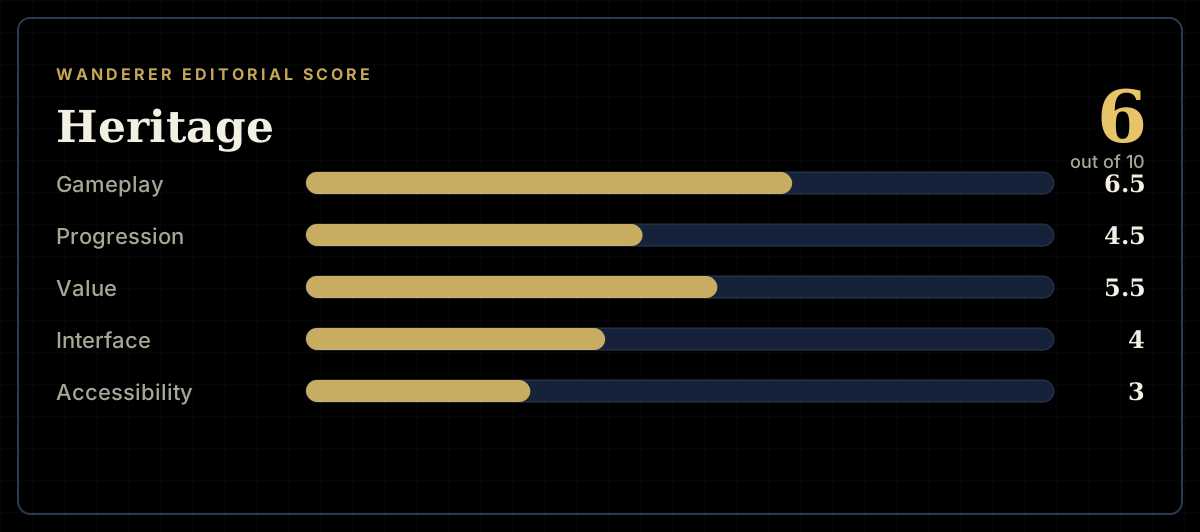
How the review scores each part of the gameWanderer Editorial -
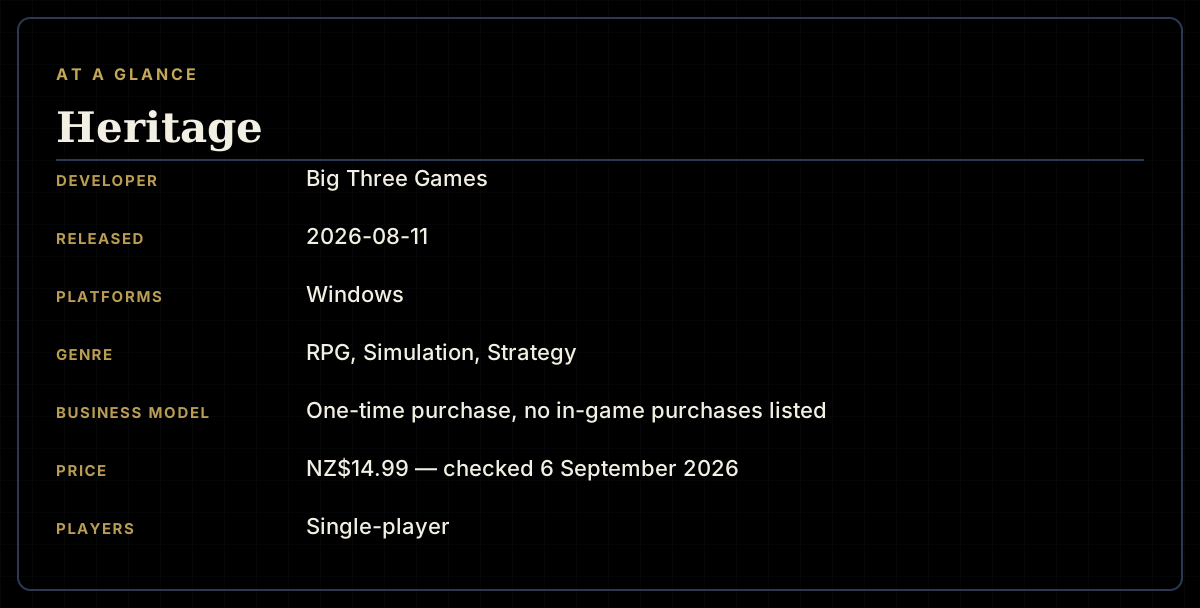
The essentials at a glanceWanderer Editorial -
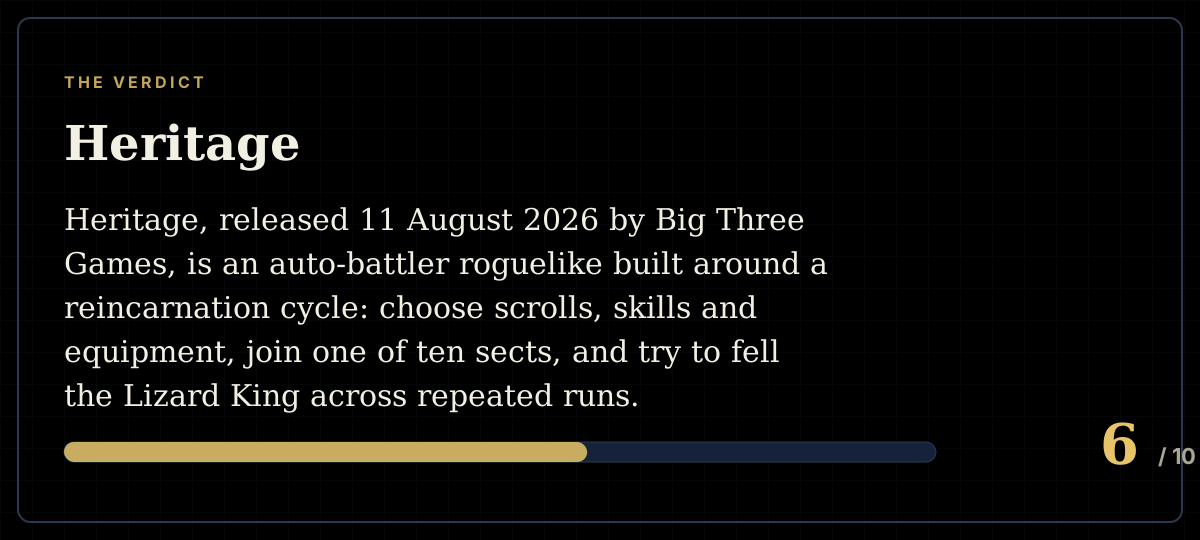
The short versionWanderer Editorial