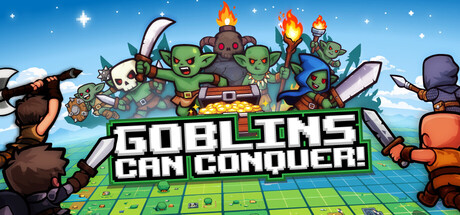
Game review
Goblins Can Conquer Review
5.6 / 10
- Developer
- starea
- Publisher
- starea
- Released
- 26 August 2026
- Platforms
- ["Windows"]
- Genre
- Strategy
A Bite-Sized Autobattler Built for Ten-Minute Sessions
Goblins Can Conquer strips the roguelike autobattler down to its simplest possible shape: pick a tile on a map, send your goblin horde in to fight for it automatically, spend the gold and units you earn on a handful of upgrades, and repeat until the map is yours or your horde is wiped out. Several reviewers frame that simplicity as exactly the point. "The game to play while waiting to queue in other games, or if u wanna burn like 10-20 mins," one review puts it, while another describes using it "as a side screen game while I was working on other things." At $6.99, more than one reviewer calls that a fair trade — "its only 5$ tho," as one puts it, framing the low stakes as part of the appeal rather than a mark against it.
That casual-session framing runs through most of the positive reviews. "Cute and fun little autobattler with some base management," one calls it, comparing the fights to "mini beyblades" — goblins collide, spells trigger, and the outcome resolves itself while the player mostly watches and occasionally fast-forwards. Reviewers who found the right build describe genuine satisfaction once things click: one recommends leaning into "The Monk and The Four Adventure Goblins" for an easier early crawl, and another who fully cleared the war camp's upgrade tree says the endgame towers "essentially give you the win regardless of playstyle" — a sign the systems do eventually reward patient investment, even if getting there takes a while.
Where the Depth Runs Out
The negative reviews converge on a specific and fairly consistent complaint: there just isn't much game here once the initial novelty wears off. One detailed review breaks the entire decision space down to three choices — which war camp upgrade to buy, which spell to pick after a win, and which tile to attack next — and notes pointedly that "you don't even get to choose" which goblin unit you receive after a fight; it's assigned at random from a pool ranging from basic rabble to a legendary pyromancer. Multiple reviewers echo this same frustration about the lack of build agency: "if you can select from 3 spells - why not 3 goblins?" one asks, a fair question given how much of the genre's appeal usually comes from deliberately building synergies around specific unit combinations.
That randomness compounds with a second issue several reviewers raise: the game gives almost no feedback about what's actually happening in a fight. "There's no battle summary — I can't see which spells did most damage nor how did my goblins perform individually," one review notes, making it hard to learn from a loss or refine a strategy for the next attempt. Combined with a small handful of maps that reviewers describe as feeling "the same experience every map," and a progression curve that one player says maxes out roughly halfway through a run, the picture that emerges is a game whose mechanical ceiling sits well below what an experienced autobattler fan would expect, even at this price point.
A Punishing, Under-Explained Early Curve
Several reviewers specifically flag the onboarding as too thin for how unforgiving the early game is. "The 6 sentences at the beginning giving you basic tips is not enough," one review writes, describing fifty minutes of failed attempts at level one across multiple strategies before giving up in frustration. A structural quirk compounds the confusion: failing to conquer a tile you've attacked costs you the attempt entirely, and you can't move onto a tile you've claimed unless you've already built on it — a rule one reviewer calls "mega dumb" for how easily it can soft-lock a run. Another negative review describes the difficulty spiking sharply after the first stage, with the skill tree resetting between attempts in a way they found made repeated failure feel punitive rather than instructive.
It's worth noting that at least one reviewer specifically credits post-launch balance patches with smoothing this curve out: "the balance got pretty good after a few patches and once you got the hang of it and knew what to build, the game became pretty easy," they write, which lines up with starea's visible pace of updates — four separate balance and content patches landed in the first three weeks after launch. Whether that's enough to resolve the harder critiques depends heavily on which patch version a given reviewer experienced, something worth keeping in mind given how young this release still is.
Modest Ambitions, Modestly Delivered
What's notable about this review pool is how rarely reviewers, even negative ones, describe Goblins Can Conquer as broken or badly made — the complaints are almost entirely about a shallow ceiling rather than bugs or technical failure. "Although fairly basic, its good for a short time," is a fairly representative summary, and even a reviewer who ultimately requested a refund after two levels still describes the core loop's individual pieces as functional, just thin. The game seems to know its own scope: ten stages, a single core loop, no pretense of being a deep strategy epic, and a price tag that matches that scope reasonably well.
Where it runs into trouble is that "autobattler" as a genre label sets certain expectations — build crafting, synergy hunting, meaningful randomness — that Goblins Can Conquer only partially delivers on. Players going in expecting a quick, disposable diversion mostly come away satisfied; players going in expecting a genre-defining strategic system come away disappointed, sometimes within the first hour.
Verdict
Goblins Can Conquer is a small, honestly priced autobattler that does one simple thing reasonably well — quick, low-commitment conquest runs you can dip into for ten minutes at a time — but doesn't offer the build depth, feedback, or map variety that would make it stick around much longer than that. The lack of goblin selection control and battle-outcome transparency are the two most legitimate complaints in the review pool, and a rough, under-explained early difficulty curve will turn off some players before the systems have a chance to click. Recommended as a cheap, disposable side-screen game for autobattler fans with modest expectations; skip it if you're looking for a deep strategic build.
Screenshots
-
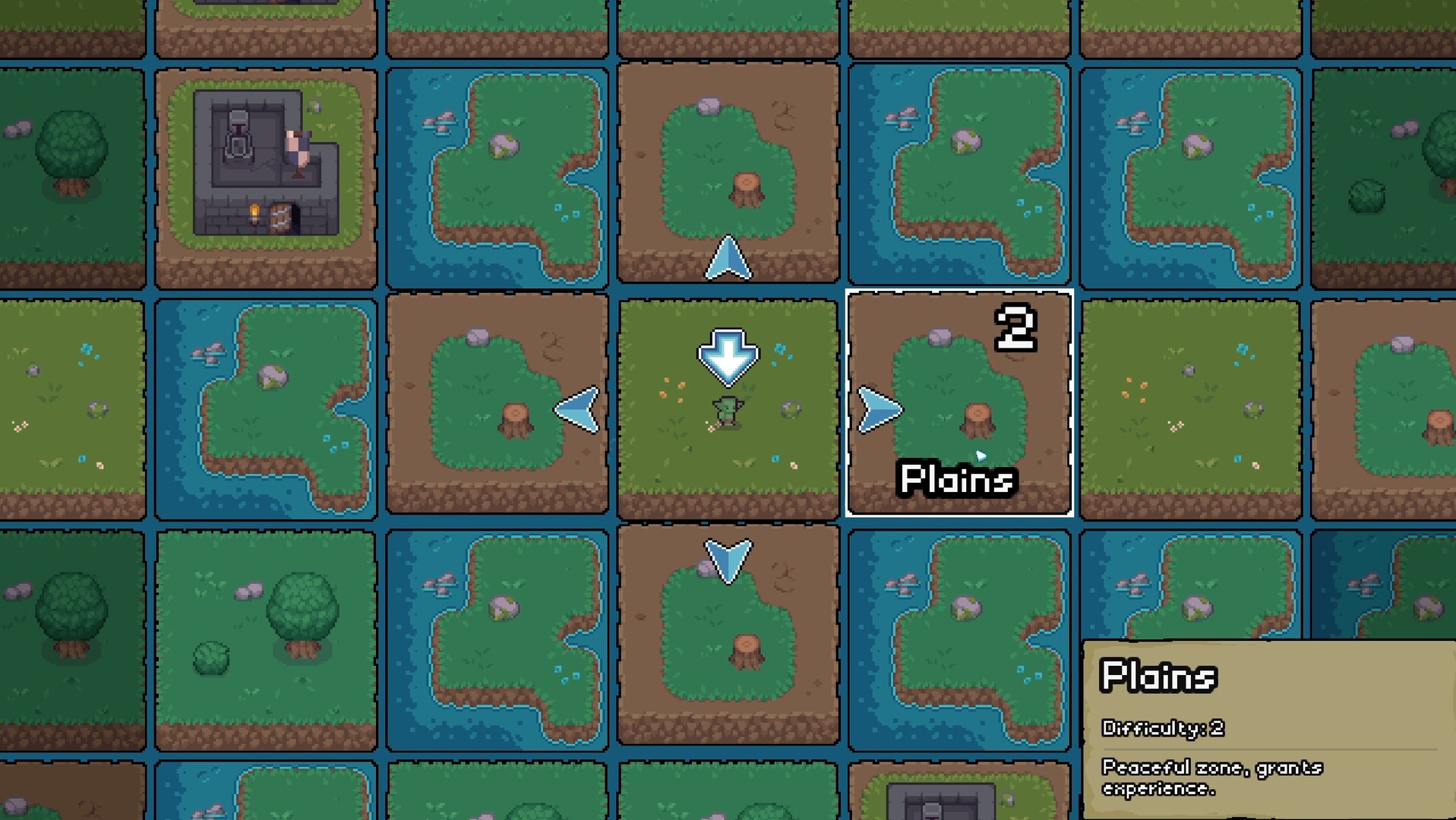
The tile-by-tile conquest map, where each move reveals a new zone with its own difficulty ratingImage: starea via Steam -
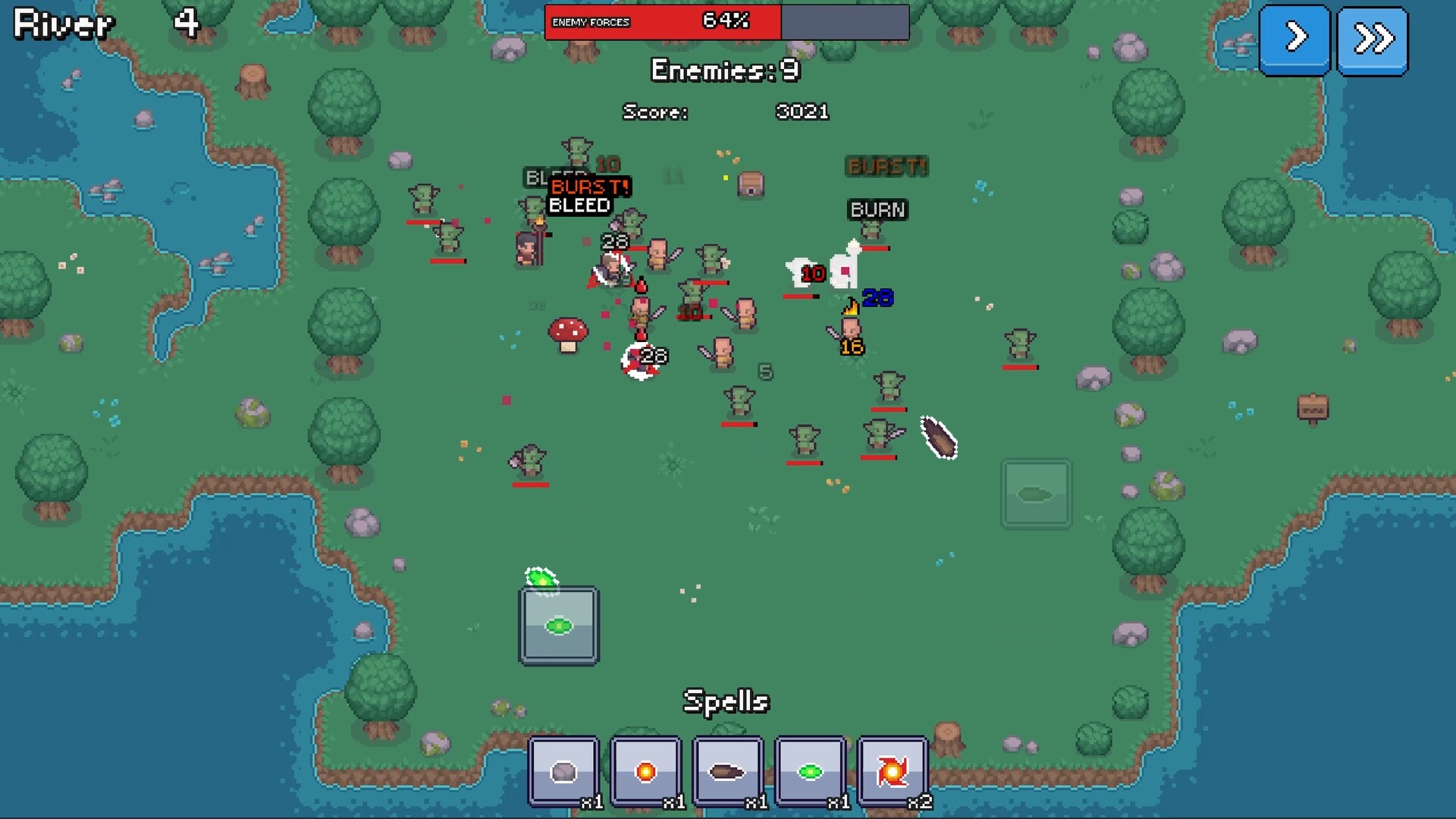
An autobattle in progress, with burn and bleed effects stacking as the goblin horde overruns a river tileImage: starea via Steam -
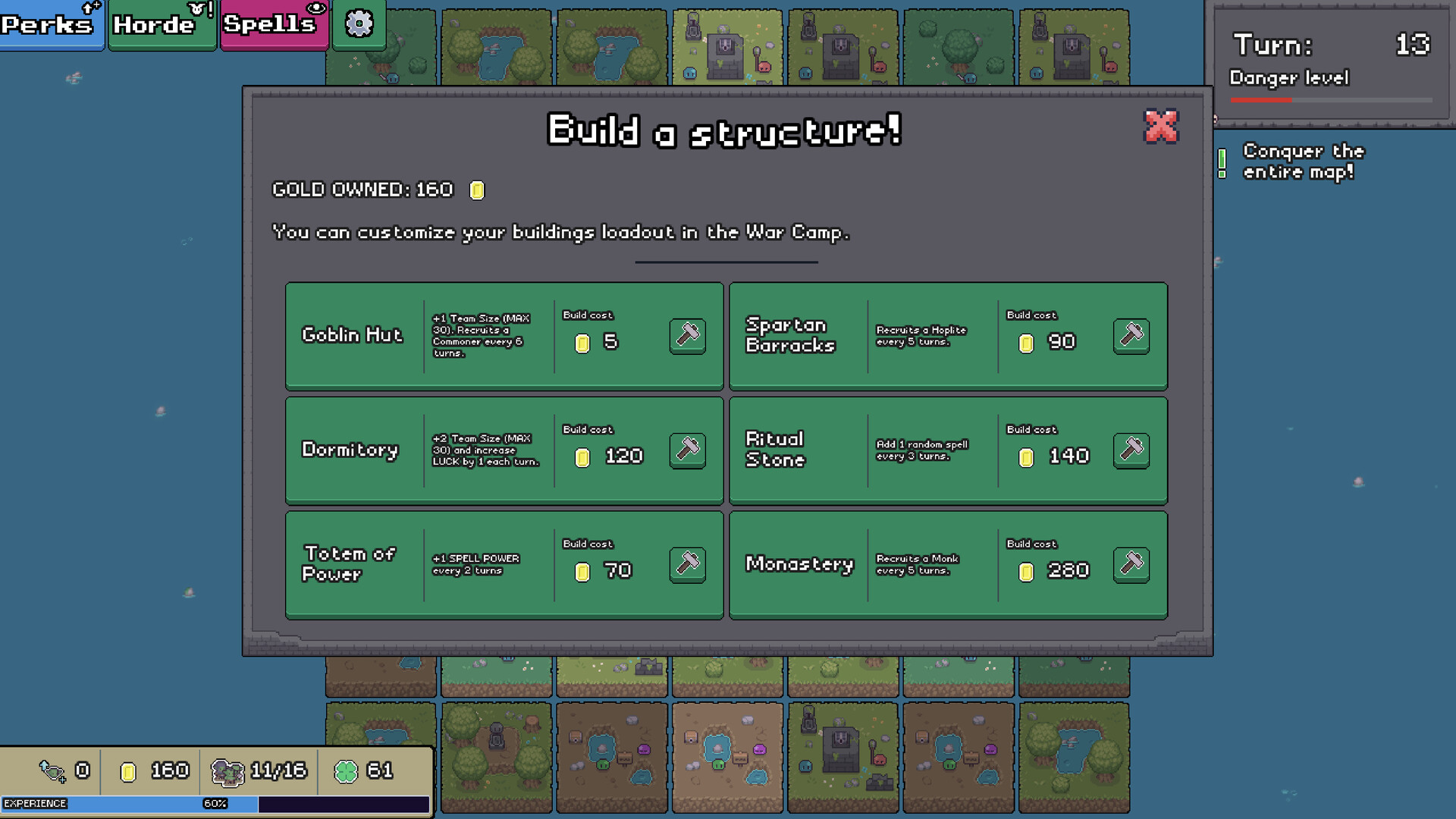
The war camp build menu, where gold earned from conquered tiles gets reinvested into recruitment and spell-power buildingsImage: starea via Steam