
Game review
QPopGirl Review
7.4 / 10
- Developer
- Emotion Dynamics
- Publisher
- Goblin Games
- Released
- 31 August 2026
- Platforms
- ["Windows"]
- Genre
- Strategy
A Claw Machine Grafted Onto a Roguelike Deckbuilder
QPopGirl's premise sounds like a joke until it clicks: instead of drawing cards from a deck in the usual roguelike-deckbuilder sense, players spend HP to operate a claw machine, physically grabbing dolls and special balls out of a cluster of prizes before deploying them against monsters floor by floor. One reviewer captures the appeal with real enthusiasm: "I have no idea why I ever assumed a claw machine wouldn't work as a roguelike. That one second while the claw comes down is a gamble on every single floor." That's the game's whole hook in a sentence — a genuinely physical, skill-based layer bolted directly onto genre mechanics that are usually pure card-selection abstraction.
The framing story is light but charming: players climb a mysterious tower as the titular QPopGirl, aided early on by a cat companion, with reviewers describing the tutorial as short and the core controls as quick to pick up despite the systems underneath having real depth. One reviewer summarizes the loop plainly: it's "a casual strategy roguelike where players spend HP (Hearts) on a gacha machine to draw dolls and balls to defeat monsters," building toward synergies between what the claw pulls and the cards chosen to upgrade the machine after each floor.
Two Systems That Genuinely Reinforce Each Other
What distinguishes QPopGirl from the crowded roguelike-deckbuilder shelf, according to the review pool, isn't the deckbuilding half on its own — it's how tightly that half depends on the claw's physical precision. One detailed review lays out the design logic directly: "Most deckbuilders only let you act at the moment you pick a card. This one adds a physical layer on top: the best build in the world does nothing if you misjudge the claw, and a mediocre build survives if your pulls are precise. The two axes prop each other up, and that's the whole design." That's a specific, well-articulated case for why the hybrid works rather than feeling like two unrelated systems stapled together, and it's echoed by another reviewer's account of a run saved not by optimal planning but by a lucky claw pull that dragged a healer doll up stuck to the warrior it was actually aiming for.
The four playable doll classes draw praise for meaningfully dividing responsibilities in combat rather than feeling like reskins of each other — one reviewer specifically highlights a Mage class that scales off enemy max HP, splitting the strategic considerations between boss fights and trash-clearing encounters in a way that keeps build decisions relevant throughout a run rather than front-loaded.
Risk Management Built Around Spending Your Own Health
The HP-as-currency mechanic gives the game a distinct risk-reward rhythm that reviewers single out as a highlight rather than a frustration. Every gacha pull costs health, meaning players are constantly weighing whether to gamble on another claw grab for a stronger build against preserving enough health to survive the floor's actual combat. One reviewer's structured breakdown calls this "Risk Management: Using HP for gacha rolls requires balancing health preservation with resource generation," pairing it with "Synergy: Combat effectiveness relies on combining ball effects with doll abilities" as the game's two core pillars. It's a tight, legible design built from a small number of interacting systems rather than genre-standard sprawl, which several reviewers frame as a deliberate strength for a game priced and scoped the way QPopGirl is.
That tight design also seems to have real staying power: one reviewer logged over one hundred hours with the game, describing being repeatedly hooked by "one more run" pacing despite going in with modest expectations for what they call "something this small."
A Small, Early Review Pool Worth Flagging for Buyers
It's worth being direct about what this review pool actually looks like: QPopGirl launched with a genuinely small number of reviews overall, and its English-language subset in particular is limited to a handful of accounts, all positive, several of them detailed and specific rather than one-line impressions. That's a meaningfully different situation than reviewing a release with hundreds or thousands of reviews behind it, and buyers should weigh that thinner sample size accordingly — a unanimous small pool is a genuinely good sign, but it's a smaller sign than a unanimous large one. Nothing in the available reviews points to bugs, technical instability, or design regrets, and the reviewers writing longer, more analytical accounts clearly engaged with the game's systems in real depth rather than skimming a launch freebie.
The absence of negative feedback also means there's less to say about where QPopGirl falls short — no reviewer flags pacing issues, unclear UI, or balance complaints, which is either a genuine sign of a tightly tuned release or simply a reflection of how few critical eyes have looked at it so far. Buyers who value going in with a fuller picture of a game's rough edges should treat that gap honestly rather than assume a small, glowing pool guarantees a flawless one.
Verdict
QPopGirl takes a genuinely unusual idea — bolting a physical claw-machine mechanic onto roguelike deckbuilding — and executes it well enough that its entire review pool, small as it is, recommends it without reservation. The HP-as-currency risk system and the four doll classes give it real strategic texture for a $4.99 game, and the claw's moment-to-moment tension gives the whole loop a tactile hook that most genre entries simply don't have. Its biggest caveat isn't a flaw in the game itself but a caveat about the review pool backing it: with only a handful of English-language reviews so far, buyers are trusting a smaller, if genuinely enthusiastic, sample than a release with a longer track record would offer. For roguelike-deckbuilder fans looking for something that reinvents a familiar formula rather than iterating on it, QPopGirl is a low-priced, well-regarded pick worth trying before its review pool grows large enough to fully settle the verdict.
Pros:
- A genuinely novel hybrid of claw-machine mechanics and roguelike deckbuilding that reviewers describe as more than a gimmick
- An HP-as-currency risk system that gives every claw pull real strategic weight
- Four distinct doll classes that meaningfully divide combat roles rather than feeling interchangeable
- Strong reported replay value, including one reviewer logging over 100 hours
- Low $4.99 price point for a tightly designed, system-dense release
Cons:
- A small overall review pool, with an especially limited English-language sample to draw on
- No negative reviews exist yet to surface potential rough edges, bugs, or balance concerns
- A light framing story that reviewers treat as a minor backdrop rather than a real draw
- Long-term build variety and endgame depth remain largely untested by the available reviews
Screenshots
-
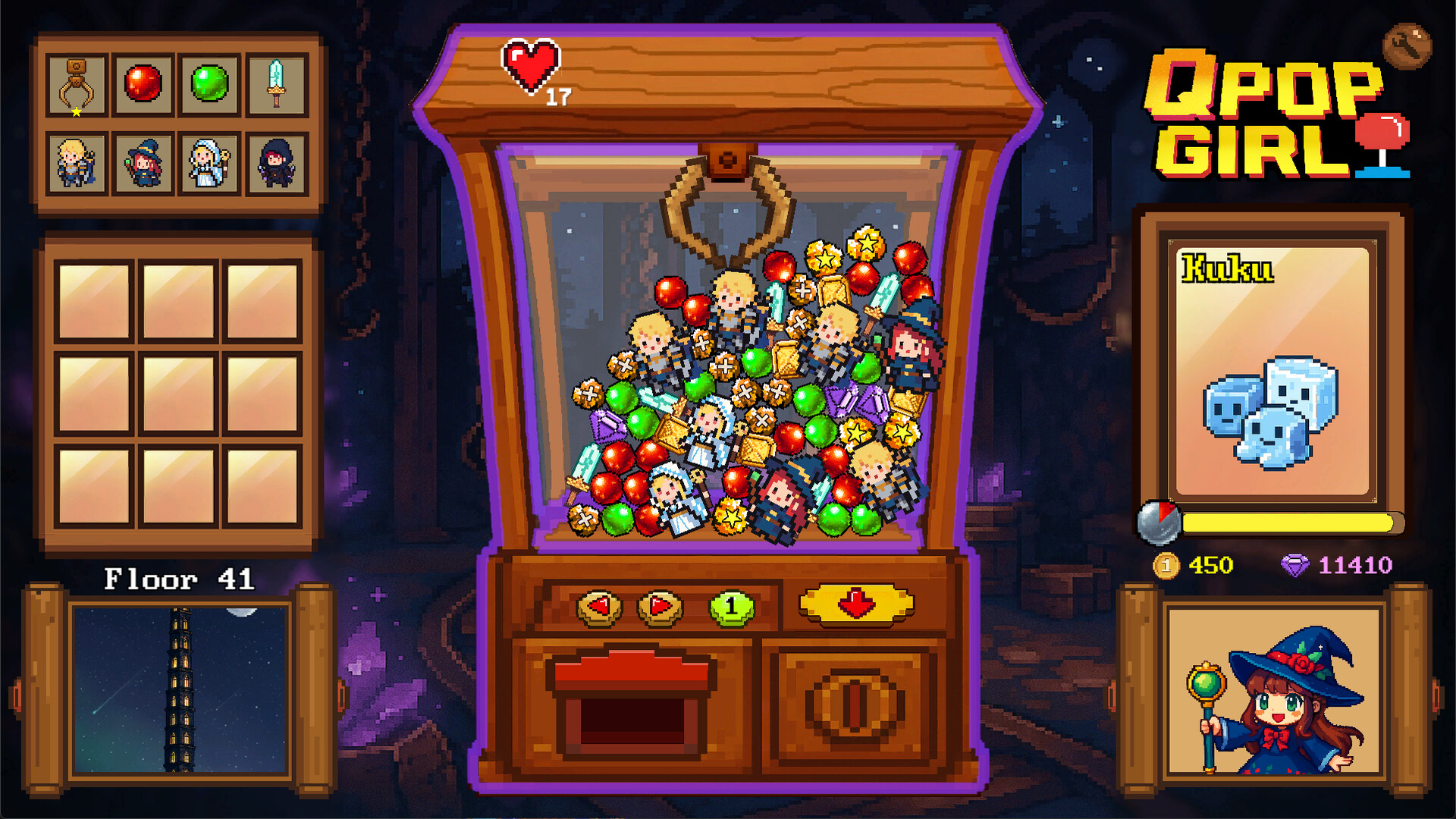
The claw machine is the game's core mechanic, physically grabbing dolls and orbs to build a runImage: Goblin Games via Steam -
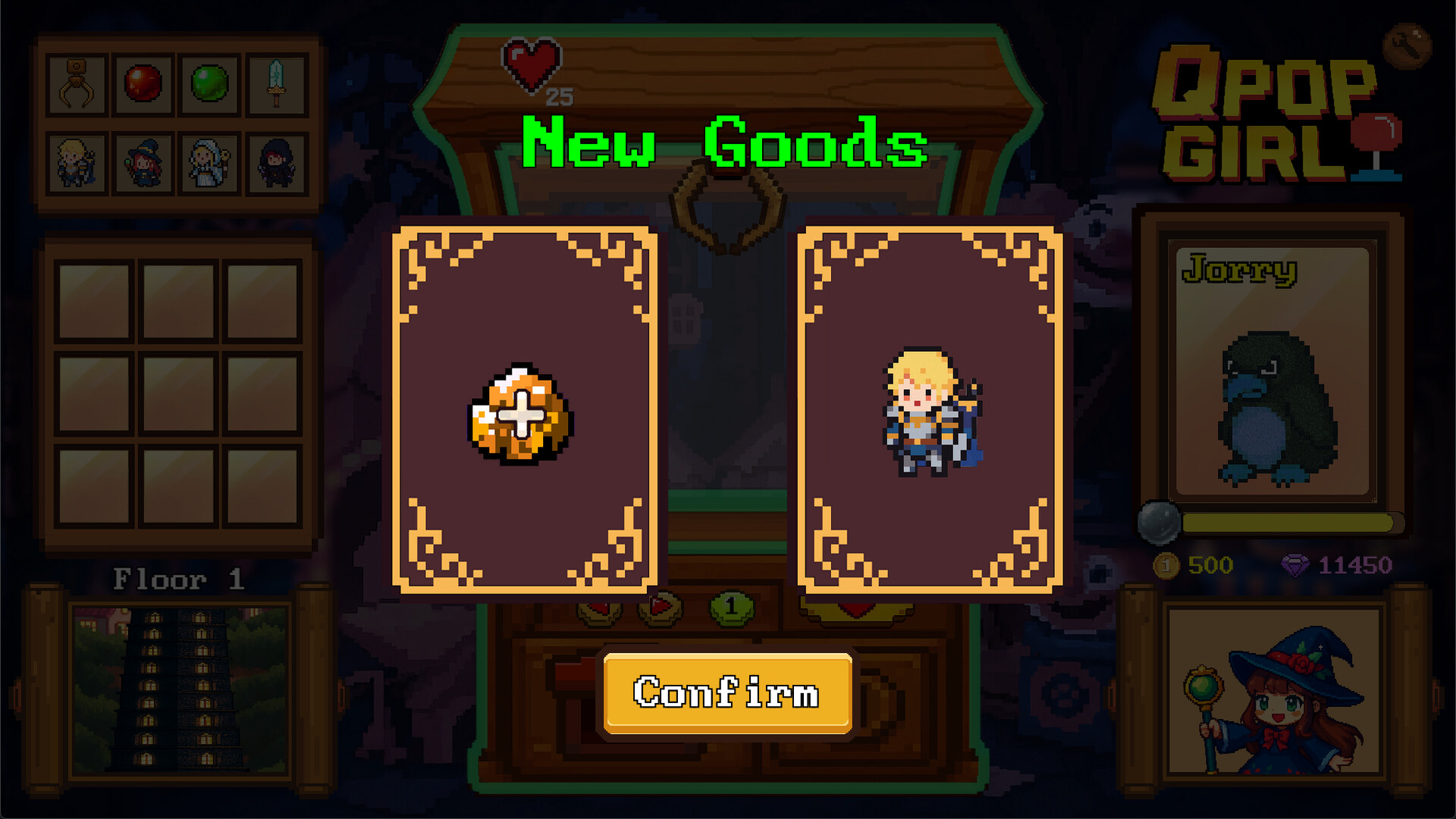
Card choices after each floor let players shape their build alongside whatever the claw pulls inImage: Goblin Games via Steam -

A light framing story ties the tower climb to the legend of the Q'Pop raceImage: Goblin Games via Steam -
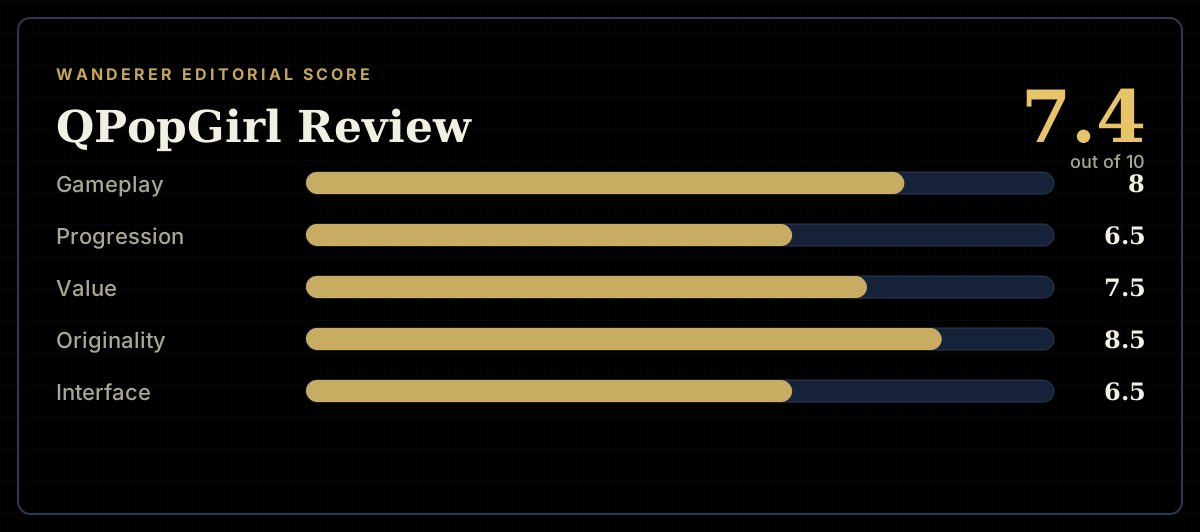
How the review scores each part of the gameWanderer Editorial -
The short versionWanderer Editorial