Game review
Tap Dungeon Review
5.6 / 10
- Developer
- Xiao5 Studios
- Publisher
- Xiao5 Studios
- Released
- 28 August 2026
- Platforms
- ["Windows"]
- Genre
- Strategy
A Card-Flip Roguelike With Real Build Variety
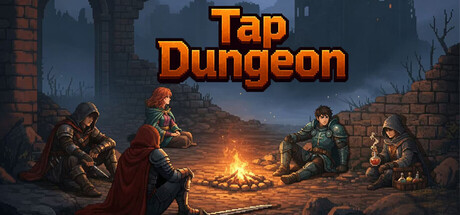
Tap Dungeon casts players as an adventurer fleeing the fall of the Duchy of Lyle, sent by a mentor's escape spell into a series of randomized dungeons built from grids of face-down tiles. Rather than free movement, exploration works by tapping adjacent tiles to reveal what's underneath: a fight, a shop, a campfire that restores a sliver of health, an altar that trades health for a permanent stat boost, a locked door needing a bronze, silver, or gold key, or simply a wall blocking the path. One detailed English-language review lays out the loop plainly, describing how players "tap on a tile to travel there and deal with whatever event it contains," with obstructing event tiles giving way to the option of flipping around them if a fight isn't worth picking.
The game offers six to seven playable classes — warrior, spellblade, alchemist, assassin, mage, and a summoner among them — each built around a distinct resource and playstyle rather than a reskinned stat block. Chinese-language reviewers, who make up the large majority of the game's review pool, describe genuinely different approaches per class: a defense-stacking warrior who counters with a shield bash, a spellblade who leans entirely on intelligence and attack-count scaling, and a summoner who tanks damage through conjured allies while chipping away with taunts. A curator review summarizing the appeal for a Chinese audience frames it well: gear stats are deliberately weak, and skill selection — not equipment — is what actually wins runs.
Turn-Based Tactics Under a Deceptively Simple Surface
Combat runs on a turn-based system where each character gets three action points to spend on attacking, defending, or casting skills, with enemy intentions for their next turn shown in advance so fights become a planning exercise rather than a reaction test. Reviewers who stuck with the game for double-digit hours describe genuine tactical depth once the basics click — mixing sub-class skills, items, and a chosen playstyle into a build that can clear the game's five difficulty tiers. One English-language reviewer who beat all five within ten hours called it "a solid game" worth recommending at its price, and a Chinese reviewer who logged sixty hours across every class described comfortably clearing the hardest difficulty with an assassin build.
That same reviewer pool is also where the design's rougher seams show. Several describe wildly uneven scaling between builds: some class-and-skill combinations trivialize the final boss outright — one reviewer reports fighting it across eight separate runs on high difficulty without ever seeing it use a skill, killing it on contact every time — while other, weaker builds struggle to clear even the lowest difficulty. A specific numeric complaint recurs too: the Strength stat is described as contributing essentially nothing to damage compared to Dexterity, an imbalance sharp enough that multiple reviewers call the weaker stat a dead choice entirely.
A Loop That Runs Thin Fast, According to Its Largest Audience
The most consistent criticism, especially among the game's larger Chinese-speaking audience, is that there simply isn't much content once the initial hook wears off. Multiple reviewers describe finishing everything the game currently offers in as little as one to two hours of "real" content before the rest of a playthrough becomes repeat runs through the same handful of maps and enemy types, several explicitly asking for more biomes, monster variety, and difficulty tiers in future updates. Character unlocks compound the issue: one reviewer reports playing for over an hour without unlocking a second class and unfavorably compares the pacing to genre peers like Slay the Spire, The Binding of Isaac, and Vampire Survivors, while another logged thirty-one hours and cleared the fourth difficulty tier without ever managing to unlock most of the game's hidden classes. A minority but sharply worded complaint accuses the game of being disposable, mass-produced content not worth its price and unlikely to see further support — a claim not broadly echoed elsewhere in the pool, where the developer's frequent post-launch patch notes suggest otherwise.
Balance Swings, Save Bugs, and a Split Verdict on Value
The English-language reviewer pool, though small, praises the interface directly — "extremely simple interface and easy to read UI" is how one reviewer puts it — and that assessment holds up against the game's straightforward tile-and-menu presentation. Bugs are a genuine and recurring complaint, though: multiple Chinese-language reviewers report save-file desync issues, and one long-session player singles out a specific "abandoned castle" stage as riddled with problems, including enemies dying without any player action against them. A design request comes up again and again in the Chinese review pool as well — an autosave or more frequent checkpointing system, with one reviewer simply repeating the request verbatim throughout their entire review for emphasis. Progression-tuning complaints round out the negative side: several reviewers say difficulty increases add only penalties with no compensating reward, and that useful relics and economy-boosting skills are too scarce and too random to reliably build around.
Set against all that, value assessments across both language pools land in similar territory: for $4.99 — $3.99 at the original launch discount — reviewers across dozens and sometimes hundreds of hours consistently say the price is fair for what's here, even when they're simultaneously asking for more of it. It helps that Xiao5 Studios, credited by reviewers as a team of only one or two people, has kept up a visible drumbeat of update notes since launch, with several reviewers explicitly citing that ongoing support as a reason to be patient with the game's current gaps rather than write it off.
A run itself is short by roguelike standards — one reviewer estimates a full clear takes one to two hours once a class is understood — which cuts both ways: it makes Tap Dungeon an easy game to pick up for a single session, but it also means the thin-content complaints land faster than they would in a longer-form roguelike, since players reach the edges of what's here within their first few sittings rather than after dozens of hours.
Verdict
Tap Dungeon nails its core hook — a tile-flipping roguelike with genuinely distinct classes and a turn-based system with real tactical texture — but the loop is thinner than its five difficulty tiers suggest, and both its balance and its save reliability need real attention. It's a fair, occasionally addictive pickup at its low price for players willing to overlook rough edges and modest content, but not yet the deep run-based RPG its systems are clearly capable of becoming.
Screenshots
-
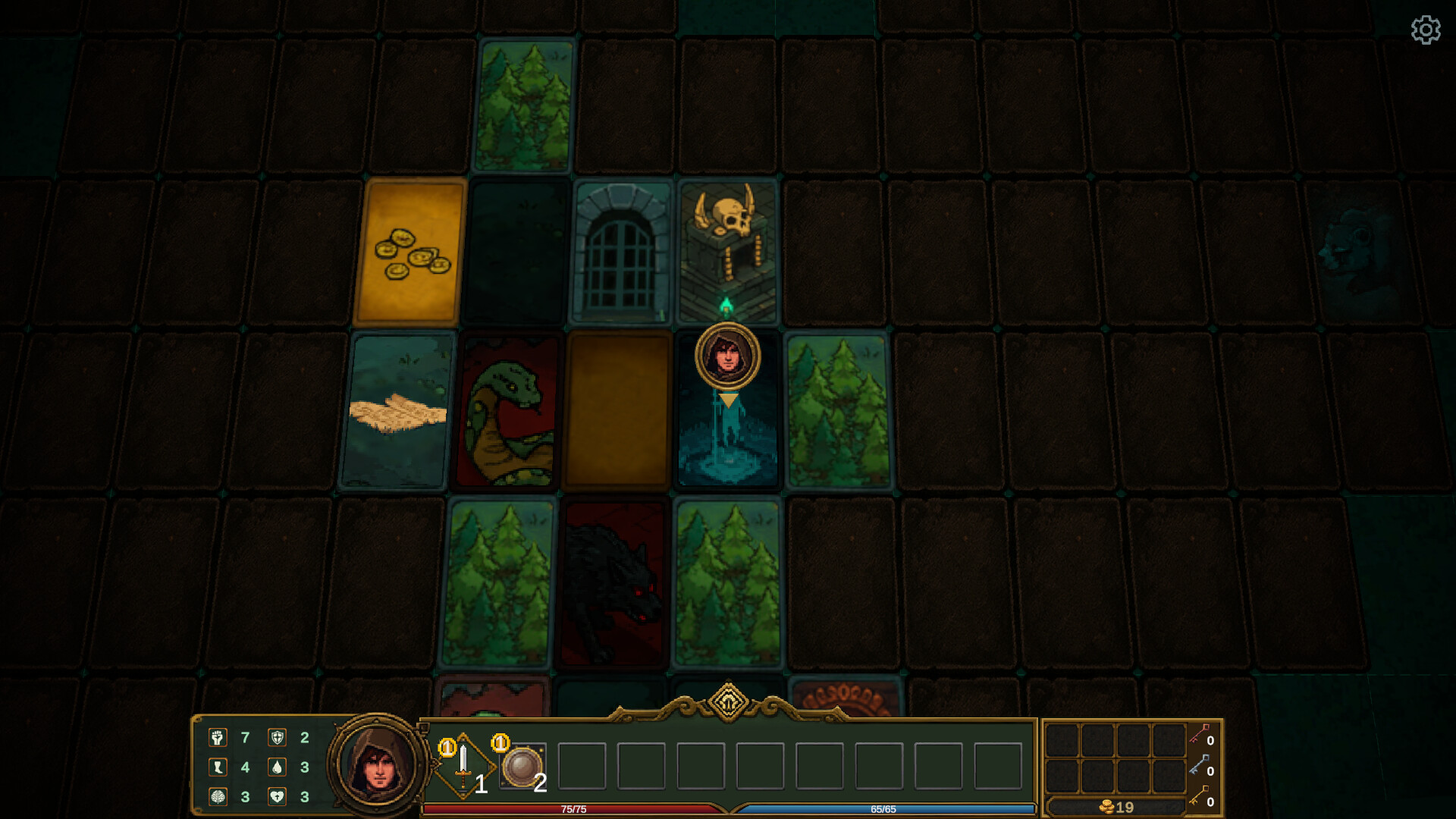
Exploration works by tapping adjacent tiles to reveal fights, loot, terrain, and events on a card-like gridImage: Xiao5 Studios via Steam -
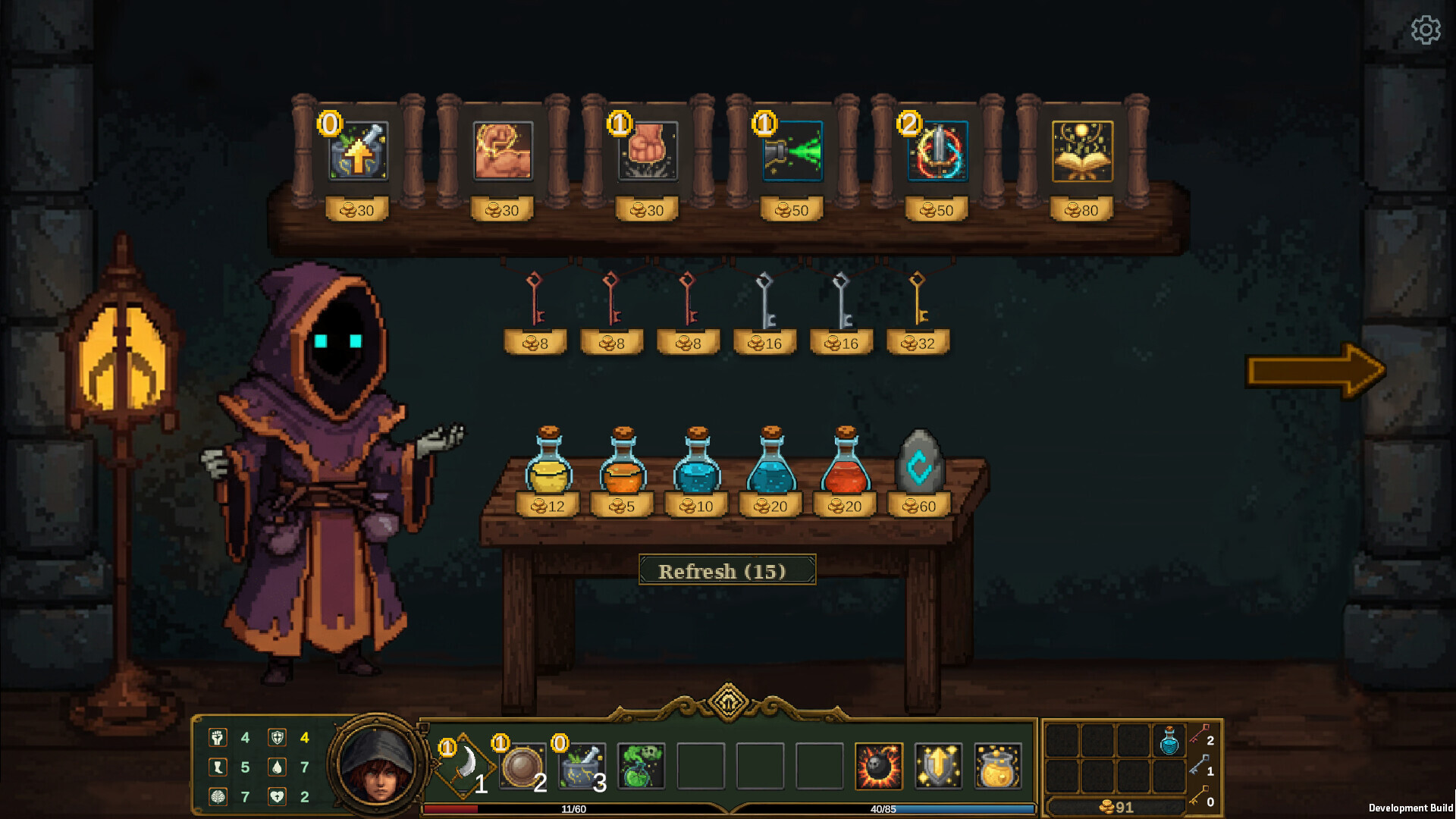
A dungeon shop offering skills, keys, and potions for the coins picked up along the wayImage: Xiao5 Studios via Steam -
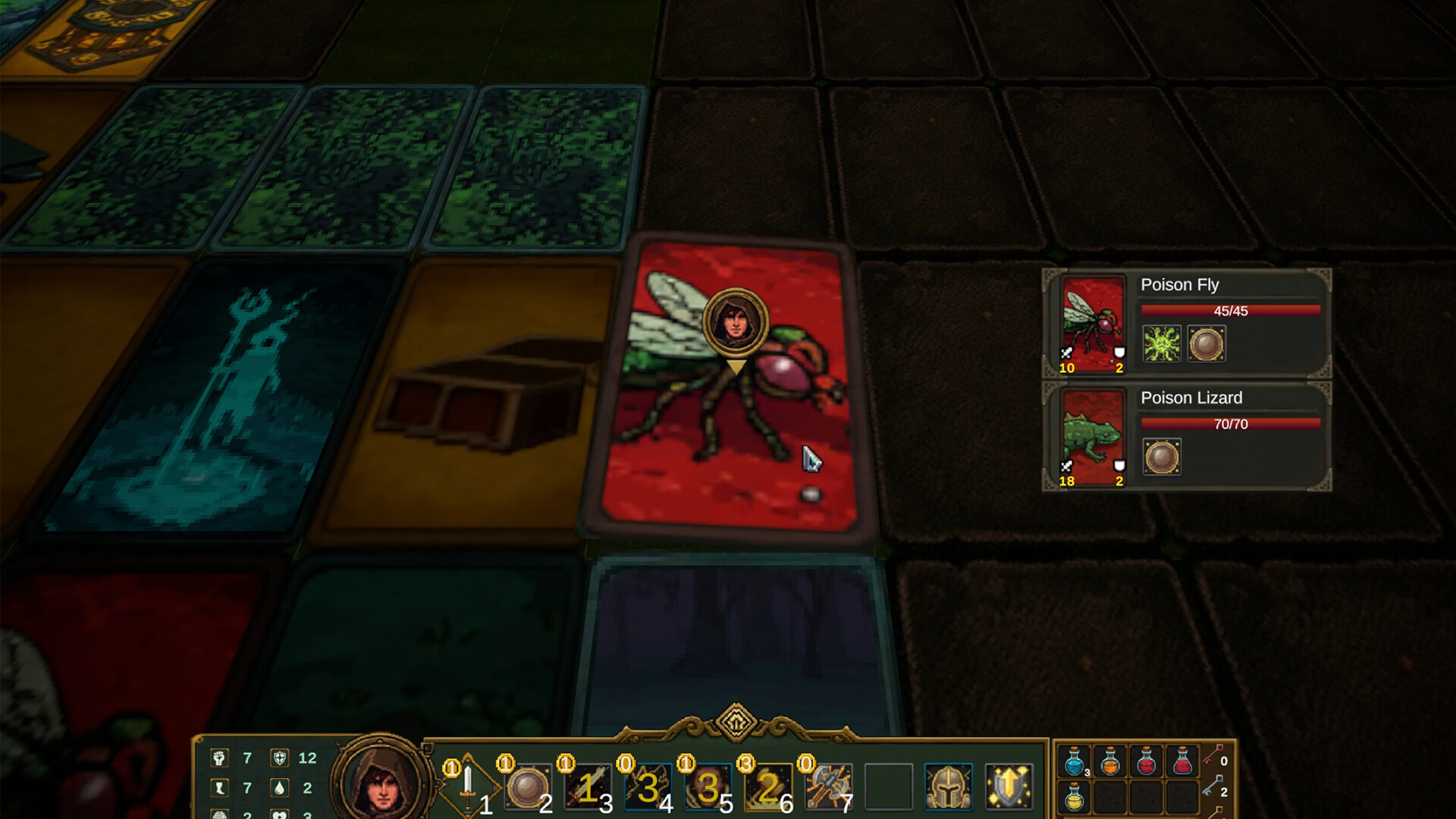
Combat shows enemies' upcoming moves in advance, turning fights into a planning exercise around a limited action-point barImage: Xiao5 Studios via Steam