
Game review
Folk Emerging Review
6.2 / 10
- Developer
- Curious Dynamics
- Publisher
- Curious Dynamics
- Released
- 26 August 2026
- Platforms
- ["Windows"]
- Genre
- Strategy
A Stone Age 4X That Actually Rewrites the Formula
Folk Emerging puts players in charge of a nomadic Stone Age band rather than a settled city, and the review pool is unusually consistent about how much that single change shifts the genre underneath it. One reviewer, describing themselves as someone who'd "drifted away from the classic Civ formula years ago," says Folk Emerging "introduced enough new ideas while keeping things tightly focused enough to have recaptured my love of the genre," while explicitly stressing that it's "very much not a Civ clone" so much as a rewrite of the genre's foundations. Instead of founding a city on turn one, players roam the map foraging, hunting, and reading a genuinely modeled food web that tracks how their pressure on local ecosystems affects what's still available to eat later — several reviewers single this system out by name as the game's most interesting idea, one calling it "A LOT OF research and thought" made playable.
That nomadic framing extends into the game's social and cultural systems as well: tribes accumulate cultural choices, debt and reciprocal-obligation mechanics modeled on real hunter-gatherer economics, and eventually branch into different "proto-civilizations" depending on how a band develops. One reviewer compares the tight, focused feel favorably to At the Gates and Thea, and multiple others describe it as finally giving the early, pre-city portion of a Civilization-style game the depth and length it's always been missing. It's also praised repeatedly and specifically for its art, music, and atmosphere — one review calls the whole presentation "extremely relaxing" and "10/10," with tooltips and pop-ups reviewers describe as unusually well made for an indie strategy title.
The Weak Link: Combat as a Lifeless Autobattler
If there's one system the review pool converges on as a genuine problem, it's combat. Battles in Folk Emerging resolve automatically once triggered, and a meaningful slice of reviewers — including several of the negative ones — describe this as leaving almost no room for actual decision-making. "The autoplaying combat is [poor]. There is no decision making to be done," one reviewer writes, adding that neighboring tribes will attack "on repeat" with no way to negotiate peace even after actively working to improve relations. Another negative review describes losing "half my tribe" to repeated Neanderthal raids within the first few turns of a fresh game, unable to do anything meaningful about it since their own military was necessarily still weak. A more measured review agrees combat is "mostly just a numbers autobattler with next to zero way for the player to affect the outcome," framing early rushed militarization as close to mandatory to avoid getting picked apart.
It's not a universal complaint — some reviewers frame the auto-resolved skirmishes as a deliberate, thematically appropriate abstraction for a period before organized armies existed, and one positive review specifically praises how battles end in intimidation or theft rather than annihilation, calling it "a refreshing change of pace." But the volume and specificity of the complaints, spanning both positive and negative reviews, makes this the system most likely to frustrate a new player in their first few sessions, particularly since a rough combat start can spiral badly before a tribe has the tools to fight back.
Responsive Development and a Quality-of-Life Fix That Shipped in a Day
One detail that comes up again and again in the review pool, treated almost as a selling point in its own right, is how quickly Curious Dynamics has responded to feedback since launch. Multiple reviewers specifically praise the developer for pushing rapid patches, and the clearest example is a missing "keep playing after victory" option: one reviewer's review, updated a day after posting, notes that the feature request was answered with an actual endless-mode patch within 24 hours, closing with "nothing but praise from me now." Others echo the same pattern — active community engagement, visible responsiveness to balance concerns around victory points and modifier stacking, and a general sense that reported problems are being worked through rather than ignored.
That matters because several of the game's rougher edges read as things a small, engaged studio is actively chipping away at rather than settled design failures. It's a meaningfully different situation from a studio that's gone quiet post-launch, and it's clearly shaping how forgiving the review pool is being about the game's remaining issues.
Short Campaigns, Real UI Friction, and a Fair Question About Price
Two more concrete complaints recur often enough to flag directly. First, UI friction: multiple reviewers describe an excessive number of clicks required to issue orders each turn, one calling it a problem with the "core loop" that "needs to be smooth and fast," and others separately mention a confusing tutorial that leaves new players unsure why their food total is dropping even while apparently doing the right things. Second, length: several reviewers note that a full campaign can be finished in as little as six hours, with victory conditions reachable well before a tribe reaches the late-game technology tree — a problem the endless-mode patch mentioned above was specifically added to address, though it's an opt-in fix rather than a change to the base pacing.
On price, opinion splits more than the review score alone would suggest. Most reviewers call the $24.99 asking price fair to generous for what's on offer, several explicitly saying it's "well worth the price," but at least two negative reviews disagree directly, with one recommending prospective buyers "wait for 10 Euros" until the game is more fleshed out. Given the game is only weeks old and still being actively patched, that's a reasonable point of disagreement rather than a contradiction in the reviews.
Verdict
Folk Emerging succeeds at something genuinely difficult: taking the well-worn 4X formula and finding a real structural twist — nomadic bands, a modeled food web, and a slow climb from foraging to proto-civilization — that changes how the genre plays rather than just how it looks. Its combat is a legitimate weak point that multiple reviewers flag as shallow and occasionally punishing, and its UI and tutorial could use real polish, but an unusually responsive developer is visibly working through both. For players tired of the standard Civ-style opening and curious about the deepest possible take on prehistory, it's a strong, still-improving recommendation.
Screenshots
-
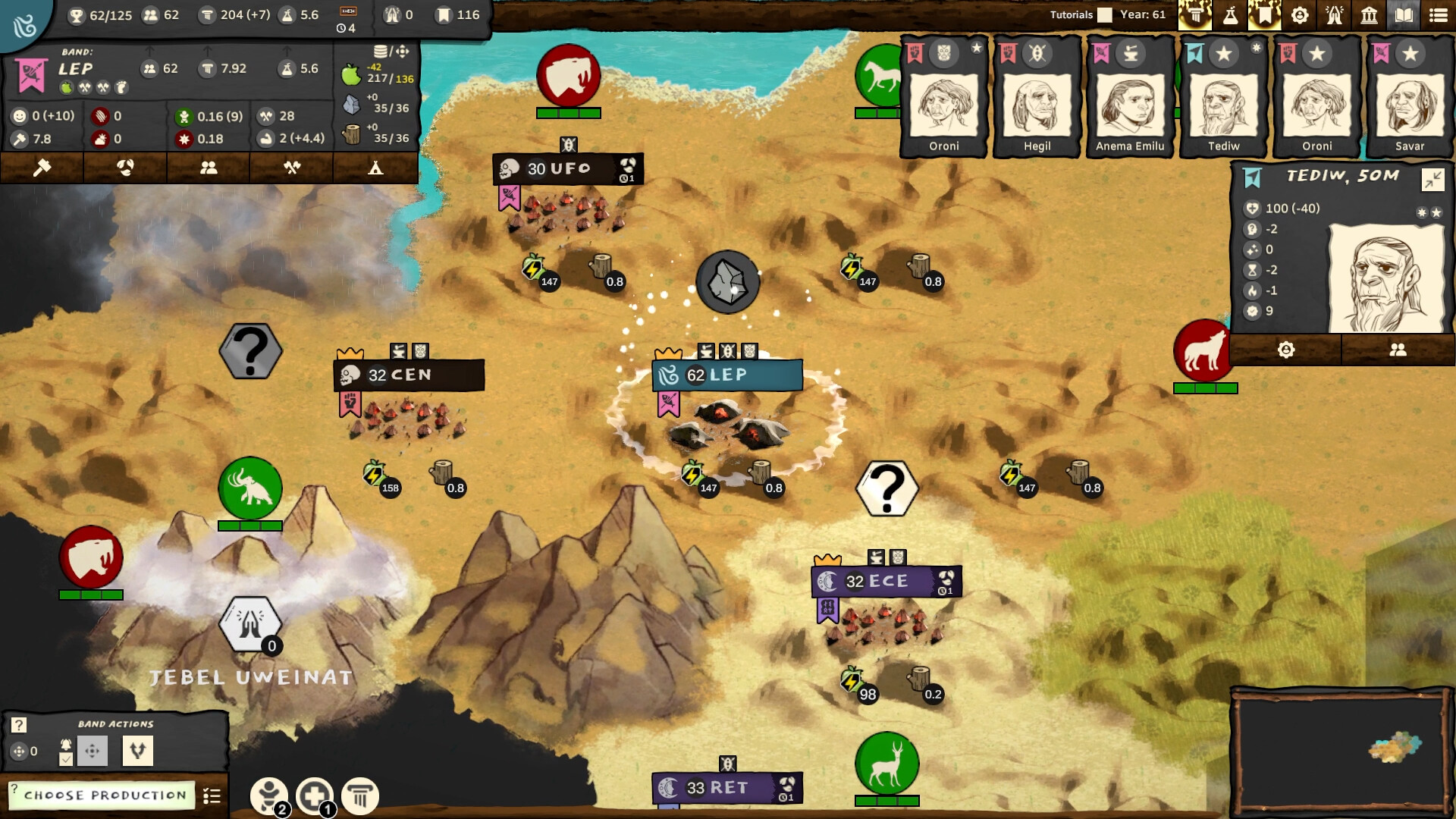
The band-management view, tracking population, resources, and neighboring tribes across a hand-painted mapImage: Curious Dynamics via Steam -
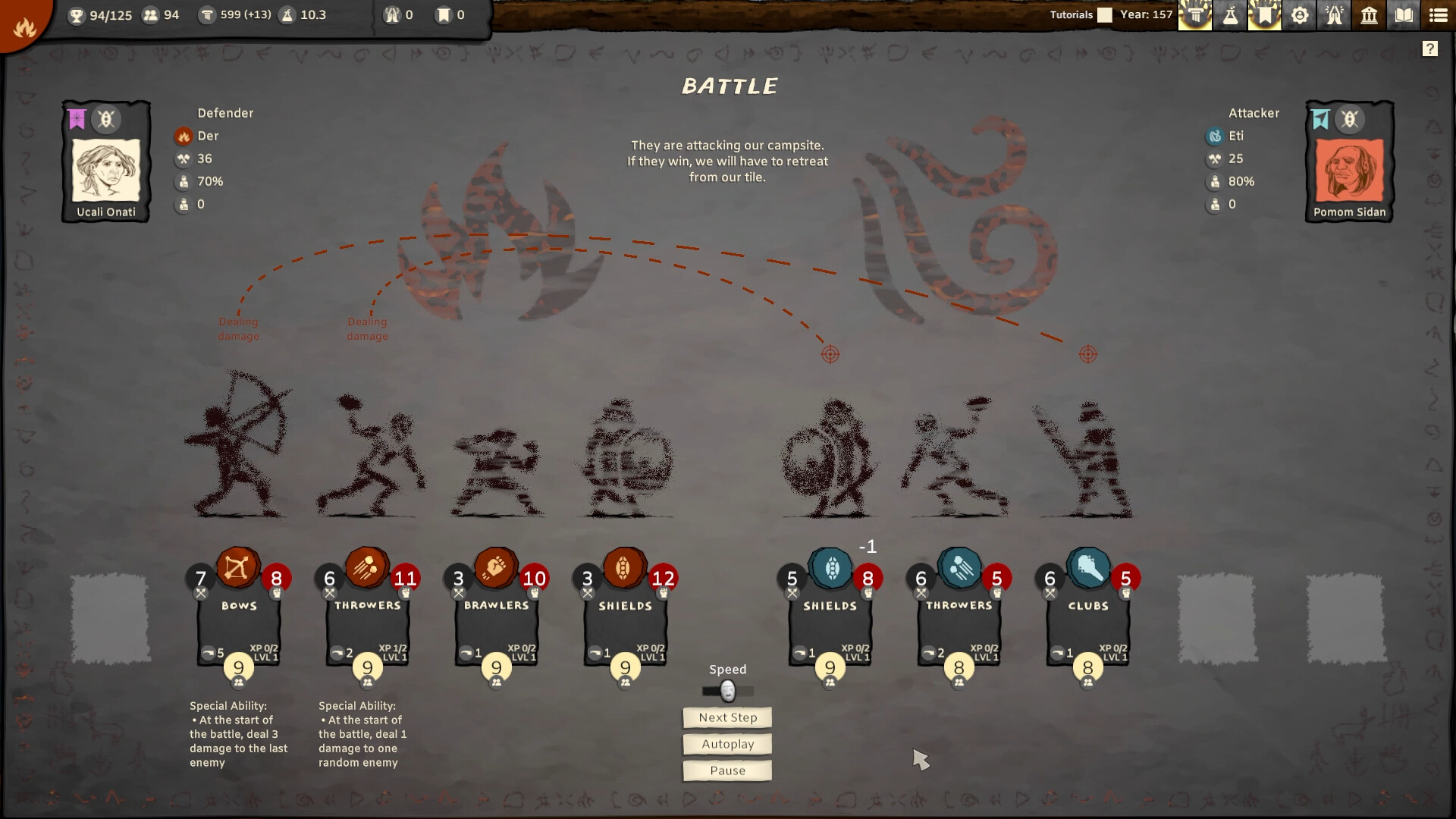
Combat resolves through this auto-battling screen, the single system reviewers most often single out as underdevelopedImage: Curious Dynamics via Steam -
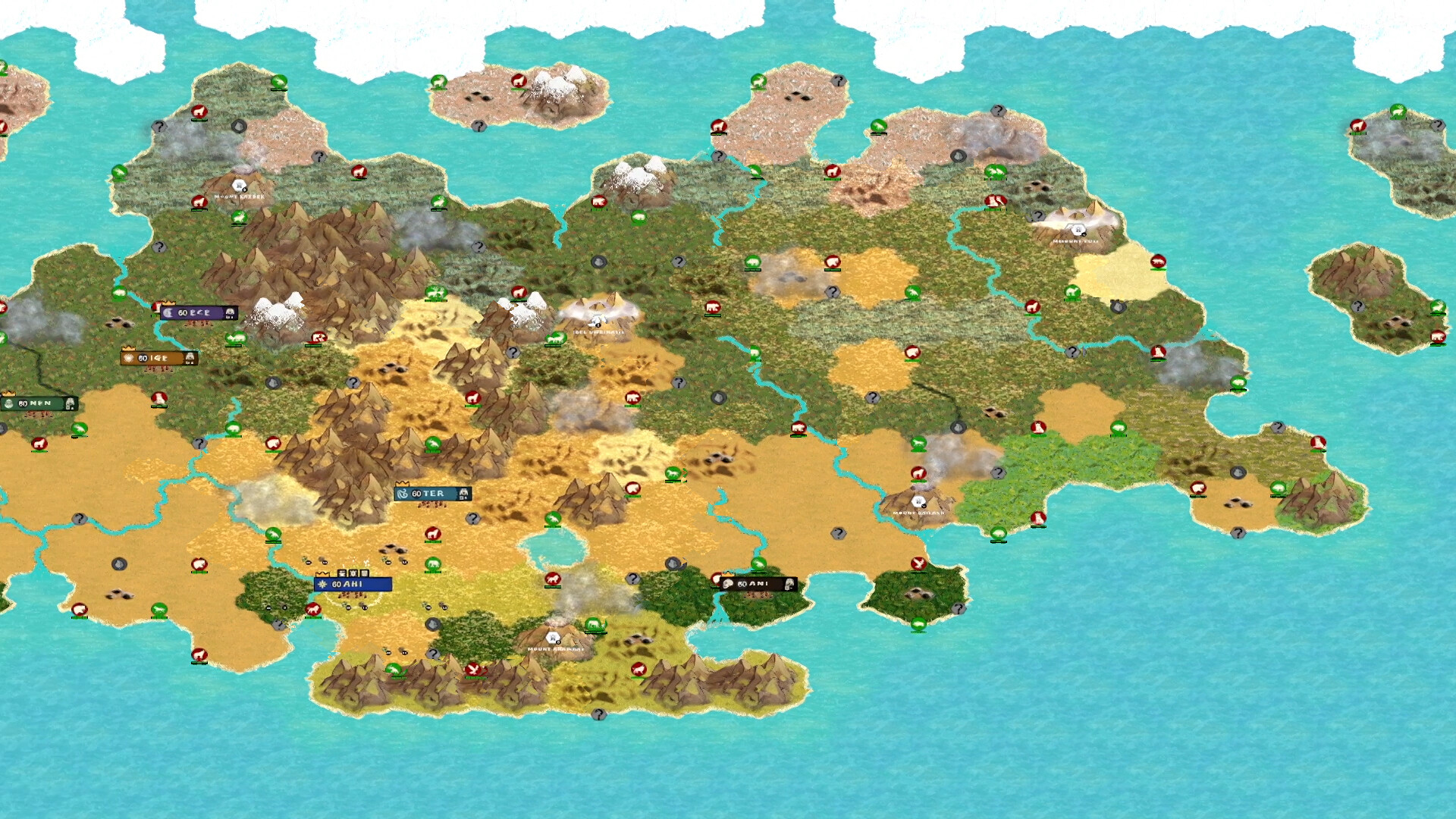
The full world map, showing the scale tribes migrate across as they forage, hunt, and eventually settleImage: Curious Dynamics via Steam