
Game review
The Economy Bros Review
5.8 / 10
- Developer
- Devin Carlson
- Publisher
- Flying Blade Studio LLC
- Released
- 28 August 2026
- Platforms
- ["Windows"]
- Genre
- Simulation
A Sprawling Sandbox Economy Built Job by Job
The Economy Bros drops players into a single persistent city with almost no explicit direction and a long list of ways to make money: work a fryer or a cash register for hourly wages, sort pills at a pharmacy, hunt and gather raw materials, run a crafting line, or skip straight to buying and flipping real estate. Reviewers consistently describe the appeal as breadth rather than depth in any one system — one calls it a game where you can "own Businesses or houses and rent them out," another sums up the loop as working odd jobs, automating resource production, then "having a blast with friends." The multiplayer side draws particular praise: several reviewers describe building cities alongside friends or strangers, competing over land, and even opting into PvP, with one noting the world supports moving between cities entirely.
That breadth is also where the game invites its most pointed criticism. More than one reviewer points out that for something billed as an economy simulator, there's surprisingly little actual economic control on offer — no way to set prices at a business you own, or adjust rent on a property you're renting out. As one reviewer puts it, players will "swap to a positive review once these aspects are improved upon." Others describe the moment-to-moment money-making as fundamentally grind-first: long stretches of repetitive job shifts (flipping burgers, working a register) before the more interesting crafting and real-estate systems become viable, with one detailed critique arguing the crafting side deserved to be the game's real focus instead of a "mild supplement."
Real Estate, Factories, and a City That Grows With You
Once past the early job-grinding, the systems reviewers describe opening up are genuinely wide: buying and furnishing homes to rent out, purchasing entire businesses (casinos, pharmacies, car dealerships, gas stations among them), building factories with production lines and automated "robot" workers, and expanding outward into farming, hunting, and oil extraction. Several long-session reviewers — playtimes in the hundreds of hours turn up more than once in the sample — describe this mid-to-late game as the payoff for sticking with the slower opening, framing the loop as satisfying precisely because there's no single optimal path to wealth. One reviewer who compares it directly to Big Ambitions, a similarly-styled tycoon title, says The Economy Bros "more than takes the sting out" of that game's performance problems on their hardware, calling the newer game noticeably smoother to run.
The systems aren't without rough patches, though. Automated "robot" workers are a recurring subject in both praise and complaint threads — reviewers welcome the concept of automating drudge work, but patch notes throughout the review period are dominated by robot-related bug fixes, suggesting the feature spent much of its first three weeks in a genuinely unstable state. A handful of reviewers also flag that the economic simulation doesn't always track logically: one describes spending two to three hours accumulating five thousand units of a building material toward a nineteen-thousand-unit factory requirement, only to find the stockpile gone the next session.
A Solo Developer Whose Patch Notes Never Stop
If there's a single thread running through nearly every review, positive or otherwise, it's the pace of post-launch support. Solo developer Devin Carlson pushed dozens of update posts in the game's first three weeks — several days saw more than one patch — covering everything from bot behavior and crafting balance to a rewritten container-storage system and new construction-loan mechanics. Reviewers repeatedly cite this responsiveness as the deciding factor in their recommendation, several explicitly saying they weighed an unfinished-feeling game more generously because fixes and requested features were landing within hours or days of being reported in the game's Discord. One reviewer frames it plainly: "the DEV alone is the best reason to buy this game."
That same rapid-patch cadence cuts the other way for at least one player. A storage rework that capped container sizes at 150 items — introduced, according to the patch notes, to prevent crashes on lower-end machines — wiped out one reviewer's stockpile of several thousand items without warning, and that reviewer explicitly recommended against buying the game as a result. It's a useful reminder that a fast-moving solo project is still a moving target: the version most of this review's positive sample played won't be identical to the one a buyer picks up today.
No Tutorial, Lost Inventories, and Other Rough Edges
The most consistent complaint in the review pool has nothing to do with content and everything to do with onboarding. Multiple reviewers describe starting the game with no explanation of core systems — what the various jobs pay, how crafting materials connect to construction, or how the day/energy timer is meant to be managed — and say the resulting first hour is confusing enough to sink the experience for anyone unwilling to push through it or lean on the community Discord. One reviewer who returned the game outright cites job timers that felt impossible to complete combined with zero in-game guidance as the reason. Crashes and general jank come up periodically as well, generally described as tolerable rather than game-breaking, and usually paired with an acknowledgment that the developer is actively working through them.
At $19.99, value assessments in the review pool split along expectation lines: players who came in expecting an early-access-flavored sandbox and got hundreds of hours of engagement feel they got a bargain, while a smaller group calls the price a bit steep for a game that, structurally, still reads as a work in progress despite carrying a full 1.0 release rather than an Early Access tag.
Verdict
The Economy Bros is a genuinely broad tycoon sandbox — jobs, crafting, real estate, and factory automation all layered into one persistent, multiplayer-friendly city — held back by an onboarding that assumes too much and systems, like pricing and rent control, that don't yet live up to the "economy" in its title. What consistently rescues it in the eyes of its player base is a solo developer patching almost daily, which buys real goodwill but also means judging the game today is judging a moving target. Worth a look for sandbox-building fans willing to learn by doing; everyone else should wait for the tutorial and the storage system to catch up to the ambition.
Screenshots
-
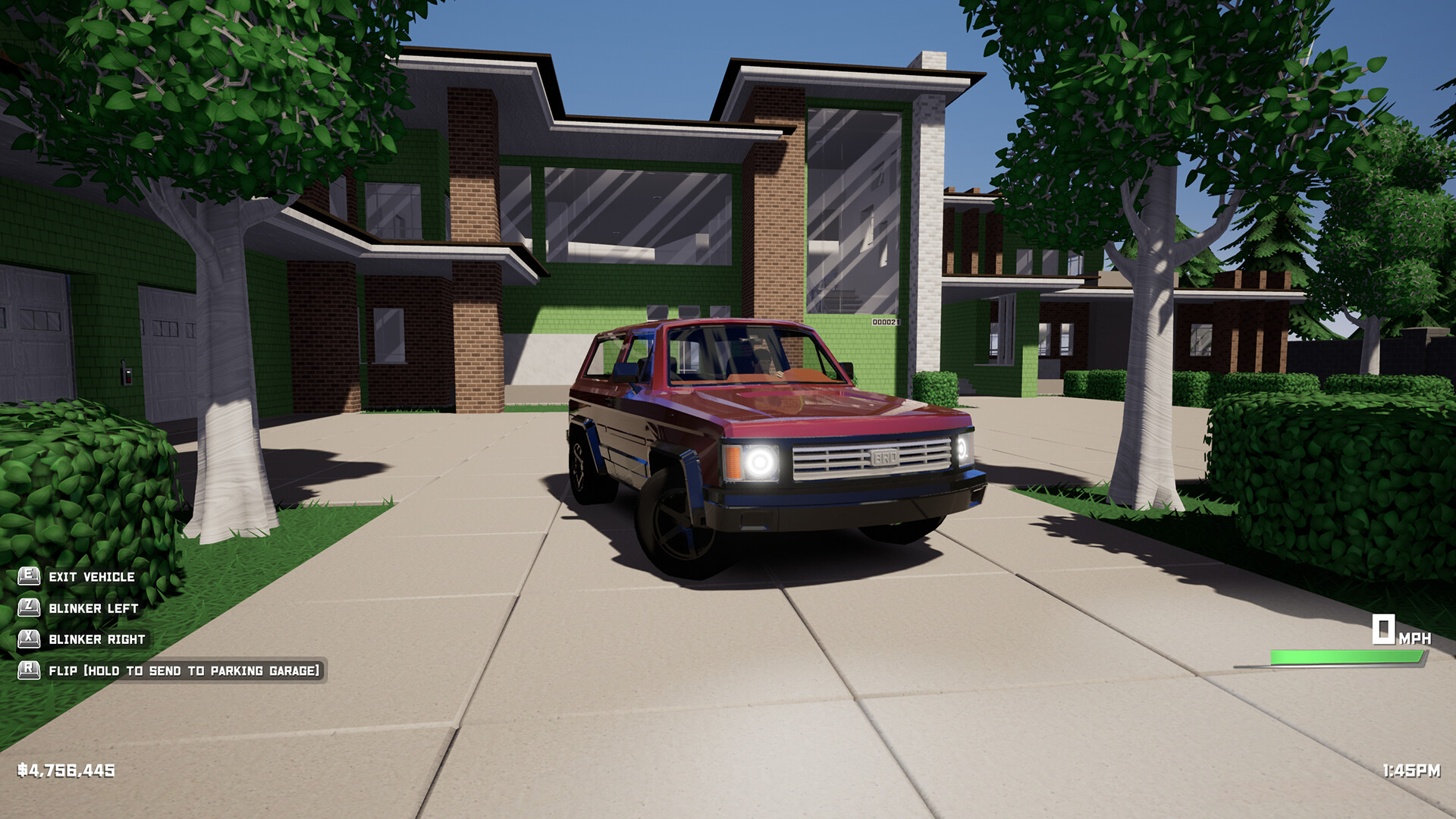
A house purchased and furnished as a rental property, one of several ways to build passive incomeImage: Flying Blade Studio LLC via Steam -
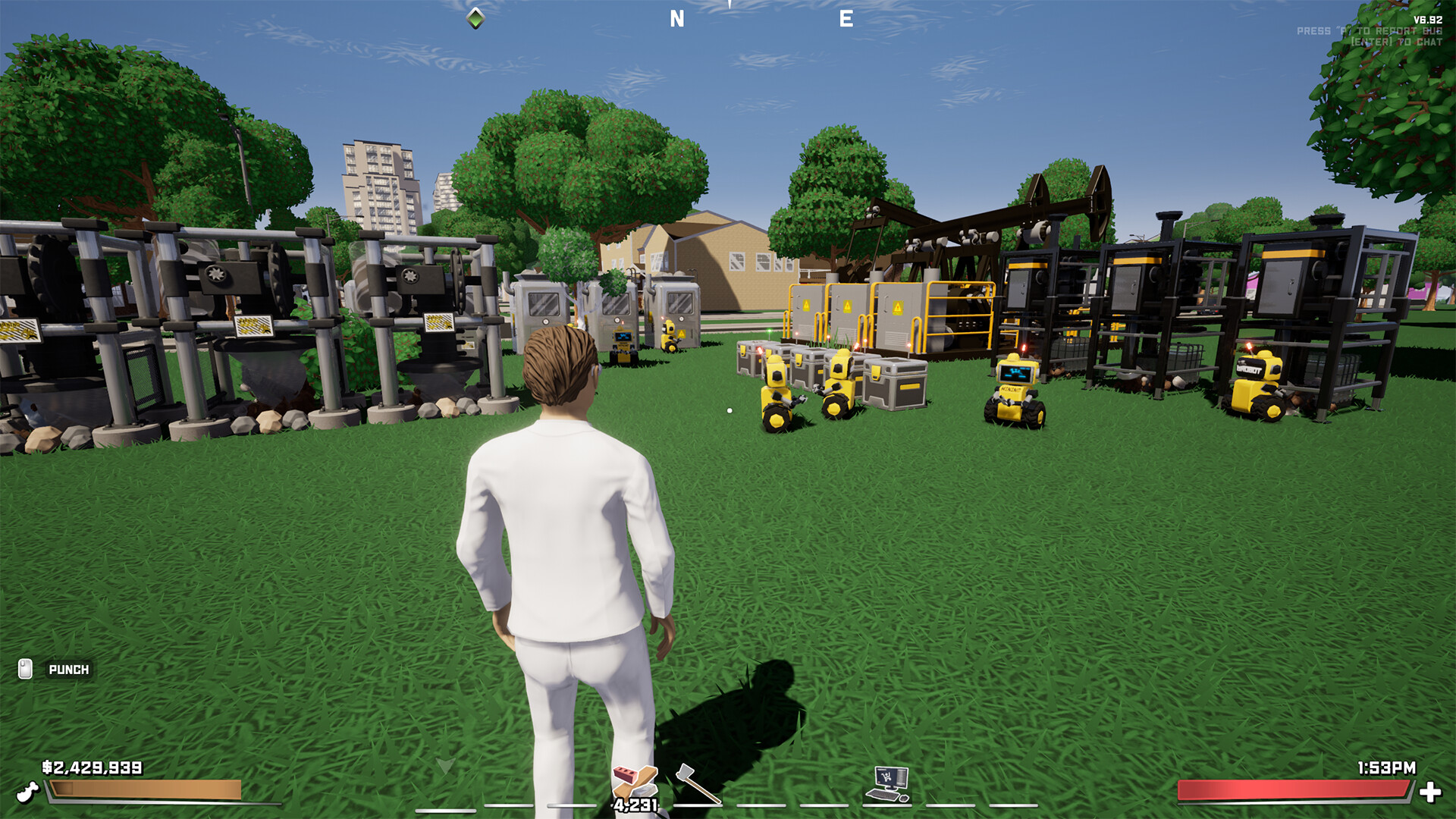
Automated "robot" workers tending a factory and oil derrick, a feature that also dominated the patch notesImage: Flying Blade Studio LLC via Steam -
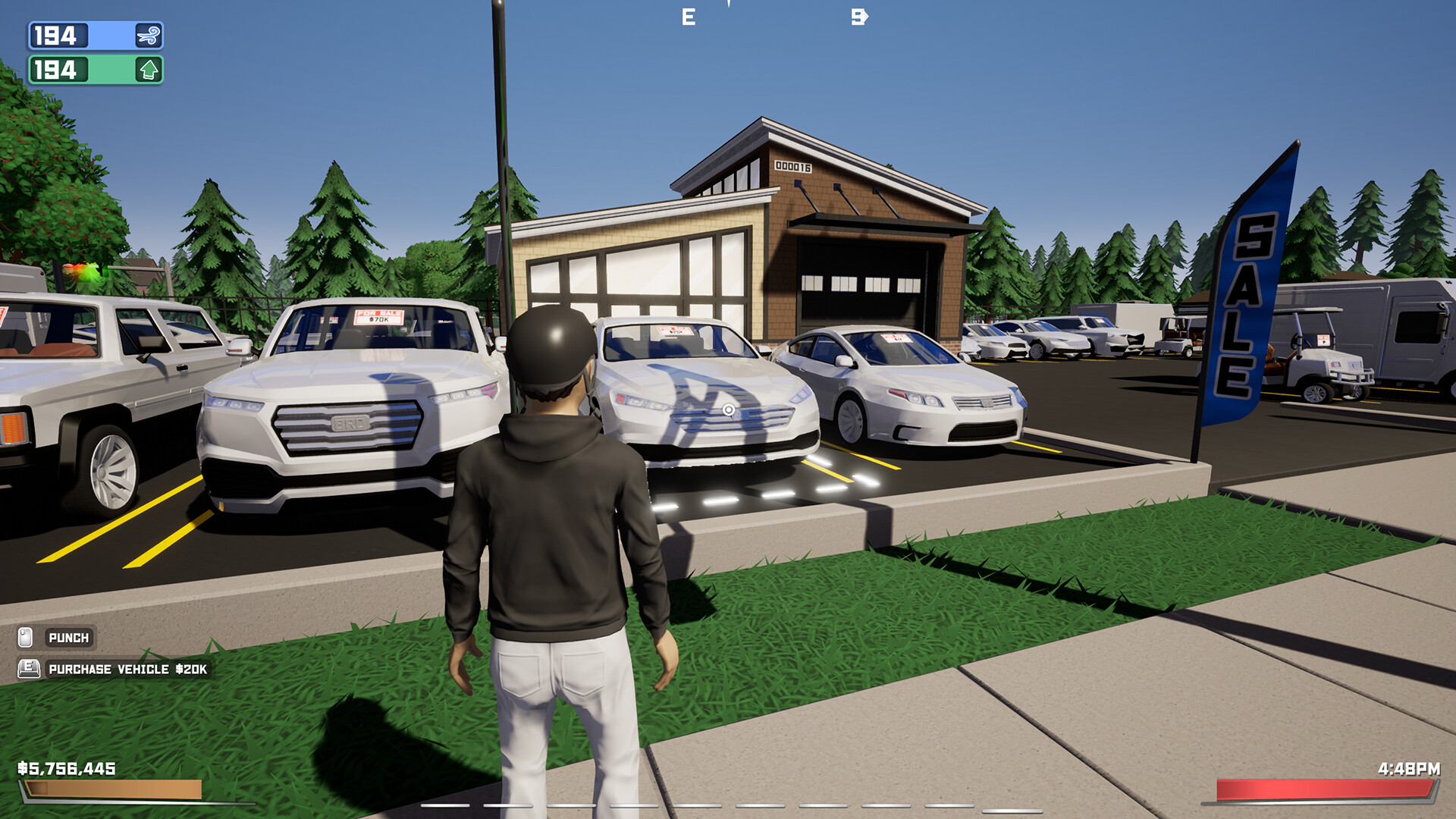
Browsing a car dealership lot, one of the businesses players can buy into or shop at directlyImage: Flying Blade Studio LLC via Steam