Game review
Ash Warden
5.2 / 10
- Developer
- Mgfa Studio
- Publisher
- Molter Games
- Released
- 9 March 2026
- Platforms
- ["Windows"]
- Genre
- Strategy
- Monetisation
- Paid
- Players
- Single-player
The short version
Ash Warden mixes tower defense with an incremental skill tree in a way that feels genuinely fresh, wrapped in confident pixel art. But a runtime most players clear in two to four hours, some serious targeting and hitbox bugs, and upgrade choices that can softlock a run without warning leave it feeling like an early access build that got a full release label a little too soon.
Biggest strengths
- A genuinely unusual mash-up of tower defense and incremental RPG progression
- Strong pixel art and a well-regarded soundtrack, praised across nearly every review
- The skill tree's branching, node-locking structure is repeatedly singled out as clever
Biggest weaknesses
- Only around two to four hours of content per character across just eight stages
- Targeting and hitbox bugs let enemies attack towers from outside their own range
- Some upgrade paths can softlock a run entirely, with no respec option to recover
Who it's for: Tower defense fans curious about a shorter, upgrade-focused take on the genre, ideally picked up on sale rather than at full price.
Our recommendation: Worth a look on discount; approach the full asking price with caution given how quickly the content runs out.
5.2 / 10
A Tower Defense Game Where You Are the Weapon
Ash Warden, developed by Mgfa Studio and published by Molter Games, borrows the shape of tower defense but changes the verb. Instead of placing turrets and watching them fire, you control a single hero who teleports between a handful of fixed towers, holding each one against waves of enemies before the position falls and you have to move on. Clearing waves earns currency spent on a sprawling skill tree, split between class-specific abilities and general stat nodes that unlock as you invest in the branches around them. Two classes are on offer at launch, a melee swordsman and a ranged archer, and progress carries over runs in the incremental-game sense: you get stronger permanently, not just within a single attempt.
It's a mash-up that a lot of Steam's 89 English-language reviewers clearly find interesting, even the ones who end up disappointed by it. Several reviews single out the store's genre tags as actively misleading, pointing out that despite labels like "Idler," "Roguelite," and "Clicker," Ash Warden is none of those things: it demands active clicking, targeting, and repositioning throughout, and one reviewer who bought it specifically expecting a long idle grind was caught off guard by how quickly it ended. With 61 of 89 reviews recommending it, the aggregate lands at Mixed, and reading through the set makes clear this is a title people are genuinely torn on rather than simply disliking outright.
Confident Art Direction and a Skill Tree Worth Praising
The single most consistent point of praise, showing up in nearly every positive review and plenty of the negative ones too, is the presentation. The pixel art is repeatedly called gorgeous, atmospheric, or just "really cool," and the music that plays over the upgrade menu specifically gets called out more than once as a highlight. One reviewer who otherwise found the game bug-ridden and dull still opened with a note that the art style and environments were "great."
Underneath the visuals, the skill tree earns real respect from players who spent time with it. One detailed positive review breaks down the meta-progression loop: clearing a wave earns a token that unlocks one of eight special power branches, each of which has both power-specific and general upgrades, plus a separate currency that lets you undo a choice and try something else. That reviewer calls it "something fresh and fun," and several others describe the requirement to invest in two adjacent branches before unlocking a central node as a clever structural touch rather than an arbitrary gate. The core loop of teleporting between towers under pressure, described by more than one reviewer as "surprisingly frantic," is also frequently cited as the game's best idea, giving the genre-blend some real mechanical identity rather than just borrowing surface trappings from two different genres.
A Handful of Hours, Then Nothing Left
The single most repeated complaint, appearing across a huge share of both positive and negative reviews, is length. Reviewers consistently report clearing the entire game, both characters included, in anywhere from two to seven hours, with eight total stages standing in for the whole of the content on offer. Multiple reviewers who played the earlier open demo say the full release barely expanded past what that demo already offered, and more than one explicitly calls the finished game underbaked for a full release rather than an early access build. At the current asking price of roughly NZ$10.49, that runtime is the single biggest driver of lukewarm and negative scores; several reviewers explicitly recommend waiting for a deep sale rather than paying full price, while others who did enjoy their time with it still qualify their recommendation with "it's fine, but it's short."
That thinness also shows up structurally. With only eight stages providing eight boss-drop tokens total, several reviewers note it's mathematically impossible to unlock more than a fraction of the skill tree's larger upgrade nodes in a single playthrough, undercutting the incremental-progression hook the marketing leans on. A few reviewers who liked what they played anyway argue that quality matters more than quantity here, and that a tight two-hour experience beats an artificially padded one, but they're clearly in the minority against a chorus asking for more levels, more classes, and an endless mode with actual staying power.
Targeting Bugs, Softlocks, and a Few AI-Slop Accusations
Beyond the length complaints, a real cluster of negative reviews centers on the game's targeting and hitbox systems. Multiple reviewers describe enemies standing just outside a tower's effective range while still being able to attack it, a problem attributed by one detailed review to how attack range is calculated from character sprite positions rather than actual enemy coordinates, meaning certain towers are systematically disadvantaged depending on which direction enemies approach from. Several reviewers report watching towers get destroyed while their hero whiffs at what looks like empty air, and one review specifically flags that the melee-focused Vergebrand class is effectively unplayable at points because of it, a bug at least one other reviewer later confirms was patched. A smaller but serious thread involves softlocks: because there's no way to respec a chosen skill node, picking the wrong upgrade at the wrong point can leave a run unwinnable, with a couple of reviewers describing exactly this happening to them with no way to recover except restarting entirely. One long-running review documents a separate, unresolved launch bug tracked across several monthly updates that reportedly still hadn't been fixed as of the most recent patch noted in the review. Two reviewers, independently, also raise suspicion that the game's art and lore text were partly AI-generated, citing inconsistencies in the artwork and generic, em-dash-heavy prose in the story text as their reasoning; this is a claim other reviewers don't repeat, but it's notable that it comes up more than once in the negative reviews.
Verdict
Ash Warden has a real idea at its center, and the reviewers who came away impressed aren't wrong that the skill tree and the tower-hopping combat loop feel distinct from anything else in the crowded tower defense space. The art and music back that up consistently. But between a runtime that most players clear well inside a single afternoon, targeting bugs that let enemies bypass tower defenses outright, and upgrade choices capable of softlocking a run with no way back, it plays like a promising prototype that reached its full release date before its systems were fully sorted out. Pick it up on a steep discount if the concept appeals, treat any purchase at full price as a bet on the developer continuing to patch and expand it, and don't go in expecting the idle-game grind its own storefront tags suggest.
Pros and cons
Pros
- A genuinely unusual mash-up of tower defense and incremental RPG progression
- Strong pixel art and a well-regarded soundtrack, praised across nearly every review
- The skill tree's branching, node-locking structure is repeatedly singled out as clever
Cons
- Only around two to four hours of content per character across just eight stages
- Targeting and hitbox bugs let enemies attack towers from outside their own range
- Some upgrade paths can softlock a run entirely, with no respec option to recover
Screenshots
-
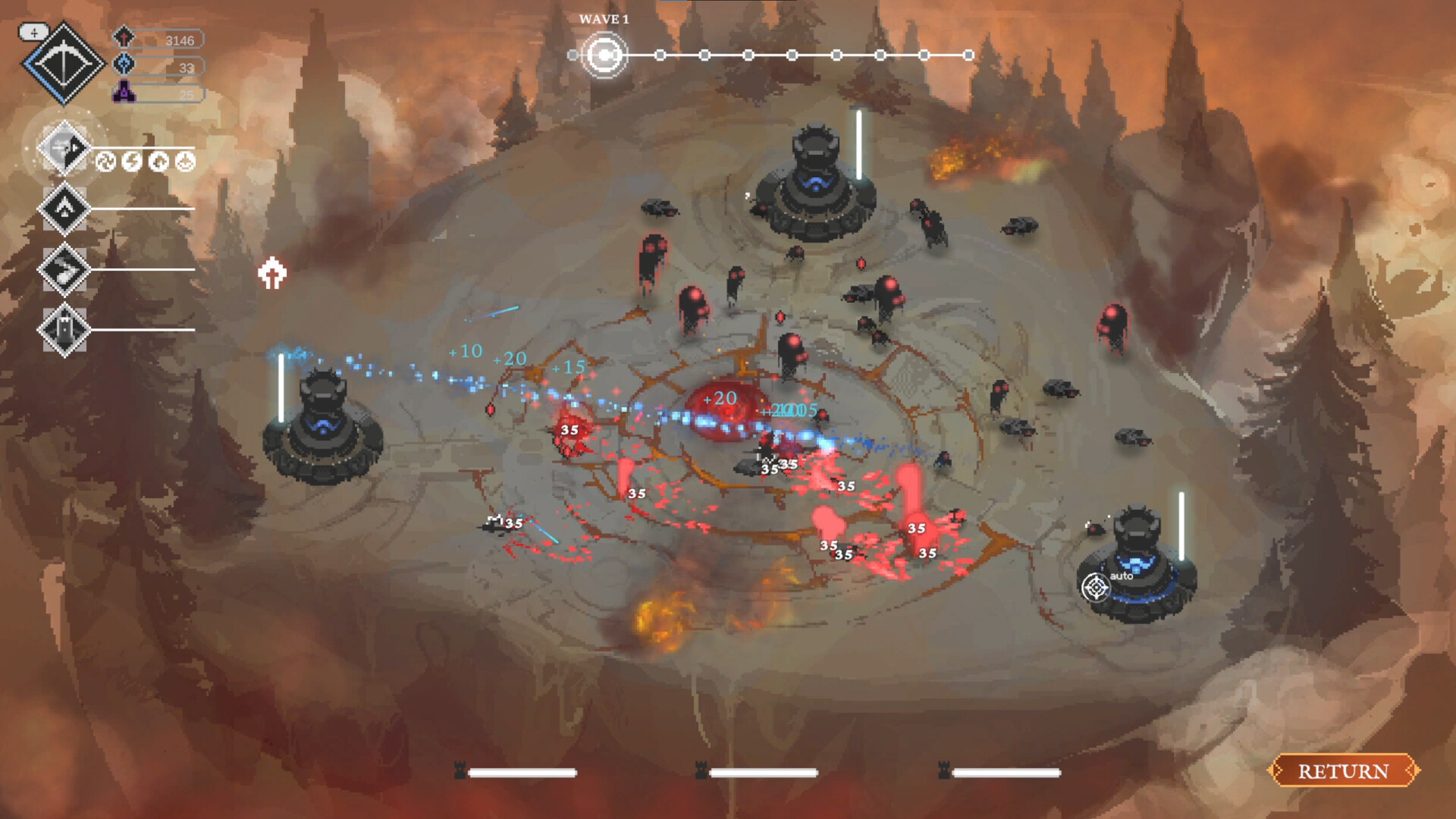
A wave in progress, the hero teleported between towers to hold the line against converging enemiesMolter Games -
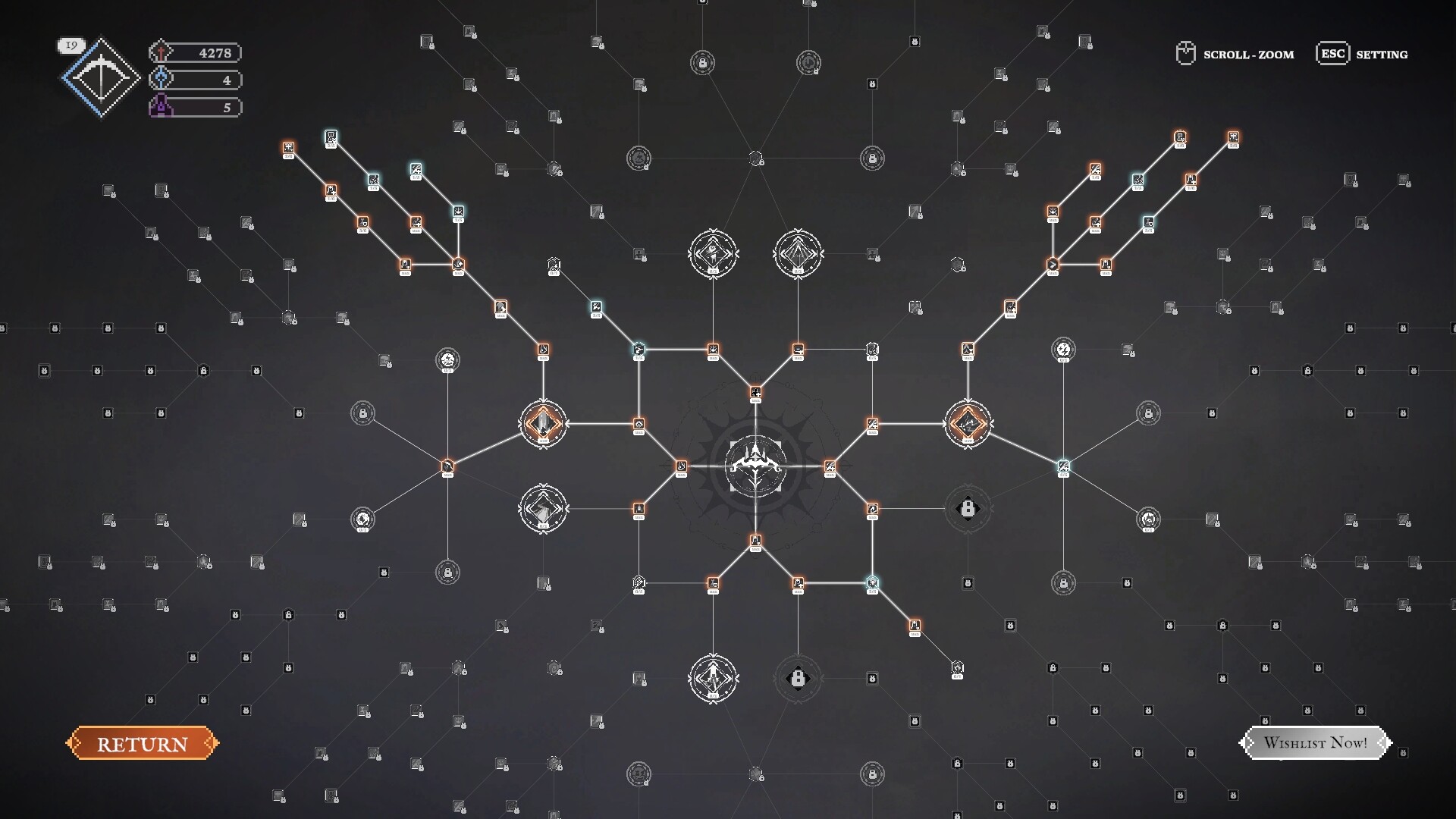
The skill tree reviewers single out as the game's best idea, though picking badly here can softlock a runMolter Games -
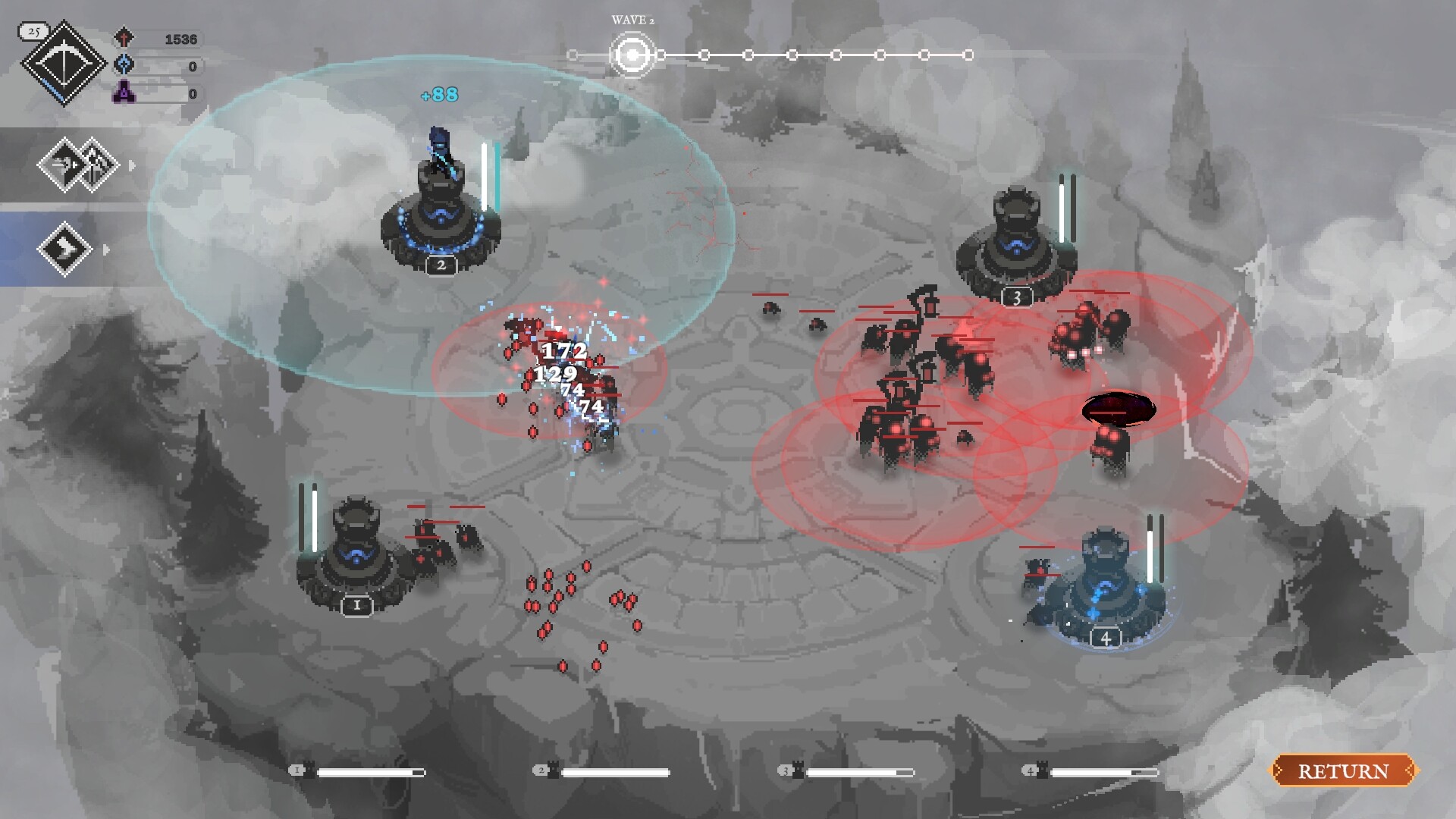
A later wave, where reviewers report enemies attacking towers from outside their effective rangeMolter Games -
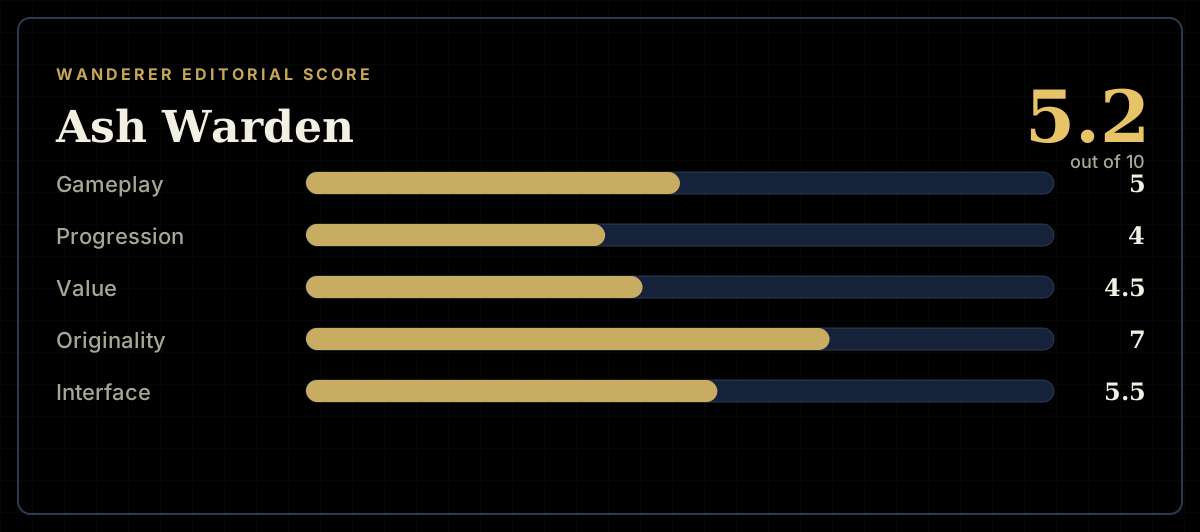
How the review scores each part of the gameWanderer Editorial -
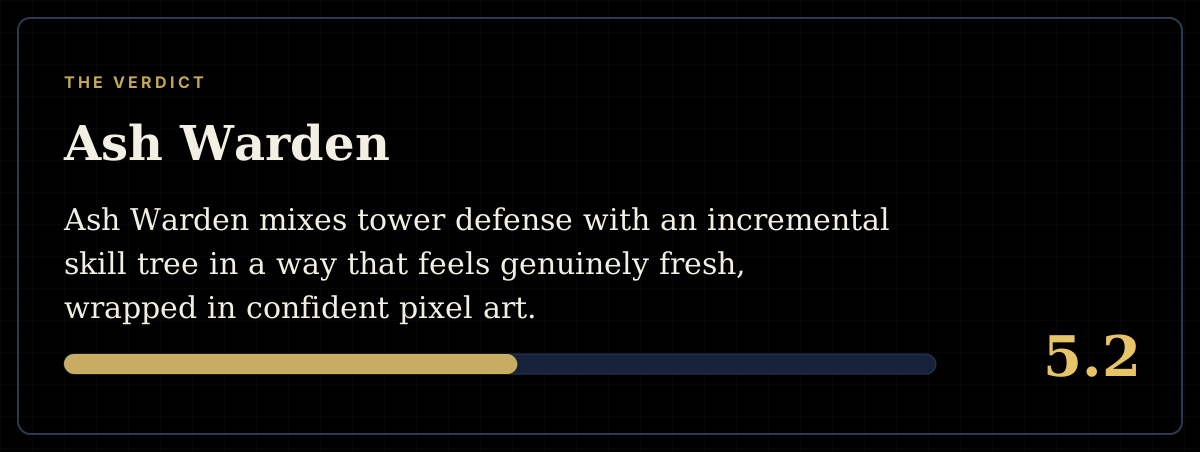
The short versionWanderer Editorial