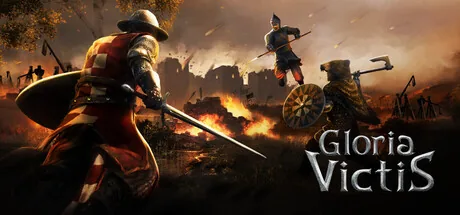
Game review
Gloria Victis: Medieval MMORPG
6 / 10
- Developer
- Black Eye Games (original), gamigo (relaunch)
- Publisher
- gamigo
- Released
- 17 June 2026
- Platforms
- Windows
- Genre
- MMORPG / Open-world PvP
- Monetisation
- Free to play with an optional premium subscription (Patronus Nobilis) and paid packs. On Steam these run from a NZ$12.39 Supporter Pack to a NZ$97.14 Merchant Pack, with bundled editions at NZ$45.87 and NZ$168.01. What they contain is boosters, premium time and cosmetics — XP and crafting-XP boosts, skins, heraldry, titles and Amber currency — not weapons or stats. Prices checked 4 August 2026.
- Players
- MMO — three-faction open-world PvP with territory control
The short version
Three nations, one map, open PvP, territory that changes hands, gear you loot from the corpse of whoever was carrying it. When Gloria Victis works, it produces the kind of story an MMO built on instanced content never will. It's free now, it's genuinely large, and seasons reset the leaderboard rather than your character — a design more games should copy. What's stopping it is everything around the fighting: an interface that never got finished, a crafting economy where most of the 150 resources are worthless, servers that needed merging within six weeks, and a cheating problem that the game's most invested veterans are documenting in public while enforcement announcements talk about gold sellers instead.
Biggest strengths
- The three-nation war is genuinely the draw — open-world territory control with a real economy behind it produces emergent moments no scripted content matches
- Seasons reset only the rankings; characters, levels, professions, gear and guild progress carry over permanently, which is exactly how seasonal design should work
- Skill-based non-target combat still feels better than most of the tab-target MMOs it competes with, and full-loot stakes give every fight weight
Biggest weaknesses
- Cheating is the dominant complaint from the players with the most hours logged — autoblock and ESP tools, reported with video evidence, still described as unaddressed weeks later
- The July enforcement announcement covered real-money trading, not the combat cheats players are actually angry about
- Multiboxing and alt-account stacking distort faction warfare in ways the rules don't prevent
Who it's for: Open-PvP veterans who want faction warfare with full loot consequences and are willing to tolerate rough edges to get it, and MMO players curious about a resurrection story. Not for PvE-focused players, not for anyone who wants a fair fight guaranteed, and not for players who bounce off dated presentation.
Our recommendation: It costs nothing, so try it before you take anyone's word — including mine. Play to level 50 and see whether the faction war grabs you, because that's the point at which the game stops being a questing MMO and becomes a PvP one. Don't buy any pack until you've decided you're staying; the top editions run to NZ$168 and everything in them is a booster or a cosmetic. If you're joining with friends, check which nation is population-capped on your server first.
6 / 10
One of the most-upvoted recent reviews of Gloria Victis is a story, not an opinion. A player is out mining near the front line. Someone from an enemy nation spots him and opens fire with a bow. He charges, kills the archer with a two-hander he'd looted off an NPC, picks up the bow, notices it's better than his own, and keeps it.
That's the entire pitch. Three nations, one contested map, full loot, and an economy where the thing that killed you becomes the thing you're carrying. No instance, no queue, no matchmaker.
The rest of this review is about why that isn't currently enough.
What actually happened to this game
The store page says 17 June 2026, and almost everything you'll read about it gets the history wrong.
Gloria Victis went into Steam Early Access on 9 June 2016, made by the Polish studio Black Eye Games. It reached 1.0 in early 2023 — and later that year the studio ran out of money and players, shut down, and the game was delisted and taken offline entirely. It wasn't abandoned in the usual MMO sense of a skeleton crew and no updates. It was switched off.
In February 2026 gamigo announced it had acquired the licence, and on 17 June it came back as a free-to-play game. So this is a relaunch of a decade-old MMO under new ownership, with a new business model, and that context explains almost every complaint and every compliment it currently receives.
It also means the lifetime review score is close to useless. 68% positive across 11,805 reviews blends a paid Early Access game from 2016, a 1.0 nobody could buy by 2024, and a free relaunch six weeks old. Read the recent ones instead — of the hundred most recent English reviews, 63 are positive. Still Mixed, but at least it's Mixed about the game that currently exists.
The war is good
The core is intact and it's still the reason to be here. Three factions, permanent open-world PvP outside safe zones, territory that changes hands, and a player-driven economy underneath it all. Combat is skill-based and non-target — you aim, you time blocks, you commit — which puts it closer to a directional-combat action game than to the tab-target MMOs it shares a shelf with.
Seasons are handled properly, and this deserves specific credit. A Glory Season runs about two months and resets the rankings — titles, gold rewards and weekly contribution points for faction PvP performance. It does not reset your character. Levels, gear, professions and guild progress carry over untouched. After years of live-service games using "season" as a synonym for "we deleted your progress", it's genuinely refreshing to see the word used to mean a leaderboard.
The gathering-and-crafting spine is ambitious too, and the players who like this game mostly like it for the loop of gathering, crafting, supplying a war and losing it all in a bad fight.
Where it comes apart
Cheating. This is the story of the relaunch, and there's no soft way to put it. The negative reviews naming autoblock tools, ESP and third-party cheats aren't from players who bounced in twenty minutes — they're from accounts with 87, 100, 150 hours logged in six weeks, one of them past 1,300 hours. They describe reporting cheats with video evidence and receiving no response, and several say the tools are trivially findable.
On 24 July the team published an enforcement update. It's about real-money trading: gold buyers banned, illicit gold and goods stripped, zero tolerance going forward. That's a real action against a real problem — but it isn't the problem the veterans are shouting about. In an open-PvP game where every fight has full-loot stakes, unaddressed combat cheating doesn't damage the experience, it voids it. Nothing else in this review matters as much.
Population, and the shape of it. The relaunch drew a genuine crowd, including a large influx from China, and the servers didn't cope — instability, lag, login failures. The team added capacity, then introduced a system capping any single nation at roughly 50% of a server after watching one faction reach 80–90%. On 30 July, all regional servers were merged into one per region.
Merging six weeks after a relaunch is the sort of thing that reads two ways. Officially it's about bigger battles and stronger economies, and for a three-faction war that's a legitimate argument. Practically, you don't consolidate servers when they're full.
The economy has a hole in it. There are around 150 gatherable resources and, by players' accounts, roughly ten that anyone wants. The rest are effectively unsellable. For a game whose entire mid-game is meant to be gather, craft, supply, that's a structural fault rather than a tuning issue — most of the map's content produces nothing anybody needs.
And it feels unfinished. Tip pop-ups fire every few seconds. Fast travel locks you out without explanation. An arena countdown reaches zero and starts a second countdown. Early questing is repetitive filler before level 50, which is where the game stops being a themepark and becomes a war. Players who arrive expecting PvE content find a fairly thin one and leave before the good part.
What it sells, and what that's worth
Free to play, and to gamigo's credit the shop is not selling stat sticks.
The packs on Steam are boosters, premium time and cosmetics: the NZ$24.25 Starter Pack is a month of Patronus Nobilis premium plus a 30% XP booster; the NZ$51.99 Blacksmith Pack is a furnace skin, a tool rack, heraldry, crafting signatures and a crafting-XP boost; the NZ$12.39 Supporter Pack is a title, heraldic symbols, Amber currency and two lore documents. Bundled editions climb to NZ$168.01.
Nothing there is a weapon or a stat. What is sold is speed, and in a PvP game with a level-gated endgame, speed is not nothing — but it's a long way from the gear-shop MMOs Wanderer readers usually get burned by, and several long-time players state plainly that time substitutes for money here. The sharper criticism is pricing: a hundred dollars for boosters and skins in a free game, and an in-game shop players describe as overpriced, is a lot of confidence for a title six weeks into a second life.
One genuine goodwill note: players who owned the game before the shutdown had their cosmetic unlocks restored at relaunch rather than being asked to buy them again.
The verdict
6.0 out of 10. Rated 6.0 out of 10.
There's a good MMO in here and, unusually, it's the design that's good and the operations that aren't. The faction war, the full-loot stakes, the non-target combat and the season model that respects your character are all things I'd happily recommend. Albion Online built an enormous following on a similar promise, and Pax Dei is still trying to.
But an open-PvP game lives or dies on whether its fights are honest, and right now its most committed players are compiling evidence dossiers instead of raiding. Add an economy where most resources are dead weight, an interface still wearing 2016's rough edges, and a server consolidation six weeks after launch, and 6.0 is where it lands. That's not a dismissal — it's free, and the faction war is worth an evening of anyone's time to find out.
Where it goes depends on one thing. If gamigo's next enforcement post is about combat cheating rather than gold selling, this score is too low and I'll happily revisit it. If it isn't, the veterans currently documenting hacks will leave, and a three-nation war doesn't work with two.
Pros and cons
Pros
- The three-nation war is genuinely the draw — open-world territory control with a real economy behind it produces emergent moments no scripted content matches
- Seasons reset only the rankings; characters, levels, professions, gear and guild progress carry over permanently, which is exactly how seasonal design should work
- Skill-based non-target combat still feels better than most of the tab-target MMOs it competes with, and full-loot stakes give every fight weight
- Free to play with no barrier to entry, and several long-time players confirm you can compete on time rather than money
- The population-balancing system, capping any nation at roughly half a server, is an unglamorous fix aimed at the right problem — one faction had reached 80–90%
- Prior owners had their cosmetic unlocks restored at relaunch rather than being asked to rebuy them
Cons
- Cheating is the dominant complaint from the players with the most hours logged — autoblock and ESP tools, reported with video evidence, still described as unaddressed weeks later
- The July enforcement announcement covered real-money trading, not the combat cheats players are actually angry about
- Multiboxing and alt-account stacking distort faction warfare in ways the rules don't prevent
- Crafting spreads across roughly 150 resources of which only a handful have real demand, leaving most gathering economically pointless
- Launch weekends brought instability, lag and login failures, and all regional servers were merged into one per region six weeks in
- The interface remains visibly unfinished — tip pop-ups every few seconds, unexplained fast travel lockouts, an arena timer that restarts itself
- Presentation is a 2016 game and looks it, with repetitive early questing before the PvP opens up
Screenshots
-
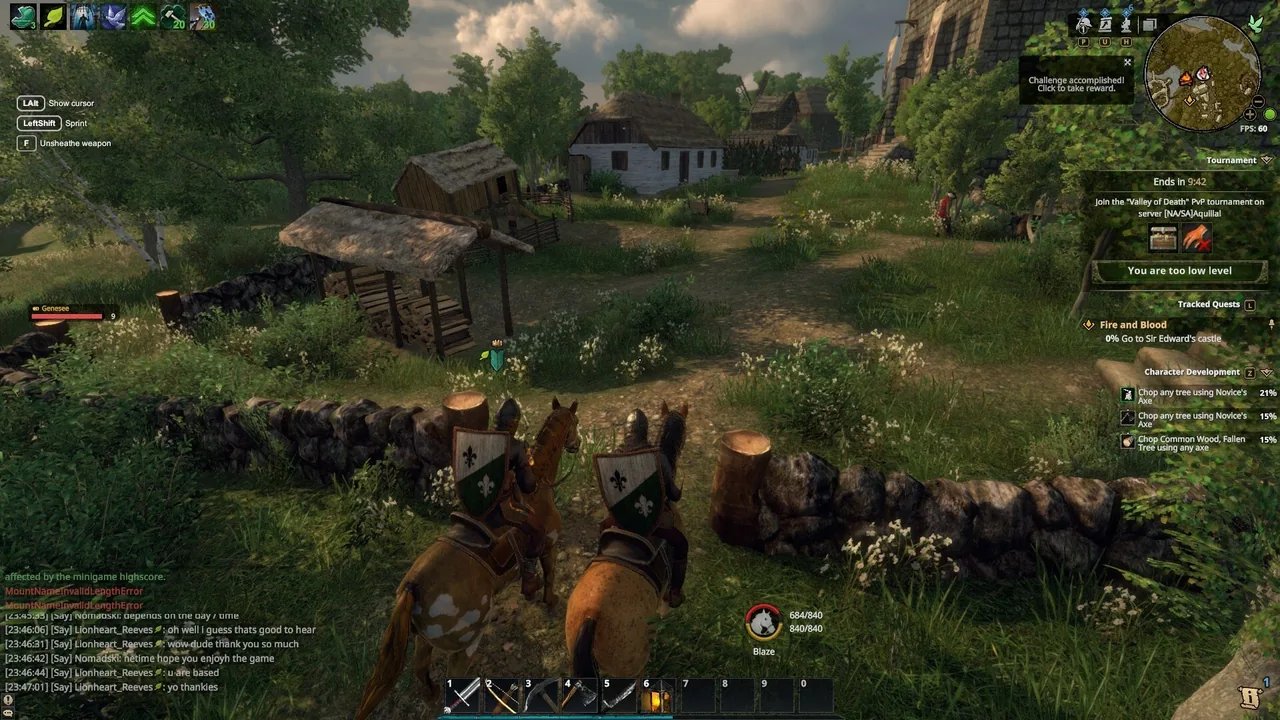
Gloria Victis: Medieval MMORPGImage: gamigo US via Steam -
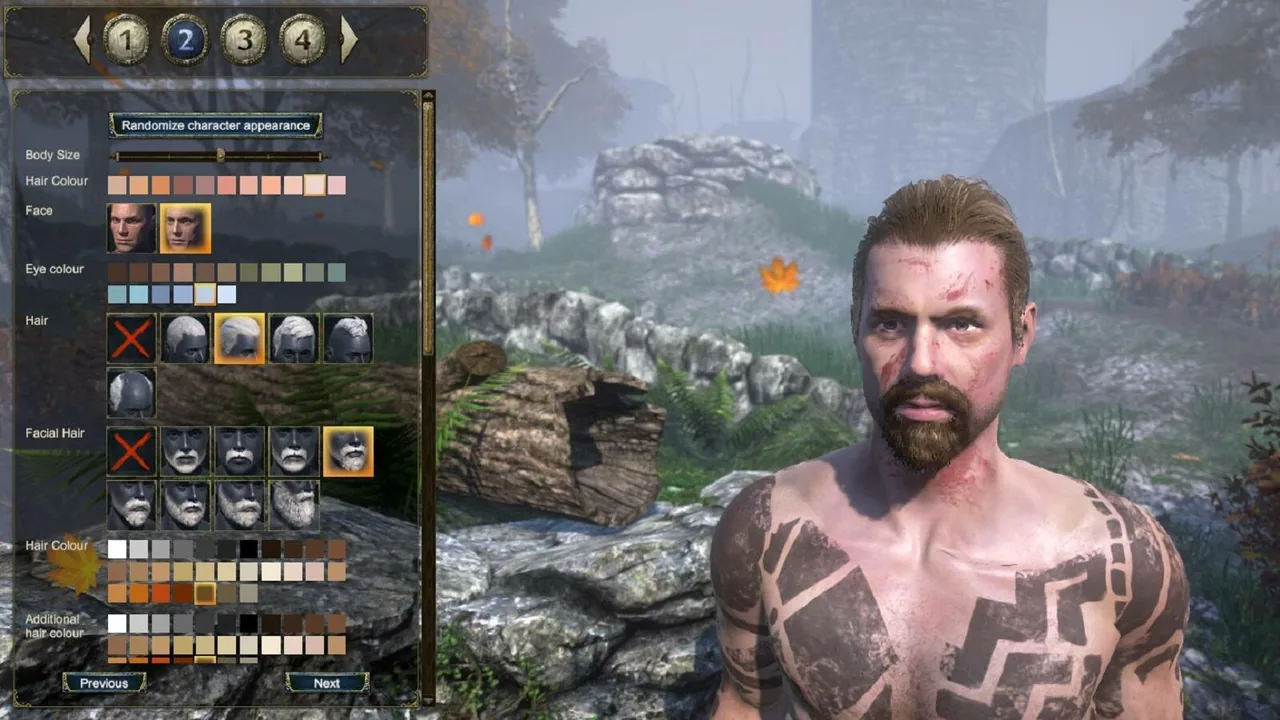
Gloria Victis: Medieval MMORPGImage: gamigo US via Steam -
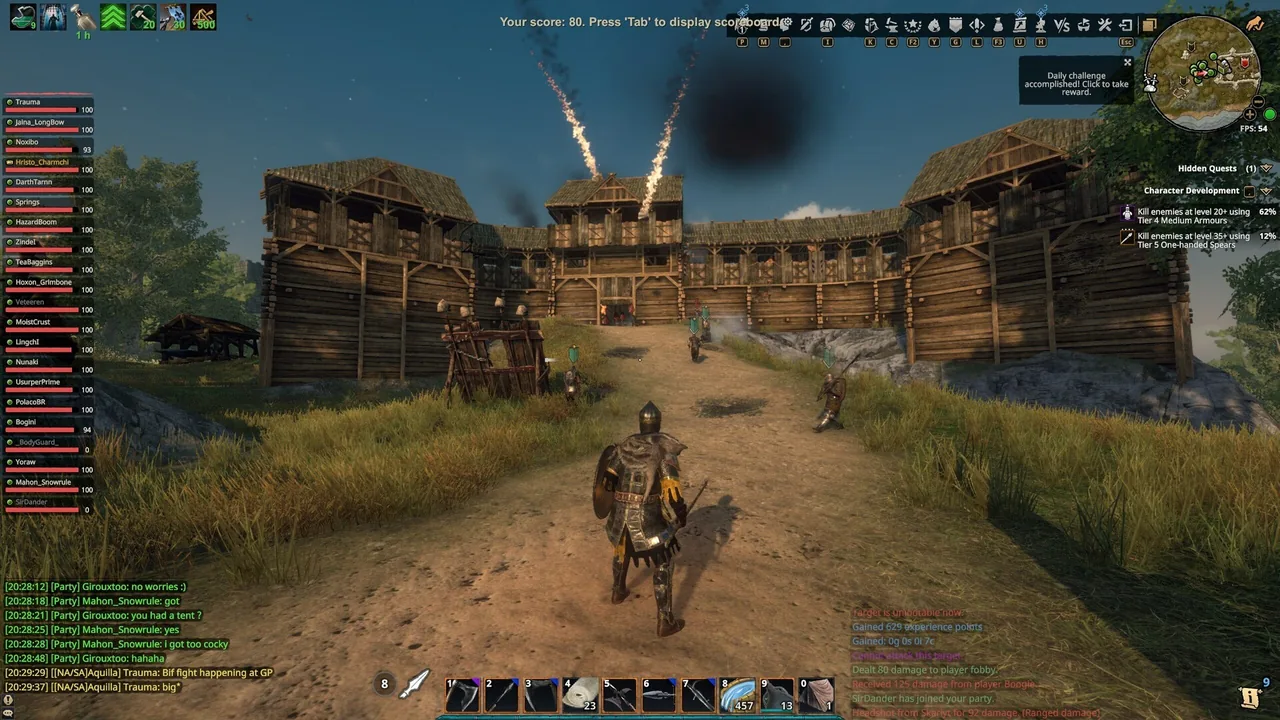
Gloria Victis: Medieval MMORPGImage: gamigo US via Steam -
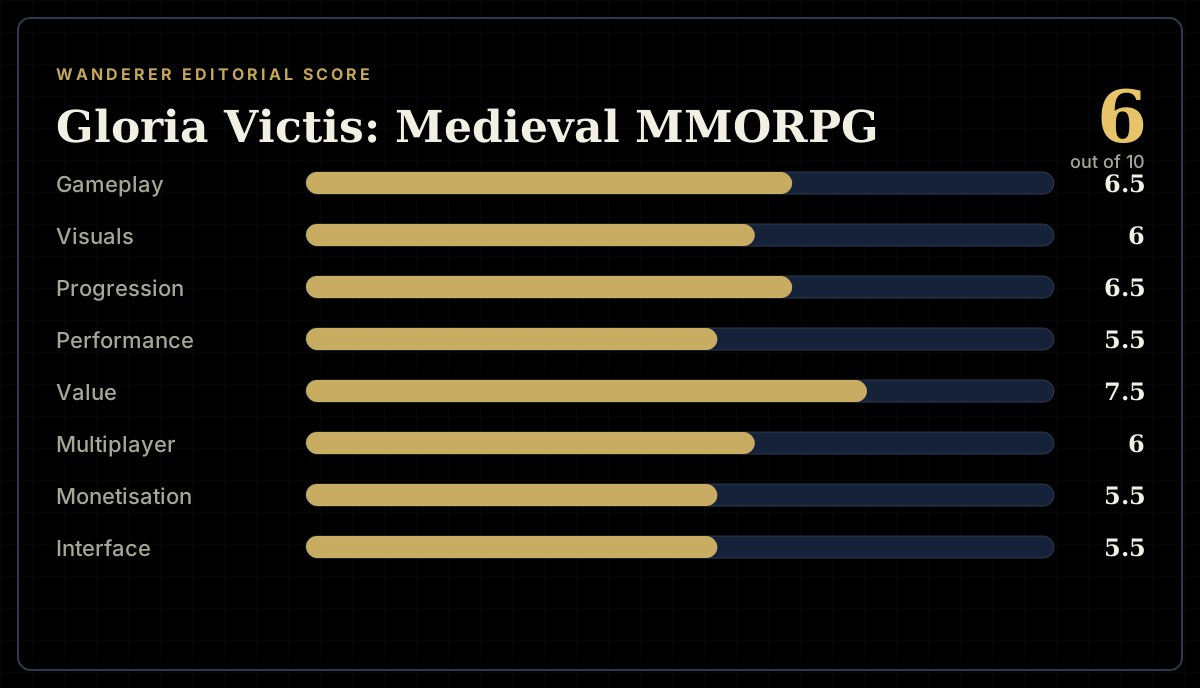
How the review scores each part of the gameWanderer Editorial -
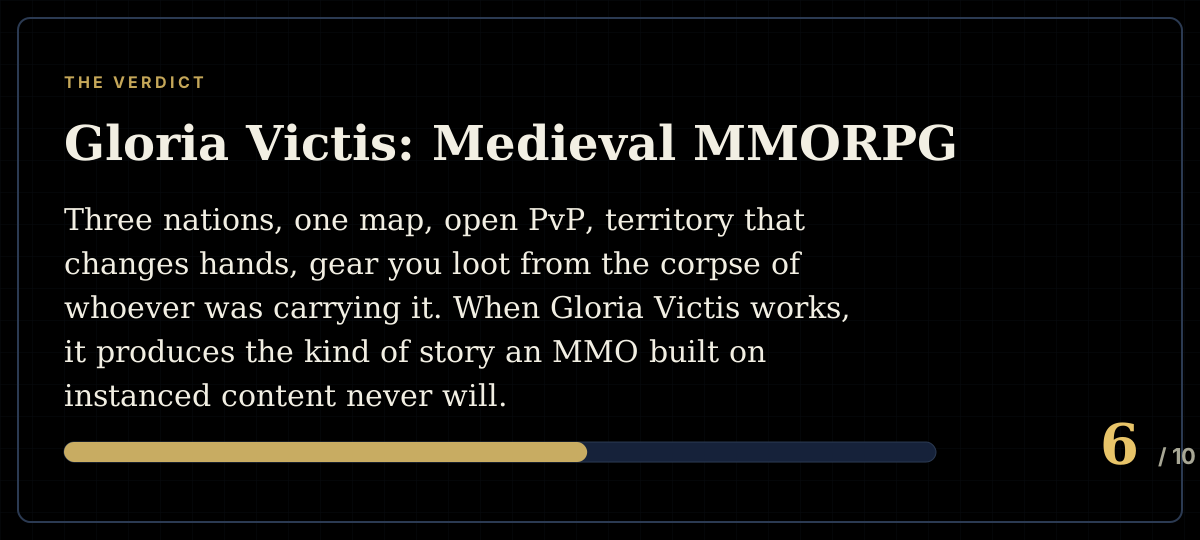
The short versionWanderer Editorial