Game review
Fuga: Melodies of Steel 3
6 / 10
- Developer
- CyberConnect2
- Publisher
- CyberConnect2
- Released
- 28 May 2025
- Platforms
- Windows
- Genre
- RPG, Simulation, Strategy
- Players
- Single-player
The short version
Biggest strengths
- A genuinely emotional, hard-earned conclusion to a distinctive tank-crew RPG trilogy that longtime fans describe as difficult to put down and hard to say goodbye to
- The core cast of children commanding the war-tank Taranis retains the emotional weight and specificity that made the earlier games stand out in a crowded RPG field
- Developer CyberConnect2 is a genuine passion project by a studio otherwise best known for licensed anime work, and reviewers rally around wanting to see it succeed for that reason
Biggest weaknesses
- Widely and specifically described by longtime series fans as the weakest and easiest entry in the trilogy, with new mechanics criticized as cluttering an already-solved combat system rather than adding meaningful challenge
- One detailed reviewer alleges the game shipped in an unfinished state — a non-existent French dub and English text they say was handled by only two employees and left incomplete in places
- The story is repeatedly described as tonally unfocused, with reviewers noting the first and second halves feel like different games and the ending underwhelms relative to the trilogy's buildup
6 / 10
Closing out a genuinely distinctive trilogy
Fuga: Melodies of Steel 3 brings CyberConnect2's tank-crew RPG series to its conclusion, wrapping up a story that's always stood apart from typical anime-adjacent RPGs by centring its cast almost entirely on children forced to crew a sentient war tank through an occupying invasion, weighing genuine moral cost against survival at every turn. The developer — a studio whose commercial bread and butter is licensed work like the Naruto Storm series — has built Fuga as something closer to a passion project across all three entries, and that context colours how the review base talks about this finale. One of the most-upvoted reviews on the store page frames it directly: "CyberConnect2: Born to make furry games with interesting stories, compelling characters and insane lore, yet forced to make anime licensed slop for Bandai Namco... please support these games" — a plea for the trilogy's commercial success that reads as much as advocacy for the studio's creative freedom as a review of this specific entry.
For fans who've followed the series from the start, the emotional core still lands. Multiple reviewers describe genuinely struggling to put the game down, and more than one frames finishing it as an experience with real, lasting weight: "it's kinda hard to say goodbye to those kids," one review states plainly, a sentiment echoed by others who've clearly grown attached to the cast across three games' worth of hardship.
The weakest entry, by its own fans' account
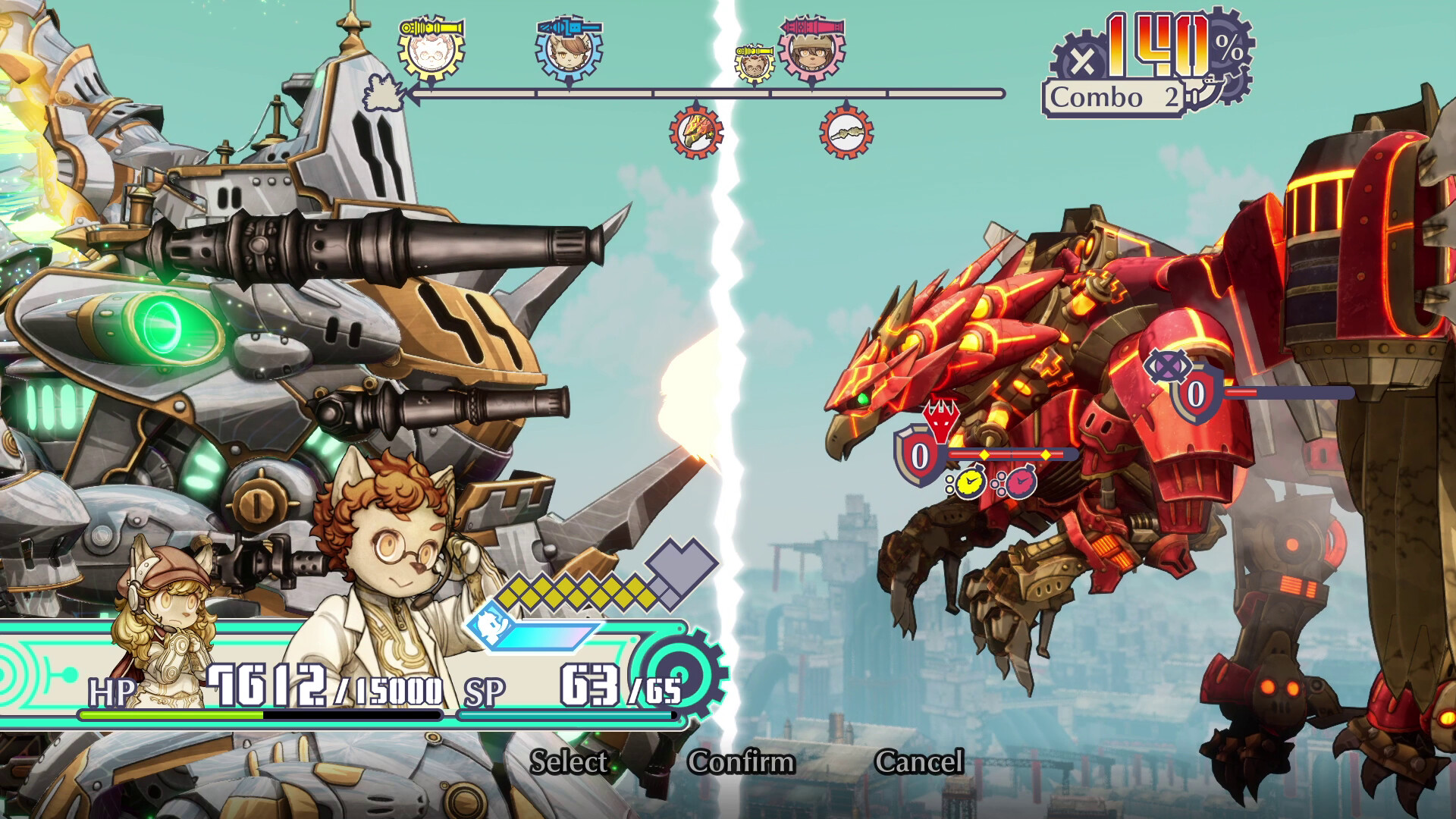
That emotional attachment sits alongside a genuinely consistent, specific critical verdict from the exact audience best positioned to make the comparison: longtime players of Fuga 1 and 2. "Much more flawed than 1 and 2," one reviewer states, going on to describe the combat as "significantly easier across the board even though it feels mostly the same as before, so it ends up more dull and feeling less desperate." A separate reviewer arrives at an almost identical conclusion independently: "It's painfully clear to me at this point that this trilogy peaked with the first game," adding that combat has become more repetitive with a correspondingly weaker sense of reward. A third, more detailed critical review breaks the mechanical complaint down precisely: the player now has access to "12 randomly triggering abilities, plus summonable allies that do a variety of things, plus an easily exploitable charge system," a stack of new systems that, rather than deepening the combat, appear to have made an already-solvable game trivially easy.
This is a specific, well-corroborated pattern rather than a vague "it's not as good" complaint — three independent, detailed reviewers converge on the same diagnosis: new mechanical layers added without corresponding difficulty tuning, resulting in a combat system that feels cluttered rather than challenging.
A finale accused of shipping unfinished
The most serious individual complaint in the review sample concerns the game's actual completeness at launch. One detailed, heavily-upvoted review states: "This game was shipped unfinished. French dub is non-existent, the English text was only done by two employees and left incomplete." That's a specific, checkable-sounding claim rather than a vague quality complaint, and it's echoed by a separate reviewer who independently flags the missing French voice-over as a real letdown given that both prior entries included one — "for me she is a canon [voice]," they write, underlining how directly the absence breaks continuity with the earlier games for series-invested players. Neither claim can be independently verified from the review text alone, but the specificity and the fact that two reviewers raise the French-dub gap independently gives it more weight than an isolated complaint would carry.
A tonal complaint sits alongside the completeness concerns: several reviewers single out an irreversible "Fast Mode" feature tied directly to imagery of child characters dying, describing the choice as mechanically interesting but emotionally jarring in a way that feels mismatched with the rest of the game's careful handling of its young cast's mortality throughout the series.
Where the story loses its footing
Story structure draws its own specific criticism, distinct from the gameplay and completeness complaints. "The story feels unfocused where the first half of the game is totally different than the second half and the final boss..." one reviewer writes, trailing into spoiler territory but making clear the tonal and structural shift between the game's two halves reads as a weakness rather than a deliberate escalation. A separate, more measured review calls it "in some ways a suitably bombastic conclusion to the trilogy, in others a kind of disappointingly orthodox and conventional sequel that draws a lot of attention to its own inability to capitalize on the unique strengths of these games" — a genuinely careful, two-sided assessment from a reviewer clearly invested in the series wanting more from its ending than a conventional wrap-up.
New characters introduced specifically for this entry fare worse in reviewer estimation than the returning cast: one reviewer describes them as having "no character," relegated to optional conversations most players are unlikely to seek out, which compounds the sense that the trilogy's emotional resources were concentrated in its returning cast rather than spent building out its finale-exclusive additions.
Where this leaves it
Fuga: Melodies of Steel 3 closes out a genuinely distinctive trilogy with real emotional weight intact for the characters players have followed across three games, but by the near-unanimous account of the series' own longtime fans, it's the weakest mechanical entry, an increasingly easy combat system cluttered with underused new systems, and — per at least one detailed and specific account — a finale that may have shipped without full localisation. Recommended primarily to players already invested in the first two games who want to see the story through, with clear-eyed expectations that this entry asks more forgiveness of its combat and its completeness than its predecessors did.
Pros and cons
Pros
- A genuinely emotional, hard-earned conclusion to a distinctive tank-crew RPG trilogy that longtime fans describe as difficult to put down and hard to say goodbye to
- The core cast of children commanding the war-tank Taranis retains the emotional weight and specificity that made the earlier games stand out in a crowded RPG field
- Developer CyberConnect2 is a genuine passion project by a studio otherwise best known for licensed anime work, and reviewers rally around wanting to see it succeed for that reason
- A wide achievement spread (90.2% down to 15.1% across 44 achievements) confirms real structural content for players who see the trilogy through to its end
Cons
- Widely and specifically described by longtime series fans as the weakest and easiest entry in the trilogy, with new mechanics criticized as cluttering an already-solved combat system rather than adding meaningful challenge
- One detailed reviewer alleges the game shipped in an unfinished state — a non-existent French dub and English text they say was handled by only two employees and left incomplete in places
- The story is repeatedly described as tonally unfocused, with reviewers noting the first and second halves feel like different games and the ending underwhelms relative to the trilogy's buildup
- An irreversible "Fast Mode" tied to imagery of child characters' deaths draws specific criticism as a tonally uncomfortable mechanical choice
- New characters and post-game "Character Secrets" content are described as underdeveloped, offering little payoff for the time invested in unlocking them
Screenshots
-
Fuga: Melodies of Steel 3Image: CyberConnect2 via Steam -
Fuga: Melodies of Steel 3Image: CyberConnect2 via Steam -
Fuga: Melodies of Steel 3Image: CyberConnect2 via Steam -
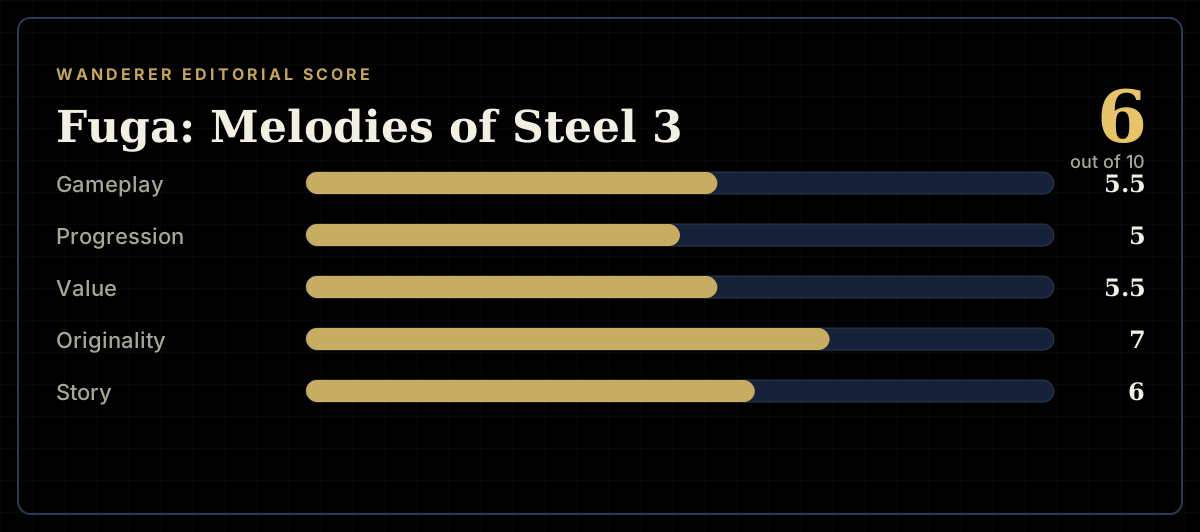
How the review scores each part of the gameWanderer Editorial -
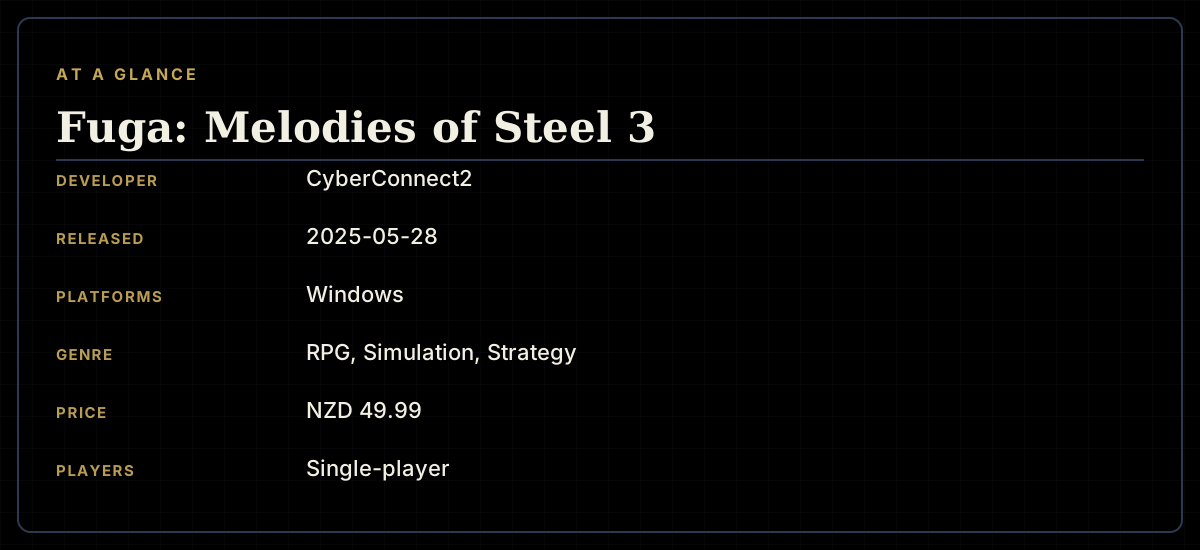
At a glanceWanderer Editorial -
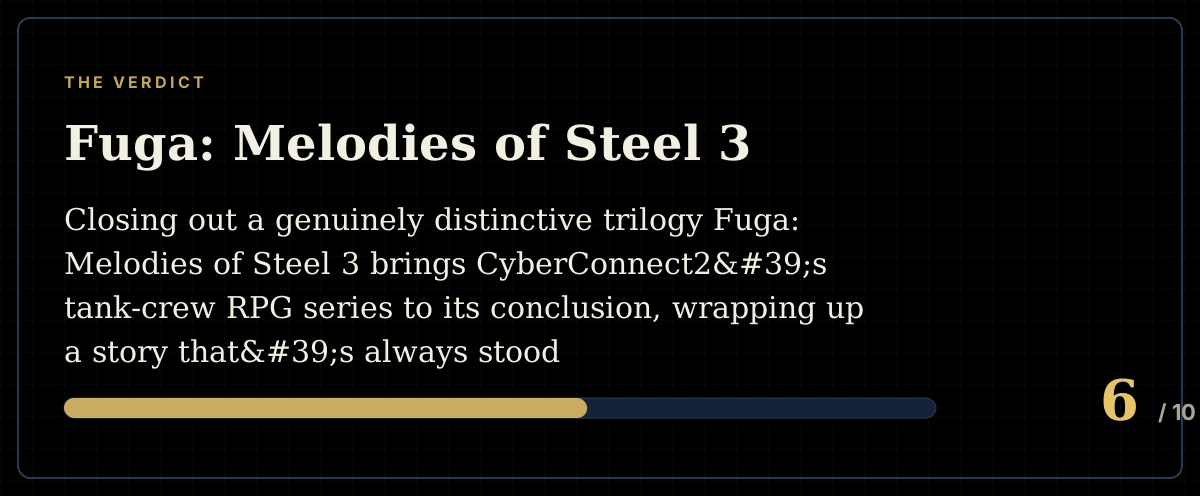
The short versionWanderer Editorial