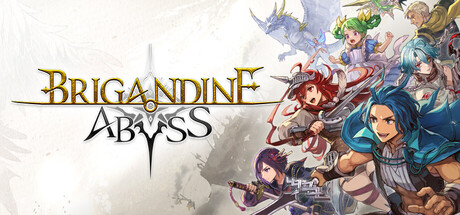
Game review
BRIGANDINE ABYSS
4.5 / 10
- Developer
- Adglobe
- Publisher
- NIS America, Inc., Happinet
- Released
- 26 August 2026
- Platforms
- Windows
- Genre
- Strategy, Simulation
- Monetisation
- One-time purchase, no in-game purchases listed
- Players
- Single-player
The short version
BRIGANDINE ABYSS, released 26 August 2026 by Adglobe and published by NIS America and Happinet, is the newest entry in a cult tactical-RPG series stretching back to the PS1-era Brigandine: The Legend of Forsena. It sits Mostly Negative with English-speaking players, 34.5% across a substantial 223-review sample as of this check, and the negative majority is unusually detailed and specific rather than generic disappointment: dozens of self-identified series veterans independently list the same concrete cuts from prior entries — fewer classes, no multiclassing, no branching general-class trees, fewer monster types, one castle per faction instead of several, faction leaders reduced to lightly reskinned generic units, and a story mode that locks invasion order behind scripted triggers rather than letting players choose their own path through rival nations as previous games allowed. Several reviewers explicitly and repeatedly recommend buying the cheaper, older Brigandine: Grand Edition or The Legend of Runersia instead. A real minority of defenders, including some equally long-time fans, argue the underlying tactical combat is genuinely more balanced than prior entries and that early post-launch patches have already meaningfully improved performance and content since a rockier initial release.
Biggest strengths
- A meaningful minority of reviewers, including experienced tactics-genre players, argue the core turn-based combat is more carefully balanced than prior Brigandine entries, citing an end to single-element squads dominating fights and more clearly differentiated monster abilities
- Reviewers report substantial post-launch improvement since the game's demo and early release builds, including a jump to 60fps, smoother animations, and quality-of-life additions, which several say make the negative reviews from launch week less representative of the current build
- Each hero and playable faction is described as having at least one unique skill or passive, and per-story final bosses and story-specific unlock conditions add some structural variety across the game's multiple playable factions
Biggest weaknesses
- A large, consistent majority of reviewers who are self-identified Brigandine veterans list the same specific cuts compared to Brigandine: Grand Edition and The Legend of Runersia: fewer classes, no multiclassing, no branching general class trees, fewer monster types, and faction leaders reduced to lightly reskinned generic units with a single extra ability rather than the series' previously distinct named characters
- The story mode reportedly locks which rival nations can be invaded and in what order behind scripted plot triggers, removing what multiple reviewers describe as a defining, longstanding series freedom to choose your own conquest path from the start
- Multiple reviewers report a hard mission time limit that, unlike in previous games, cannot be disabled, and describe base-building requirements as demanding disproportionate resources for underwhelming results
Who it's for: Longtime Brigandine fans should read the specific list of removed features before buying at full price; newcomers to the series who want a self-contained tactical RPG may find more to like without the weight of comparison to its predecessors.
Our recommendation: Wait for a significant price drop unless the specific combat-balance improvements described below are what you're most looking for; series veterans wanting the fuller feature set should strongly consider Brigandine: Grand Edition or The Legend of Runersia instead, as multiple reviewers explicitly suggest.
4.5 / 10
Introduction
BRIGANDINE ABYSS, released 26 August 2026 by Adglobe and published by NIS America and Happinet, carries a real legacy on its shoulders: it's the newest entry in a tactical-RPG series that began with the PS1-era Brigandine: The Legend of Forsena and continued through the well-regarded Brigandine: The Legend of Runersia. It sits Mostly Negative with English-speaking players — 34.5% across a substantial 223-review sample — and this is not a case of a small, disorganized minority souring an otherwise fine reception. The negative majority here is detailed, specific, and strikingly consistent, written overwhelmingly by reviewers who identify themselves as longtime series fans citing exact features they say are missing compared to games they've played for years.
A long, specific list of what's missing
The single most repeated pattern across dozens of critical reviews is a direct, itemized comparison to Brigandine: Grand Edition and The Legend of Runersia. Reviewers independently and consistently list the same removed or reduced features: fewer playable classes overall, no multiclassing, no branching class-tree paths for General units, fewer monster types to recruit, and faction leaders that multiple reviewers describe as little more than reskinned generic units carrying one extra ability rather than the series' previously distinct named characters. Several reviewers separately note that maps now typically contain a single castle per faction rather than the multiple contested strongholds earlier games offered, meaningfully shrinking the strategic layer the series is known for. Two mechanics singled out repeatedly as defining, longstanding series features are reported missing entirely: the ability to capture enemy monsters during battle, and the risk of losing units when retreating from a losing fight. When this many specific, matching details come from reviewers who don't appear to be coordinating with each other, it reads as an accurate account of the current build rather than exaggeration.
A story mode that removes the series' signature freedom
A related, equally specific complaint concerns structure rather than content volume. Multiple reviewers report that which rival nations can be invaded, and in what order, is now locked behind scripted story triggers rather than left to player choice — several explicitly contrast this with earlier games, where choosing your own conquest path across the map, including deciding whether to confront the primary antagonist faction early or late, was a defining part of the experience. Compounding this, reviewers report a hard mission time limit that, unlike in prior entries, cannot be turned off, adding pressure to a structure several already feel is more restrictive than the series' history would suggest.
A steep price for what reviewers call a smaller package
Because Brigandine has a real back catalogue to compare against, the price draws unusually specific, comparative criticism rather than abstract "too expensive" complaints. At NZ$75.99, multiple reviewers explicitly frame the cost as disproportionate given the reduced scope described above, with more than one directly recommending that prospective buyers purchase the cheaper, larger Brigandine: Grand Edition or The Legend of Runersia instead — one reviewer even compares install sizes directly, citing Runersia's roughly 21GB against this release's roughly 7GB as a rough proxy for the difference in content volume. Whether or not that specific comparison holds up precisely, the pattern of directing buyers toward cheaper older entries in the same series, repeated across many independent reviews, is a serious signal about perceived value that this review cannot responsibly leave out.
Real defenders, and real signs of post-launch improvement
Set against all of the above, this review found a genuine, credible minority making a different argument, and it deserves to be reported fairly rather than dismissed as contrarian noise. Several experienced tactics-genre reviewers argue the underlying turn-based combat is actually more carefully balanced than in prior Brigandine games, citing an end to single-element-type squads steamrolling entire battles and monster abilities that feel more individually distinct than previous entries' comparatively flat stat blocks — one reviewer states plainly that mechanically, "this is probably the best the series has ever been," even while agreeing the overall package feels smaller than what came before. Separately, multiple reviewers report substantial post-launch improvement compared to the game's demo and early release builds specifically, including a jump to a stable 60fps, smoother animation, and added quality-of-life features, arguing that some of the harshest early reviews no longer reflect the current state of the game. This review cannot verify exactly how much has changed since launch week, but the pattern of multiple independent reviewers making the same claim about active, ongoing improvement is worth weighing alongside the scope complaints above.
A specific, fixable technical bug
One concrete technical finding is worth passing along directly: one detailed reviewer identifies a reproducible crash tied to a specific Windows driver — Intel's NPU, listed in Device Manager under "Neural processors" as "Intel(R) AI Boost" — and reports that disabling that specific device allows the game to launch normally afterward. This review has not independently reproduced that fix but reports it as a specific, actionable troubleshooting step for anyone who owns compatible hardware and hits a launch crash.
Final Verdict
BRIGANDINE ABYSS lands as a legitimately disappointing full-price entry in a series with real, demanding fans, and the negative reception here is earned by specifics rather than vague nostalgia: a long, consistent, independently corroborated list of removed classes, monsters, mechanics and structural freedom, sold at a price several reviewers say would only make sense for a larger, more complete game. What keeps this from scoring even lower is that the complaints aren't universal or unanswered — a real minority of experienced players make a specific, credible case that its core combat is mechanically sound or even improved, and there's genuine evidence of active post-launch support addressing some of launch week's roughest edges. Series veterans should read the specific list of missing features above carefully before buying at full price; newcomers without that baggage may find a reasonably solid, if unexceptional, tactical RPG underneath it.
Pros and cons
Pros
- A meaningful minority of reviewers, including experienced tactics-genre players, argue the core turn-based combat is more carefully balanced than prior Brigandine entries, citing an end to single-element squads dominating fights and more clearly differentiated monster abilities
- Reviewers report substantial post-launch improvement since the game's demo and early release builds, including a jump to 60fps, smoother animations, and quality-of-life additions, which several say make the negative reviews from launch week less representative of the current build
- Each hero and playable faction is described as having at least one unique skill or passive, and per-story final bosses and story-specific unlock conditions add some structural variety across the game's multiple playable factions
- Music and 2D promotional art are singled out even by harsh critics as genuine strengths, standing apart from the game's more heavily criticized 3D presentation
Cons
- A large, consistent majority of reviewers who are self-identified Brigandine veterans list the same specific cuts compared to Brigandine: Grand Edition and The Legend of Runersia: fewer classes, no multiclassing, no branching general class trees, fewer monster types, and faction leaders reduced to lightly reskinned generic units with a single extra ability rather than the series' previously distinct named characters
- The story mode reportedly locks which rival nations can be invaded and in what order behind scripted plot triggers, removing what multiple reviewers describe as a defining, longstanding series freedom to choose your own conquest path from the start
- Multiple reviewers report a hard mission time limit that, unlike in previous games, cannot be disabled, and describe base-building requirements as demanding disproportionate resources for underwhelming results
- At NZ$75.99, a large number of reviewers explicitly call the price disproportionate to the amount of content delivered, several directly recommending the cheaper, larger, and by their account more complete Brigandine: Grand Edition or The Legend of Runersia instead
- Core series mechanics are reported missing entirely, including the ability to capture enemy monsters and the risk of losing units when retreating, both described by multiple reviewers as defining, longstanding features of the franchise
- One detailed reviewer identifies a specific, reproducible crash tied to Intel's NPU driver ("Neural processors: Intel(R) AI Boost"), reporting that disabling it in Windows Device Manager allows the game to launch normally
Screenshots
-
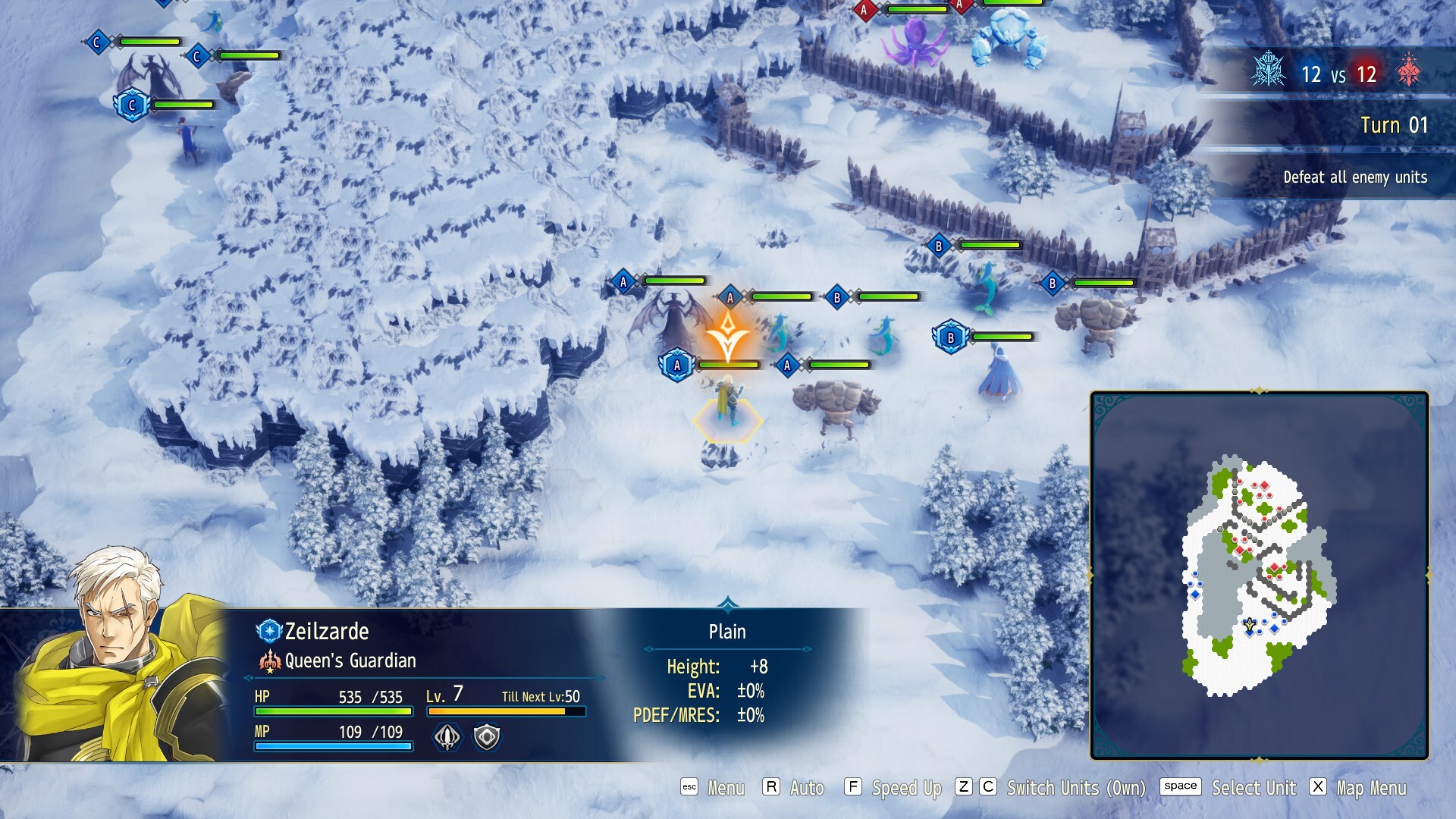
BRIGANDINE ABYSSImage: NIS America, Inc. via Steam -
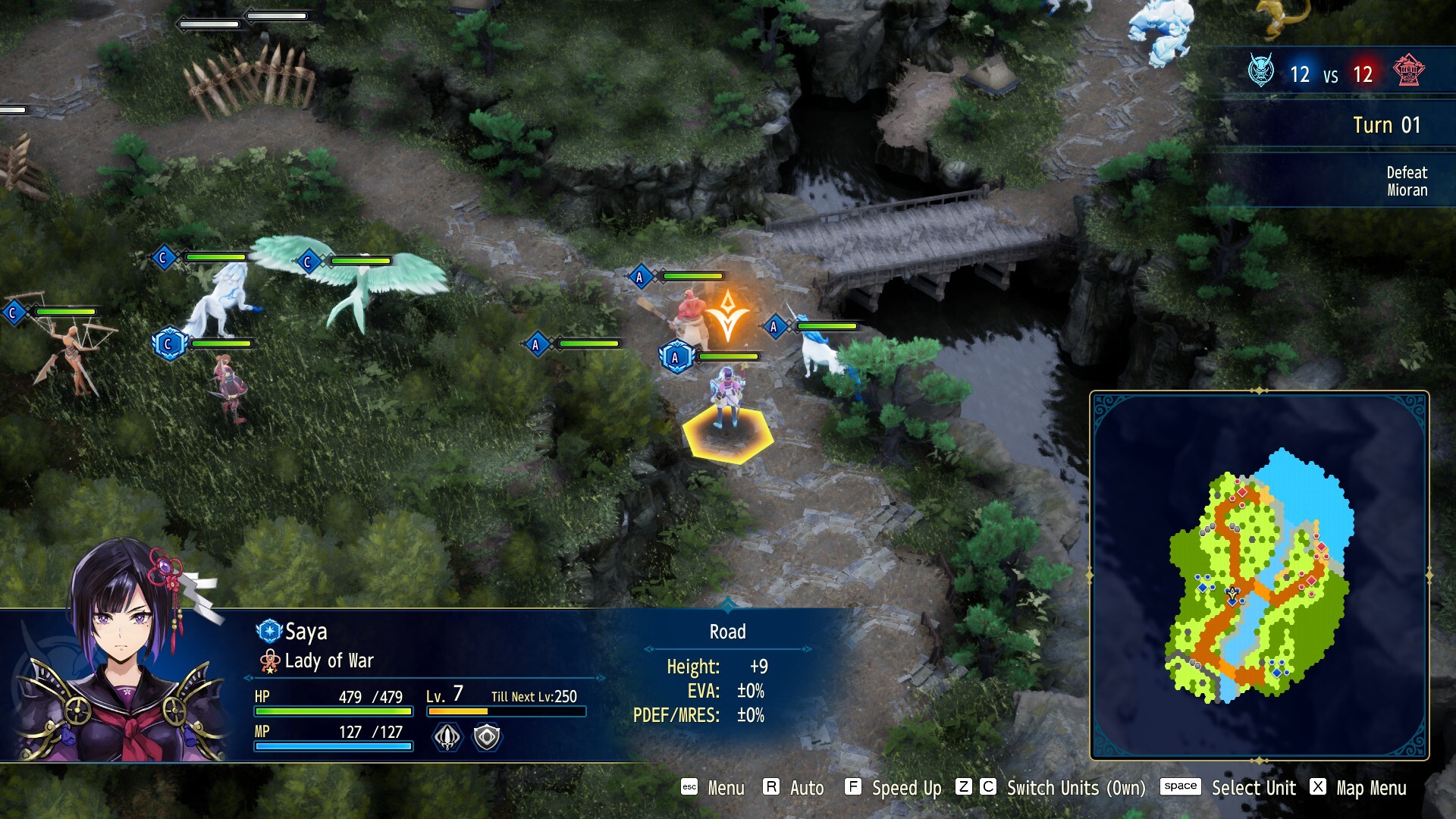
BRIGANDINE ABYSSImage: NIS America, Inc. via Steam -
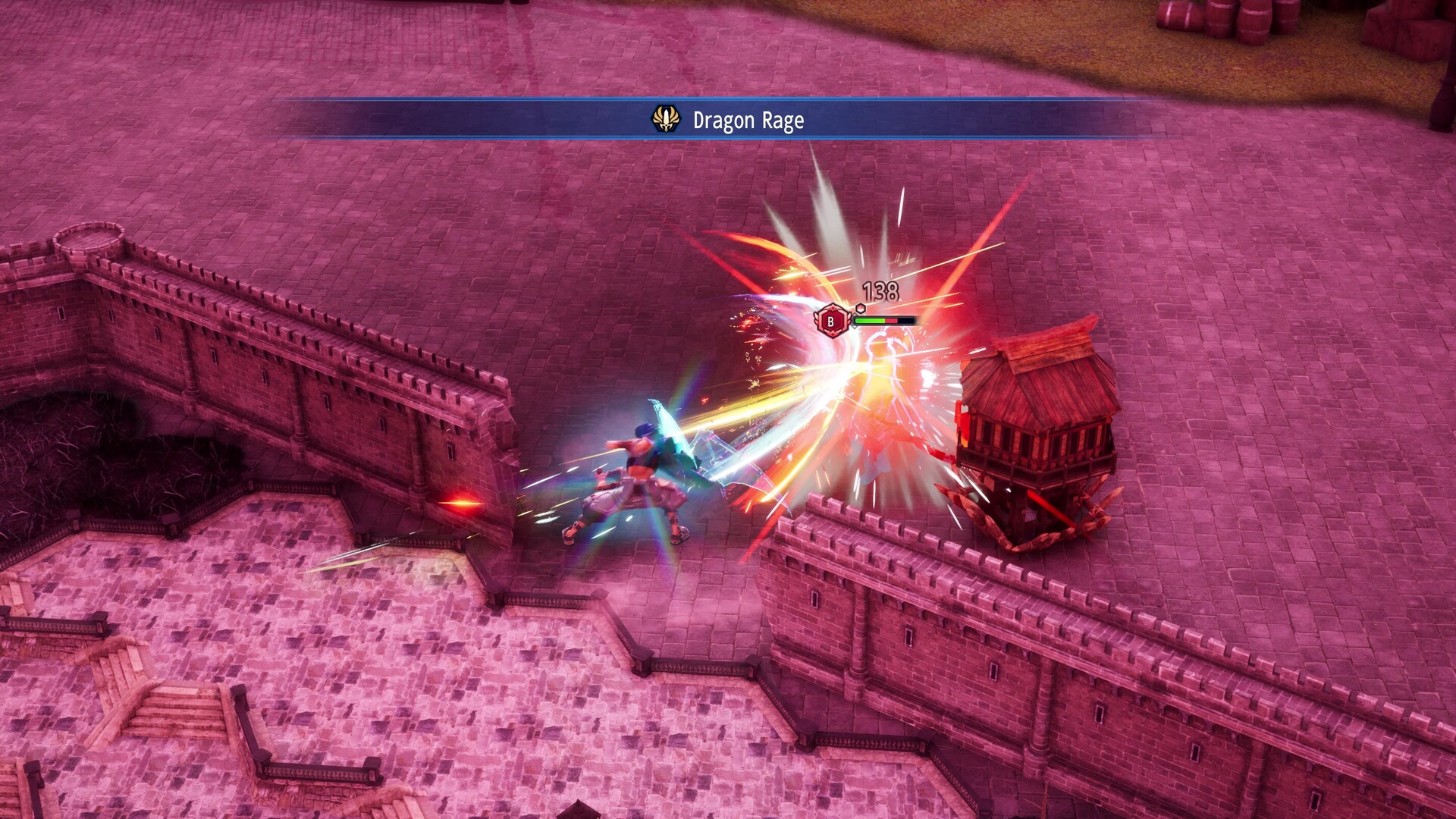
BRIGANDINE ABYSSImage: NIS America, Inc. via Steam -
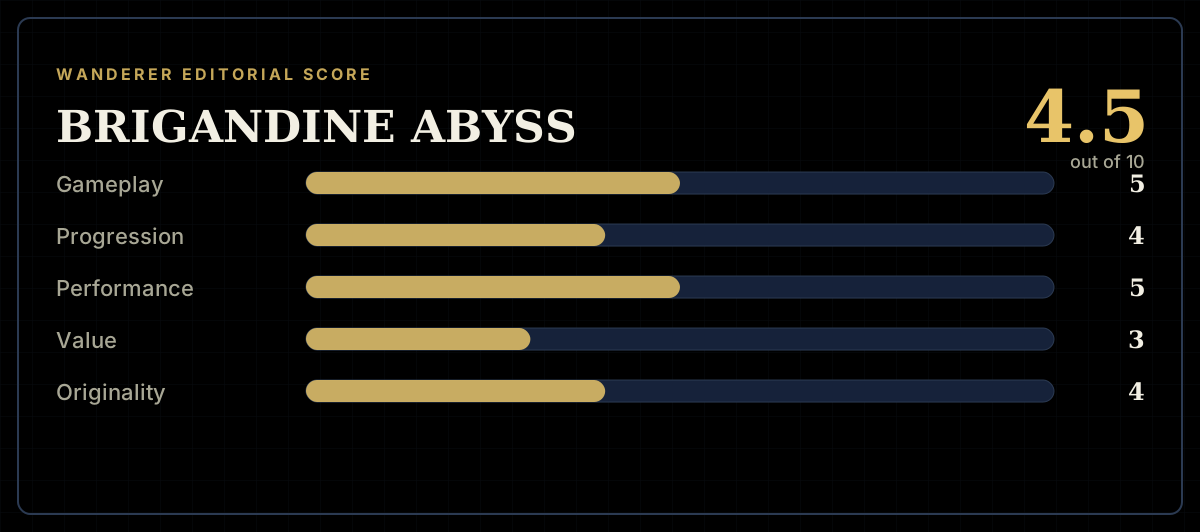
How the review scores each part of the gameWanderer Editorial -
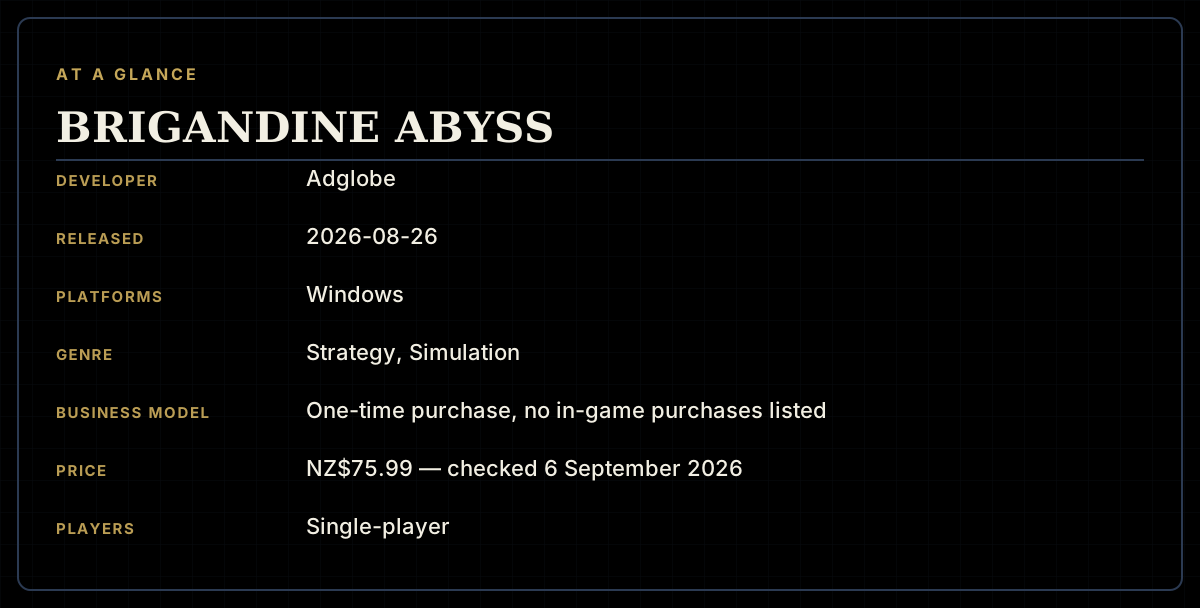
The essentials at a glanceWanderer Editorial -
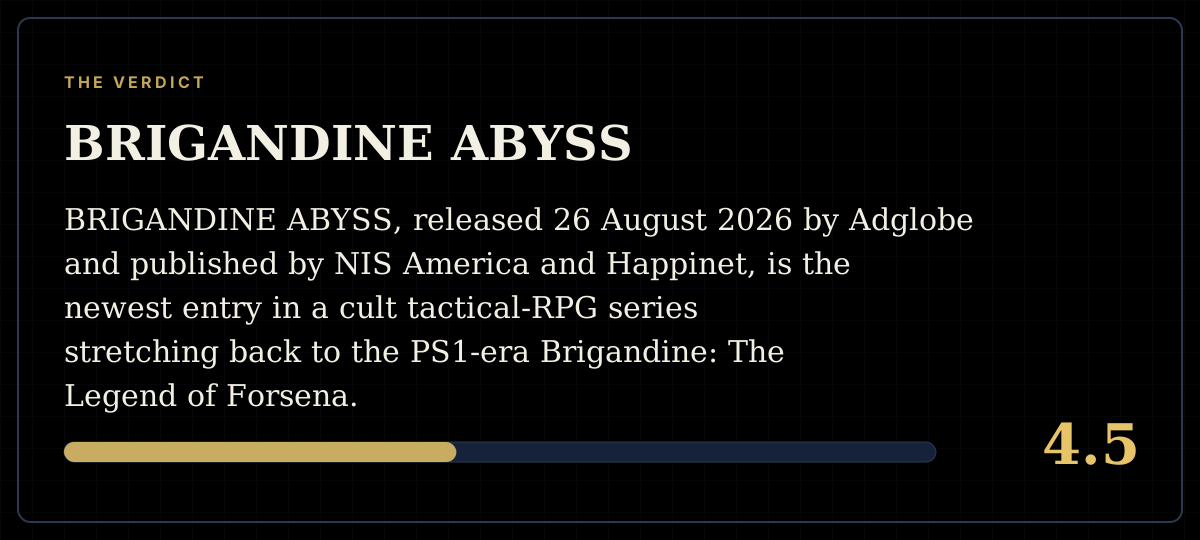
The short versionWanderer Editorial