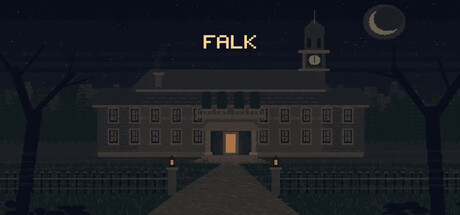
Game review
Falk
7 / 10
- Developer
- Miat
- Publisher
- Miat
- Released
- 10 September 2026
- Platforms
- Windows, macOS
- Genre
- RPG
A Forty-Fifth Consecutive Launch Without a Single Review
Falk launched on Steam on 10 September 2026 as a full release for Windows and macOS, and at the time of writing has zero user reviews. That gap matters more than usual here, since Falk is pitched almost entirely on the strength of its writing and its branching consequences — a choice-driven CRPG lives or dies on whether its skill checks feel fair and its five endings feel genuinely earned, and that's exactly the kind of judgment that normally takes a wave of players comparing notes on which path they took to settle.
A Rehabilitation Institute Built on Skill Checks, Not Combat Encounters
The premise drops the player inside Kurat, a "mysterious institute of rehabilitation," tasked with building a character, developing skills and perks, recruiting companions, and unravelling what's actually happening in the institute. What stands out from the store page's own framing is the breadth of stated approaches to any given obstacle: stealth, force, deception, knowledge, or empathy are all listed as valid paths through the game's problems, and the pitch explicitly promises multiple concrete methods — sneaking, distracting, hiding, climbing, deceiving, investigating, or confronting — depending on the character build chosen. That's a genuinely classic CRPG structure, closer in spirit to skill-check-driven titles like Disco Elysium or the Fallout tradition than to a combat-first action-RPG, and it's a demanding one to execute well: every one of those verbs needs its own reactive writing and failure states to actually matter, rather than converging on the same outcome regardless of approach.
Light as Both Tool and Threat, With Enemies That Hunt Differently
The most concrete and distinctive mechanical detail on the store page is the light system: exposing an ember lets the player see and interact with the world, but also makes them visible, while covering it grants concealment at the cost of vision — a direct risk-reward toggle rather than a passive stealth meter. That's paired with two explicitly different enemy detection models: Shadows are described as sight-based hunters, while a separate enemy type called the Listener reacts instead to footsteps, landings, thrown objects, and creaking floors. Giving enemies genuinely different senses to exploit, rather than a single uniform "detection radius," is a meaningfully more interesting stealth design than most small-scale indie stealth games attempt, since it means the correct tactic against one threat — staying still and quiet, say — can be the wrong one against another that's listening for exactly that kind of stillness broken by a single misstep. Pairing that dual-sense enemy design with the Horror tag and the store page's own description of "grotesque spaces" suggests Falk is leaning on tension and vulnerability rather than pure combat difficulty to make its stealth stakes feel real, which fits a rehabilitation-institute setting more comfortably than a straightforward dungeon-crawl would. Screenshots back the ember system up directly rather than leaving it as a marketing line: one shot is almost entirely black but for a single lit doorway and window, with the player's own silhouette barely visible beside an indistinct dark shape that could just as easily be furniture as a threat, and another shows the ember's light picking out a bench and framed pictures while a hunched shape sits mostly obscured in an open doorway just out of full view.
Five Chapters, Five Endings, and Consequences That Compound
Structurally, the game is split into five distinct chapters, each promising its own environmental storytelling and "grotesque spaces" rendered in pixel art with reactive audio — a handcrafted rather than procedurally generated nightmare, which suits a narrative CRPG's need for hand-placed detail and foreshadowing. The store page is specific that dialogue approaches, companions, abilities, reputations, and earlier decisions all carry forward to affect later chapters and the finale, culminating in one of five distinct endings. A corridor screenshot showing a barred cell-style window and a metal-framed table resembling a gurney, tucked behind a locked door, is consistent with that "grotesque spaces" promise, suggesting the institute's architecture itself is meant to carry unease rather than relying purely on scripted encounters to unsettle the player. That's an ambitious amount of state-tracking for a solo developer to maintain consistently across a full playthrough, and the store page doesn't specify how long a single run takes or how much of that five-chapter structure is reactive to build choices versus fixed regardless of approach — details that would normally take direct player accounts to confirm. It's also worth noting the store page never names or backgrounds the protagonist beyond instructing the player to "build your character," which frames the mystery of Kurat as something the player-created character is uncovering fresh alongside the player, rather than a story about a pre-written protagonist with their own established stake in the institute — a choice that puts more weight on the writing to make the player's own decisions feel like they matter to a blank-slate character rather than to someone whose motivations were already fixed by the plot.
A Low Price for a Narratively Ambitious Solo Project
At NZ$7.89 with no discount, Falk sits at a modest, accessible price for the scope of branching narrative and multiple-ending structure being promised, with nothing on the store page suggesting any in-app purchases or additional monetisation beyond the base price. The category listing is sparse — single-player and Family Sharing only, with no stated controller support, achievements, or cloud saves — which is a fairly minimal technical baseline even by solo-developer standards, though it's also consistent with a narrow, narrative-focused project that isn't chasing a broad feature checklist. Support for both Windows and macOS is a reasonable spread for a 2D pixel-art title, and there's no stated system requirement to judge performance demands, though a game built around static pixel environments and dialogue-heavy scenes is unlikely to be especially demanding regardless.
Verdict
Falk pitches a genuinely classic choice-driven CRPG structure — skill-based problem-solving across combat, stealth, deception, and empathy, a light-as-risk stealth system with enemies that hunt by different senses, and five chapters converging on five distinct endings — at an accessible price from a solo developer. Screenshots of near-total darkness broken only by a single ember's glow, and of grotesque, cell-lined institutional corridors, confirm the atmosphere and light mechanic are genuinely built rather than only described. It launched on 10 September 2026 with zero user reviews so far, so whether the writing and branching consequences actually deliver on that structural ambition, and whether the promised variety of approaches meaningfully changes how each chapter plays out rather than just how it's narrated, remain unverified by anyone outside the studio.
Screenshots
-
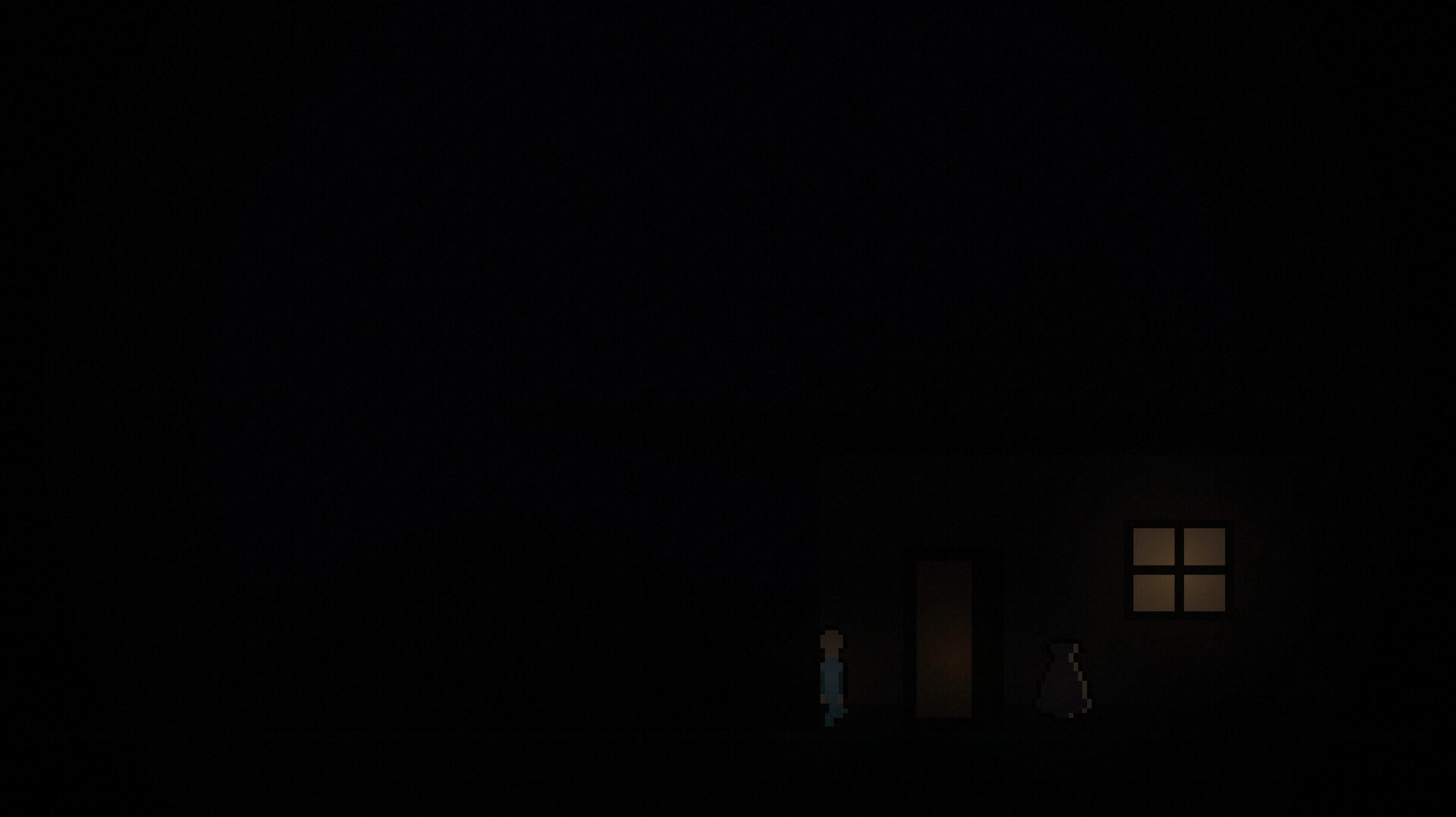
A near-total darkness screenshot demonstrates the ember mechanic directly — visibility is genuinely limited to small lit pockets, with an ambiguous shape near the player that could easily be mistaken for scenery until it moves.Steam store page -
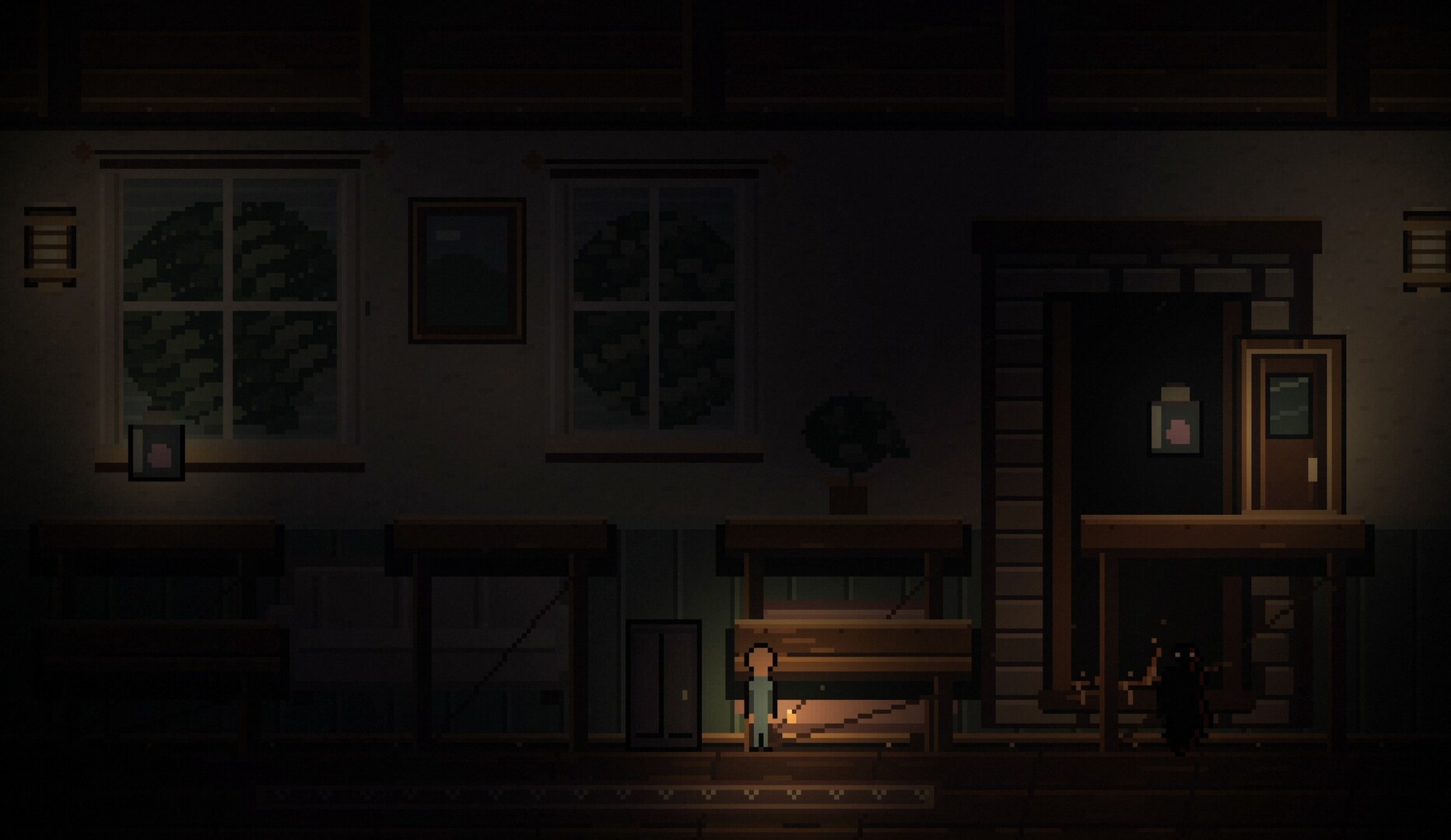
The ember's small radius of light picks out framed pictures and furniture while leaving an open doorway, and whatever is crouched inside it, mostly obscured — a concrete demonstration of light as both a tool for seeing and a risk for being seen.Steam store page -
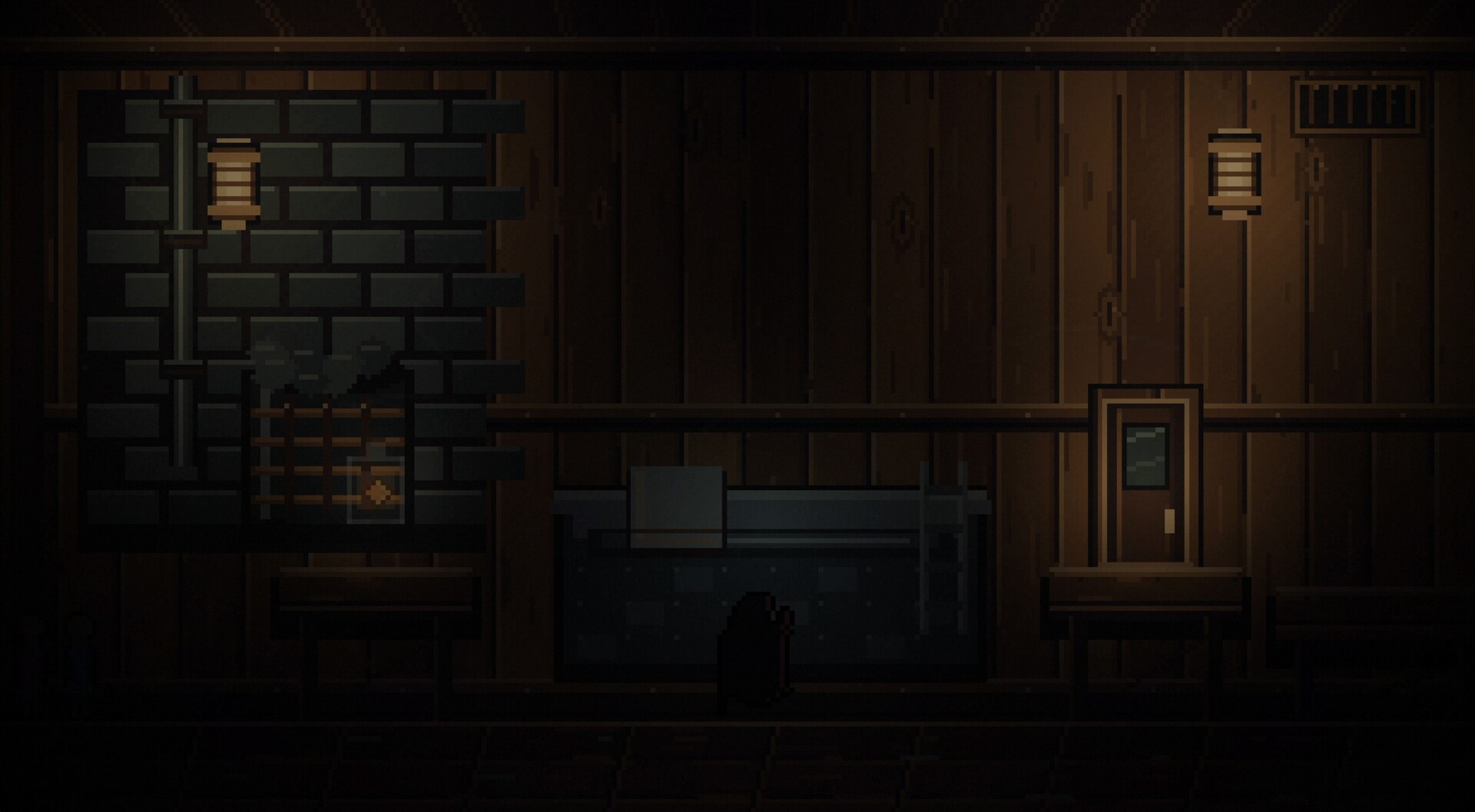
Barred cell windows and a gurney-like metal frame in a locked corridor back up the store page's promise of a handcrafted, grotesque institutional setting rather than a generic dungeon reskin.Steam store page