Game review
Eschalon: Book II
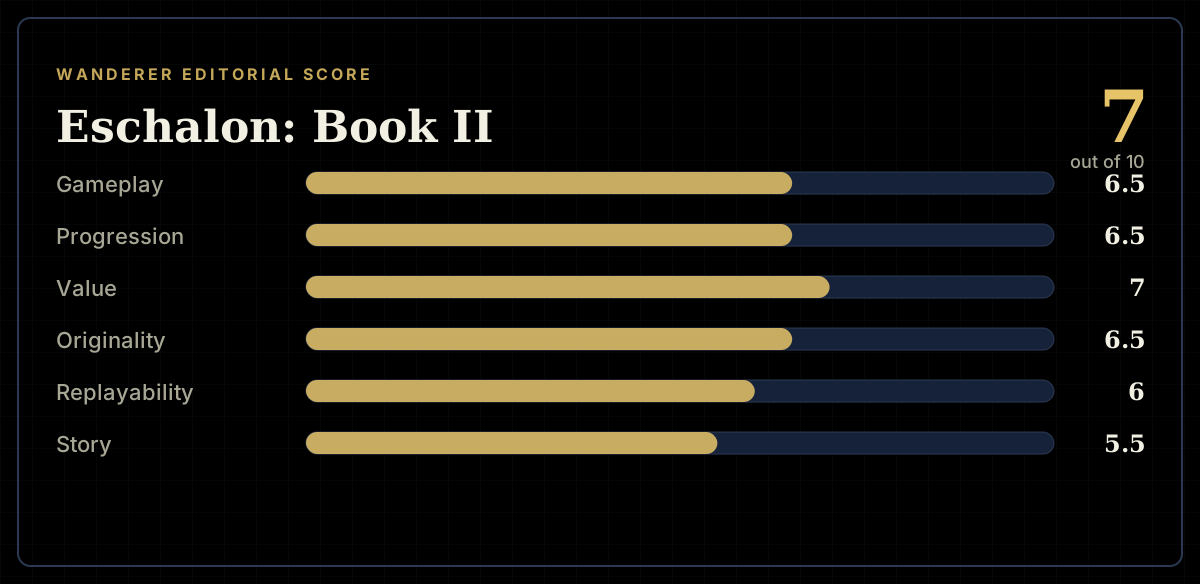
7 / 10
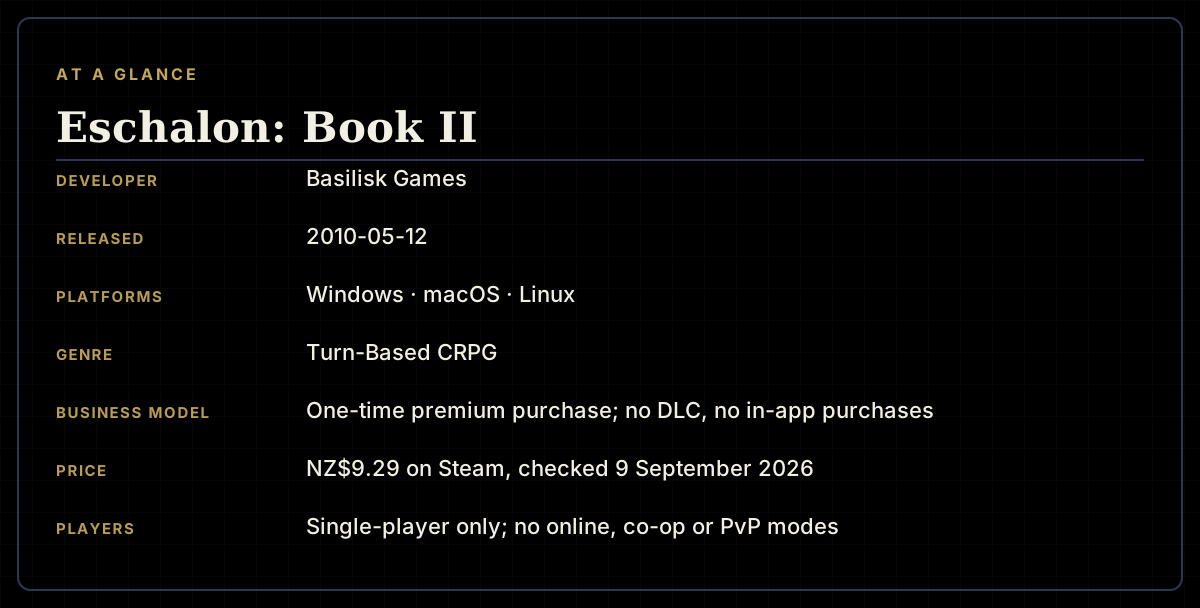
- Developer
- Basilisk Games
- Publisher
- Basilisk Games
- Released
- 12 May 2010
- Platforms
- Windows, macOS, Linux
- Genre
- Turn-Based CRPG
- Monetisation
- One-time premium purchase; no DLC, no in-app purchases
- Players
- Single-player only; no online, co-op or PvP modes
The short version
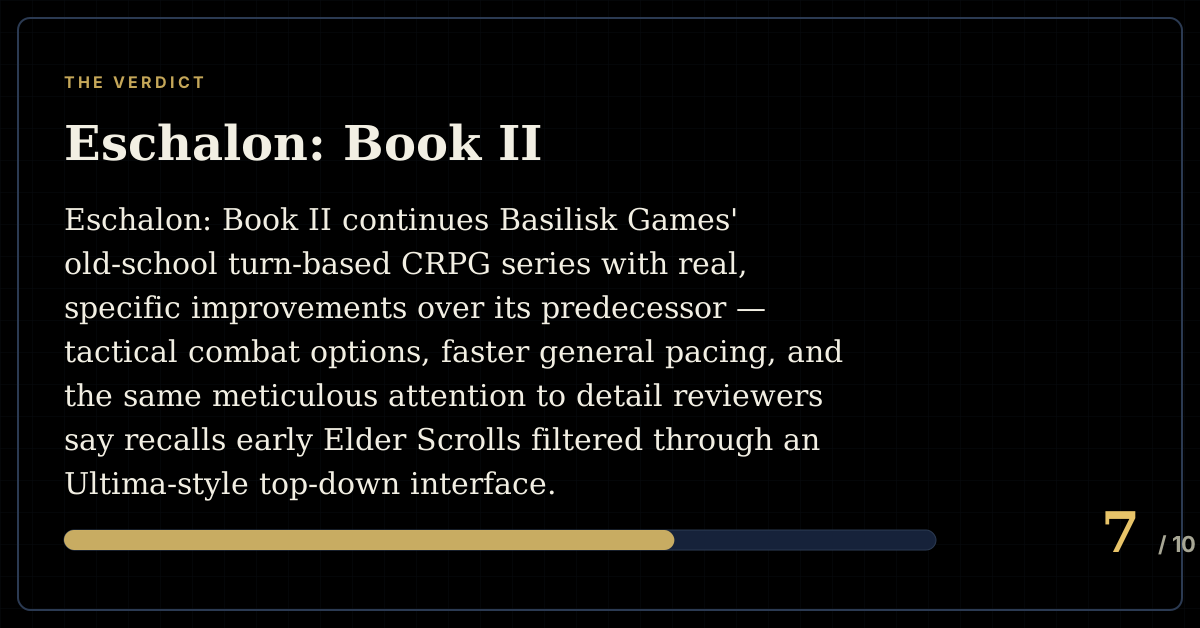
Eschalon: Book II continues Basilisk Games' old-school turn-based CRPG series with real, specific improvements over its predecessor — tactical combat options, faster general pacing, and the same meticulous attention to detail reviewers say recalls early Elder Scrolls filtered through an Ultima-style top-down interface. Reviewers describe genuine, sustained affection for the series, with several logging dozens or even, by one account, over a hundred playthroughs.
A real, specific structural complaint recurs, though: as the middle entry in a planned trilogy, the story deliberately ends without resolving its main plot, introducing a greater threat late that goes unaddressed by the credits. That's a fair criticism of pacing and structure rather than a taste complaint, and worth knowing before starting a game that won't wrap up on its own.
Biggest strengths
- Real, specific tactical improvements over the first Eschalon game, with reviewers citing added combat options and a faster overall pace
- Meticulous world detail and exploration that reviewers compare favorably to early Elder Scrolls games filtered through an Ultima-style top-down interface
- Genuine, sustained fan affection across the review sample, including reviewers who report replaying the game dozens of times over many years
Biggest weaknesses
- A real, specific structural complaint: the story does not resolve its main plot, introducing a greater threat partway through that goes unaddressed by the ending, leaving the game on an unresolved cliffhanger rather than a complete arc
- A minor but recurring system-design quirk: reviewers note the leveling system rewards holding off on spending points until skills are purchased, an unintuitive mechanic that isn't well explained
- At least one detailed reviewer describes the combat as repetitive over a long playthrough, citing similar enemies and a narrow skill set used across many hours
Who it's for: Fans of old-school, detail-dense turn-based CRPGs who don't mind starting a story that won't resolve until a later entry, and who value systemic depth over modern production values. Less suited to players who want a complete narrative arc in a single purchase.
Our recommendation: A worthwhile purchase for old-school CRPG fans, especially those willing to continue into Book III — just go in knowing this entry is a genuine middle chapter, not a self-contained story.
7 / 10
Small studios rarely sustain a trilogy across nearly a decade without meaningful compromises along the way. Eschalon: Book II continues Basilisk Games' small, dedicated turn-based CRPG trilogy, and reviewers who've stuck with the series describe it with the kind of specific, sustained affection that only comes from genuinely returning to something for years. One reviewer states plainly they've played this particular game "probably one hundred times." That's not casual enthusiasm — it's the kind of long-term loyalty a detail-dense, old-school RPG earns when it gets the fundamentals right.
Real, specific improvements over the first game
The praise here isn't generic nostalgia for the genre — reviewers cite concrete changes. Combat gained real tactical options over the first Eschalon, and the overall pace picked up noticeably, addressing a common complaint about the original. One detailed review captures the series' whole appeal in a single line quoted from the game itself: "The toughest enemy in this game? Well, try to break a door secured with a masterful adamantium lock" — a nod to just how much granular, systemic detail the world simulates. Reviewers consistently compare the experience to early Elder Scrolls games filtered through an Ultima-style top-down interface, praising a freely explorable world and genuine character-building depth through traits and stats.
A real structural complaint about the ending
Set against that praise is a specific, fair criticism worth taking seriously rather than treating as a taste issue: as the middle entry in a planned trilogy, Book II's story doesn't resolve. One detailed reviewer, who states they loved the first Eschalon, describes this directly: "the story is incomplete... it doesn't finish its main storyline, and finishing the game on a cliff hanger," noting that a greater threat introduced partway through the game is never addressed before the credits roll. A separate, shorter review echoes the same sentiment more bluntly: it "falls off hard at the end." This is a legitimate structural complaint about pacing and completeness, not a disagreement over taste — anyone buying this expecting a self-contained story should know going in that it's explicitly building toward Book III rather than closing its own arc.
A separate complaint about a different game, reported carefully
One review raises a serious concern worth reporting with care because it concerns a different product entirely: a reported seven-month delay in releasing a bug-fixing patch for Eschalon: Book III on Steam, with the developer allegedly responding to frustrated players with a dismissive joke. This review could not independently verify that account, and it specifically concerns Book III's patch history, not this game. It's included here only because a reader researching this developer's broader reliability might reasonably want to know it exists, not because it reflects directly on Book II's own quality or support.
A leveling quirk worth knowing before starting
One detailed reviewer, otherwise rating the game highly, flags a specific mechanical wrinkle worth passing along: the skill and leveling system rewards holding off on spending level-up points until after purchasing skills from trainers, rather than the more intuitive approach of leveling up immediately as points become available. That's not explained clearly in-game, and a player who levels up naturally as they go may end up with a meaningfully weaker build than one who understood the system's actual incentive structure from the start. It's a small thing, but the kind of detail worth knowing before investing dozens of hours into character progression, rather than discovering partway through a long playthrough.
Real, if repetitive, combat over a long campaign
A more critical review raises a fair point about the moment-to-moment experience across a full playthrough: with a relatively narrow set of combat skills used against broadly similar enemies across many hours, the tactical improvements over the first game don't necessarily prevent the core loop from feeling repetitive by the later stretches. That's a real tension worth naming directly — the systemic depth in character building is genuine, but it doesn't always translate into moment-to-moment combat variety across a campaign this long, and reviewers who logged the most hours are the ones most likely to notice the pattern settle in.
A real cross-platform legacy
One long-time fan specifically highlights the series' Linux support as a defining strength going back to the very first Eschalon, calling it "one of the few real Linux game ports of classic old style RPGs" at a time when that was genuinely rare, and noting Basilisk Games maintained that commitment across all three entries. That's a meaningful detail for anyone specifically shopping for cross-platform indie RPGs, and it reflects a level of platform commitment from a small studio that's easy to overlook when focusing purely on the game's story and combat systems.
Where it lands
Eschalon: Book II delivers real, specific improvements over its predecessor and the kind of detail-dense, old-school CRPG depth that's earned it genuine long-term loyalty from its fanbase. The unresolved, cliffhanger ending is a fair structural complaint rather than a flaw in execution — this is a middle chapter, and it plays like one. For players willing to continue into Book III to see the story through, that's an easy trade for a genuinely well-crafted turn-based RPG; for anyone wanting a complete story in a single purchase, it's worth knowing upfront rather than discovering at the credits. Judged as one installment in a longer, still-supported body of work rather than a standalone product, it holds up as a genuinely solid, detail-rich entry that earns the loyalty its longtime players clearly feel.
Pros and cons
Pros
- Real, specific tactical improvements over the first Eschalon game, with reviewers citing added combat options and a faster overall pace
- Meticulous world detail and exploration that reviewers compare favorably to early Elder Scrolls games filtered through an Ultima-style top-down interface
- Genuine, sustained fan affection across the review sample, including reviewers who report replaying the game dozens of times over many years
- Solid character-building depth through traits and stats, giving real weight to build choices across a playthrough
- Cheap, especially on sale, for a substantial, detail-rich RPG campaign
Cons
- A real, specific structural complaint: the story does not resolve its main plot, introducing a greater threat partway through that goes unaddressed by the ending, leaving the game on an unresolved cliffhanger rather than a complete arc
- A minor but recurring system-design quirk: reviewers note the leveling system rewards holding off on spending points until skills are purchased, an unintuitive mechanic that isn't well explained
- At least one detailed reviewer describes the combat as repetitive over a long playthrough, citing similar enemies and a narrow skill set used across many hours
- A separate, serious complaint concerns a different product from the same developer — a reported seven-month delay in pushing a bug-fixing patch for Eschalon: Book III to Steam, with a dismissive developer response reviewers found insulting; this concerns Book III specifically, not this game, and this review could not independently verify the claim
- Limited resolution options and a dated interface, consistent with the game's age and modest original scope
Screenshots
-
Eschalon Book IIImage: Basilisk Games via Steam -
Eschalon Book IIImage: Basilisk Games via Steam -
Eschalon Book IIImage: Basilisk Games via Steam -
How the review scores each part of the gameWanderer Editorial -
The specsWanderer Editorial -
The short versionWanderer Editorial