
Game review
Avernum: Escape From the Pit
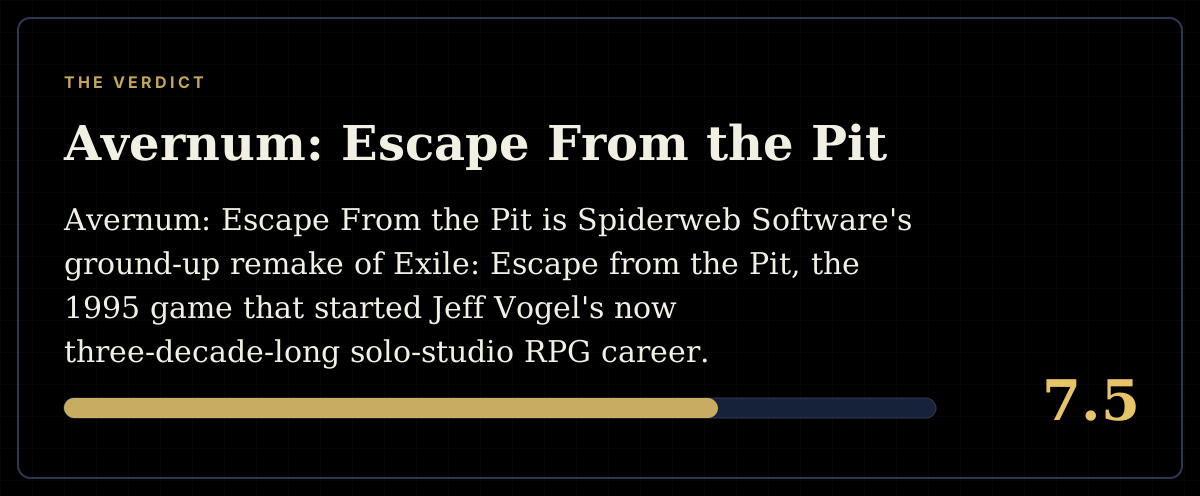
7.5 / 10
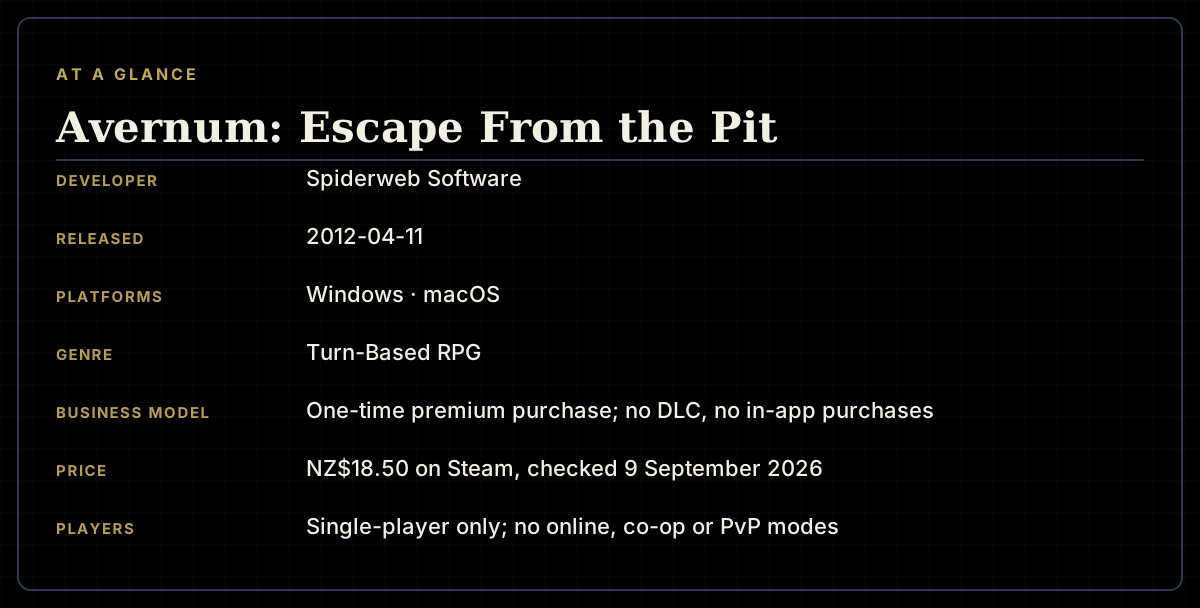
- Developer
- Spiderweb Software
- Publisher
- Spiderweb Software
- Released
- 11 April 2012
- Platforms
- Windows, macOS
- Genre
- Turn-Based RPG
- Monetisation
- One-time premium purchase; no DLC, no in-app purchases
- Players
- Single-player only; no online, co-op or PvP modes
The short version
Avernum: Escape From the Pit is Spiderweb Software's ground-up remake of Exile: Escape from the Pit, the 1995 game that started Jeff Vogel's now three-decade-long solo-studio RPG career. It keeps everything longtime fans point to as the series' identity: an enormous, densely written underground world, turn-based party tactics, and the kind of earned, unforgiving progression reviewers say modern RPGs rarely bother with anymore — one reviewer calls it more storyline than "the entire Skyrim."
A real, detailed critique from a reviewer with clear long-term series history argues this specific remake pulled back on exactly the systems that made earlier versions distinctive: fewer usable spells per class, a flattened loot economy, and the removal of a survival-style food mechanic that used to tie into the game's revival system. It's a specific, internally consistent account worth weighing seriously rather than dismissing as nostalgia for its own sake, even as the game's Very Positive reception confirms most players still find plenty here.
Biggest strengths
- Exceptionally dense, text-rich worldbuilding that reviewers consistently praise as offering more genuine storyline and lore than far bigger-budget modern RPGs
- Real, earned tactical depth in turn-based party combat, rewarding careful preparation and resource management rather than reflexes
- A huge amount of content and playtime for the price, backed by a franchise with decades of continuous solo-studio investment behind it
Biggest weaknesses
- A detailed, internally consistent critique from a reviewer with clear long-term familiarity with earlier versions argues this remake specifically reduced spell variety per class, cut a survival-style food mechanic that used to matter for the party's revival system, and flattened the loot economy compared to what the reviewer remembers from an older build
- The interface is dated and, by multiple reviewers' own admission, genuinely clunky at first — several specifically warn new players to push through a rough first few hours before the game clicks
- Achievement data shows the deepest class-mastery goals (high-tier mage and priest builds) sitting under 2.5% of the tracked playerbase, which could reflect either genuine late-game difficulty or the specific spell-limitation complaint above — this review can't fully distinguish between the two explanations from the data alone
Who it's for: Old-school CRPG fans who want genuine tactical depth and dense worldbuilding over modern production values, and who are willing to push through a dated, sometimes clunky interface to get there. Less suited to players who want fast-paced action combat or who need more streamlined onboarding.
Our recommendation: A worthwhile purchase for patient RPG fans, especially newcomers to the series who won't have earlier versions to compare it against — just budget a few hours to adjust to the interface before judging it.
7.5 / 10
Avernum: Escape From the Pit shares its subtitle with the game that started it all: Exile: Escape from the Pit, the 1995 debut that launched Jeff Vogel's Spiderweb Software and, with it, one of the longest-running solo-studio RPG franchises still active today. This 2012 release is a ground-up remake of that original story — a party of exiles thrown into a vast, monster-infested underground realm and left to survive, explore and eventually rebel — and reviewers, including several with decades of history with the series, still recommend it without much hesitation.
Density and depth that reviewers say modern RPGs skip
What earns Avernum its reputation isn't flashy presentation — it's sheer written and mechanical density. One reviewer puts it plainly: "There is probably more storyline in this small download than in the entire Skyrim." That's not hyperbole reviewers offer lightly; the underground world of Avernum is consistently described as packed with lore, secrets and genuine choices in how a party is built and how encounters are approached, with turn-based combat that rewards careful preparation over reflexes. Several reviewers explicitly reassure newcomers that no familiarity with earlier Exile or Avernum entries is required to enjoy this specific release fully — it stands on its own even for players discovering the series here for the first time.
A detailed case that this remake pulled back on the original
Set against that praise is a specific, carefully argued critique from a reviewer with clear long-term history in the series. Structured as a direct before-and-after comparison, the review argues this remake reduced usable spells per class down to a narrow handful, flattened a loot economy that used to let players sell items mid-battle and find meaningful upgrades outside preset dungeons, and — most specifically — removed a survival-style food mechanic that used to tie directly into how the party's revival system worked, arguing free in-town healing now makes that whole layer of tension pointless. This is a different kind of complaint than ordinary "the game feels dated" criticism; it's a detailed, internally consistent account of specific systems being simplified between versions, from someone clearly familiar enough with the franchise's history to make the comparison meaningfully. It's reported here as exactly that — one detailed reviewer's specific, comparative account — rather than independently verified against Spiderweb's own patch or design history for earlier releases, which this review didn't have direct access to.
An interface that asks for patience
Independent of that historical critique, multiple reviewers agree on one thing: the interface is dated and takes real effort to acclimate to. "The interface is quite unlike any other game... and as such gameplay will probably be clunky and it takes a few hours to really get [into it]," one review states plainly, while another describes an initial urge to dismiss the dated graphics before being won over once the systems click. This isn't presented as a fundamental flaw so much as a genuine barrier to entry that reviewers consistently say is worth pushing through.
What the achievement data can and can't settle
Steam's own achievement data shows a real, gradual difficulty curve — solid early milestones sit around 40-75% of the tracked playerbase — but the deepest class-mastery goals, specifically high-tier mage and priest achievements, sit under 2.5%. That's consistent with the detailed spell-limitation complaint above, but it's also just as consistent with ordinary late-game difficulty in any RPG with deep specialization paths. This review can't fully separate those two explanations from the completion data alone, and says so plainly rather than treating the low percentage as confirmation of one reading over the other.
Part of a genuinely rare, still-active solo-studio legacy
One reviewer's opening note is worth dwelling on: they picked this game back up specifically because Spiderweb Software had just released a new entry in the series, "Crystal Souls." That's representative of something real about this franchise's history — Jeff Vogel has been remaking and extending the same core world across Exile, Avernum, and later series entries for three decades, with this specific "Escape From the Pit" release standing as one remake in a lineage that predates it by 17 years and continued well past it. Reviewers who dig into that history describe genuine excitement at tracking the "correct order" to play everything in, treating the whole catalogue as one long-running body of work rather than a single self-contained game — context that makes this particular entry's simplifications, real as they may be, part of an ongoing conversation the developer has been having with the same fanbase for a very long time.
A genre comparison reviewers reach for consistently
Multiple reviewers independently frame Avernum against a specific pair of touchstones — Baldur's Gate and Divinity — describing it as the "old school pen-and-paper RPG experience" those series evoke, minus the production budget and modern visual polish. That's a useful, consistent way to calibrate expectations: this isn't trying to compete on spectacle, and reviewers who go in already knowing that tend to come away satisfied specifically because the game delivers on the tactical and narrative substance those comparisons promise, even where its presentation clearly can't match them.
Where it lands
Avernum: Escape From the Pit earns its Very Positive reception on the strength of genuine density, writing and tactical depth that a large majority of reviewers say more than compensates for its dated presentation. The detailed critique arguing this specific remake simplified systems from earlier versions is worth taking seriously, particularly for anyone who played and loved an earlier iteration of this exact story — but for players coming to Avernum fresh, without that point of comparison, the version reviewed here still delivers the kind of deep, unhurried old-school RPG experience its fans consistently describe.
Pros and cons
Pros
- Exceptionally dense, text-rich worldbuilding that reviewers consistently praise as offering more genuine storyline and lore than far bigger-budget modern RPGs
- Real, earned tactical depth in turn-based party combat, rewarding careful preparation and resource management rather than reflexes
- A huge amount of content and playtime for the price, backed by a franchise with decades of continuous solo-studio investment behind it
- Newcomers to the series consistently report not needing any prior familiarity with earlier Exile or Avernum entries to fully enjoy this specific release
- Achievement data confirms a real, gradual difficulty curve rather than an artificial wall, with most players reaching solid early-to-mid milestones before the game's hardest class- mastery goals narrow sharply
Cons
- A detailed, internally consistent critique from a reviewer with clear long-term familiarity with earlier versions argues this remake specifically reduced spell variety per class, cut a survival-style food mechanic that used to matter for the party's revival system, and flattened the loot economy compared to what the reviewer remembers from an older build
- The interface is dated and, by multiple reviewers' own admission, genuinely clunky at first — several specifically warn new players to push through a rough first few hours before the game clicks
- Achievement data shows the deepest class-mastery goals (high-tier mage and priest builds) sitting under 2.5% of the tracked playerbase, which could reflect either genuine late-game difficulty or the specific spell-limitation complaint above — this review can't fully distinguish between the two explanations from the data alone
- As a remake of a remake, players deeply invested in earlier versions' specific mechanical identity may find this iteration a meaningfully different game rather than a straightforward modernization
- Dated visuals that several reviewers admit require a real adjustment period, even while ultimately arguing the substance underneath is worth it
Screenshots
-
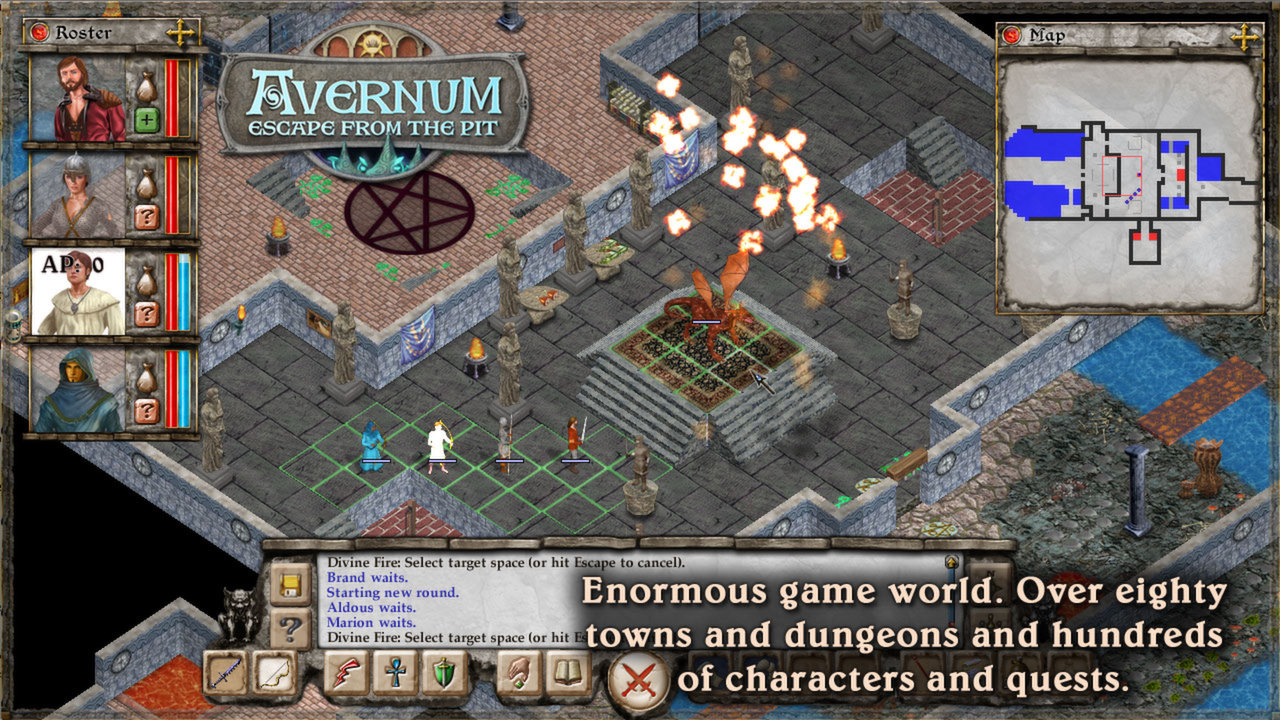
Avernum Escape From the PitImage: Spiderweb Software via Steam -
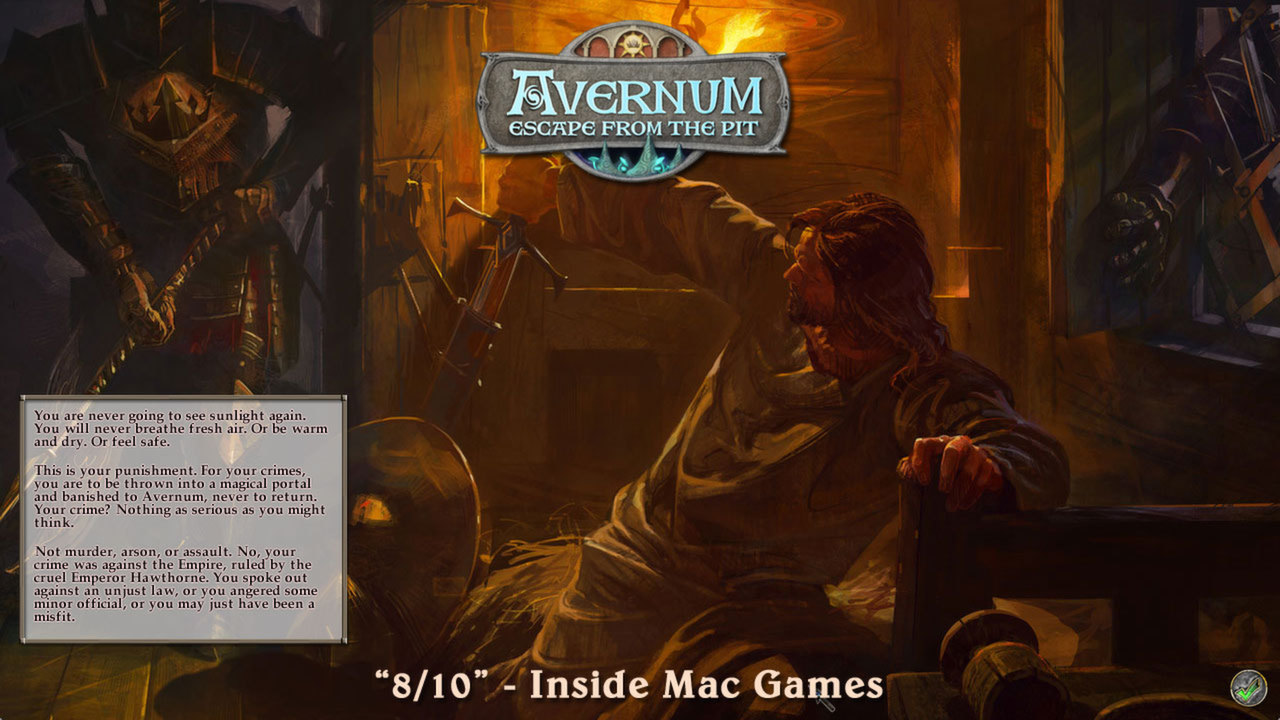
Avernum Escape From the PitImage: Spiderweb Software via Steam -
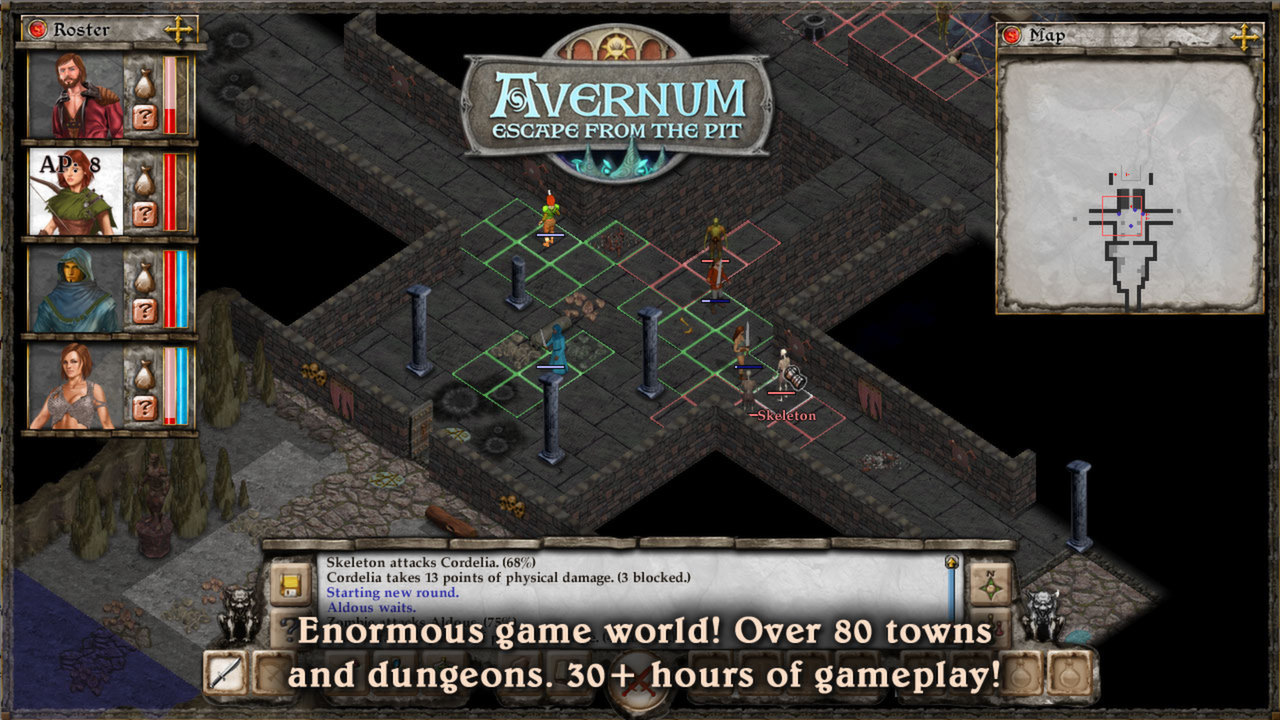
Avernum Escape From the PitImage: Spiderweb Software via Steam -
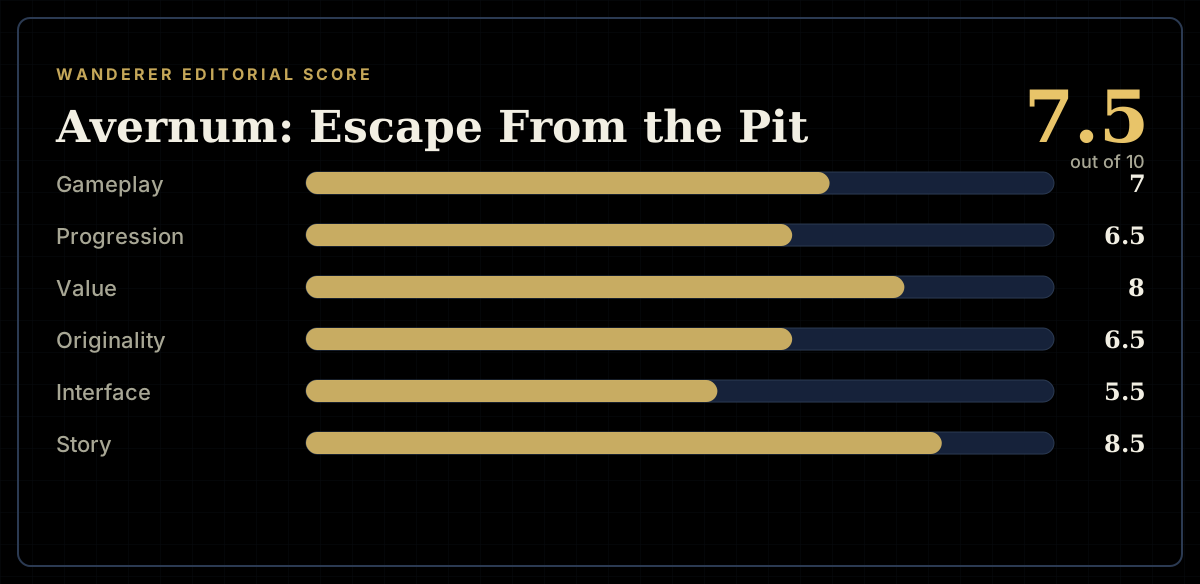
How the review scores each part of the gameWanderer Editorial -
The specsWanderer Editorial -
The short versionWanderer Editorial