
Game review
ELDEN RING Shadow of the Erdtree
8.5 / 10
- Developer
- FromSoftware
- Publisher
- FromSoftware, Bandai Namco Entertainment
- Released
- 20 June 2024
- Platforms
- Windows, PlayStation 5, Xbox Series X|S
- Genre
- Action RPG
- Monetisation
- One-time purchase DLC for owners of the base game, no additional in-game currency
- Players
- Online co-op and PvP, shared with the base game
The short version
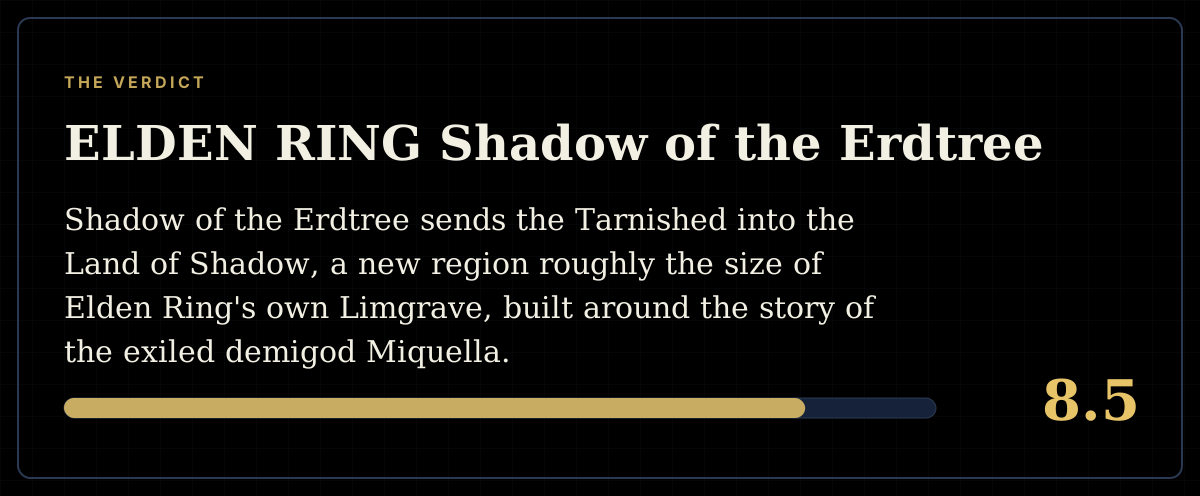
Shadow of the Erdtree sends the Tarnished into the Land of Shadow, a new region roughly the size of Elden Ring's own Limgrave, built around the story of the exiled demigod Miquella. Critics were close to unanimous in their acclaim, awarding it a Metacritic score of 95 — a new record for the highest-rated DLC in the medium's history, surpassing The Witcher 3: Blood and Wine's previous mark. Steam's own audience, drawing on a vastly larger sample of more than 82,000 reviews, tells a more complicated story: Mostly Positive at 71% lifetime, with the score genuinely dipping into "Mixed" territory in the days immediately after launch. Two specific, well-documented problems drove that dip. Severe performance issues — stuttering, frame drops, no ultra-wide support, no DLSS — plagued the PC version at launch, serious enough that FromSoftware shipped a dedicated patch addressing both performance and boss placement less than two weeks later. And a genuinely substantive minority of veteran players, several citing platinum trophies across the entire Souls catalogue, argue several of the DLC's late-game bosses represent a real, concerning shift in design philosophy — away from readable, punishable attack patterns and toward aggressive, high-damage combo strings that reward attrition over the series' traditional skill expression.
Biggest strengths
- The Land of Shadow is widely credited as some of FromSoftware's best world design to date, roughly Limgrave-sized and dense with the layered exploration and environmental storytelling the studio is known for
- Critics were close to unanimous, awarding a record-setting 95 on Metacritic — the highest score any DLC has received, surpassing The Witcher 3: Blood and Wine
- The soundtrack draws consistent, specific praise as some of the best music FromSoftware has produced, even from reviewers otherwise critical of the boss design
Biggest weaknesses
- PC performance at launch was severely compromised for many players — persistent micro-stuttering, frame drops well below the 60fps cap, no ultra-wide monitor support, and no DLSS or frame generation despite years of development time, serious enough to drop the Steam review score into "Mixed" territory in the days after release
- A substantive, detailed minority of veteran players — several citing platinum trophies across Dark Souls, Bloodborne, Sekiro and the base Elden Ring — argue several late-game bosses represent a genuine shift away from the series' traditional readable-pattern design toward aggressive, high-damage combo chains that reward attrition and healing-item stockpiles over pattern recognition
- At least one detailed review makes the specific observation that no prior FromSoftware release drew this volume of criticism about boss design philosophy specifically, as distinct from ordinary "this is too hard" complaints the series always attracts
Who it's for: Elden Ring fans who loved the base game's late-game areas and want more of everything that made it great — world design, lore, exploration, combat variety — will find one of the best expansions ever made, and the critical consensus reflects that honestly. Veteran Souls players specifically attached to the series' traditional "learn the pattern, punish the opening" boss design should read the detailed boss-design critique below before assuming difficulty complaints here are the usual "git gud" dismissal — several of the sharpest critics are among the series' most accomplished players.
Our recommendation: Strongly recommended, and the record-setting critical reception is earned by the world, story, art and music on offer. If you're specifically sensitive to launch-week PC performance, most reports suggest it's meaningfully improved since the post-launch patches; if you're specifically sensitive to a harder-hitting, more aggressive boss-design philosophy than the base game used, sample footage of a late-game boss fight first rather than assuming it'll feel like more of the same.
8.5 / 10
The highest-rated DLC ever made, by the numbers that measure it that way
Shadow of the Erdtree expands Elden Ring with the Land of Shadow, a new region built around uncovering what happened to Miquella, a demigod whose story runs through the base game's own background lore. By the measure critics use, it's an unqualified triumph: a Metacritic score of 95 makes it the highest-rated piece of downloadable content in the medium's history, surpassing the previous record held by The Witcher 3: Blood and Wine. That reception isn't hollow hype — the specific things critics praised are the same things Steam's own massive review base, even at its most critical, rarely disputes: world design roughly the scale of Limgrave itself, packed with the layered secrets and environmental storytelling FromSoftware built its reputation on, alongside a soundtrack multiple reviewers single out as some of the best music the studio has ever produced.
Where Steam's much larger sample tells a more complicated story
What the critic consensus doesn't fully capture is the story Steam's own review base tells with a much larger, more varied sample — more than 82,000 reviews, landing at a Mostly Positive 71% lifetime, a score that genuinely dipped into "Mixed" territory in the days immediately following the 20 June 2024 launch. Two specific, well-documented problems drove that dip, and they're worth separating clearly rather than treating as one undifferentiated wave of complaints.
The first is straightforwardly technical. PC performance at launch was severely compromised for a large share of players — persistent micro-stuttering, frame drops well below the advertised 60fps cap regardless of graphics settings, no ultra-wide monitor support, and no DLSS or frame-generation options despite the years of development time between the base game and this expansion. One especially pointed review joked that the DLC's true final boss "lowers your FPS below 30 mid-fight and casts FPS stutters as an attack effect" — a bitter joke, but one grounded in a genuinely widespread, well-documented technical shortfall. FromSoftware responded within two weeks: patch 1.12.3, released 4 July 2024, included performance improvements alongside specific changes to boss placement, evidence the studio was actively listening rather than letting the complaints sit.
A design-philosophy argument from the series' most invested fans
The second, more substantive complaint concerns boss design itself, and it's worth taking seriously precisely because of who's making it. Multiple detailed reviews come from players who explicitly cite having platinumed Dark Souls, Dark Souls III, Bloodborne, Sekiro and the base Elden Ring — not casual players bouncing off difficulty, but some of the series' most accomplished veterans making a specific, technical argument. Their claim: several of the DLC's late-game bosses combine unusually large health pools with unusually aggressive, high-damage combo strings simultaneously, a combination that shifts combat away from the series' traditional rhythm — observe an attack pattern, identify the opening, punish it — and toward something closer to attrition, where surviving long enough while spamming weapon arts and healing flasks matters more than reading the fight. One reviewer's specific framing lands the point precisely: bosses that move "like Sister Friede" (an especially fast, aggressive Dark Souls III boss) with "the HP pool of Nameless King" (one of that game's most drawn-out fights) and "the damage of Manus" (a boss famous for devastating hits) is a combination the base series never asked players to face all at once.
What makes this argument land differently than ordinary "the boss is too hard" grumbling is a specific, meta-level observation one detailed review makes explicitly: no prior FromSoftware release generated this volume of criticism specifically about design philosophy, as opposed to raw difficulty. The series has always been hard, and its fanbase has always argued about which games nailed the balance best — but the argument here is narrower and more pointed, about whether these specific fights removed the pattern-recognition rhythm that made the difficulty feel fair in the first place, rather than simply making the difficulty higher.
A response, but not a full resolution
It's worth being precise about what FromSoftware's July patch actually changed, since "the devs responded" and "the problem is solved" are different claims. Patch 1.12.3 specifically repositioned two of the most-criticised bosses, the Golden Hippopotamus and Commander Gaius, within their arenas — a targeted, evidence-based response to specific player feedback rather than a vague general rebalance. That's real, concrete evidence the studio was listening rather than dismissing the criticism outright, and it's a genuinely different posture than many developers take toward difficulty complaints. What it doesn't represent is a wholesale reversal of the broader design philosophy several veteran reviewers were describing — the patch addressed specific, named encounters rather than announcing a change in approach to boss design generally, and subsequent player discussion suggests the underlying combo-heavy, high-damage design language several reviewers flagged remained present in most of the DLC's other late-game fights. Judge the specific bosses you actually fight rather than assuming either "it's exactly as hard as launch week" or "it's all been fixed" — the truth sits somewhere more specific than either extreme.
Verdict
Shadow of the Erdtree earns its record-setting critical reception honestly on the strength of the Land of Shadow's world design, story and music — this is genuinely one of the best expansions the medium has produced, and the 95 Metacritic score reflects real, substantial achievement rather than franchise momentum alone. What that critical consensus doesn't fully capture is a real, technical dip at launch — severe PC performance issues FromSoftware moved to address within two weeks, and a genuine, well-argued boss-design controversy from some of the series' most skilled and invested players that goes beyond simple difficulty complaints. Buy it for the world, the story and the music, which are exactly as good as the critical reception says. Go in aware that a meaningful, technically-grounded slice of the base's most experienced players think a specific design choice in several late-game fights represents a real step away from what made the series' combat feel fair, and judge those specific fights for yourself rather than assuming the whole DLC plays like more of the base game.
Pros and cons
Pros
- The Land of Shadow is widely credited as some of FromSoftware's best world design to date, roughly Limgrave-sized and dense with the layered exploration and environmental storytelling the studio is known for
- Critics were close to unanimous, awarding a record-setting 95 on Metacritic — the highest score any DLC has received, surpassing The Witcher 3: Blood and Wine
- The soundtrack draws consistent, specific praise as some of the best music FromSoftware has produced, even from reviewers otherwise critical of the boss design
- New weapon types, Ashes of War, and the Scadutree Blessing progression system add genuine build variety without requiring players to abandon their existing base-game builds
- FromSoftware responded to launch criticism directly and relatively quickly, shipping patch 1.12.3 within two weeks to address both PC performance and the specific placement of two of the most-criticised bosses
Cons
- PC performance at launch was severely compromised for many players — persistent micro-stuttering, frame drops well below the 60fps cap, no ultra-wide monitor support, and no DLSS or frame generation despite years of development time, serious enough to drop the Steam review score into "Mixed" territory in the days after release
- A substantive, detailed minority of veteran players — several citing platinum trophies across Dark Souls, Bloodborne, Sekiro and the base Elden Ring — argue several late-game bosses represent a genuine shift away from the series' traditional readable-pattern design toward aggressive, high-damage combo chains that reward attrition and healing-item stockpiles over pattern recognition
- At least one detailed review makes the specific observation that no prior FromSoftware release drew this volume of criticism about boss design philosophy specifically, as distinct from ordinary "this is too hard" complaints the series always attracts
- Some of the criticised bosses combine unusually large health pools with unusually high per-hit damage simultaneously, a combination multiple reviewers argue removes the series' classic risk-reward rhythm rather than intensifying it
- At NZ$64.99, several reviewers explicitly recommend waiting for a discount of 25 to 50%, distinguishing their view of the DLC's value from their generally higher opinion of the base game
Screenshots
-

ELDEN RING Shadow of the ErdtreeImage: FromSoftware, Inc. via Steam -

ELDEN RING Shadow of the ErdtreeImage: FromSoftware, Inc. via Steam -

ELDEN RING Shadow of the ErdtreeImage: FromSoftware, Inc. via Steam -
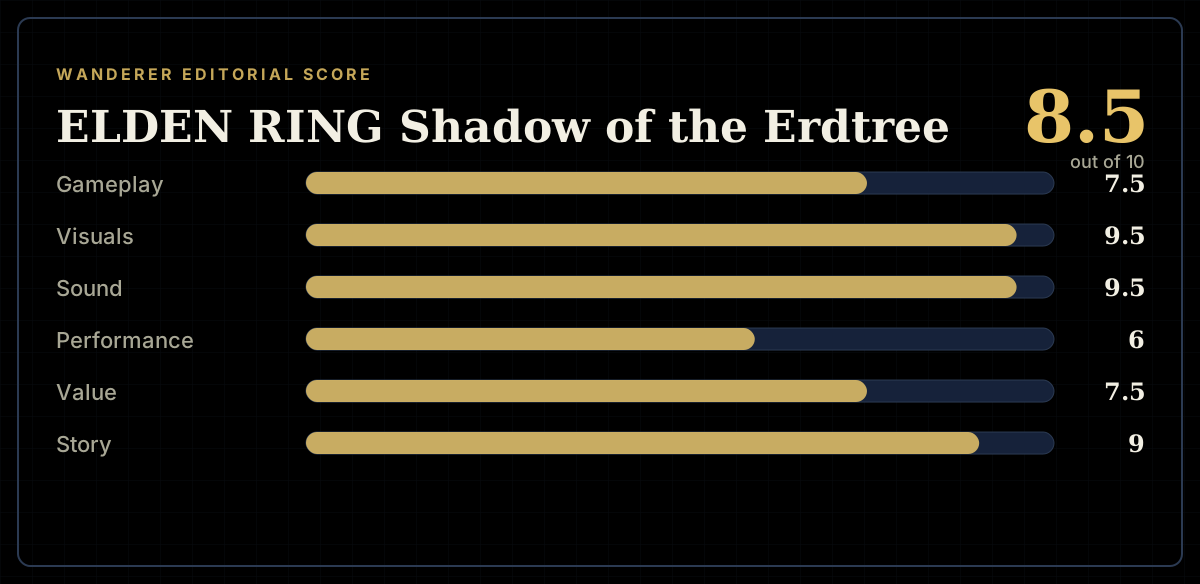
How the review scores each part of the gameWanderer Editorial -
The short versionWanderer Editorial