
Game review
Ebenezer and the Invisible World
6.5 / 10
- Developer
- Orbit Studio
- Publisher
- Play on Worlds
- Released
- 3 November 2023
- Platforms
- Windows
- Genre
- Victorian-Fantasy Metroidvania
- Monetisation
- One-time premium purchase; no ads, DLC or in-game store found
- Players
- Single-player only; no online, co-op or PvP modes
The short version
Ebenezer and the Invisible World takes a genuinely bold premise — Charles Dickens's Ebenezer Scrooge, repentant after his brush with the Christmas Spirits, swinging his cane against ghosts and guards to save a friend the spirits couldn't reach — and executes it with real narrative care. Reviewers who expected the concept to feel like a gimmick describe being pleasantly surprised by how faithfully it captures A Christmas Carol's emotional core, paired with gorgeous hand-drawn art and animation that draws consistent praise even from the game's harshest critics.
That praise sits alongside a remarkably consistent set of launch-era complaints: clunky, input-delayed movement without directional dodging or coyote jumping, sparse save points and fast-travel options across oversized, sometimes-empty level design, and specific, reproducible bugs including one where remapping controls broke core game functions entirely. Checking those complaints against the developer's patch history shows a genuinely thorough response — a major update nearly two years after launch specifically added control remapping, more save points, more fast travel, cleaner hitboxes and faster base movement speed, addressing nearly every major complaint by name, if considerably later than ideal.
Biggest strengths
- A genuinely clever, emotionally faithful reimagining of A Christmas Carol that reviewers describe as surprisingly well-executed rather than gimmicky, once they engage with the story
- Gorgeous hand-drawn art direction and character animation that draws consistent praise even from reviewers otherwise sharply critical of the game's technical execution
- A real, substantial metroidvania structure with meaningful ability-gated exploration, secret areas, and fun boss encounters that reward committed exploration
Biggest weaknesses
- Launch-era movement was widely and consistently reported as clunky and input-delayed, lacking directional dodging and coyote jumping that genre veterans expect, though base movement speed was specifically increased in a later major patch
- Level design at launch drew consistent complaints for oversized, sparsely populated rooms with pointless platforms and an overly zoomed-out camera, though a later patch added map zoom options and considerably more save points and fast travel
- A specific, reproducible bug allowed remapping controls to break core game functions entirely at launch, a severe issue for a genre where precise input is essential
Who it's for: Metroidvania fans specifically drawn to the unusual Victorian-fantasy Christmas Carol premise, especially those buying today rather than at launch to benefit from the substantial post-launch overhaul. Less suited to anyone judging the game purely by its launch-era reputation.
Our recommendation: A genuinely charming, worthwhile metroidvania today given how thoroughly its most serious launch complaints have been addressed since — just don't judge it by reviews written before the major 2025 patch.
6.5 / 10
It's hard to imagine Charles Dickens intending for Ebenezer Scrooge to swing a cane at ghosts and guards, but Ebenezer and the Invisible World makes that unlikely premise work. Developed by a small team over what the studio itself describes as almost two and a half years of work, the game transplants Dickens's Victorian London into a side-scrolling action-adventure without losing sight of what made the original story resonate. Repentant after his own encounters with the Spirits of Christmas Past, Present and Future, Scrooge is sought out by another ghost hoping to save a friend the spirits couldn't reach in time — and reviewers who expected the concept to feel like a gimmick describe being genuinely won over by how faithfully it honors A Christmas Carol's emotional core while building an entirely new metroidvania adventure around it.
A genuinely inspired adaptation, beautifully drawn
The narrative conceit draws real, specific praise from reviewers who came in skeptical. Beyond the story, the game's hand-drawn art direction and character animation earn consistent admiration even from reviewers otherwise sharply critical of its technical execution, with comparisons to genre touchstones like Bloodstained and Afterimage. The underlying metroidvania structure holds up its end too, with real ability-gated exploration, secret areas, and boss encounters reviewers describe as genuinely fun once they click. Several reviewers explicitly describe wanting to make replaying it an annual Christmas tradition, a rare and specific kind of praise reflecting how effectively the seasonal premise landed.
A launch reviewers describe as genuinely rough
Set against that praise, this review's research turned up a remarkably consistent set of launch-era complaints. Movement drew the most frequent criticism, described as clunky and input-delayed, with reviewers specifically missing directional dodging and coyote jumping — staples of the genre that were absent at launch. Level design compounded the frustration, with multiple reviewers describing oversized, sparsely populated rooms, pointless platforms leading nowhere, and a camera zoomed out far enough to make Ebenezer feel small and hard to track on screen. Save points and fast-travel options were both widely reported as too sparse relative to the size of the map, turning ordinary backtracking into a real chore. Most seriously, at least one detailed reviewer documents a specific, reproducible bug where remapping controls broke core game functions entirely — a severe problem in a genre built around precise input.
A patch that answers nearly every complaint by name
What sets Ebenezer apart from many similarly-launched indie metroidvanias is how comprehensively the developer eventually responded. A major update, Build 1.2.0.0, arrived roughly a year and a half after the November 2023 launch and explicitly targets the complaints above almost point for point: the ability to remap controls, considerably more save points specifically framed as reducing backtracking, more fast-travel options, cleaner hitboxes on certain enemies, faster base movement speed for Ebenezer, and new map features including zoom. The developer's own framing of the update — describing community feedback as "our roadmap" for continued investment — matches the substance of what shipped, and it's a genuinely rare case this lane has documented of a developer directly naming and fixing nearly every major category of complaint in a single, comprehensive pass, even if the timeline between launch and that fix was considerably longer than ideal.
A dense trail of smaller, named bug fixes
Beyond that major update, the patch record shows sustained, granular attention to specific reported issues across multiple earlier updates: fixed dialogue jumbling, a boss respawn bug, sprite blinking issues, quest-blocking bugs tied to specific enemy encounters, and Steam Deck-specific display problems all appear as named, dated fixes in patches released within weeks of launch. That density of specific fixes suggests a development team genuinely engaged with bug reports throughout, even while the more structural movement and level-design complaints took considerably longer to address.
What the achievement data suggests
Global achievement figures show a fairly typical metroidvania decline, from 86% of the playerbase earning an early milestone down through the 25-35% range for mid-campaign sidequest and boss achievements. That's a reasonably gradual curve rather than an especially steep one, suggesting that once past the specific frustrations reviewers describe with early movement and navigation, a meaningful share of engaged players do continue progressing through the game's real content rather than bouncing off entirely.
A caution about reading reviews chronologically
It's worth being explicit about how much a review's usefulness depends on when it was written for a game like this. Reviews posted in the weeks after the November 2023 launch describe a genuinely different, rougher experience than the one available following the 2025 overhaul, and several of the specific complaints quoted above — sparse save points, no control remapping, slow movement speed — are complaints about a version of the game that, per the developer's own patch notes, no longer exists in its original form. Prospective buyers weighing older reviews heavily should factor in that gap specifically, since the version currently available differs meaningfully from what launch-era criticism describes.
Where it lands
Ebenezer and the Invisible World earns its charm honestly: a genuinely clever, well-executed Dickens adaptation wrapped in gorgeous hand-drawn art, backed by a real metroidvania structure worth exploring. Its launch-era reputation for clunky movement and sparse, confusing level design was earned fairly, but the developer's subsequent, comprehensive patch work directly answers nearly every major complaint by name — a genuine turnaround that reviews written closer to launch simply couldn't have accounted for. For metroidvania fans specifically drawn to its unusual premise, buying today means a considerably more polished experience than the one many early reviews describe.
Pros and cons
Pros
- A genuinely clever, emotionally faithful reimagining of A Christmas Carol that reviewers describe as surprisingly well-executed rather than gimmicky, once they engage with the story
- Gorgeous hand-drawn art direction and character animation that draws consistent praise even from reviewers otherwise sharply critical of the game's technical execution
- A real, substantial metroidvania structure with meaningful ability-gated exploration, secret areas, and fun boss encounters that reward committed exploration
- A major, comprehensive patch roughly two years after launch that directly targeted nearly every significant reviewer complaint by name — control remapping, save point density, fast travel, hitbox cleanup and base movement speed all improved in one dated update
- A distinctive seasonal appeal that several reviewers describe wanting to revisit annually, filling a real gap in a genre with few genuinely good Christmas-themed games
Cons
- Launch-era movement was widely and consistently reported as clunky and input-delayed, lacking directional dodging and coyote jumping that genre veterans expect, though base movement speed was specifically increased in a later major patch
- Level design at launch drew consistent complaints for oversized, sparsely populated rooms with pointless platforms and an overly zoomed-out camera, though a later patch added map zoom options and considerably more save points and fast travel
- A specific, reproducible bug allowed remapping controls to break core game functions entirely at launch, a severe issue for a genre where precise input is essential
- Several reviewers report visual and progression bugs, including stuck animation states, missing dialogue text and quest-blocking issues, though patch notes confirm many specific instances of these were later fixed by name
- Enemy damage and healing scarcity drew balance complaints from multiple reviewers at launch, compounded by the movement and dodge issues above making avoidance harder than intended
Screenshots
-

Ebenezer and the Invisible WorldImage: Play on Worlds via Steam -

Ebenezer and the Invisible WorldImage: Play on Worlds via Steam -

Ebenezer and the Invisible WorldImage: Play on Worlds via Steam -
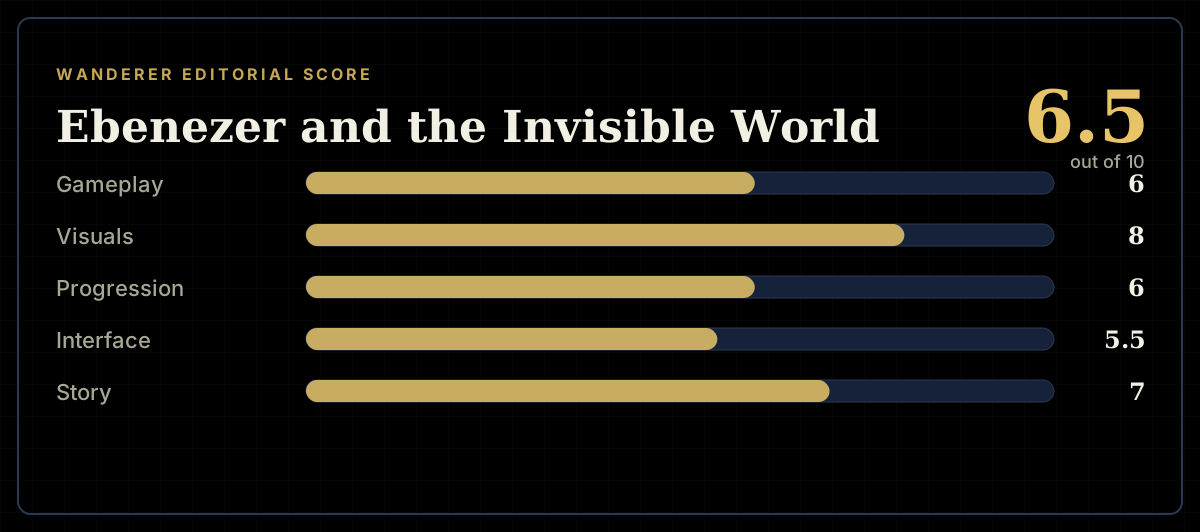
How the review scores each part of the gameWanderer Editorial -
The short versionWanderer Editorial