Game review
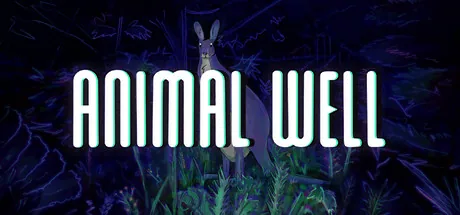
ANIMAL WELL
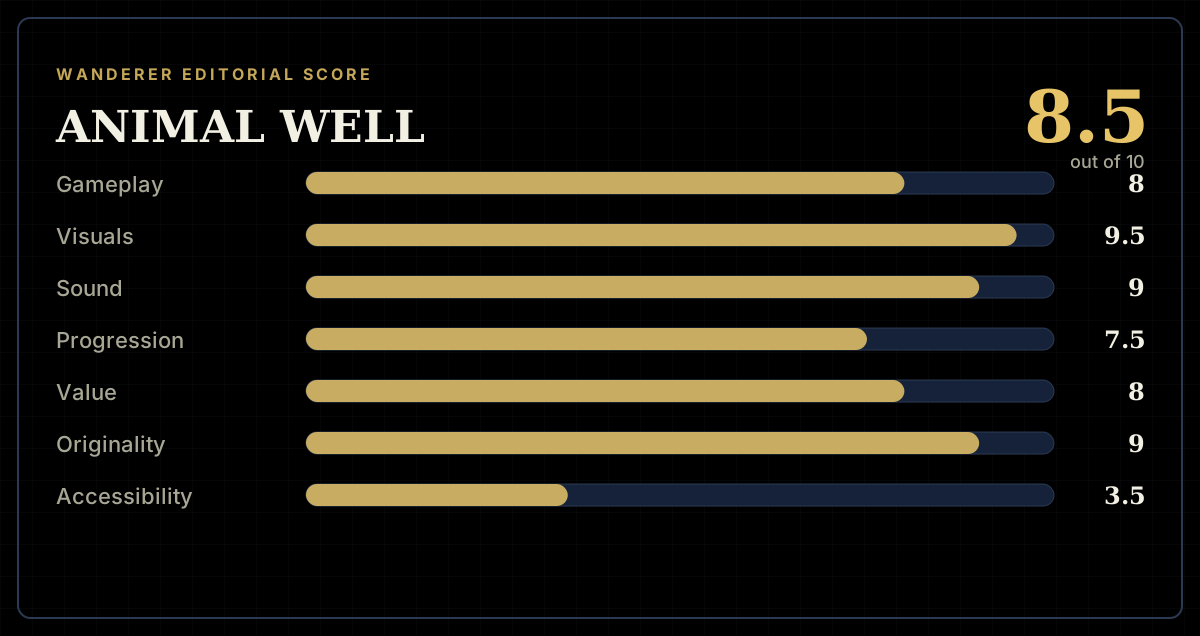
8.5 / 10
- Developer
- Billy Basso
- Publisher
- Bigmode
- Released
- 9 May 2024
- Platforms
- Windows, PlayStation 5, Nintendo Switch, Xbox Series X|S
- Genre
- Puzzle Metroidvania
- Monetisation
- One-time purchase. No DLC, no in-game purchases.
- Players
- Single-player only
The short version
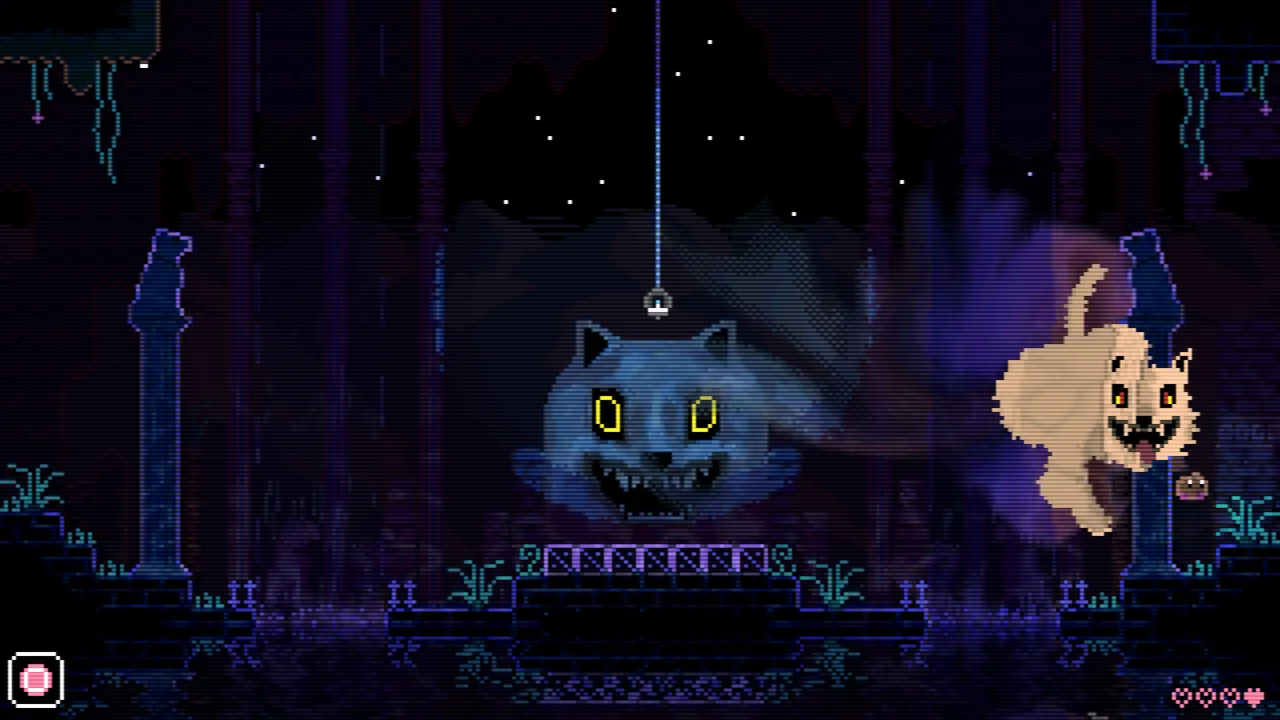
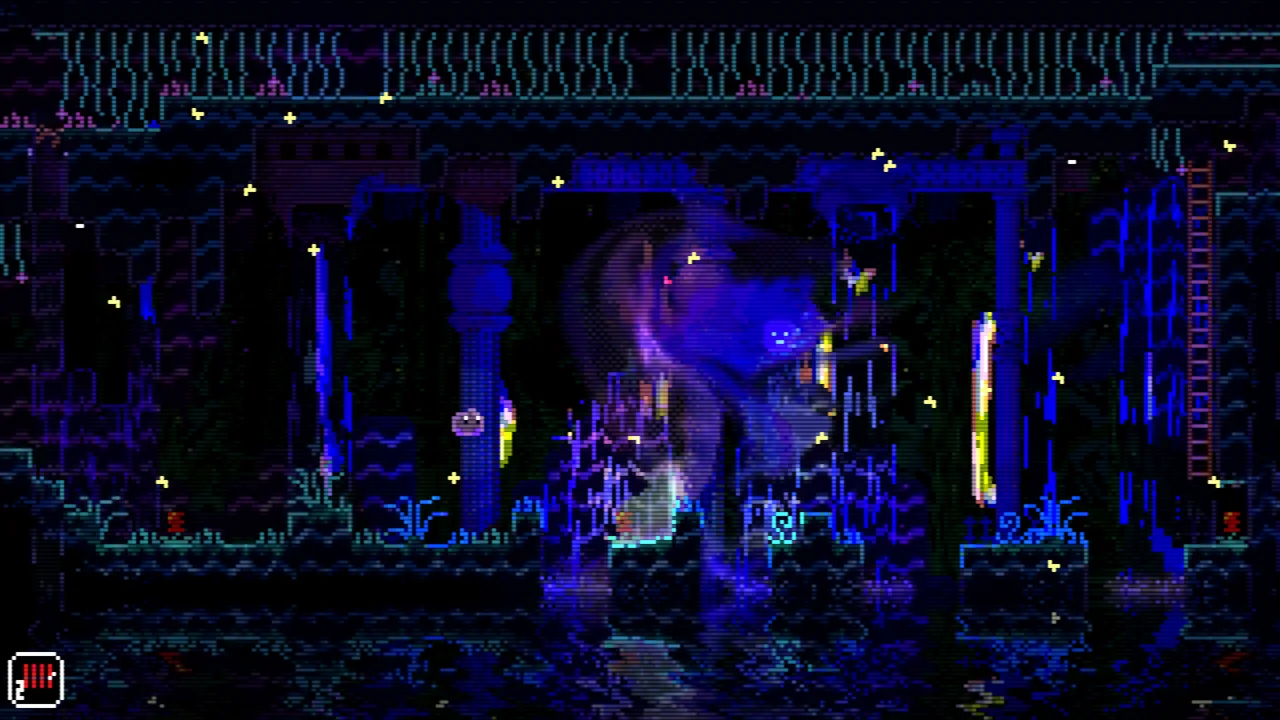
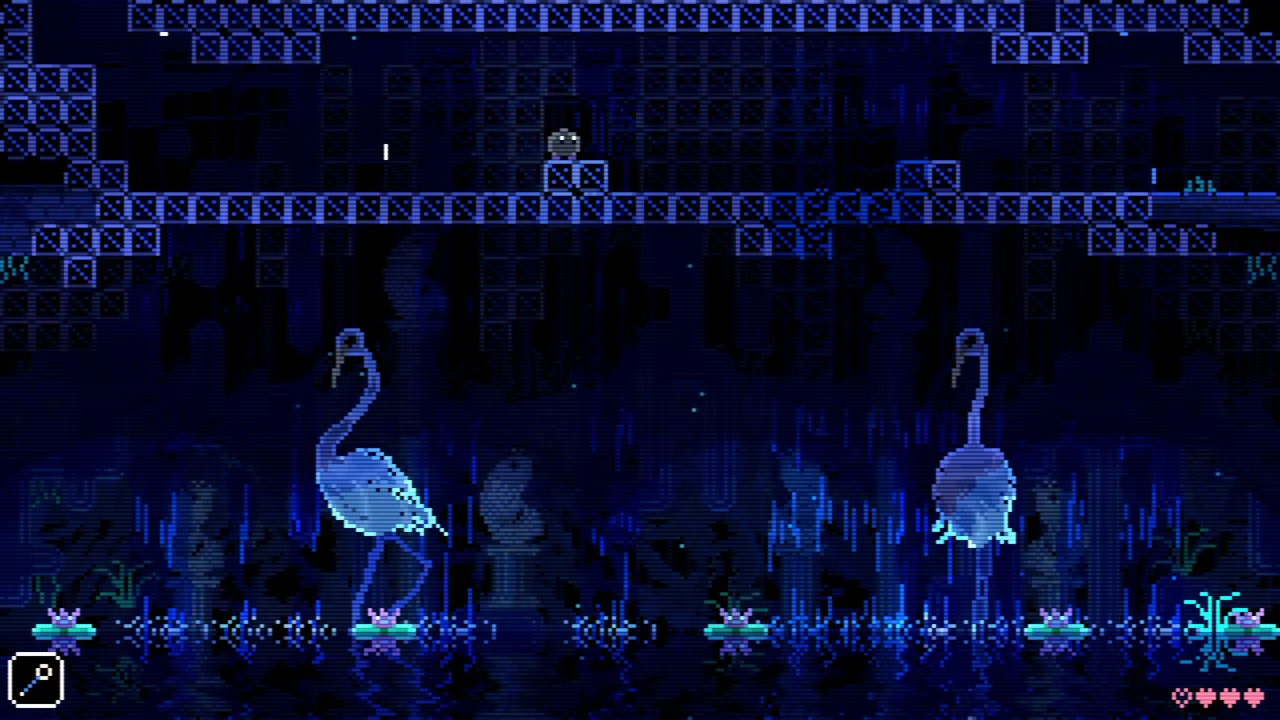
Animal Well is the most beautiful pixel-art game of its generation and one of the strangest things anyone shipped in 2024 — a dense, unnerving labyrinth where every item has three uses you weren't told about and the map keeps folding back on itself. For about eight hours it's a superb, compact metroidvania. Then it becomes something else entirely.
That second thing is a layered secret-hunting game designed to outlast any individual player, and the completion data shows exactly how that lands: 93% of players collect their first egg and 15.5% ever leave the well. Its critics aren't wrong that the back half turns into hunting pixels without a brief. They're describing a game meant to be solved by a community, played alone.
Biggest strengths
- Astonishing visual and audio craft, with lighting and animation work that no screenshot conveys
- Items with multiple non-obvious uses make discovery feel like genuine insight rather than inventory management
- A world that is genuinely unsettling without ever resorting to horror conventions
Biggest weaknesses
- No key rebinding, which the most-upvoted negative review flags as making it unplayable for a disabled player, and which was never added
- After the first ending it shifts from designed puzzles to hunting obscure details with almost no direction
- Death sends you back far enough that repeating solved platforming sections is a routine annoyance
Who it's for: Players who keep a notebook, enjoy being told nothing, and are happy for a game to remain unfinished business for months. Anyone who wants a clean metroidvania arc with a satisfying ending should know that the ending is where this one starts getting difficult.
Our recommendation: Buy it for the atmosphere and the first eight hours, which are worth the money on their own, and treat everything after as optional homework you can do with the internet's help. Check the control options first if you need to rebind keys — you can't.
8.5 / 10
There are twenty achievements in Animal Well. 93.3% of players collect their first egg. 92% find the map. Then the numbers start falling: 55.8% reach eight eggs, 47.6% reach sixteen, 32.8% reach thirty-two. 16.9% collect all of them. 15.5% leave the well. And 8.6% touch the squirrel, which is a sentence that will mean nothing to you now and quite a lot later.
That descent is the whole game, and it's the most honest description of Animal Well anyone can give you. Five in six players never finish it. The ones who do find that finishing was never the point.
Eight hours of near-perfect craft
Start with what is not in dispute. Animal Well is gorgeous in a way that pixel art almost never manages — not nostalgic, not retro-styled, but a genuinely modern rendering technique applied to a low-resolution canvas, with light that bleeds and pools and reflections that do real work. Billy Basso built it alone over roughly seven years, including his own engine, and it shows in details nobody would have insisted on: the way animals move, the way the dark behaves, the way a room you've crossed twenty times suddenly reads differently once you know what's in it.
The design principle is that items have more uses than they advertise. A frisbee, a yo-yo, a flute, a bubble wand — each does the obvious thing, and then two or three unobvious things that turn out to be how you get past something you'd written off an hour ago. The pleasure isn't finding a key for a lock. It's realising that the thing in your pocket was always a key, and you weren't looking at it properly.
For its first stretch that produces a superb, compact metroidvania. There's no combat to speak of, no dialogue, no explanation, and it doesn't need any.
Then the floor opens
Here's where the critical reviews live, and they're worth taking seriously because they're describing something real.
After the first ending, Animal Well stops being a designed progression and becomes a search. The game's remaining content — dozens of eggs, hidden rooms, a rabbit hunt, and layers beneath those — is concealed with a severity that has almost no precedent. A reviewer with 10 hours puts it plainly: "The first quarter of the game is a fun little puzzle metroidvania. The last three quarters are pixel sniffing and abstract trial and error that would make 90s adventure game devs blush." Another: after the second ending, "the game turns into you looking for a needle in a haystack. Except you don't actually know what the needle is."
I think both the game and its critics are right, and the resolution is in how the secrets were designed to be found. The deepest layers of Animal Well were not built for one person with a notebook. They were built for thousands of people comparing notes — a puzzle box aimed at a community, released into a world with Discord servers and shared spreadsheets, where the final discoveries emerged collectively over weeks. Played that way it's one of the most ambitious things in the medium. Played alone, in the dark, with no idea what you're looking for, it's the frustration those reviewers describe.
That's a fair thing to warn a buyer about, and it's also not really a flaw — it's an unusual choice about who the audience is. Compare Tunic, which hides its depth behind a manual you can assemble by yourself, or Outer Wilds, where knowledge is the progression but the trail is always laid. Animal Well is the only one of the three that assumes you're not alone.
The complaint that never got fixed
The single most-upvoted negative review of Animal Well, with 476 helpful votes, is not about puzzles. It's from a player missing fingers on their right hand, explaining that the game's fixed controls put every input on one hand and that they cannot play it. They said they'd change the review to positive once rebinding was added, then edited it later to note that it hadn't been.
Reading the developer's entire announcement history, it still hasn't. There were input changes — accepting all connected gamepads, a controller speaker toggle, lowering the CPU instruction-set requirement so older machines could run it — and the small-fix cadence through mid-2024 shows real care. Key rebinding was not among them, and gameplay patching wound down in late 2024.
Since then the announcements have been plushies, a sweater, figures, two runs of physical editions, a documentary and an art book. I don't begrudge a solo developer the merchandise from a deserved success. But when your top-voted criticism is a disabled player saying they physically cannot use your control scheme, and two years of announcements pass without addressing it, that belongs in the score. It's why accessibility here is the lowest category mark in this review.
Where it stands now
The game is finished and its reputation has settled upward. Negative reviews have thinned from 67 of the hundred most-helpful in 2024 to nine so far in 2026, and 97 of the last 100 English reviews are positive, with a median playtime of 14 hours — higher than the 7.8-hour median among its critics, which suggests the people finding it now are the ones inclined to stay past the first ending.
It picked up Golden Joystick nominations for Best Indie and PC Game of the Year, a Steam Awards nomination, and in April 2026 was bundled with Blue Prince, Fez, Outer Wilds and Tunic under the heading "games that make you whip out your pen and notebook" — which is the most accurate genre label anyone has managed for it.
The verdict
Animal Well earns an 8.5. On craft alone it's close to untouchable: the best-looking pixel game in years, made by one person, with a design intelligence in its item systems that most studios never reach. Nothing about it is padded, nothing is monetised, and it ends when it's done.
It sits below a 9 for two reasons. The first is deliberate and defensible — the back half asks for a kind of collective, obsessive searching that a lot of buyers neither want nor were warned about, and five in six of them stop before the ending. The second isn't defensible: a game this carefully made, by someone who patched the CPU requirements to include older machines, still can't be rebound for a player who can't use its default layout, and hasn't been for two years.
Buy it. Play the eight hours. Then decide honestly whether you want to join the hunt or read about it — both are legitimate, and only one of them will cost you a fortnight.
Pros and cons
Pros
- Astonishing visual and audio craft, with lighting and animation work that no screenshot conveys
- Items with multiple non-obvious uses make discovery feel like genuine insight rather than inventory management
- A world that is genuinely unsettling without ever resorting to horror conventions
- Secret layers deep enough that the community was still unpicking them months after launch
- Complete and self-contained — no DLC, no monetisation, nothing asking for more money
Cons
- No key rebinding, which the most-upvoted negative review flags as making it unplayable for a disabled player, and which was never added
- After the first ending it shifts from designed puzzles to hunting obscure details with almost no direction
- Death sends you back far enough that repeating solved platforming sections is a routine annoyance
- Only about one player in six reaches the ending at all
- At NZ$36.99 for an eight-hour first run, the value case depends entirely on whether the secret layers appeal
Screenshots
-
ANIMAL WELLImage: Bigmode via Steam -
ANIMAL WELLImage: Bigmode via Steam -
ANIMAL WELLImage: Bigmode via Steam -
How the review scores each part of the gameWanderer Editorial -
The short versionWanderer Editorial